
Tibetan Mandala Sets
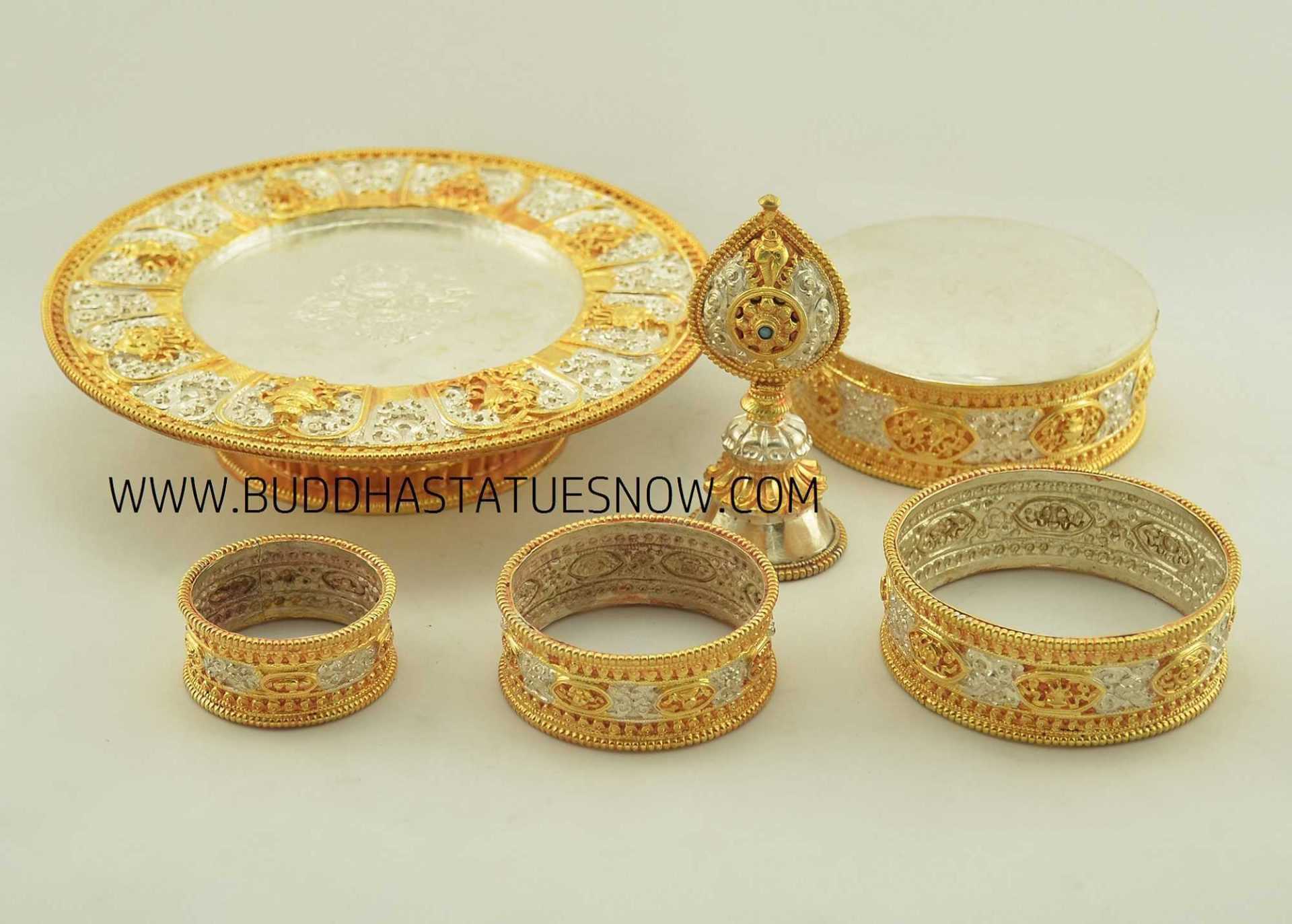
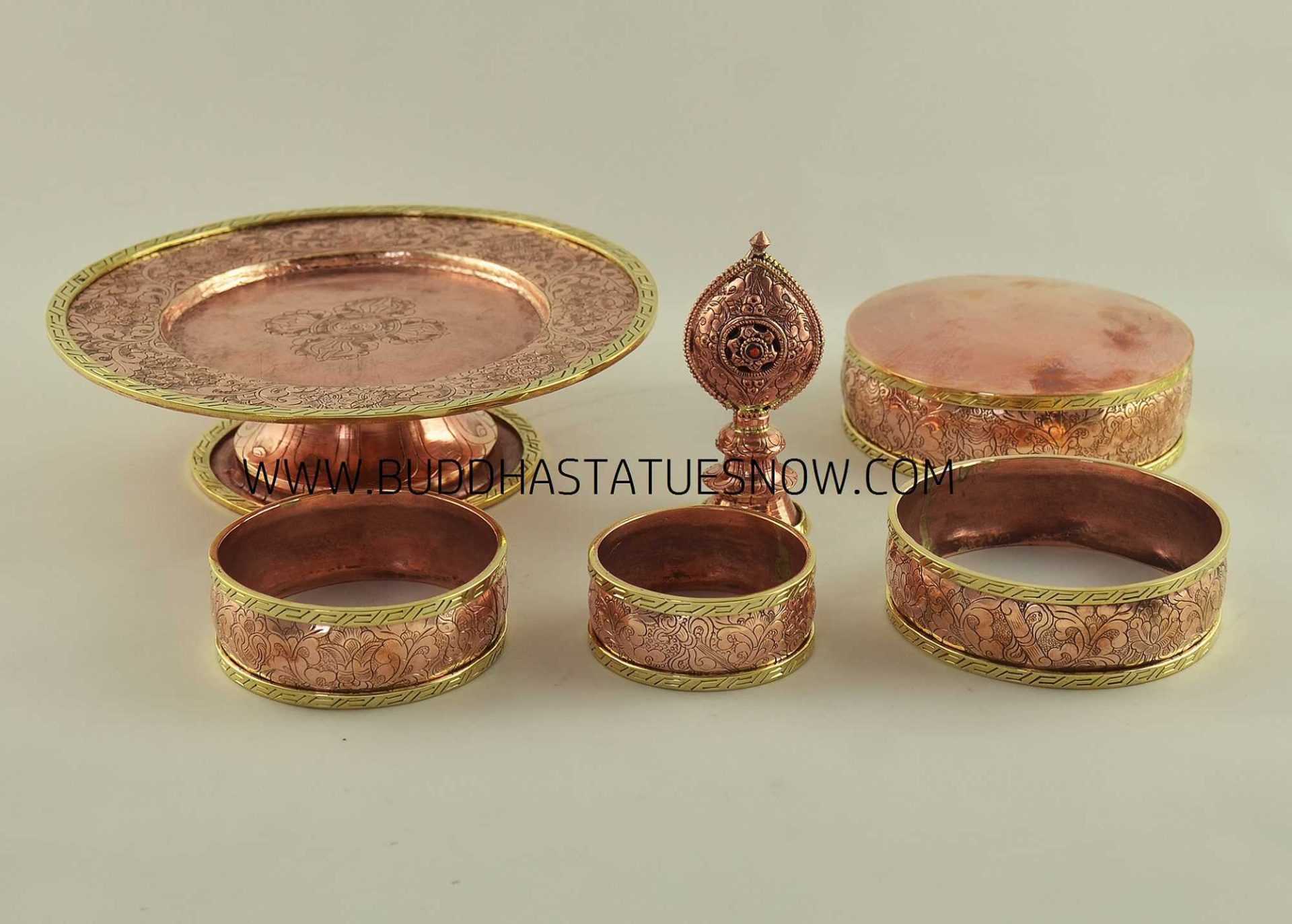
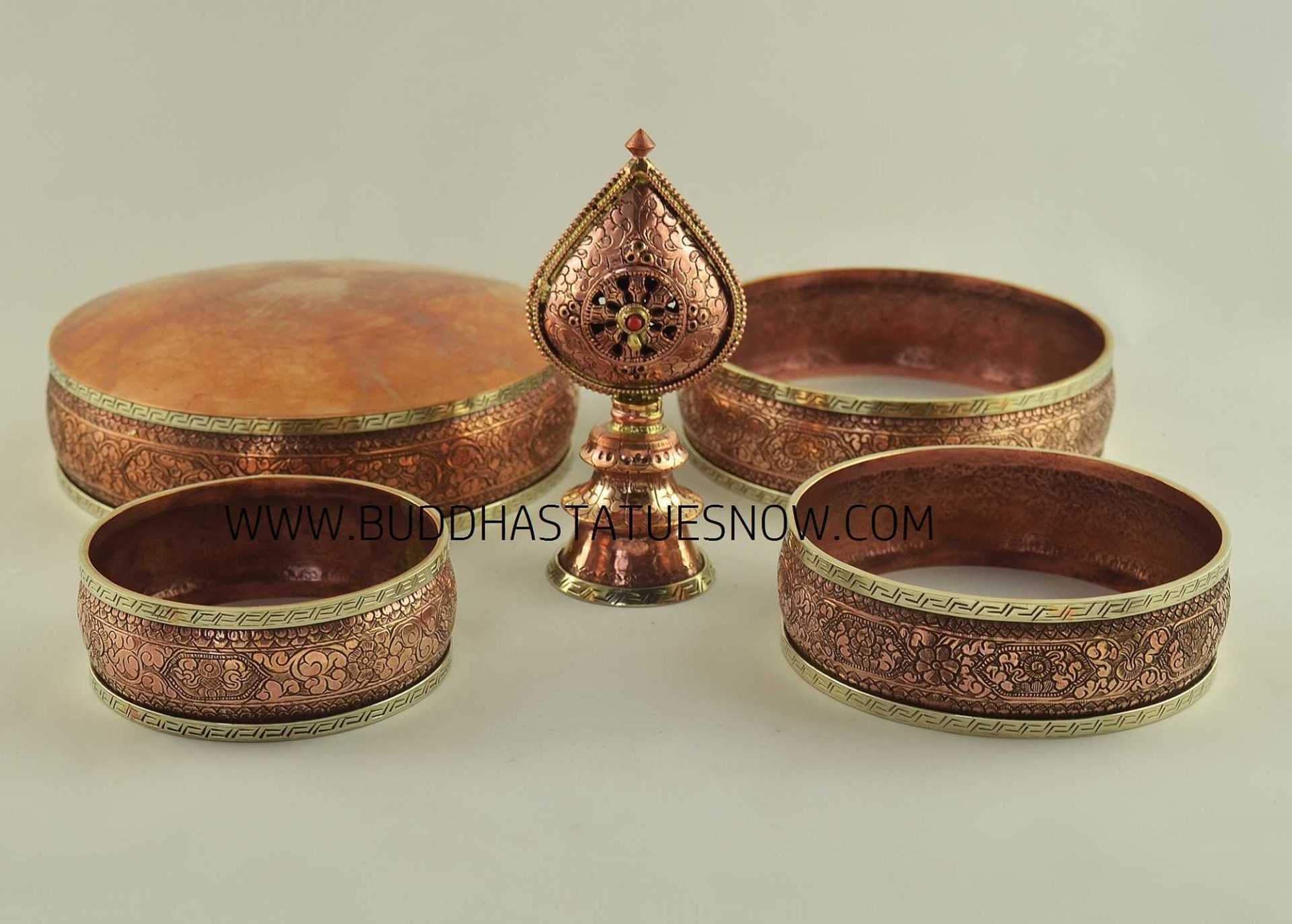
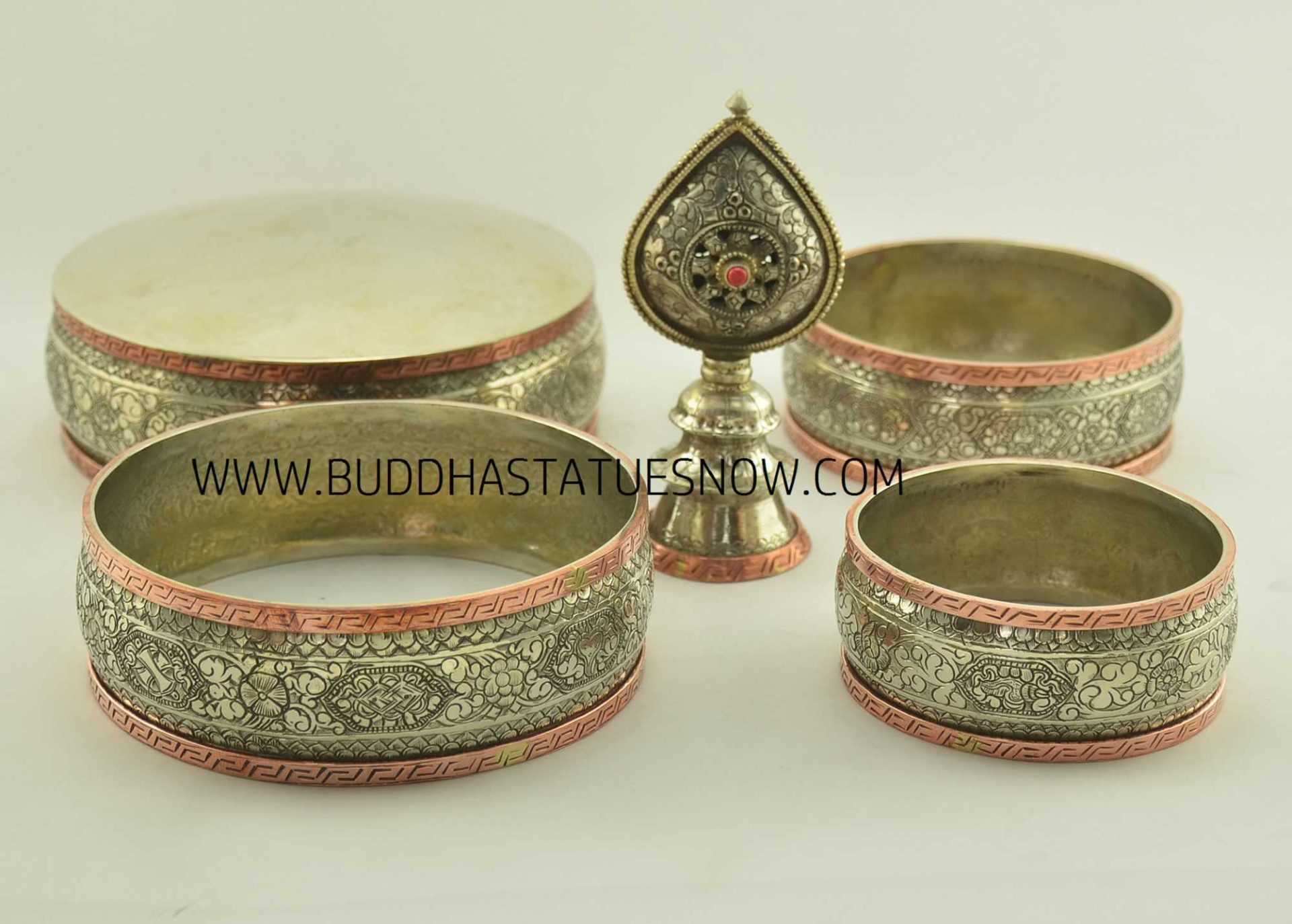
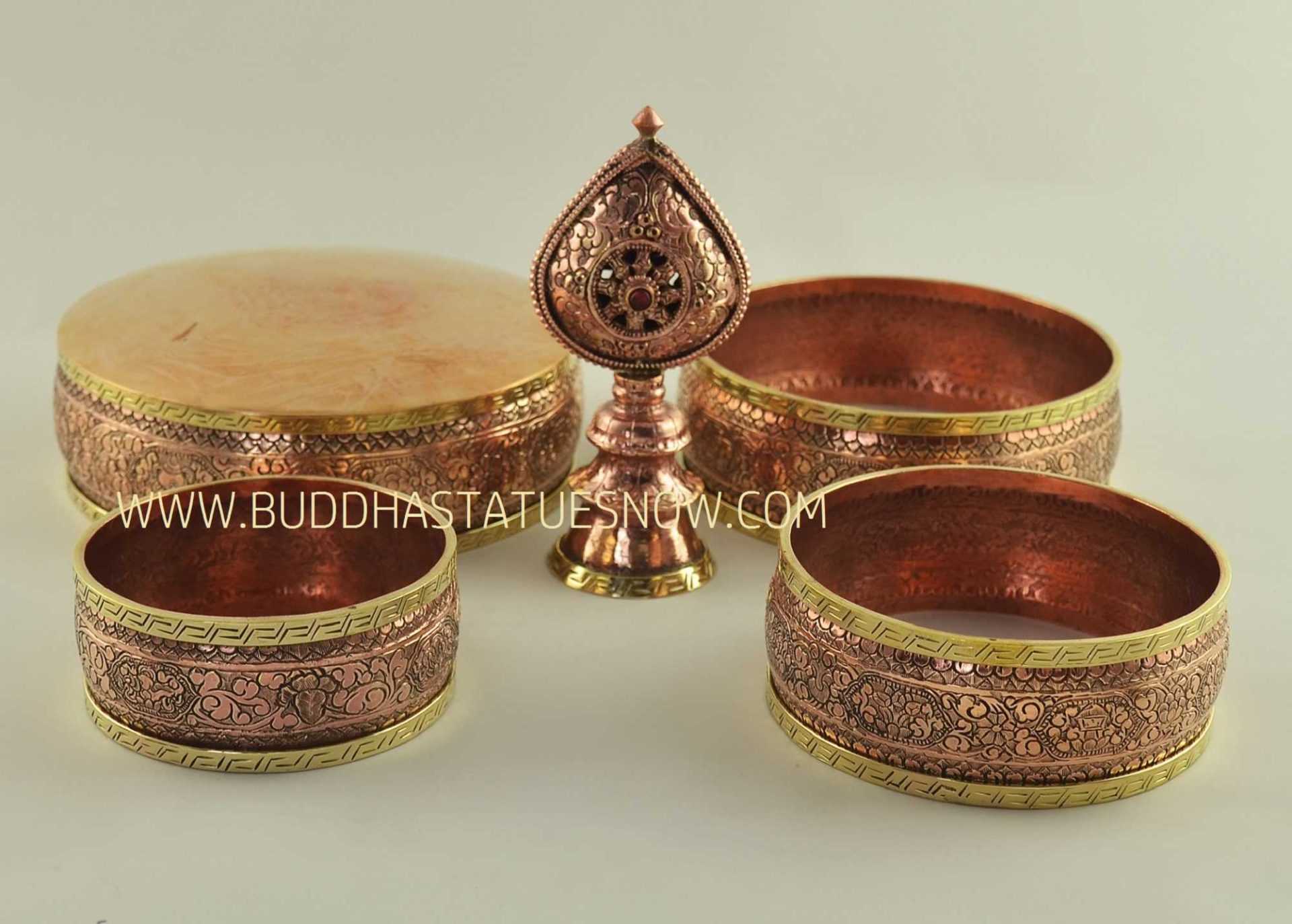
Tibetan mandala sets are used for one of the most demanding practices in Tibetan Buddhism, and one of the most generous. The set represents the entire universe as described in Buddhist cosmology, and in the practice the devotee offers all of it – every world, every jewel, every pleasure it contains – before beginning meditation. The lower bases are built up with rice, the rings are filled with precious substances such as coins and jewels, and at the apex sits a representation of Mount Meru, the axis at the centre of the Buddhist cosmos. The completed mandala is raised over the head while the mandala prayers are recited.
What is being offered is not the metal but everything the practitioner could ever want, given away in exchange for the enlightenment of all beings. For this reason devotees are traditionally encouraged to buy the finest set they can afford – the merit of self-sacrifice accrues in proportion to how genuine the sacrifice is, and choosing carefully rather than cheaply is itself part of the practice.
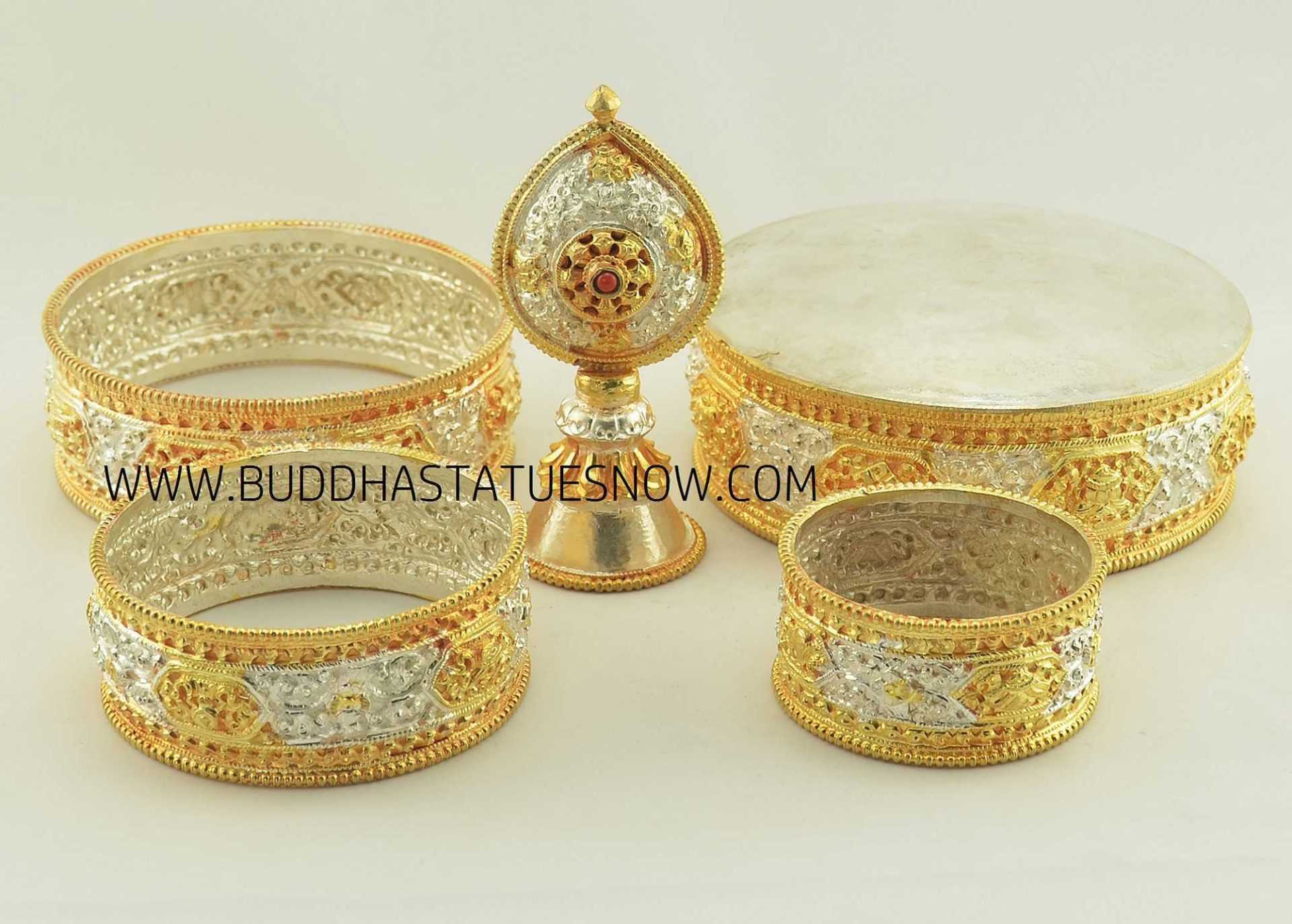
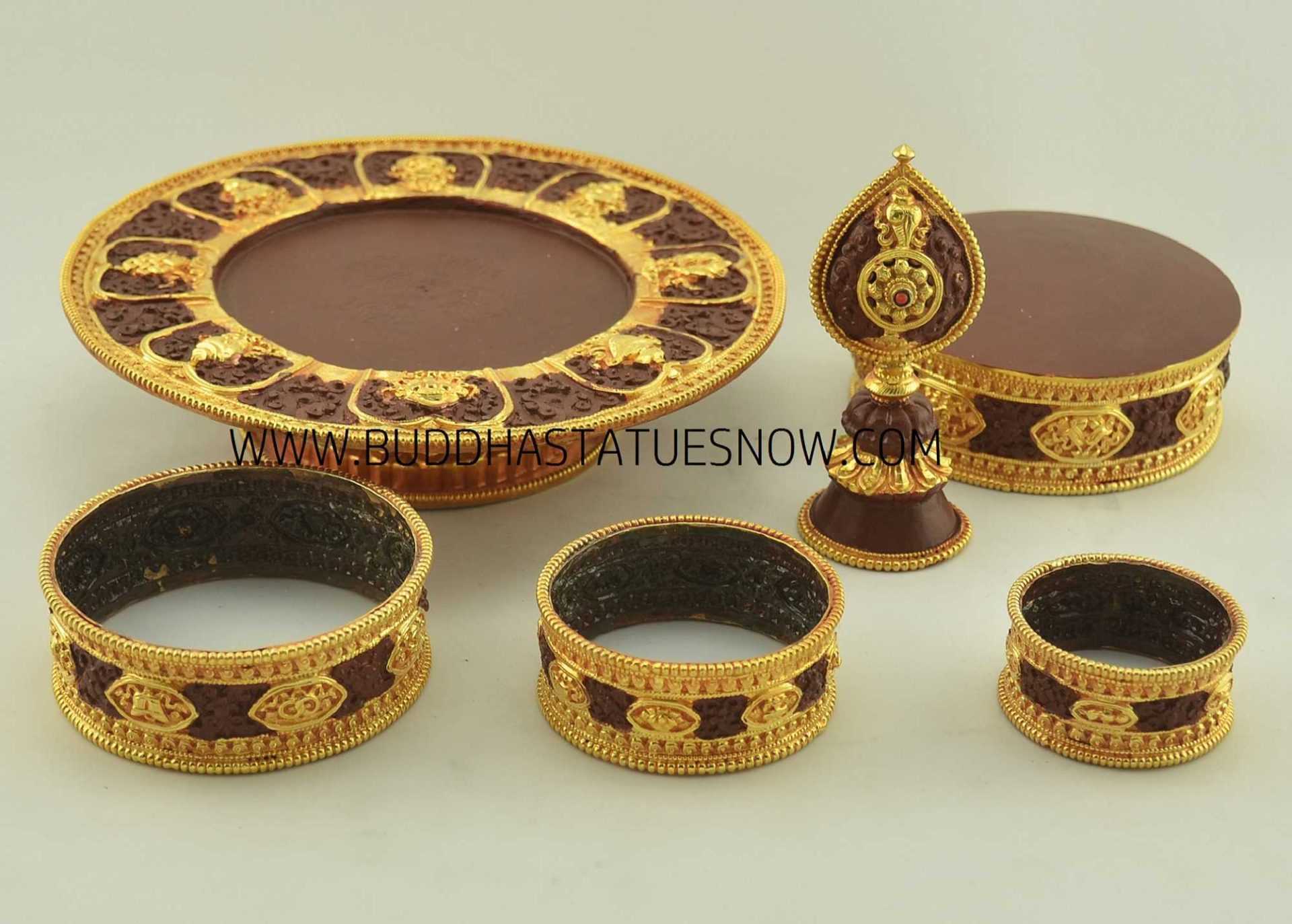
Our Tibetan mandala sets are hand carved in Patan, Nepal, and embellished with semi-precious stones. Sizes run from 9 to 11 inches, and finishes include white metal with copper or brass rings, gold and silver plate, and oxidized copper with 24K gold gilding. Some Tibetan mandala sets include the base stand ring and some are supplied without it, so check the product title before choosing. Every set is engraved by hand, and no two are identical.
Browse the complete range of Tibetan mandala sets below, see the wider selection of Tibetan ritual items, or view the offering bowls used in daily practice alongside them.
Showing 1–12 of 18 resultsSorted by popularity
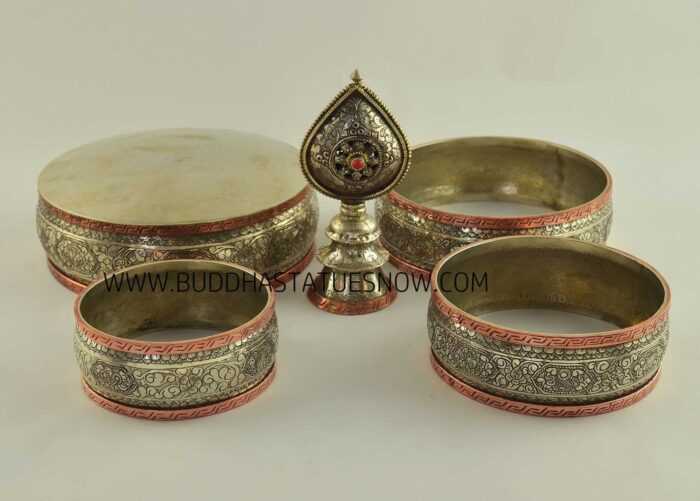
White Metal Mandala Set 10.25″ | Copper Trim and Dharma Wheel Finial
Original price was: $369.00.$249.00Current price is: $249.00.Add to Cart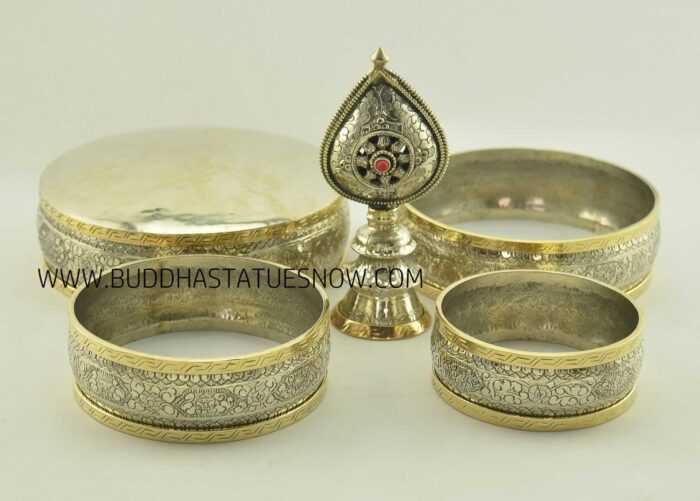
Handmade Mandala Offering Set 10.5″ | White Metal, Brass Borders
Original price was: $399.00.$279.00Current price is: $279.00.Add to Cart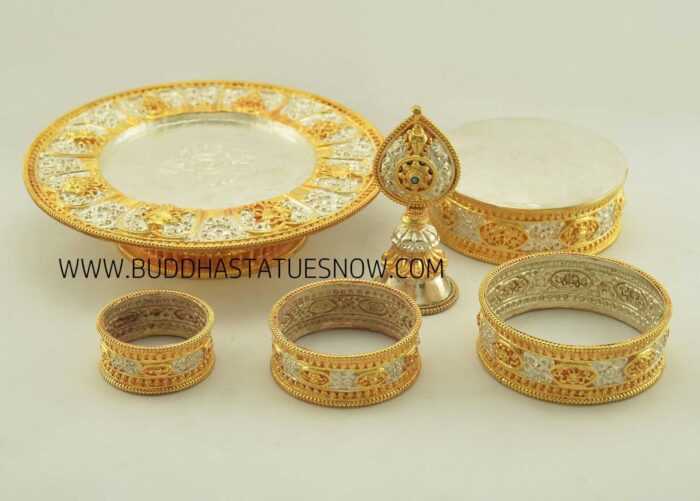
Tibetan Mandala Ritual Set 10″ | Gold & Silver | Auspicious Symbols
Original price was: $659.00.$399.00Current price is: $399.00.Add to Cart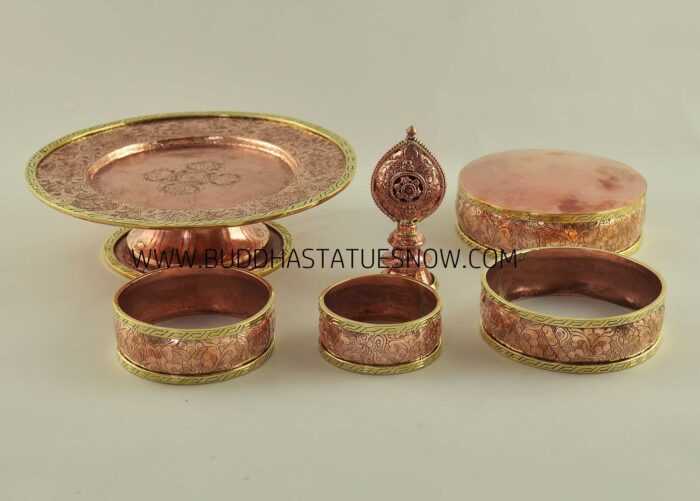
Mandala Offering Set 9.5″ | Copper Rings, Brass Borders with Stand
Original price was: $329.00.$219.00Current price is: $219.00.Add to Cart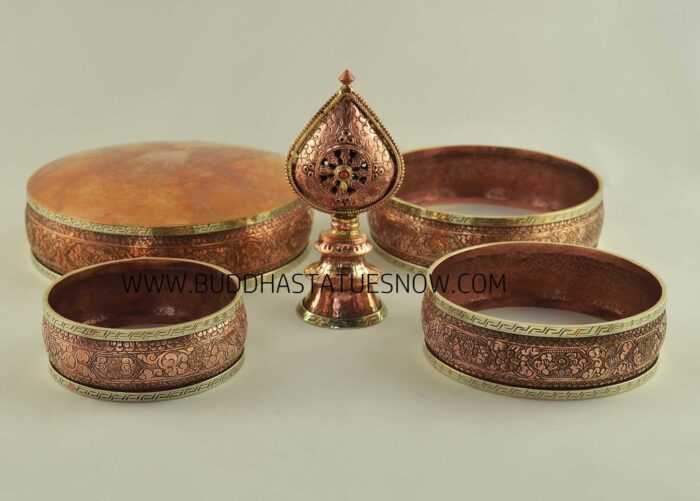
White Metal Mandala Set 11″ | Handmade Tibetan Mandala Offering Set
Original price was: $359.00.$229.00Current price is: $229.00.Add to Cart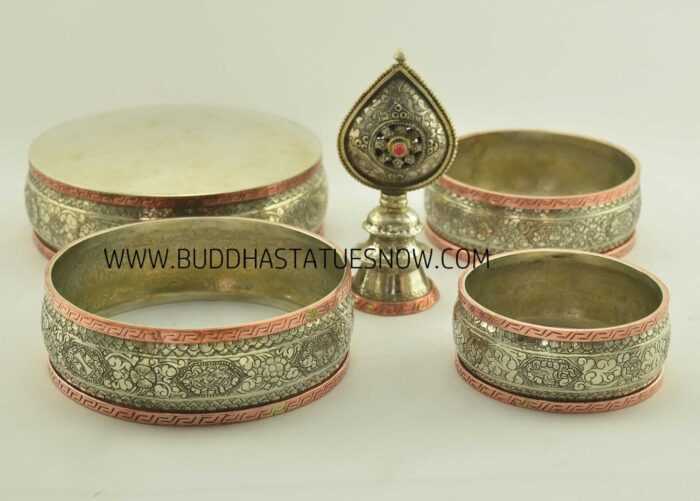
White Metal Tibetan Mandala Set 11″ | Copper Alloy Offering Rings
Original price was: $379.00.$259.00Current price is: $259.00.Add to Cart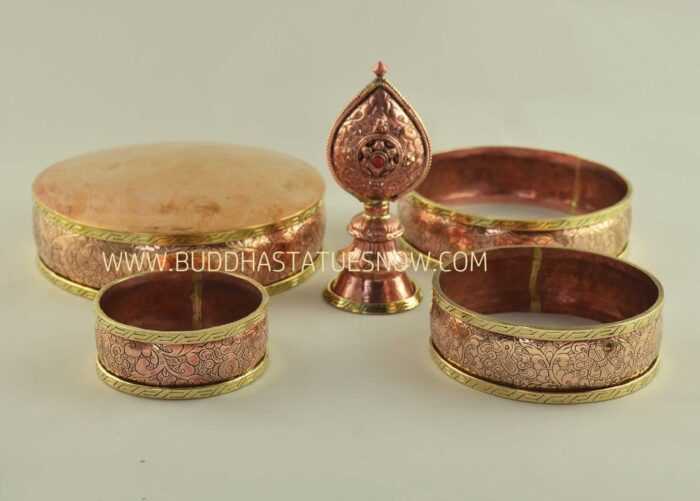
Tibetan Mandala Offering Set 10.25″ | Copper Rings, Brass Borders
Original price was: $299.00.$179.00Current price is: $179.00.Add to Cart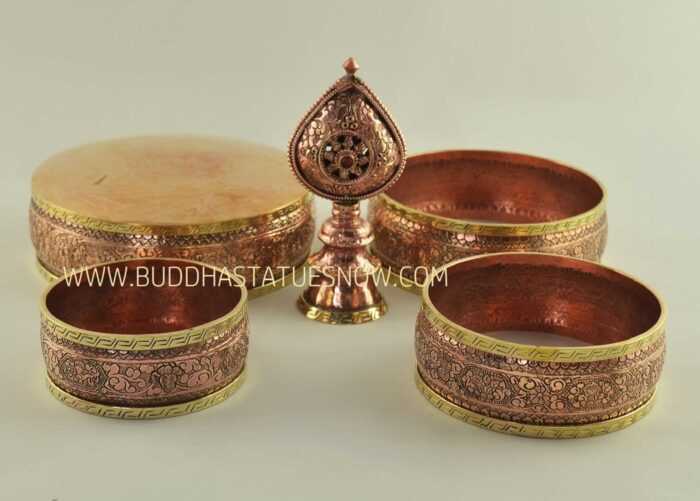
Tibetan Mandala Offering Set 10.25″ | Handmade Copper Alloy, Brass Rings
Original price was: $369.00.$239.00Current price is: $239.00.Add to Cart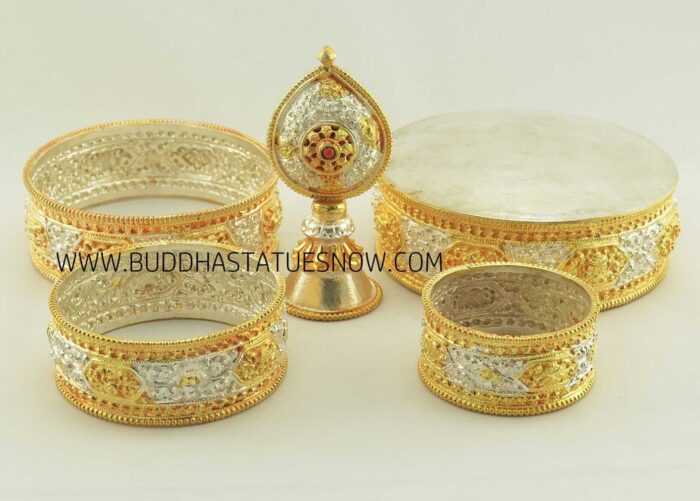
Handmade Tibetan Mandala Set 10″ | Gold & Silver, Gemstones
Original price was: $399.00.$269.00Current price is: $269.00.Add to Cart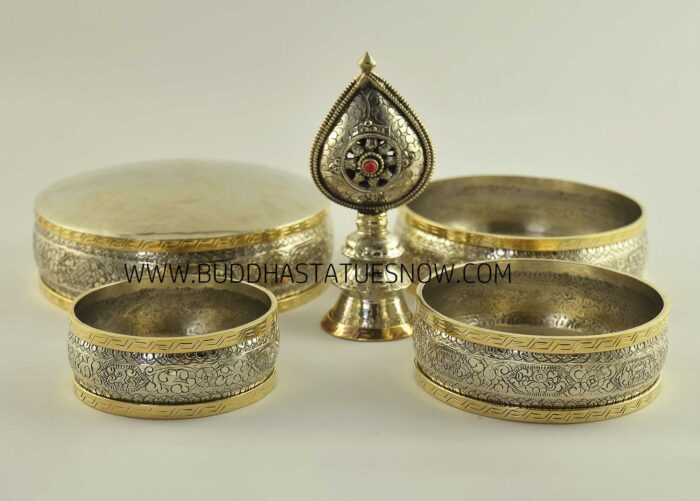
Hand Carved Mandala Set 9.75″ | White Metal, Brass | Patan, Nepal
Original price was: $399.00.$269.00Current price is: $269.00.Add to Cart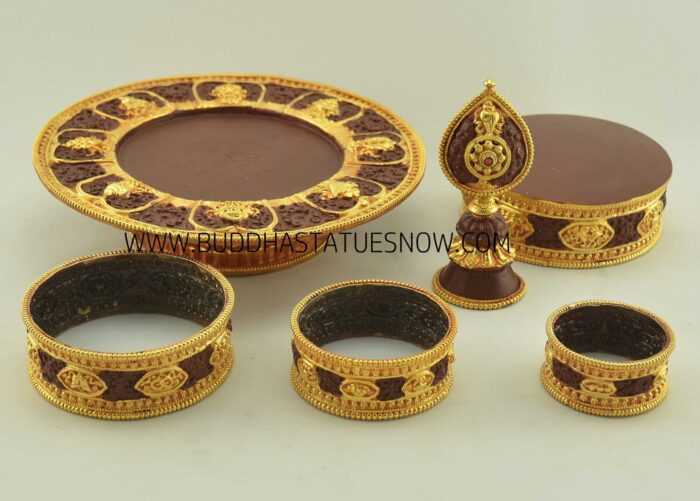
Antiquated Tibetan Mandala Set 9.5″ | Gold Plated, Oxidized Copper
Original price was: $599.00.$399.00Current price is: $399.00.Add to Cart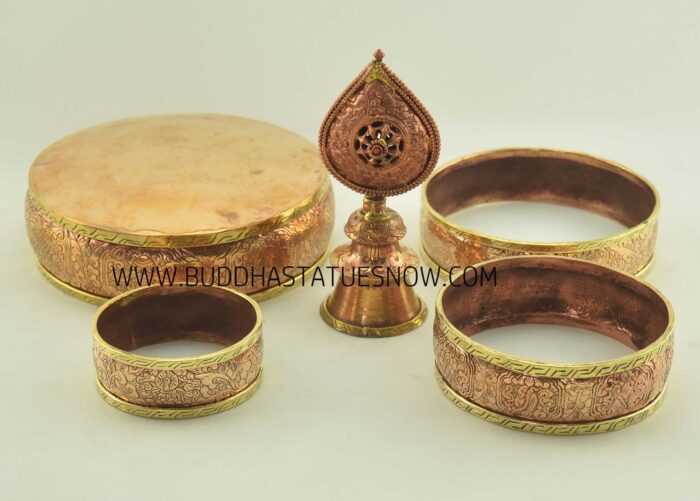
Finely Engraved Mandala Set 9″ | Copper Alloy with Brass Rings
Original price was: $259.00.$169.00Current price is: $169.00.Add to Cart





The Mandala Offering Practice
The mandala offering asks the practitioner to give away everything - not a portion, not a symbol of a portion, but the whole universe with all its wealth and all its pleasures - in exchange for the enlightenment of all beings. It is performed by assembling the set ring by ring, filling each layer with rice and precious substances, placing Mount Meru at the apex, and then raising the completed mandala over the head while reciting the mandala prayers.
The practice appears in the preliminary practices of most Tibetan lineages, where it is commonly repeated a hundred thousand times, and it is done before meditation rather than instead of it. Its purpose is to loosen attachment by rehearsing generosity at the largest possible scale, which is why the offering is of everything rather than something.
Materials, Sizes and Finishes
Our mandala sets are hand carved in Patan, in the Kathmandu Valley, and embellished with semi-precious stones. Sizes run from 9 to 11 inches. Finishes include white metal with copper or brass rings, gold and silver plate, and oxidized copper with 24K gold gilding, and the engraving on the finer sets covers the full outer surface of every ring rather than a decorative band alone.
Because each set is assembled and dismantled every time it is used, the fit of the rings matters as much as the carving, and both are worked by hand. Check the product title to see whether a set includes the base stand ring. Browse the full range of Tibetan ritual items, or see the offering bowls used in daily practice alongside the mandala.
Frequently Asked Questions
What is a Tibetan mandala set used for?
It is used for the mandala offering, a practice in which the devotee symbolically offers the entire universe - every world it contains and everything of value in it - before beginning meditation. The set is assembled ring by ring, filled with rice and precious substances, then raised over the head while the mandala prayers are recited. The practice is undertaken to accumulate merit and to weaken attachment, and it is often performed many thousands of times as part of the preliminary practices.
What are the rings for?
The rings build the universe upward in layers. Each is placed on top of the last and filled with rice, which represents the wealth of the world being offered, together with small precious items such as coins, jewels or semi-precious stones. The structure follows Buddhist cosmology, with the continents and oceans arranged around the central axis, and it is dismantled and rebuilt each time the practice is performed.
What is Mount Meru?
Mount Meru is the axis at the centre of the Buddhist cosmos, the great mountain around which the continents, sun and moon are arranged. On a mandala set it is represented by the finial at the apex, placed last when the offering is assembled. Because it stands at the centre of everything being offered, it is the piece that completes the universe the practitioner is giving away.
What is the difference between sets with and without a base stand ring?
The base stand ring is an additional ring that raises and supports the assembled mandala, giving it a more substantial footing on the altar. Some of our sets include it and some are supplied without it, and the product title states which. If you already own a stand, or intend to place the mandala directly on a shrine surface, a set without the base ring is perfectly usable - it simply sits lower.
Which mandala set should I choose?
Devotees are traditionally encouraged to buy the finest set they can reasonably afford, because the merit of an offering is understood to reflect how genuine the sacrifice behind it is - a set chosen carefully rather than cheaply is itself part of the practice. Beyond that, consider size relative to your altar and how the set will be handled: heavier sets with denser carving are favoured for daily practice and in Dharma centres, while smaller sets suit a personal shrine.