
Avalokiteshvara Statues | Chenrezig — Bodhisattva of Compassion
Explore our collection of authentic Avalokiteshvara (Chenrezig) statues from Nepal, created by skilled Himalayan artisans using traditional lost wax casting methods. Avalokiteshvara, known in Tibetan Buddhism as Chenrezig, is the Bodhisattva of Infinite Compassion and one of the most revered enlightened figures in Mahayana and Vajrayana Buddhism.
Chenrezig embodies unconditional compassion for all sentient beings and is closely associated with the famous mantra Om Mani Padme Hum. In Tibetan Buddhist iconography, Avalokiteshvara appears in several sacred forms including the peaceful four-armed Chenrezig and the powerful thousand-armed Avalokiteshvara, whose many hands symbolize limitless compassionate activity. For feminine expressions of compassionate enlightened activity, explore our Green Tara statues.
Many of our Avalokiteshvara statues are handcrafted in copper, carefully detailed by hand, and traditionally finished using genuine 24K gold fire gilding. These sacred works reflect the master craftsmanship of Patan and the Kathmandu Valley, where Nepali artisans have supplied Buddhist monasteries, temples, Dharma centers, practitioners, and collectors for generations.
Choose a handmade Avalokiteshvara or Chenrezig statue for a meditation altar, shrine room, compassion practice, Dharma center, temple, or fine Himalayan Buddhist art collection.
Related Bodhisattva Statues:
Green Tara Statues | Vajrasattva Statues | Manjushri Statues | Vajrapani Statues | White Tara Statues
Showing 1–12 of 31 resultsSorted by popularity
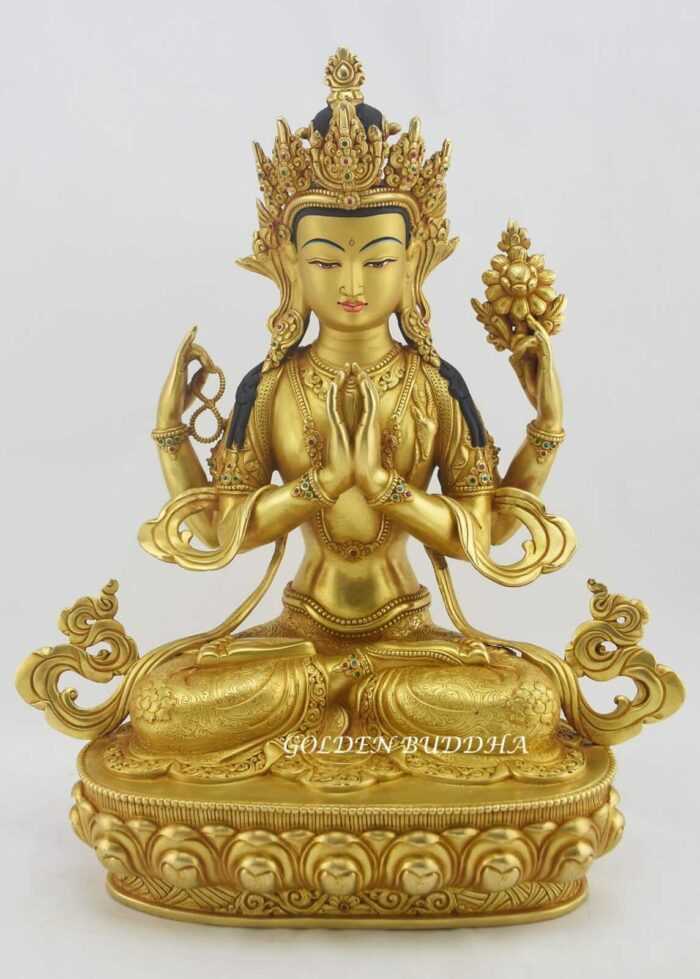
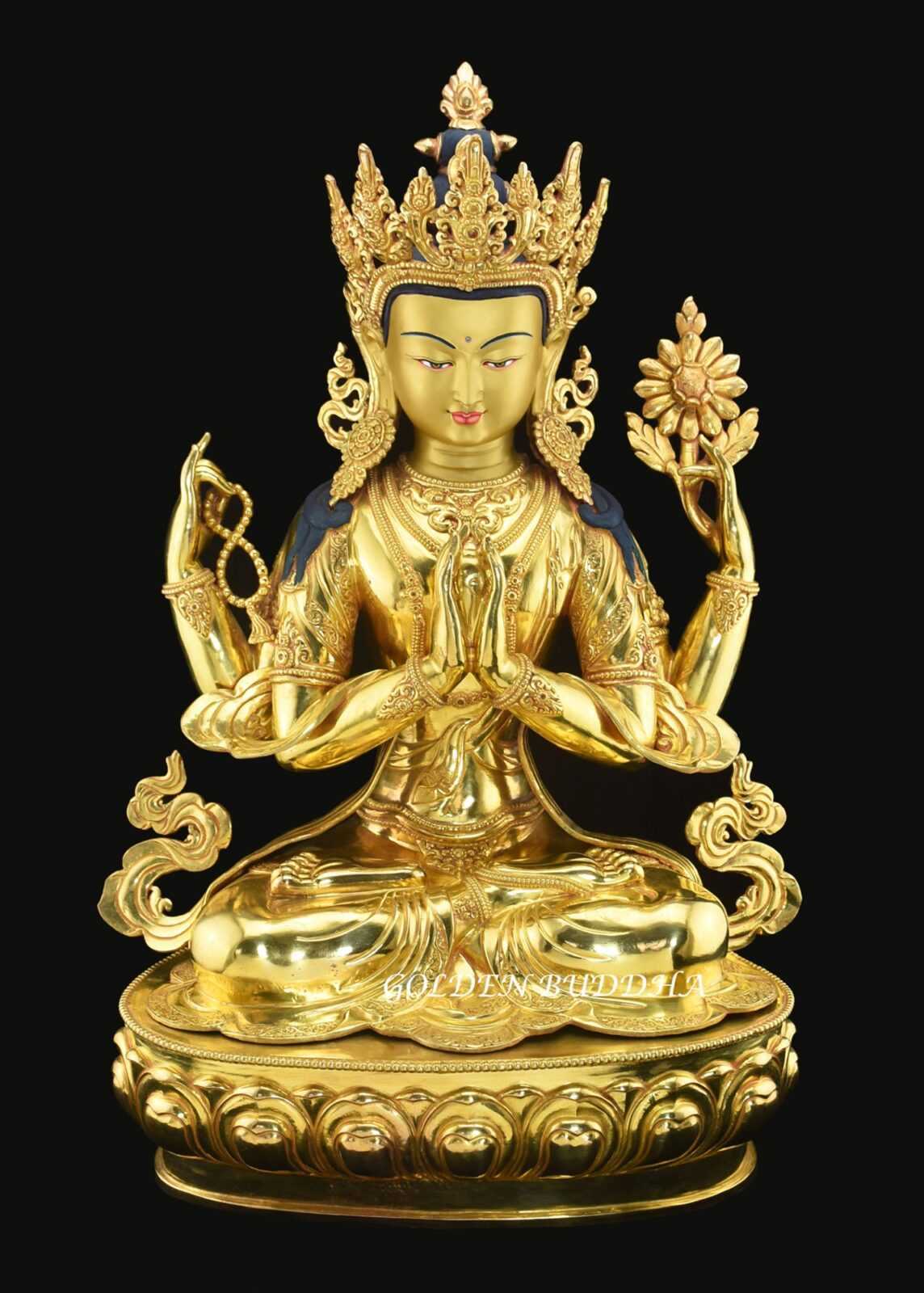
Masterpiece Chenrezig Sculpture | 13.75″ | 24K Gold | Avalokiteshvara
Original price was: $5,799.00.$3,899.00Current price is: $3,899.00.Add to Cart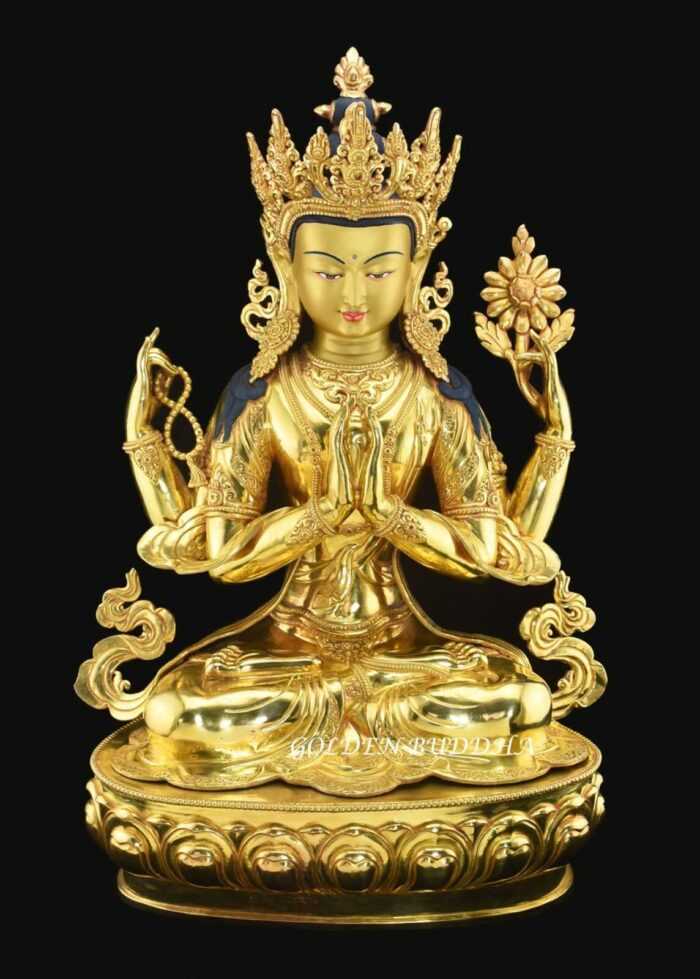
Lokeshvara Statue | 24.5″ | Chenrezig, 24K Gold | Authentic Nepal
Original price was: $8,499.00.$6,399.00Current price is: $6,399.00.Add to Cart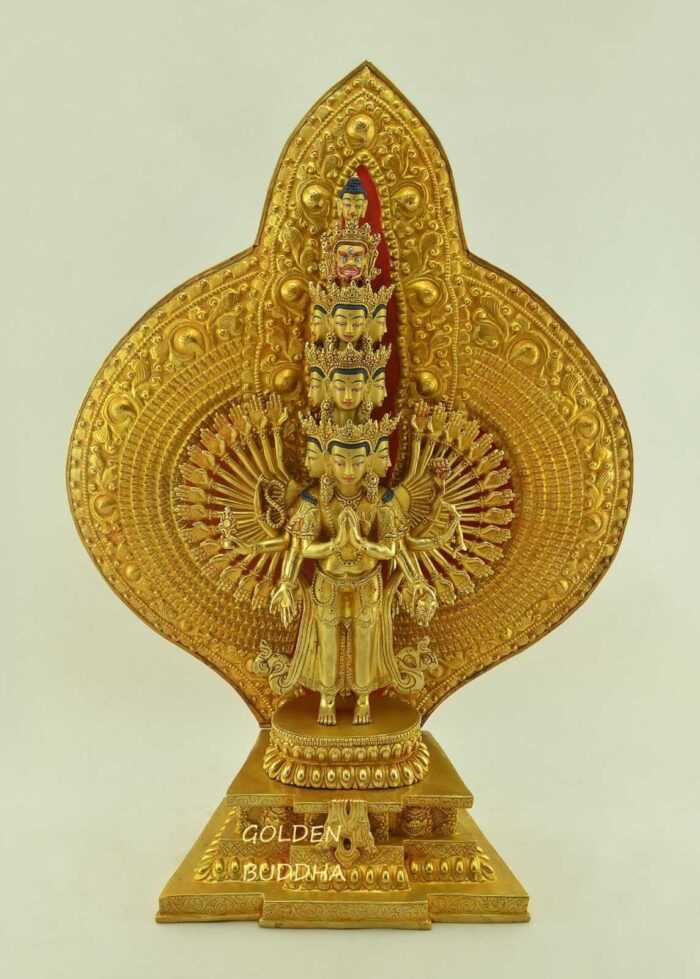
1000-Armed Avalokiteshvara Sculpture | 20-inch Gold Gilded Chenrezig
Original price was: $3,499.00.$2,599.00Current price is: $2,599.00.Add to Cart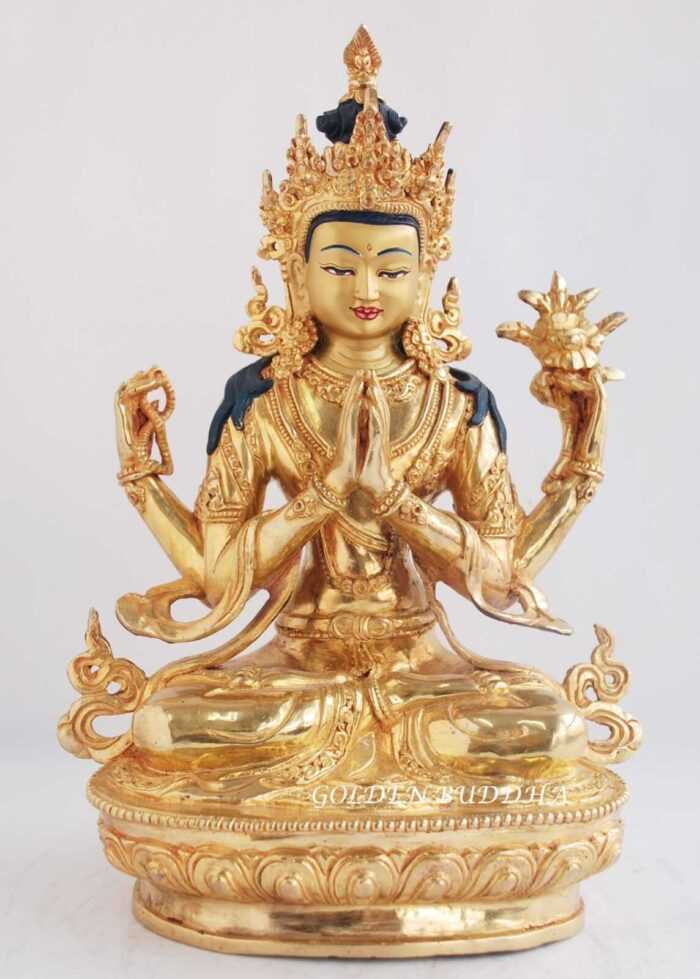
Four-Armed Avalokiteshvara Statue | 12.75-Inch 24K Gold | Chenrezig
Original price was: $1,969.00.$1,499.00Current price is: $1,499.00.Add to Cart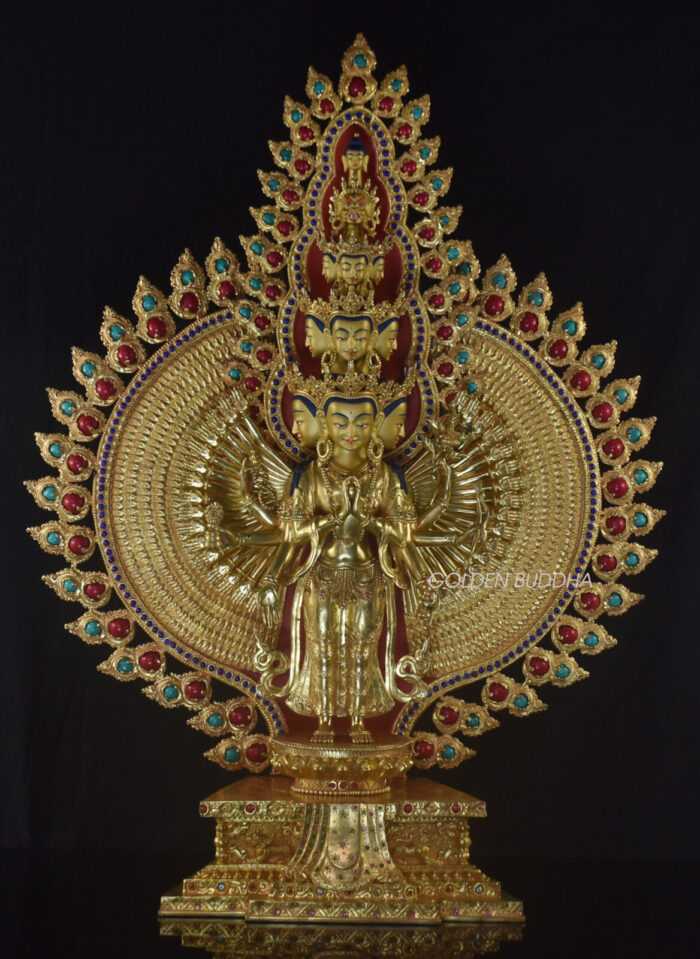
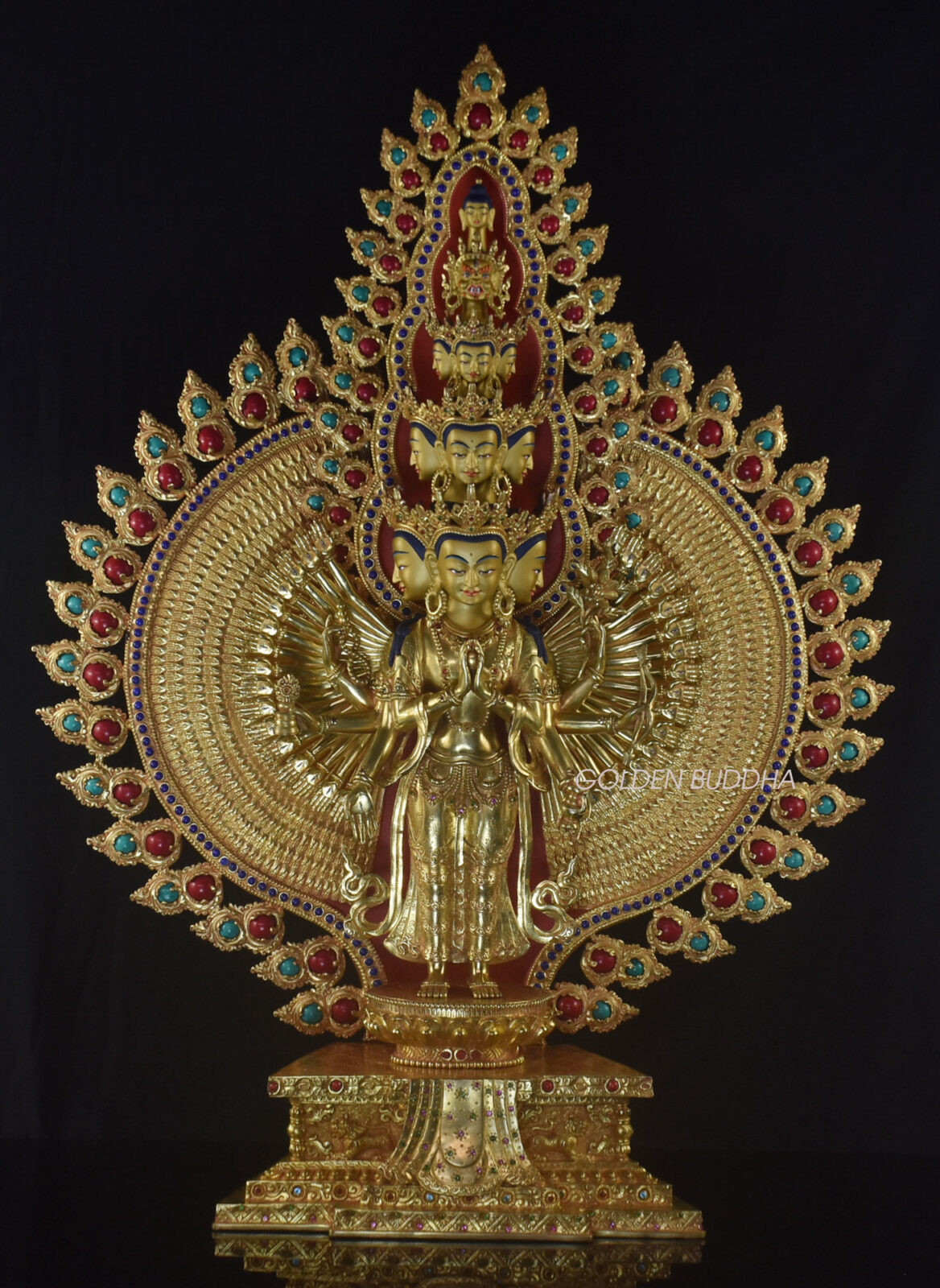
Masterpiece 1000-Armed Avalokiteshvara Statue | 27-inch 24K Gold with Gemstones
Original price was: $10,999.00.$7,799.00Current price is: $7,799.00.Add to Cart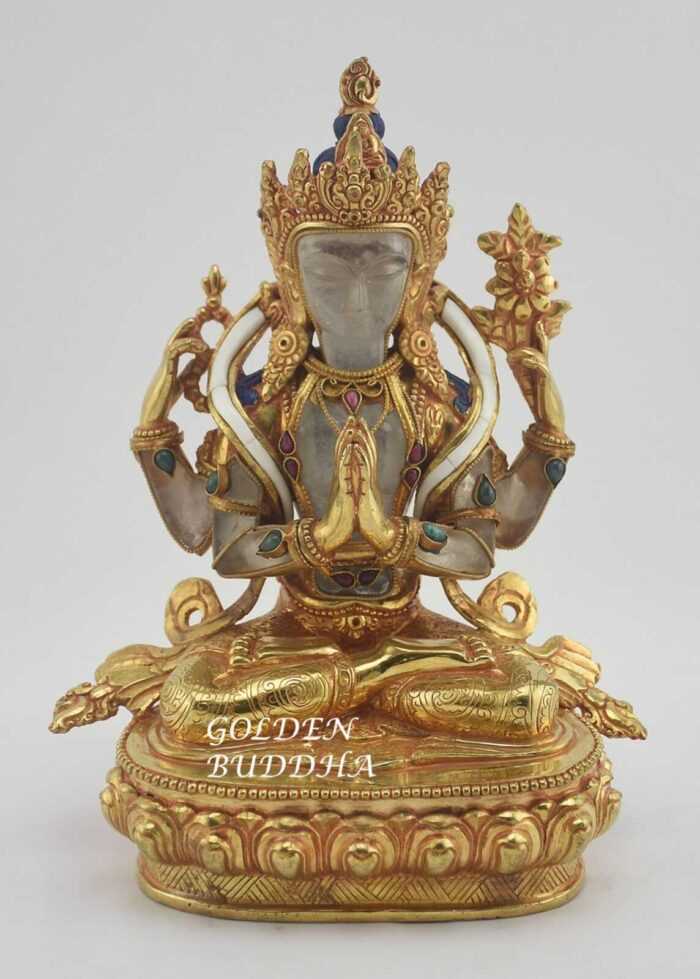
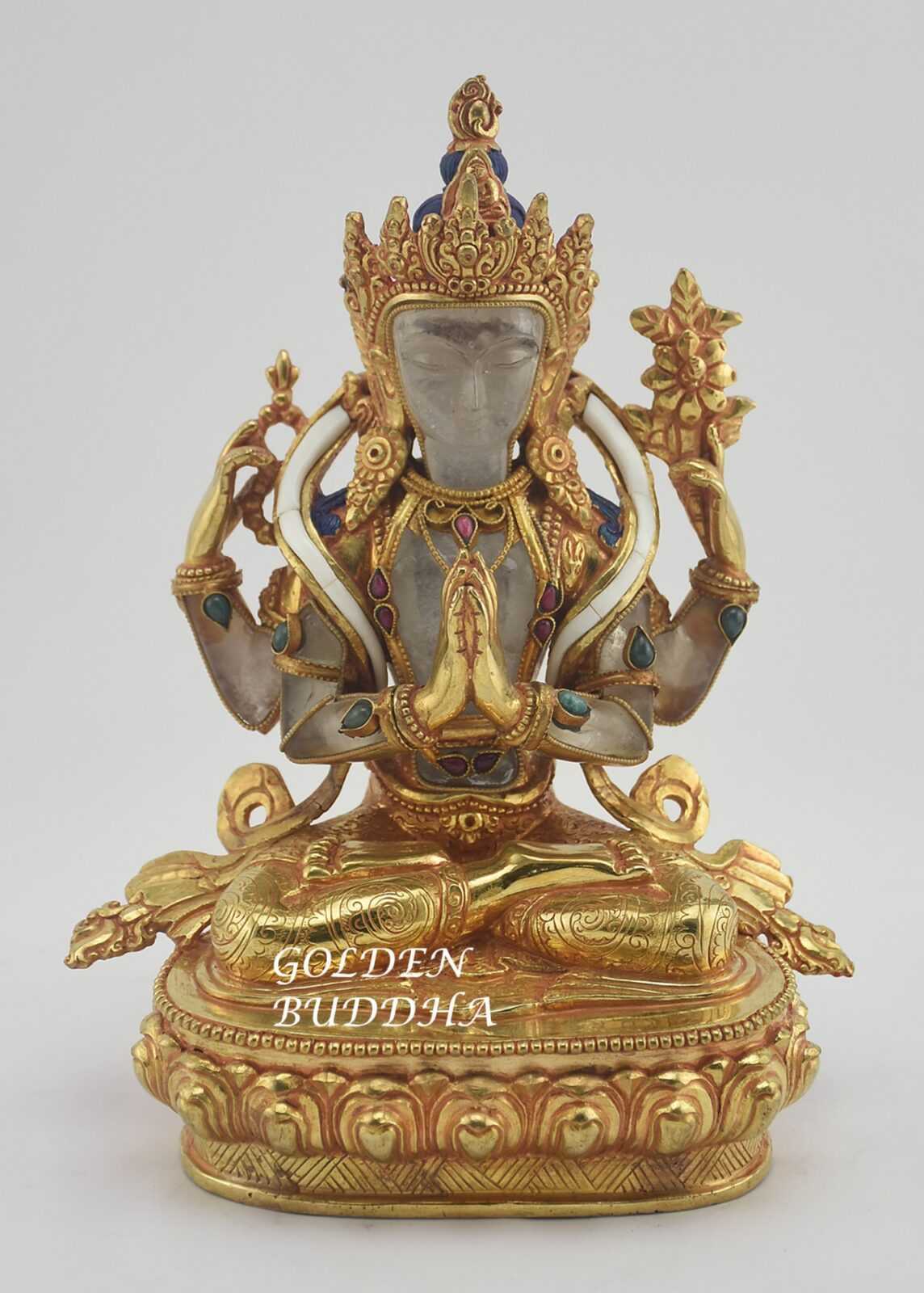
Tibetan Avalokiteshvara Sculpture | 8.75″ | 24K Gold & Crystal | Nepal
Original price was: $1,879.00.$1,499.00Current price is: $1,499.00.Add to Cart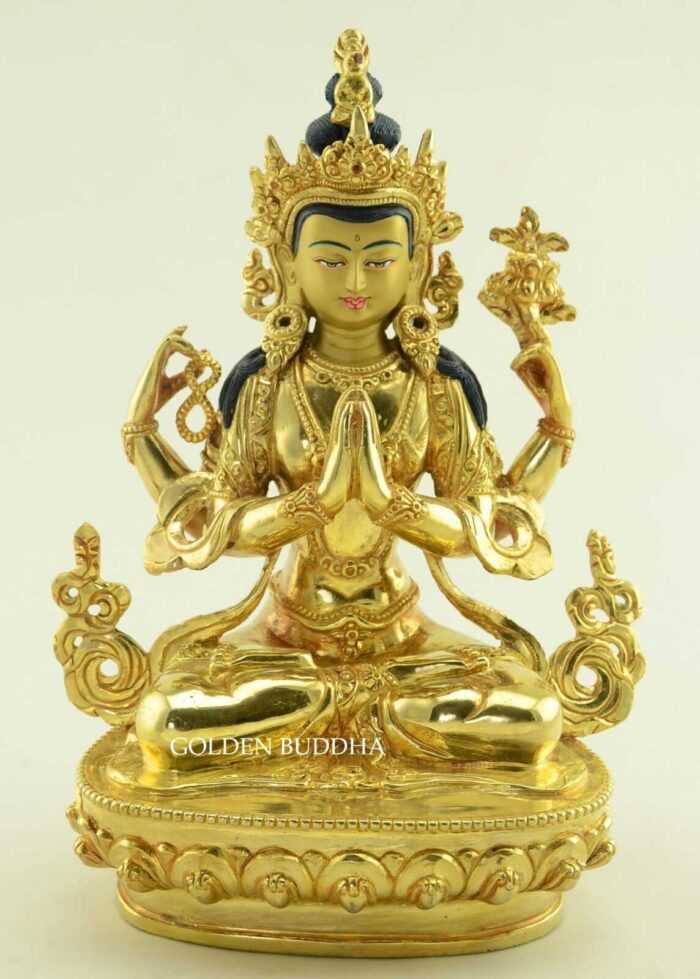
Beautiful Chenrezig Statue | 9-Inch 24K Gold | Four-Armed Avalokiteshvara
Original price was: $1,499.00.$999.00Current price is: $999.00.Add to Cart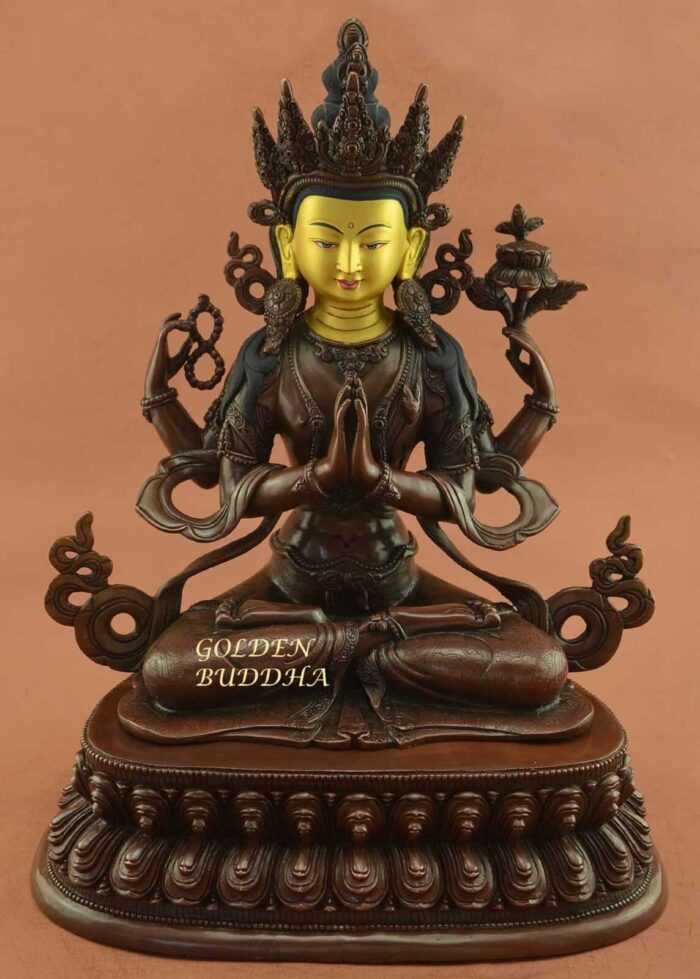
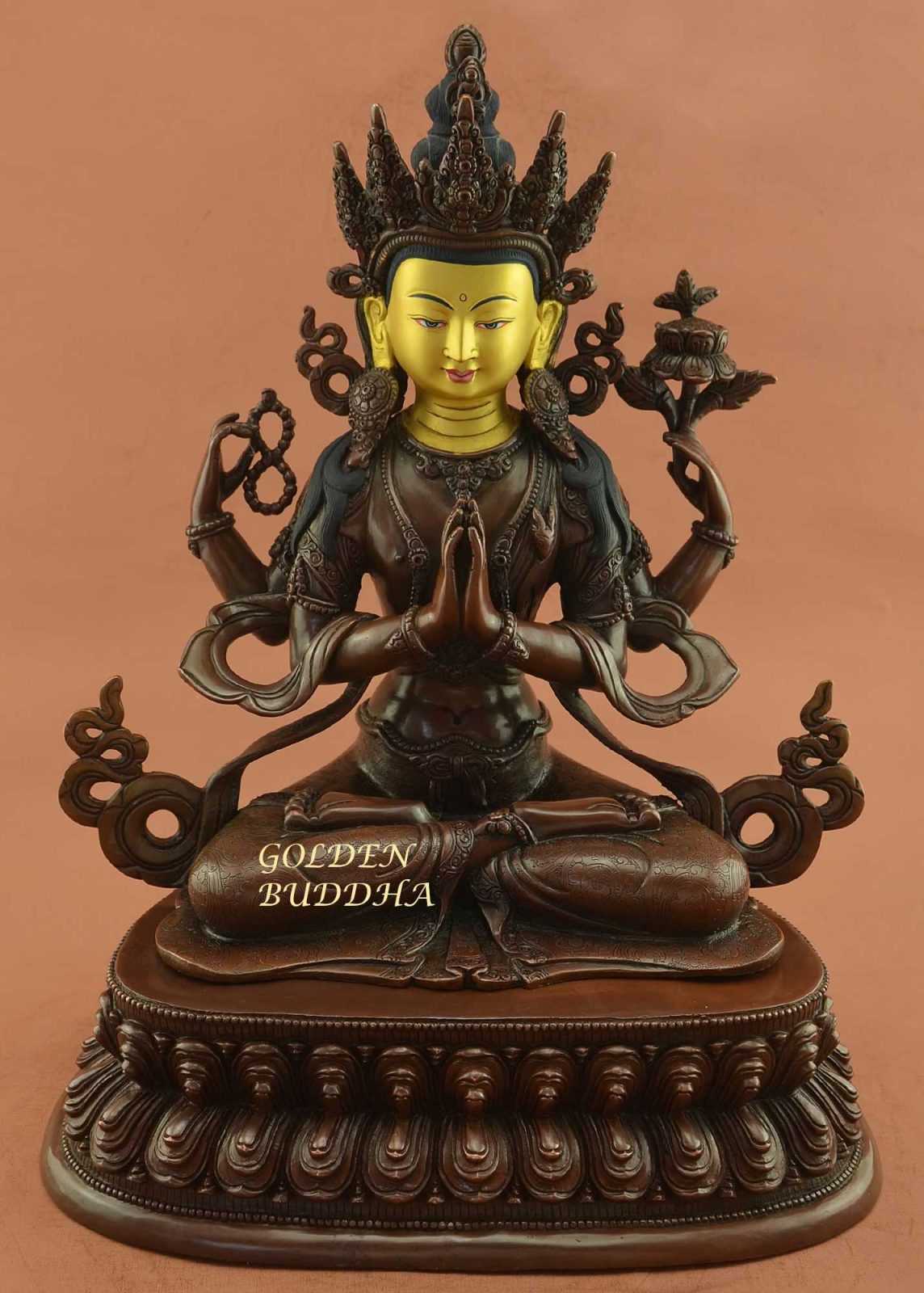
Four-Armed Chenrezig Statue | 15.25″ | Antiquated, Gold Face | Authentic Nepal
Original price was: $2,599.00.$1,699.00Current price is: $1,699.00.Add to Cart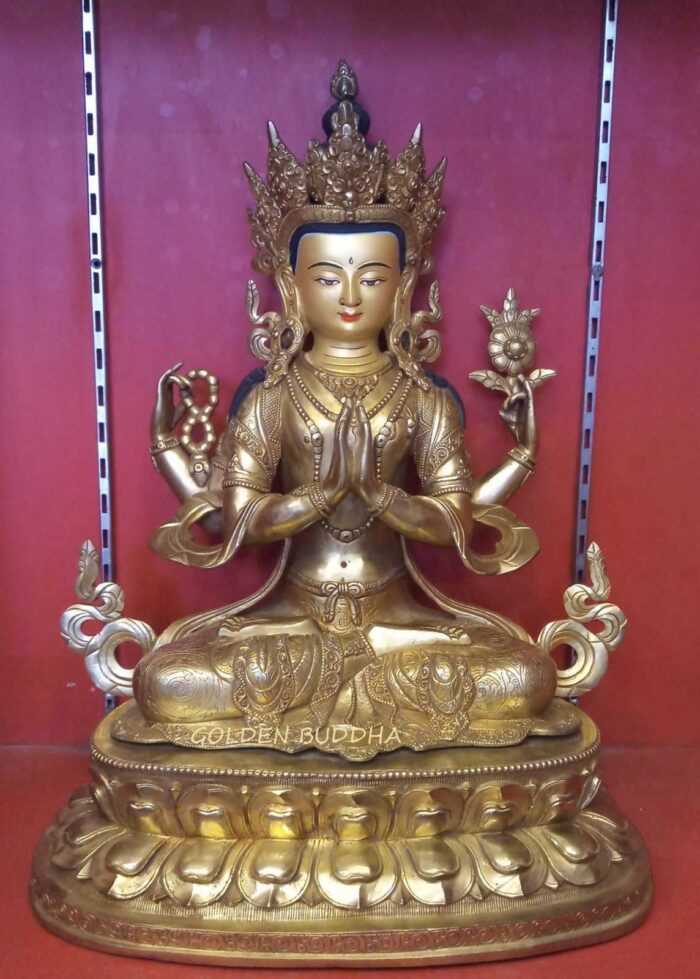
Handmade Nepali Chenrezig Statue | 18-inch | 24K Gold Gilded
Original price was: $3,299.00.$2,599.00Current price is: $2,599.00.Add to Cart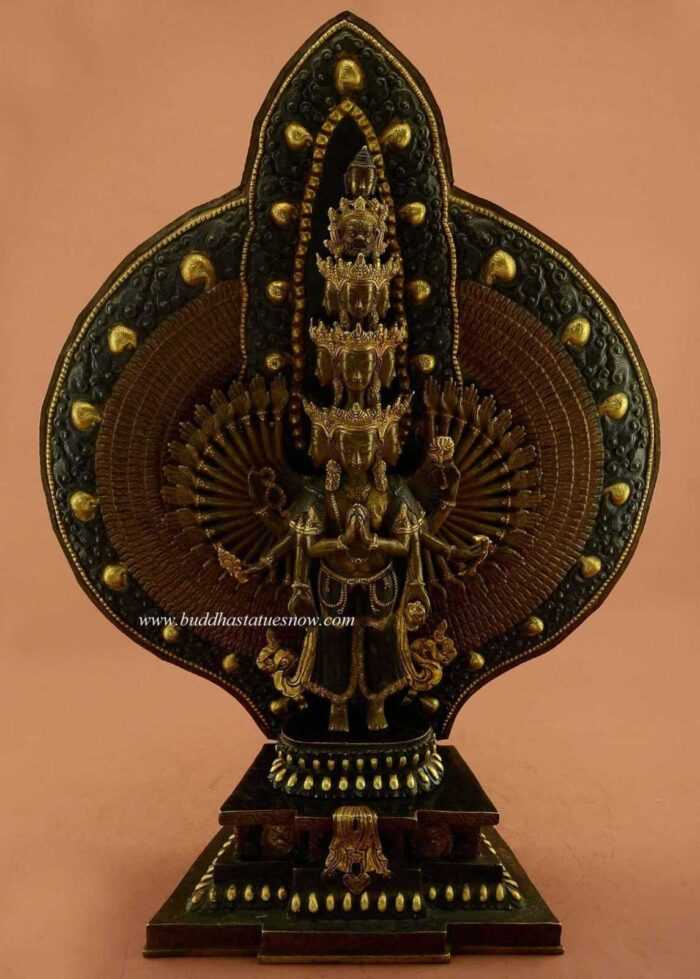
1000 Armed Avalokiteshvara Statue | 20.25″ | Oxidized Copper | Nepal
Original price was: $2,799.00.$1,999.00Current price is: $1,999.00.Add to Cart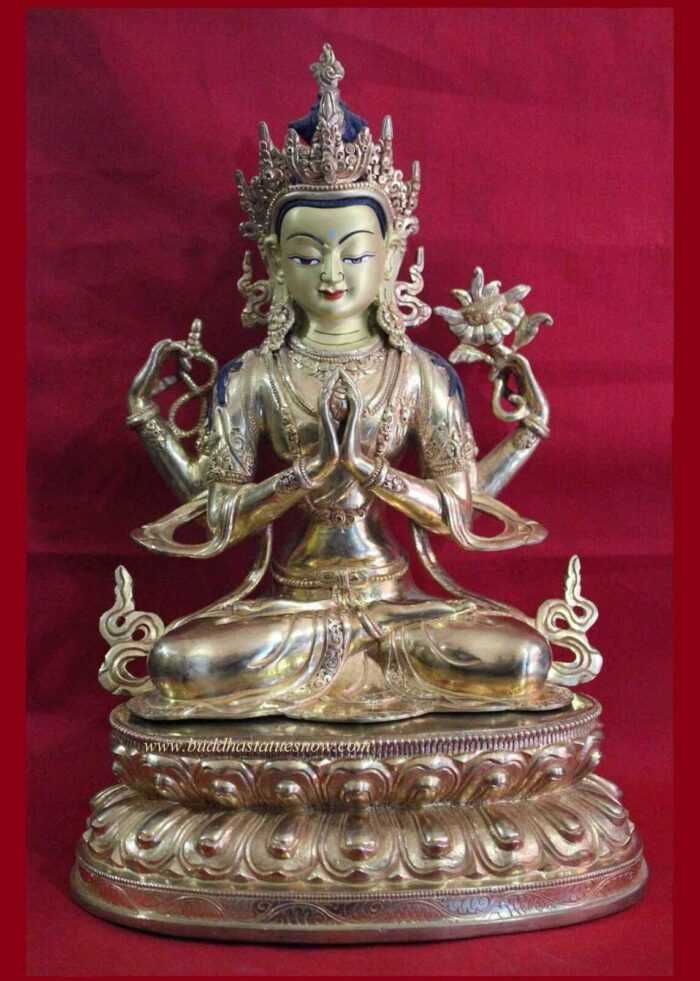
Fire Gilded Chenrezig Statue | 8″ Four-Armed Avalokiteshvara | 24K Gold
Original price was: $1,399.00.$899.00Current price is: $899.00.Add to Cart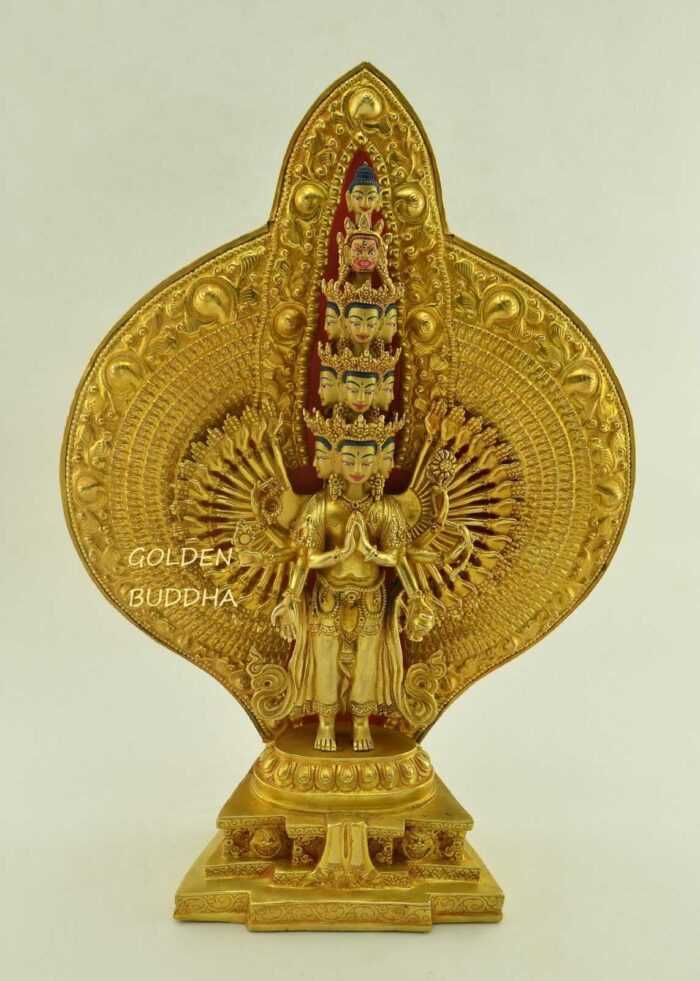
Thousand Armed Avalokiteshvara Statue | 14.5″ 24K Gold Chenrezig
Original price was: $2,499.00.$1,699.00Current price is: $1,699.00.Add to Cart





Avalokiteshvara (Chenrezig) Statue Symbolism and Meaning
Avalokiteshvara, known in Tibetan as Chenrezig, is the Bodhisattva of Infinite Compassion and one of the most revered enlightened figures in Mahayana and Vajrayana Buddhism. He embodies the active expression of compassion for all sentient beings, and his practice is central to Tibetan Buddhism, closely associated with the mantra Om Mani Padme Hum, recited by practitioners as a means of cultivating compassion.
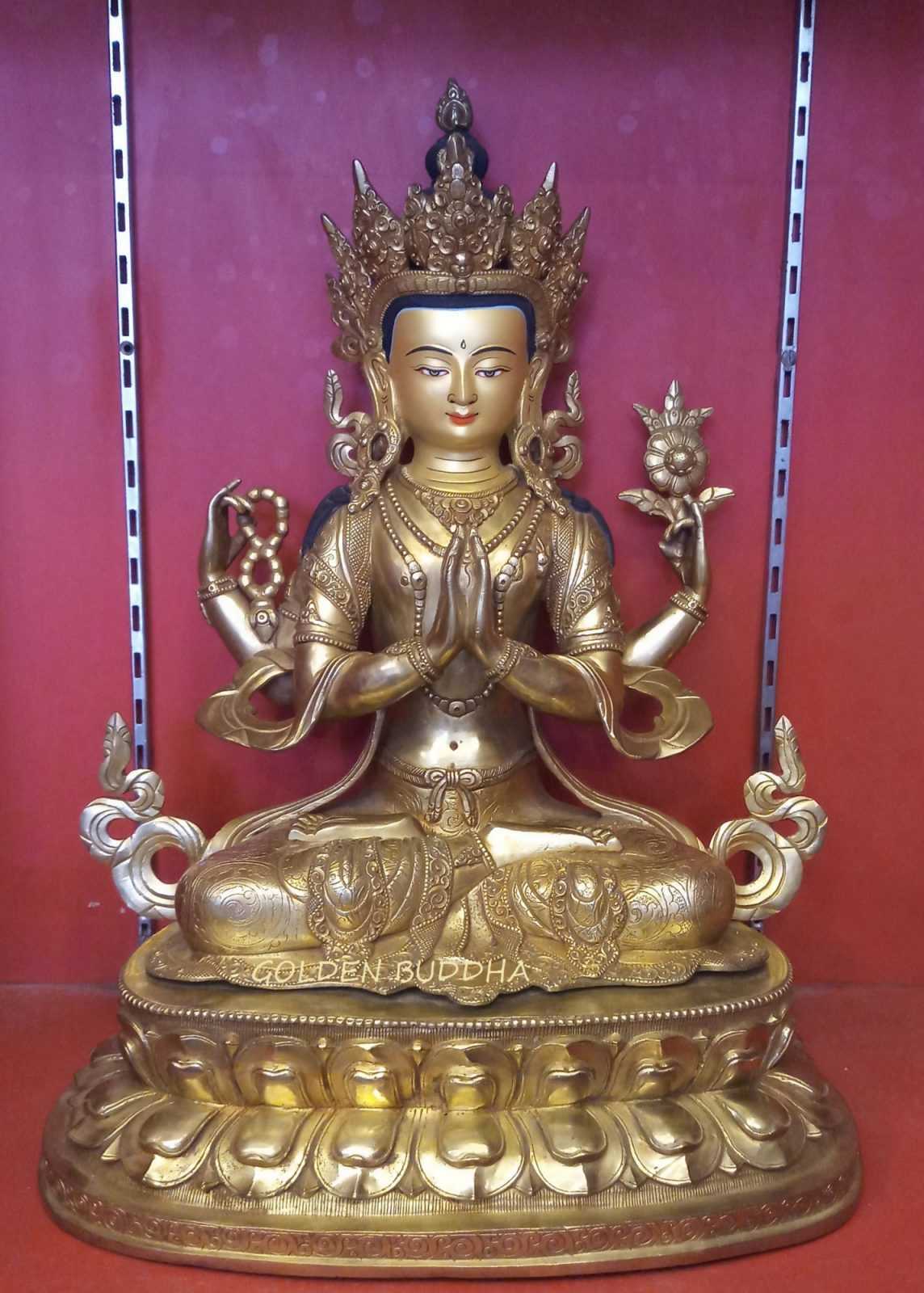
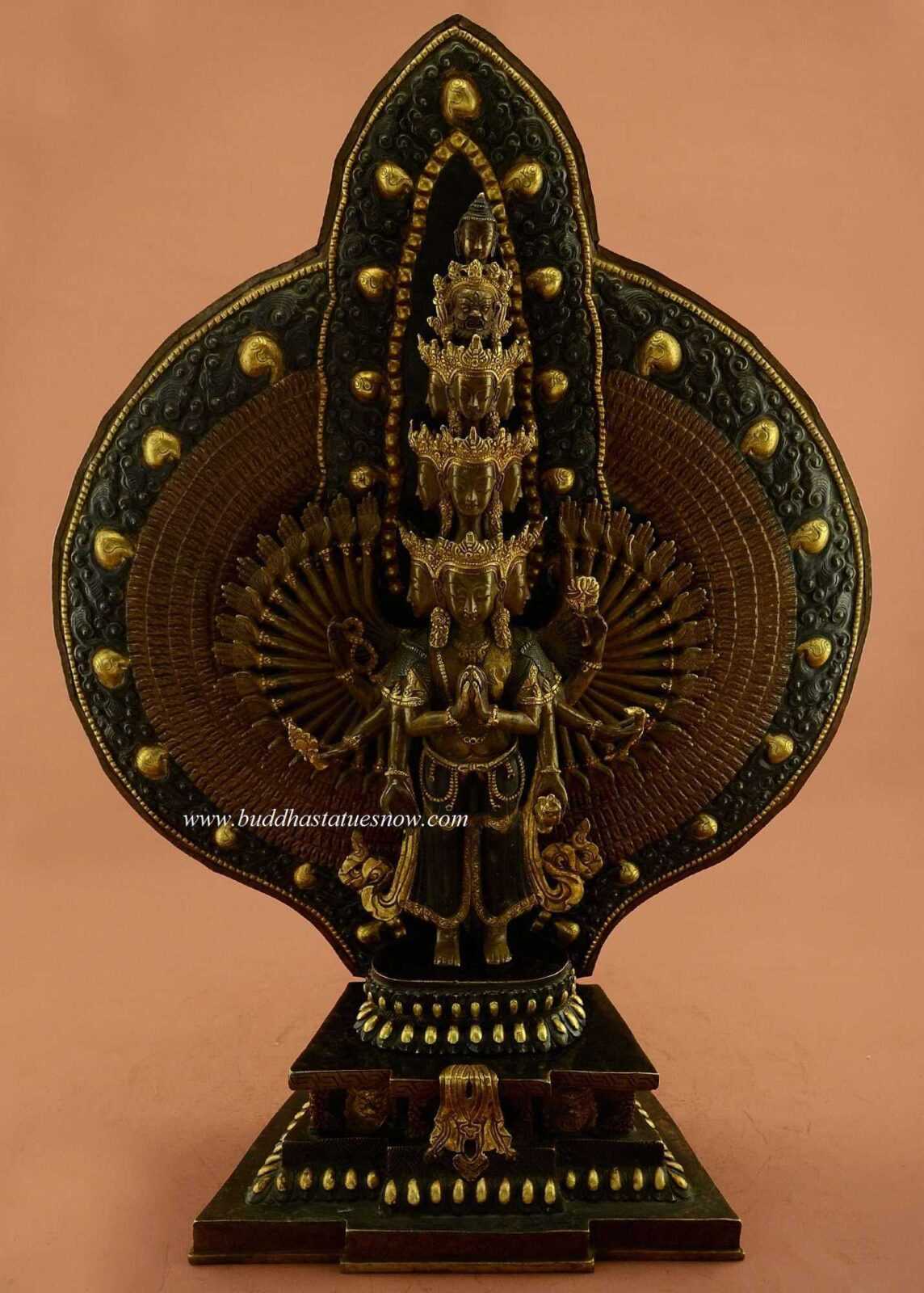
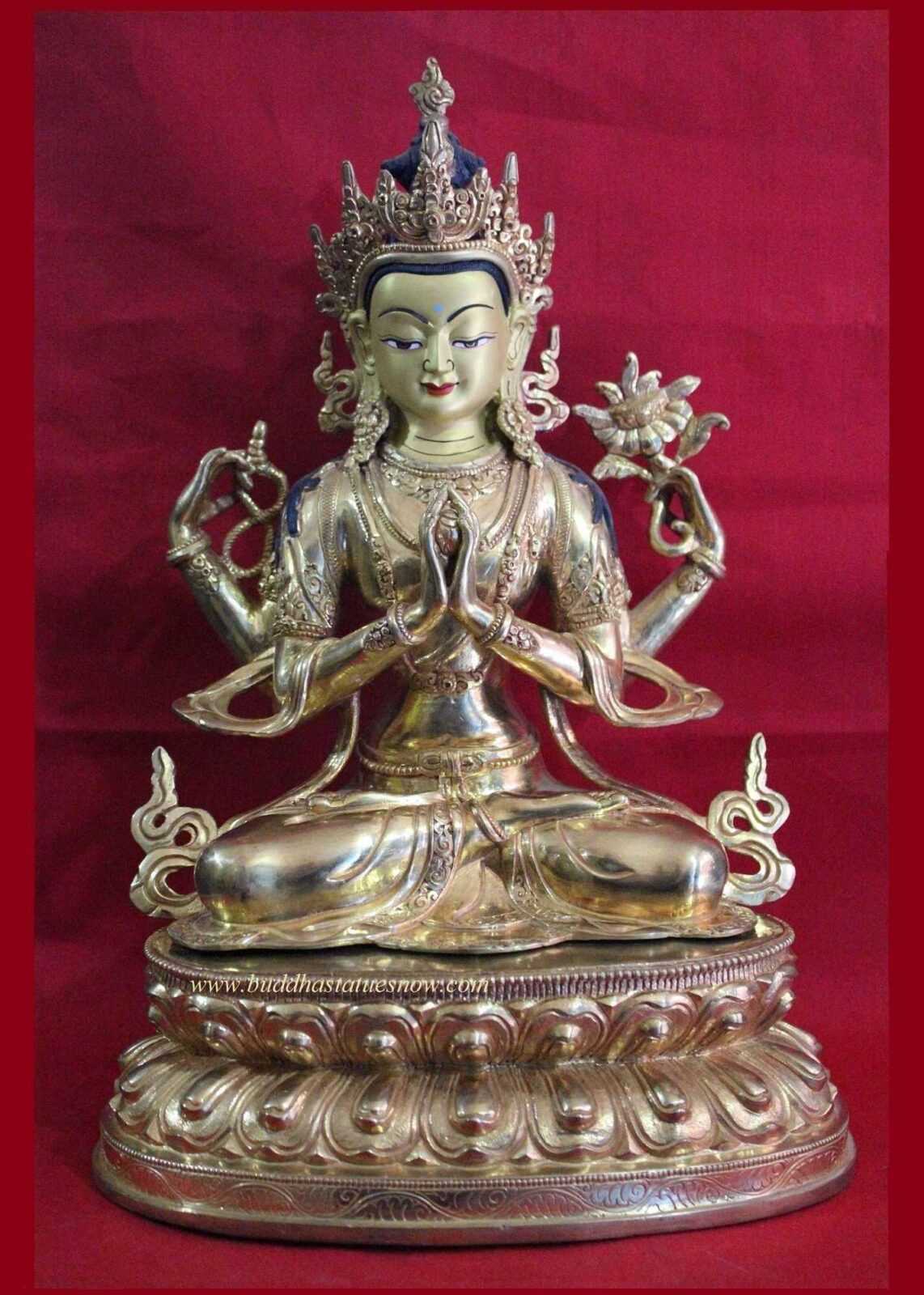
Avalokiteshvara appears in many forms. The peaceful four-armed Chenrezig, sometimes called Shadakshari, is typically shown with two hands joined at the heart holding a wish-fulfilling jewel, and the other two hands holding a crystal mala and a lotus. The thousand-armed, eleven-faced form represents the same Bodhisattva extending compassionate activity in every direction, with eyes often shown in the palms of each hand, symbolizing awareness of suffering wherever it occurs. Other names such as Padmapani ("lotus-bearer") and Lokeshvara ("lord of the world") refer to related forms and aspects of the same figure. For a broader look at these symbols, see our guides to Buddha statue meaning and the Buddhist pantheon.
Materials, Sizes, and Finishes
Our Avalokiteshvara statues are handcrafted in Patan, in the Kathmandu Valley, using the traditional lost wax casting method practiced by Newari artisans for generations. Each piece begins as a wax model, cast in copper and then hand-finished, with crowns, jewelry, multiple arms and faces, and robe details carved or chased by hand, so no two statues are ever exactly alike.
Finishes vary by piece: many statues are fully gold gilded using traditional fire gilding, where 24K gold is fused to the copper surface for a durable, rich finish; some feature crystal bodies set with semi-precious stones for a particularly luminous appearance; and others are left with a natural oxidized or antiqued copper finish, often with gold face painting, for a more understated, aged look.
Sizes in our collection range from compact statues around 8-9 inches, suitable for a small altar or travel shrine, up to large masterpiece pieces of 20-27 inches, including elaborate thousand-armed forms, intended as a centerpiece for a shrine room or Dharma center.
Frequently Asked Questions
What does Avalokiteshvara (Chenrezig) represent?
Avalokiteshvara, known in Tibetan as Chenrezig, is the Bodhisattva of Infinite Compassion and one of the most widely venerated figures in Mahayana and Vajrayana Buddhism. He embodies unconditional compassion for all sentient beings, and his practice is central to Tibetan Buddhism, with the Dalai Lama traditionally regarded as a living emanation of Chenrezig.
What is the significance of the Om Mani Padme Hum mantra?
Om Mani Padme Hum is the mantra most closely associated with Avalokiteshvara, and it's one of the most widely recited mantras in Tibetan Buddhism. It's often translated as invoking the union of compassion (symbolized by the lotus) and wisdom (symbolized by the jewel), and is recited as a practice of cultivating compassion for oneself and all beings.
What is the difference between four-armed Chenrezig and the thousand-armed Avalokiteshvara?
The four-armed form, often called Shadakshari Avalokiteshvara, is the most common peaceful depiction, typically holding a mala, a lotus, and a jewel, with two hands joined at the heart. The thousand-armed, eleven-faced form represents the same Bodhisattva extending compassionate activity in every direction, with each hand often containing an eye symbolizing his awareness of suffering wherever it occurs. Both forms represent the same figure, expressed at different scales of compassionate reach.
What do names like "Padmapani" and "Lokeshvara" mean?
Padmapani, meaning "lotus-bearer," and Lokeshvara, meaning "lord of the world," are alternate names and epithets for Avalokiteshvara used across different Buddhist traditions and regions. You may see these names used on statue listings, and they refer to the same Bodhisattva of Compassion, often emphasizing a particular aspect or form.
What's the difference between Avalokiteshvara and Green Tara statues?
Avalokiteshvara (Chenrezig) and Green Tara are both embodiments of compassion in Tibetan Buddhism, but Avalokiteshvara is typically depicted in male form with four or more arms, while Green Tara is depicted in female form, seated in lalitasana with one leg extended. In some traditions, Green Tara is described as having emerged from a tear of Avalokiteshvara, reflecting the close connection between the two figures.
How do I choose the right size for my altar?
For a personal altar or meditation space, statues in the 8-15 inch range are common. For a temple, Dharma center, or shared shrine room, larger statues of 18 inches and above, including masterpiece thousand-armed forms, are often chosen as a focal point.