
Shakyamuni Buddha Thangka Paintings
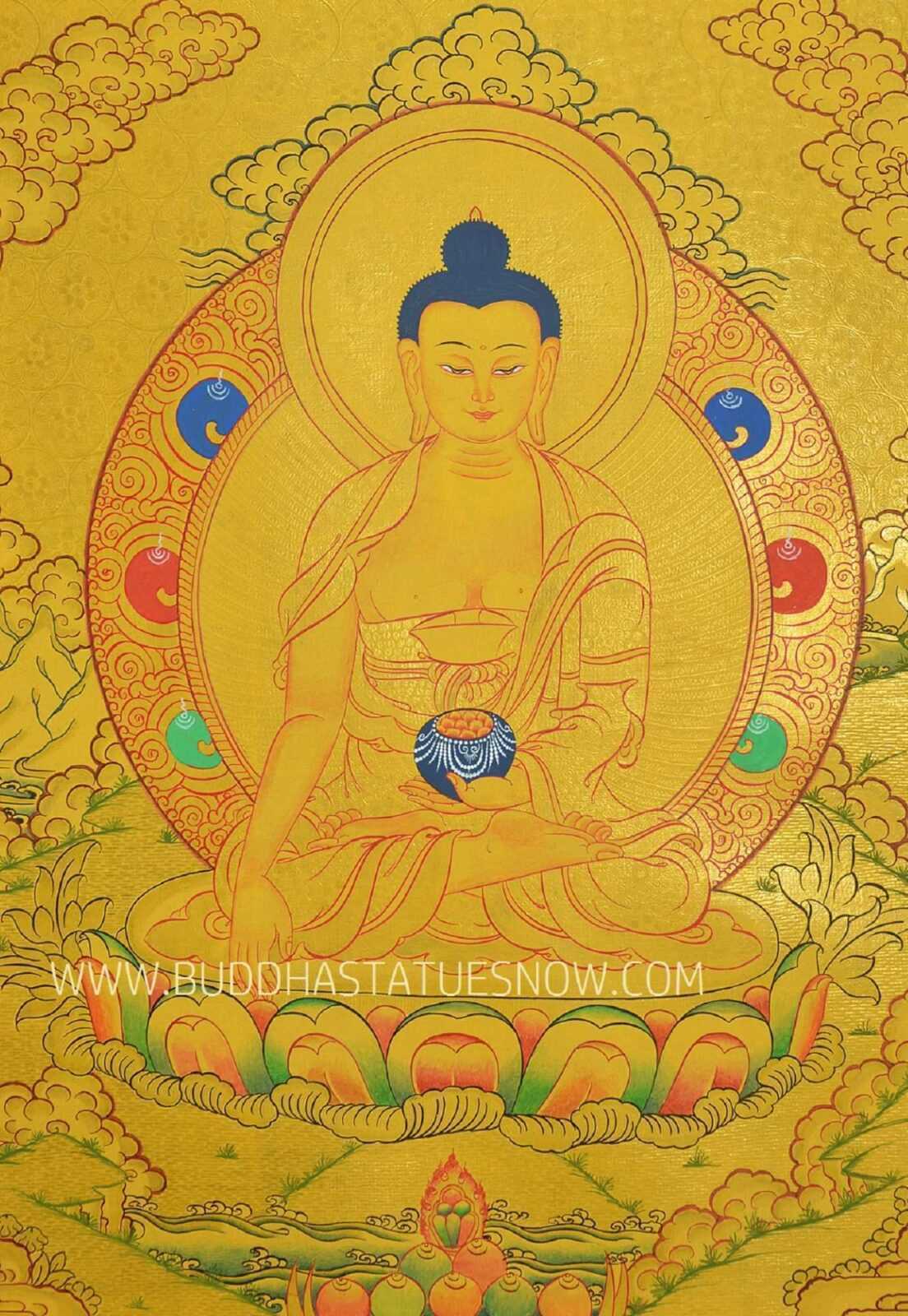
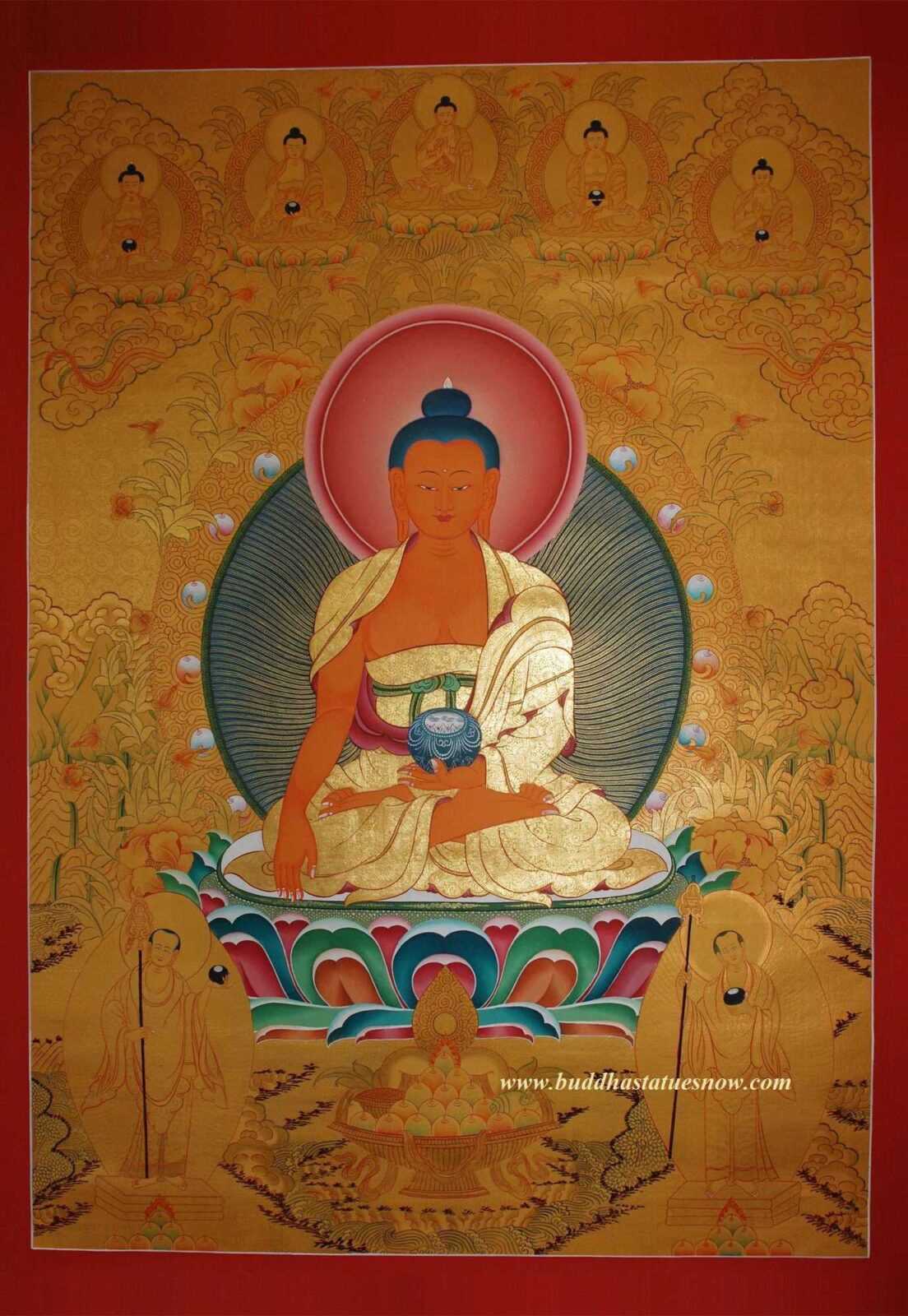
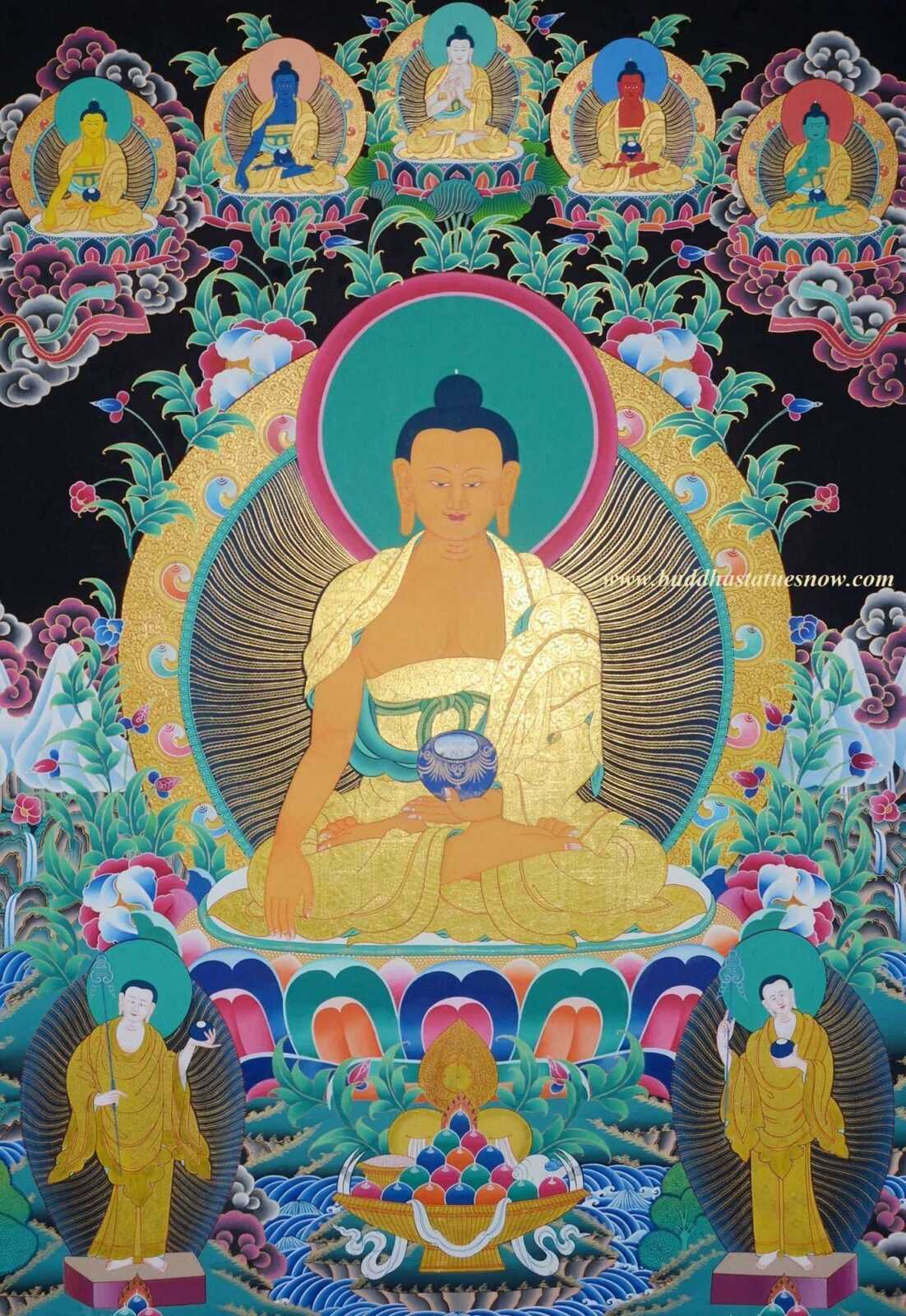
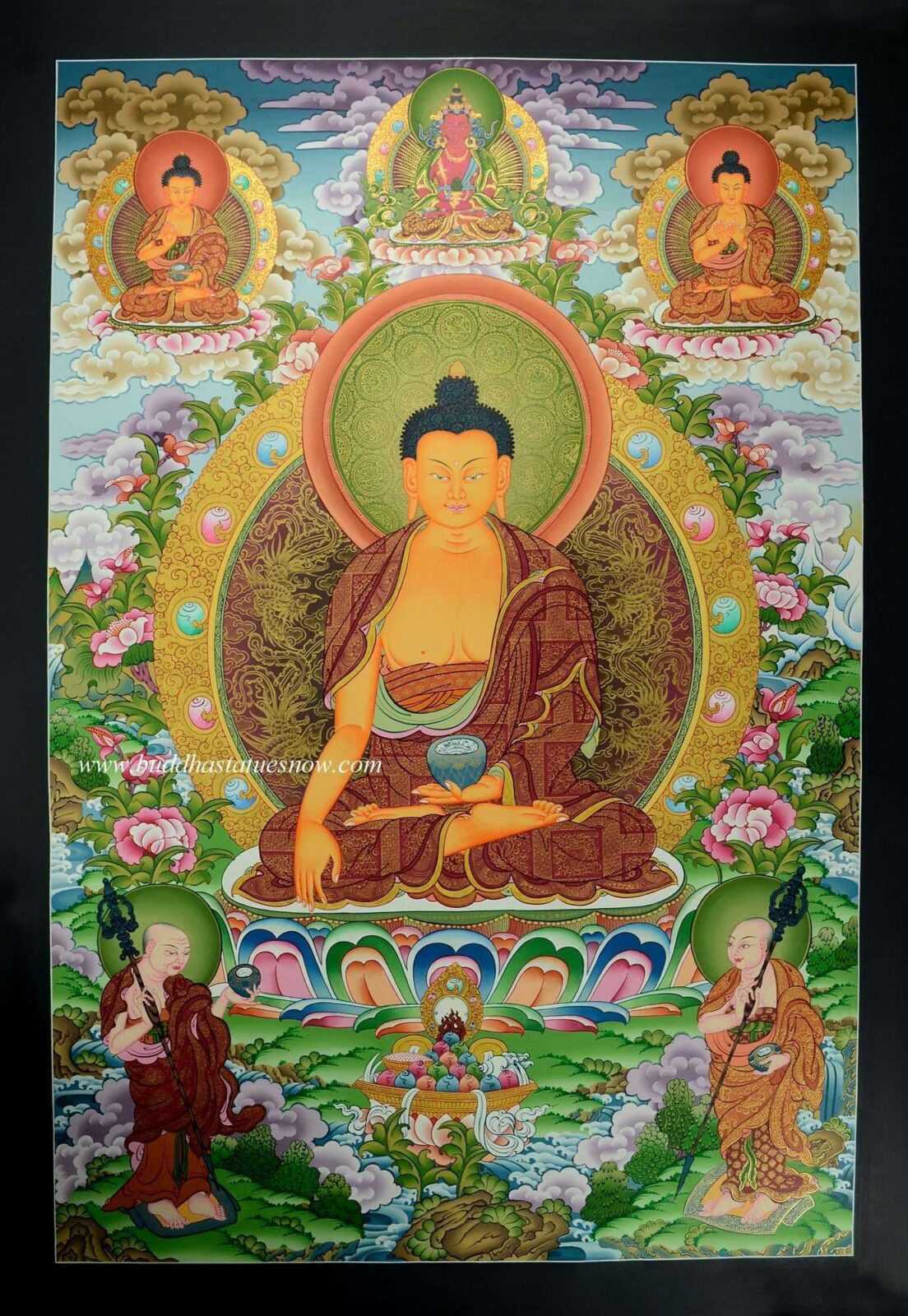
Shakyamuni Buddha thangka paintings depict the historical Buddha — Prince Siddhartha Gautama, who renounced his royal life, attained enlightenment beneath the Bodhi tree, and taught the Dharma from which every Buddhist school descends. Nearly all of our Shakyamuni thangkas show him in the Bhumisparsha, or earth touching, mudra: his right hand draped over the right knee with the fingers reaching toward the ground, calling the earth goddess to witness his victory over the demon Mara at the moment of awakening. His left hand rests in the meditation mudra, cradling the alms bowl of a monastic. Explore the meaning of this and his other gestures in our complete guide to Shakyamuni Buddha mudras and iconography.
Every painting in this collection is hand painted in Nepal by Himalayan artists working to the traditional iconometric grids that govern the Buddha’s proportions, marks, and attributes, and finished with genuine 24K gold detailing applied by hand to the robe borders, throne, and aureole. Sizes range from compact 15-inch paintings suited to a small altar or meditation room up to major works of 47 inches and more, intended as the central image of a shrine room or Dharma center.
Two compositions in this category are of a kind rarely offered outside the monasteries. The 108 Shakyamuni Buddha thangka surrounds the central figure with a hundred and eight repetitions of himself — 108 being the number of beads on a mala and of the afflictions to be purified — while the Shakyamuni Buddha mandala thangka sets him at the center of a geometric palace representing the enlightened mind and its realm. Browse the full range of Tibetan thangka paintings, or see the same Buddha rendered in copper alloy among our Shakyamuni Buddha statues.
Showing all 7 resultsSorted by popularity
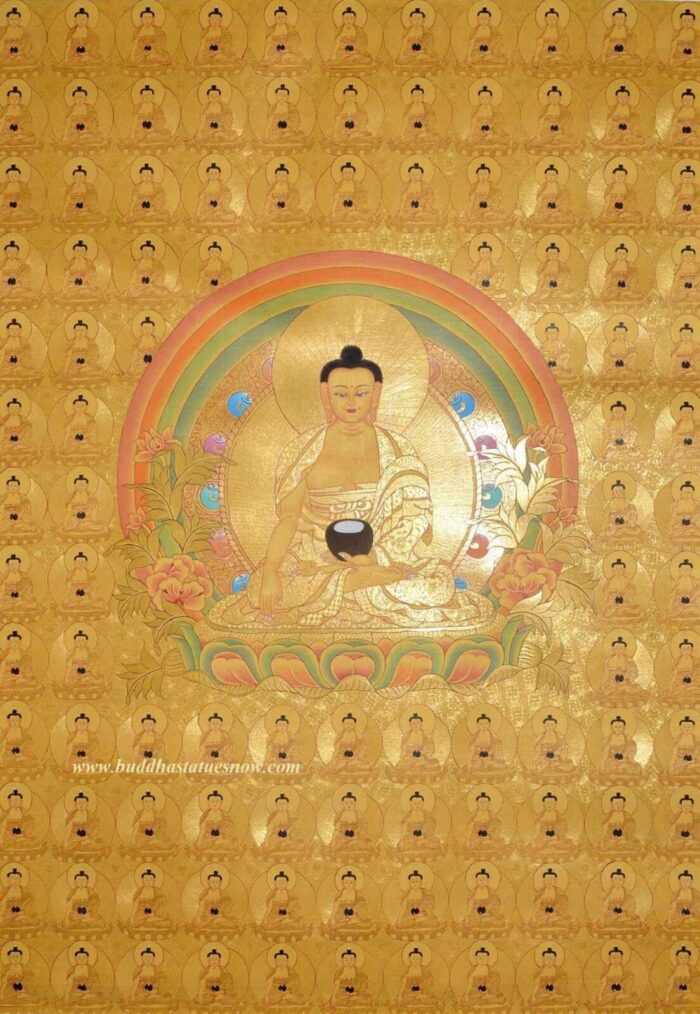
108 Shakyamuni Buddha Thangka, 35″ x 27.5″, Hand Painted 24k Gold Detailing
Original price was: $1,499.00.$1,099.00Current price is: $1,099.00.Add to Cart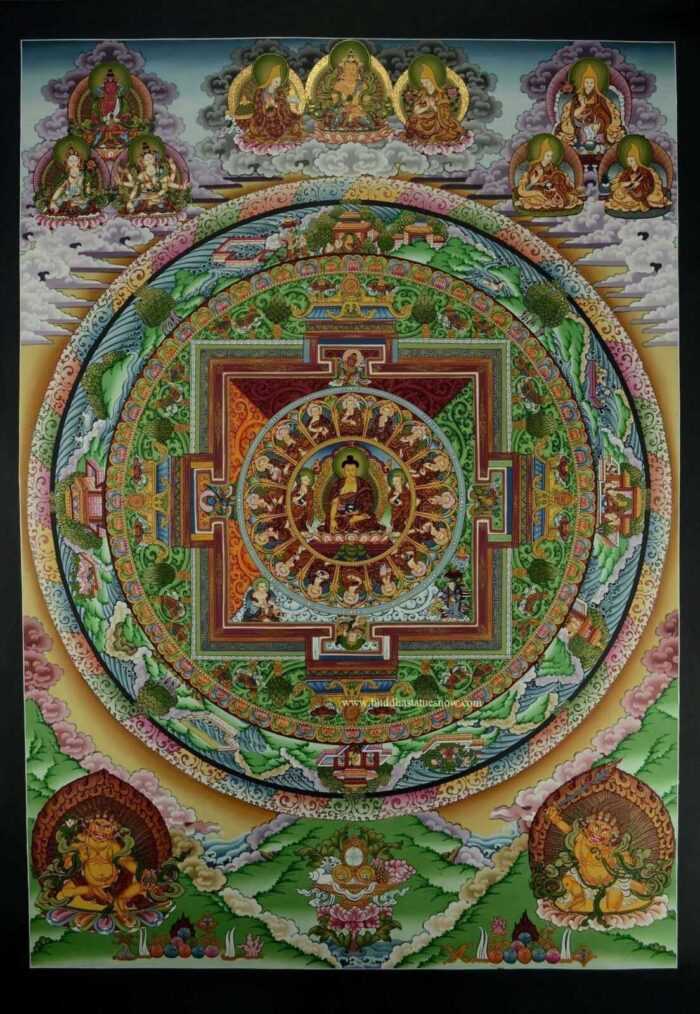
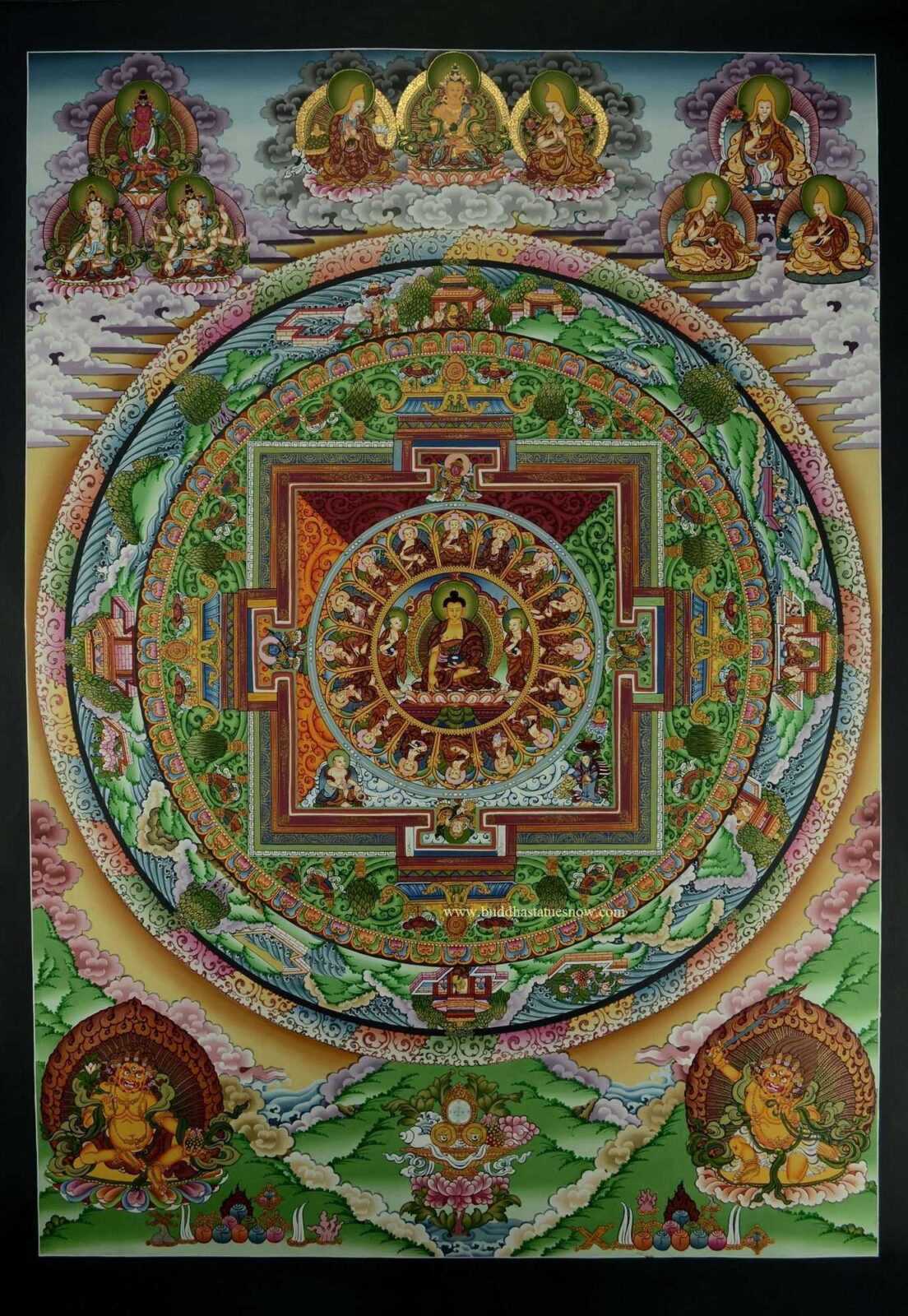
Shakyamuni Buddha Mandala Thangka, 32.5″ x 23.5″, 24k Gold Detailing
Original price was: $2,899.00.$1,989.00Current price is: $1,989.00.Add to Cart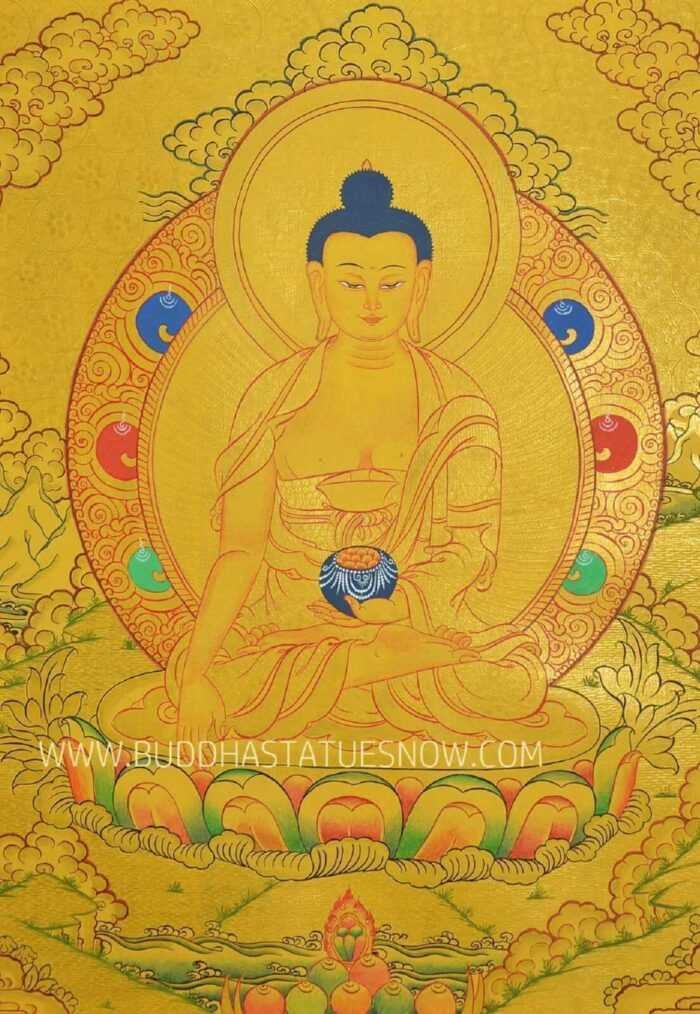
Shakyamuni Buddha Tibetan Thangka, 15.5″ x 12″, 24K Gold Detailing
Original price was: $259.00.$169.00Current price is: $169.00.Add to Cart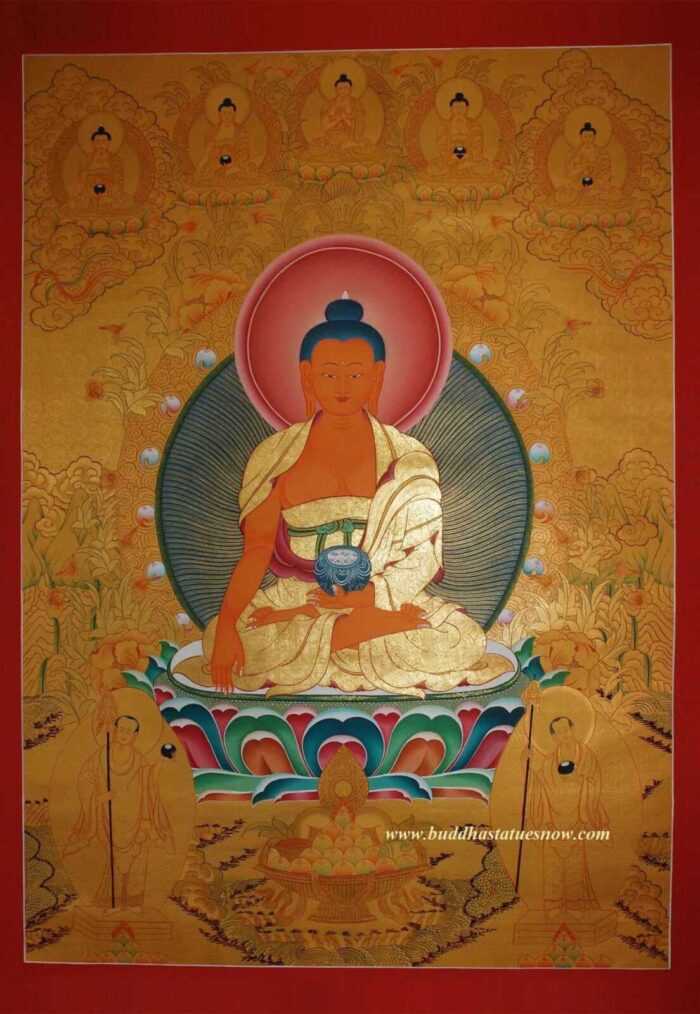
Shakyamuni Tibetan Thangka Painting, 42″ x 30.75″, 24k Gold Detailing
Original price was: $1,799.00.$1,399.00Current price is: $1,399.00.Add to Cart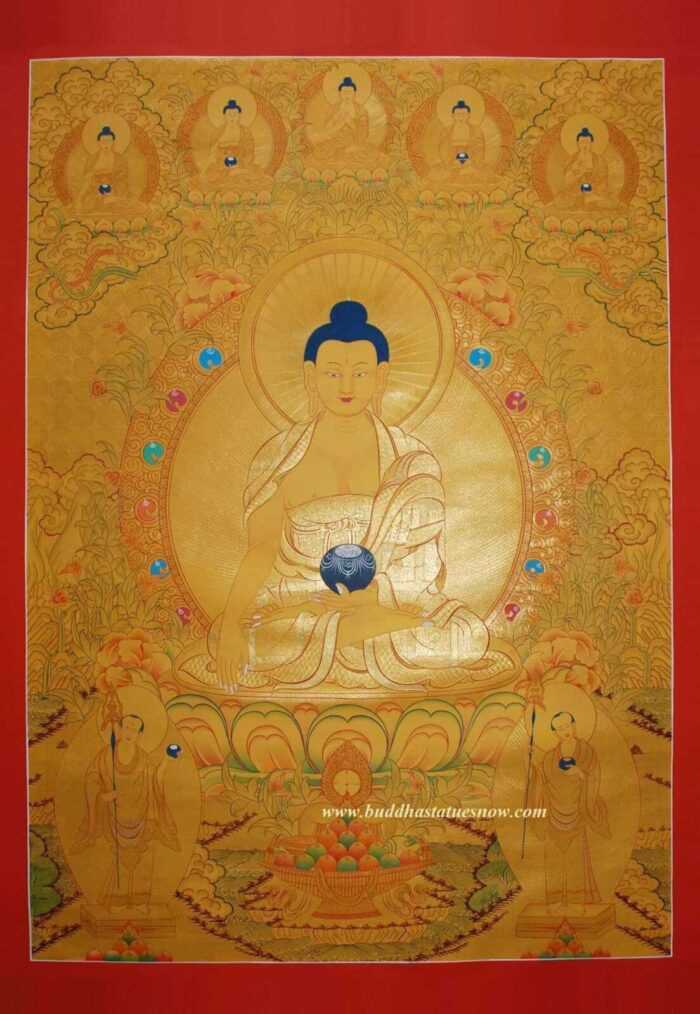
Shakyamuni Buddha Thangka, 44.5″ x 32.75″, Hand Painted 24k Gold Detailing
Original price was: $2,429.00.$1,599.00Current price is: $1,599.00.Add to Cart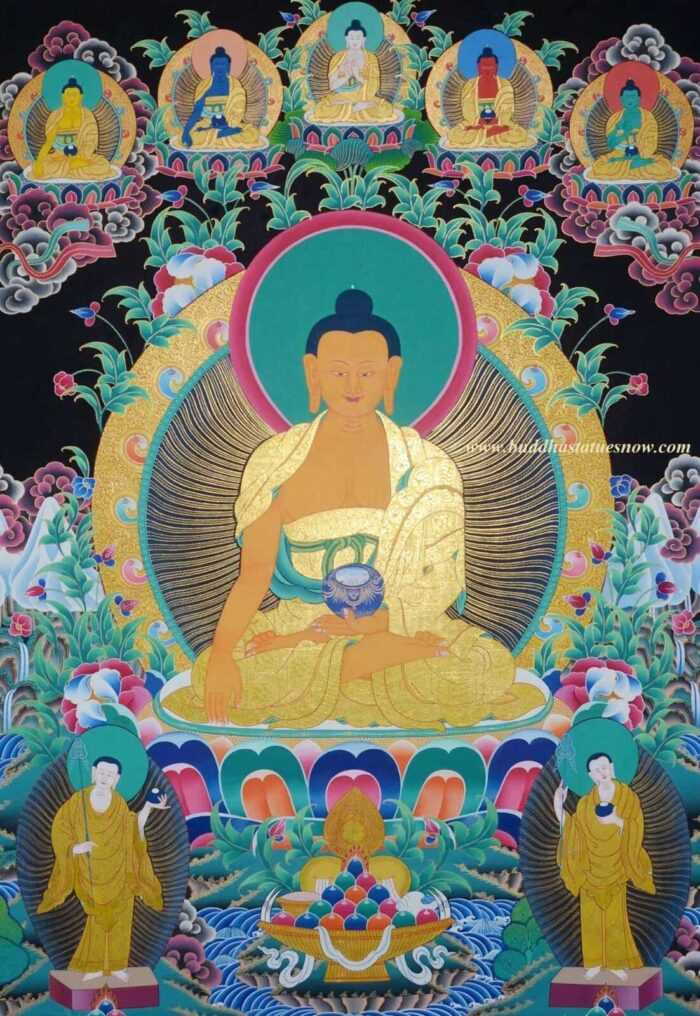
Shakyamuni Buddha Thangka Painting, 47″ x 36″, 24k Gold Detailing
Original price was: $2,399.00.$1,599.00Current price is: $1,599.00.Add to Cart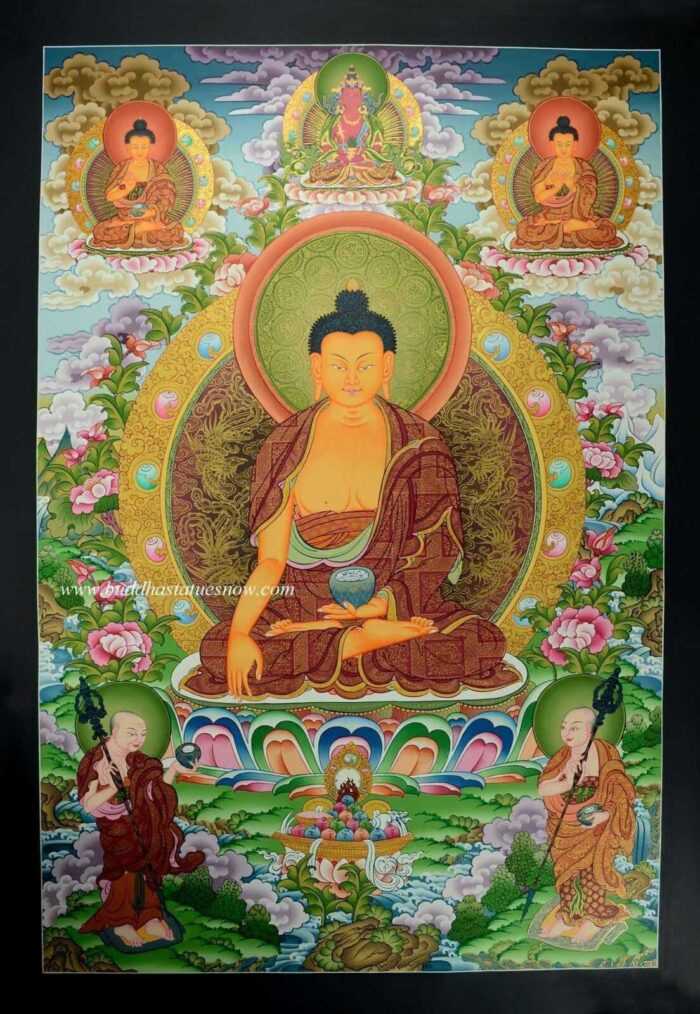
Shakyamuni Thangka Painting, 32.75″ x 22.75″, Hand Painted 24k Gold Detailing
Original price was: $1,699.00.$1,199.00Current price is: $1,199.00.Add to Cart


Shakyamuni Buddha Thangka Iconography
In a Shakyamuni thangka the Buddha is painted with golden skin and deep blue-black hair, wearing the simple patched robes of a renunciant rather than the crown and jewelry of a celestial Buddha. He sits in full lotus pose on a moon disc above a lotus throne, the lotus signifying that he rose above the mud of samsara to blossom in clear air. Behind him a nimbus rings the head and a larger aureole surrounds the body, often filled with scrolling foliage or flame patterns worked in gold.
The colors themselves follow rules rather than taste. Traditional thangka pigments are ground from minerals - malachite for green, azurite and lapis for blue, cinnabar for red - and the gold is applied by hand as a final stage, then burnished. For a broader introduction to these symbols, see our guides to Buddha statue meaning and the Buddhist pantheon.
108 Buddha and Mandala Compositions
Alongside single-figure paintings, this category includes two composition types rarely offered outside the monasteries. The 108 Shakyamuni Buddha thangka repeats the central figure one hundred and eight times across the canvas, each repetition painted individually with its own face and robes - a devotional exercise for the artist as much as an image for the shrine.
The Shakyamuni Buddha mandala thangka instead sets the Buddha within a geometric palace viewed from above, ringed by concentric bands of protection. Mandalas of this kind are used in visualization practice, where the practitioner builds the realm mentally element by element. Both composition types command a premium because of the months of work involved, and both make a natural centerpiece for a shrine room or Dharma center.
Frequently Asked Questions
What does a Shakyamuni Buddha thangka represent?
A Shakyamuni Buddha thangka depicts the historical Buddha at the moment of his awakening beneath the Bodhi tree. It serves as a support for practice rather than as decoration - a focal point for visualization, refuge, and mantra recitation. Because Shakyamuni is the source of the Dharma taught in every Buddhist school, his thangka is the most universal image a practitioner can place on a shrine, suitable for beginners and long-time practitioners alike.
What is the earth touching mudra shown in these thangkas?
The Bhumisparsha, or earth touching mudra, is the gesture of the enlightenment itself. Assailed beneath the Bodhi tree by the demon Mara, who tempted him with illusions of pleasure and terror, Shakyamuni reached down and touched the earth with the fingers of his right hand, calling the earth goddess to witness the merit of his countless lifetimes. She arose and swept Mara away. His left hand rests in the meditation mudra, holding the alms bowl of a monastic. See our guide to Shakyamuni Buddha mudras for the full range of gestures.
What is a 108 Shakyamuni Buddha thangka?
A 108 Buddha thangka surrounds the central figure of Shakyamuni with one hundred and eight smaller repetitions of himself, each individually painted. The number 108 is deeply significant in Buddhism: it is the number of beads on a mala, and traditionally the number of afflictions to be purified on the path. These compositions demand months of work and are among the most demanding paintings a thangka artist undertakes.
What is a Buddha mandala thangka?
A mandala thangka presents the deity at the center of a geometric palace seen from above, ringed by concentric circles of protection. It is a map of the enlightened mind and its realm, used in visualization practice to construct that realm mentally, step by step. A Shakyamuni Buddha mandala places the historical Buddha at the center of that architecture rather than a Tantric deity, making it a more accessible image for general practice.
What are the marks shown on the Buddha in these paintings?
Thangka artists follow the same iconometric rules that govern statues. Shakyamuni is shown with the ushnisha, the cranial protuberance rising from his tightly curled blue-black hair; the urna, a mark between the brows representing radiant wisdom; elongated earlobes recalling the heavy earrings he wore as a prince before his renunciation; and three folds at the neck. These are drawn from the traditional thirty-two marks of a fully enlightened being.
Can I commission a custom Shakyamuni thangka?
Yes. Custom thangkas can be commissioned in a specific size, composition, or level of gold detailing, and can be delivered unmounted for your own framing or mounted in traditional silk brocade. Because each painting is executed entirely by hand, a commissioned work takes considerably longer than a piece already in stock. Contact us with the deity, dimensions, and mounting you have in mind and we will advise on cost and timing.