
Tibetan Offering Bowls
Tibetan offering bowls are the most widely used ritual item on a Buddhist altar, and for most practitioners they are the daily practice. The bowls are set out in a row each morning, filled with clean water, and emptied and dried each evening. The offering follows the ancient custom of welcoming an honoured guest into the home: water for drinking, water for washing the feet, then flowers, incense, light, perfume and food – seven offerings in all, with an eighth bowl added in some traditions for music.
Water is used because it costs nothing and can be offered without a trace of miserliness, which is precisely the point. The practice is a daily exercise in generosity rather than an act of appeasement, and its simplicity is what allows it to be sustained every morning for a lifetime.
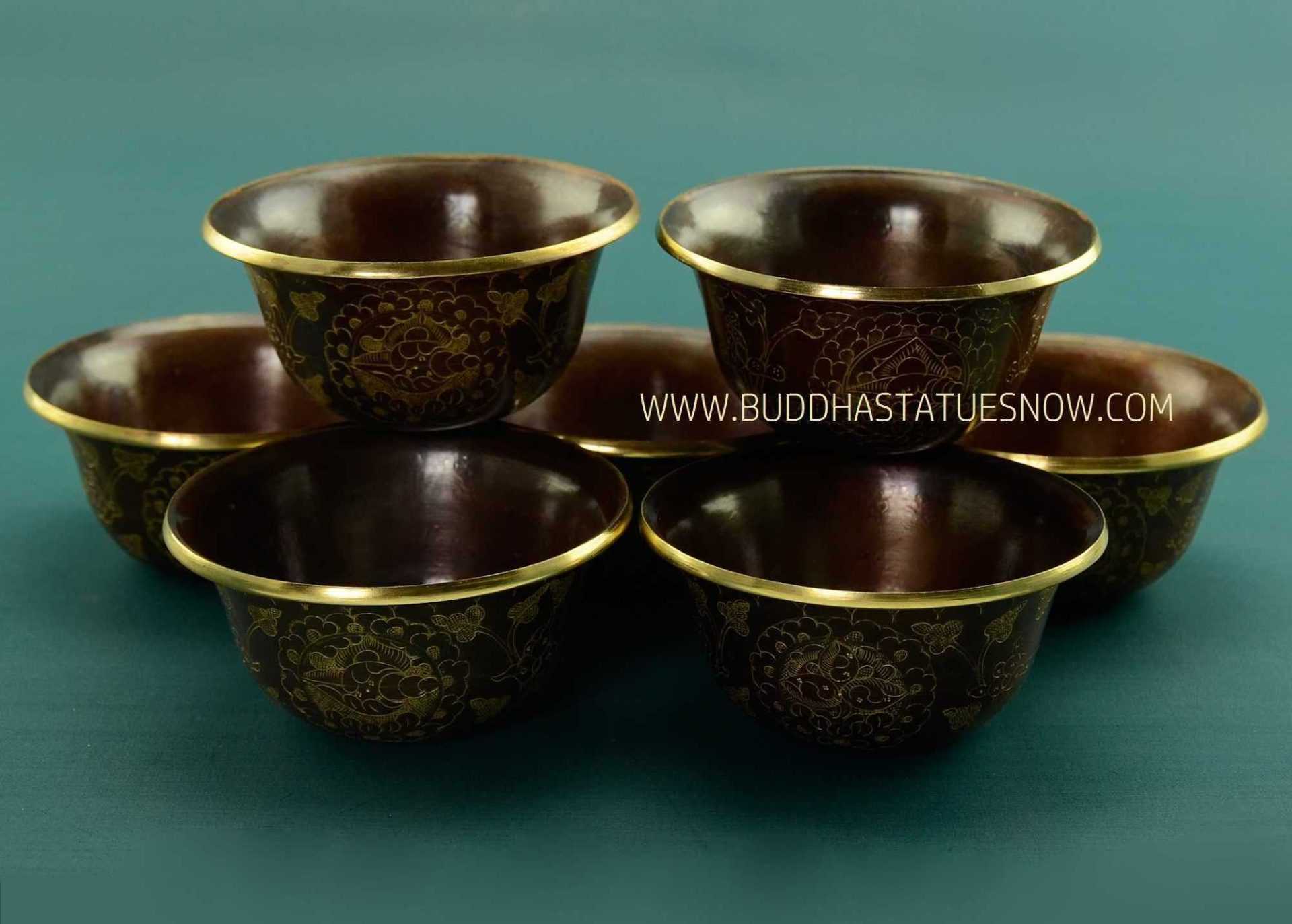
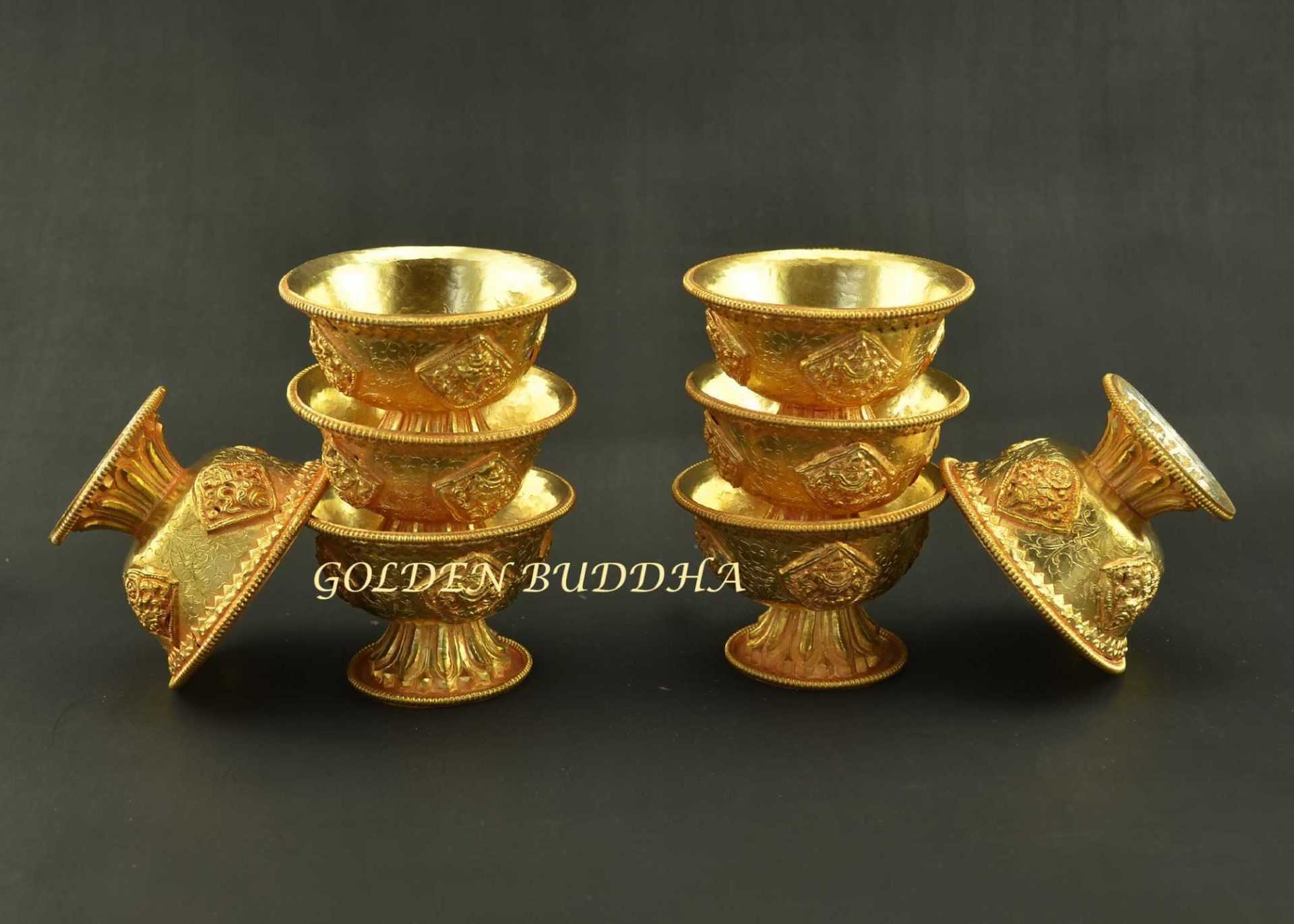
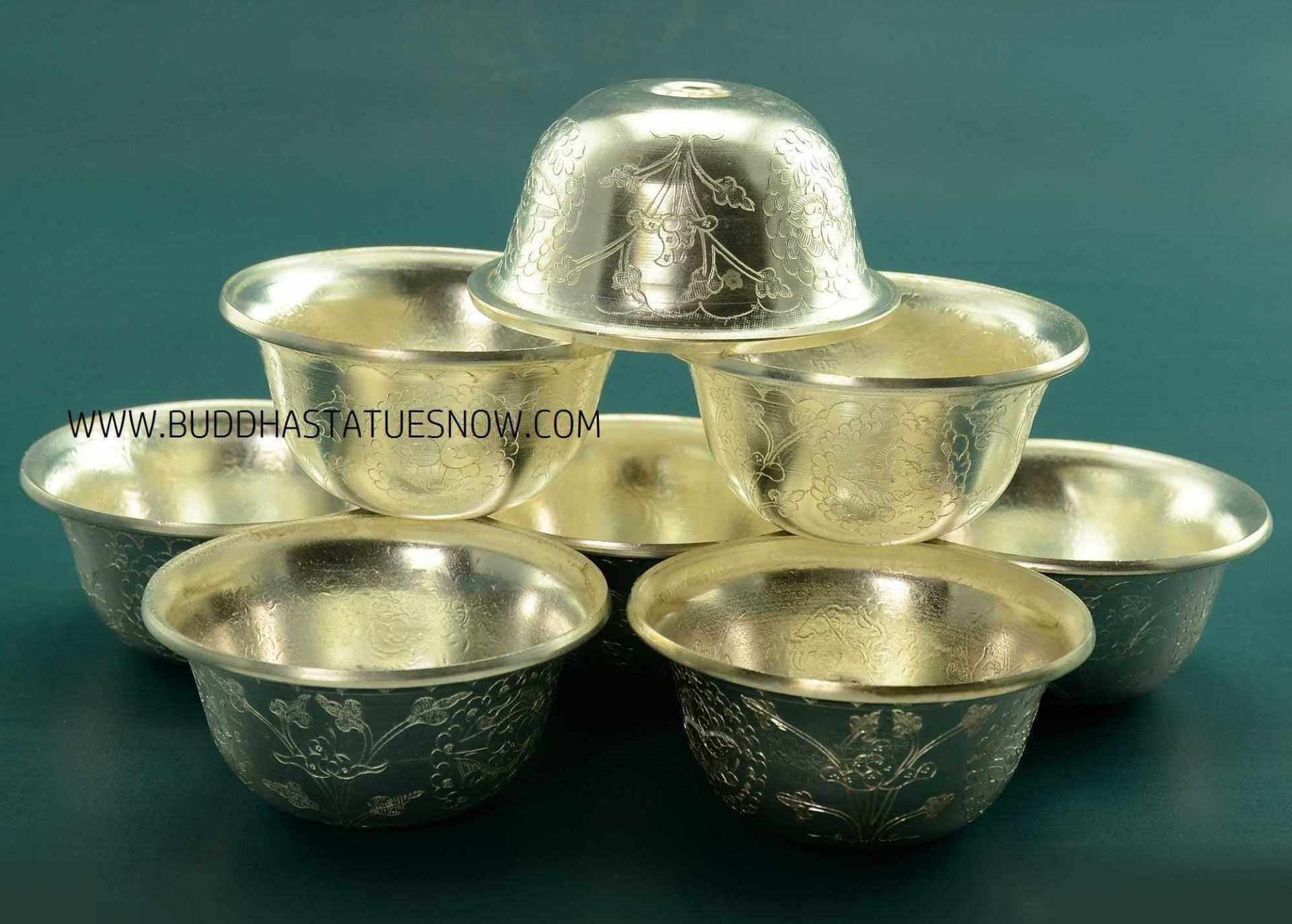
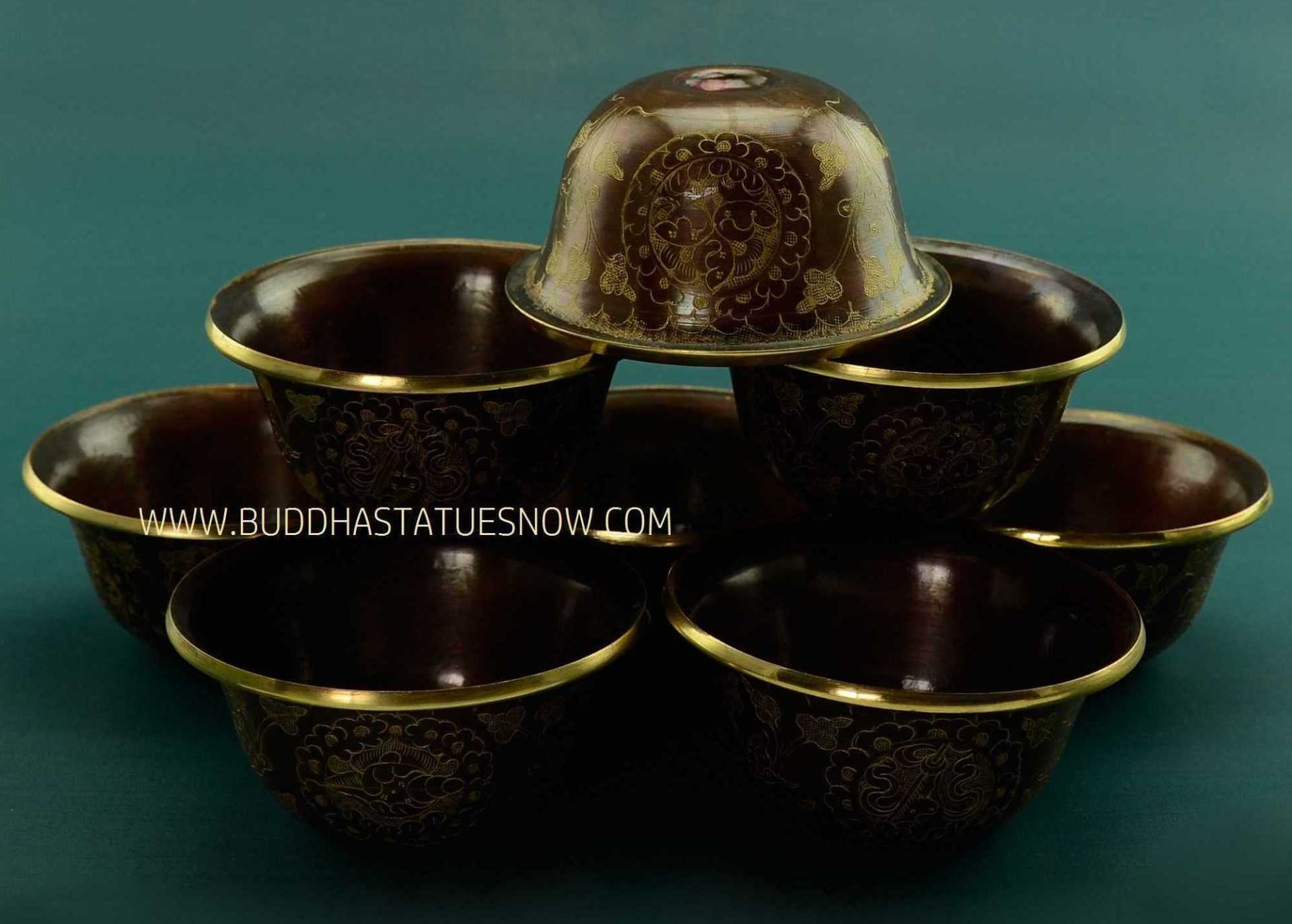
Our Tibetan offering bowls are handmade in Patan, Nepal, in sets of seven and eight, in diameters from 2.75 to 4 inches. Finishes include fully gold plated, silver and gold plated together, and oxidized copper with fire gilded 24K gold detailing. Every set is engraved by hand, and on the finer Tibetan offering bowls the carving runs across the whole outer surface rather than a border alone. Bowls are traditionally stored stacked and inverted when not in use.
Tibetan offering bowls are usually the first thing to go on a new altar, and they pair naturally with butter lamps for the offering of light and incense burners for the offering of fragrance. Browse the full range of Tibetan ritual items, or see our Buddha statues for the figure the offerings are made before.
Showing 1–12 of 17 resultsSorted by popularity
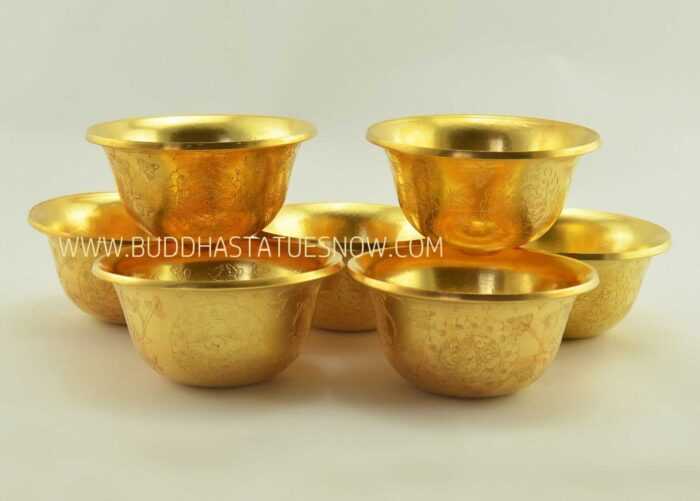
Gold Plated Offering Bowls | 3.5″ Set of Seven | Authentic Nepal
Original price was: $299.00.$189.00Current price is: $189.00.Add to Cart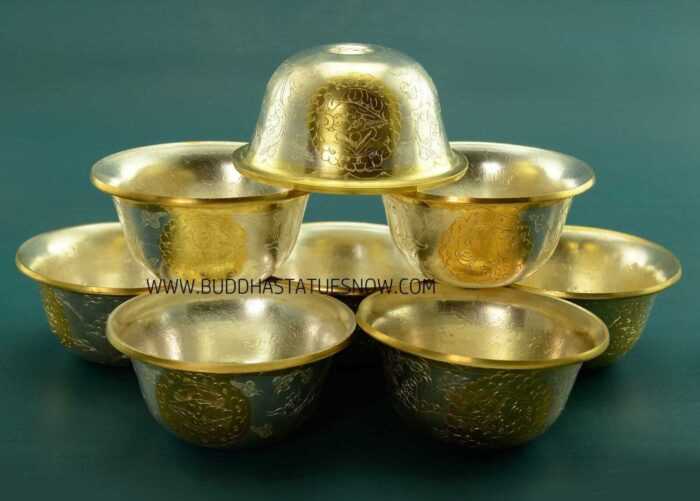
Silver and Gold Offering Bowls | 3.5″ Set of Eight | Auspicious Symbols
Original price was: $379.00.$229.00Current price is: $229.00.Add to Cart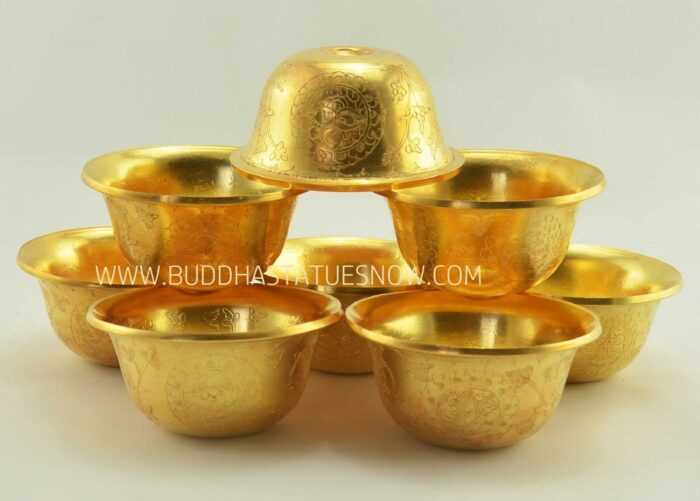
Gold Plated Tibetan Offering Bowls | 3.5″ Set of Eight | Patan, Nepal
Original price was: $299.00.$199.00Current price is: $199.00.Add to Cart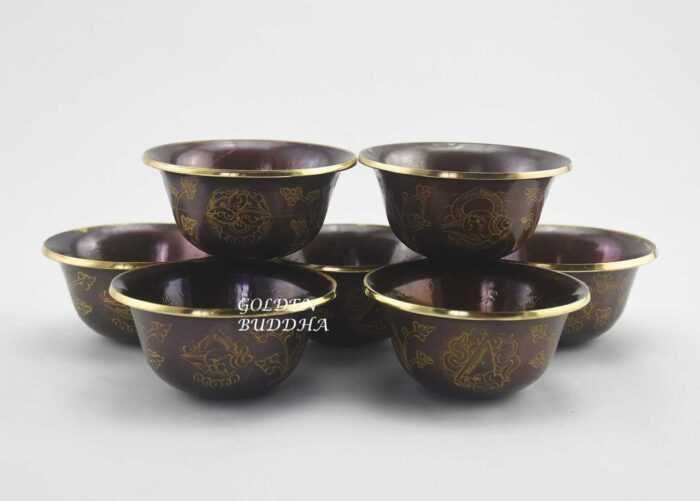
Seven Tibetan Offering Bowls Set 2.75″ | Oxidized, 24K Gold Details
Original price was: $269.00.$169.00Current price is: $169.00.Add to Cart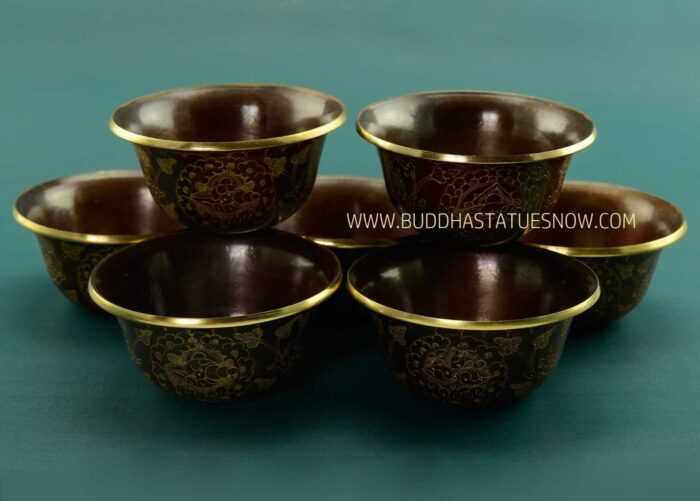
Oxidized Water Offering Bowls | 3.5″ Set of Seven | 24K Gold Detail
Original price was: $349.00.$239.00Current price is: $239.00.Add to Cart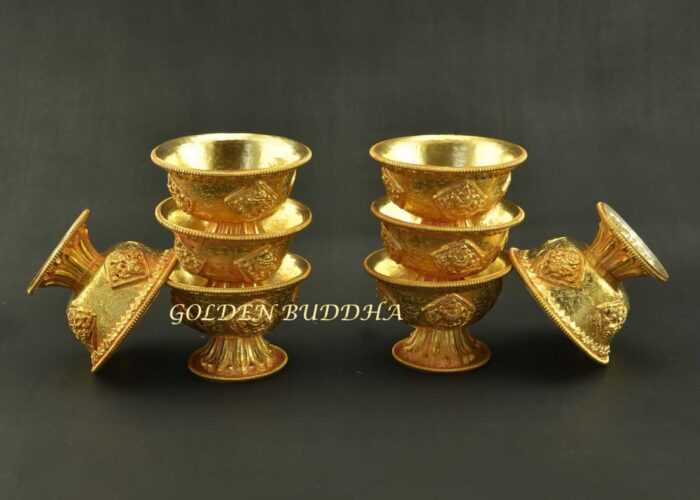
Tibetan Offering Bowls Set with Stand 3.25″ | 8 Gold Plated Bowls
Original price was: $399.00.$299.00Current price is: $299.00.Add to Cart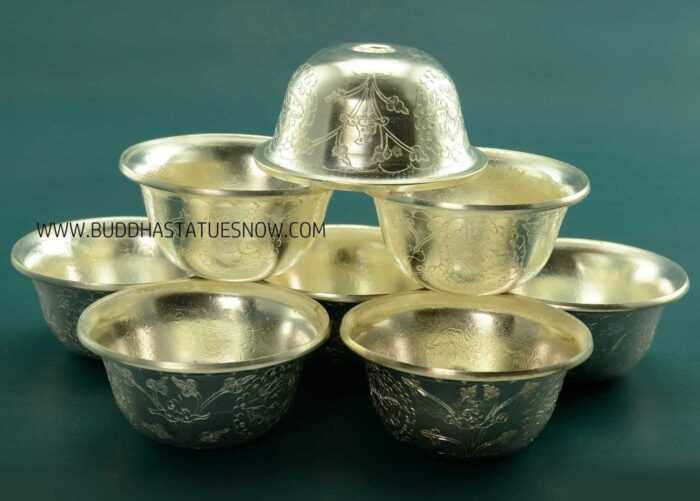
Silver Plated Offering Bowls 3.5″ | Set of Eight | Auspicious Symbols
Original price was: $329.00.$199.00Current price is: $199.00.Add to Cart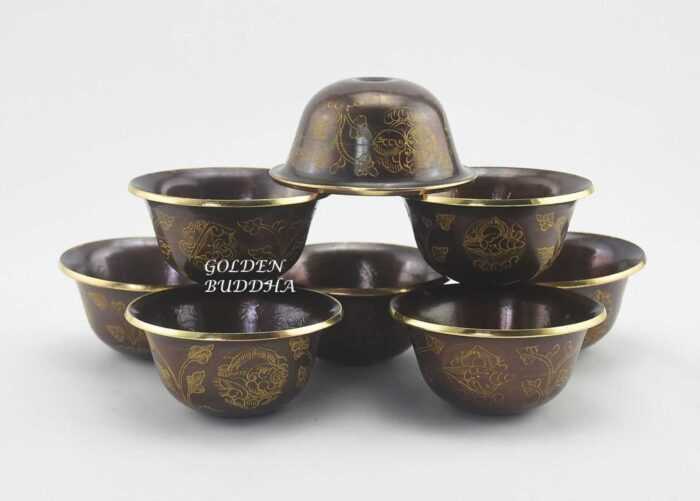
Eight Tibetan Offering Bowls Set 2.75″ | Oxidized, 24K Gold Gilded
Original price was: $299.00.$189.00Current price is: $189.00.Add to Cart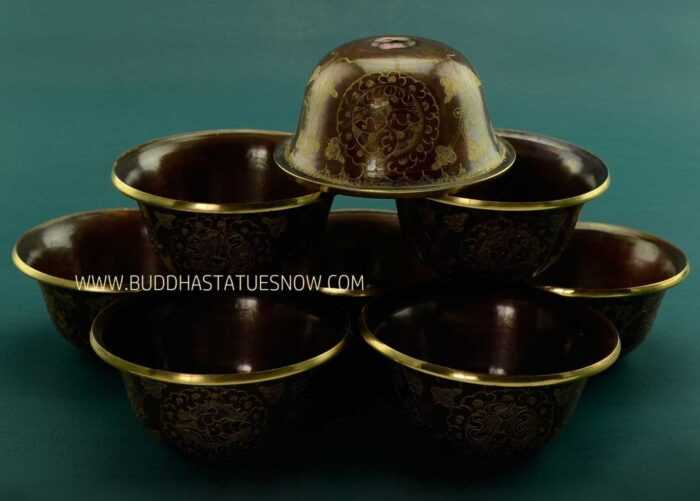
Tibetan Offering Bowls 3.5″ | Oxidized, Set of Eight | 24K Gold
Original price was: $399.00.$279.00Current price is: $279.00.Add to Cart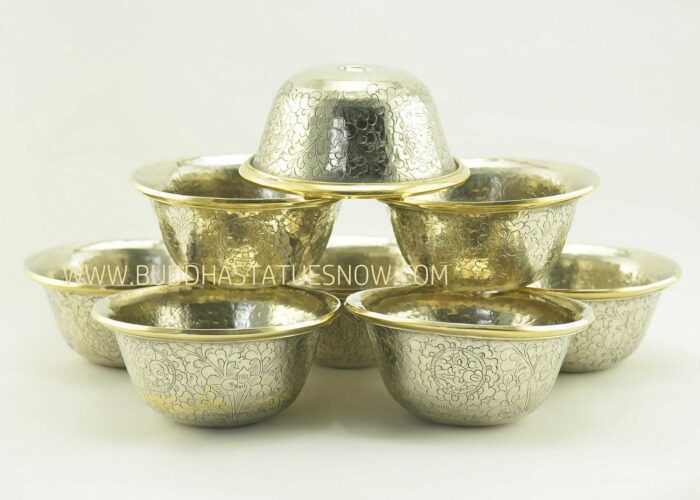
White Metal Offering Bowls | 4″ Set of Eight | Authentic Nepal
Original price was: $299.00.$219.00Current price is: $219.00.Add to Cart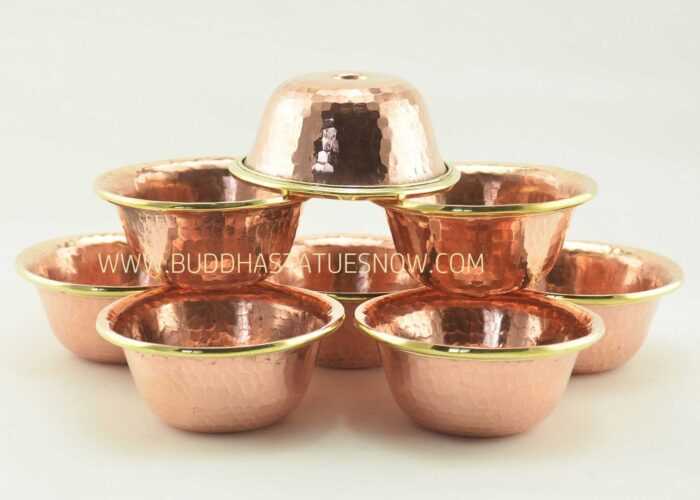
Copper Offering Bowls Set | 3.5″ Set of Eight | Handmade in Nepal
Original price was: $299.00.$199.00Current price is: $199.00.Add to Cart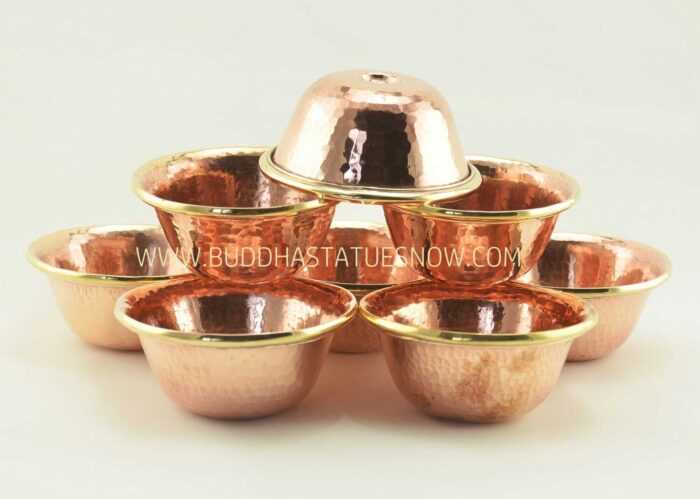
Handmade Water Offering Bowls | 4″ Set of Eight | Brass Rings
Original price was: $329.00.$229.00Current price is: $229.00.Add to Cart



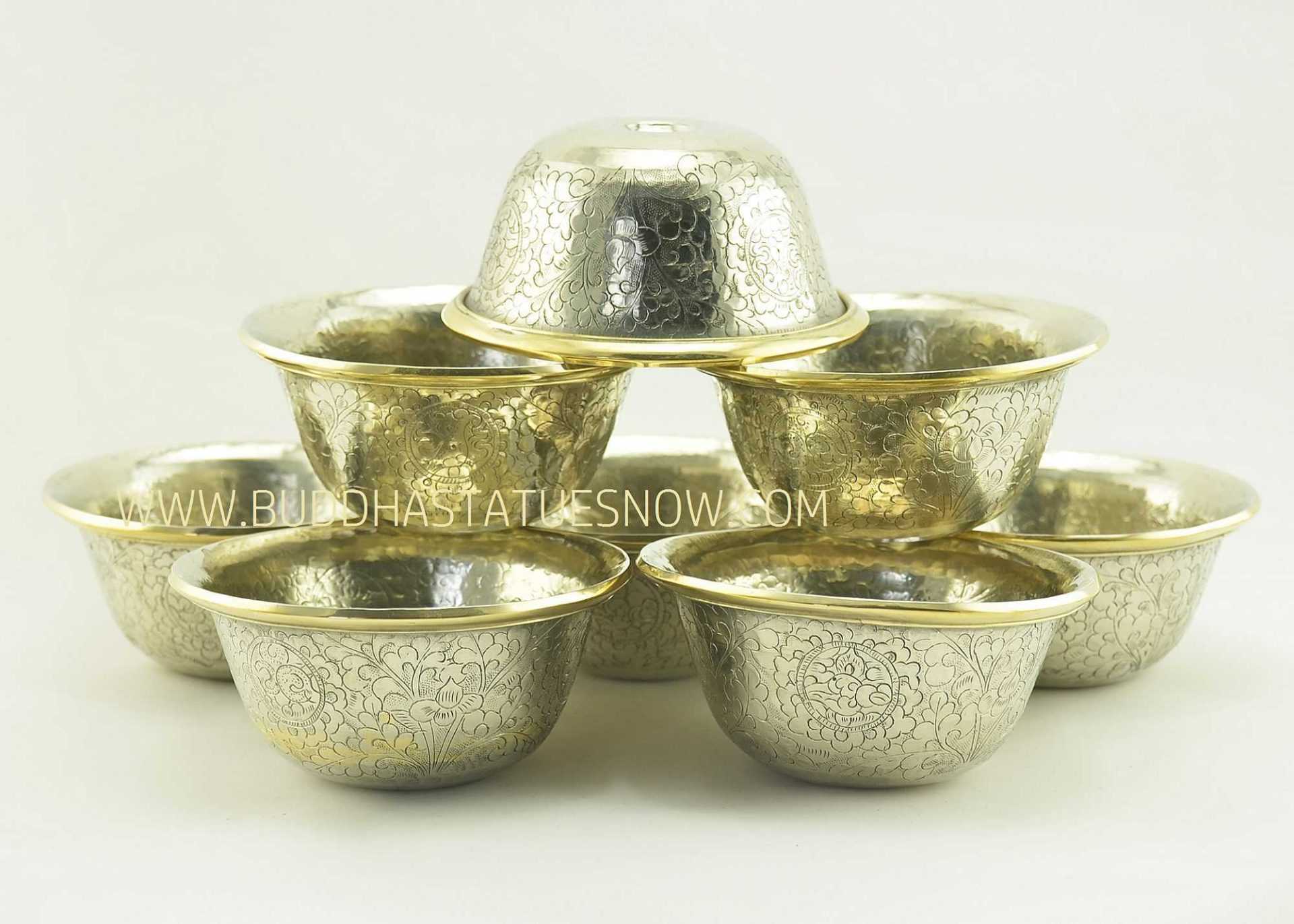

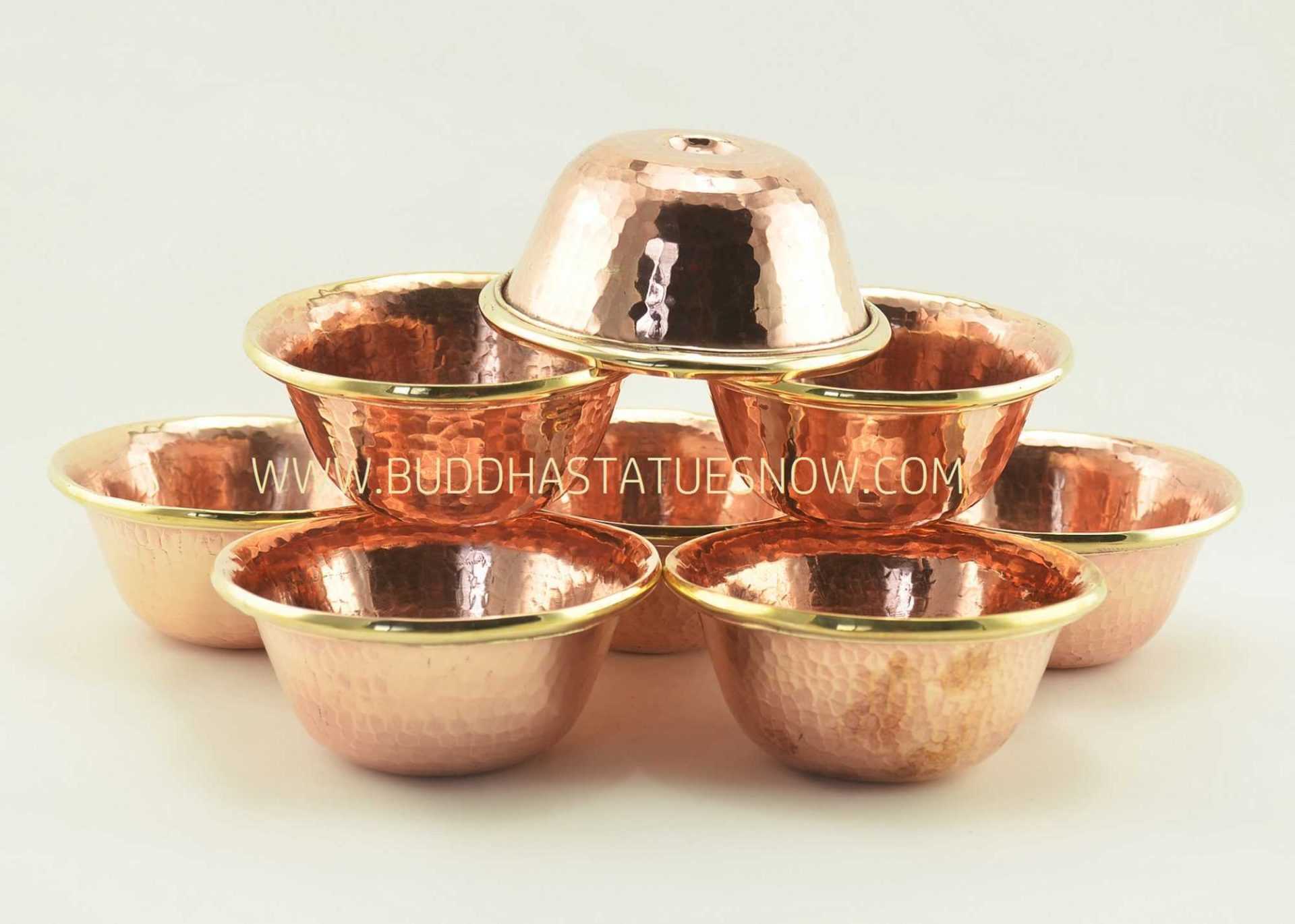
The Seven Offerings
The row of water bowls on a Tibetan altar reproduces an act of hospitality that predates Buddhism itself: what you would offer an honoured guest arriving at your home after a long journey. Water to drink, water to wash the feet, then flowers, incense, light, perfume and food - seven offerings, each represented by a bowl of clean water, with an eighth added in some traditions for music.
Water is used for all of them because it is freely available and costs nothing, which means it can be offered without the faintest trace of reluctance. That is the entire point. The practice is a daily rehearsal of generosity rather than an attempt to please anyone, and its plainness is exactly what makes it possible to sustain every morning for a lifetime.
Materials, Sizes and Daily Use
Our offering bowls are handmade in Patan, in the Kathmandu Valley, in sets of seven and eight, in diameters from 2.75 to 3.5 inches. Finishes include fully gold plated, silver and gold plated together, and oxidized copper with fire gilded 24K gold detailing. Every set is engraved by hand, and on the finer sets the carving covers the whole outer surface rather than a border alone.
Because the bowls are handled every day, they are made to be washed and dried repeatedly without damage. Dry them thoroughly before inverting and stacking, and avoid abrasive cleaners, which will dull plating and gilding over time. Offering bowls are usually the first thing to go on a new altar, and they pair naturally with butter lamps for the offering of light and incense burners for the offering of fragrance. Browse the full range of Tibetan ritual items.
Frequently Asked Questions
Do I need seven bowls or eight?
Seven is the most common arrangement, corresponding to the seven offerings made to an honoured guest: water for drinking, water for washing the feet, flowers, incense, light, perfume and food. Some traditions add an eighth bowl for music. Both are correct, and the choice usually follows whatever your teacher or lineage practises - if you have no instruction on the point, a set of seven is the safer default.
How are Tibetan offering bowls used each day?
The bowls are set out in the morning and filled with clean water, then emptied and dried in the evening so they are not left standing overnight with water in them. Bowls are commonly filled from left to right as you face the altar and emptied in the reverse order, and each is filled to just below the rim rather than to the brim. The water is poured out respectfully onto plants or clean ground rather than down a drain.
How far apart should the bowls be placed?
Traditionally about the width of a grain of rice - close enough that they are clearly one continuous offering, but not touching. Bowls set too far apart are said to suggest distance from your teachers, and bowls set touching to suggest dullness, so the spacing is deliberate rather than aesthetic. The row is aligned straight and parallel to the front edge of the altar.
Should the bowls be stored face up or face down?
Face down. When the offering is finished for the day the bowls are dried and stacked inverted, so that they are never left empty and facing upward on the shrine. An empty upturned bowl is traditionally regarded as inauspicious, which is why the practice is to either fill them or invert them.
What size offering bowls should I choose?
Our sets run from 2.75 to 3.5 inches in diameter. Smaller sets suit a personal altar or a shelf shrine where space is limited, and larger sets carry better on a full shrine or in a Dharma centre where they are seen from a distance. The more important consideration is the altar itself: the row of bowls should sit comfortably in front of the central image without crowding it or overhanging the surface.