Tibetan Stupa & Chorten
A Tibetan stupa — chorten in Tibetan, pagoda in East Asia, and chaitya in the Newar tradition of the Kathmandu Valley — is a reliquary form, and the oldest architectural expression of Buddhism there is. The first stupas were raised over the relics of Shakyamuni Buddha after his parinirvana, and the form has been built ever since at every scale, from the vast monuments of Boudhanath and Sanchi down to the altar pieces offered here. Evidence of them reaches back to the fourth century BCE, which means the chorten predates the Buddha statue by several centuries — devotees were circumambulating stupas long before anyone thought to depict the Buddha in human form.
The Tibetan word says what it is for: chö-ten, a support for offering. Where a statue represents the body of a Buddha and a scripture his speech, the stupa represents his mind — the third member of a triad a fully appointed shrine is meant to hold together, which is why a chorten belongs alongside statues rather than instead of them. The proportions carry the meaning: the square base is the Buddha seated with legs crossed, the shaft his torso, the crown his head, while the tiers running upward are read as the elements ascending from earth through water and fire to space.
Through consecration the presence of the Buddha is invited into the chorten, making it a sanctuary rather than a sculpture — and because an altar-sized Tibetan stupa is portable, that sanctuary travels. Practitioners carry a small chorten on pilgrimage and to holy places, where it is held to reveal the Buddha’s presence wherever it is set down. See our guide to filling and consecration for what the process involves.
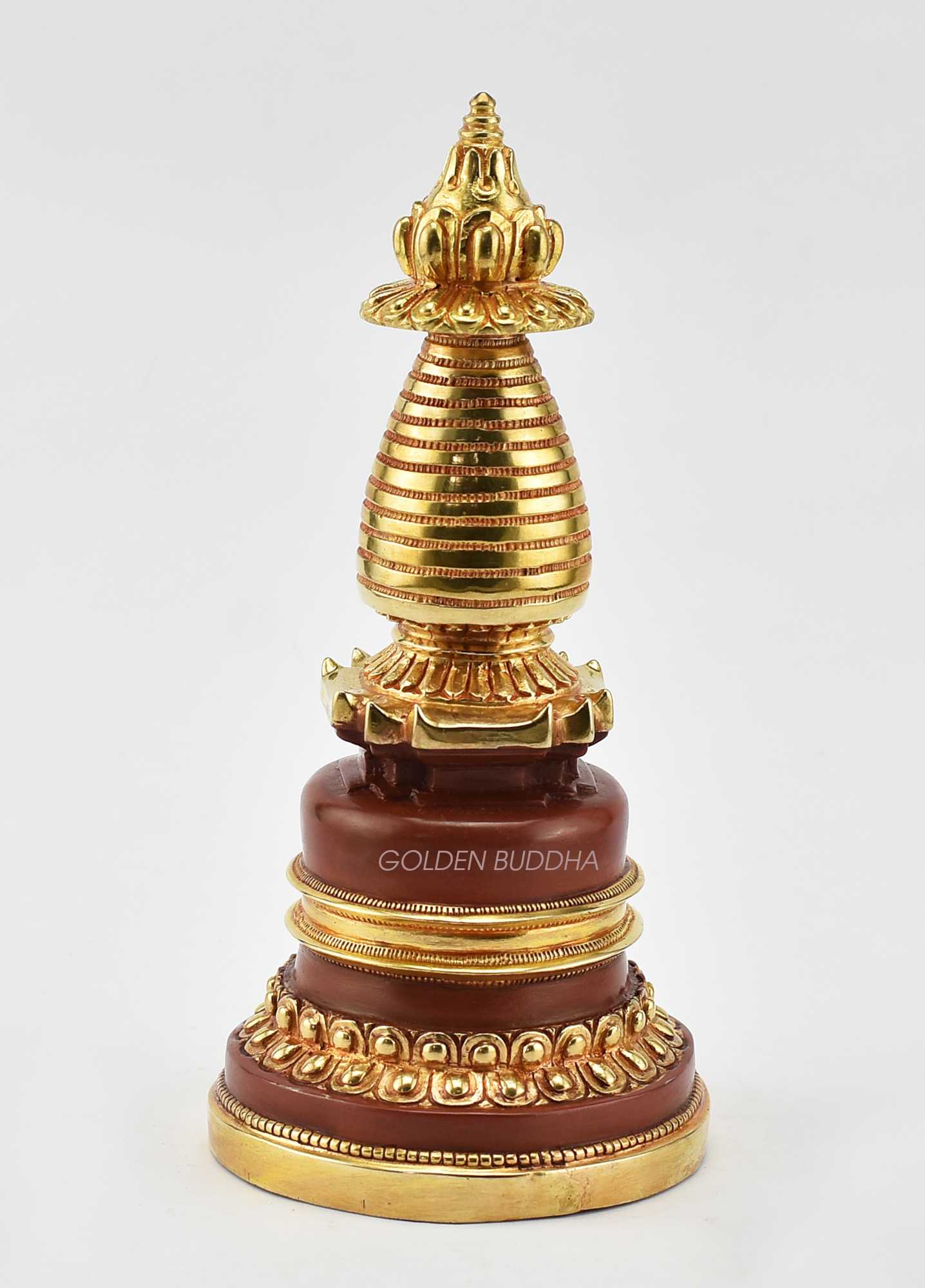
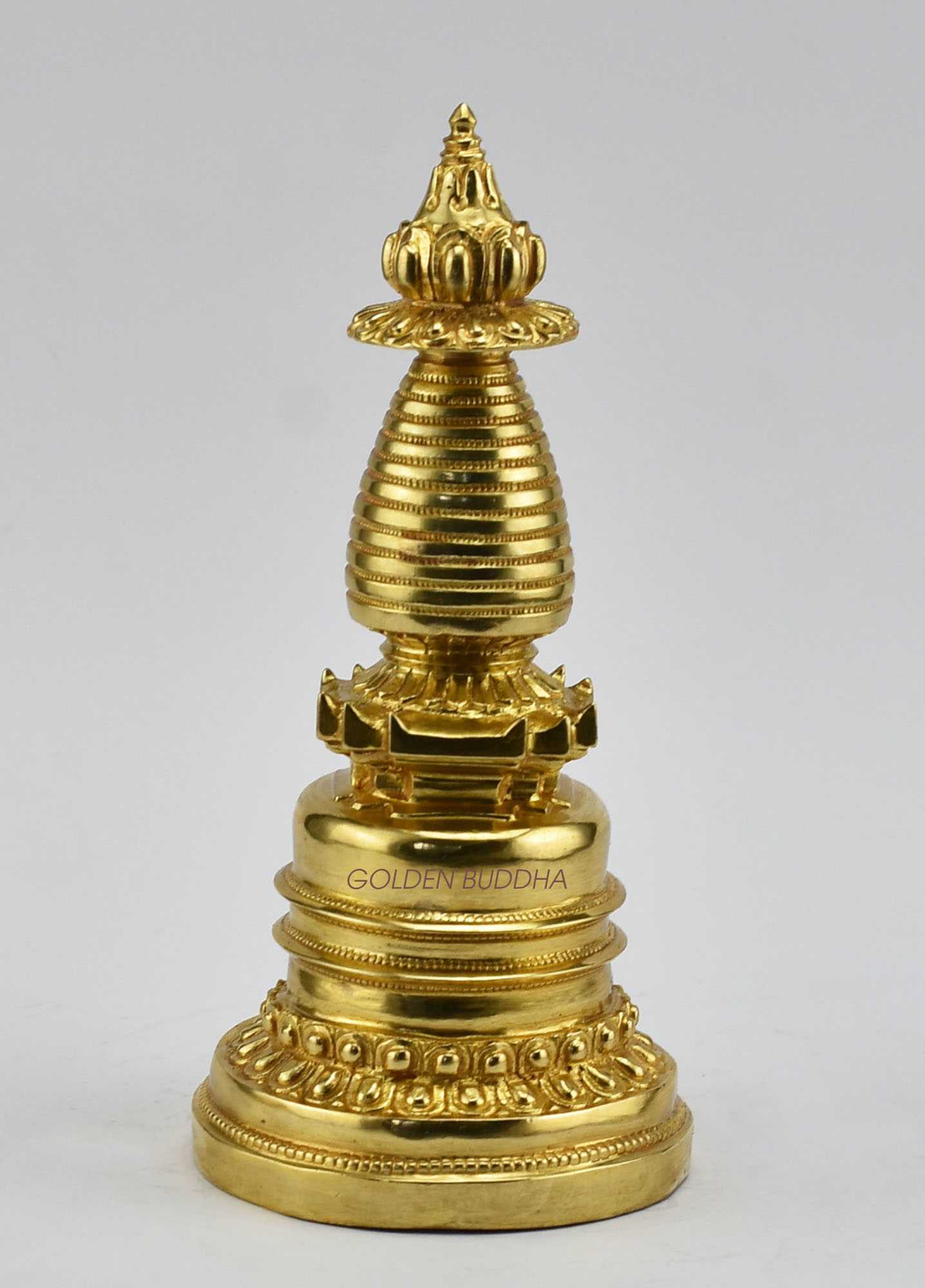
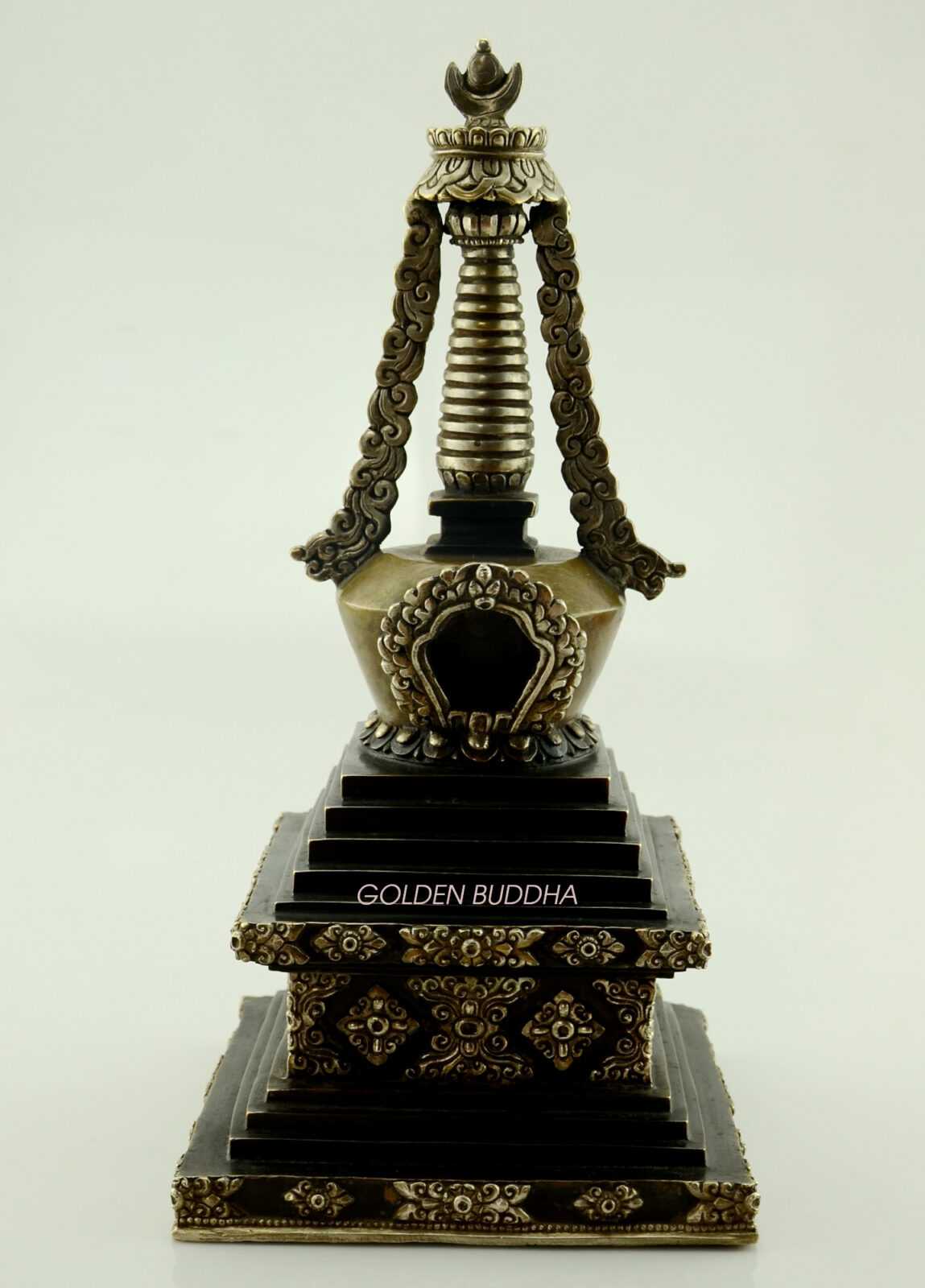
Two of our stupas are made in the Kadam style, the classic Tibetan form named for the Kadampa school founded in the eleventh century after Atisha brought his lineage from India — austere in outline where later styles grew ornate. The third is a larger 12 inch chorten in silver plated oxidized copper, its darkened surface throwing the silver detail forward.
Each Tibetan stupa here is hand crafted in Patan by the lost wax method, which is what allows the fine framework and carving to hold their detail, in sizes from 7.75 to 12 inches and finished in fully gilded 24K gold or silver over oxidized copper. Browse the selection below, or see the Buddha statues and Tibetan ritual items that complete a shrine.
Showing all 3 resultsSorted by popularity
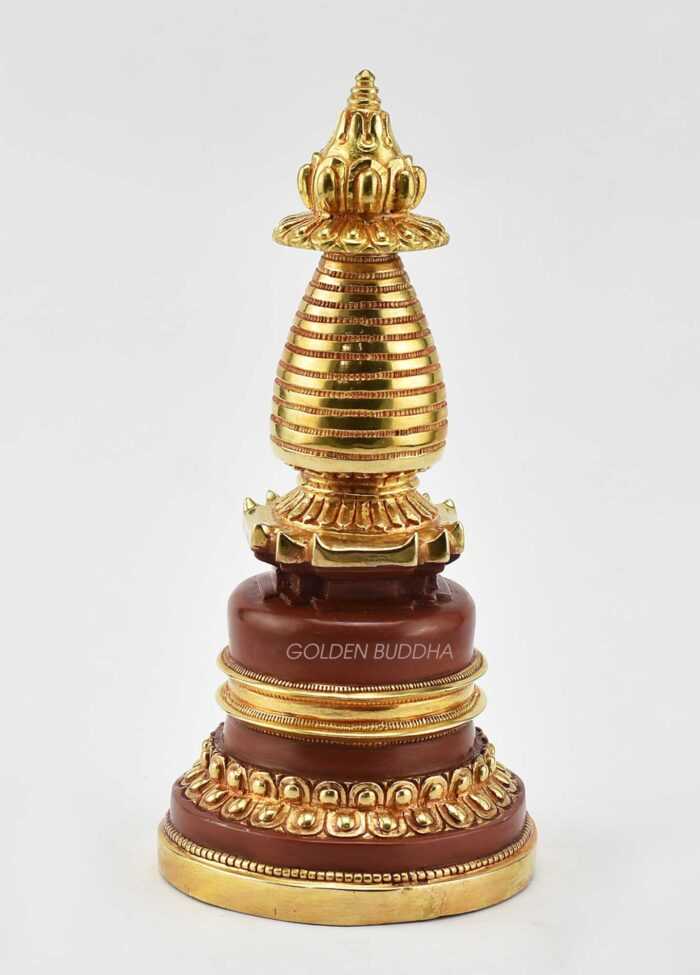
7.75″ Kadam Style Stupa, 24K Gold Finish, Handmade in Nepal
Original price was: $639.00.$389.00Current price is: $389.00.Add to Cart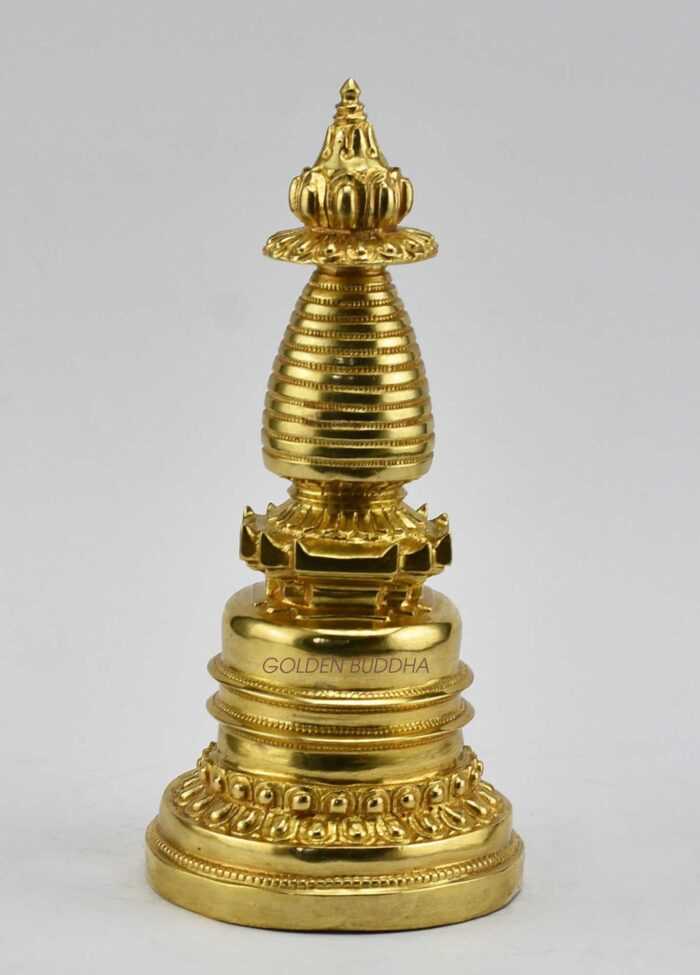
Fully Gold Gilded, Kadam Style Chorten, 8″, 24K Gold Finish, Handmade in Nepal
Original price was: $739.00.$429.00Current price is: $429.00.Add to Cart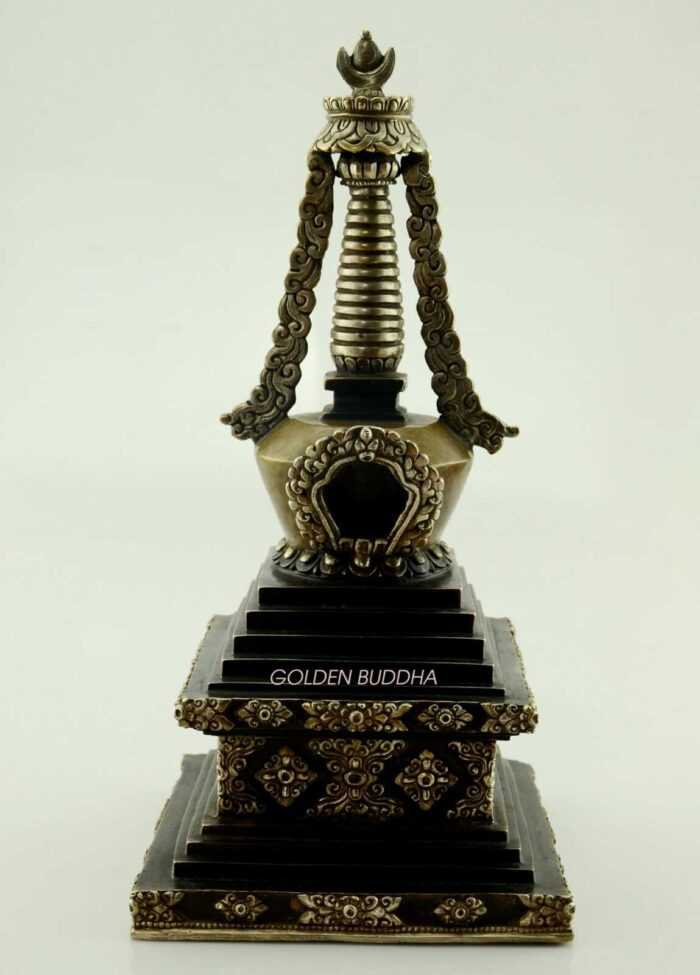
Stupa 12″ Silver Plated Oxidized Copper Handmade (Chorten)
Original price was: $899.00.$659.00Current price is: $659.00.Add to Cart