
Je Tsongkhapa Statue with Disciples | Gelug Founder & Disciple Sets
Explore our collection of authentic Guru Tsongkhapa statues with disciples, handcrafted in Patan, Nepal by master Newar artisans using the traditional lost wax sculpting method. Each statue is cast in fine copper alloy and finished with options including 24K gold fire gilding, antiquated oxidized copper, and hand-painted details with traditional Himalayan Buddhist ornamentation.
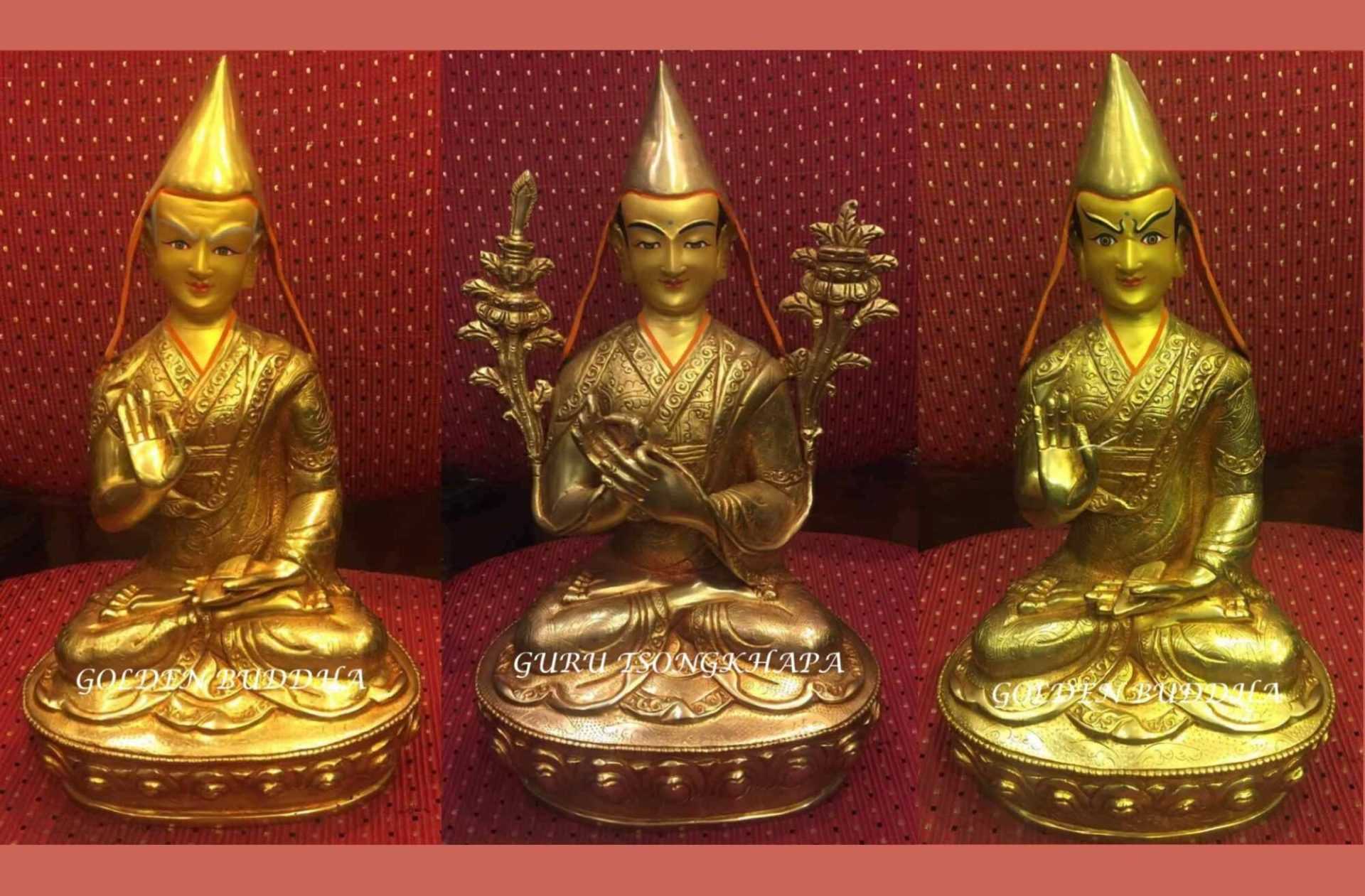
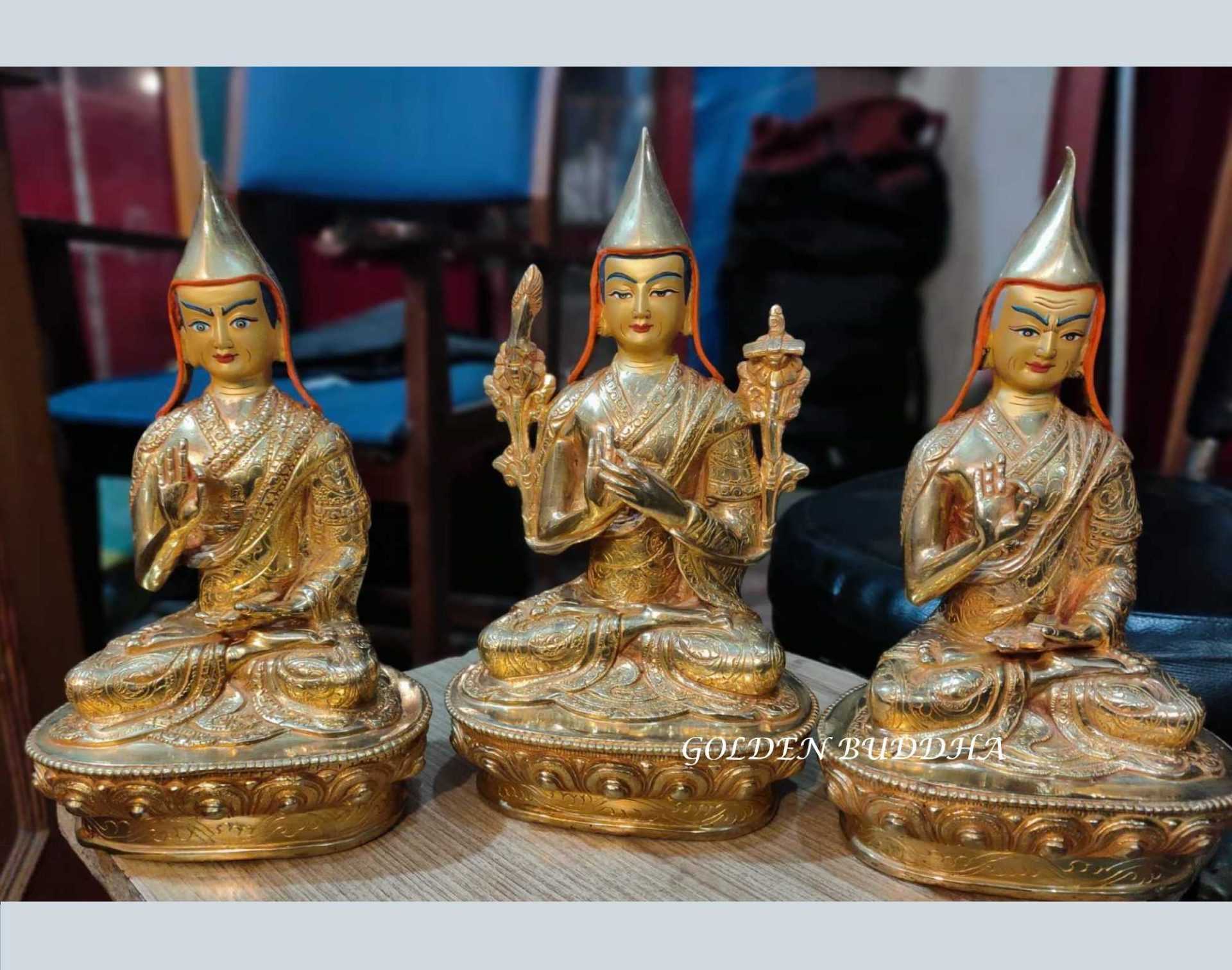
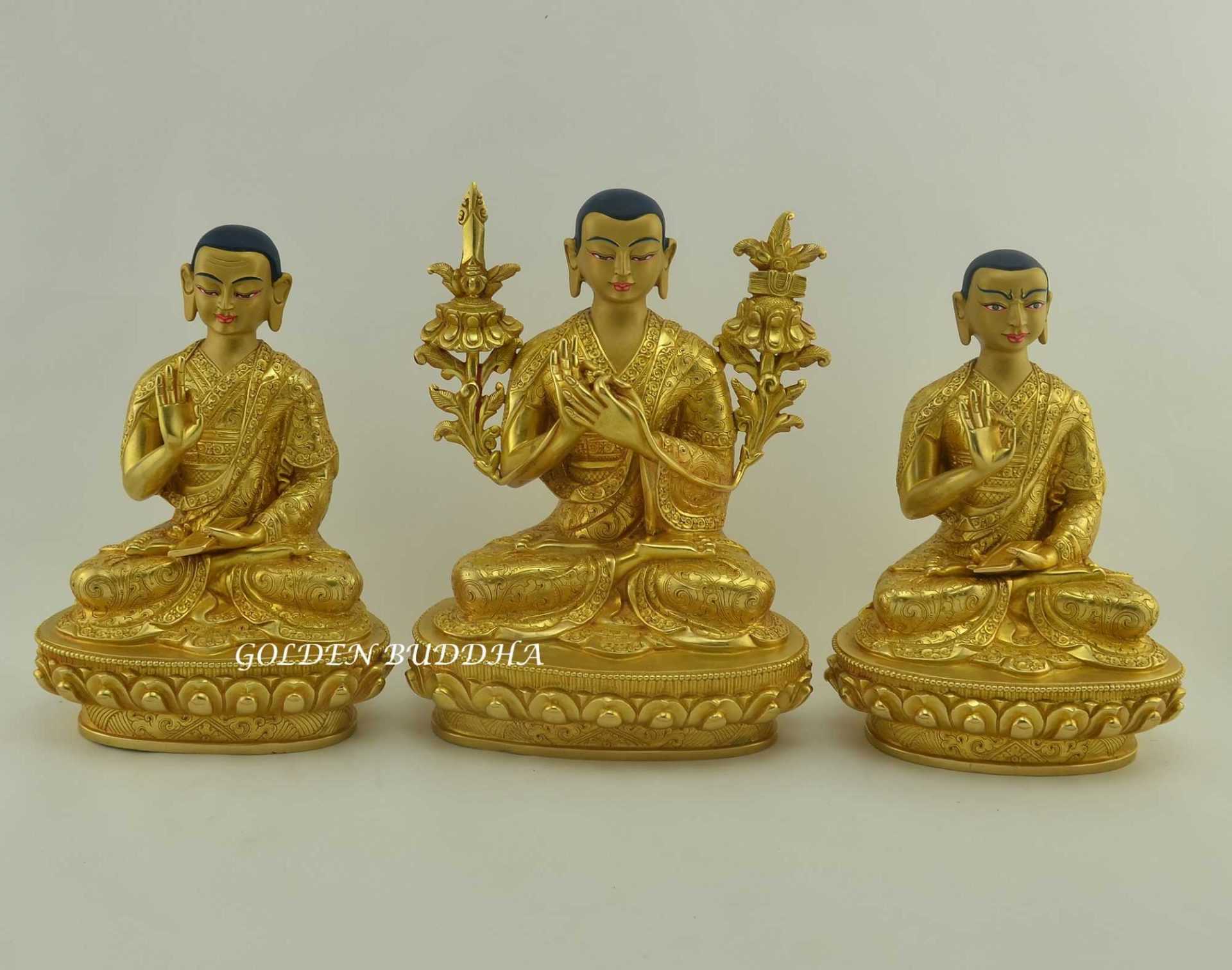
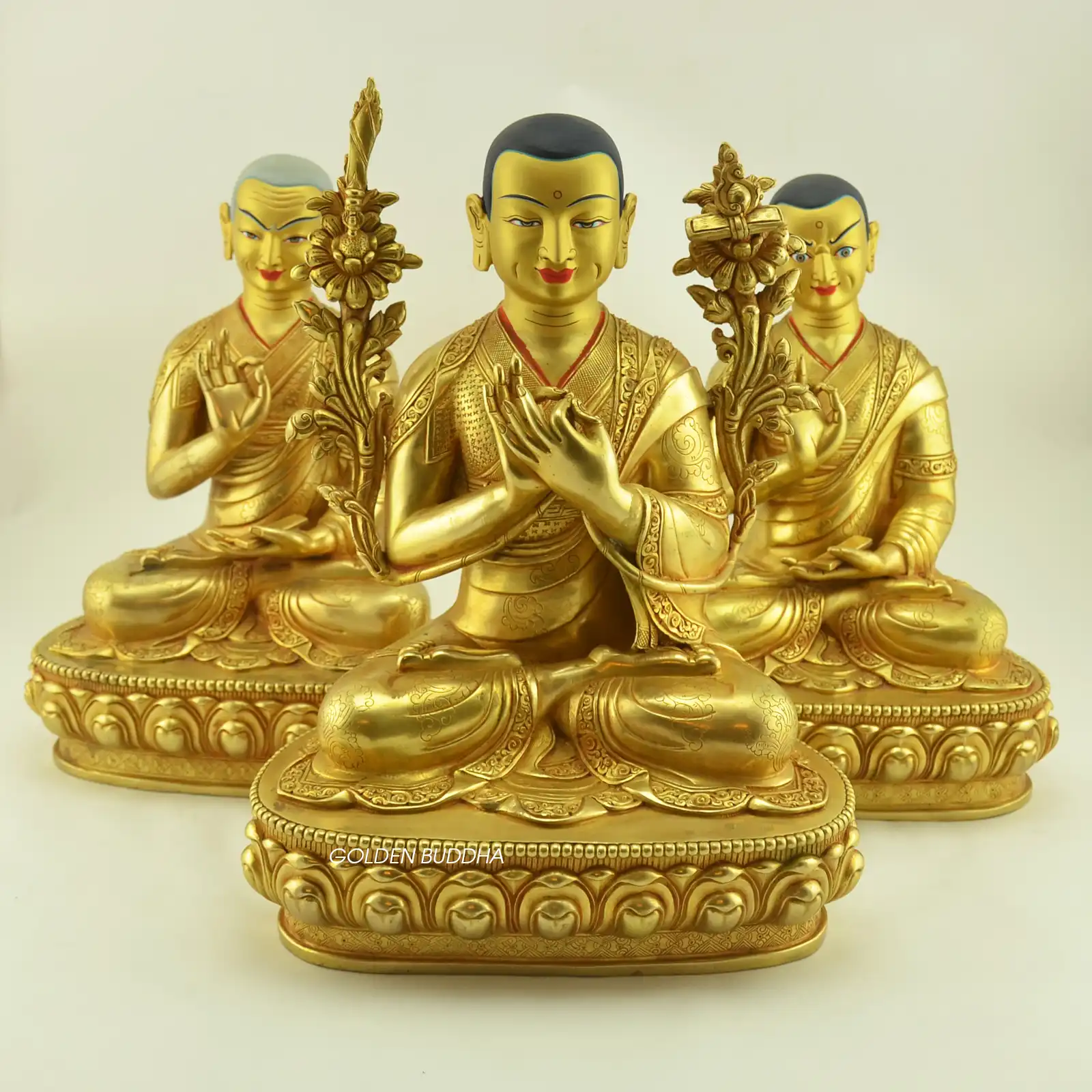
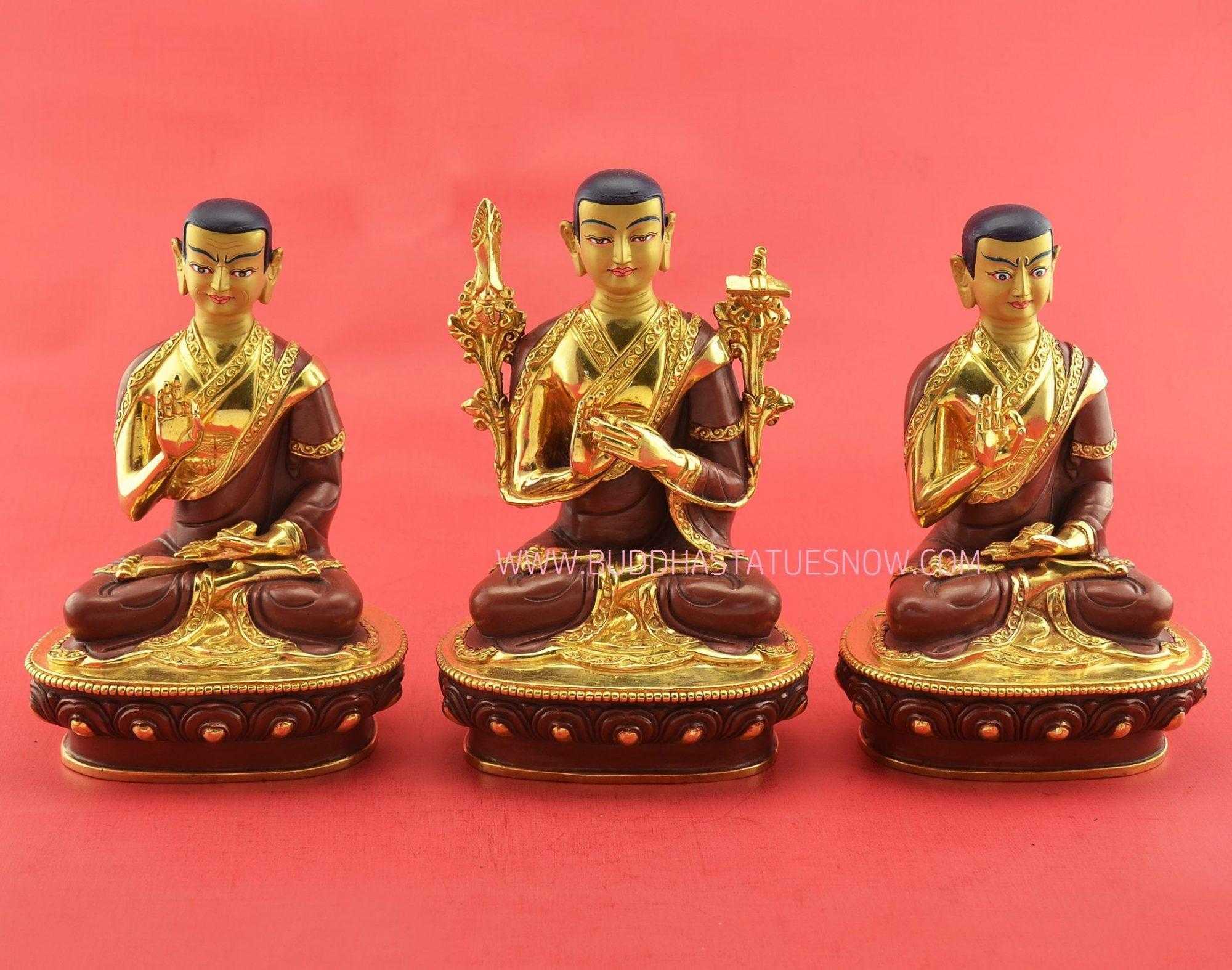
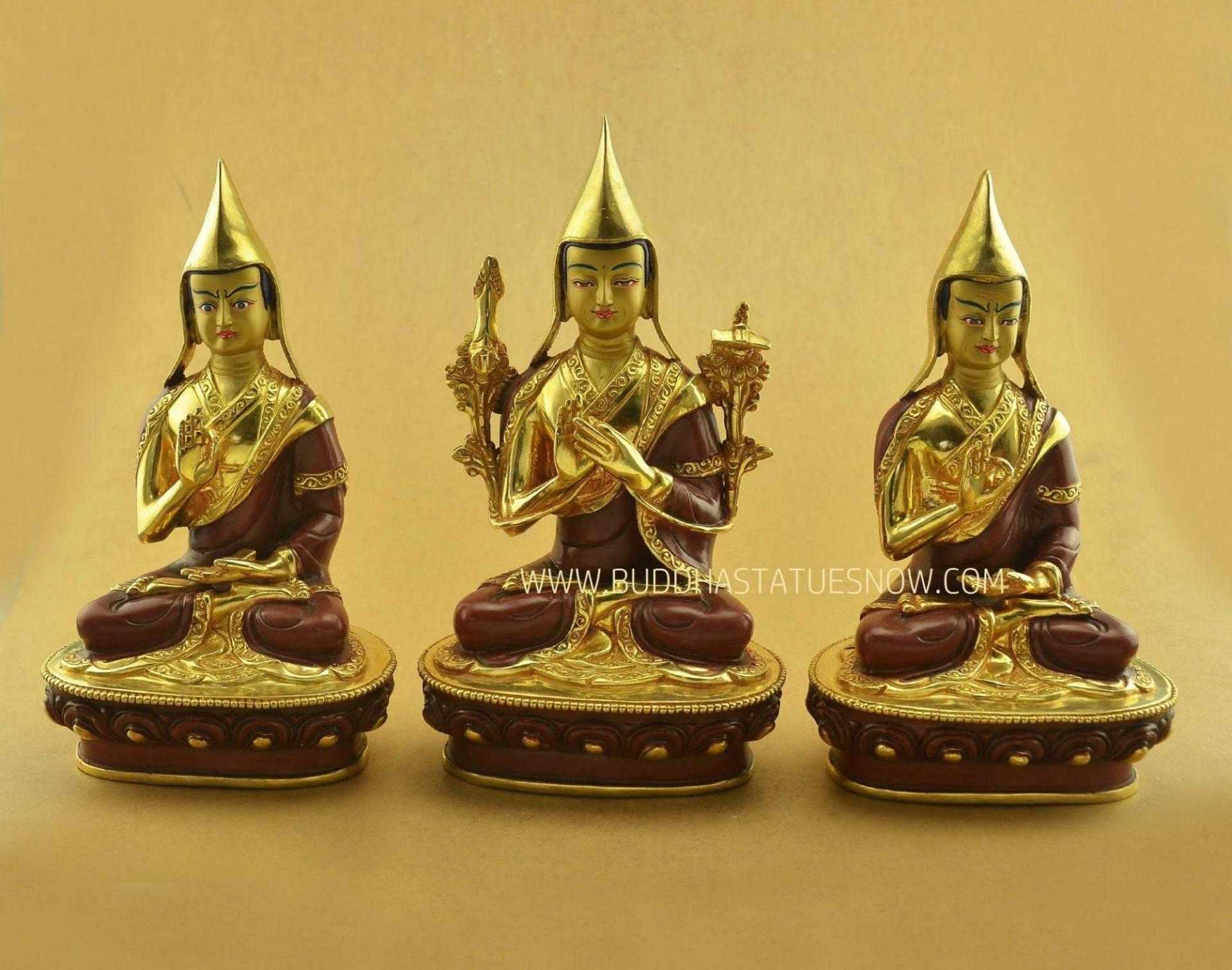
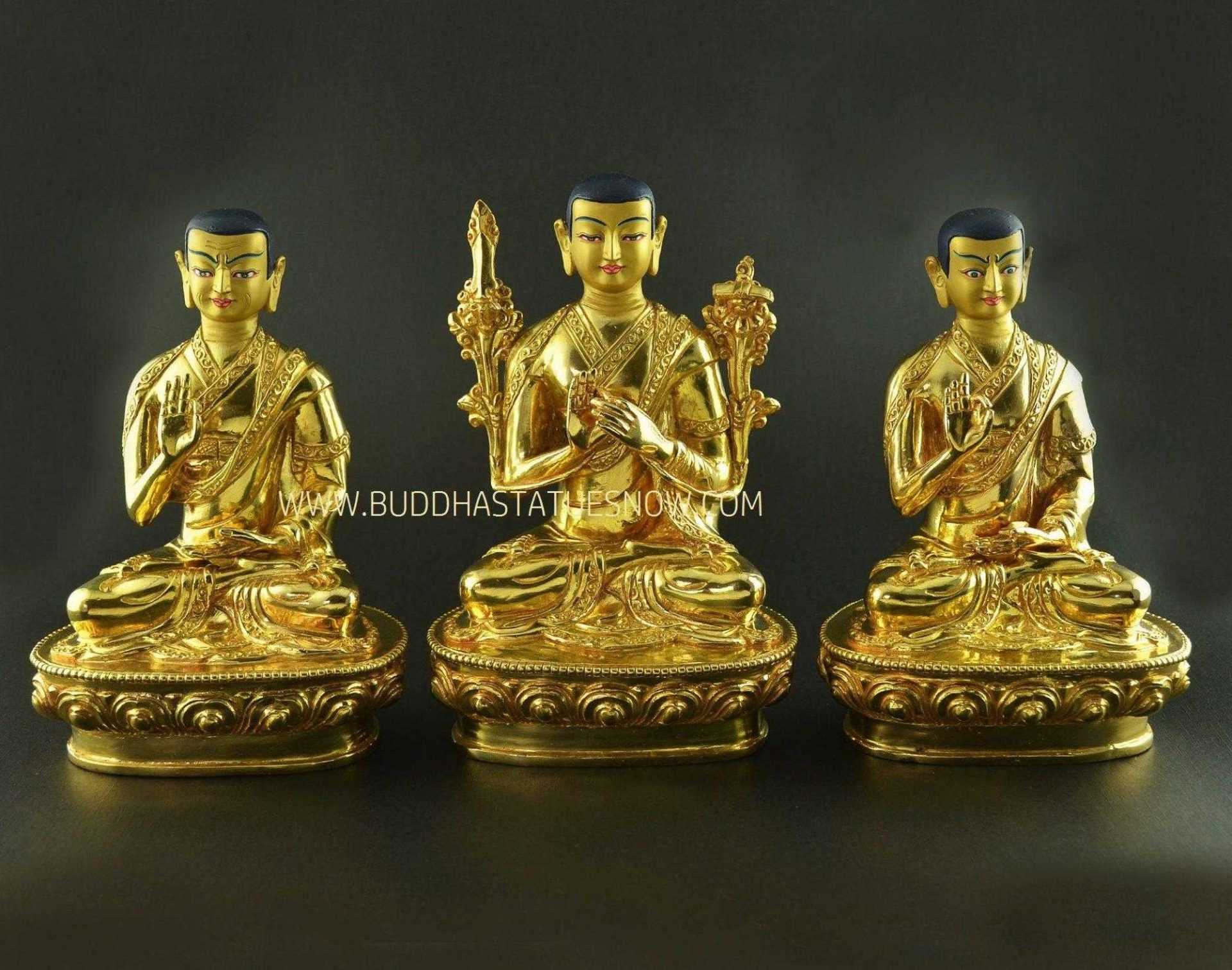
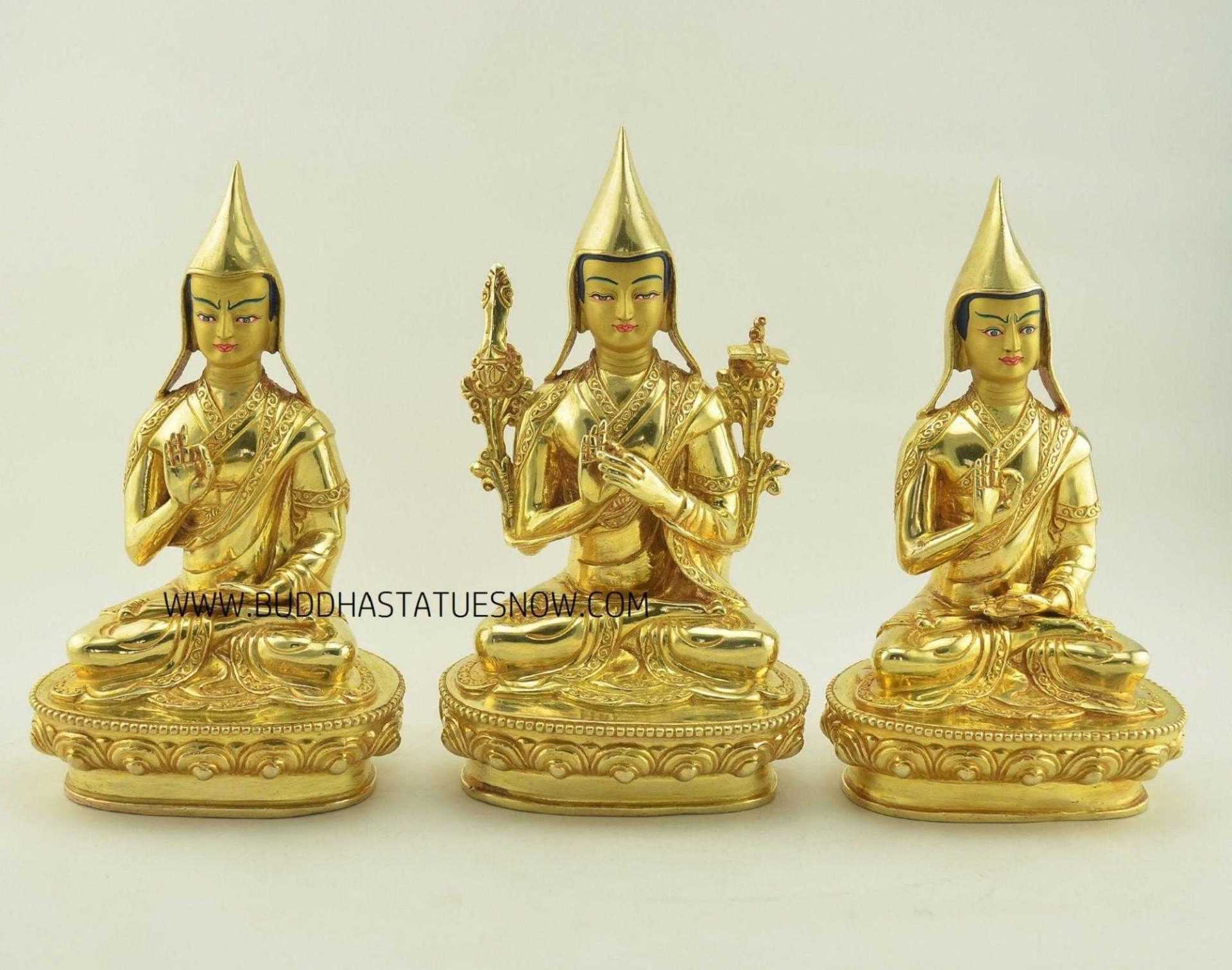
Guru Tsongkhapa — also known as Je Tsongkhapa — was the founder of the Gelug school of Tibetan Buddhism and is regarded as an emanation of Manjushri, the Bodhisattva of Wisdom. His statues are immediately recognizable by the pointed yellow Gelug pandita hat (we also display statue sets without the Gelug pandita hat), twin lotus flowers rising over each shoulder bearing the sword of wisdom and the Prajnaparamita Sutra, and the Dharmachakra mudra — the gesture of Turning the Wheel of Dharma. A Guru Tsongkhapa statue with his two disciples is a natural choice for Gelug practitioners, Dharma centers, monasteries, and collectors of sacred Himalayan Buddhist art.
Most statues in this collection are presented as the traditional three-figure set — Guru Tsongkhapa seated at center with his two principal disciples Gyaltsabje and Khedrubje flanking him — representing the Gelug school’s trinity of wisdom, compassion, and power. Each piece is selected for iconographic accuracy, authentic craftsmanship, and spiritual significance. If you are interested in a stand alone Guru Tsongkhapa statue or improvised statue set contact me for details — browse the collection below.
Related Tibetan Guru Statues
Showing all 8 resultsSorted by popularity
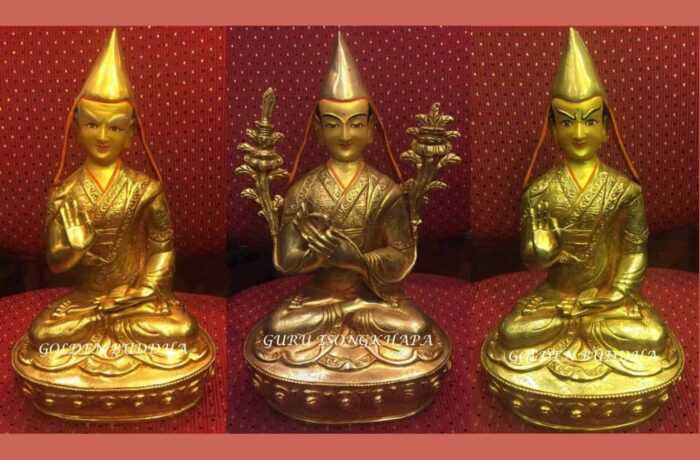
Je Tsongkhapa Statue with Disciples | 12.5″ | Fire Gilded in 24K Gold
Original price was: $3,799.00.$2,899.00Current price is: $2,899.00.Add to Cart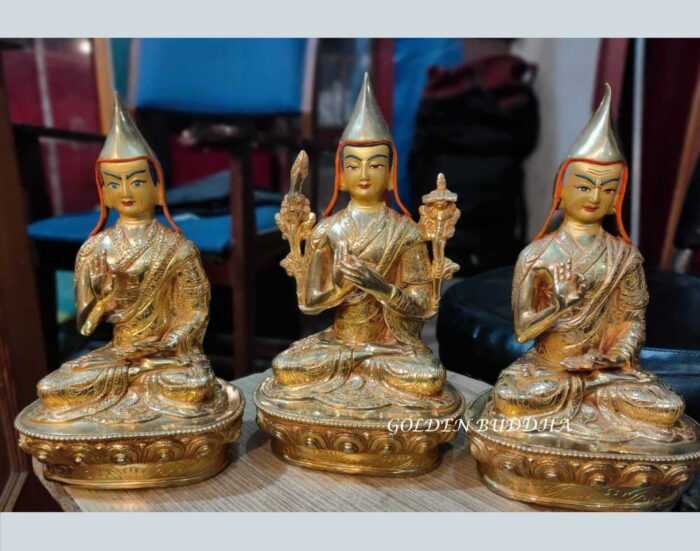
Je Tsongkhapa Statues Set | 8-inch | Fire Gilded in 24K Gold
Original price was: $2,799.00.$2,099.00Current price is: $2,099.00.Add to Cart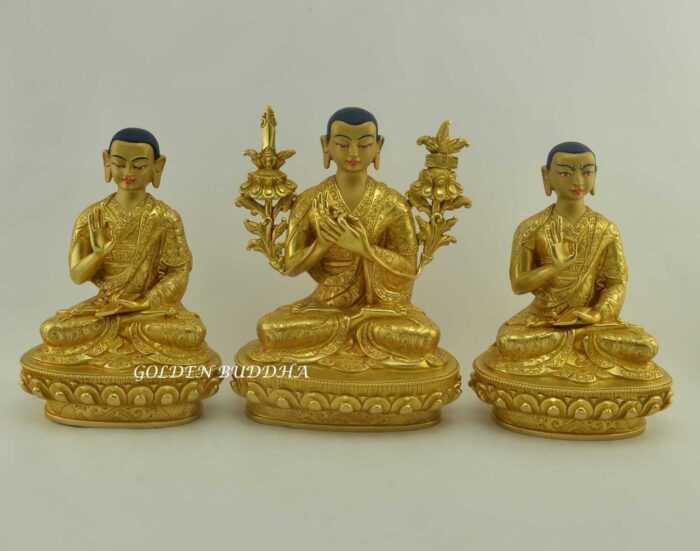
Guru Tsongkhapa Statue Set | 8.5-inch | Fully 24K Gold Gilded
Original price was: $3,499.00.$2,699.00Current price is: $2,699.00.Add to Cart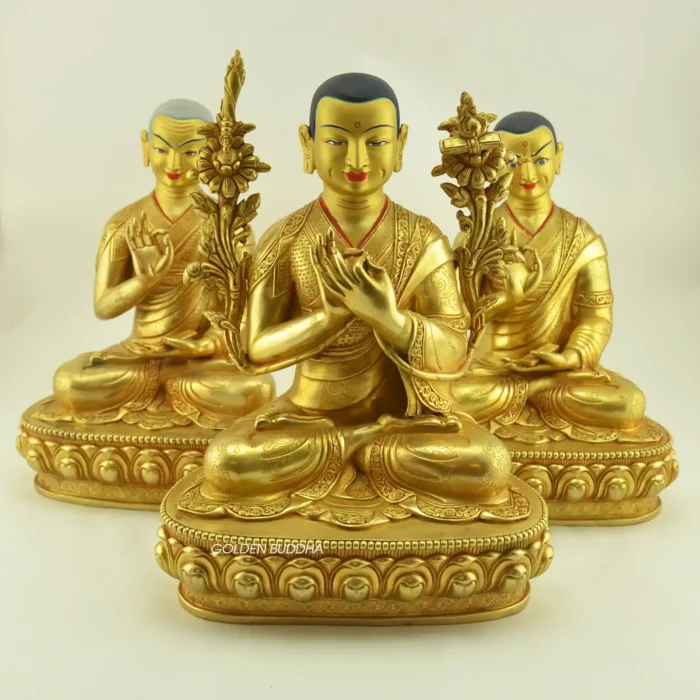
Je Tsongkhapa Statue Set | 12.5-inch | Fire Gilded in 24K Gold
Original price was: $7,379.00.$5,399.00Current price is: $5,399.00.Add to Cart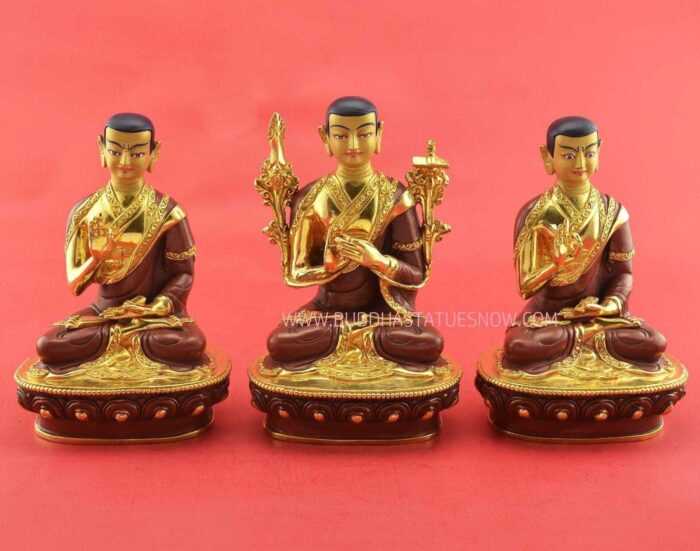
Antiquated Je Tsongkhapa Statues Set | 8-inch | 24K Gold Gilded
Original price was: $2,599.00.$1,999.00Current price is: $1,999.00.Add to Cart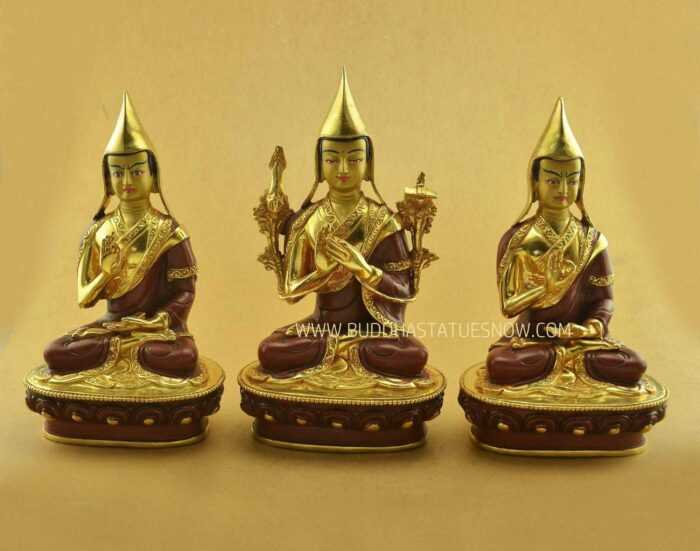
Guru Tsongkhapa Sculpture Set | 9.25-inch | Antiquated 24K Gold
Original price was: $2,899.00.$2,399.00Current price is: $2,399.00.Add to Cart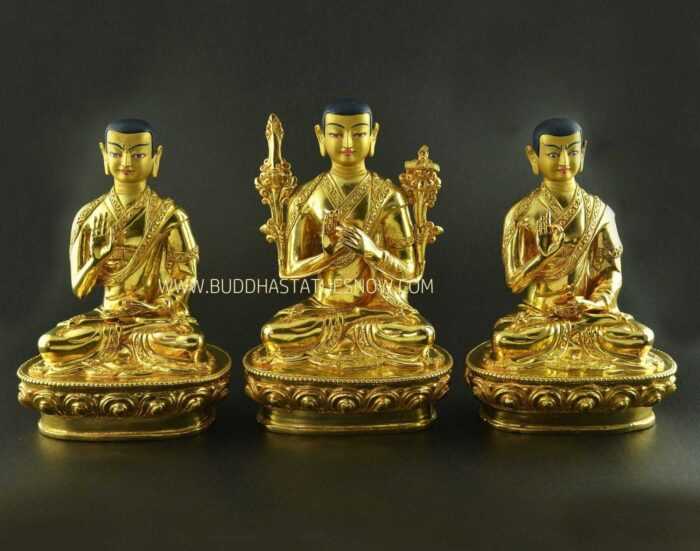
Guru Tsongkhapa Sculpture Set | 8-inch | 24K Gold Gilded
Original price was: $3,299.00.$2,499.00Current price is: $2,499.00.Add to Cart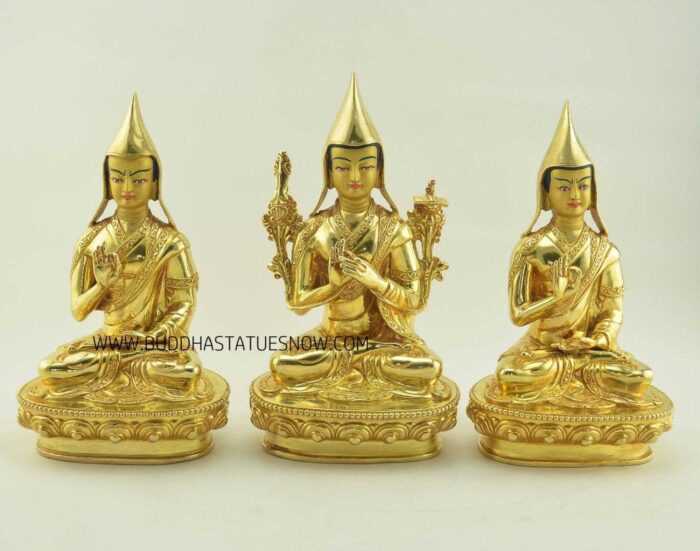
Guru Tsongkhapa Sculptures Set | 9.25-inch | 24K Gold Gilded
Original price was: $3,599.00.$2,699.00Current price is: $2,699.00.Add to Cart
Guru Tsongkhapa Statue Symbolism and Meaning
Guru Tsongkhapa, also known as Je Tsongkhapa, was the founder of the Gelug school of Tibetan Buddhism and remains one of the most revered masters in the Tibetan Buddhist tradition. His legacy is closely associated with wisdom, rigorous scholarship, monastic discipline, and the preservation and clarification of Buddhist teachings. The Gelug tradition is sometimes called the "Yellow Hat" school, after the distinctive pointed pandita hat worn by its monks and depicted on statues of Tsongkhapa himself.
Guru Tsongkhapa is traditionally shown seated with both hands in the Dharmachakra mudra, the gesture of teaching, with lotus stems rising to each shoulder supporting a sword and a volume of the Prajnaparamita scripture. This iconography echoes that of Manjushri, the Bodhisattva of Wisdom, reflecting the tradition that Tsongkhapa is regarded as an emanation of Manjushri. He is often depicted alongside his two principal disciples, Gyaltsab Je and Khedrub Je, forming a traditional three-figure set widely used in Gelug shrines. For a broader look at these symbols, see our guides to Buddha statue meaning and the Buddhist pantheon.
Materials, Sizes, and Finishes
Our Guru Tsongkhapa statues are handcrafted in Patan, in the Kathmandu Valley, using the traditional lost wax casting method practiced by Newari artisans for generations. Each piece begins as a wax model, cast in copper and then hand-finished, with the pandita hat, robes, sword, and scripture carved or chased by hand, so no two statues are ever exactly alike.
Finishes vary by piece: many statues and sets are fully or partly gold gilded using traditional fire gilding, where 24K gold is fused to the copper surface for a durable, rich finish, often with fine hand-carved engravings; and others are left with a natural oxidized or antiqued copper finish, typically with 24K gold detailing on the hat, robes, and ritual implements, for a more understated, aged look.
Sizes in our collection range from compact statue sets around 8 inches, suitable for a small altar or travel shrine, up to larger sets of 12 inches and more, intended as a centerpiece for a shrine room or Dharma center.
Frequently Asked Questions
Who is Guru Tsongkhapa?
Guru Tsongkhapa, also known as Je Tsongkhapa, was a fourteenth-century scholar, teacher, and reformer who founded the Gelug school of Tibetan Buddhism, sometimes called the 'Yellow Hat' tradition for the distinctive pandita hat worn by its monks and depicted on statues of Tsongkhapa himself. He remains one of the most revered masters in Tibetan Buddhism, closely associated with wisdom, scholarship, monastic discipline, and the preservation of Buddhist teachings.
What is typically included in a "Guru Tsongkhapa statue set"?
Many Guru Tsongkhapa statues are sold as a set of three figures: Tsongkhapa in the center, flanked by his two principal disciples, Gyaltsab Je and Khedrub Je. This grouping is a traditional and widely recognized representation of Tsongkhapa's lineage and teaching activity, and is a common choice for Gelug shrines and altars.
What do the sword and scripture symbolize, and how does this relate to Manjushri?
Guru Tsongkhapa is traditionally shown seated with both hands in the Dharmachakra mudra, the teaching gesture, with lotus stems rising to each shoulder supporting a sword and a volume of the Prajnaparamita scripture. This iconography directly echoes that of Manjushri, the Bodhisattva of Wisdom, reflecting the tradition that Tsongkhapa is regarded as an emanation of Manjushri, and his teaching activity as an expression of the same transcendent wisdom.
How does Guru Tsongkhapa relate to Guru Rinpoche?
Guru Tsongkhapa and Guru Rinpoche are both major lineage masters in Tibetan Buddhism, though from different eras and traditions. Guru Tsongkhapa was a fourteenth-century scholar and reformer who founded the Gelug tradition, while Guru Rinpoche helped establish Vajrayana Buddhism in Tibet in the eighth century and is especially central to the Nyingma tradition. Statues of both are commonly found in shrines representing the broader lineage of Tibetan Buddhist masters.
Are these Guru Tsongkhapa statues authentic and certified?
Yes. Every Guru Tsongkhapa statue in this collection is handmade in Patan, Nepal, using traditional lost wax casting and 24K fire gilding. Statues include a certificate of authenticity verifying materials, technique, and origin.
How do I choose the right size for my altar?
For a personal altar or meditation space, statue sets in the 8-9 inch range are common. For a temple, Dharma center, or shared shrine room, larger sets of 12 inches and above are often chosen as a focal point.