
Manjushri Statues | Bodhisattva of Wisdom — Handmade in Nepal
Explore our collection of authentic Manjushri statues from Nepal, created by skilled Himalayan artisans using traditional lost wax casting methods. Manjushri is one of the most revered Bodhisattvas in Mahayana and Vajrayana Buddhism, representing transcendent wisdom, clarity of mind, and enlightened understanding.
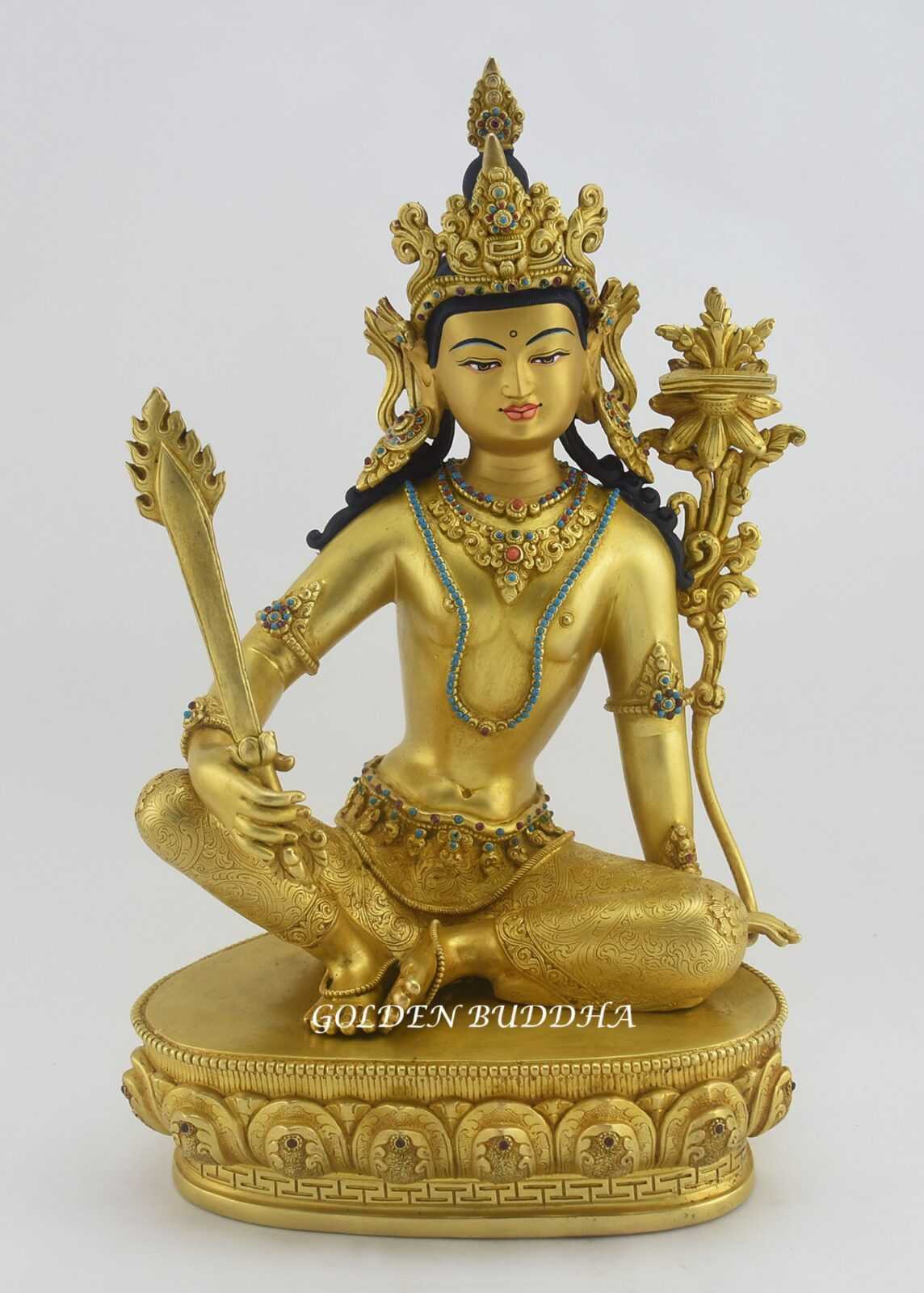
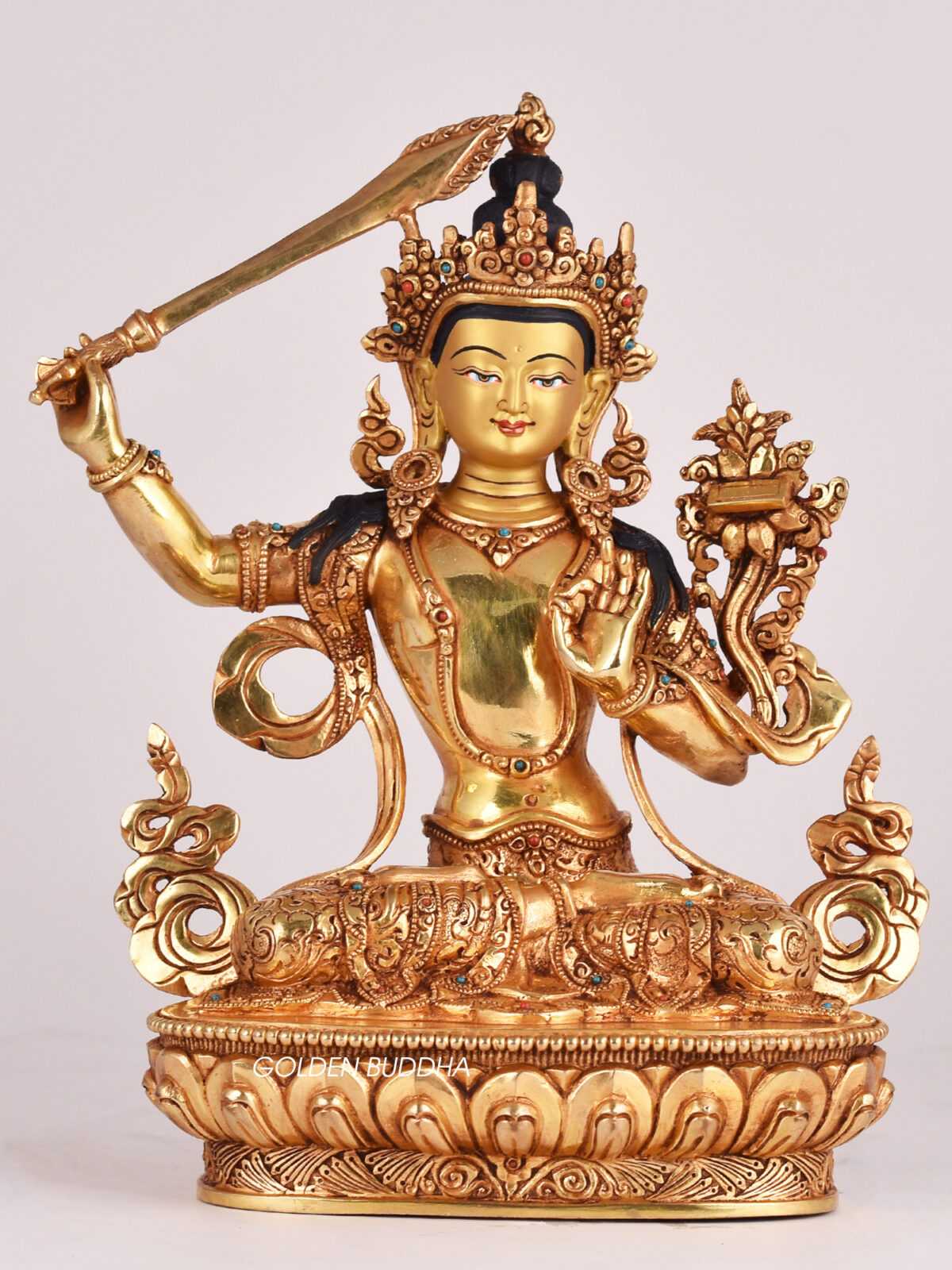
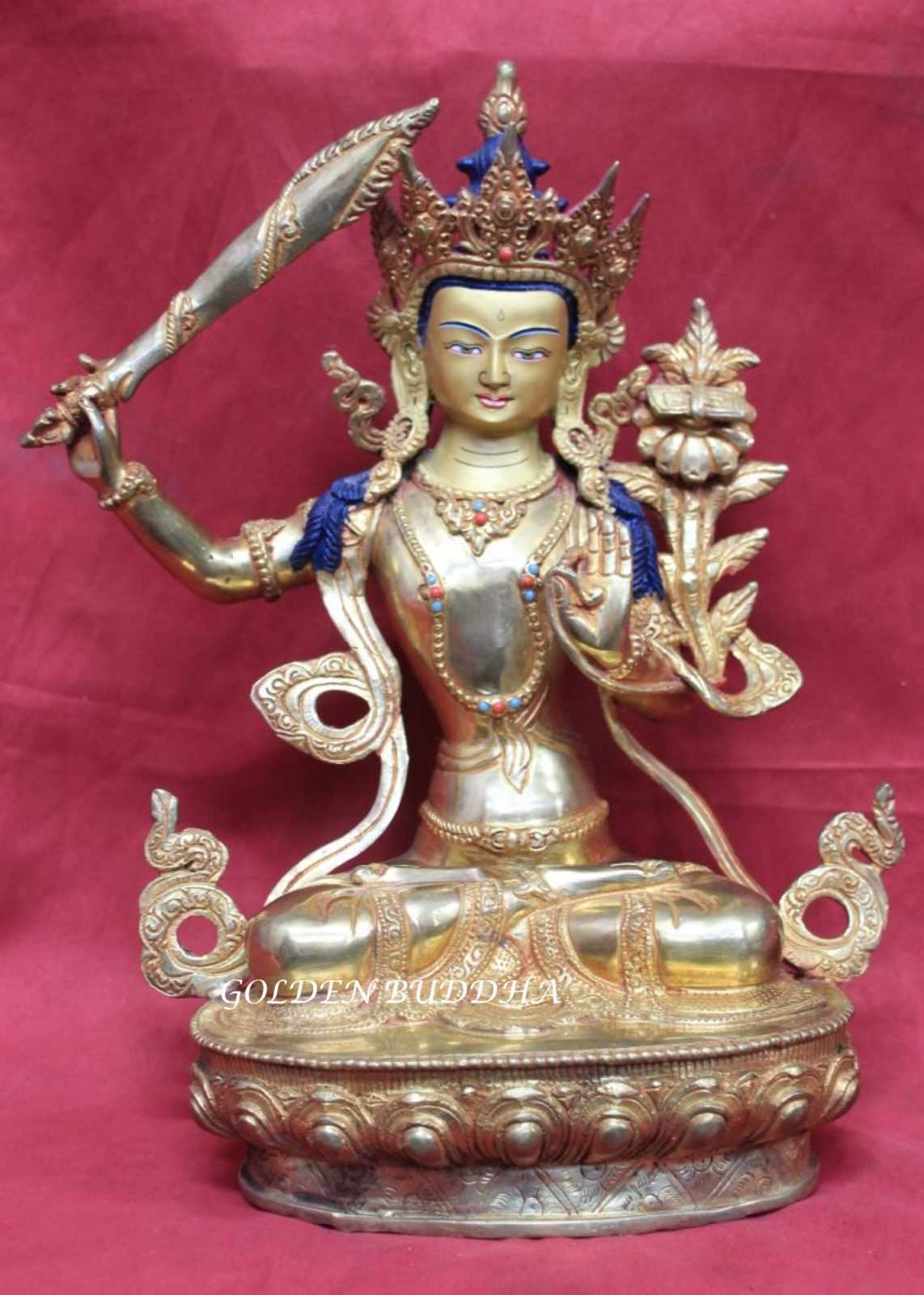
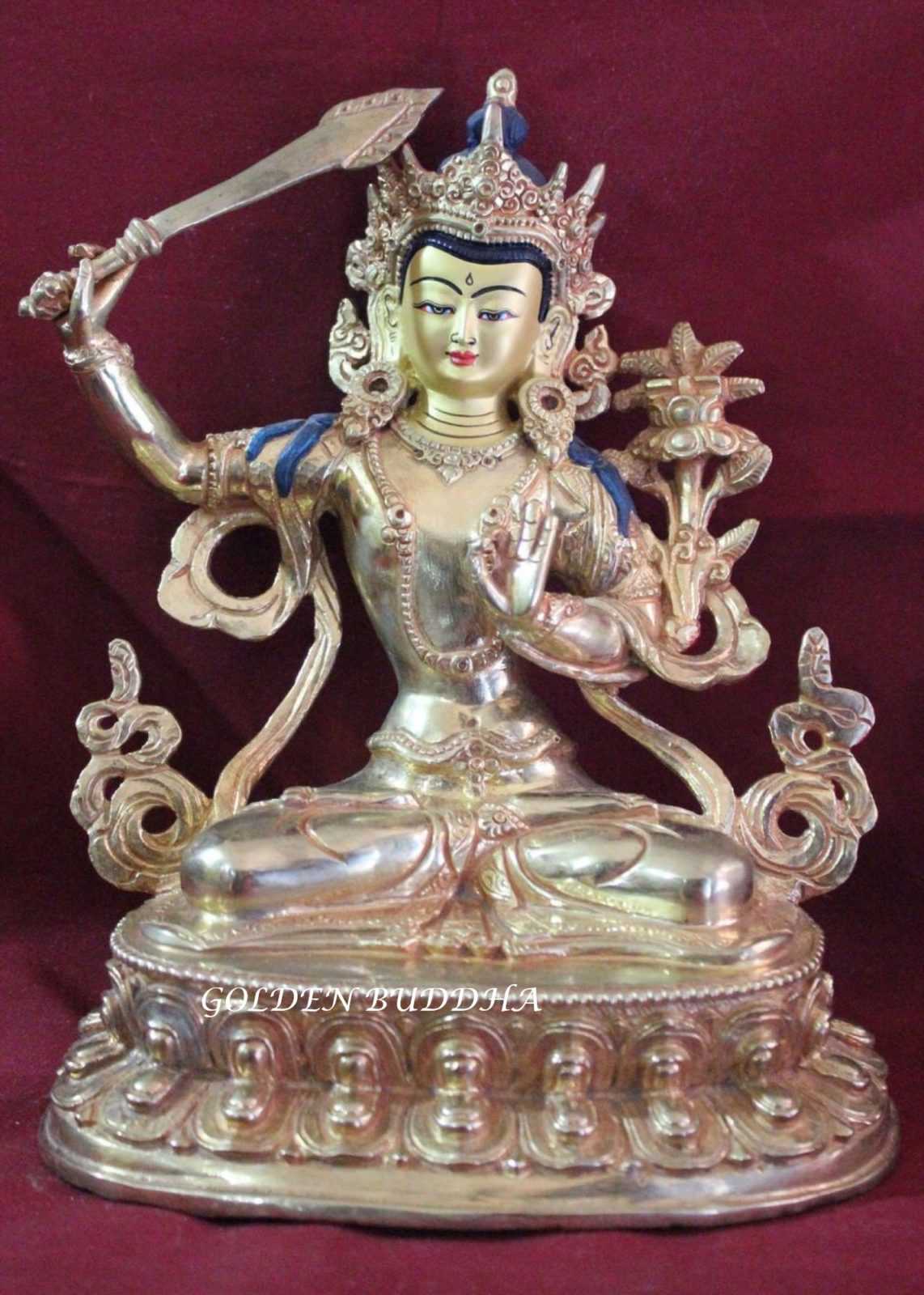
Manjushri is traditionally depicted holding the flaming sword of wisdom in his right hand, symbolizing the cutting of ignorance and delusion, while his left hand supports a lotus bearing the Prajnaparamita scripture, representing perfected wisdom. His peaceful yet powerful presence makes him especially meaningful for practitioners seeking knowledge, discernment, and spiritual insight.
Many of our Manjushri statues are handcrafted in copper, carefully detailed by hand, and traditionally finished using genuine 24K gold fire gilding. These sacred works reflect the master craftsmanship of Patan and the Kathmandu Valley, where Nepali artisans have supplied Buddhist monasteries, Dharma centers, practitioners, and collectors for generations.
Choose a handmade Manjushri statue for a meditation altar, shrine room, Dharma center, temple, study space, or fine Himalayan Buddhist art collection.
Related Bodhisattva Statues:
Green Tara Statues | Avalokiteshvara Statues | Vajrasattva Statues | Vajrapani Statues | White Tara Statues
Showing 1–12 of 21 resultsSorted by popularity
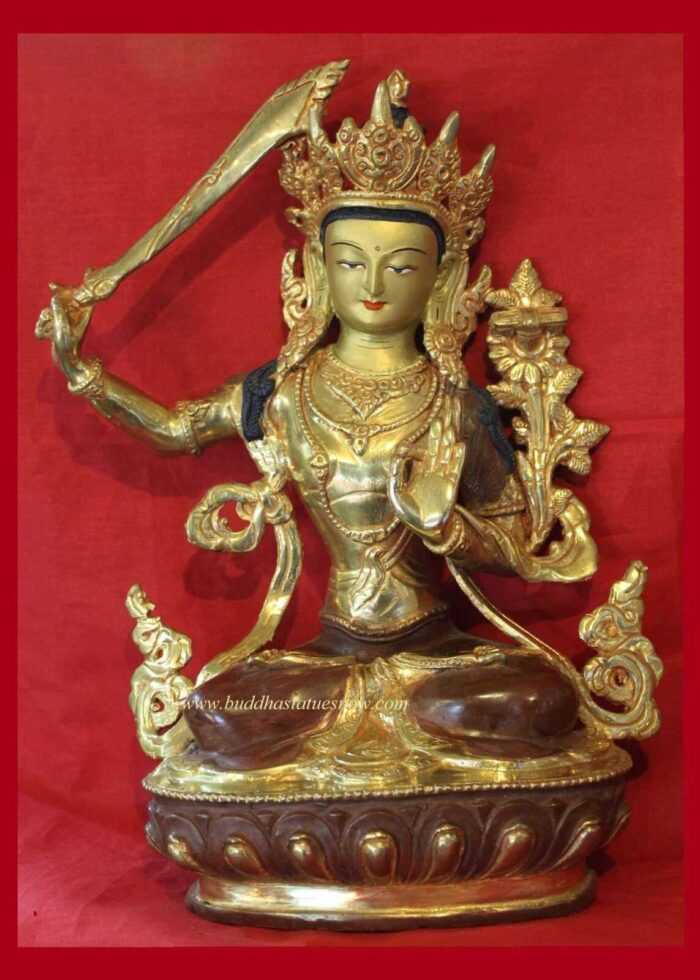
Manjushri Jampelyang Sculpture | 8-inch | 24K Gold Gilded
Original price was: $1,399.00.$899.00Current price is: $899.00.Add to Cart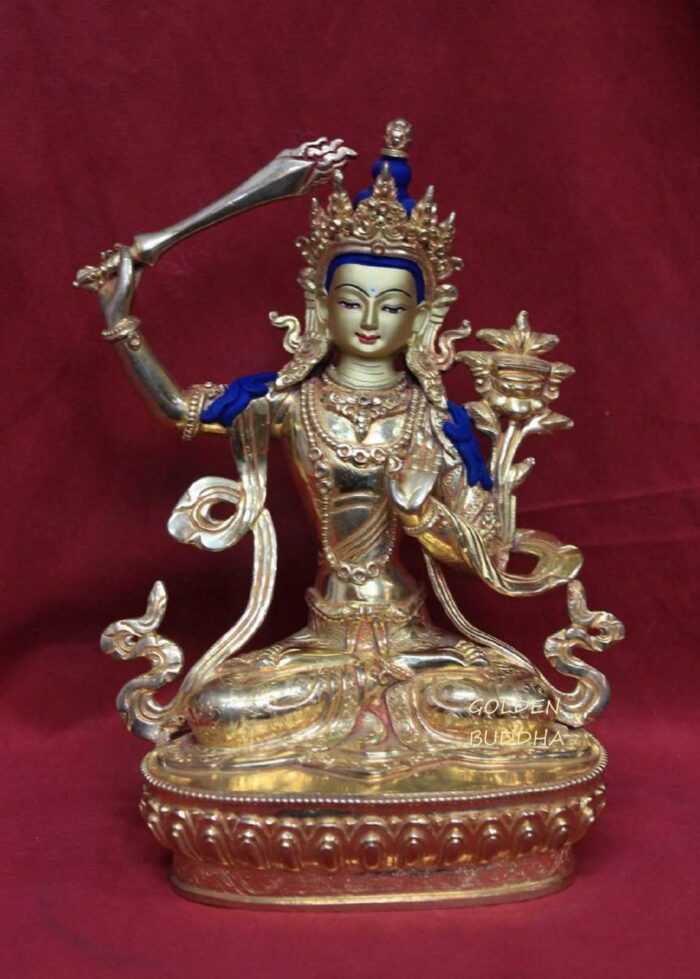
Manjushri Jampelyang Statue | 8.5″ Sword of Wisdom | 24K Gold
Original price was: $1,399.00.$999.00Current price is: $999.00.Add to Cart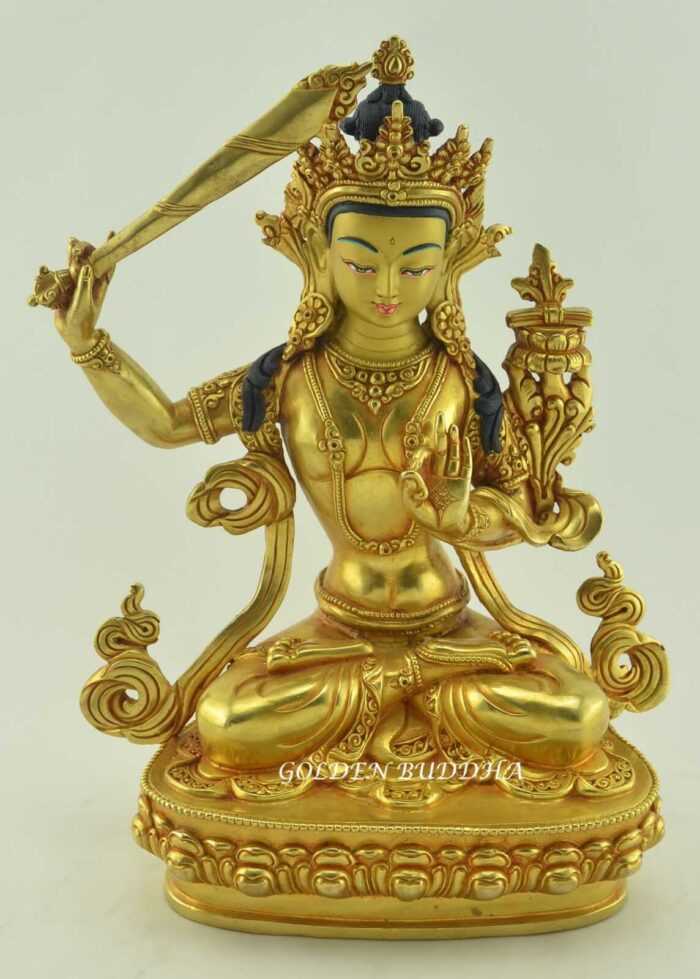
Manjushri Sculpture | 9.5-Inch 24K Gold Gilded | Jampelyang
Original price was: $1,499.00.$1,099.00Current price is: $1,099.00.Add to Cart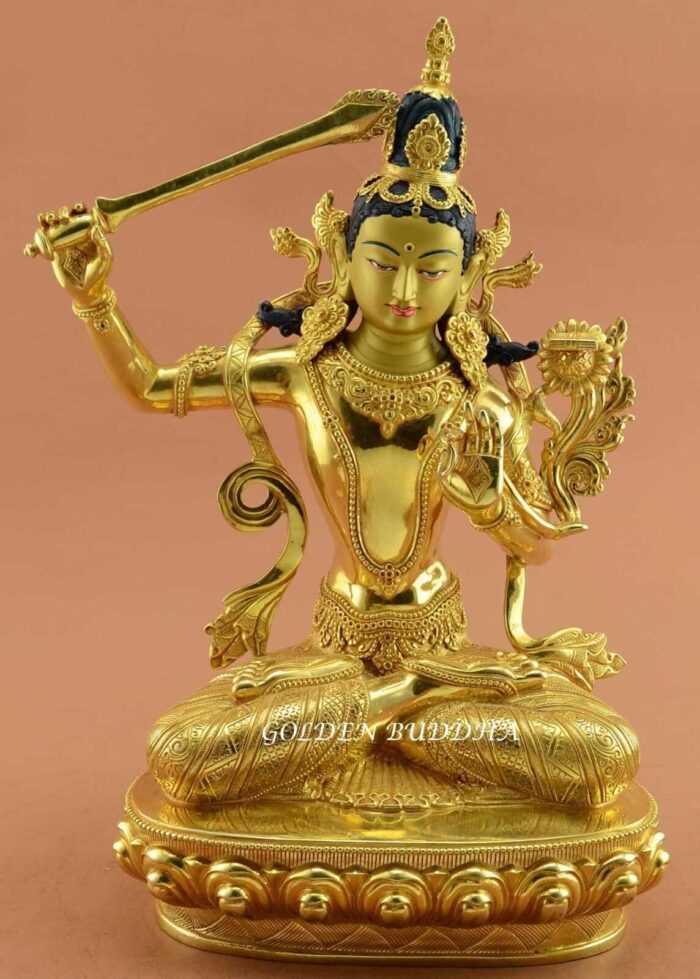
Nepali Manjushri Sculpture | Sword of Wisdom, 24K Gold | 14″
Original price was: $3,599.00.$2,699.00Current price is: $2,699.00.Add to Cart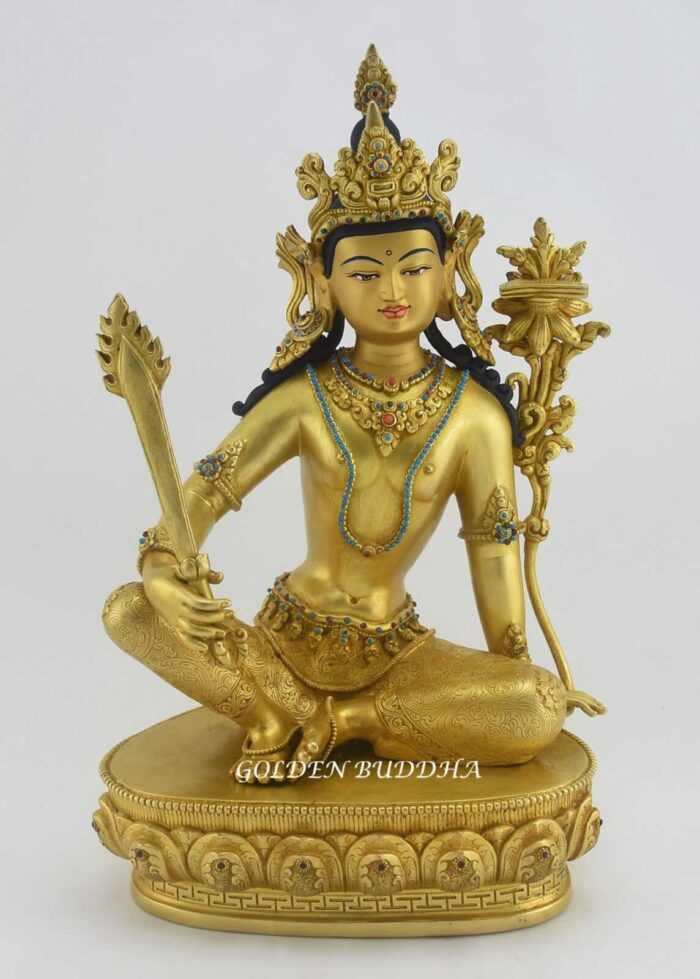
Masterpiece Manjushri Sculpture 13″ | 24K Gold | Authentic Nepal
Original price was: $6,559.00.$4,799.00Current price is: $4,799.00.Add to Cart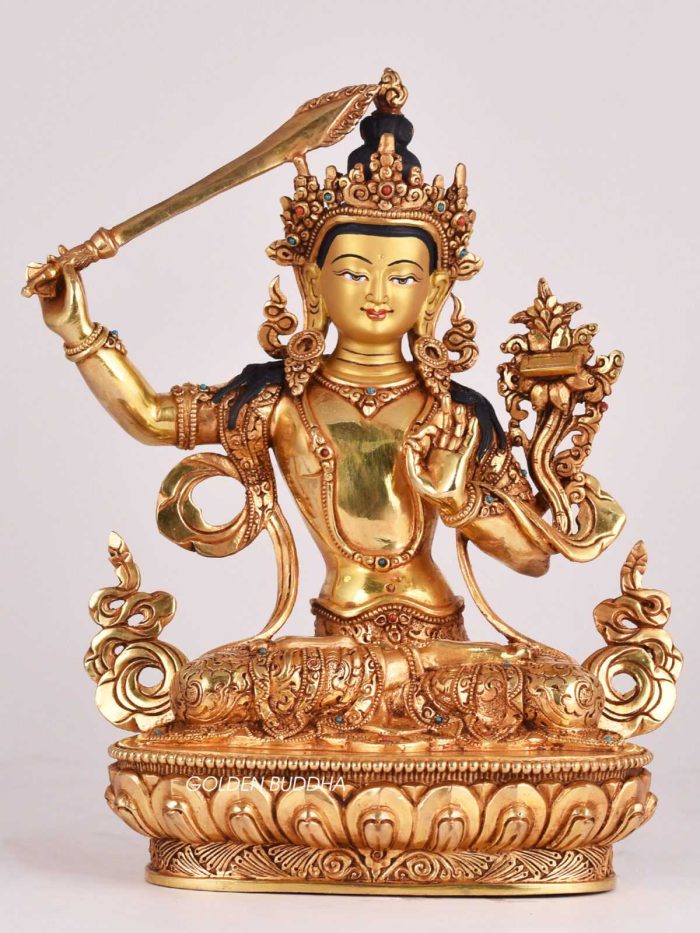
Tibetan Jampelyang Statue | 9.25-Inch 24K Gold | Manjushri
Original price was: $1,875.00.$1,375.00Current price is: $1,375.00.Add to Cart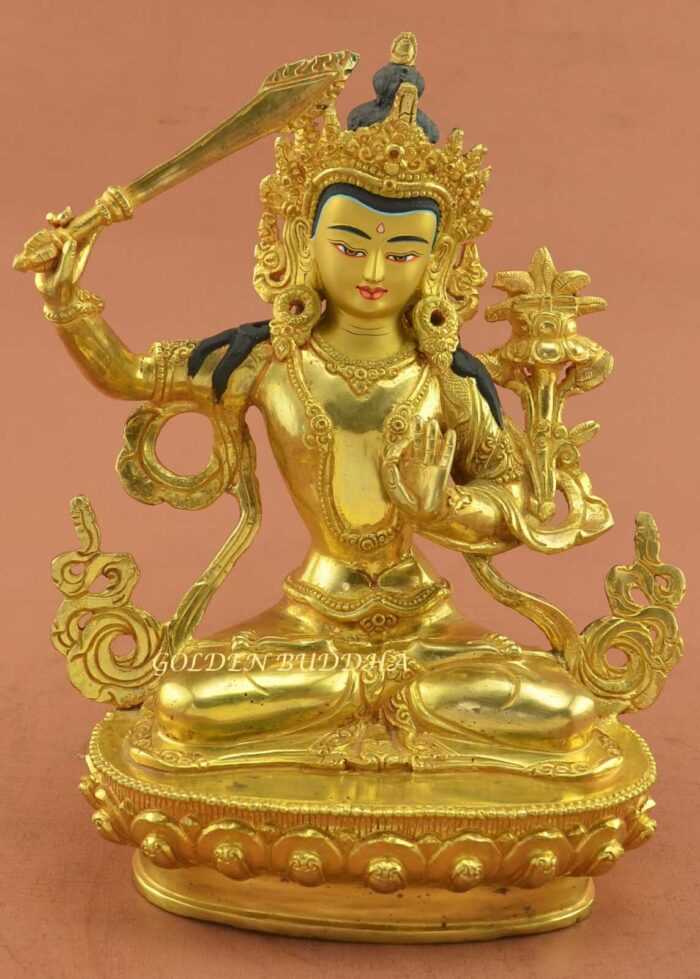
Wisdom Bodhisattva Sculpture | 8.75-Inch 24K Gold | Manjushri
Original price was: $1,399.00.$899.00Current price is: $899.00.Add to Cart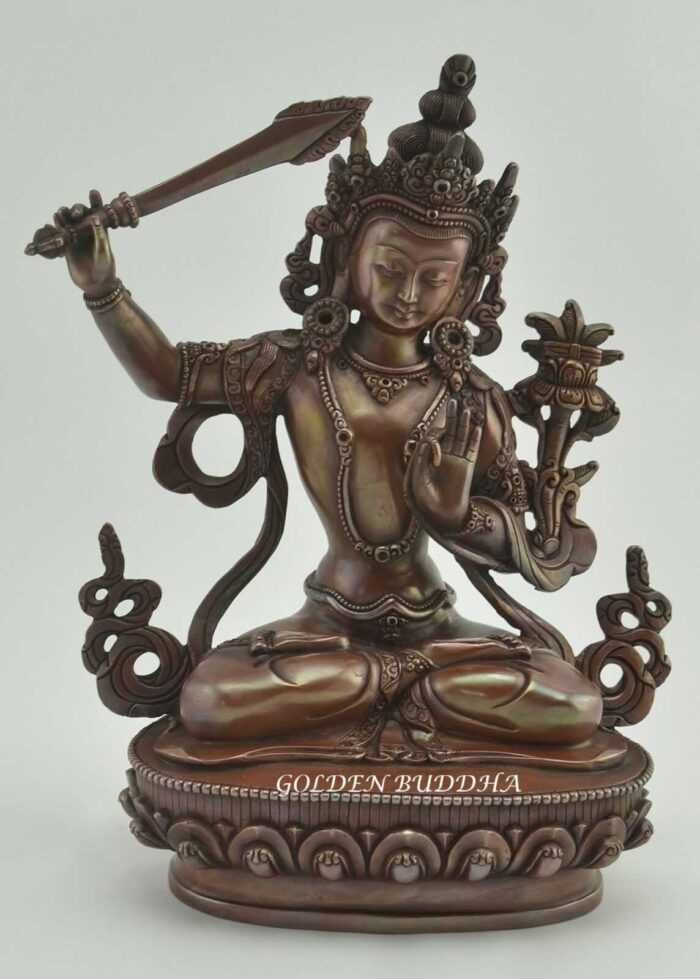
Oxidized Manjushri Statue | 9″ Buddha’s Wisdom | Authentic Nepal
Original price was: $999.00.$799.00Current price is: $799.00.Add to Cart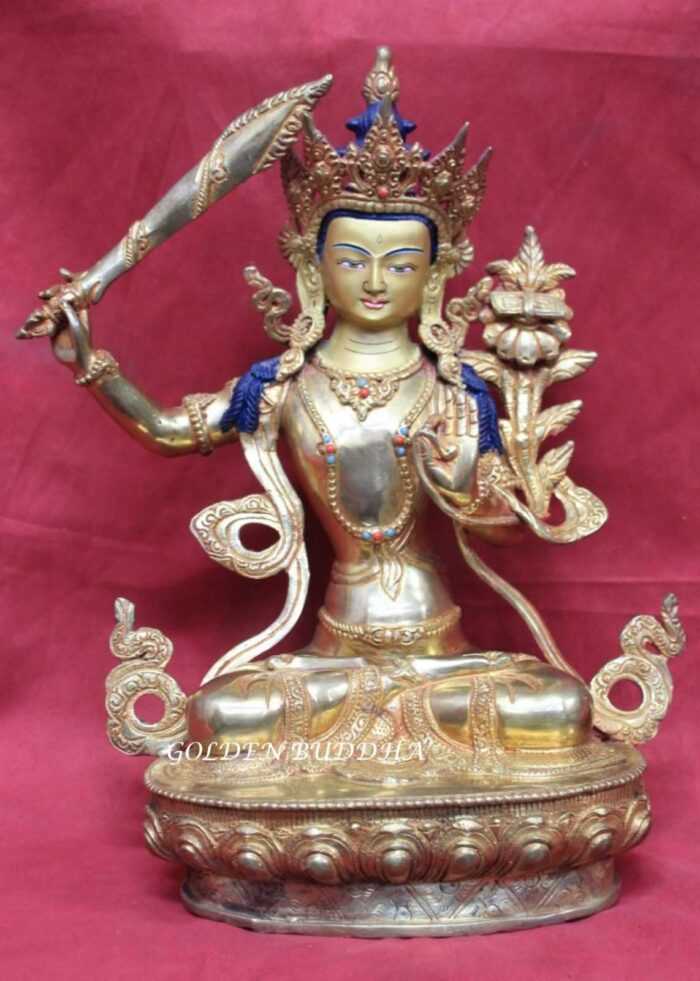
Golden Manjushri Statue | 13.25-inch | 24K Gold Gilded
Original price was: $1,899.00.$1,399.00Current price is: $1,399.00.Add to Cart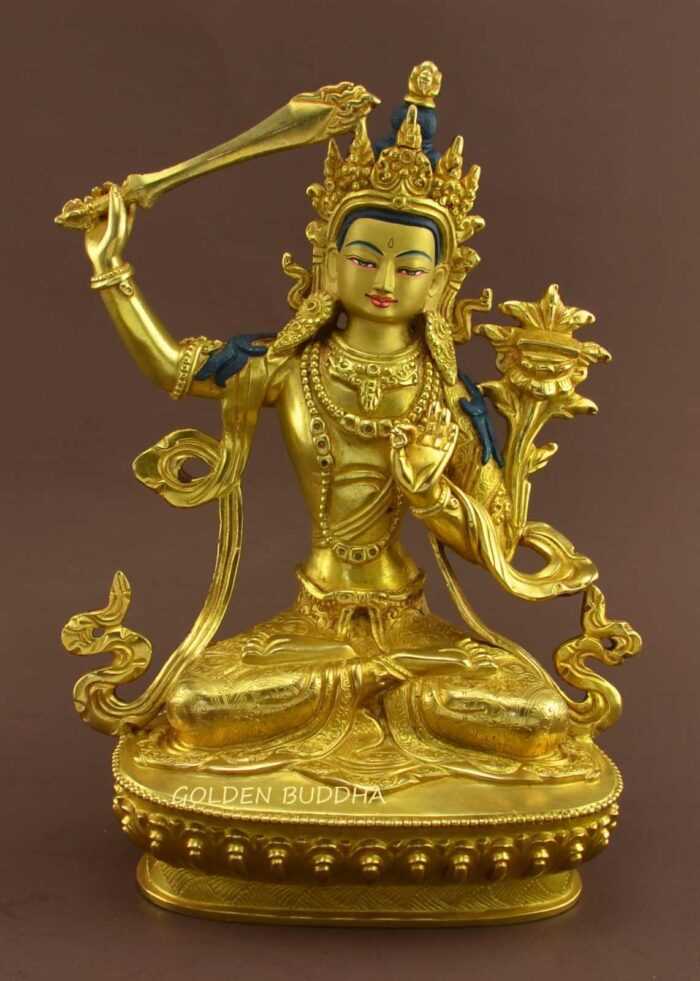
Tibetan Jampelyang Sculpture | 9-Inch 24K Gold | Manjushri
Original price was: $1,399.00.$999.00Current price is: $999.00.Add to Cart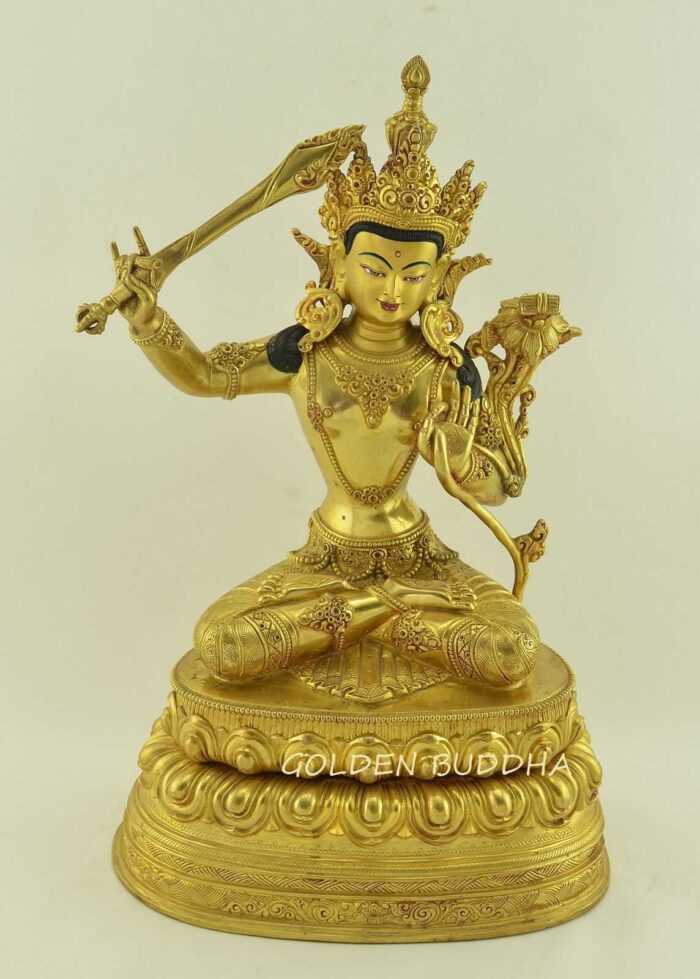
Gold Gilded Manjushri Sculpture | 13.5-inch | Handmade in Nepal
Original price was: $3,499.00.$2,599.00Current price is: $2,599.00.Add to Cart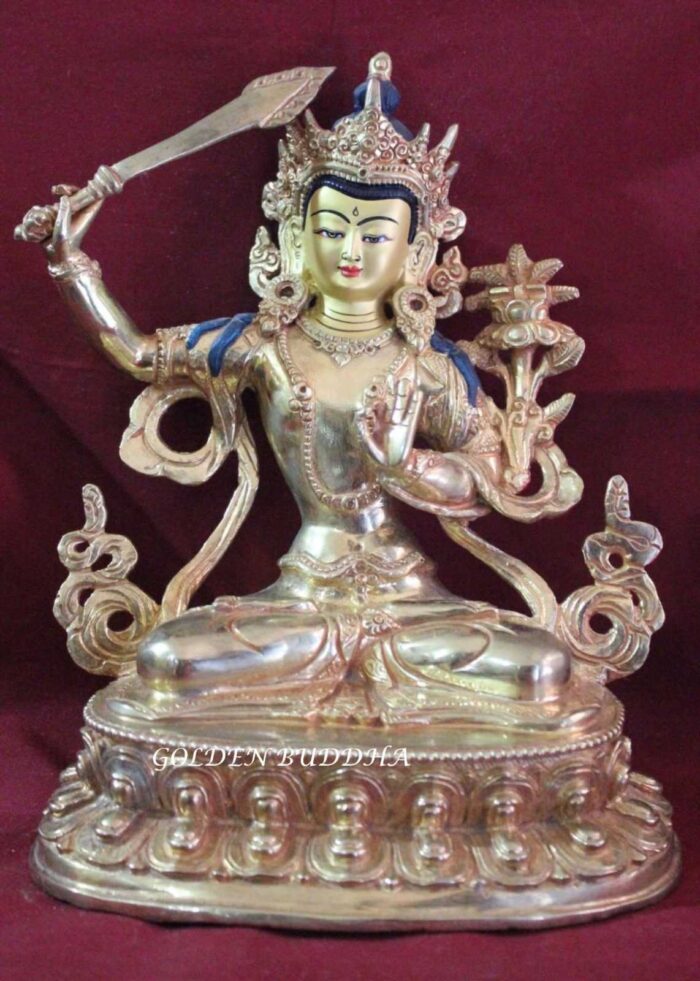
Handmade Manjushri Sculpture | 9-inch | 24K Gold Gilded
Original price was: $1,399.00.$999.00Current price is: $999.00.Add to Cart





Manjushri Statue Symbolism and Meaning
Manjushri is one of the most revered Bodhisattvas in Mahayana and Vajrayana Buddhism, representing transcendent wisdom, clarity of mind, and enlightened understanding. His practice is closely associated with the cultivation of insight and discernment, and he is especially venerated by students, scholars, and practitioners seeking clarity in study or spiritual practice.
Manjushri is traditionally depicted holding a flaming sword raised in his right hand, symbolizing the cutting of ignorance and delusion at its root, while his left hand supports a lotus bearing the Prajnaparamita sutra, the scripture on the perfection of wisdom. In Tibetan, Manjushri is also known as Jampelyang, or Jampalyang, a name you may see used on some statues. Together with Avalokiteshvara (compassion) and Vajrapani (power), Manjushri (wisdom) forms the Three Protectors, or Rigsum Gonpo, three Bodhisattvas often venerated together. For a broader look at these symbols, see our guides to Buddha statue meaning and the Buddhist pantheon.
Materials, Sizes, and Finishes
Our Manjushri statues are handcrafted in Patan, in the Kathmandu Valley, using the traditional lost wax casting method practiced by Newari artisans for generations. Each piece begins as a wax model, cast in copper and then hand-finished, with the crown, sword, lotus, and robe details carved or chased by hand, so no two statues are ever exactly alike.
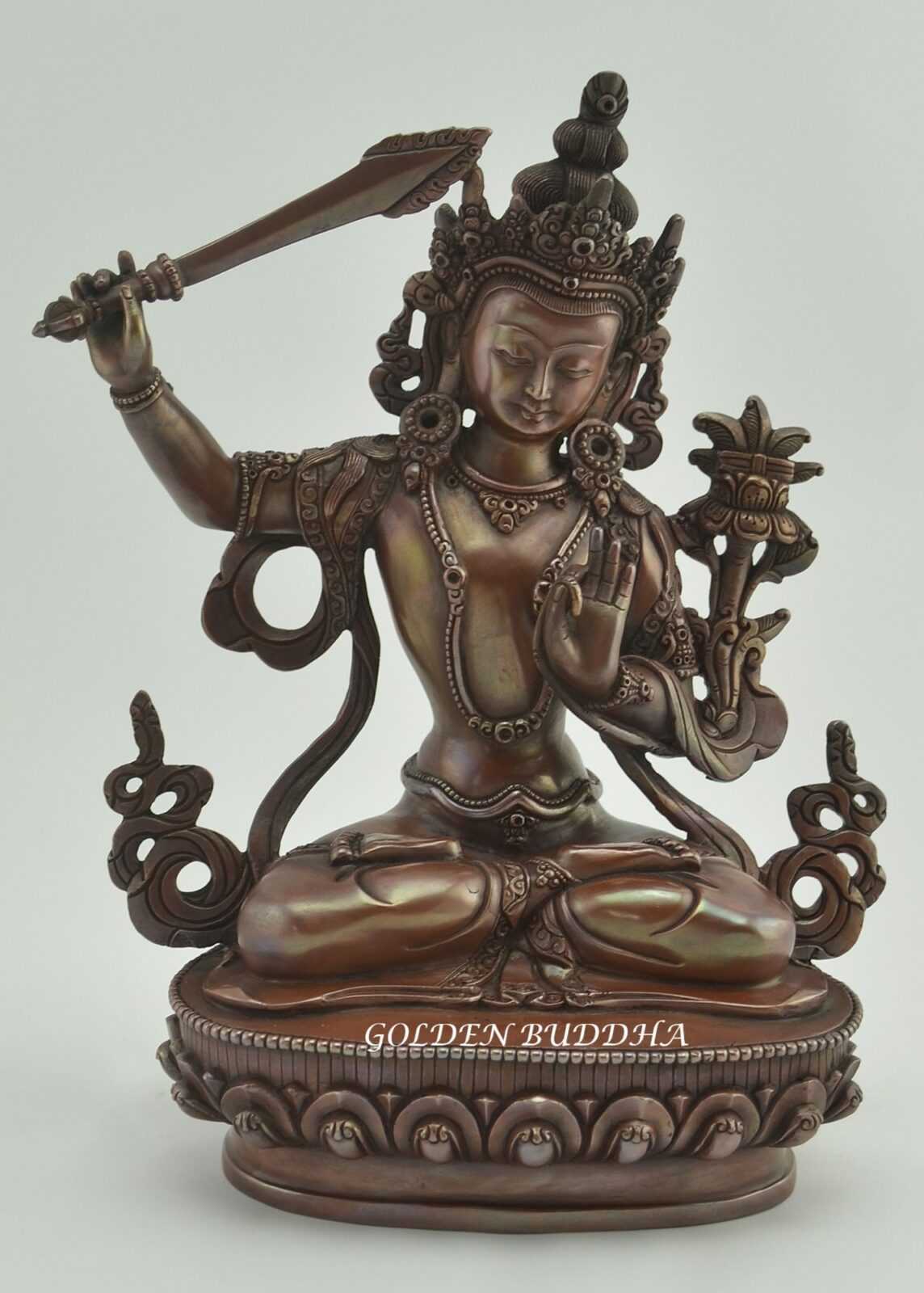
Finishes vary by piece: many statues are fully gold gilded using traditional fire gilding, where 24K gold is fused to the copper surface for a durable, rich finish; some masterpiece pieces feature fine engravings and embedded semi-precious stones; and others are left with a natural oxidized or antiqued copper finish for a more understated, aged look.
Sizes in our collection range from compact statues around 8-9 inches, suitable for a small altar or study space, up to larger masterpiece pieces of 13-14 inches and more, intended as a centerpiece for a shrine room or Dharma center.
Frequently Asked Questions
What does Manjushri represent?
Manjushri is the Bodhisattva of Wisdom, representing transcendent insight, clarity of mind, and the cutting through of ignorance and confusion. He is one of the most important Bodhisattvas in Mahayana and Vajrayana Buddhism, and his practice is particularly meaningful for students, scholars, writers, and anyone seeking greater clarity and understanding. Traditionally, Manjushri is described as embodying the wisdom of all the Buddhas of the past, present, and future, which is why his practice is often taken up at the start of any serious course of study or contemplation — read more in our guide to the Bodhisattva of Wisdom.
What do the flaming sword and lotus scripture symbolize?
Manjushri is traditionally shown holding a flaming sword in his raised right hand, representing the cutting of ignorance and delusion at its root. His left hand supports a lotus bearing the Prajnaparamita sutra, the scripture on the perfection of wisdom, representing the wisdom that arises once ignorance is cut away. Together, these two attributes represent both the removal of confusion and the wisdom that remains. The sword is described as flaming because wisdom is not passive — it burns away the roots of ignorance in a single stroke, in contrast to the slow work of merely subduing them. Read more in our guide to Manjushri statue meaning and symbolism.
What does "Jampelyang" mean?
Jampelyang, sometimes spelled Jampalyang, is the Tibetan name for Manjushri. You may see this name used on some statue listings, and it refers to the same Bodhisattva of Wisdom known in Sanskrit as Manjushri. In Sanskrit, Manjushri literally translates as "Gentle Glory," which reflects the traditional understanding that transcendent wisdom is not forceful — it is gentle, precise, and utterly transformative once it takes hold.
How does Manjushri relate to Avalokiteshvara and Vajrapani?
Manjushri, Avalokiteshvara, and Vajrapani are traditionally grouped together as the Three Protectors, or Rigsum Gonpo, representing wisdom, compassion, and power respectively. Many practitioners keep statues of all three together, as they represent the three qualities considered essential on the path to enlightenment. Together they are sometimes described as the three enlightened activities of every Buddha — knowing rightly, feeling rightly, and acting rightly — and are venerated as a set on many Tibetan altars.
Are these Manjushri statues authentic and certified?
Yes. Every Manjushri statue in this collection is handmade in Patan, Nepal, using traditional lost wax casting and 24K fire gilding. Statues include a certificate of authenticity verifying materials, technique, and origin. The certificate is issued by Nepal's Department of Archaeology, which regulates the export of religious sculpture from the country, and it serves both as a proof of provenance and as your export clearance.
How do I choose the right size for my altar?
For a personal altar, study space, or meditation room, statues in the 8-9 inch range are common. For a temple, Dharma center, or shared shrine room, larger statues of 13 inches and above, including masterpiece pieces with embedded stones, are often chosen as a focal point. As a general rule, the statue should feel proportionate to the space and the eye level of the practitioner — a statue that fits comfortably within your field of view when seated for meditation is nearly always the right choice. Our buyer's guide for Buddha statues walks through the practical considerations in more detail.