Ksitigarbha Statues — Jizo, Bodhisattva of the Hell Realms
Ksitigarbha (Sanskrit: Kṣitigarbha — “Earth Store” or “Earth Womb”; Chinese: Dìzàng Púsà; Japanese: Jizō) is the Bodhisattva of the hell realms — the being who made the most extreme compassionate vow in the entire Buddhist tradition: not to attain Buddhahood until every hell realm is emptied and every being without exception has been liberated from suffering. Where other Bodhisattvas vow to remain in the world until all beings are free, Ksitigarbha specifically vowed to work in the most difficult realm — the hells — for as long as beings continue to be born there. His presence in the hell realms is not a punishment or a descent into darkness but an act of deliberate, sustained, unconditional compassion: he enters the very depths of suffering in order to bring the light of the Dharma to beings who have no other access to it. He is the patron of the deceased, of children, of travelers, and of all beings undergoing the most extreme conditions of suffering — the Bodhisattva who goes where no other will go and stays as long as is needed. The Ksitigarbha Sutra — one of the most widely recited texts in East Asian Buddhism, chanted at funeral ceremonies and for the benefit of deceased relatives — teaches in detail about his vows, the nature of the hell realms, and how the merit generated by living practitioners can benefit those who have died.
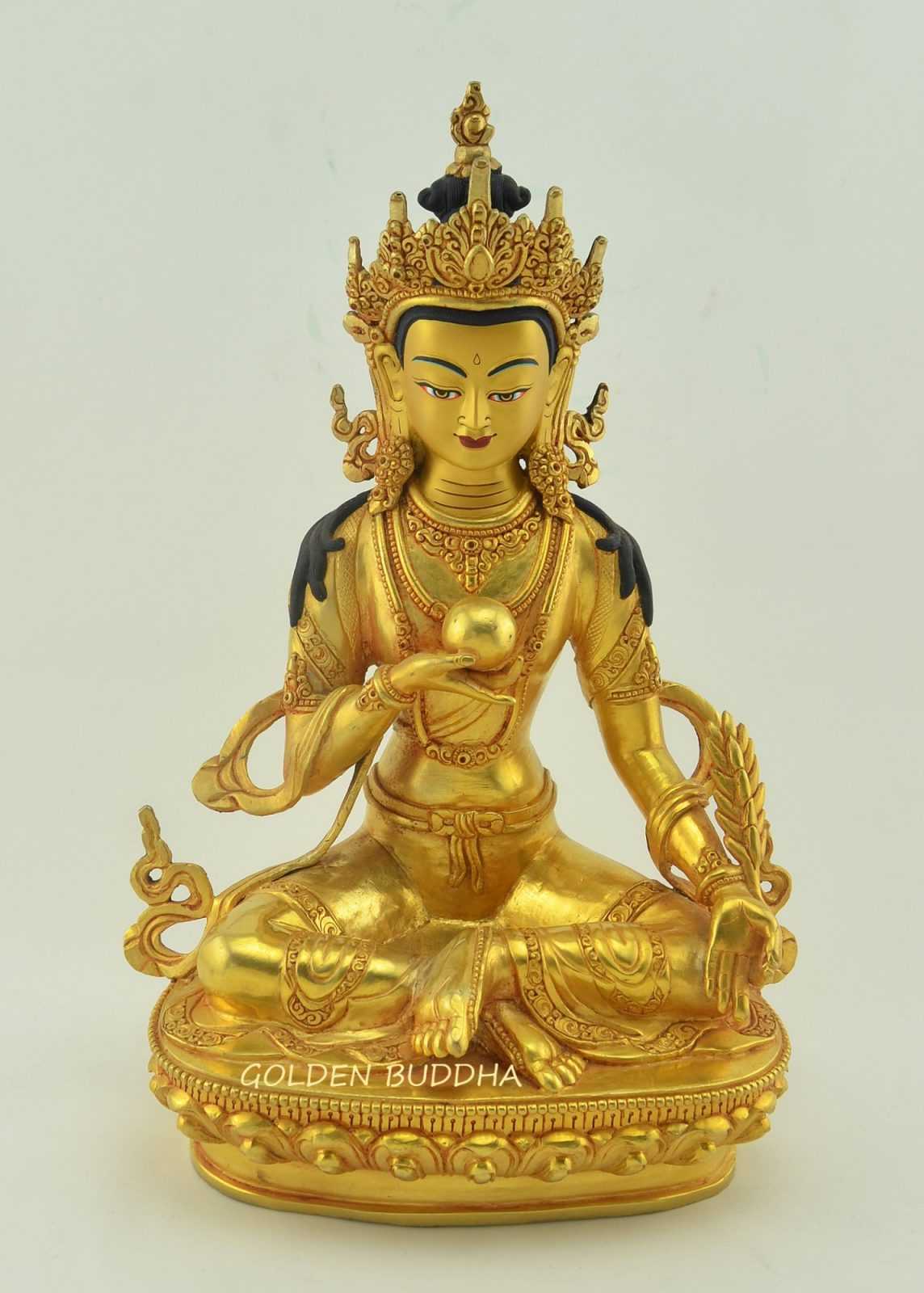
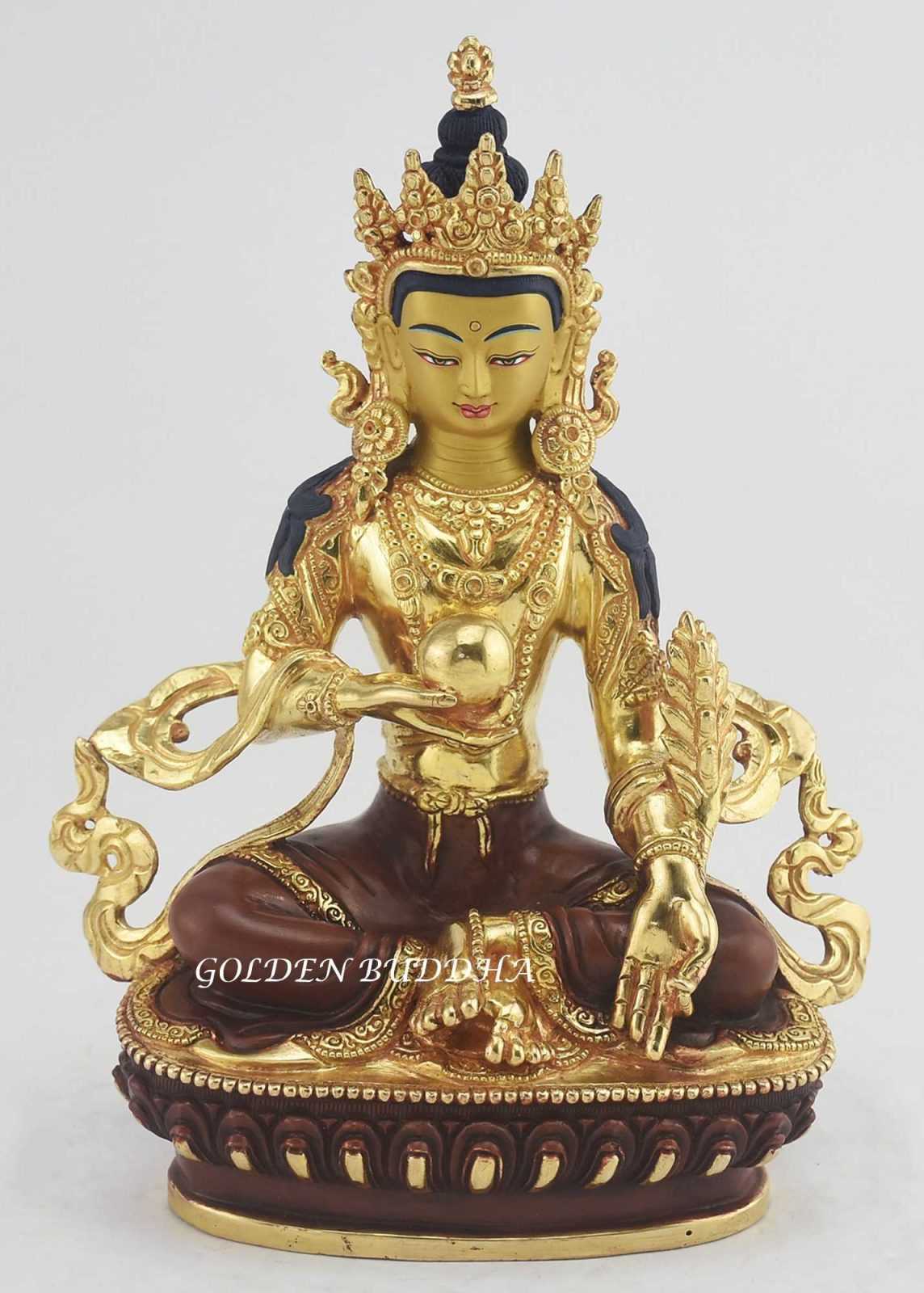
In his most traditional iconographic form — particularly in Chinese and Japanese art — Ksitigarbha is depicted in the simple robes of a Buddhist monk with a shaved head, holding a staff with six rings (khakkhara) and a wish-fulfilling jewel (cintāmaṇi) that illuminates the darkness of the hell realms. However, as with many great Buddhas and Bodhisattvas in the Newar sculptural tradition of Patan, Nepal, Ksitigarbha is also depicted in the full royal Bodhisattva form — wearing an elaborate crown and jewels, richly adorned robes, and the ornaments of an enlightened princely being — rather than the austere monk’s appearance. Just as Shakyamuni Buddha is sometimes depicted in the Sambhogakaya crowned and adorned form rather than in simple monk’s robes, Ksitigarbha in the Bodhisattva presentation emphasizes the full radiance of his enlightened qualities rather than the specific context of his hell realm activity. The wish-fulfilling jewel (pearl) remains his principal identifying attribute in both forms — the jewel that grants the deepest aspirations of beings in distress and shines light into the darkest realms of existence. All Ksitigarbha statues in the Golden Buddha collection are handcrafted in Patan, Nepal by master Newar artisans of the Shakya caste using the traditional lost wax sculpting method. Explore the broader Buddhist pantheon in our complete guide.
Showing all 2 resultsSorted by popularity