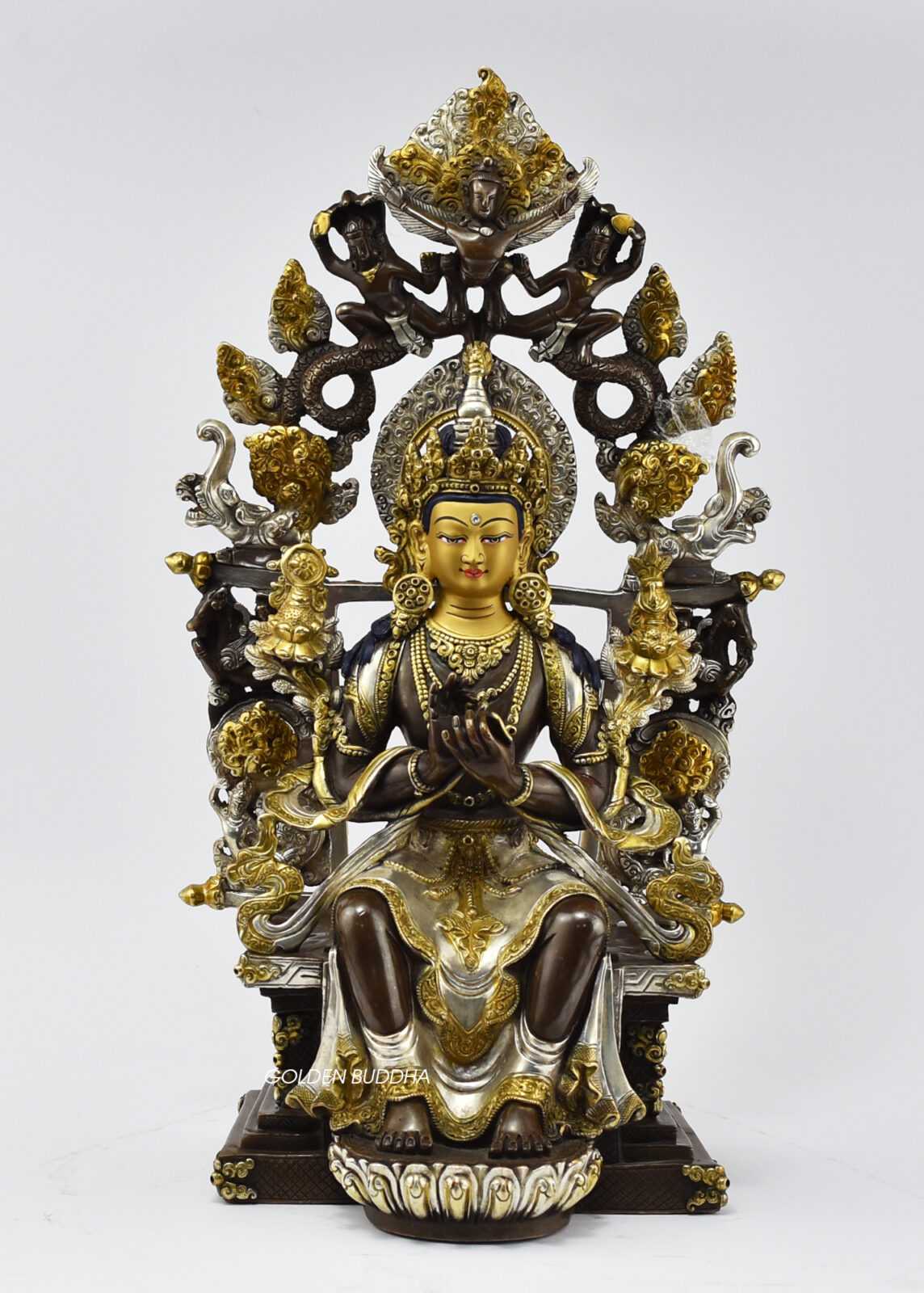
Maitreya Buddha Statues — The Future Buddha
Maitreya (Sanskrit: Maitrī — “loving-kindness”; Tibetan: Jampa — “the Loving One”) is the Future Buddha — the next fully enlightened being who will appear in this world after the teachings of Shakyamuni Buddha have completely faded from human memory and the Dharma has disappeared from the world. He is currently a Bodhisattva residing in Tushita Heaven (Sanskrit: Tuṣita — “the Joyful Realm”), the pure land of the desire realm where future Buddhas await the moment of their descent. His arrival in the world is understood in the Buddhist tradition as both a prophecy and a promise — that the Dharma is not extinguished when a particular Buddha’s teachings fade, but that a new Buddha will arise to rediscover and teach it again, as Buddhas have done throughout beginningless time. The name Maitreya derives from the same root as maitri (loving-kindness) — the first of the four immeasurables — making him specifically the Buddha whose defining quality is the boundless loving-kindness that reaches equally to all beings without exception.
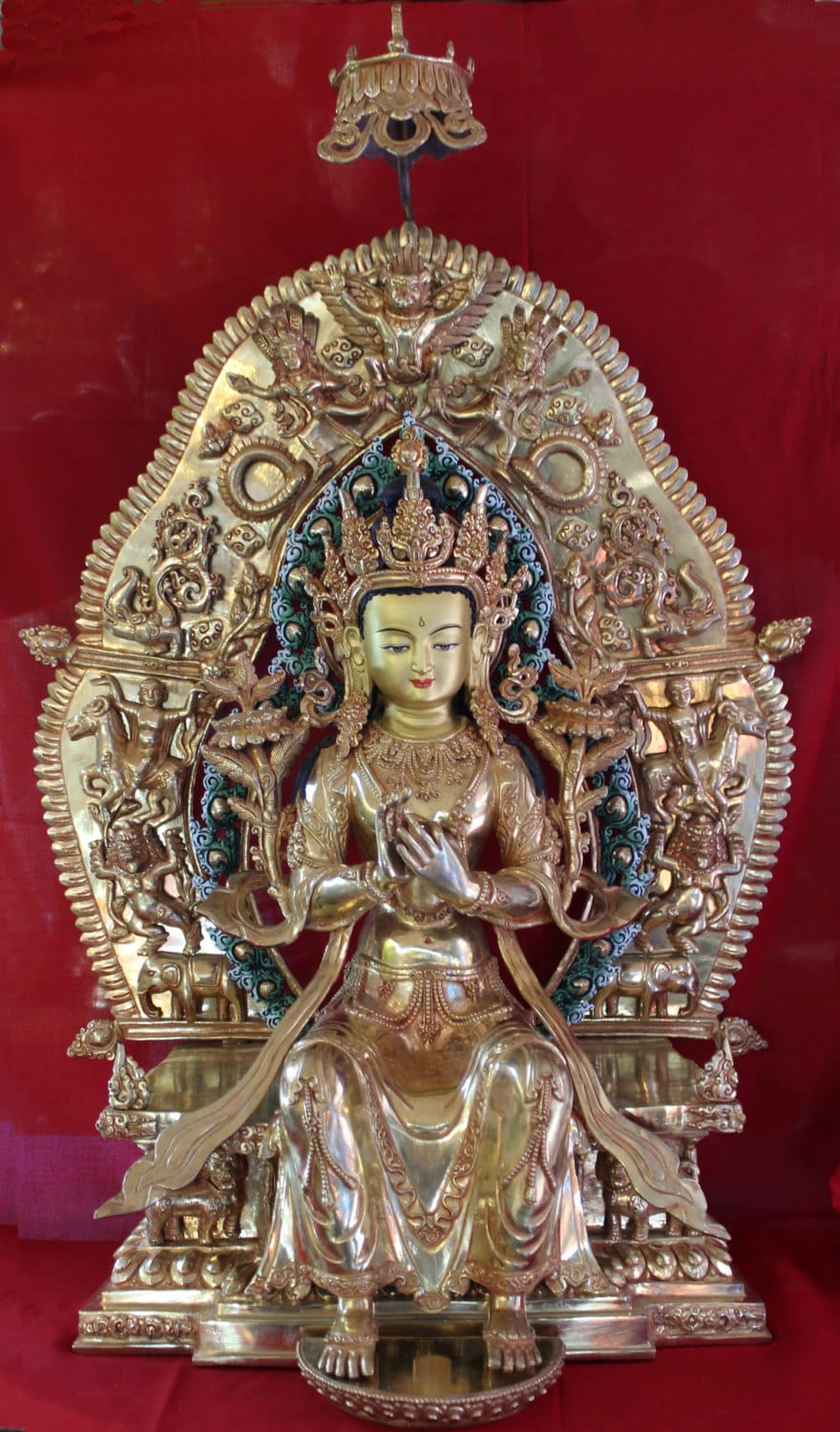
Maitreya is identified in iconography by his distinctive seated posture — the European seat or royal ease posture (pralambapādasana), with both legs pendant and feet resting on the ground rather than folded in the lotus posture used by most other Buddhas. This posture is his defining iconographic signature: it expresses his readiness to descend from Tushita at a moment’s notice, his feet already positioned to rise and step into the world. He typically wears the ornaments of a Bodhisattva — crown, jewels, and flowing robes — rather than the simple monk’s robes of a historical Buddha, reflecting his current Bodhisattva status while he awaits his final birth. A small stupa is often shown in his crown or held in his hands, containing the robe of Shakyamuni Buddha — the transmission of the historical lineage carried forward into the future dispensation. Maitreya statues in the Golden Buddha collection are handcrafted in Patan, Nepal by master Newar artisans of the Shakya caste using the traditional lost wax sculpting method, following the precise iconometric standards of the Tibetan and Newar sculptural traditions.
Showing all 4 resultsSorted by popularity
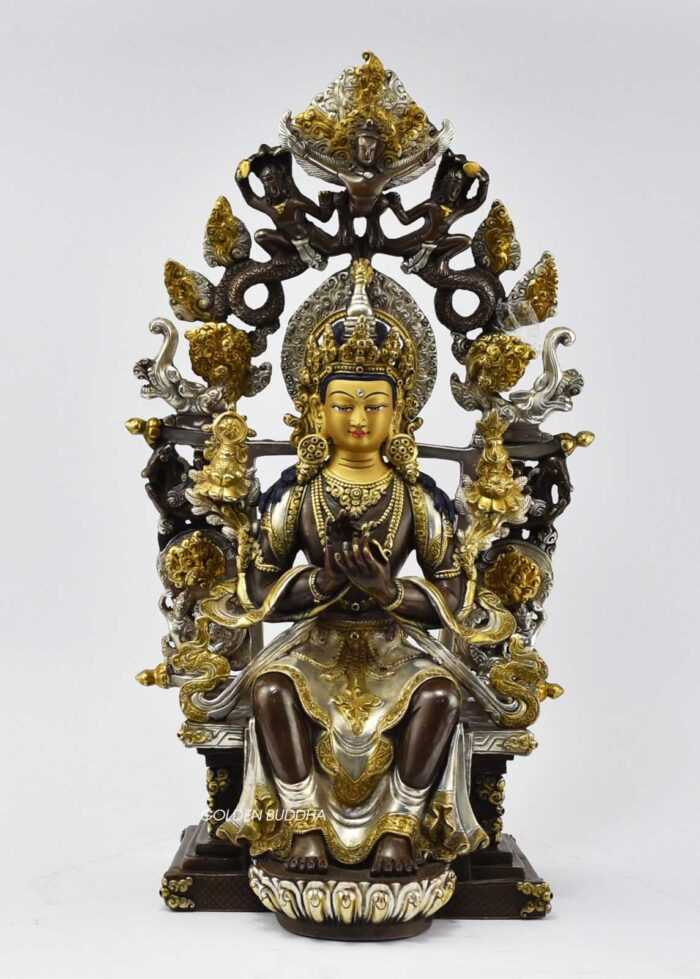
Handmade Maitreya Buddha Statue | 13.5″ Gold and Silver | Jampa
Original price was: $3,399.00.$2,499.00Current price is: $2,499.00.Add to Cart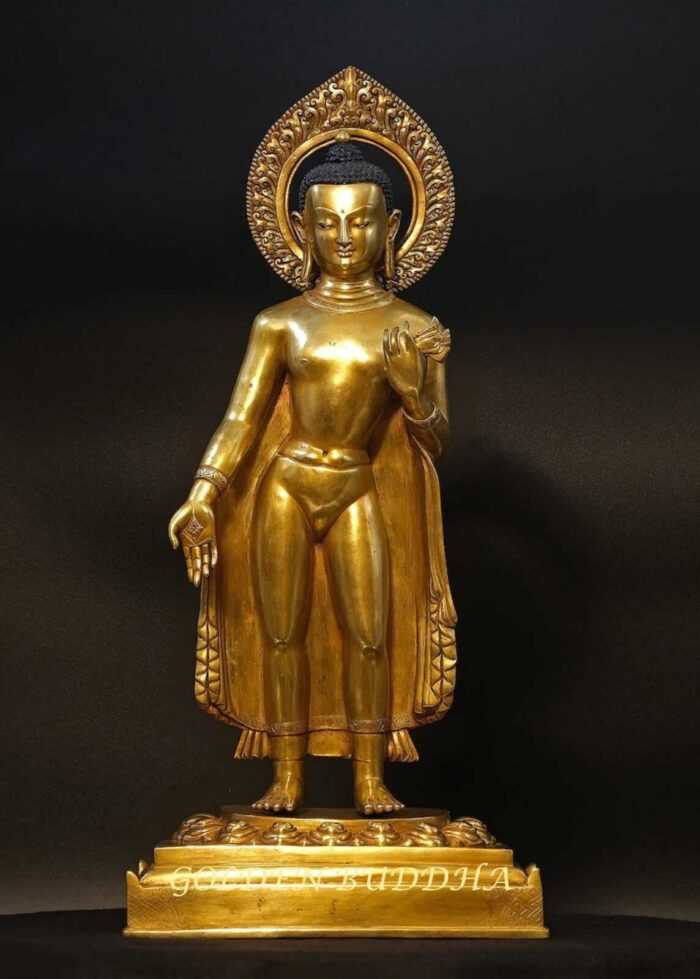
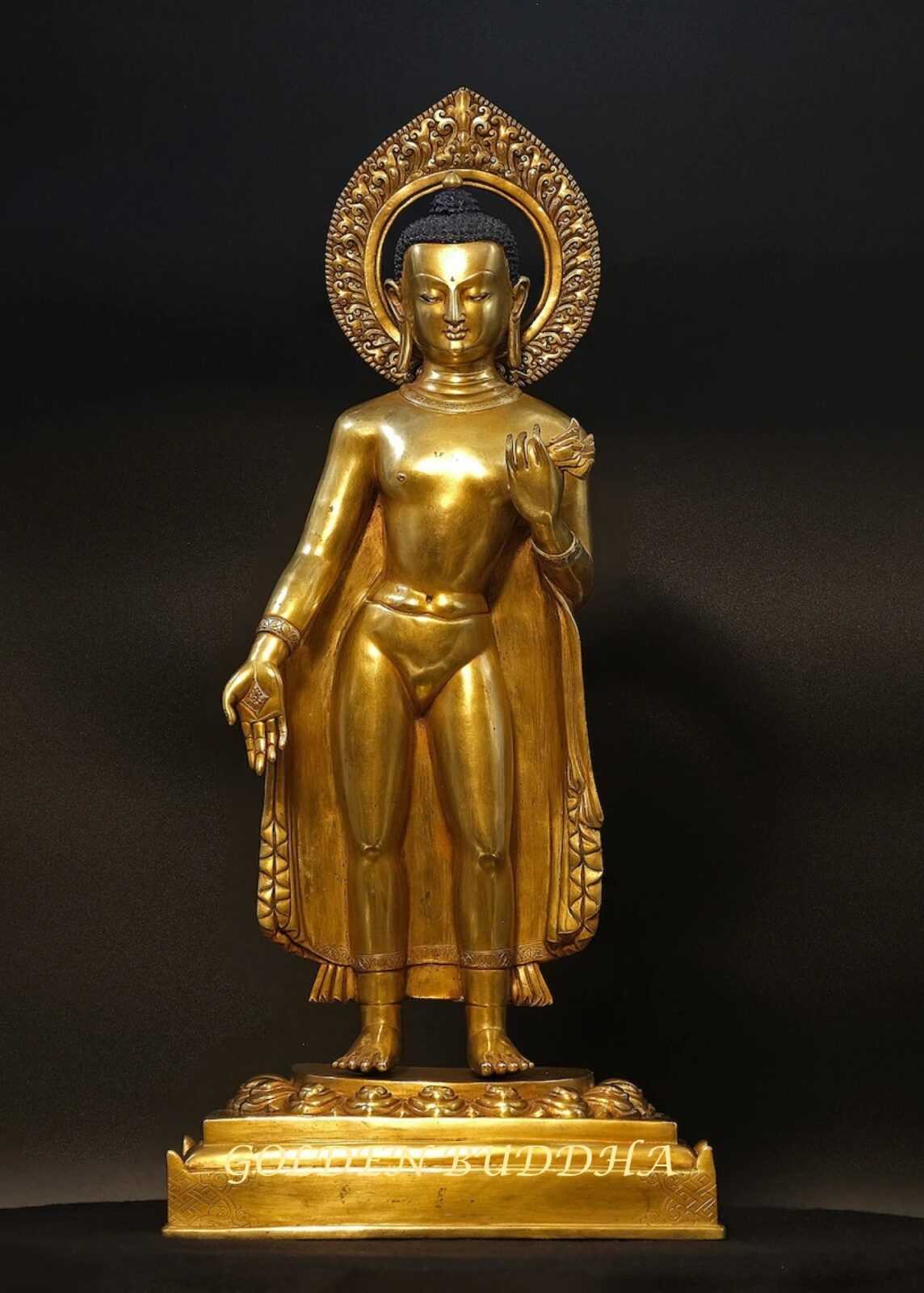
Standing Maitreya Buddha Statue | 19.25″ | 24K Gold | Authentic Nepal
Original price was: $6,699.00.$4,499.00Current price is: $4,499.00.Add to Cart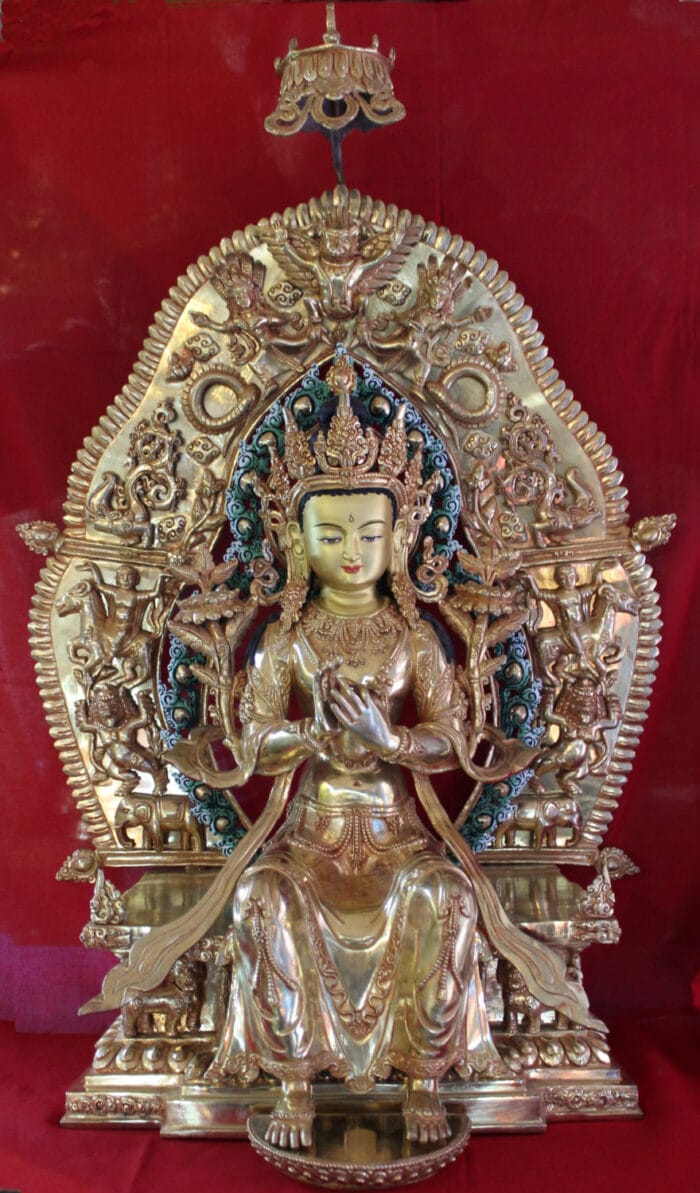
Maitreya Buddha Statue | 23″ 24K Gold Gilded | Pakpa Jampa
Original price was: $7,799.00.$5,899.00Current price is: $5,899.00.Add to Cart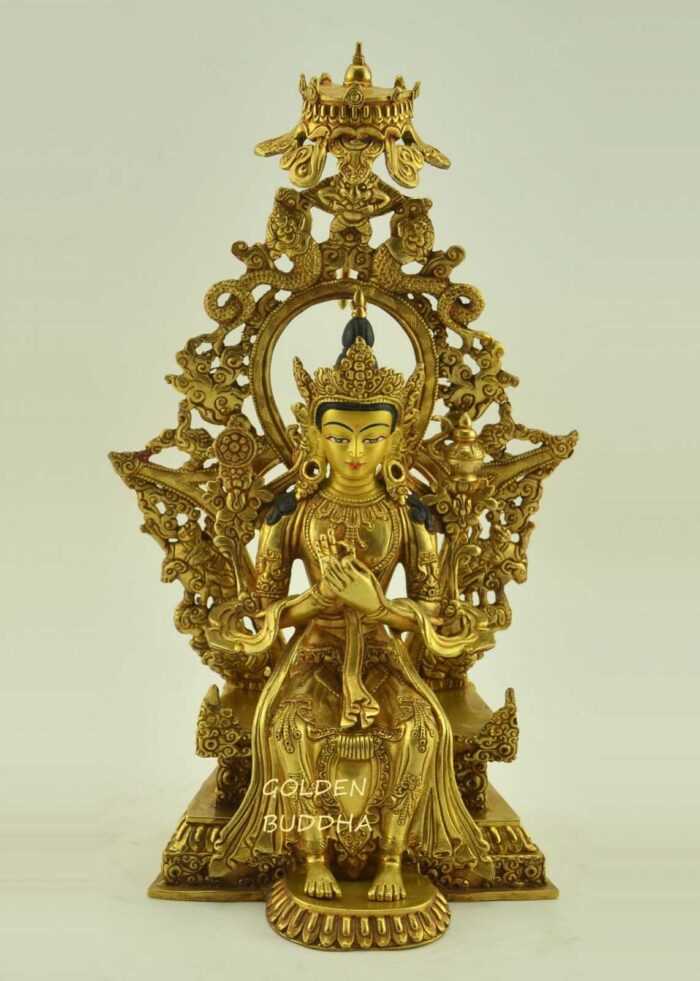
Maitreya Buddha Statue | 12″ | Future Buddha, 24K Gold Gilded | Handmade Nepal
Original price was: $1,899.00.$1,299.00Current price is: $1,299.00.Add to Cart