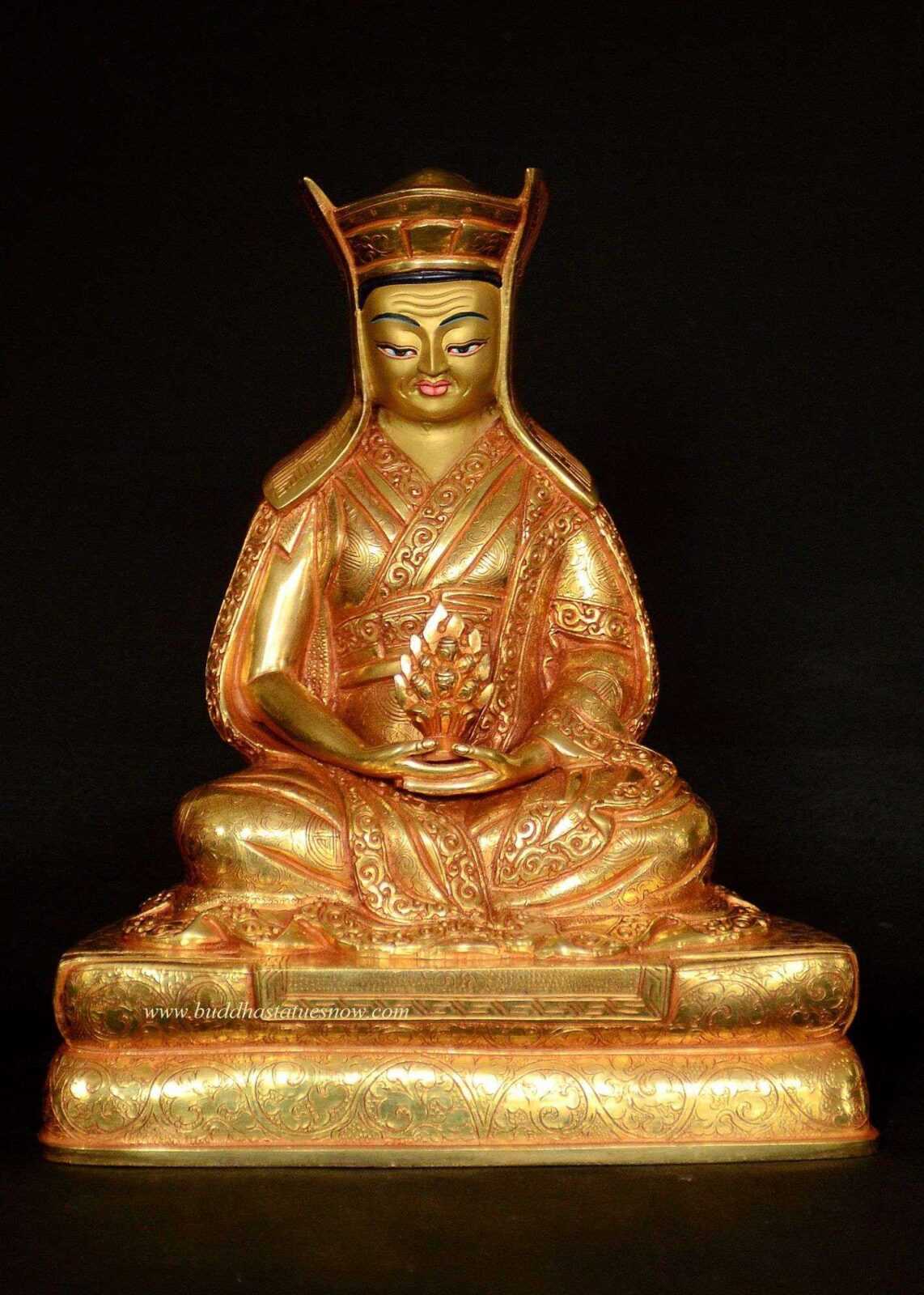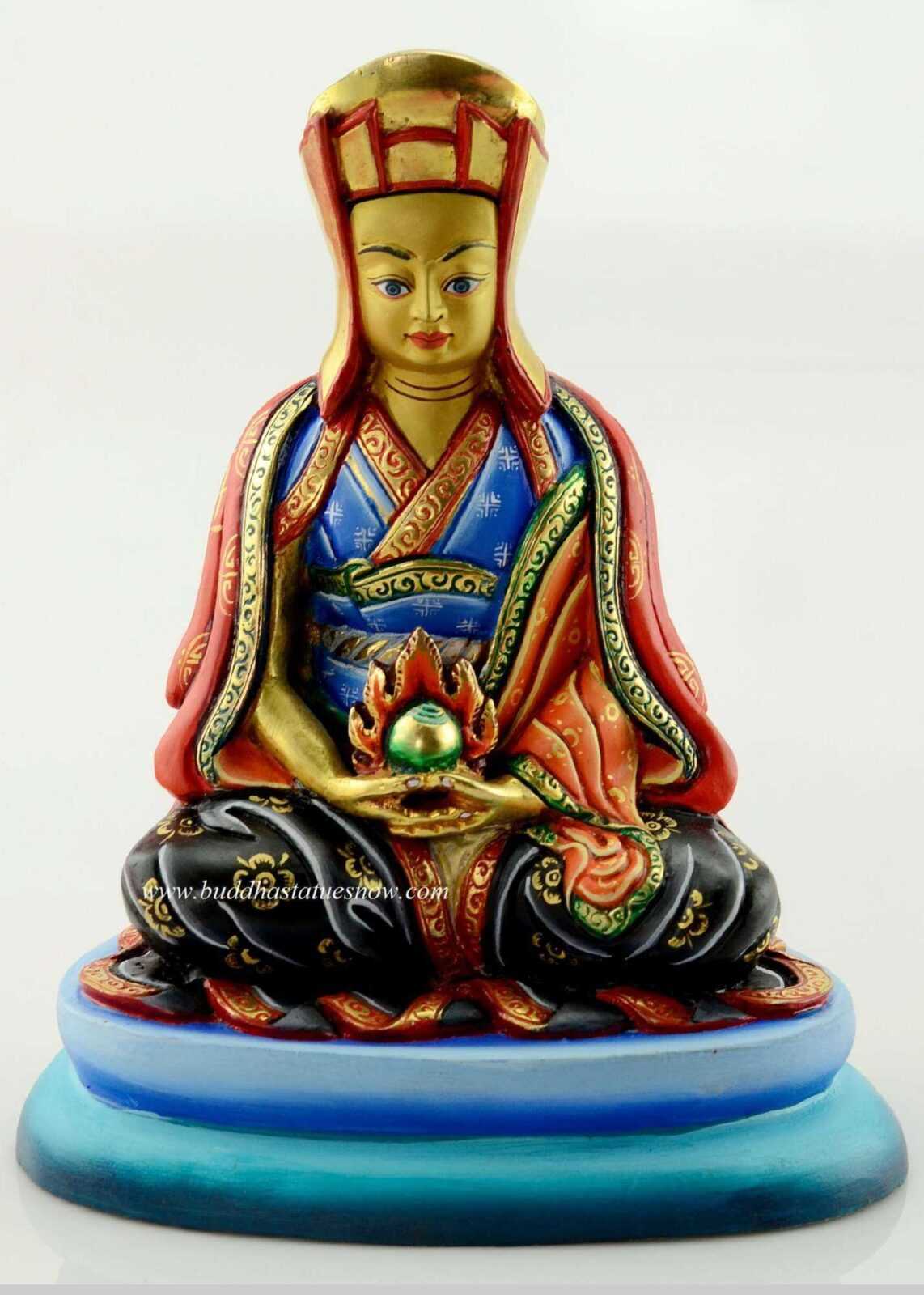
Guru Gampopa Statues — Milarepa's Successor & Kagyu Lineage Master
Gampopa (Gampopa Sönam Rinchen — also known as Dakpo Rinpoche, “Precious One of Dakpo,” 1079–1153 CE) is the third great transmitter in the principal Kagyu lineage — Marpa → Milarepa → Gampopa — and the figure who transformed a direct but intimate tantric transmission into one of the great institutional traditions of Tibetan Buddhism. Unlike Guru Marpa, who lived as a householder, Gampopa was first a fully ordained monk in the Kadampa tradition before receiving Mahamudra teachings from Milarepa. This combination — the rigorous scholarly and ethical foundation of the Kadampa school inherited from Atisha, fused with the direct experiential transmission of Mahamudra — is Gampopa’s specific and lasting contribution to Tibetan Buddhism. He synthesized what had previously been two distinct streams into a single integrated path: the foundation of the Kadampa’s graduated approach to the path (lamrim), combined with the direct pointing-out of the nature of mind that is the heart of Mahamudra. The result became known as the Dakpo Kagyu — the Kagyu of Dakpo — which forms the basis of all the major Kagyu sub-schools that exist today.
Gampopa’s most widely read work, the Jewel Ornament of Liberation (Thar pa rin po che’i rgyan), is one of the most comprehensive and systematically organized presentations of the Mahayana Buddhist path ever composed in Tibetan. It traces the complete journey from the recognition of Buddha-nature as the ground of practice through the accumulation of merit and wisdom, the cultivation of bodhicitta, the six perfections, and the qualities of full Buddhahood — making the entire path accessible and clearly structured for practitioners at every level. The text is memorized and studied in Kagyu monasteries to this day and is widely regarded as one of the essential introductory texts for Mahayana Buddhist study across all traditions. From Gampopa’s monastery at Daklha Gampo, which he founded in 1121 CE, his students spread throughout Tibet to establish the main branches of the Kagyu school — including the Karma Kagyu, whose head is the Karmapa — that continue as living traditions today. Explore the four schools of Tibetan Buddhism in our complete guide to Tibetan Guru statues.
Showing all 2 resultsSorted by popularity