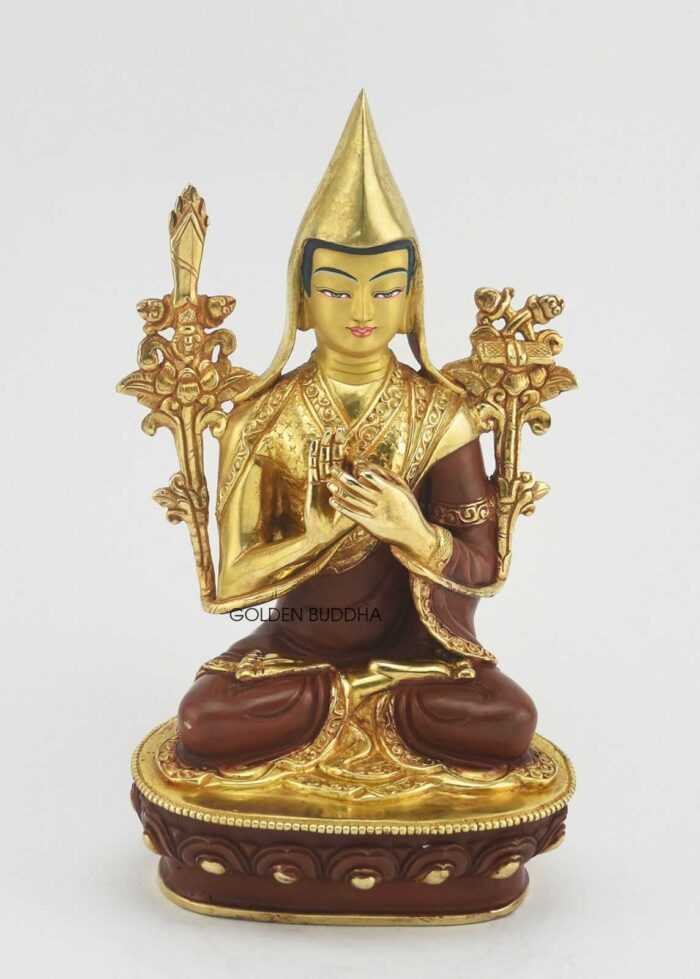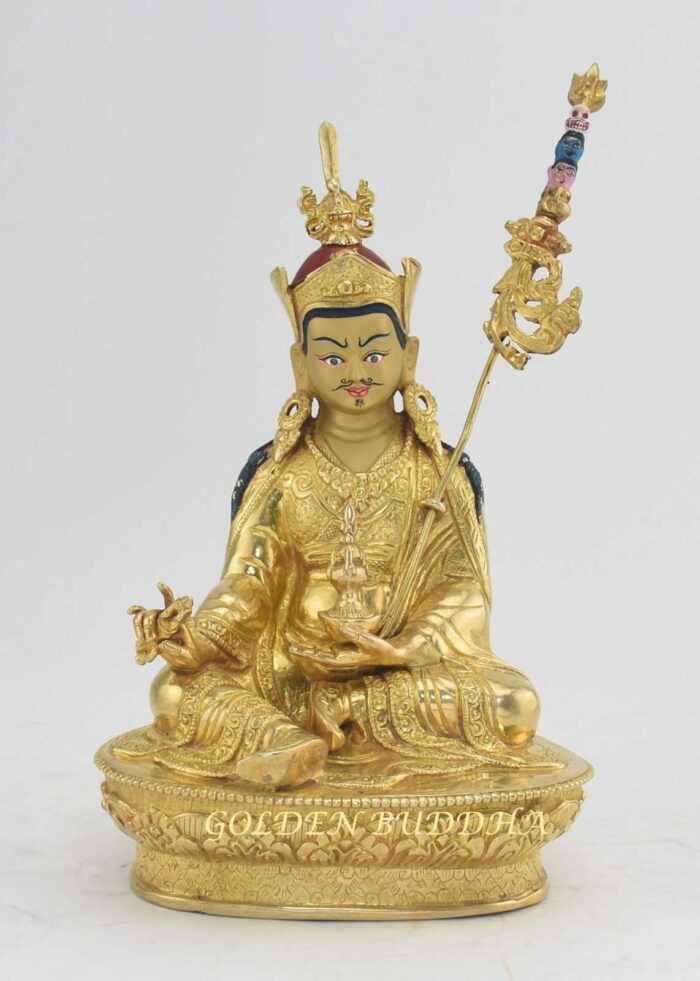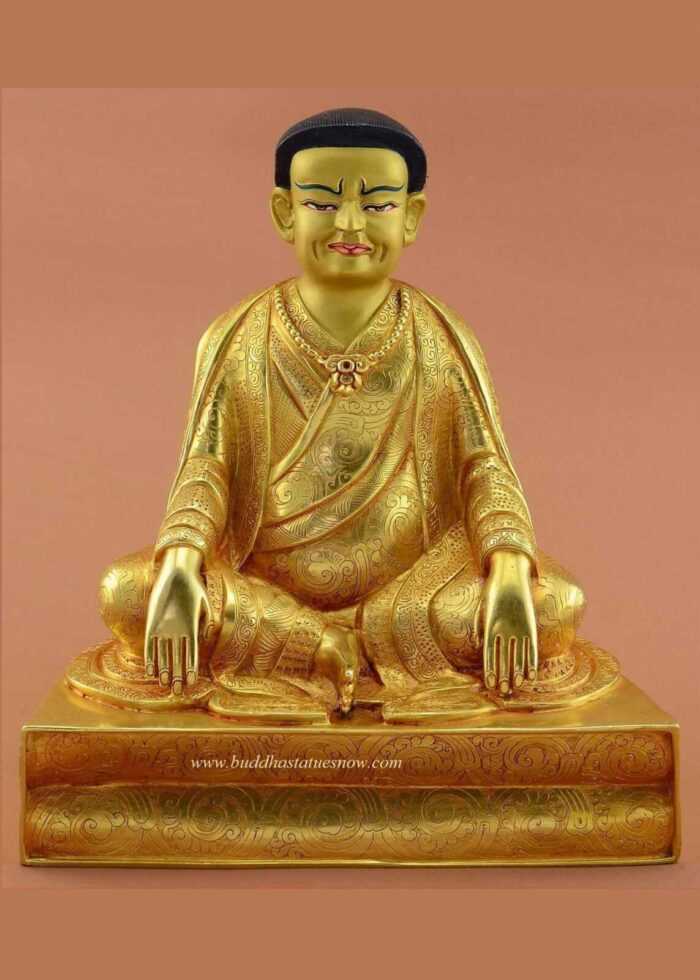
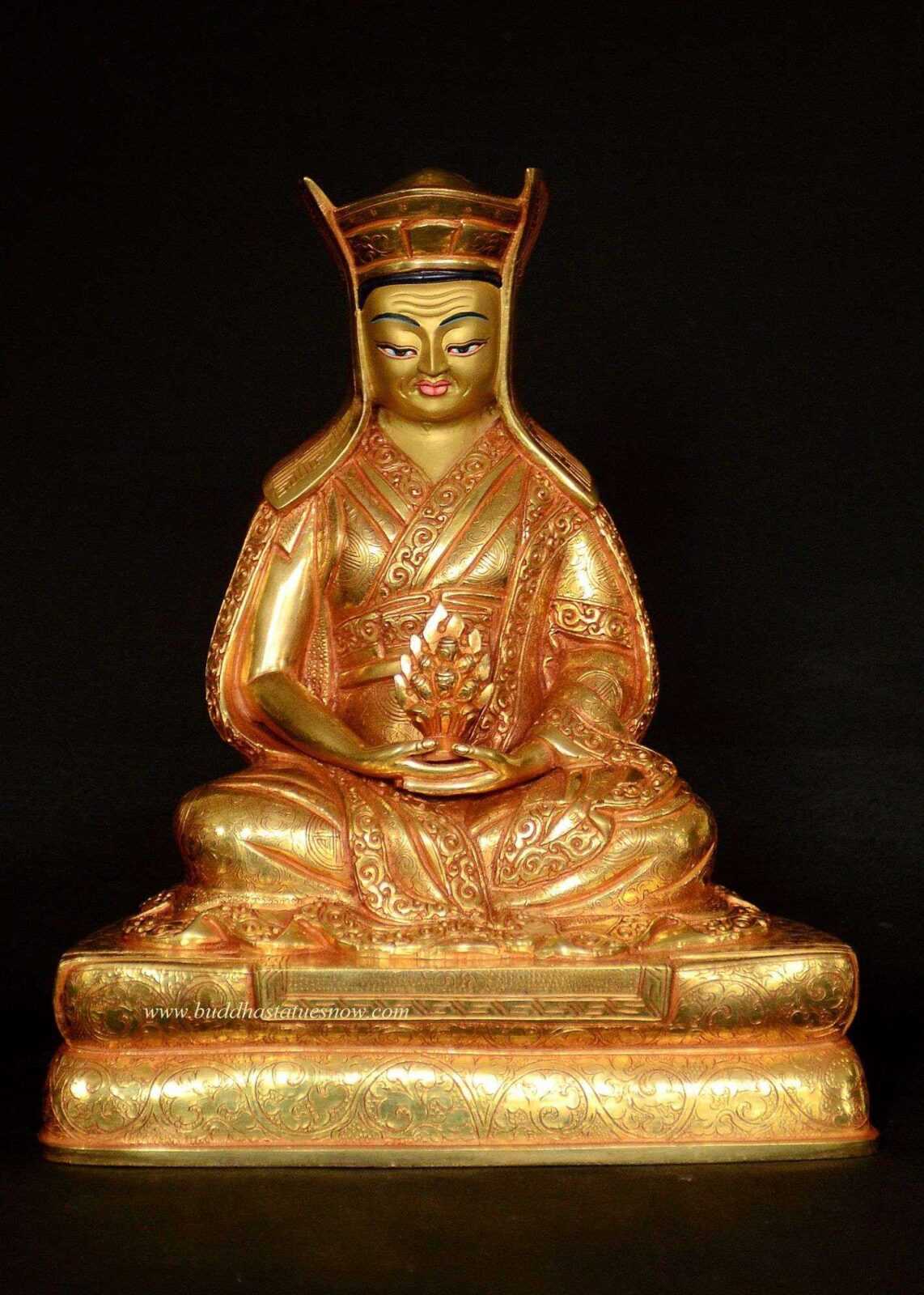
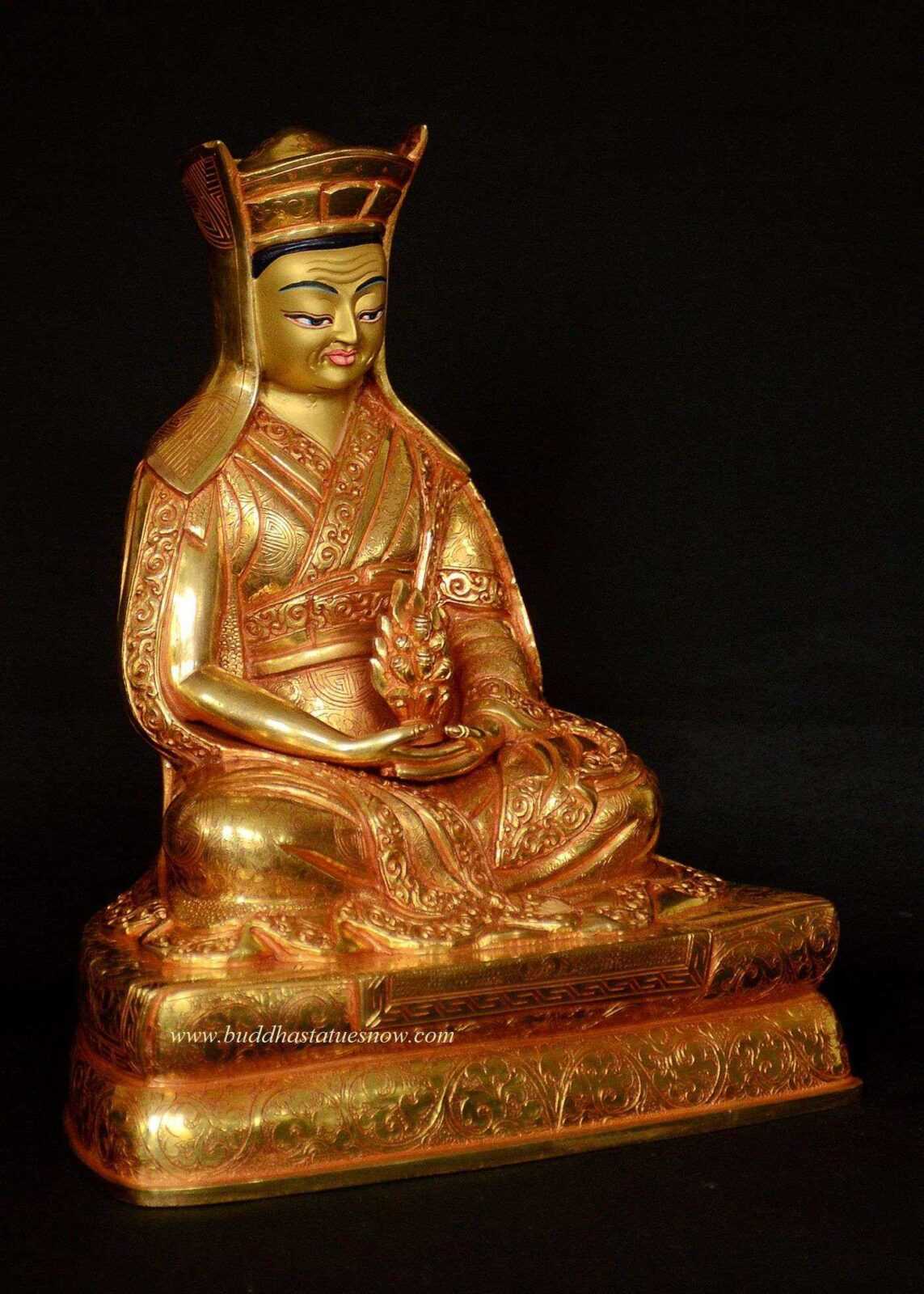
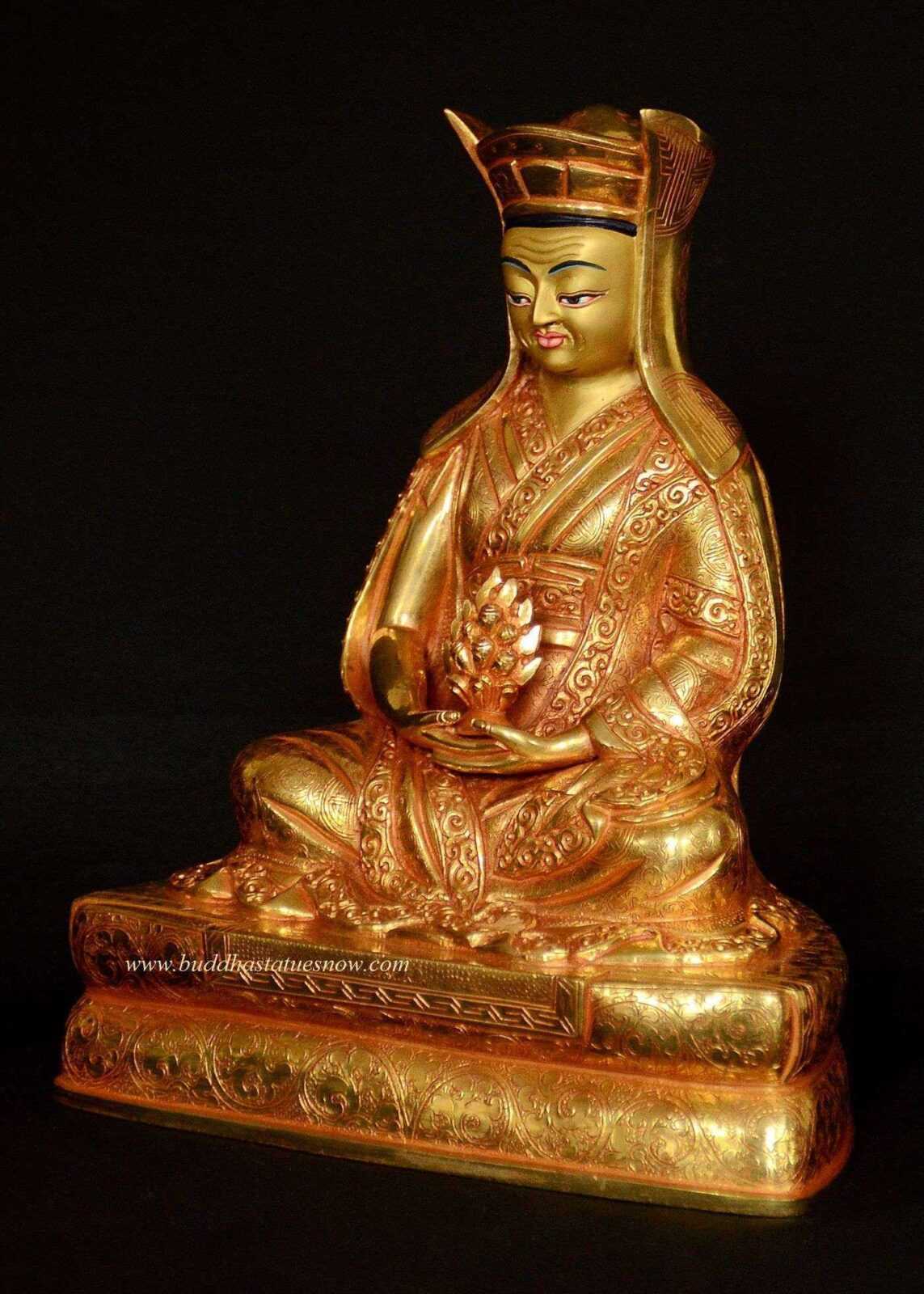

This 8.25-inch Gold Gilded Gampopa Statue presents Dakpo Rinpoche as one of the pivotal lineage masters through whom the Kagyu tradition developed from a transmission of realized yogis into a durable monastic and teaching institution. Handmade in Patan, Nepal from copper alloy using the traditional lost-wax casting method, the sculpture is fire gilded in 24K gold and distinguished by extensive engraving across the robes, meditation seat and architectural throne. Gampopa sits composed beneath his tall lineage hat, his hands joined in Dhyana mudra above the lap while supporting a stylized myrobalan medicinal plant. The attribute is especially appropriate to Gampopa because he was trained and practiced as a physician before entering monastic life, connecting his early vocation as a healer with his later role as one of the foundational teachers of the Kagyu tradition. His face is separately hand painted with 18K gold and natural pigments. Learn more about Gampopa and the Kagyu lineage in our guide to Tibetan Buddhist masters.
Gold Gilded Gampopa Statue | Engraved Newar Craftsmanship
The photographs reveal an exceptionally decorative treatment. Broad overlapping robes envelop Gampopa’s body, with engraved scrolling borders, fine repeating patterns and carefully divided textile panels continuing around the shoulders, sleeves and lower garments. Even the rear surfaces are extensively worked: the back of the tall hat displays circular auspicious motifs surrounded by engraved clouds, while the hanging robe panels contain alternating geometric and curvilinear designs. Beneath the figure is a broad stepped throne covered with scrolling botanical engraving and narrow geometric bands. Rather than concentrating ornament only on the frontal view, the artisan has treated the sculpture as a fully three-dimensional altar object intended to reward examination from every angle.
Gampopa, Dakpo Rinpoche and the Formation of Kagyu
Gampopa (1079–1153), called Dakpo Rinpoche, “Precious One from Dakpo,” began as a physician and later entered monastic life after profound personal loss. Before meeting Milarepa he received extensive Kadampa training, giving him a systematic foundation in monastic discipline and the graduated Buddhist path. He subsequently became a principal disciple of Milarepa and received the Mahamudra and Vajrayana transmissions of the Kagyu lineage. Gampopa’s historical importance lies in bringing these streams together. His synthesis of Kadampa discipline with the experiential meditation lineage received from Milarepa provided a structure through which Kagyu teachings could be transmitted through monasteries, teachers and successive generations of practitioners.
Gold Gilded Gampopa Statue | Dhyana Mudra and Myrobalan
Gampopa’s hands rest together above the lap in the Dhyana mudra, the traditional gesture of meditation and concentrated awareness. Resting within the joined hands is a stylized myrobalan medicinal plant, an iconographic detail that recalls his early training as a physician before he became a monk and eventually one of the principal lineage holders of the Kagyu school. The medicinal herb creates a meaningful bridge between these two periods of his life: first caring for physical illness as a doctor, and later addressing the deeper causes of suffering through Buddhist teaching and realization. In this sculpture the plant rises prominently from the center of the Dhyana mudra in a compact floral form, making the medical reference immediately visible without disturbing the calm symmetry of his meditation posture. The tall Kagyu teacher’s hat, richly engraved monastic robes and formal seated presentation further distinguish Gampopa from the householder master Marpa and the ascetic yogi Milarepa.
The Mar-Mi-Dag Triad | Marpa, Milarepa and Gampopa
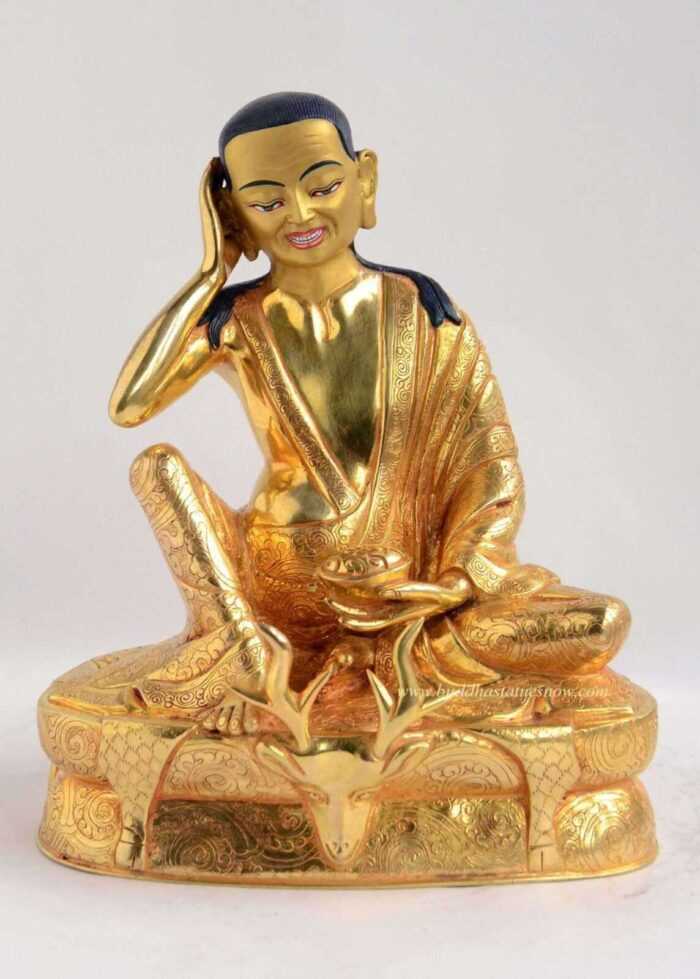
For a Kagyu lineage altar, Gampopa forms a doctrinally powerful grouping with Guru Marpa Lotsawa and Guru Milarepa. Often summarized as the Mar-Mi-Dag succession, the three masters represent the immediate development of the Kagyu transmission within Tibet. Marpa brought the essential teachings from Indian masters such as Naropa; Milarepa realized those instructions through extraordinary yogic practice and retreat; and Gampopa received that realization lineage and integrated it with disciplined monastic training. Together they therefore represent transmission, realization and institutional preservation. For a balanced three-statue display, Marpa may be placed on the viewer’s left, Milarepa in the center and Gampopa on the viewer’s right, allowing the altar itself to visually communicate the teacher-to-disciple succession.
Gold Gilded Gampopa Statue | Filling and Consecration
Traditional filling and consecration can be arranged in Kathmandu, Nepal before shipment for customers preparing this statue for active devotional use. Sacred mantra rolls, fragrant woods, incense powders and other appropriate substances may be placed within the hollow copper-alloy sculpture before it is sealed and blessed by a qualified Buddhist guru. When Marpa, Milarepa and Gampopa are acquired as a complete lineage grouping, their preparation can also be coordinated together. Learn more about our Buddha statue filling and consecration service in Nepal.
Custom Tibetan Buddhist Statues
Collectors, Dharma centers and Kagyu practitioners seeking a coordinated lineage shrine may commission custom Tibetan Buddhist statues handmade in Nepal. Marpa, Milarepa and Gampopa can be created in complementary dimensions and matching 24K gold fire-gilded finishes while preserving the distinctive householder, yogic and monastic iconography of each teacher. Commissioning the lineage masters together also allows the artisan to coordinate throne heights, proportions, engraving and overall visual balance for a unified altar installation.
Authentic, Handmade in Nepal
Every statue is handcrafted in Patan, Nepal, using traditional lost wax casting and comes with a certificate of authenticity issued by Nepal’s Department of Archaeology, verifying its materials, technique, and origin.