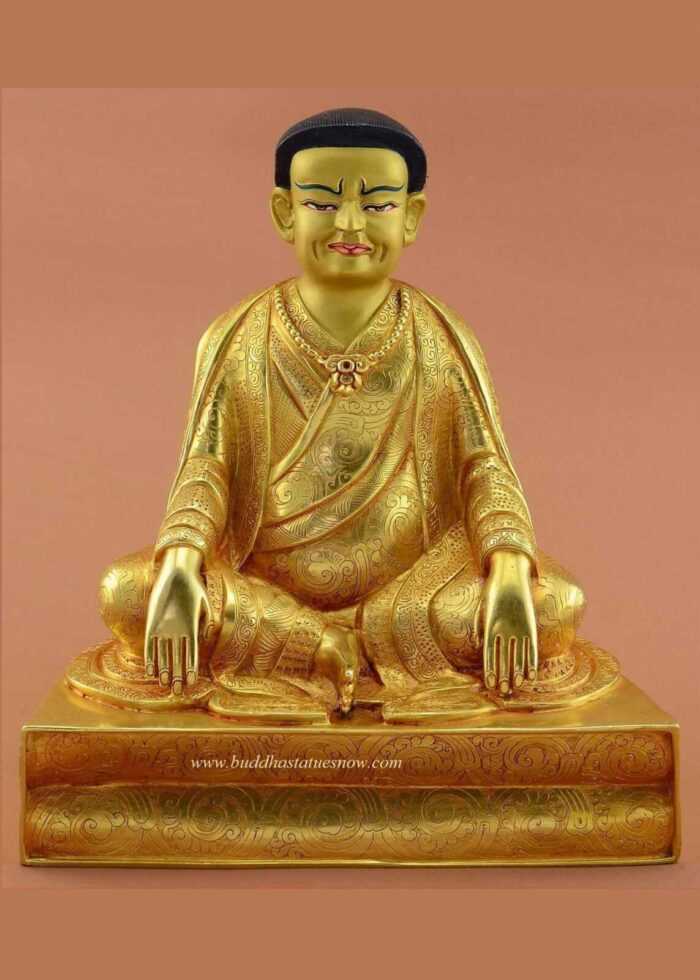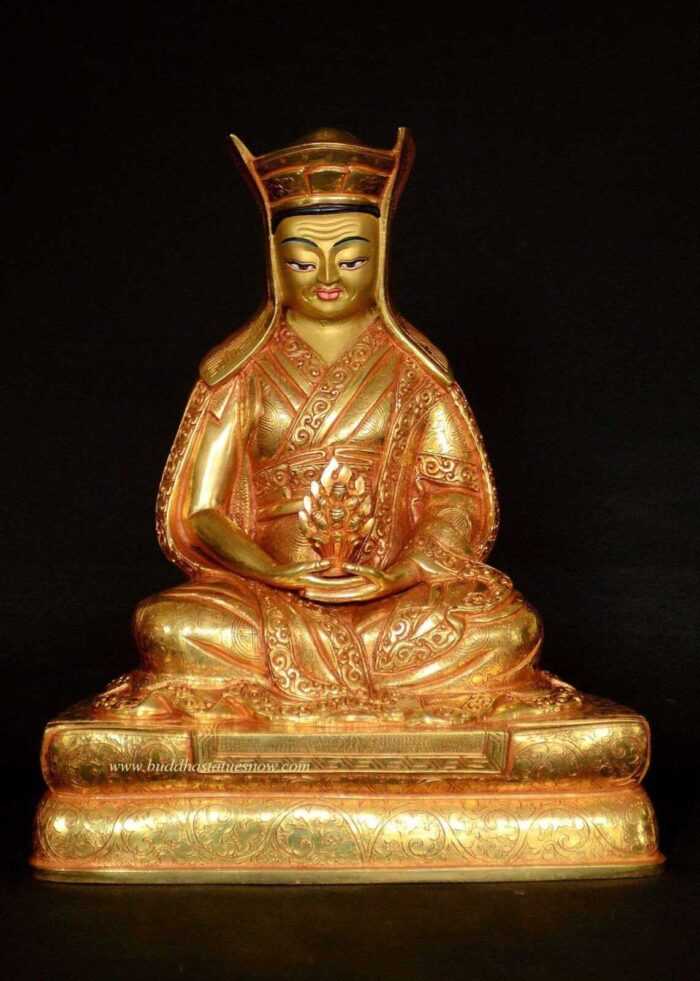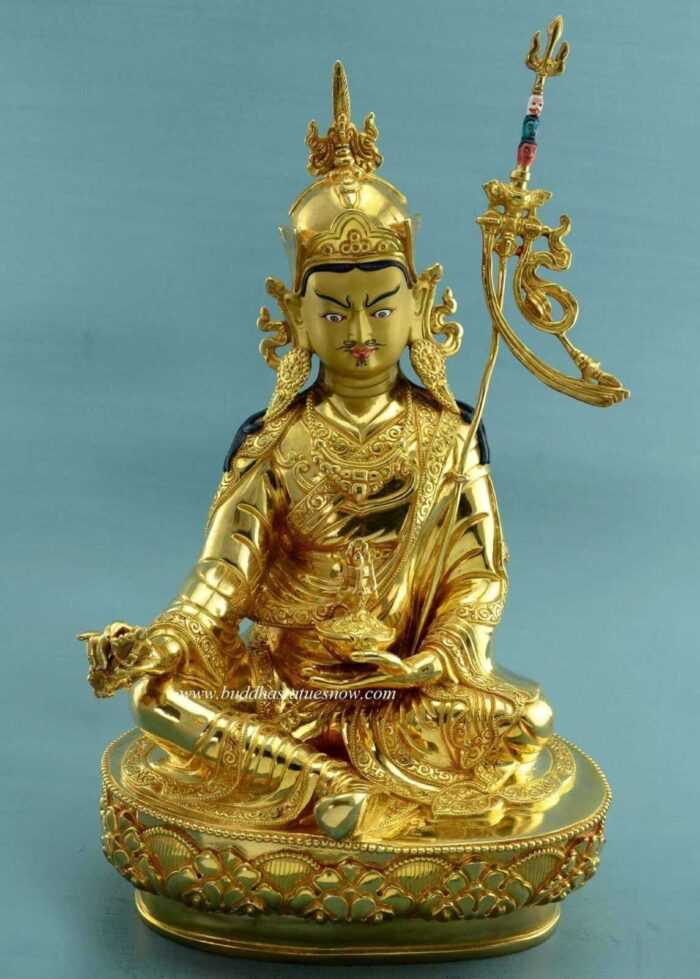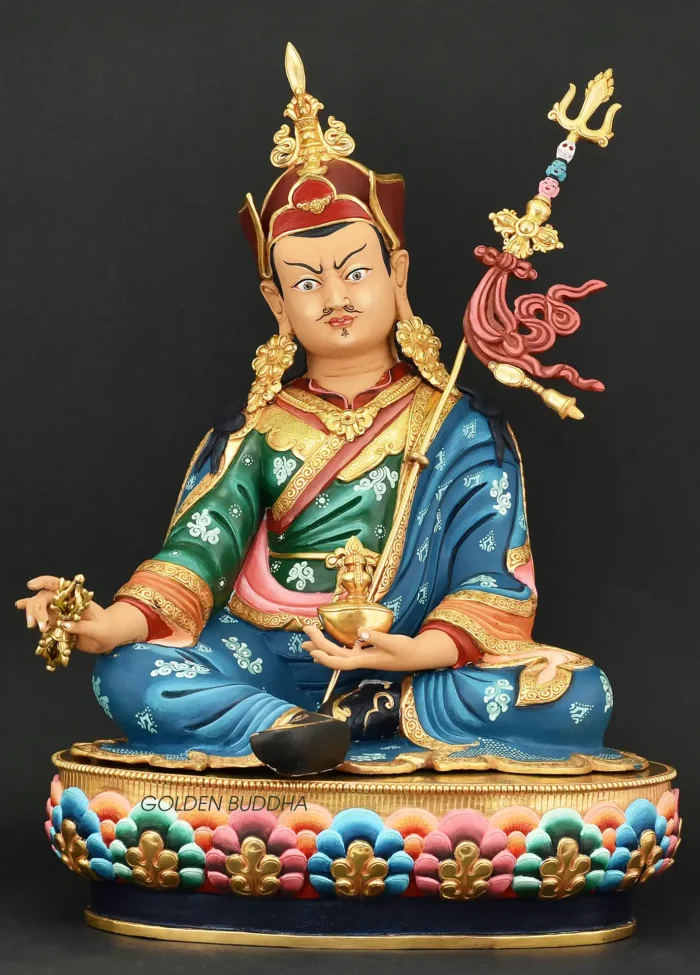
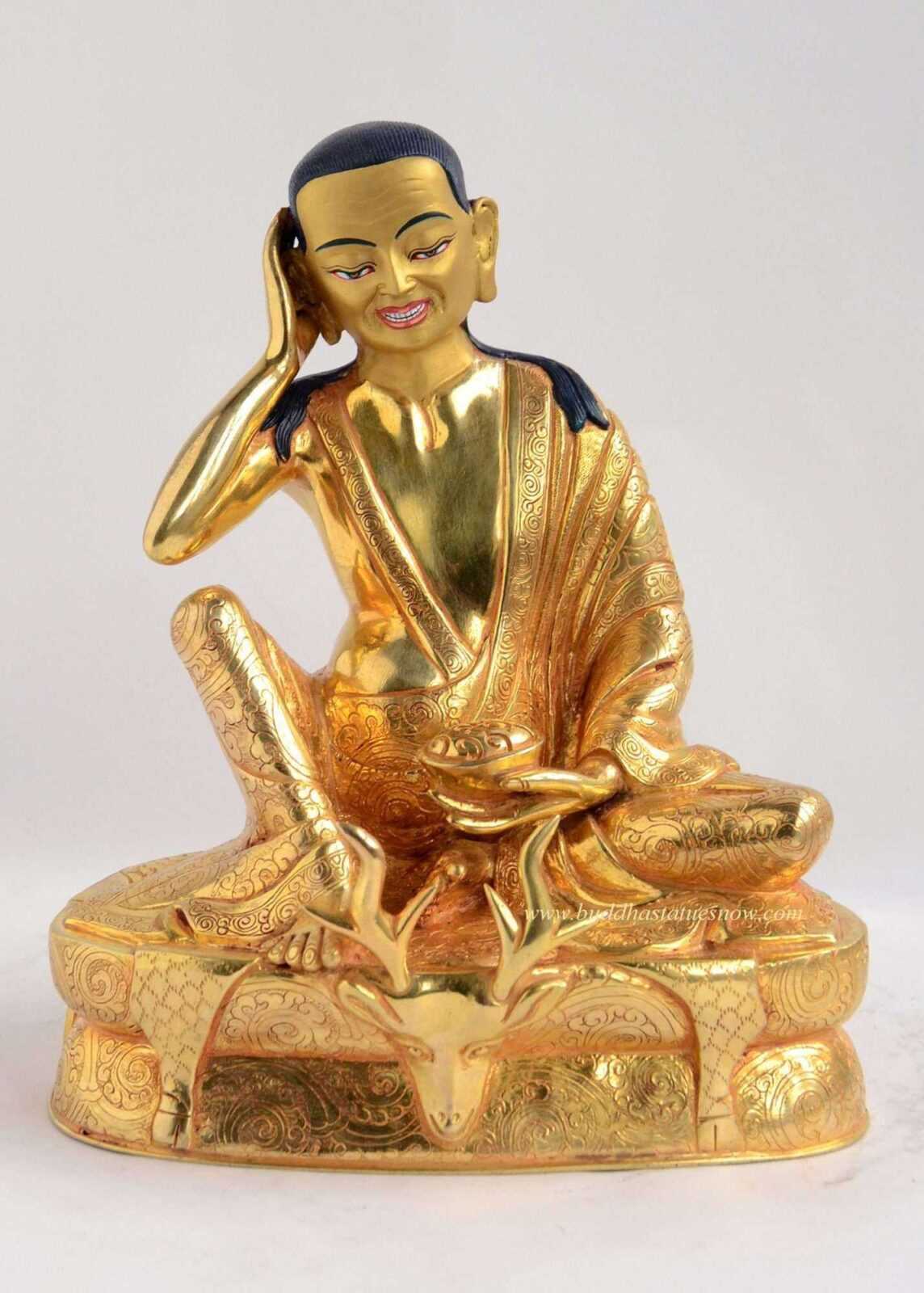
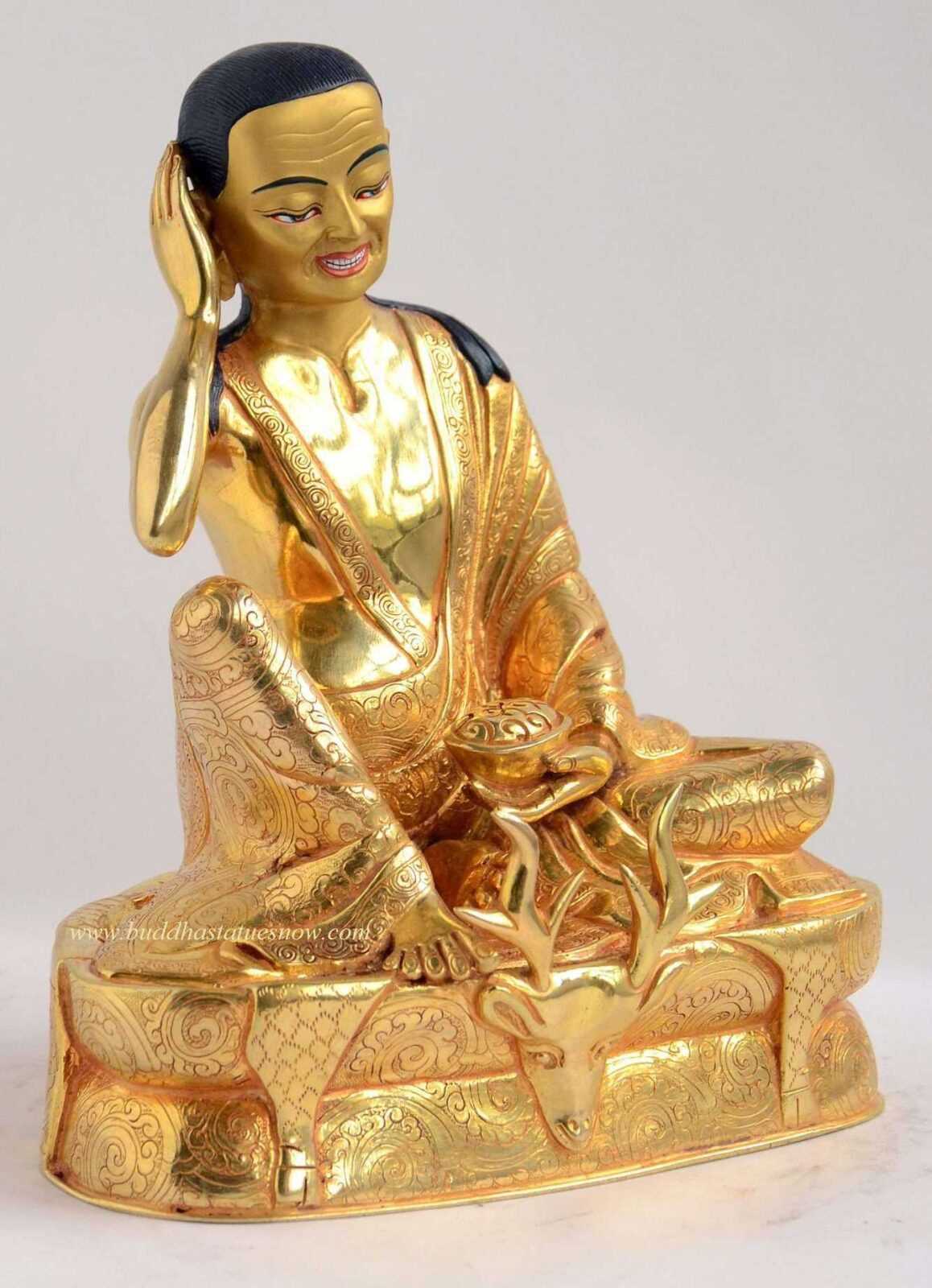
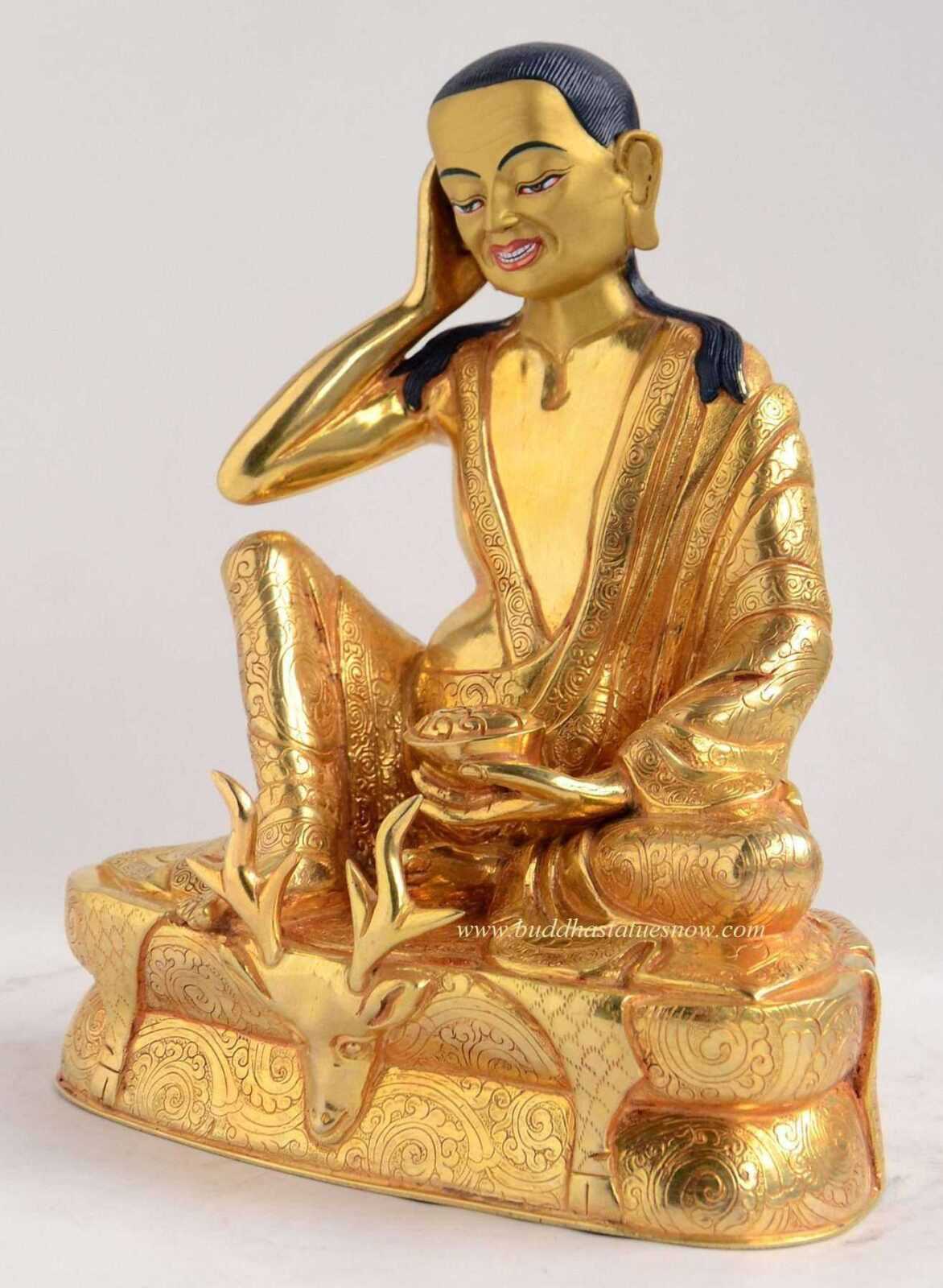
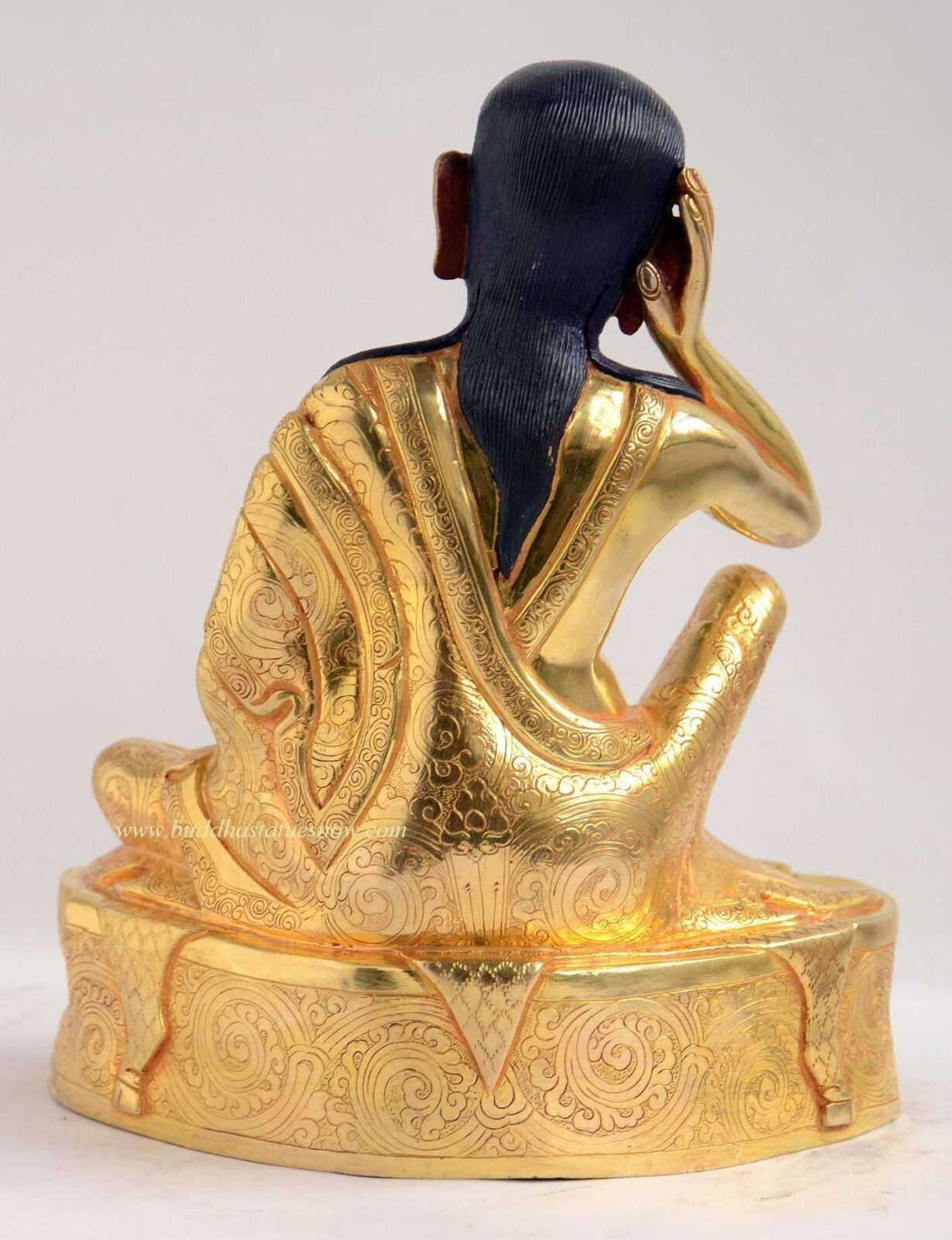
This 7.5″ Guru Milarepa statue is fully fire gilded in 24K gold throughout — figure, elaborately engraved deer skin cushion, and base in a unified golden surface with fine hand-carved scroll patterns visible across every surface, including the distinctive deer head carved in relief on the front of the cushion base. The face is hand-painted with Milarepa’s characteristic features. The statue was handcrafted in Patan, Nepal by master Newar artisans using the traditional lost wax sculpting method. Learn more about Guru Milarepa statues and his place in the Kagyu lineage.
Where a partly gilded Milarepa statue shows the great yogi in his cave-retreat form — gaunt, greenish from eating nettles, visibly ascetic — this fully gilded presentation depicts him in his realized state: golden body, the same visual language used for fully enlightened Buddhas, the outer appearance transformed to reflect the inner attainment. Milarepa (c.1040–1123 CE) is one of the very few figures in Tibetan Buddhist history said to have achieved complete enlightenment within a single human lifetime — moving from black magic and sorcery in his youth to full Buddhahood through years of intensive retreat under Guru Marpa’s demanding guidance. Before Marpa transmitted any teachings, he required Milarepa to build and demolish stone towers repeatedly — one of those towers, built in the eleventh century in Lhodrak, is said to stand to this day. After years in Himalayan caves, surviving on nettles, mastering tummo (inner heat) to the point of wearing only a single cotton robe in extreme cold, Milarepa realized the Mahamudra teachings fully and expressed that realization through spontaneous song — the Hundred Thousand Songs that remain among the most beloved works of Tibetan literature. Explore the four schools of Tibetan Buddhism in our complete guide to Tibetan Guru statues.
Guru Milarepa Statue Features
The statue depicts Milarepa in his signature cave meditation posture: right hand raised to the ear — the gesture of listening and singing, of a teacher who transmitted the Dharma through spontaneous song rather than formal discourse — and left hand holding the kapala (skull cup) of Tantric practice. He sits on a deer skin — the traditional seat of Indian and Tibetan ascetic masters, and a symbol connecting to the deer park at Sarnath where Shakyamuni Buddha gave his first teaching — its surface elaborately engraved in the fully gilded treatment of this statue, with the deer head carved in relief at the front of the cushion base making the symbolism explicit and visible.
Authentic, Handmade in Nepal
Every statue is handcrafted in Patan, Nepal, using traditional lost wax casting and comes with a certificate of authenticity issued by Nepal’s Department of Archaeology, verifying its materials, technique, and origin.