Tibetan Conch Shell Horns
The conch shell horn — dungkar in Tibetan, shankha in Sanskrit — is one of the eight auspicious symbols of Buddhism, and the one that stands for the Buddha’s speech. Its deep, carrying note represents the sound of the Dharma proclaimed in every direction, reaching beings of every disposition and waking them from the sleep of ignorance. Where the other seven symbols are seen, the conch is heard, which is why it appears both as an emblem in art and as a working instrument in the monasteries.
Every conch shell horn we offer is right-turning. The spiral begins at the centre of the shell tip and winds clockwise, and Tibetan tradition prizes this above all other conches: right-turning shells occur only rarely in nature, and their clockwise spiral echoes the direction in which stupas are circumambulated, in which offerings are made, and in which the hair of a Buddha curls. A left-turning shell is a shell; a right-turning shell is an auspicious object in its own right, and has been treated as such for as long as the tradition has existed.
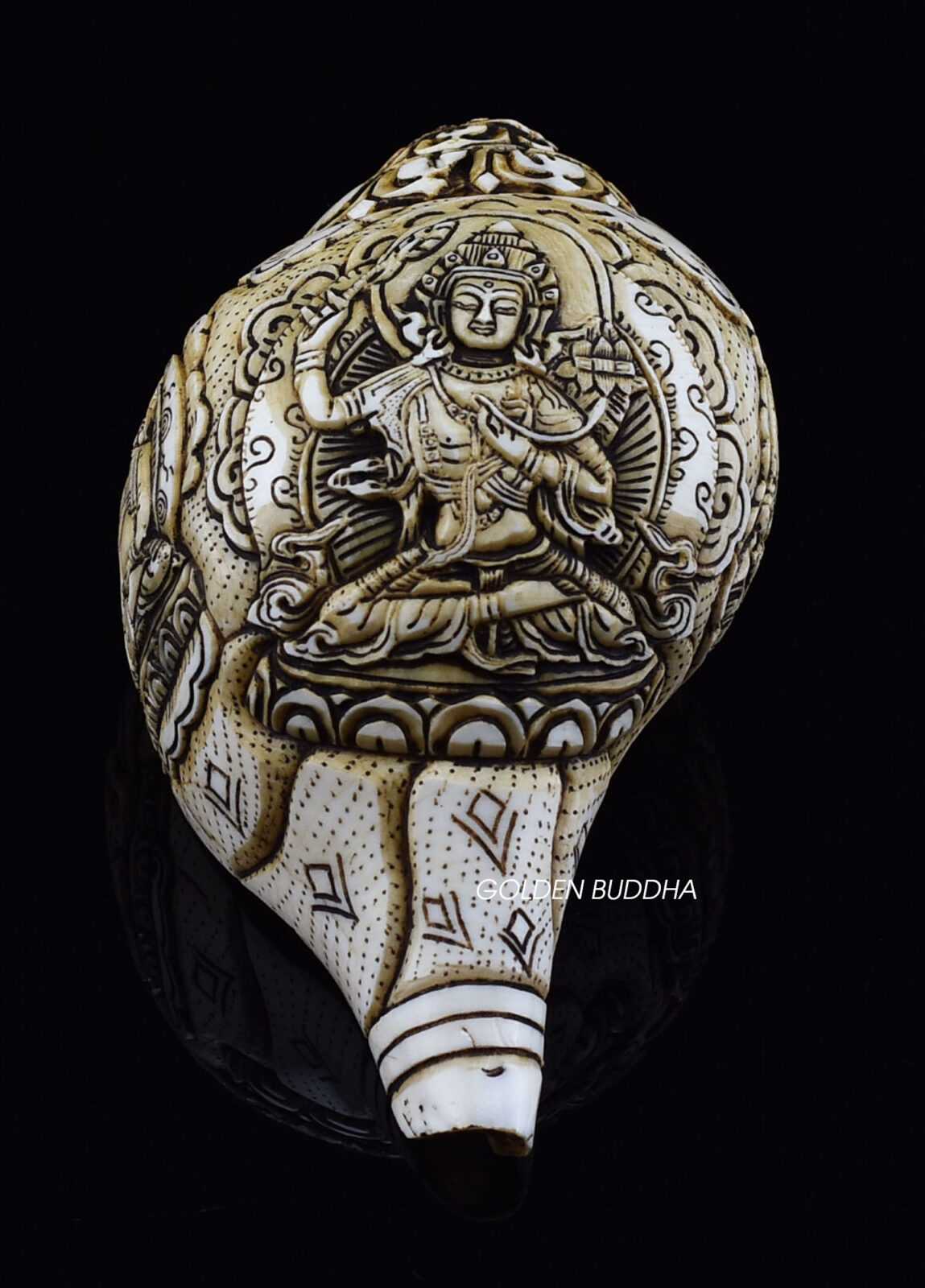
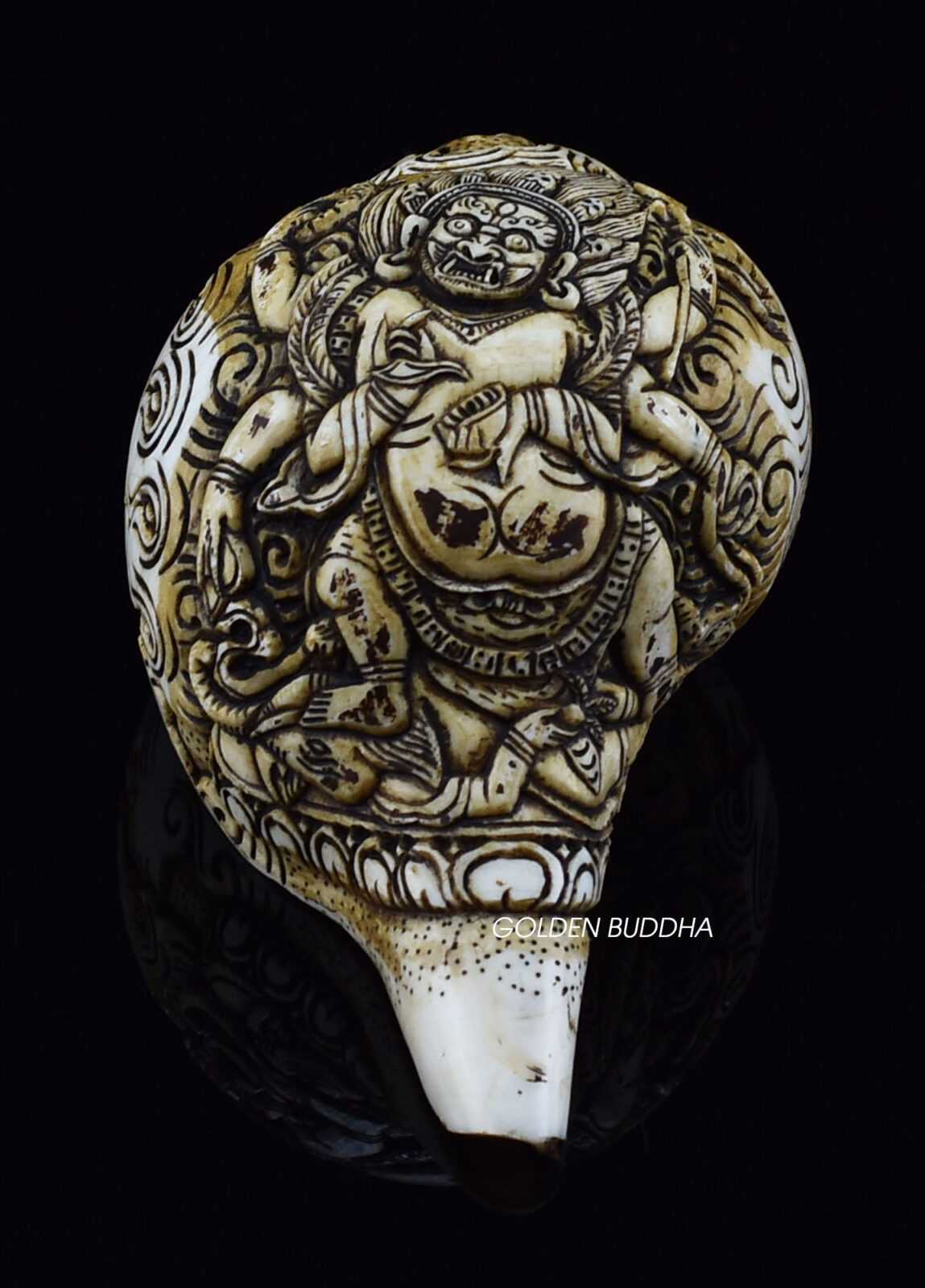
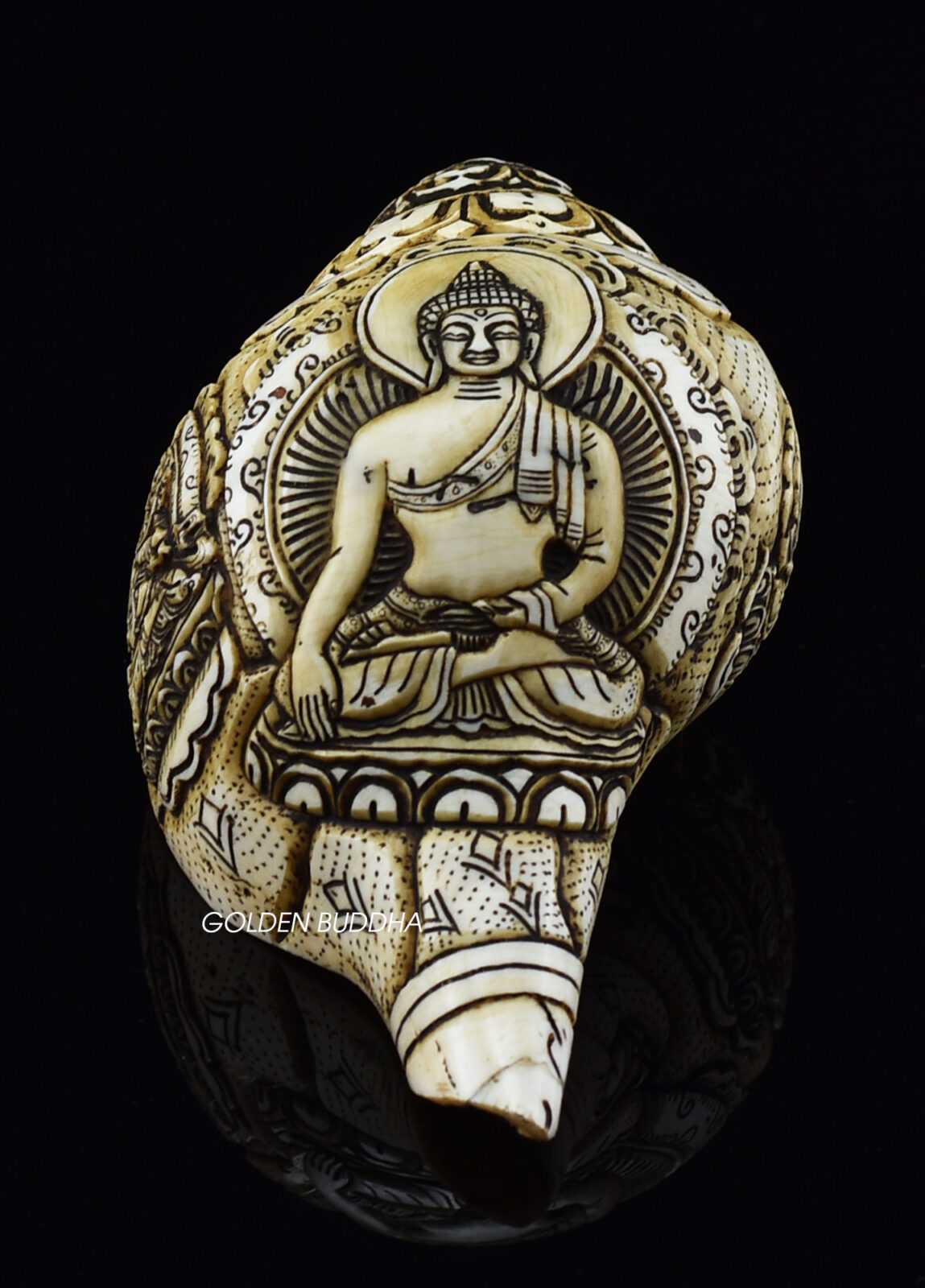
In practice a conch shell horn is sounded to call the assembly to prayer, to open ceremonies, and to mark processions — a role it has held since the earliest days of the tradition, when the conch was among the offerings made to the Buddha at his first teaching. Each of ours is hand carved with Buddhist deities across the body of the shell, so the instrument carries an image as well as a sound: one bears Manjushri, Bodhisattva of Wisdom, whose sword cuts through ignorance; one bears Black Mahakala, wrathful protector of the teachings; and one carries three figures together — Shakyamuni Buddha flanked by Chenrezig and Manjushri, compassion and wisdom on either side of the historical Buddha.
All three measure 7 inches and are carved entirely by hand in Patan, in the Kathmandu Valley, by artisans working in the same tradition that supplies the Tibetan monasteries. Because each begins as a natural right-turning shell, no two are identical in colour, weight or tone — the carving is adapted to the shell rather than the shell to the carving, and what you receive is the piece photographed.
Browse the conch shell horn selection below, see the eight auspicious symbols rendered as wearable ghau pendants, or explore our full range of Tibetan ritual items.
Showing all 3 resultsSorted by popularity
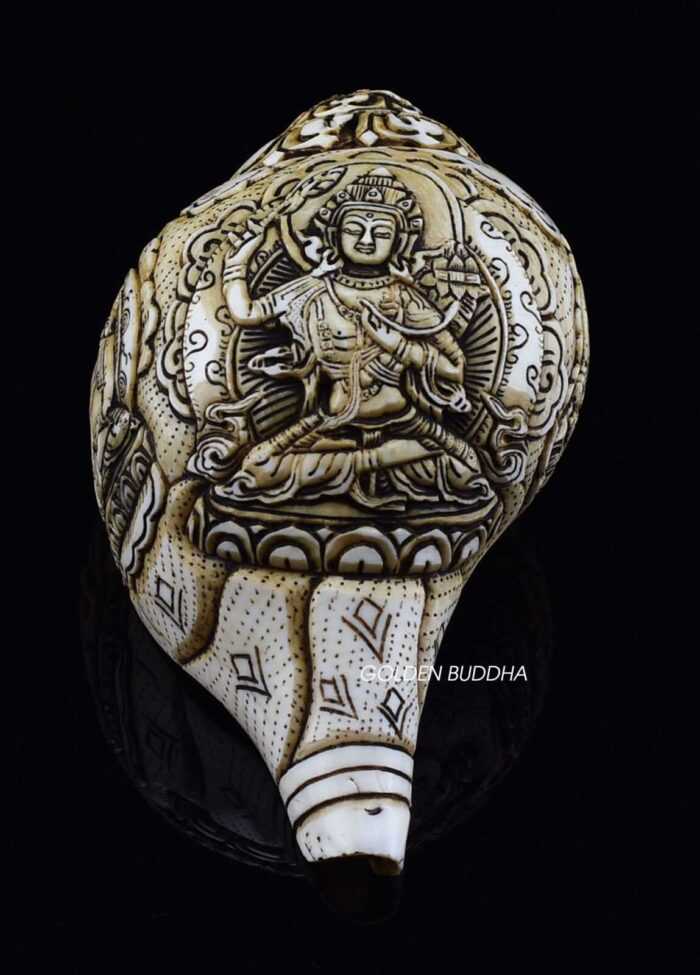
Right-Turning Conch Shell Horn 7″ | Hand Carved Manjushri
Original price was: $399.00.$288.00Current price is: $288.00.Add to Cart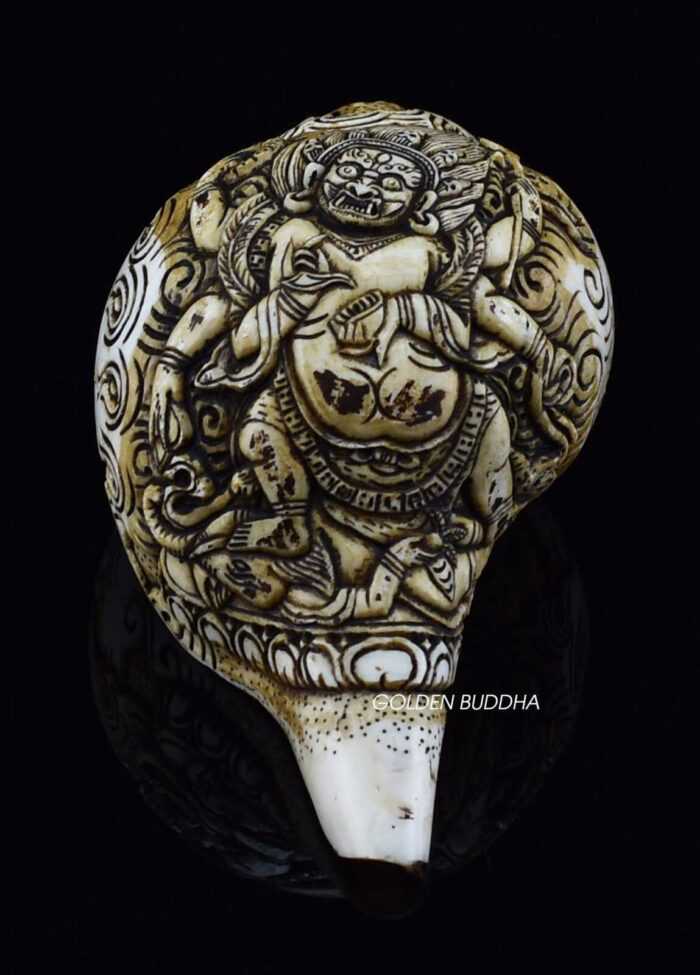
Right-Turning Conch Shell Horn 7″ | Six-Armed Black Mahakala
Original price was: $399.00.$288.00Current price is: $288.00.Add to Cart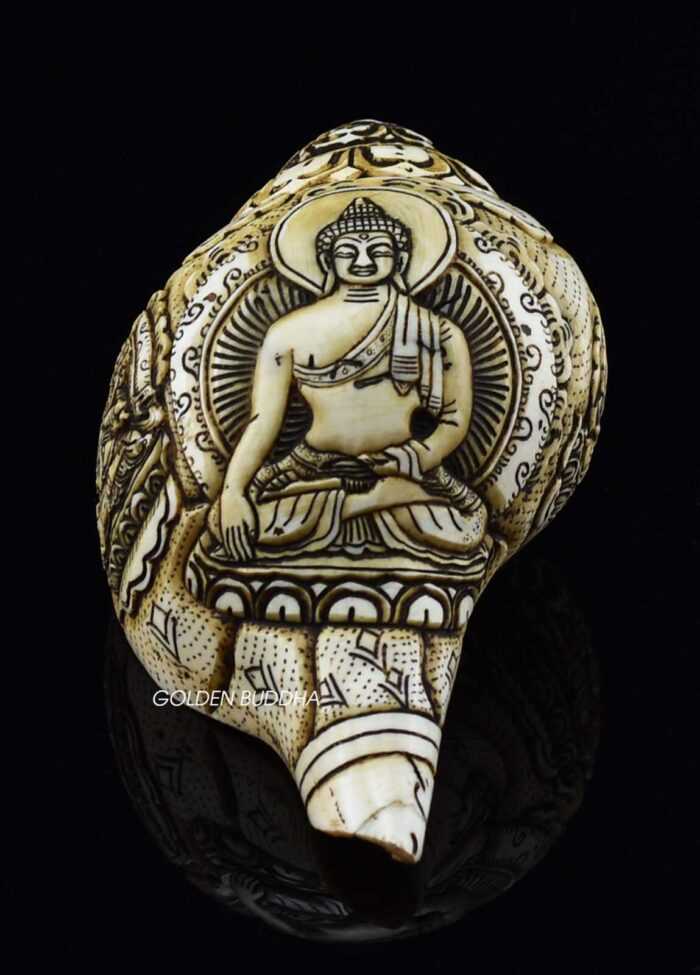
Right-Turning Conch Shell Horn 7″ | Hand Carved Shakyamuni Buddha
Original price was: $399.00.$288.00Current price is: $288.00.Add to Cart