
Tibetan Butter Lamps
Tibetan butter lamps have been used in the monasteries of Tibet and Nepal for centuries to represent the triumph of knowledge over ignorance – light over darkness. The lamp is the offering of illumination, one of the seven traditional offerings made on a Buddhist altar, and it is lit in the morning alongside the water bowls, before a session of practice, or on behalf of someone who is ill or who has died. Unlike a candle, which burns down and is thrown away, a butter lamp is refilled and relit indefinitely, which is why a well made one is bought once and used for decades.
Traditionally the fuel is clarified yak butter, which burns slowly with a soft, steady flame and gives the lamps their name. Outside the Himalaya that is rarely practical, and Tibetan butter lamps can be fuelled just as well with vegetable oil or vanaspati ghee – the quality of the light is the same, and so is the symbolism. A cotton wick is set upright in the well and trimmed as it burns.
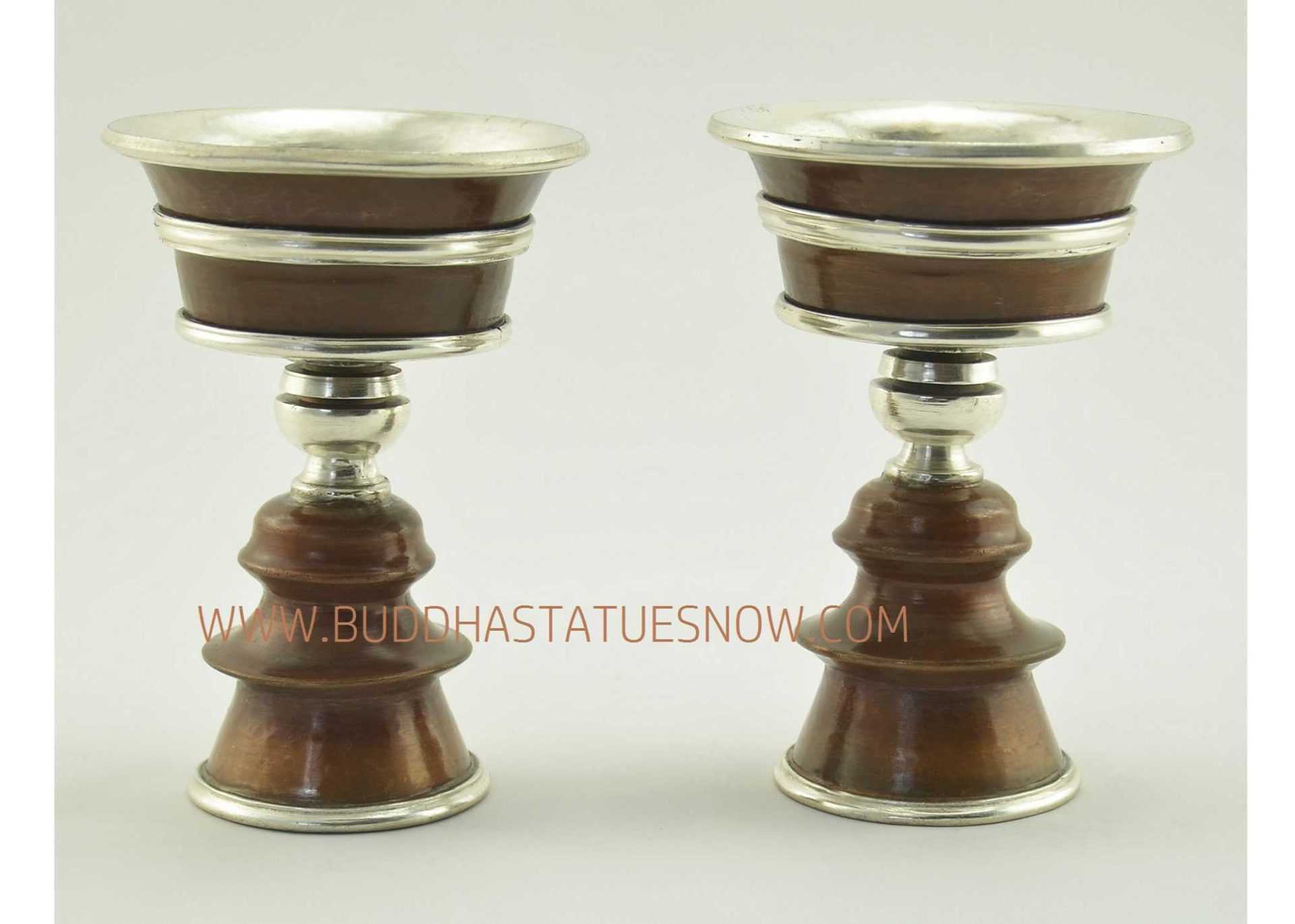
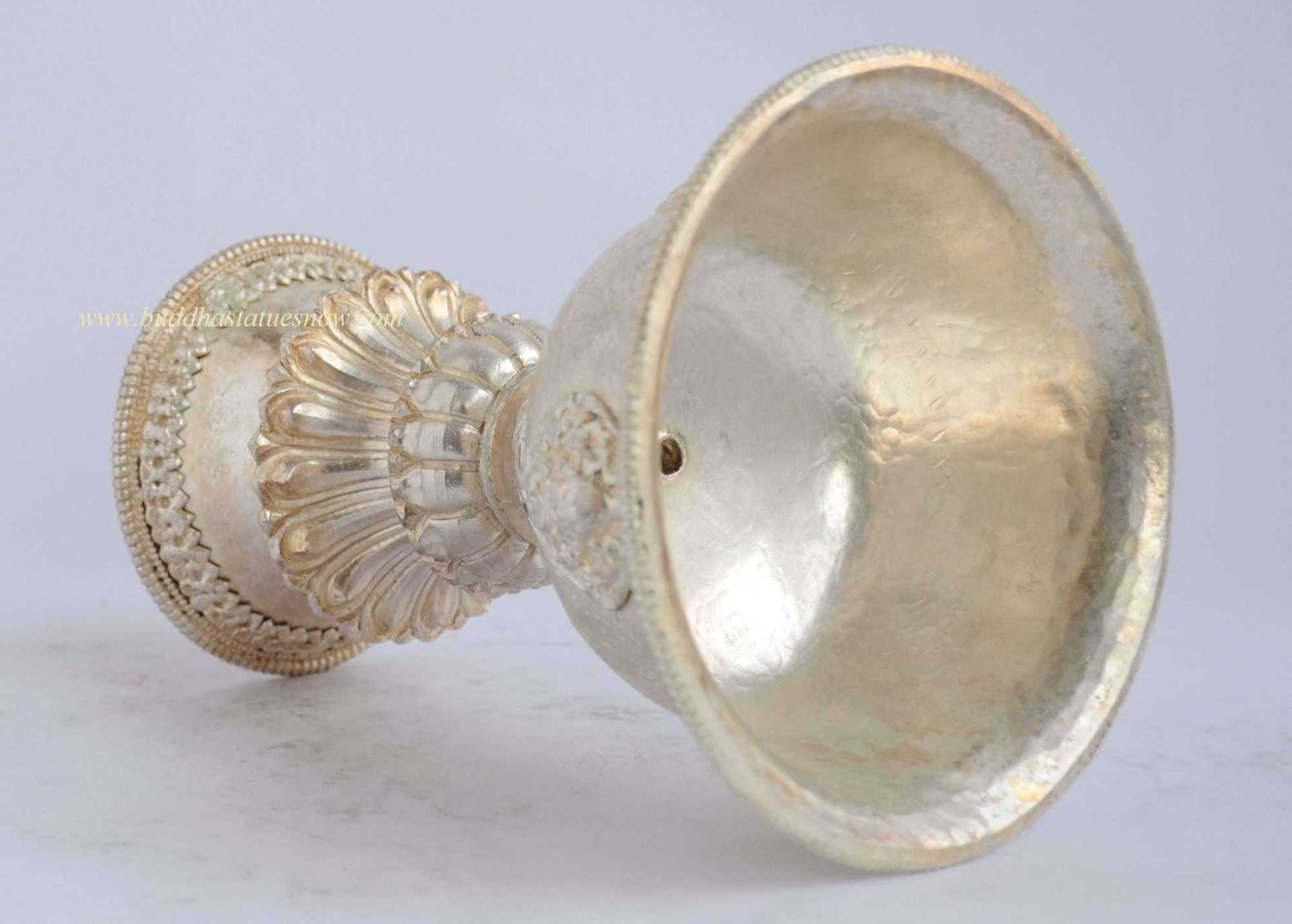
Our Tibetan butter lamps are handmade in Patan, in the Kathmandu Valley, in sizes from 4.25 to 6.5 inches. Four are supplied as two-piece sets, and the 6.5 inch silver plated lamp is sold singly. Most are finished in antiqued or oxidized copper with silver plating, a combination that suits the object well – the darkened body throws the flame forward while the silver catches and returns it – and one set is finished in oxidized copper with 24K gold gilding. Every lamp is hand carved, so the depth of the engraving varies slightly from piece to piece.
Because the light offering is one of the seven, Tibetan butter lamps are usually placed on the altar alongside a row of Tibetan offering bowls and an incense burner for the offering of fragrance, in front of the central image. Wipe the lamp clean once it has cooled, since butter and oil residue will dull plating over time. Browse the full range of Tibetan ritual items, or see our Buddha statues for the figure the offerings are made before.
Showing all 5 resultsSorted by popularity
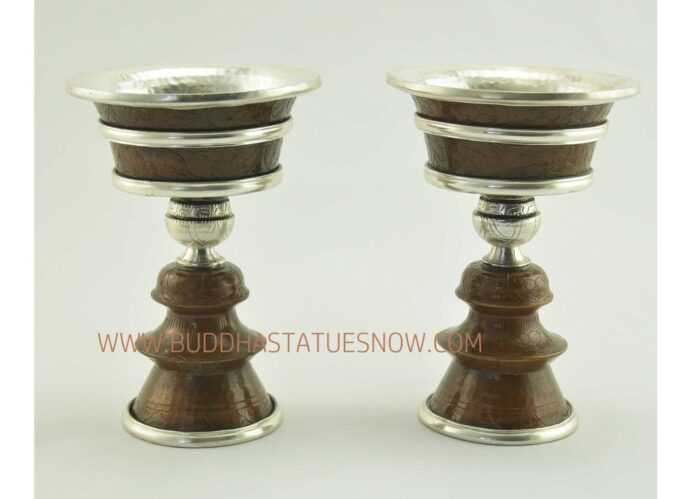
Tibetan Butter Lamps Set 5″ | Handmade Silver Plated Pair with Stem
Original price was: $369.00.$249.00Current price is: $249.00.Add to Cart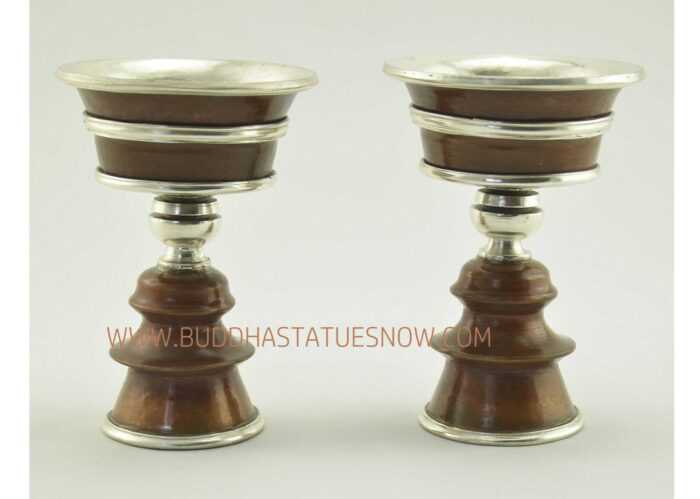
Oxidized Tibetan Butter Lamps Set | 4.25″ | Oxidized Copper & Silver Plated
Original price was: $269.00.$189.00Current price is: $189.00.Add to Cart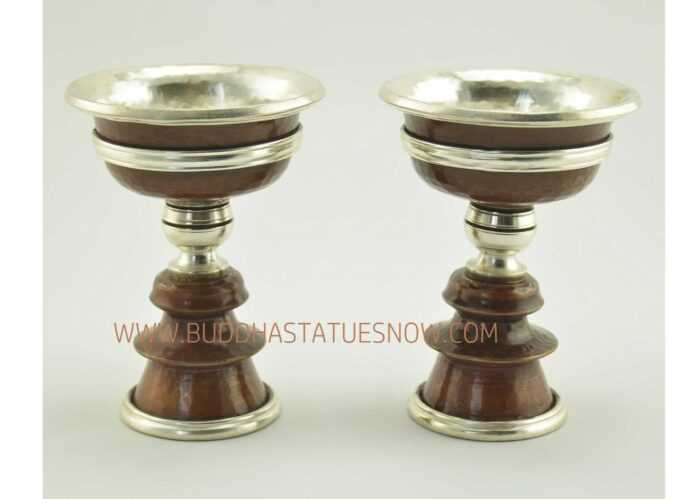
Antiquated Tibetan Butter Lamps Set 4.25″ | Silver Plated
Original price was: $299.00.$199.00Current price is: $199.00.Add to Cart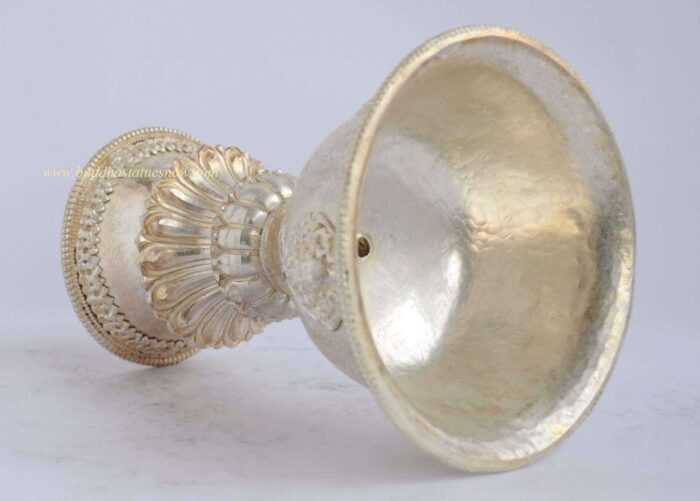
Silver Plated Tibetan Butter Lamp 6.5″ | Himalayan Ritual Offering Lamp
Original price was: $299.00.$219.00Current price is: $219.00.Add to Cart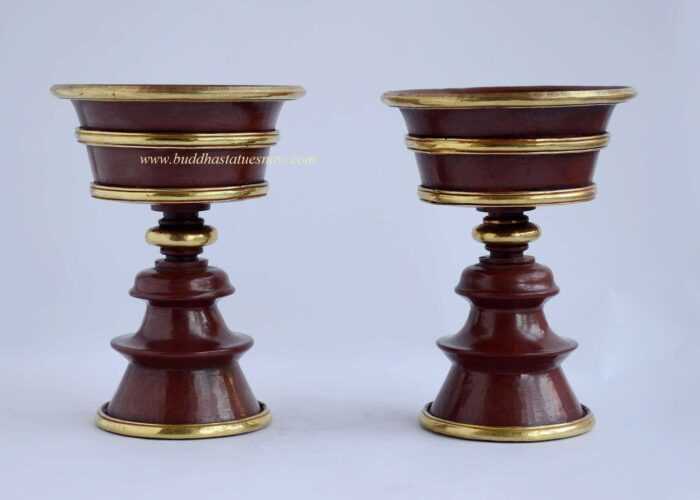
Tibetan Butter Lamps, 5″ | 24K Gold Gilded with Stem | Authentic Nepal
Original price was: $379.00.$269.00Current price is: $269.00.Add to Cart



The Offering of Light
Of the seven offerings made on a Tibetan altar, the lamp is the one that does something visible. Water sits in its bowls; incense burns and is gone; but a lamp changes the room it is in, and that is precisely the image the offering trades on. Light dispels darkness the way wisdom dispels ignorance - not by arguing with it, but simply by being present.
In the monasteries of Tibet and Nepal lamps are kept burning continuously, banks of them tended through the day, and the practice carries over to home shrines in a smaller form. A lamp is lit in the morning with the water offering, before sitting to practise, or dedicated to a particular person - someone ill, someone facing difficulty, or someone who has died. Unlike a candle, which is consumed and replaced, a butter lamp is refilled and relit indefinitely, which is why a well made one is bought once and kept for decades.
Fuel, Wicks and Care
Clarified yak butter is the traditional fuel and the source of the name. It burns slowly, with a soft and steady flame, and where it is available it remains the preference. Elsewhere, vegetable oil or vanaspati ghee substitute without difficulty, and nothing about the offering is lessened by using them - the light is the same light.
A cotton wick is set upright in the well and trimmed as it burns; an untrimmed wick smokes and will blacken both the lamp and whatever hangs above it. Wipe the residue out once the lamp has cooled rather than letting it harden, since butter and oil deposits dull silver plating and gilding over time. Our lamps are handmade in Patan, in the Kathmandu Valley, in sizes from 4.25 to 6.5 inches, in antiqued and oxidized copper with silver plating or 24K gold gilding - see the full range of Tibetan ritual items for the bowls and burners that complete the offering.
Frequently Asked Questions
What are Tibetan butter lamps used for?
The butter lamp is the offering of light, one of the seven traditional offerings made on a Buddhist altar. It represents the triumph of knowledge over ignorance - wisdom dispelling darkness - and is lit in the morning alongside the water bowls, before a session of practice, or as a dedicated offering on behalf of another person. In monasteries lamps are kept burning continuously, and in homes they are lit daily or on significant days.
What fuel should I use if I cannot get yak butter?
Clarified yak butter is the traditional fuel and gives the lamps their name, but it is rarely practical outside the Himalaya. Vegetable oil or vanaspati ghee work perfectly well as substitutes, and clarified butter or ghee from any source is equally acceptable. The quality of the light is the same and so is the symbolism - nothing about the offering is diminished by the substitution.
How do I light and look after a butter lamp?
Set a cotton wick upright in the well, fill with your chosen fuel, and light it. Trim the wick as it burns to keep the flame steady and reduce smoke. Once the lamp has cooled, wipe out the residue rather than leaving it to harden, since butter and oil deposits will dull silver plating and gilding over time. Never leave a lamp burning unattended, and keep it clear of thangkas and anything else that could catch.
Are these sold singly or in sets?
Both. Four of our butter lamps are supplied as two-piece sets, and the 6.5 inch silver plated lamp is sold as a single. The product title states which in each case, so check before ordering if you have a particular altar arrangement in mind.
Can I offer a butter lamp for someone who has died?
Yes, and it is one of the most common reasons lamps are offered. In Tibetan Buddhism the period following a death is traditionally observed for forty-nine days, and lamps are lit during that time alongside prayers, dedicated to the benefit of the person who has died. Lamps are also offered on behalf of the living - for someone who is ill, or facing difficulty - and the practice does not require any formal ceremony.
Where should butter lamps be placed on an altar?
Lamps are generally set in front of the central image, alongside the row of water offering bowls and an incense burner, so that the light falls toward the figure rather than away from it. Beyond that the arrangement is practical: leave clearance above the flame, keep the lamp away from hanging thangkas and fabric, and place it where it can be lit and cleaned without reaching across the rest of the shrine.