
Tibetan Bhumpa Sets
Tibetan bhumpa sets are the ritual vases that hold consecrated water, and they appear wherever blessing or purification is performed – in empowerment ceremonies, in the consecration of statues and shrines, and in the purification of people, objects and buildings. Bhumpas are traditionally supplied in pairs, and the pairing is functional rather than decorative: one is the chief vase, which remains on the altar throughout the ceremony as the seat of the blessing, and the other is the action vase, carried and used to distribute the water to those present.
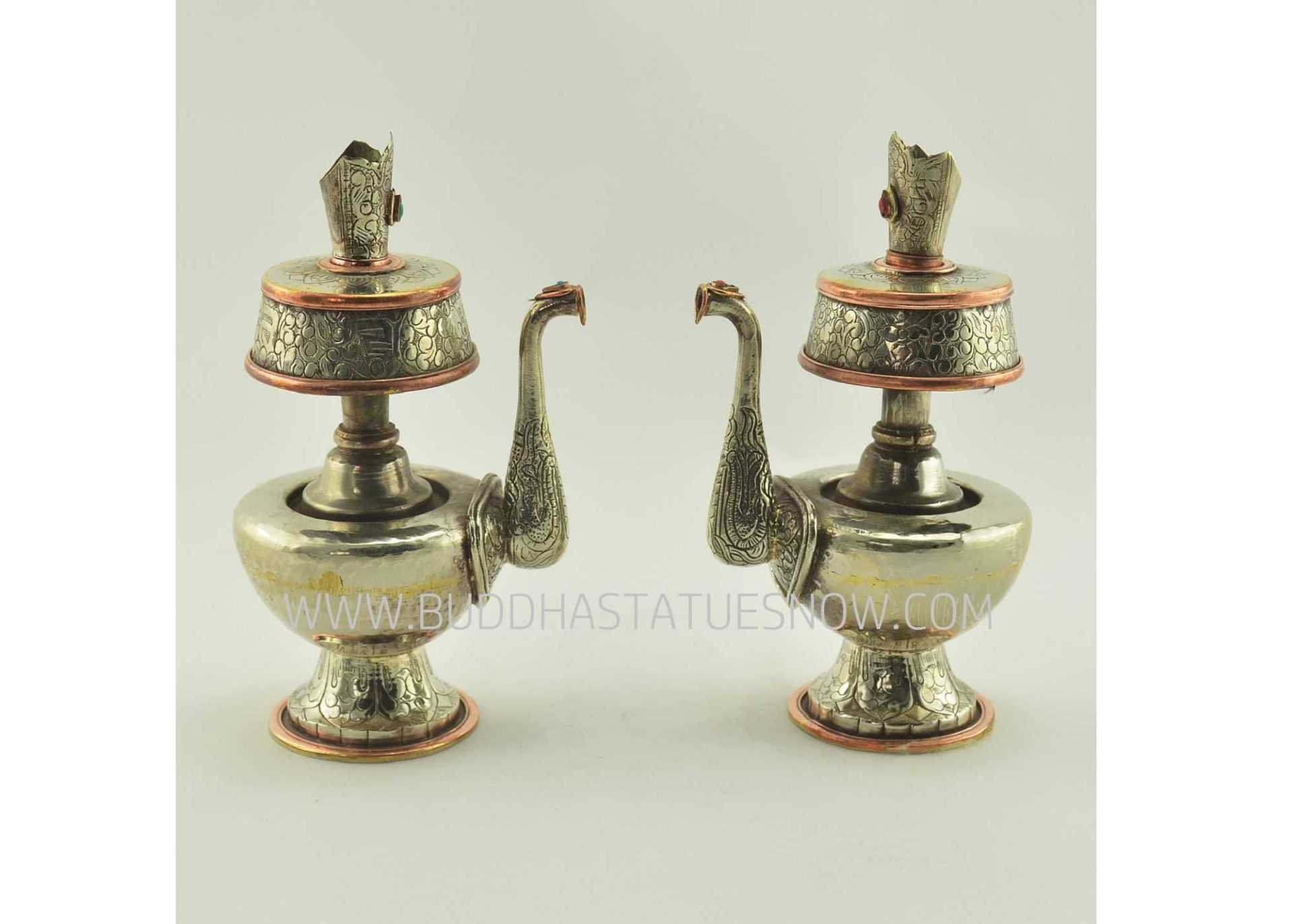
Both vases carry the same form – a rounded body on a footed base, a long neck, and a spout crowned with a peacock feather or kusha grass in use – and the quality of a bhumpa is judged by the engraving that covers it. Our Tibetan bhumpa sets are hand carved in Patan, Nepal, by artisans whose work has supplied the Tibetan monasteries for centuries, and the detail on the finer sets rewards close inspection.
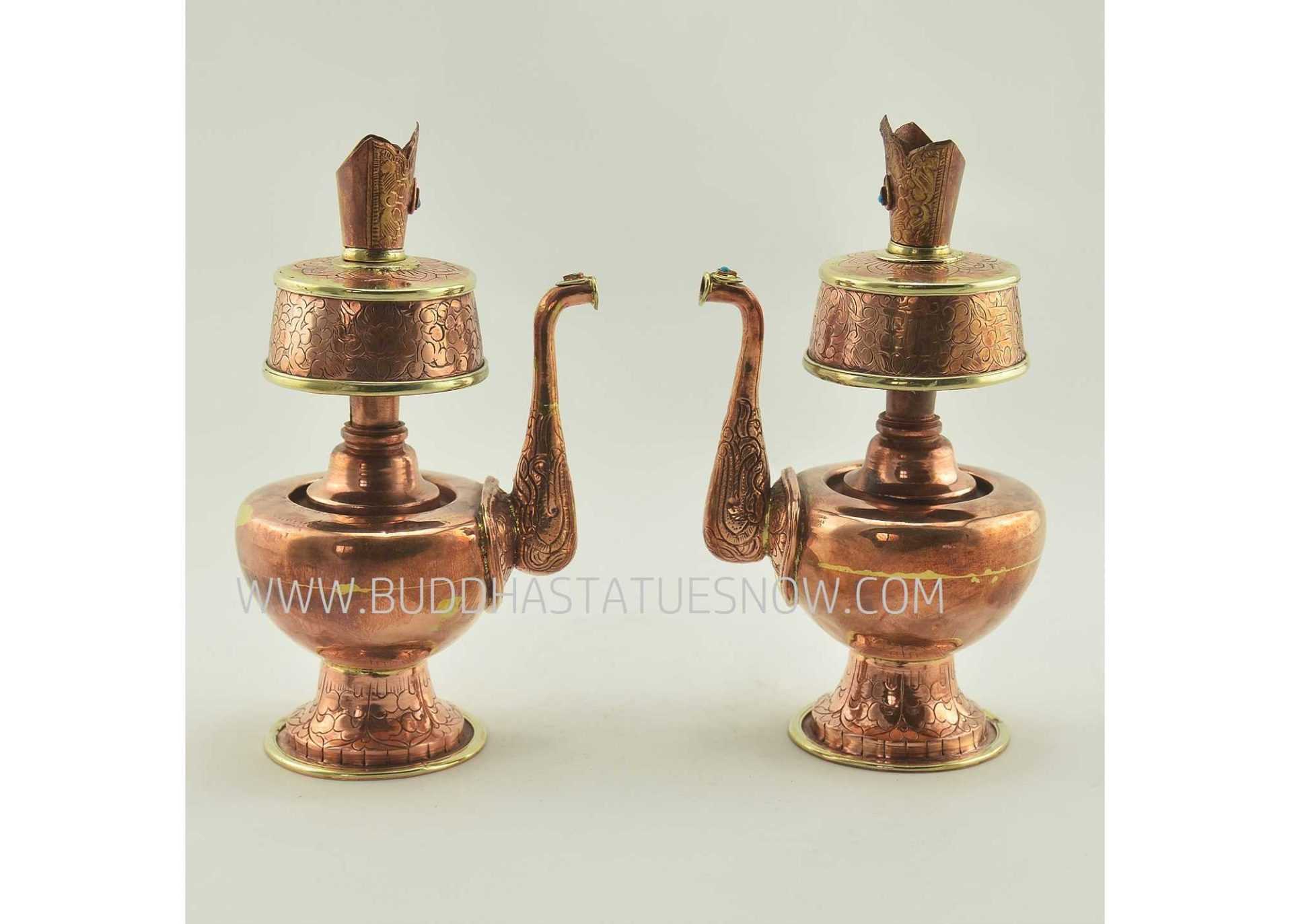
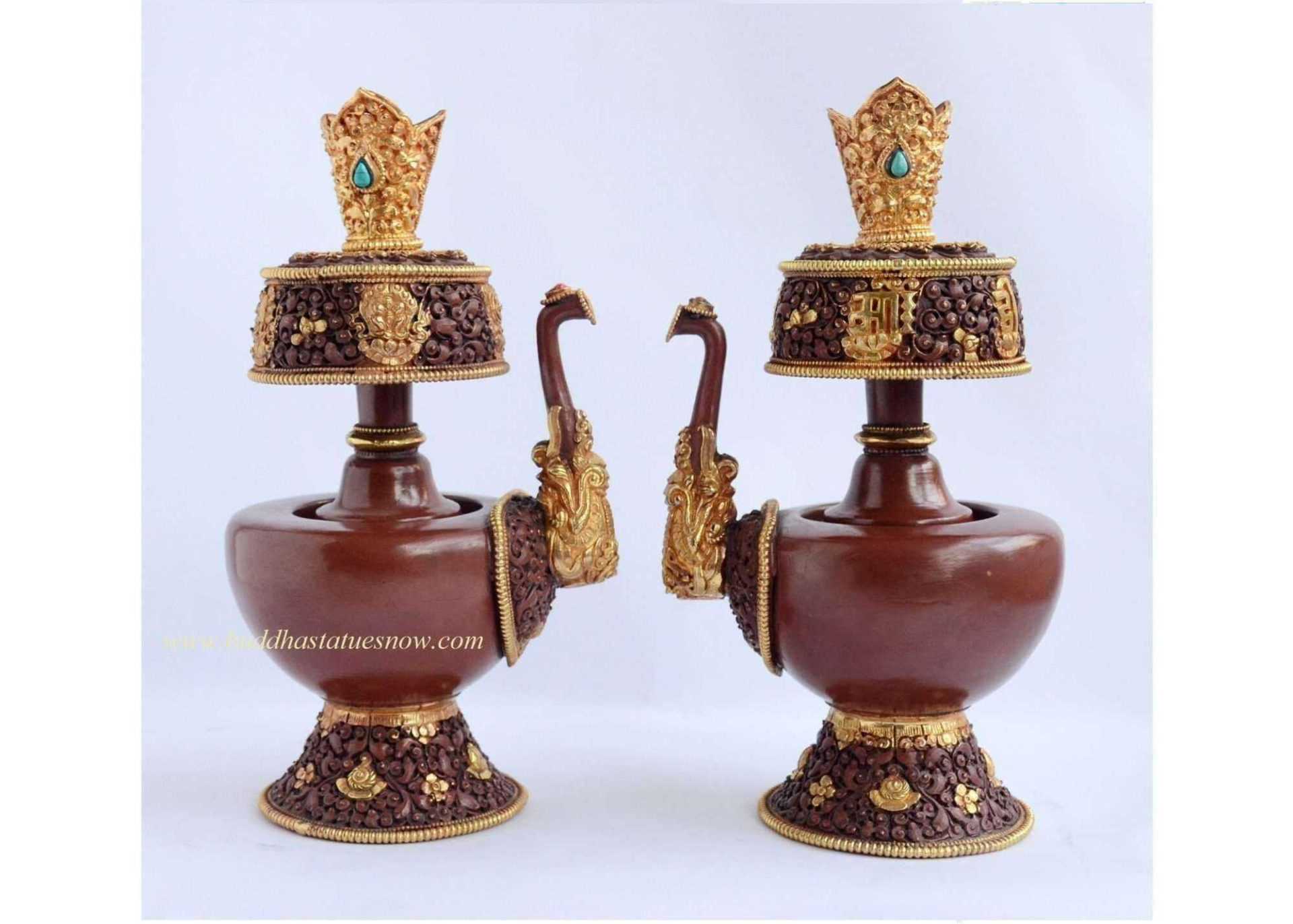
Sizes run from 6 to 9 inches. Finishes across our Tibetan bhumpa sets include oxidized copper with brass rings, white metal, antiqued copper with silver plating, gold plating, and 24K gold gilding, with many inset with semi-precious turquoise and coral. Because a bhumpa is a working vessel handled throughout a ceremony rather than an ornament left on a shelf, the heavier sets tend to be preferred by lamas and Dharma centres, while the smaller ones suit a home shrine.
Tibetan bhumpa sets are often bought alongside the vajra and bell and the mandala set as part of a full ritual kit. Browse the complete range of Tibetan ritual items, or read about how consecrated water is used in our guide to filling and consecration.
Showing all 12 resultsSorted by popularity
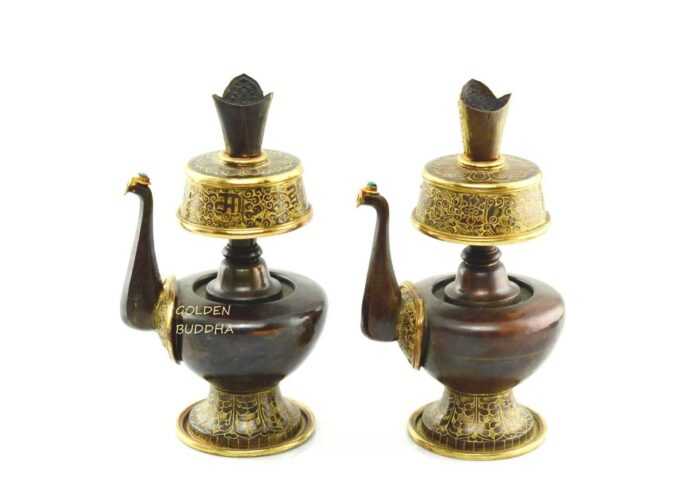
7.5″ Tibetan Bhumpa Set (Oxidized Copper Alloy with 24K Gold Gilding)
Original price was: $399.00.$279.00Current price is: $279.00.Add to Cart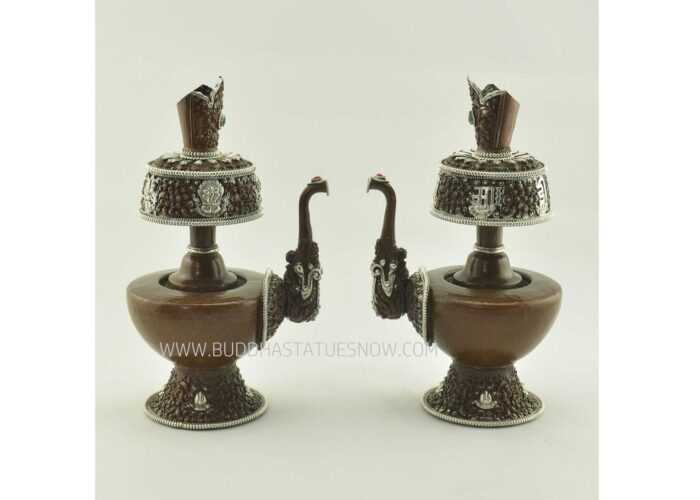
9″ Tibetan Bhumpa Set Antiquated Copper w/Silver Plating, Semiprecious Stones
Original price was: $579.00.$389.00Current price is: $389.00.Add to Cart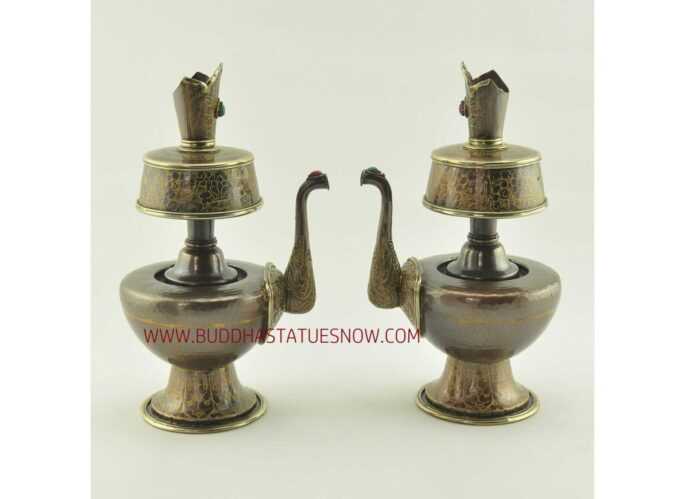
9″ Tibetan Bhumpa Set Hand Carved Oxidized Copper w/Brass Rings, Stones
Original price was: $399.00.$279.00Current price is: $279.00.Add to Cart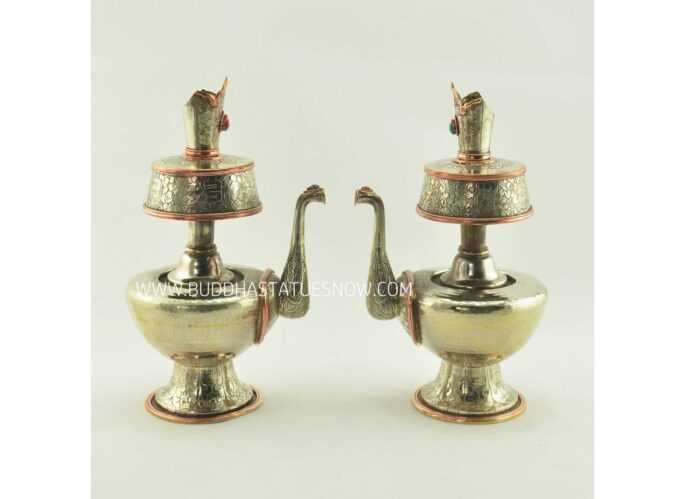
9″ Tibetan Bhumpa Set Hand Carved White Metal w/Semiprecious Stones
Original price was: $399.00.$289.00Current price is: $289.00.Add to Cart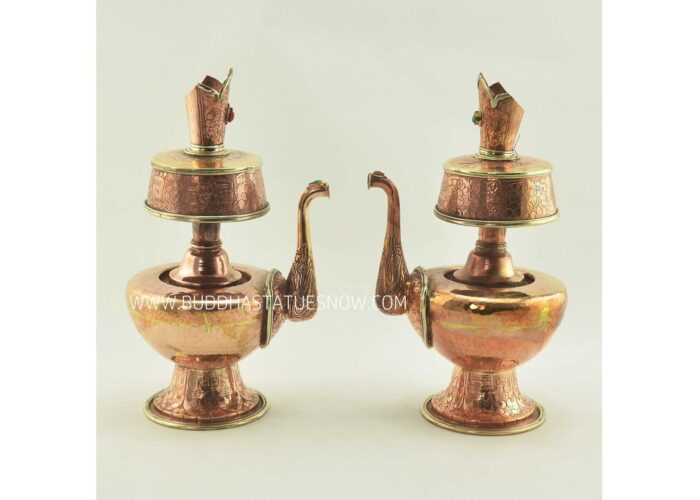
9″ Tibetan Bhumpa Sets Copper Alloy, Brass Rings w/Semiprecious Stones
Original price was: $399.00.$279.00Current price is: $279.00.Add to Cart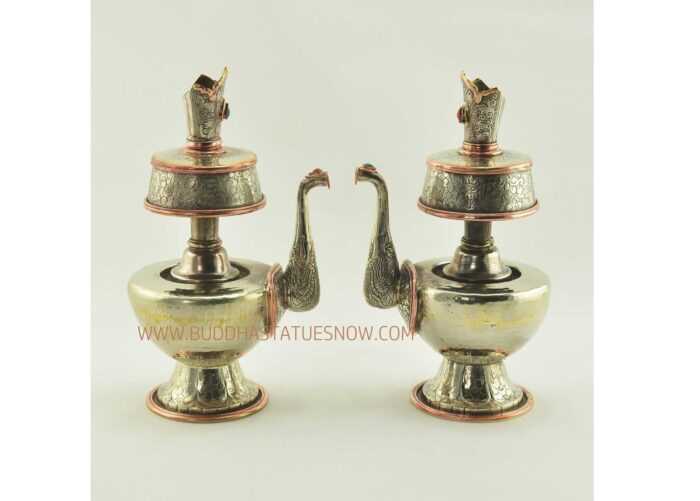
8″ Tibetan Bhumpa Set White Metal Alloy, Copper Rings Handmade w/Stones
Original price was: $399.00.$269.00Current price is: $269.00.Add to Cart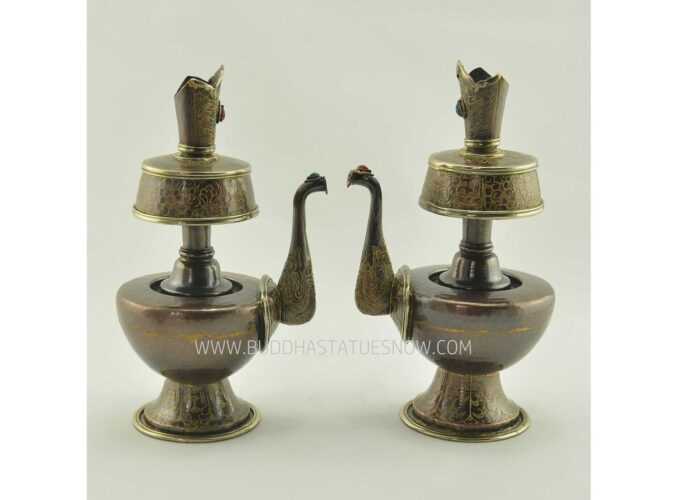
8″ Tibetan Bhumpa Set Oxidized Copper, Brass Rings w/Semiprecious Stones
Original price was: $379.00.$269.00Current price is: $269.00.Add to Cart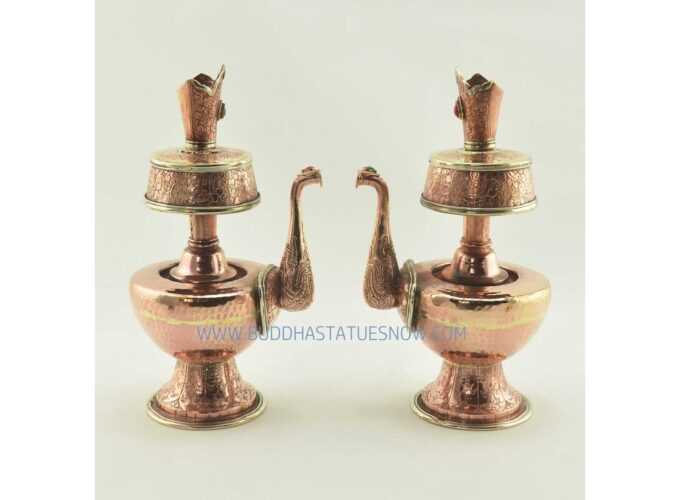
8″ Tibetan Bhumpa Set Copper Alloy, Brass Rings w/Semiprecious Stones
Original price was: $359.00.$249.00Current price is: $249.00.Add to Cart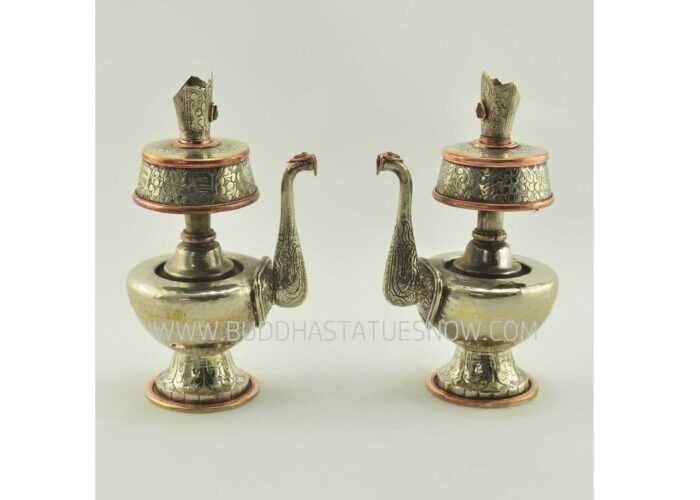
6″ Tibetan Bhumpa Set, White Metal, Hand Carved w/Semiprecious Stones
Original price was: $359.00.$249.00Current price is: $249.00.Add to Cart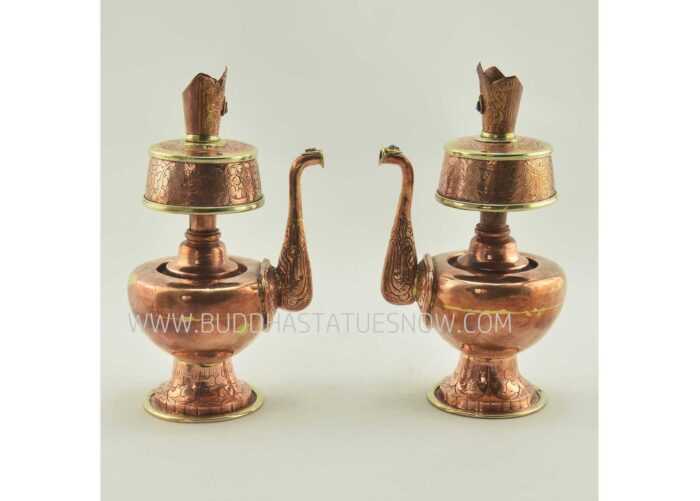
6″ Tibetan Bhumpa Set Brass Rings, Semiprecious Stones (Fine Carving)
Original price was: $349.00.$229.00Current price is: $229.00.Add to Cart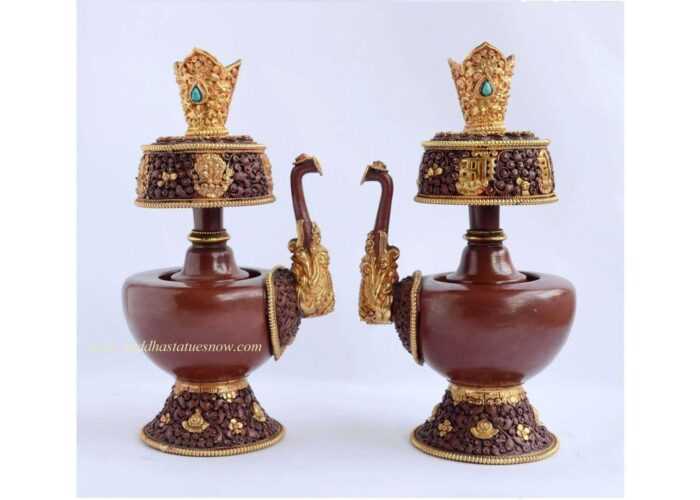
9″ Tibetan Bhumpa Set Antiquated Copper w/Gold Plating, Semiprecious Stones
Original price was: $899.00.$679.00Current price is: $679.00.Add to Cart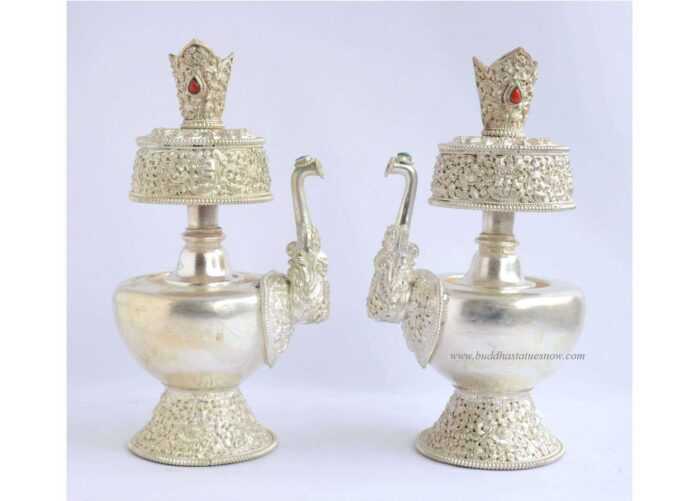
9″ Tibetan Bhumpa Set Antiquated Copper w/Silver Plating, Semiprecious Stones
Original price was: $679.00.$479.00Current price is: $479.00.Add to Cart

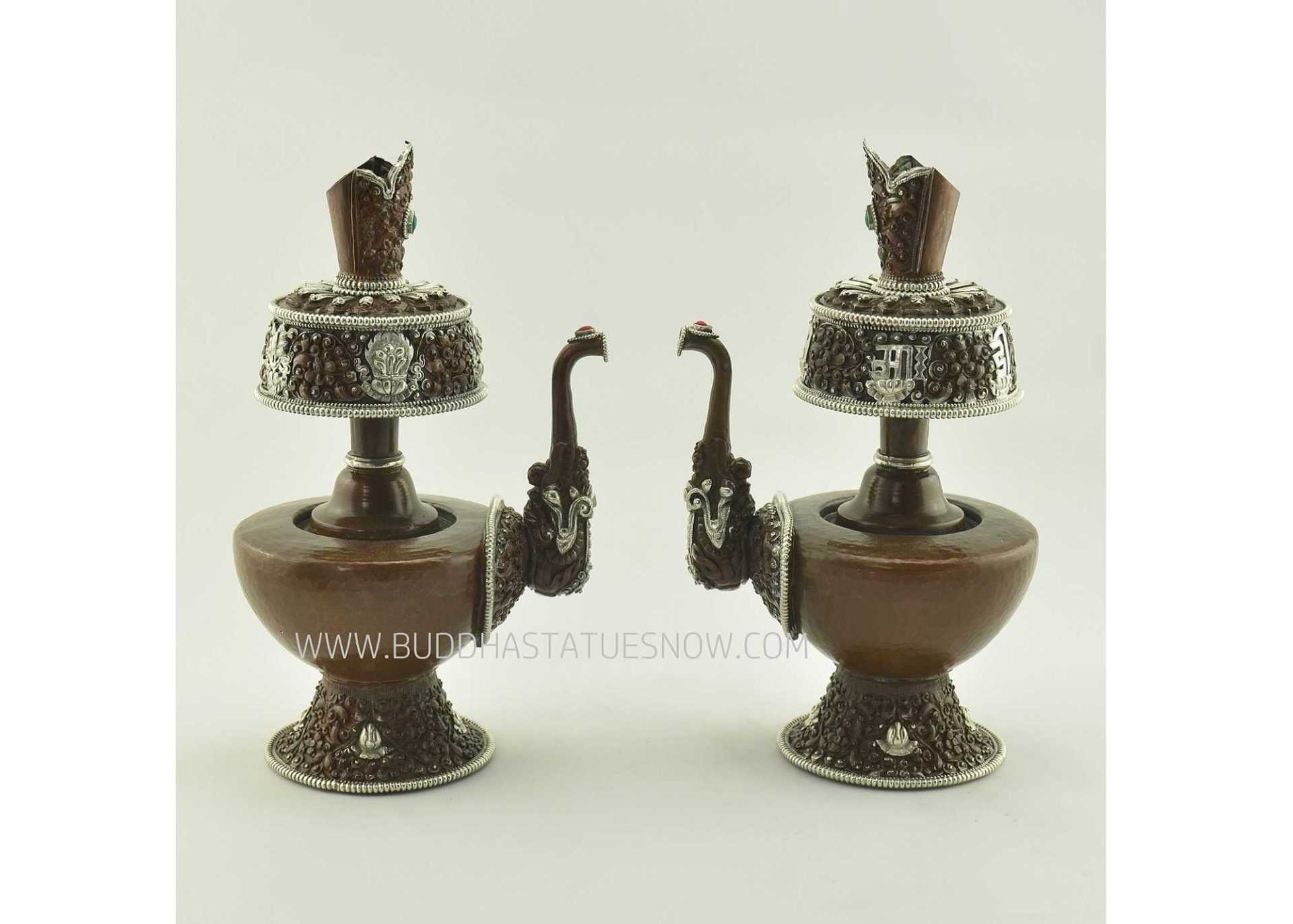


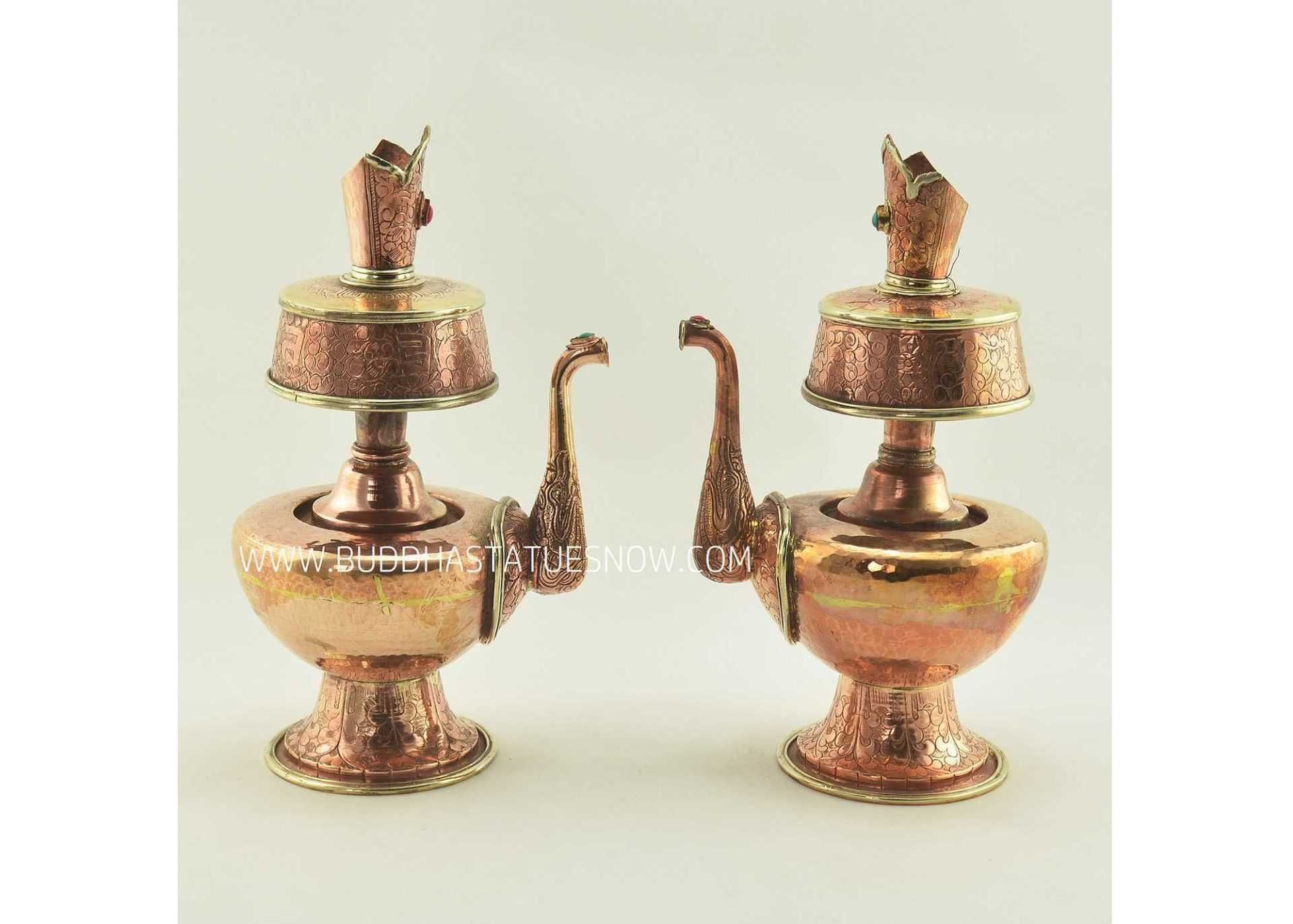

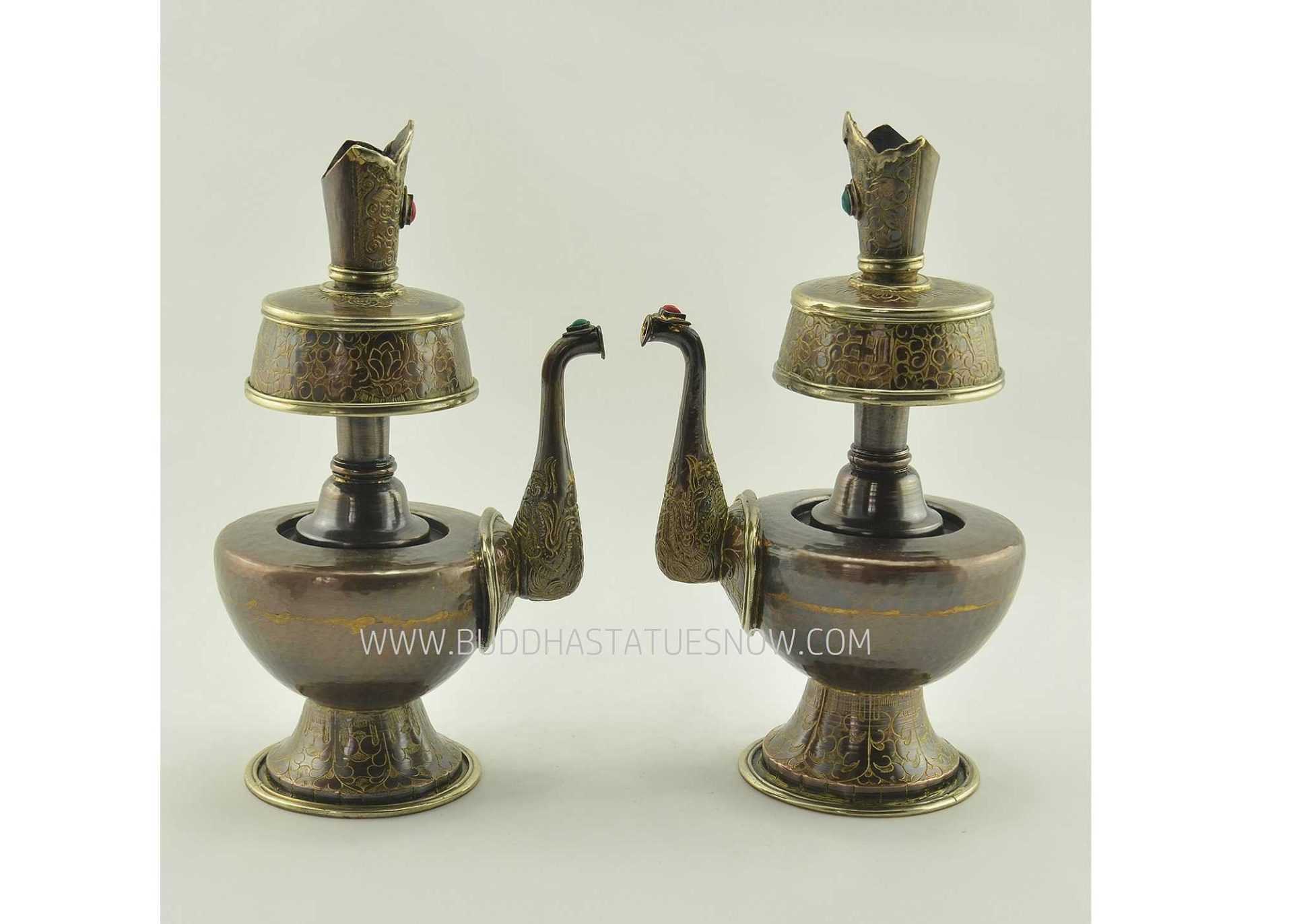
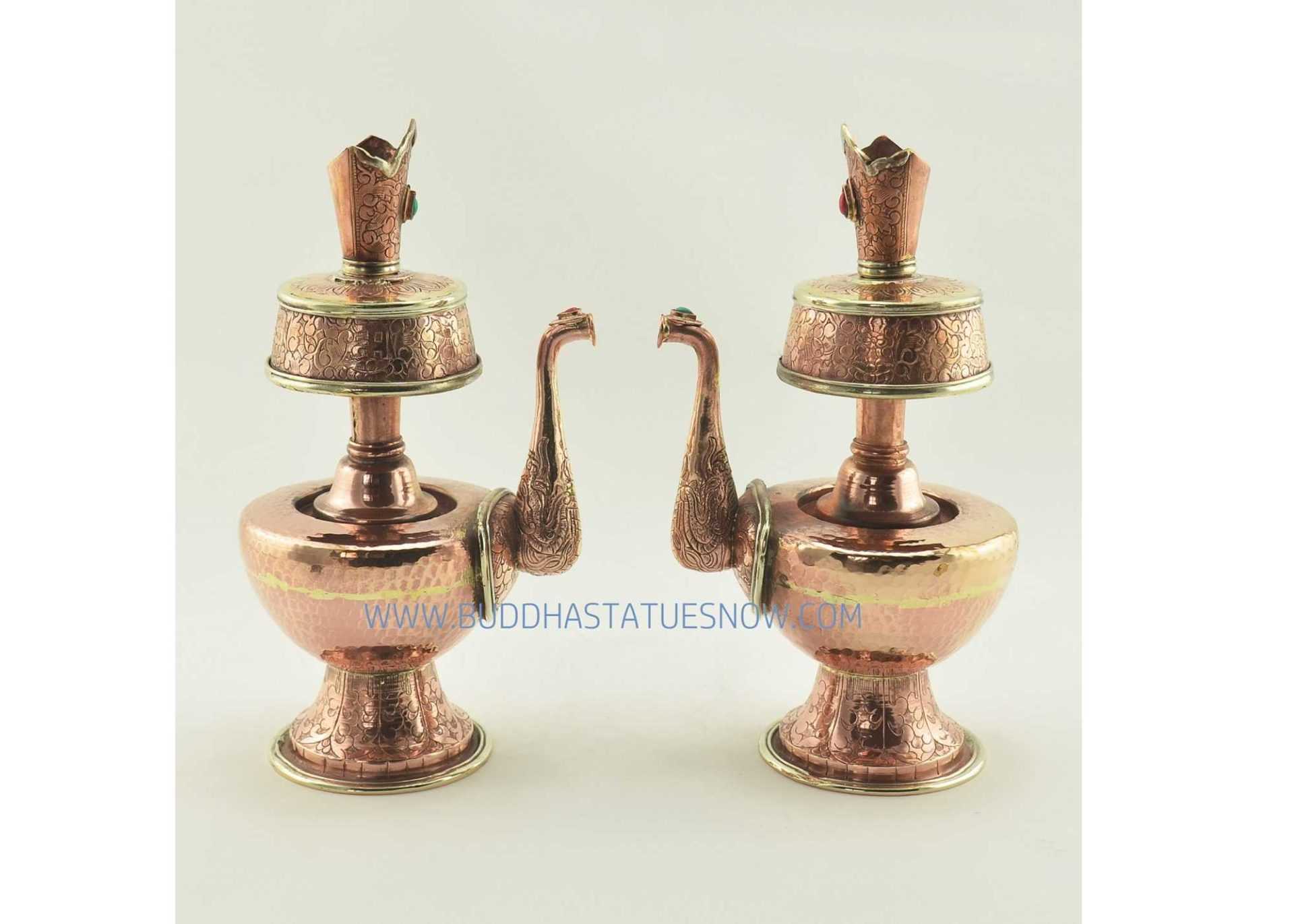

The Chief Vase and the Action Vase
Bhumpas are made and sold in pairs because the ritual requires two, each with a distinct job. The chief vase is placed on the altar at the start of the ceremony and remains there as the seat of the blessing, undisturbed. The action vase is the one that moves - carried by the officiant, used to sprinkle or distribute the consecrated water to the people, objects or space being purified.
In use, a spray of kusha grass or a peacock feather is set into the mouth of each vase, and the water is flicked from it rather than poured. Both materials carry long associations with purification, and the peacock in particular with the transformation of poison into wisdom, which is precisely what the rite enacts.
Materials, Sizes and Craftsmanship
Our bhumpa sets are hand carved in Patan, in the Kathmandu Valley, by artisans whose work has supplied the Tibetan monasteries for centuries. Sizes run from 6 to 9 inches. Finishes include oxidized copper with brass rings, white metal, antiqued copper with silver plating, gold plating, and 24K gold gilding, with many sets inset with semi-precious turquoise and coral.
Because a bhumpa is a working vessel carried through a ceremony rather than an ornament left on a shelf, weight and balance matter as much as decoration, and the heavier sets tend to be chosen by lamas and Dharma centres for that reason. Bhumpas are often bought alongside the vajra and bell and the mandala set as part of a full ritual kit. Browse the complete range of Tibetan ritual items.
Frequently Asked Questions
What is a Tibetan bhumpa used for?
A bhumpa is the ritual vase that holds consecrated water. It appears wherever blessing or purification is performed - in empowerment ceremonies, in the consecration of statues, thangkas and shrine rooms, and in the purification of people, objects and buildings. The water is prepared and blessed during the ceremony and then distributed to those present, or sprinkled over whatever is being consecrated.
Why do bhumpa sets come in pairs?
The two vases have different roles. One is the chief vase, which stays on the altar throughout the ceremony as the seat of the blessing and is not moved. The other is the action vase, which is carried and used to actually distribute the water to participants. The pairing is functional rather than decorative, which is why the two are made as a matched set rather than sold individually.
What goes in the spout of a bhumpa?
In use, a spray of kusha grass or a peacock feather is set into the mouth of the vase. It serves a practical purpose - the water is flicked or sprinkled from it rather than poured - and a symbolic one, since both kusha grass and peacock feathers carry associations with purification and the transformation of poison into wisdom. The grass or feather is not supplied with the vase and is added by the practitioner.
What size bhumpa set should I choose?
Our sets run from 6 to 9 inches. Larger sets are generally preferred by lamas and Dharma centres, where the vase is handled through a full ceremony and seen by a room, and the extra weight is an advantage rather than a burden. Smaller sets suit a home shrine or a practitioner who wants a bhumpa for personal use. Consider also how much altar space the pair will occupy, since both vases are displayed together.
Can a bhumpa be used on a home altar?
Many practitioners keep one. A bhumpa on a personal shrine functions as a support for practice and as a vessel for blessed water received at empowerments or from a teacher, and it does not require a formal ceremony to be present. How it is used beyond that depends on your own practice and on any instruction you have received, and it is worth asking your teacher if you are unsure.