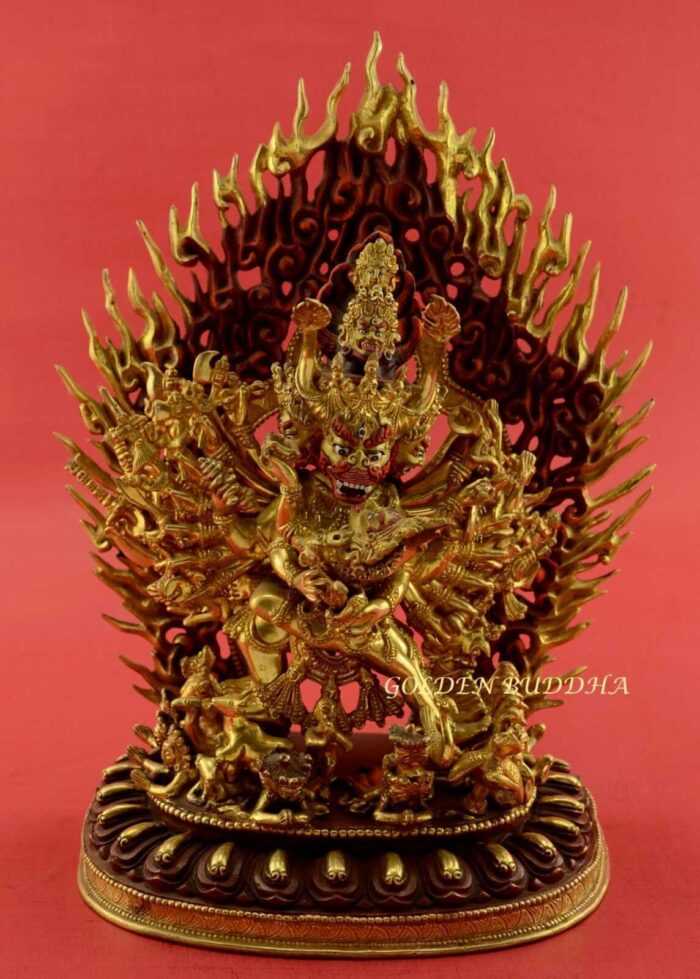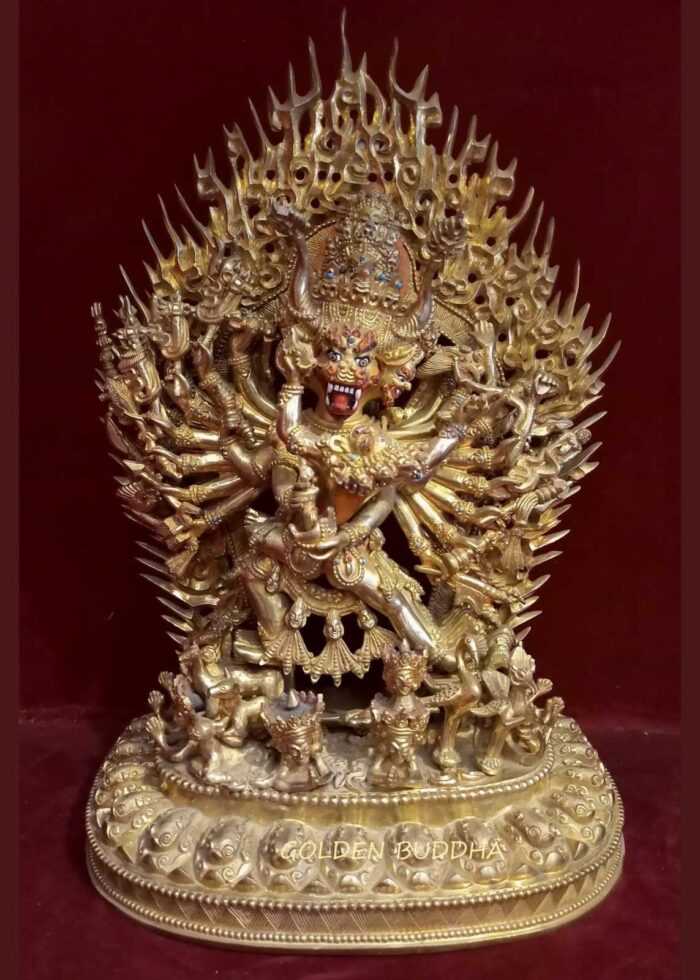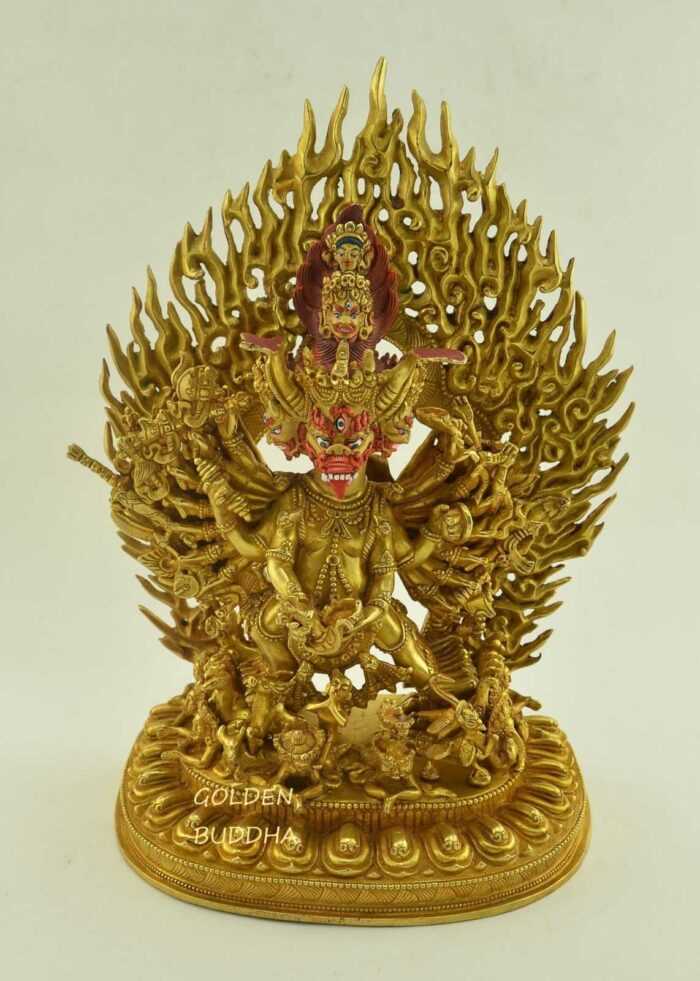

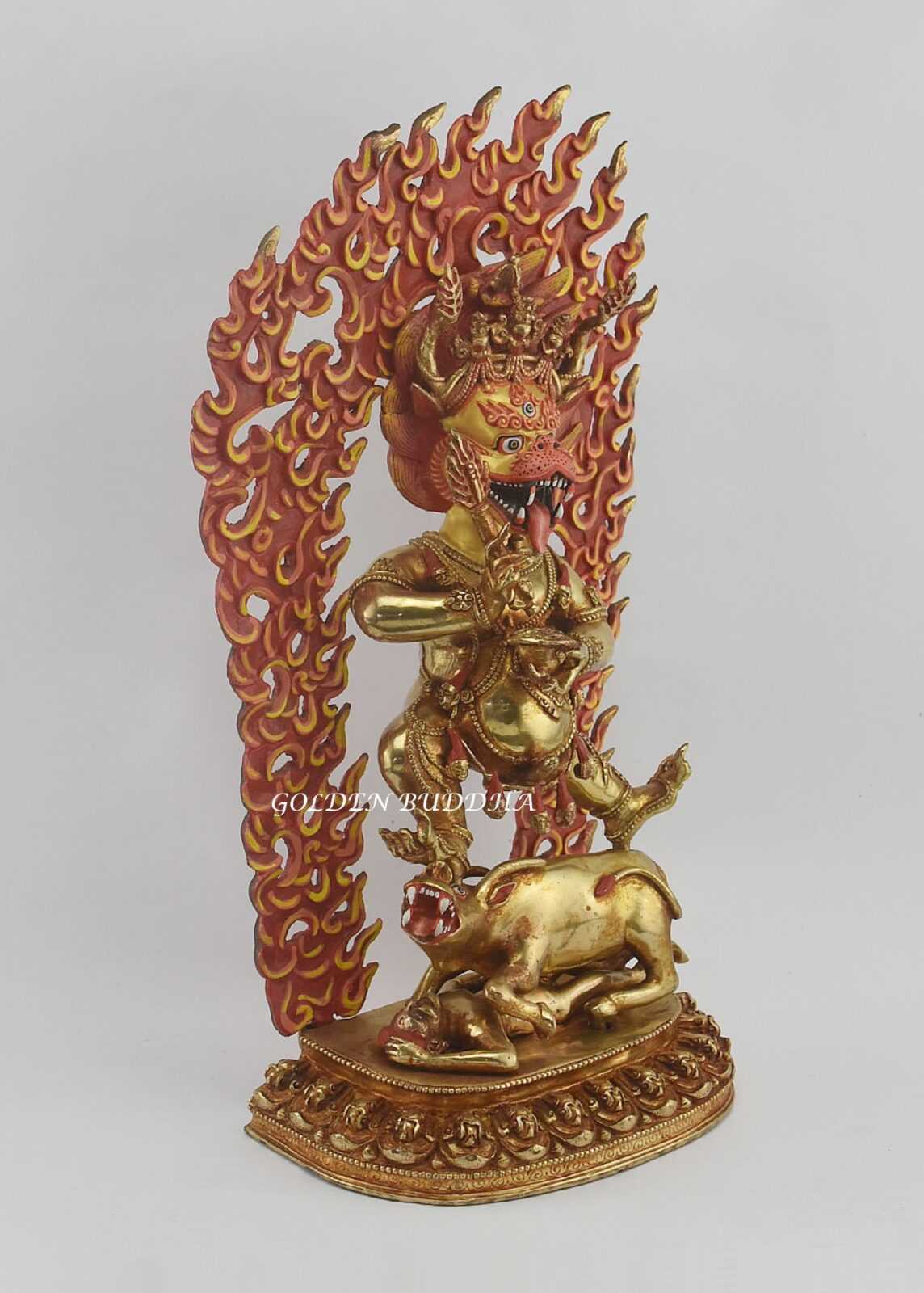
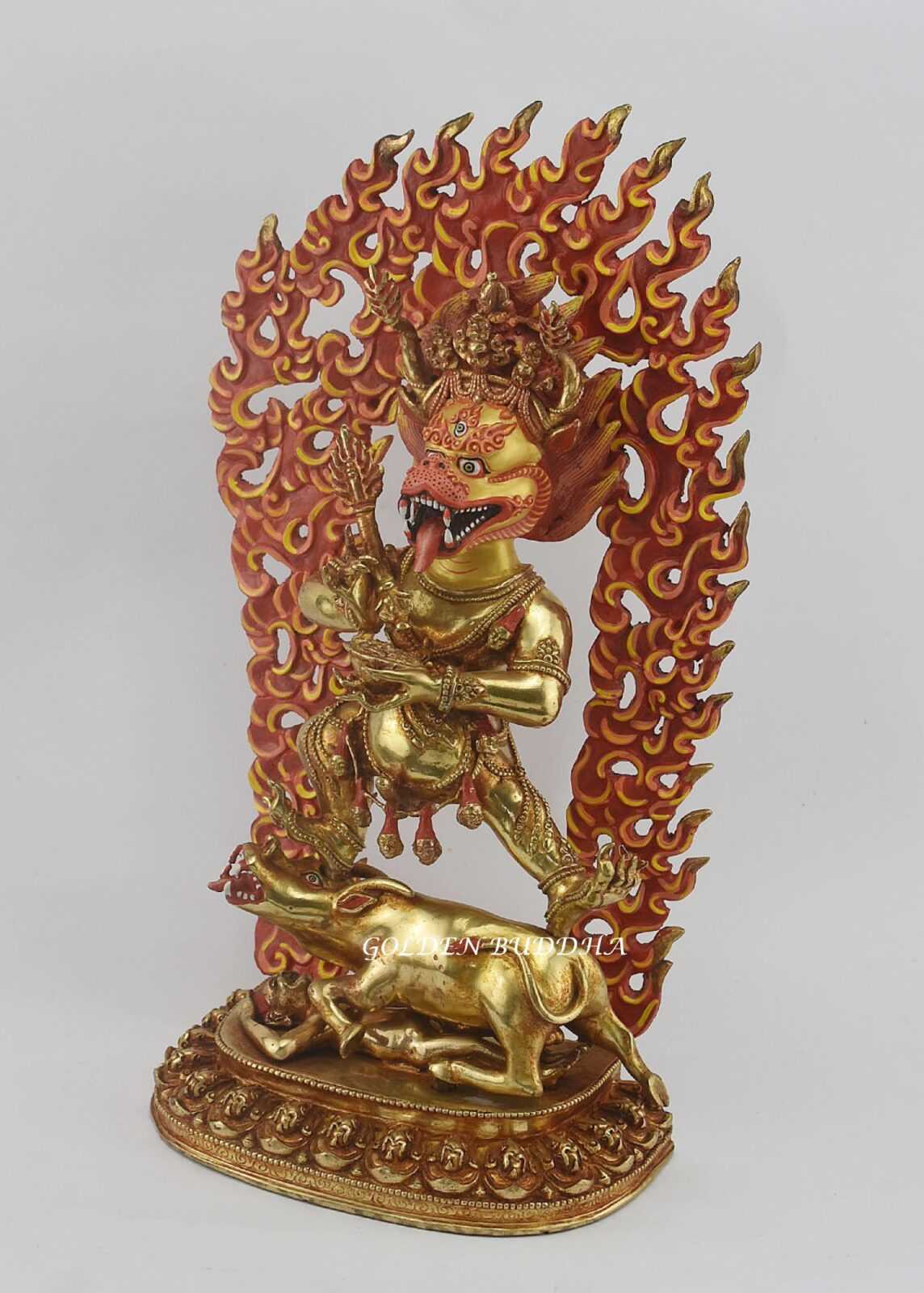
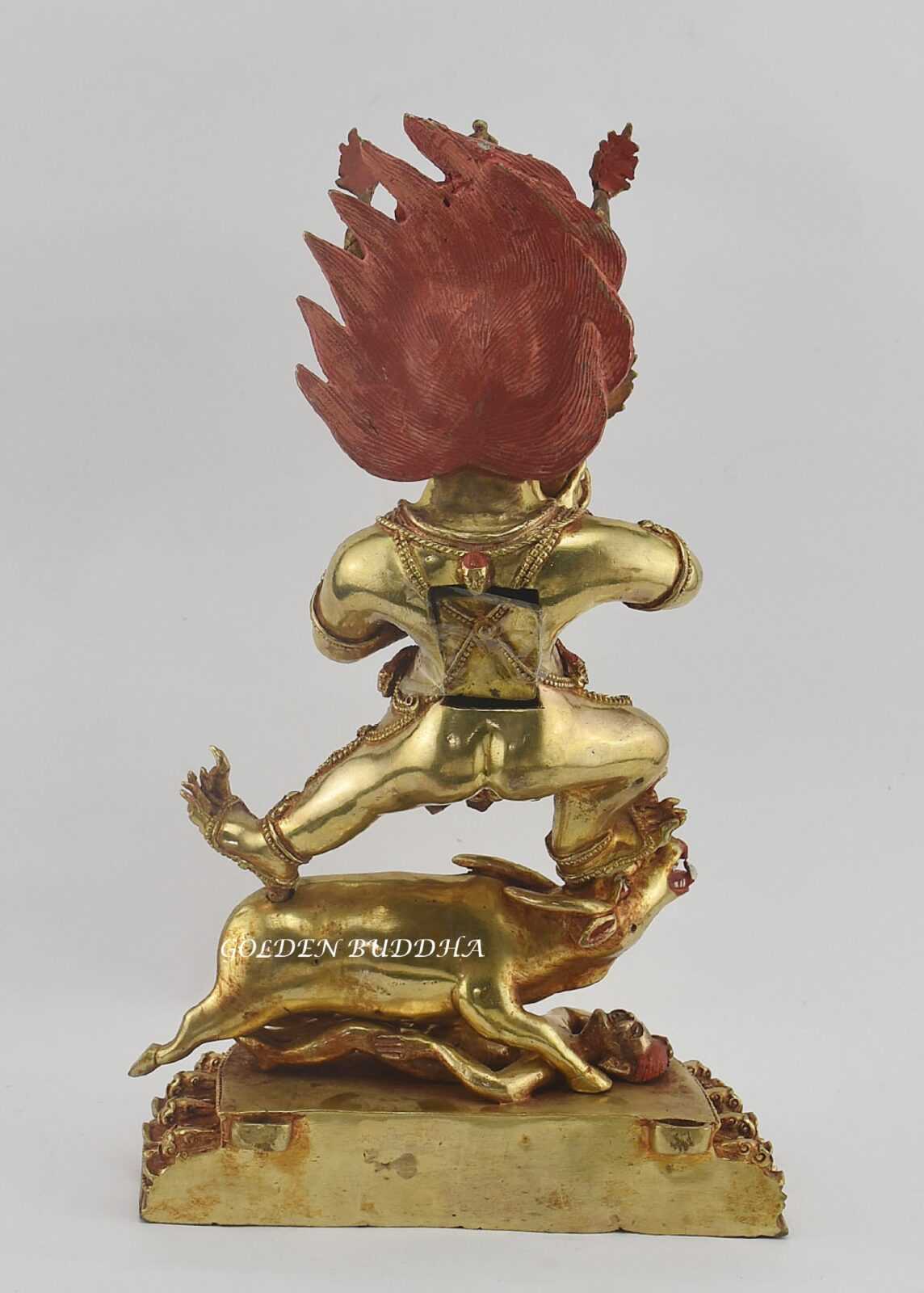
This handcrafted Yama statue depicts Yama Dharmaraja, also known as Shinje Chogyal, the enlightened wrathful protector revered throughout the highest tantras of Tibetan Buddhism. Unlike the worldly Lord of Death found in Buddhist cosmology, Yama Dharmaraja is a fully awakened wisdom deity who manifests a fierce buffalo-headed form to protect sincere practitioners, eliminate obstacles to realization and destroy ego-clinging through enlightened activity. Every component of this remarkable sculpture—including the deity, lotus throne and removable ring of fire—is traditionally cast from copper alloy using the ancient lost-wax casting method before being meticulously finished with brilliant 24K fire gilding and carefully hand-painted details.
Handcrafted by master Newar artisans in Patan, Nepal, this statue faithfully follows traditional Himalayan iconography. The brilliant gold surface is beautifully complemented by the hand-painted red and gold flames of the removable mandorla, producing a striking shrine image that embodies fearless enlightened activity while preserving centuries of sacred Nepalese metalworking tradition.
Yama Statue Symbolism
Although he shares the name Yama, this form represents Yama Dharmaraja—the enlightened protector found within Vajrayana Buddhism—not the worldly deity who governs the hell realms. As a wrathful emanation arising from enlightened wisdom, Shinje Chogyal protects practitioners engaged in profound tantric practice by overcoming fear, subduing obstructing forces and destroying attachment to the ego. His terrifying appearance is therefore an expression of compassion rather than anger, revealing wisdom in its most dynamic and protective form.
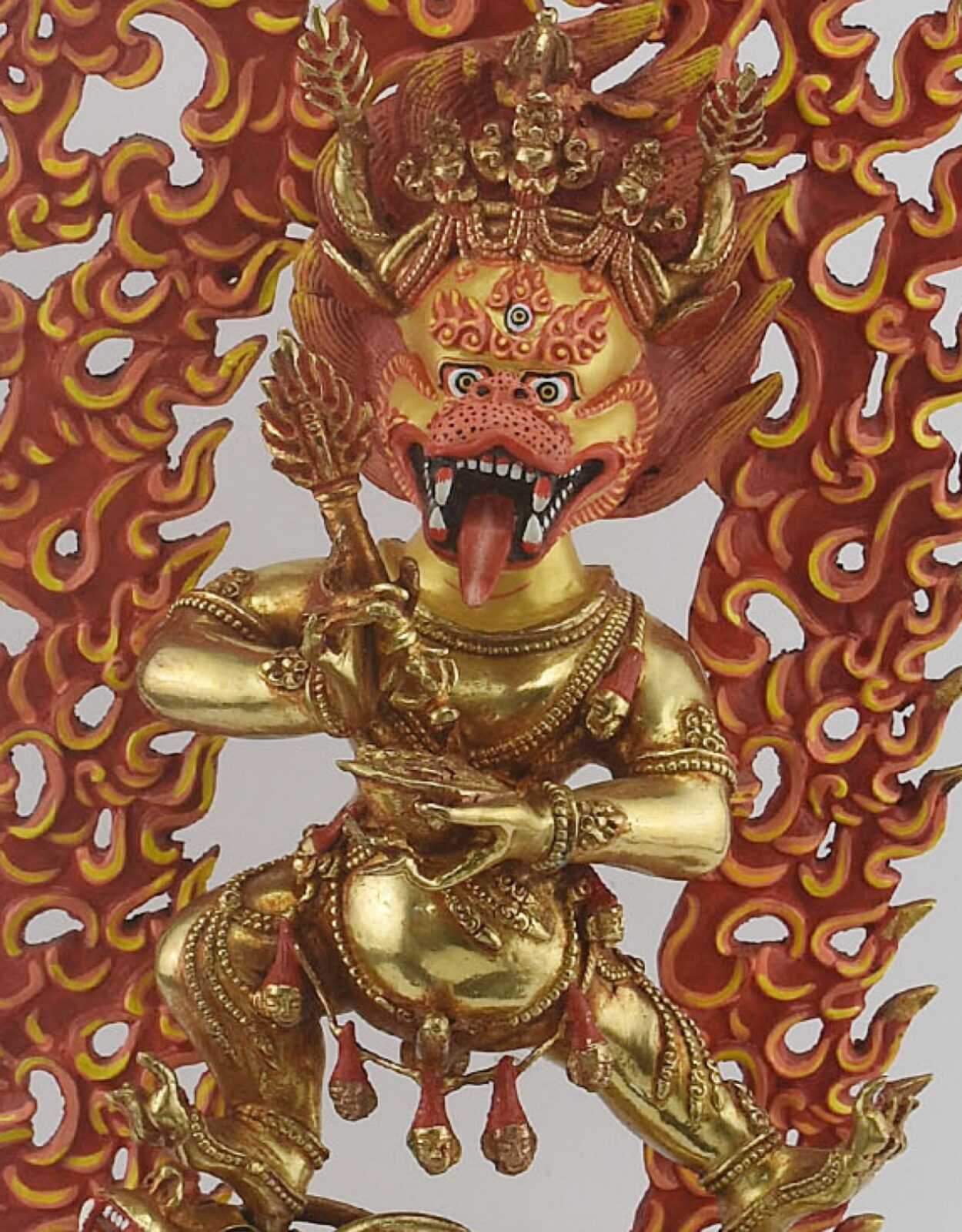
The buffalo head symbolizes indestructible spiritual strength, while the blazing hair, third eye and wrathful expression represent awakened awareness that penetrates every form of ignorance. Standing triumphantly upon the buffalo and subduing negative forces beneath his feet illustrates the complete victory of enlightened wisdom over ego, delusion and spiritual obstacles. The surrounding ring of fire symbolizes the wisdom flames that consume ignorance and transform afflictive emotions into the path of awakening.
Learn more about the relationship between Yama, Yamantaka and Vajrayana protector deities in our complete guide.
Traditional Newar Craftsmanship
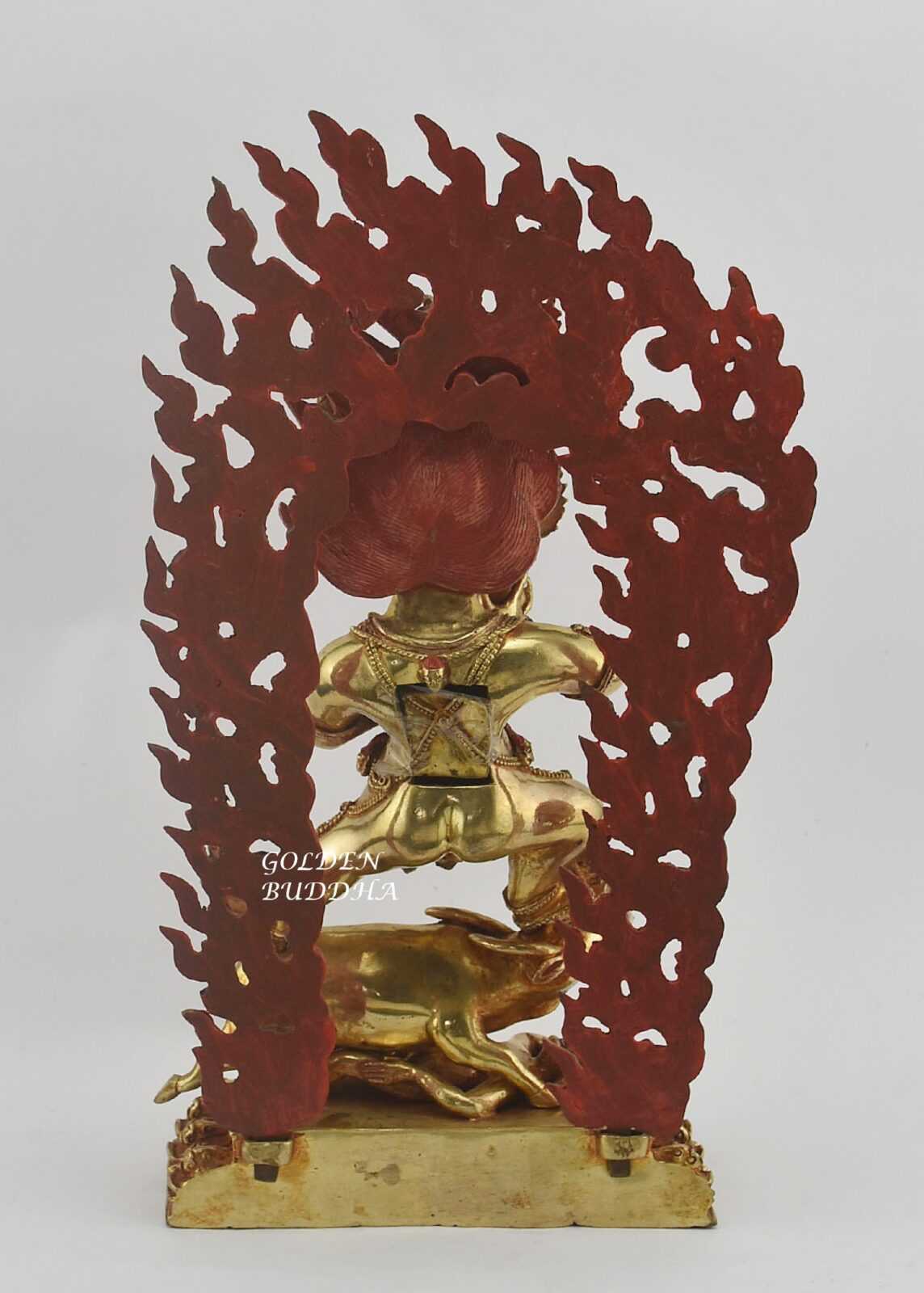
This Yama statue is individually handcrafted using Nepal’s traditional lost-wax casting process. Every element—from the expressive buffalo head to the finely detailed ornaments and removable flame mandorla—is cast from copper alloy before being extensively hand chased and finished with genuine 24K fire gilding. The vivid painted flames and carefully rendered facial features create exceptional depth while remaining faithful to centuries-old Himalayan sculptural traditions.
The removable ring of fire is likewise cast from copper alloy, allowing the sculpture to be displayed either with or without its mandorla while also making international packing considerably safer. Viewed from every angle, the three-dimensional workmanship demonstrates the extraordinary skill of Patan’s master craftsmen.
Matching Manjushri, Yamantaka and Yama Statue Set
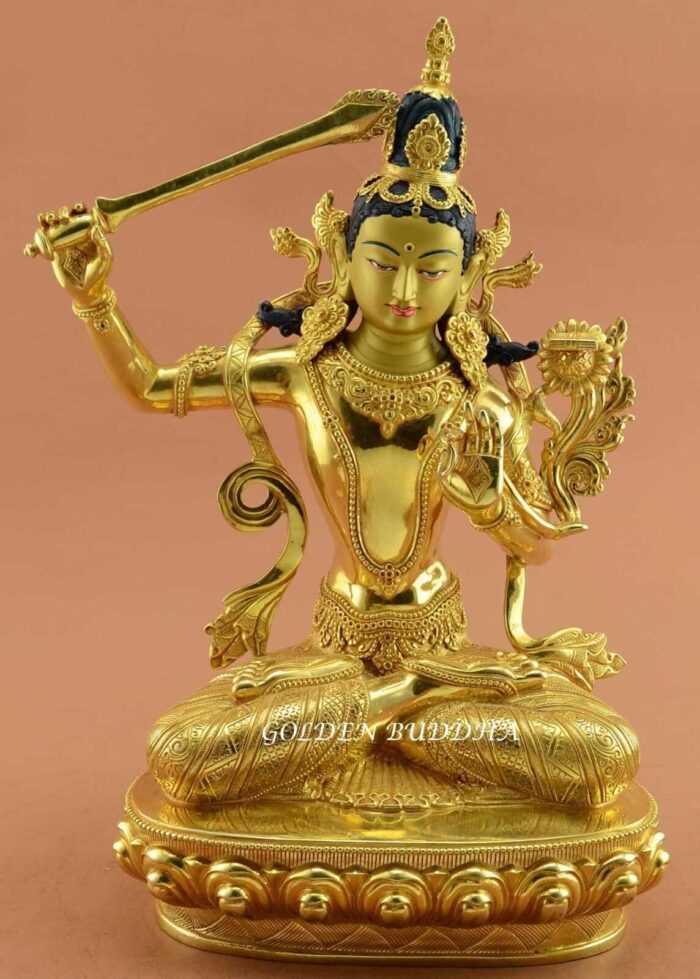
This Yama statue forms a doctrinally meaningful three-piece shrine arrangement together with the Nepali Manjushri statue and the Yamantaka statue. Manjushri is traditionally placed at the center or highest position as the Bodhisattva of Transcendent Wisdom. Yamantaka, his supreme wrathful manifestation, may be positioned nearby as the principal meditational deity, while Yama Dharmaraja stands as the enlightened Dharma protector who safeguards practitioners engaged in these profound Vajrayana teachings.
Together these three sacred figures present a complete expression of enlightened wisdom. Manjushri embodies peaceful wisdom that cuts through ignorance with the sword of realization. Yamantaka manifests that same wisdom in its most powerful wrathful form, conquering death, fear and the deepest obscurations to enlightenment. Yama Dharmaraja functions as the fearless enlightened protector who defends practitioners, removes obstacles and preserves the integrity of the tantric path. Displayed together they create an altar arrangement rich in symbolism while accurately reflecting their interconnected roles within the Vajrayana tradition.
Custom Made Yama Statues
Golden Buddha works directly with master artisans in Nepal to create custom handmade statues for temples, Dharma centers and private collectors. Custom commissions of Yama Dharmaraja, Manjushri and Yamantaka can be produced in a wide variety of sizes while preserving their authentic iconography, traditional proportions and harmonious artistic style. Commissioning all three together allows the artisans to create a perfectly matched shrine set, faithfully expressing the doctrinal relationship between peaceful wisdom, its wrathful enlightened manifestation and the enlightened protector who safeguards practitioners on the Vajrayana path.
Authentic, Handmade in Nepal
Every statue is handcrafted in Patan, Nepal, using traditional lost wax casting and comes with a certificate of authenticity issued by Nepal’s Department of Archaeology, verifying its materials, technique, and origin.