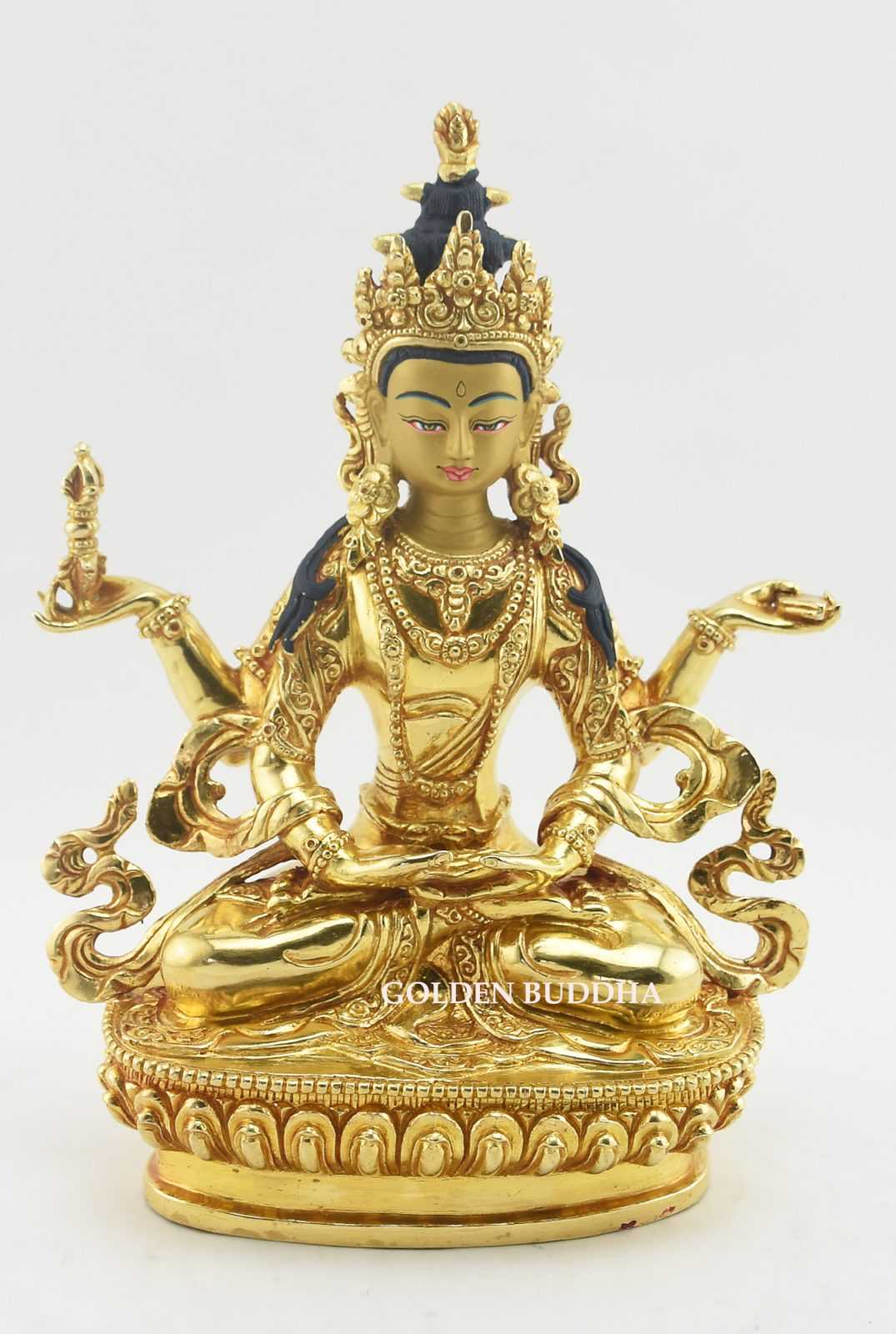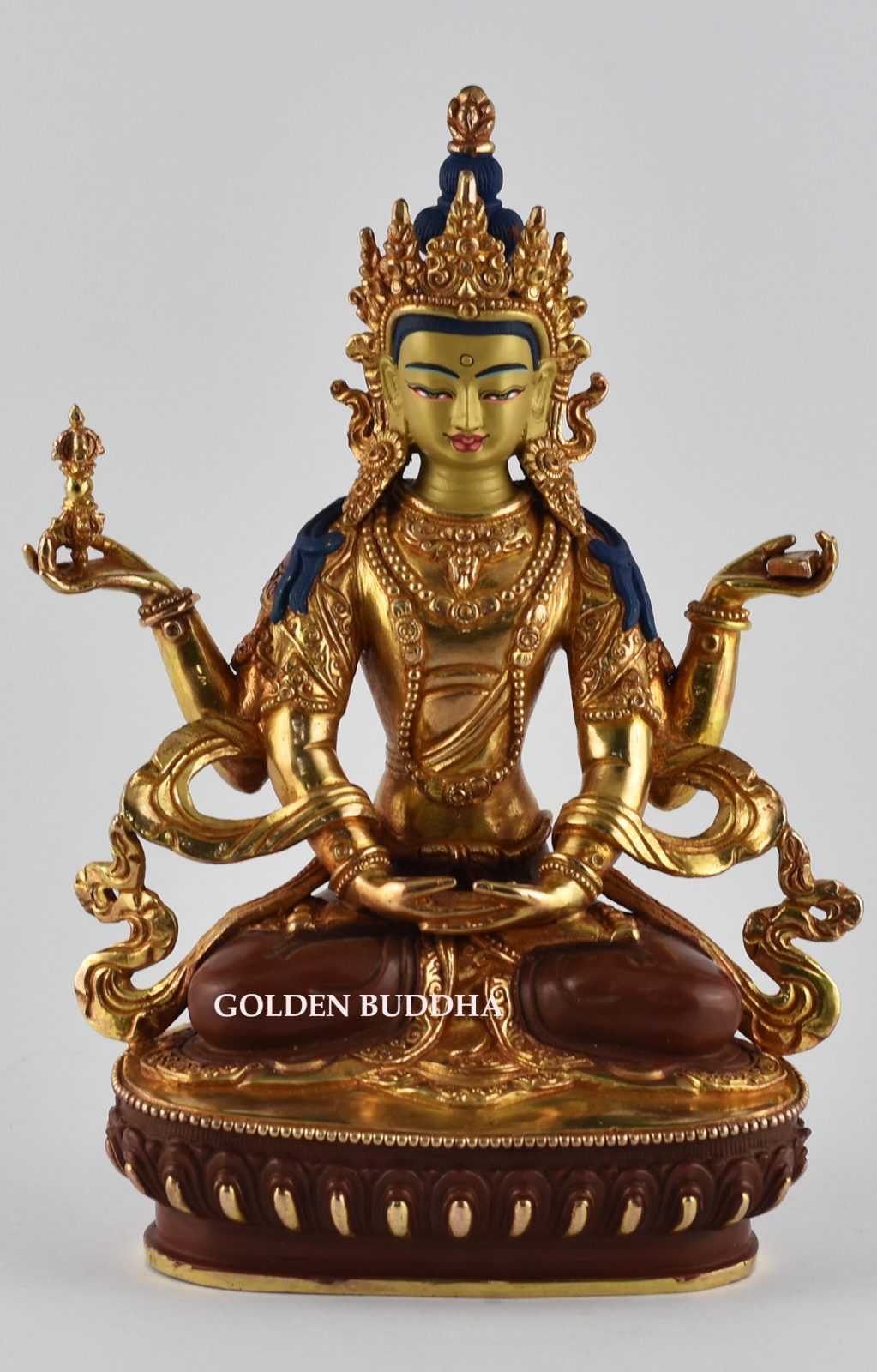
Prajnaparamita Statues — Mother of All Buddhas
Prajnaparamita (Sanskrit: Prajñāpāramitā — “Perfection of Wisdom” or “Transcendent Wisdom”) is unique in the Buddhist tradition in being simultaneously a body of scripture and a fully realized deity — the personification of the wisdom teachings that bear her name. As a body of text, the Prajnaparamita Sutras constitute the foundational Mahayana scriptures on emptiness (śūnyatā), including the Heart Sutra and the Diamond Sutra — texts whose teaching that “form is emptiness, emptiness is form” encapsulates the most fundamental insight of the Mahayana path. As a deity, she is the goddess who embodies that wisdom directly — not a being who has wisdom as an attribute but a being who is wisdom, the direct personification of the realization of emptiness that is the ground of all enlightened mind. She is known throughout the Mahayana tradition by her most significant title: Sarvabuddhamātar — the Mother of All Buddhas. The meaning of this title is precise: because the direct realization of emptiness is the single indispensable condition for the attainment of Buddhahood, Prajnaparamita — as the personification of that wisdom — is the mother from whose womb every Buddha in every world system in every time has emerged. Without her, there is no enlightenment. No Buddha has ever been born without passing through her.
In iconography, Prajnaparamita is depicted as a golden female deity seated in full lotus posture, wearing the crown and ornaments of a Bodhisattva. Her most distinctive attribute is the Prajnaparamita text — the book of transcendent wisdom sutras — held in one of her hands or resting on a lotus beside her, identifying her as the living embodiment of the teaching. She typically holds a vajra in another hand, expressing the indestructible quality of the wisdom she embodies — the wisdom that cannot be refuted, diminished, or obscured by any condition. A lotus flower often appears as a further attribute, connecting her to the purity and completeness of enlightened awareness arising unstained from the conditions of ordinary existence. She is frequently depicted with four arms — the two principal hands in teaching or meditation posture, the secondary hands holding the text and vajra — though specific forms vary by tradition and text. All Prajnaparamita statues in the Golden Buddha collection are handcrafted in Patan, Nepal by master Newar artisans of the Shakya caste using the traditional lost wax sculpting method. Explore the broader Buddhist pantheon in our complete guide.
Showing all 2 resultsSorted by popularity
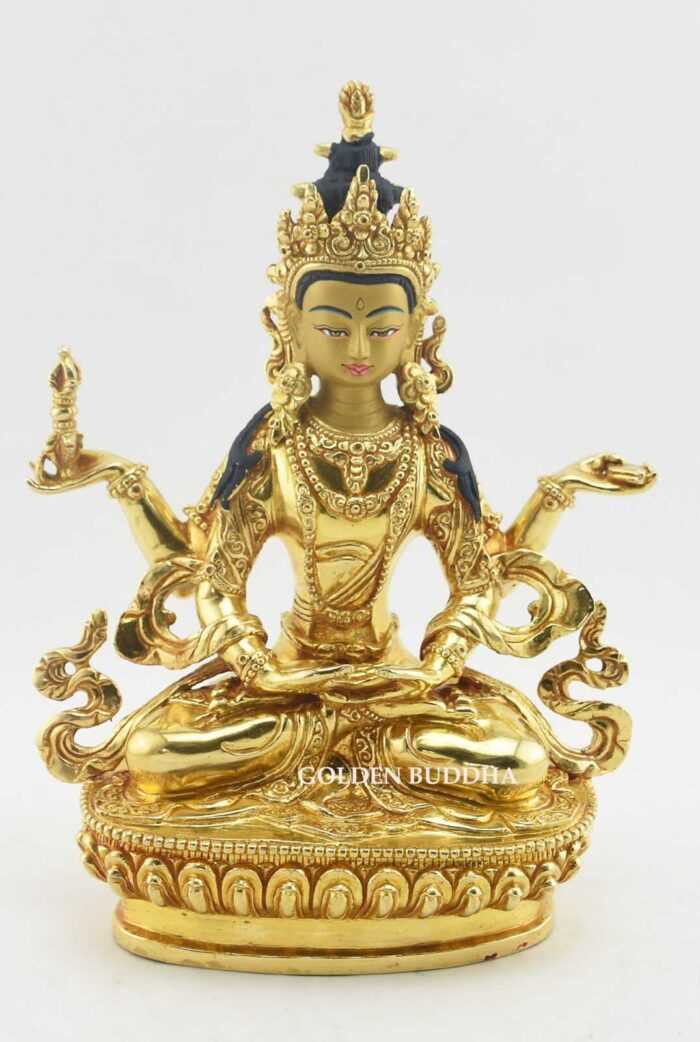
Prajnaparamita Statue | 8.75″ | Fully 24K Gold Gilded | Handmade Nepal
Original price was: $1,299.00.$899.00Current price is: $899.00.Add to Cart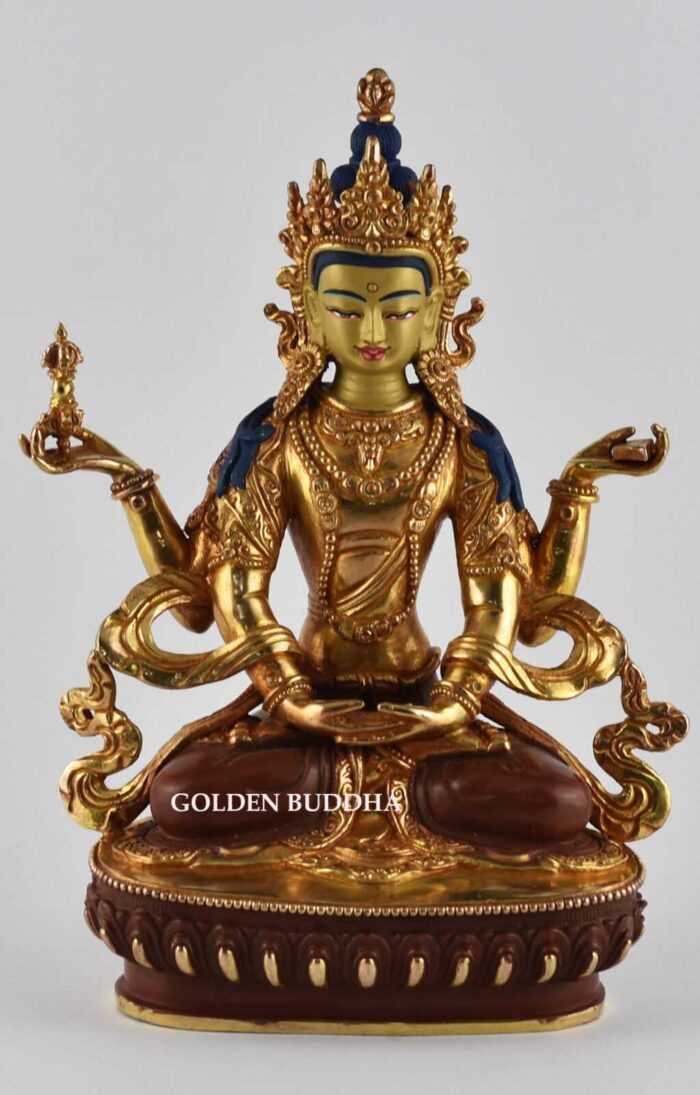
Prajnaparamita Statue | 9″ | Oxidized Copper, Gold Face Painted | Handmade Nepal
Original price was: $1,239.00.$799.00Current price is: $799.00.Add to Cart