Chakrasamvara Statues — Heruka Yab-Yum | Authentic Nepal
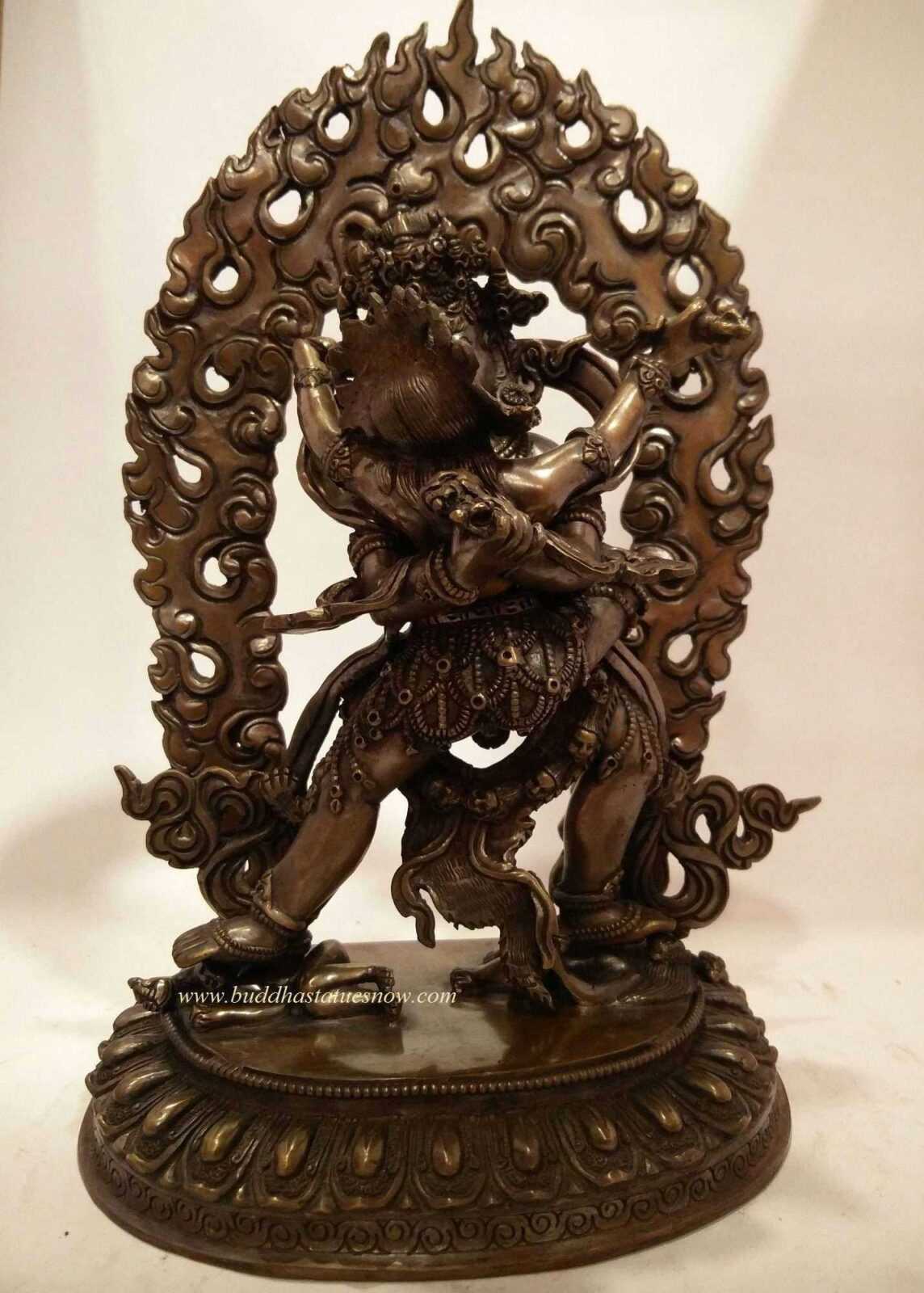
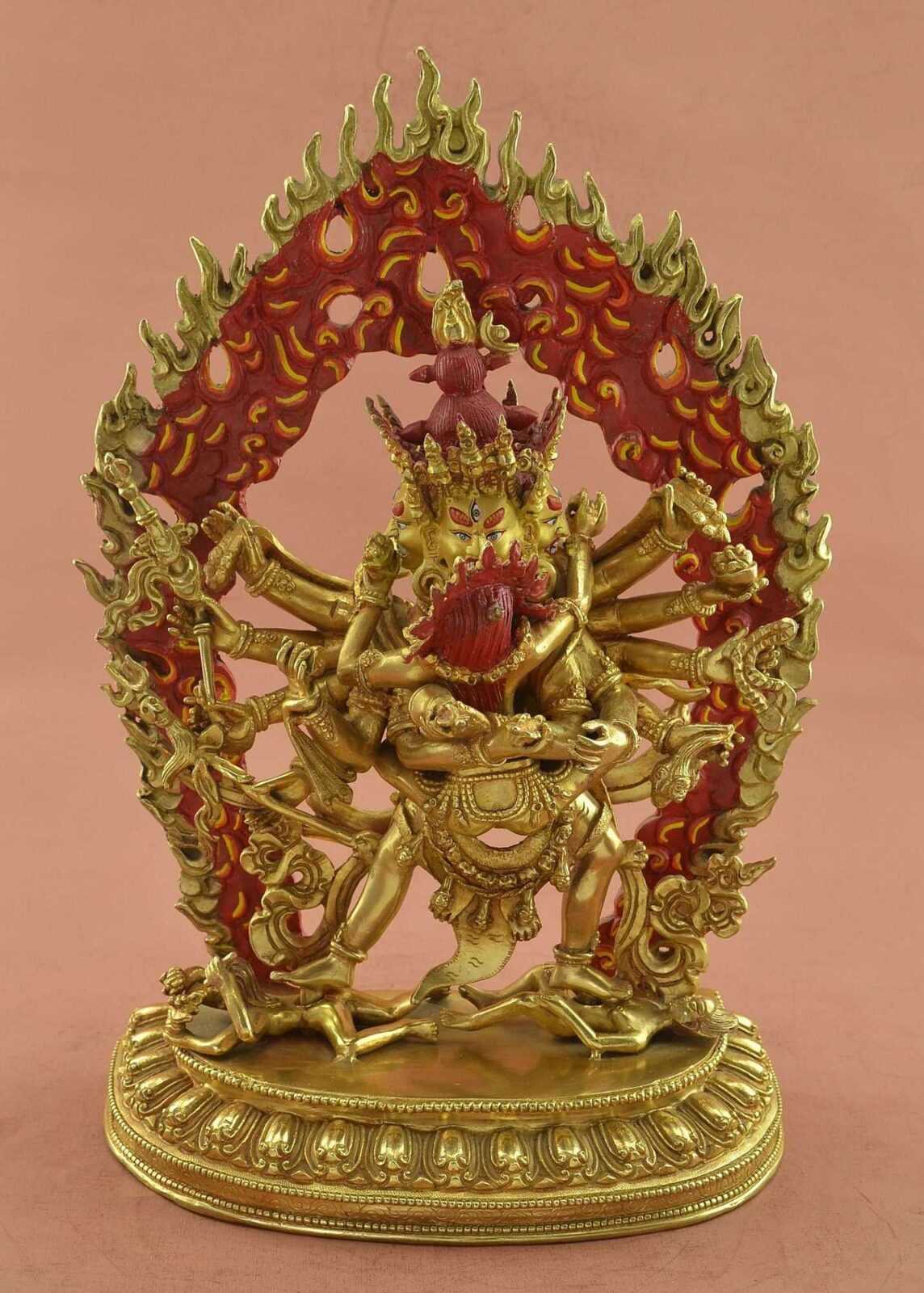
Chakrasamvara (Sanskrit: Cakrasaṃvara — “Wheel of Supreme Bliss”; Tibetan: Khorlo Demchok) is one of the most important Tantric meditation deities in Tibetan Buddhism — a principal yidam of the Kagyu, Sakya, and Gelug schools, and the supreme deity of the Chakrasamvara Tantra, one of the highest Mother Tantras in the Anuttarayoga Tantra class. Also known as Heruka (“hero,” the wrathful realized being who consumes the defilements), he is depicted as a dark blue figure with four faces and twelve arms, standing in the alidha warrior posture — the posture of a being in direct, dynamic engagement with the forces of liberation and delusion simultaneously. He is typically depicted in yab-yum (the sacred union posture) with his consort Vajravarahi — the wrathful Dakini whose animal-headed form represents the uprooting of ignorance at its root — the two figures embracing as a single mandala of enlightened awareness. The yab-yum is not a depiction of ordinary sexuality but the iconographic expression of the inseparable union of wisdom (prajna, represented by the female) and compassionate method (upaya, represented by the male) — the two qualities whose union constitutes complete enlightenment in the Tantric framework.
Chakrasamvara stands with his feet on the prostrate forms of Bhairava and Kalarati — wrathful forms of Shiva and his consort — a posture that in the Buddhist iconographic tradition represents the transformation and transcendence of the Hindu Tantric system from which many of the Vajrayana practices historically developed. His relationship with Vajrayogini is particularly intimate: when Vajrayogini is depicted in her solitary Naro Kacho form, the khatvanga (three-skulled staff) that rests against her left shoulder specifically represents Chakrasamvara — she is understood to be never separated from him even when he is not visibly depicted beside her. The Chakrasamvara Tantra describes a mandala of 62 deities and 24 sacred power places (pitha) across the Indian subcontinent, each associated with a specific Dakini practice. Statues of Chakrasamvara are placed on altars by initiates who have received empowerment in this tradition as the primary support for visualization practice — the practitioner generating themselves as the deity in union with the consort, actualizing the inseparability of wisdom and method within their own experience. Explore our Dakini statues collection for related figures in the Chakrasamvara cycle.
Showing all 4 resultsSorted by popularity
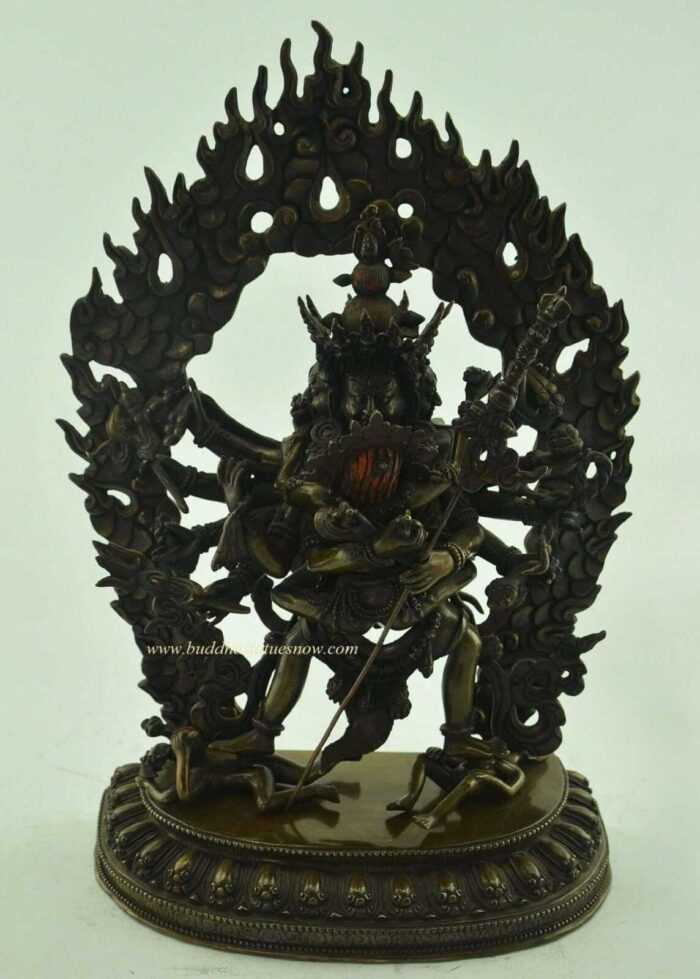
Chakrasamvara Statue with Consort | 13.5″ Antiquated | 12 Arms
Original price was: $2,699.00.$1,999.00Current price is: $1,999.00.Add to Cart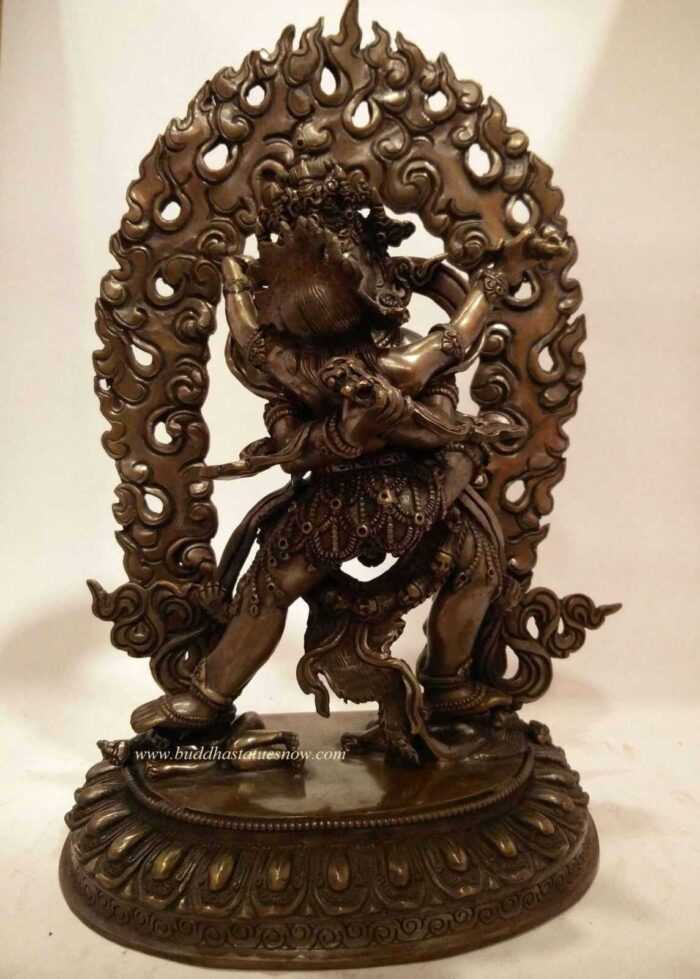
Chakrasamvara Statue with Consort | 25cm Oxidized Copper | Yab-Yum
Original price was: $1,399.00.$789.00Current price is: $789.00.Add to Cart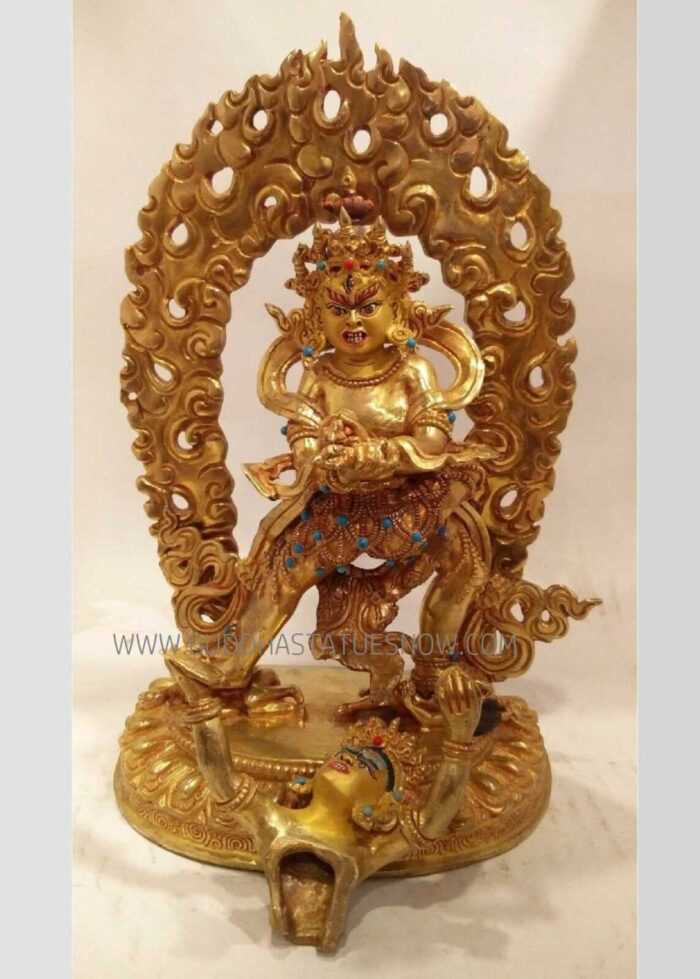
Chakrasamvara Statue with Consort | 25cm Gold Plated | Yab-Yum
Original price was: $1,099.00.$899.00Current price is: $899.00.Add to Cart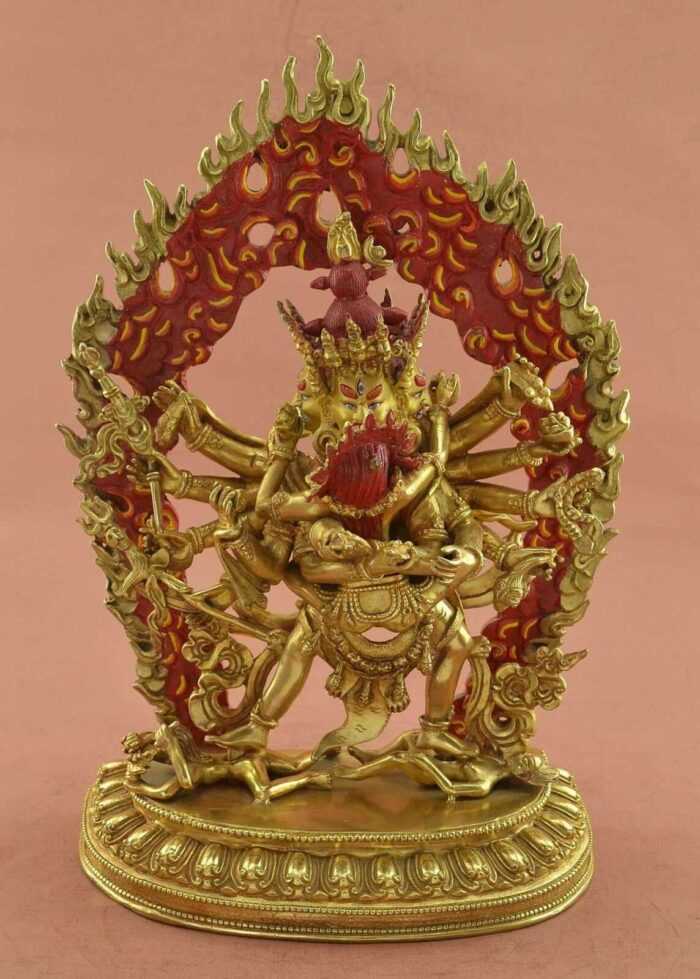
Chakrasamvara Statue with Consort | 13.5″ Fully Gold Gilded | Yab-Yum
Original price was: $3,899.00.$1,399.00Current price is: $1,399.00.Add to Cart