
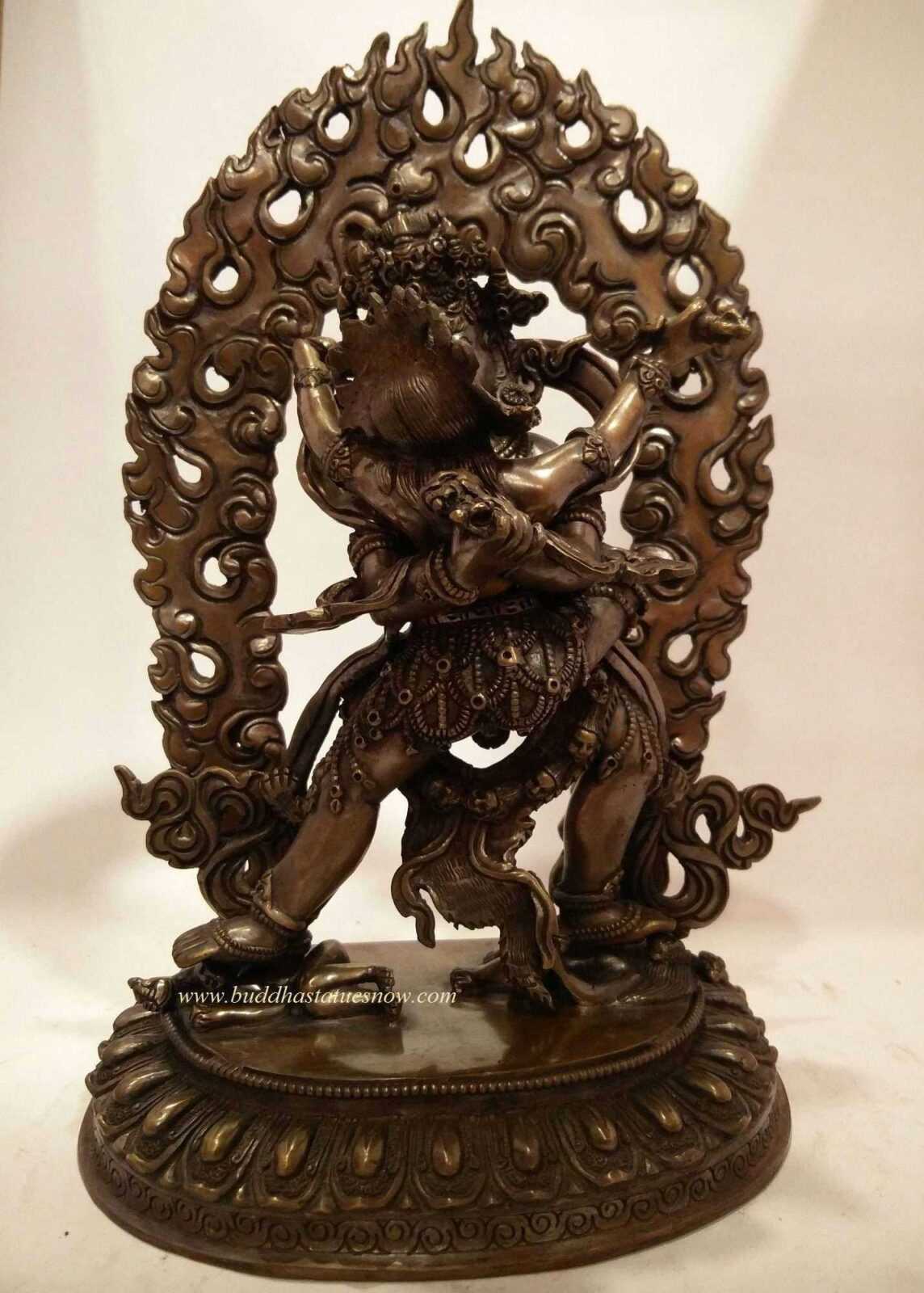

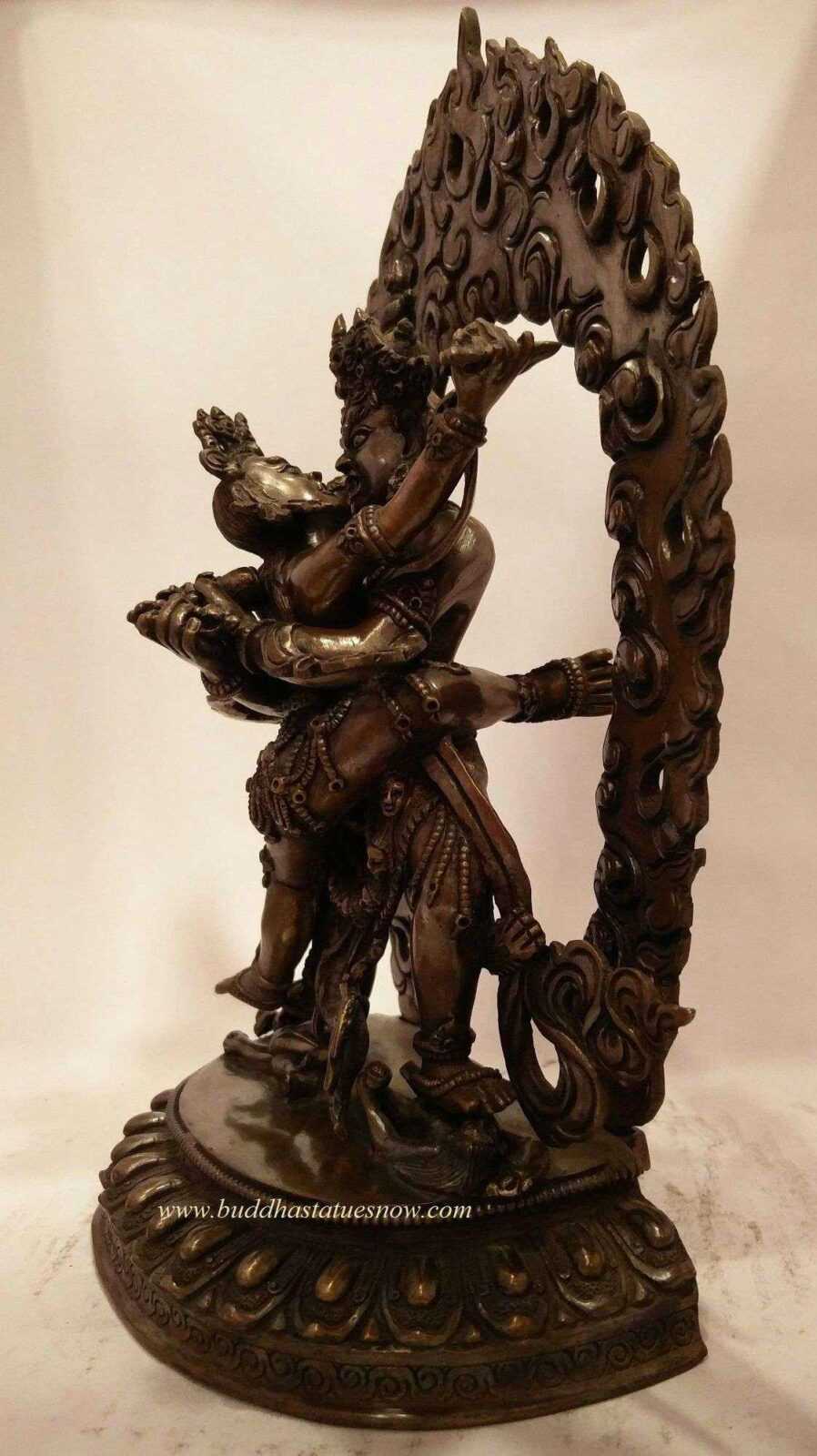
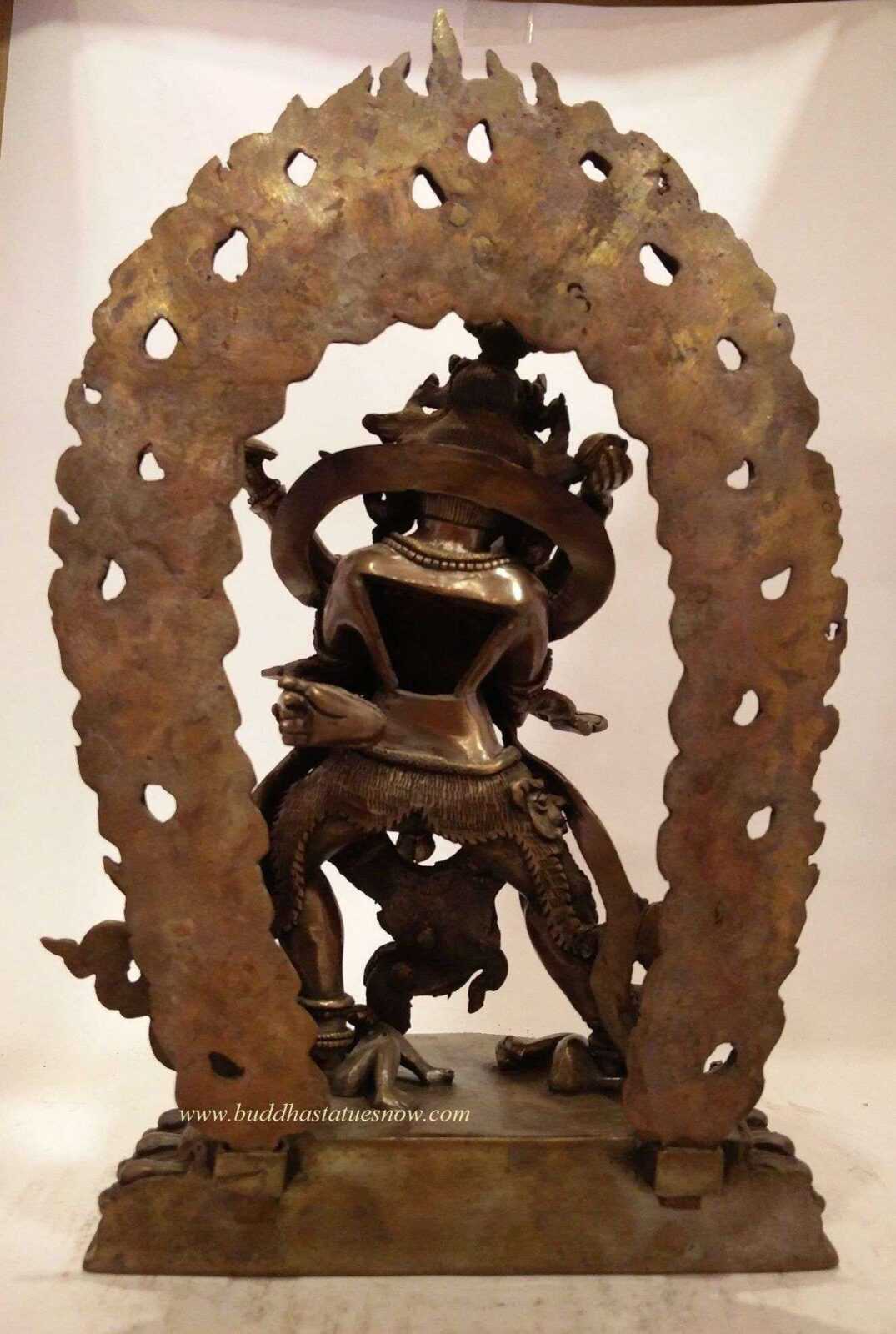
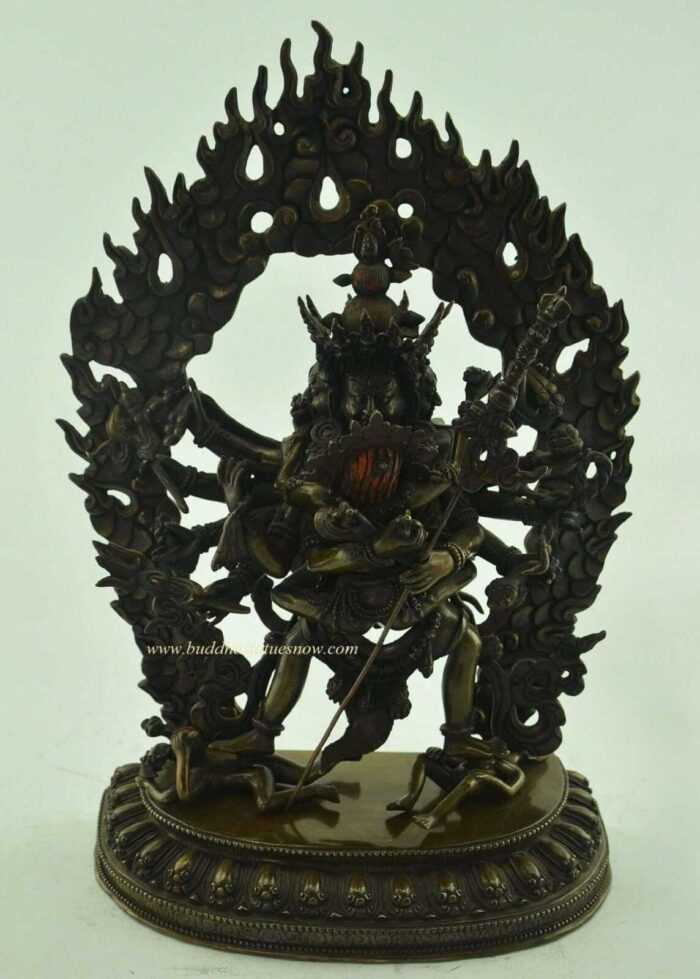
This 25cm Chakrasamvara yab-yum statue is finished entirely in oxidized copper — the complex two-figure composition, elaborate flame mandorla, and round lotus base all in a single warm, dark patina with no gilding — giving the piece the dense, ancient character of a cave shrine or monastery altar figure rather than the formal brightness of the gilded presentation. The fully oxidized treatment allows the extraordinary sculptural detail of the composition — the multiple arms, the dynamic posture, the interlocking figures, the carved flames — to read as pure form and surface rather than colour contrast. The statue was handcrafted in Patan, Nepal by master Newar artisans using the traditional lost wax sculpting method in strict accordance with the iconometric requirements of the Chakrasamvara tradition.
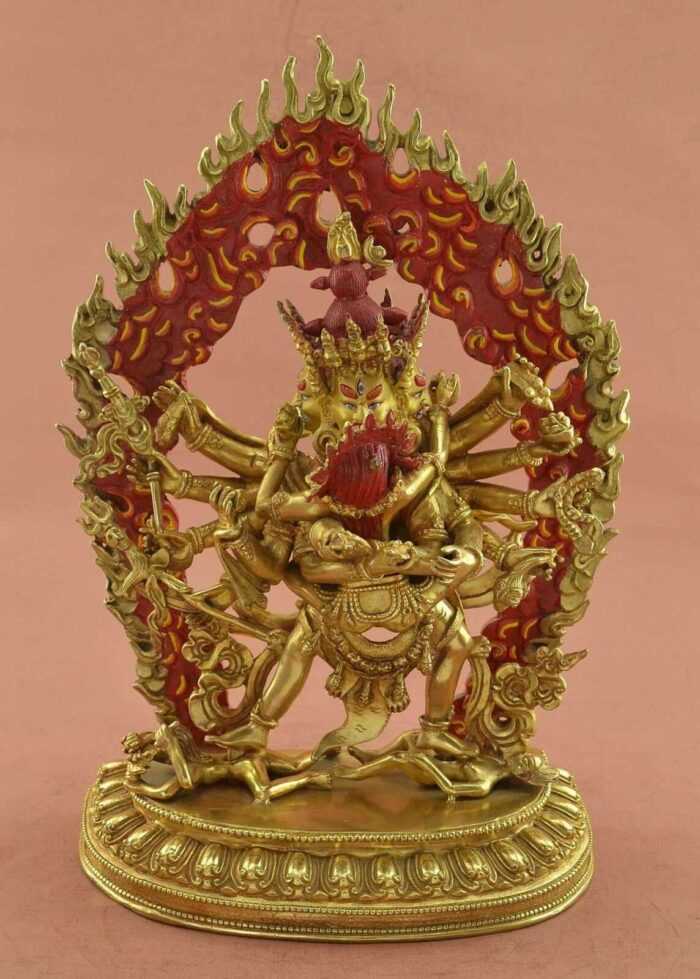
Chakrasamvara (Heruka) embraces his consort Vajravarahi in the yab-yum posture of inseparable wisdom and method. In his right hand Chakrasamvara holds the vajra (indestructible enlightened mind) and in his left the ghanta (bell, representing wisdom/emptiness) — the two together expressing the union of compassionate method and the direct realization of the nature of mind that constitutes full enlightenment in the Vajrayana framework. Vajravarahi’s hands hold the kapala skull cup (in her left, filled with blood representing the transmutation of life-force) and the kartika flaying knife (in her right, cutting through the skin of ego and delusion). The two figures stand on the prostrate forms of Bhairava and Kalarati — wrathful manifestations of ego-grasping and dualistic conceptuality respectively — expressing the Vajrayana principle that full realization transcends both samsara (cyclic existence) and the passive nirvana of withdrawal from the world: the enlightened being stands above both, active and engaged, beyond both extremes.
The Chakrasamvara Tantra belongs to the Mother class of the Anuttarayoga Tantra — the highest of the four classes of Tantric teaching — and its practice is understood to make available both the mundane siddhis (extraordinary capacities that arise as byproducts of advanced practice) and the supramundane siddhi of complete liberation. The Tantra entered Tibet in the eighth and ninth centuries with the first transmission of Vajrayana teachings and has remained a living practice tradition in the Kagyu, Sakya, and Gelug schools continuously since that time.
Chakrasamvara Statue Features
The composition includes Chakrasamvara and Vajravarahi in full yab-yum embrace, standing in the alidha warrior posture on Bhairava and Kalarati, enclosed within an elaborate flame mandorla of pristine awareness, mounted on a round lotus throne with fine scroll engravings throughout the base. The fully oxidized copper finish is consistent across every surface of the composition, giving the piece a unified and formally imposing presence suited to a Tantric practice altar where empowered practitioners use the statue as a visualization support.
Authentic, Handmade in Nepal
Every statue is handcrafted in Patan, Nepal, using traditional lost wax casting and comes with a certificate of authenticity issued by Nepal’s Department of Archaeology, verifying its materials, technique, and origin.
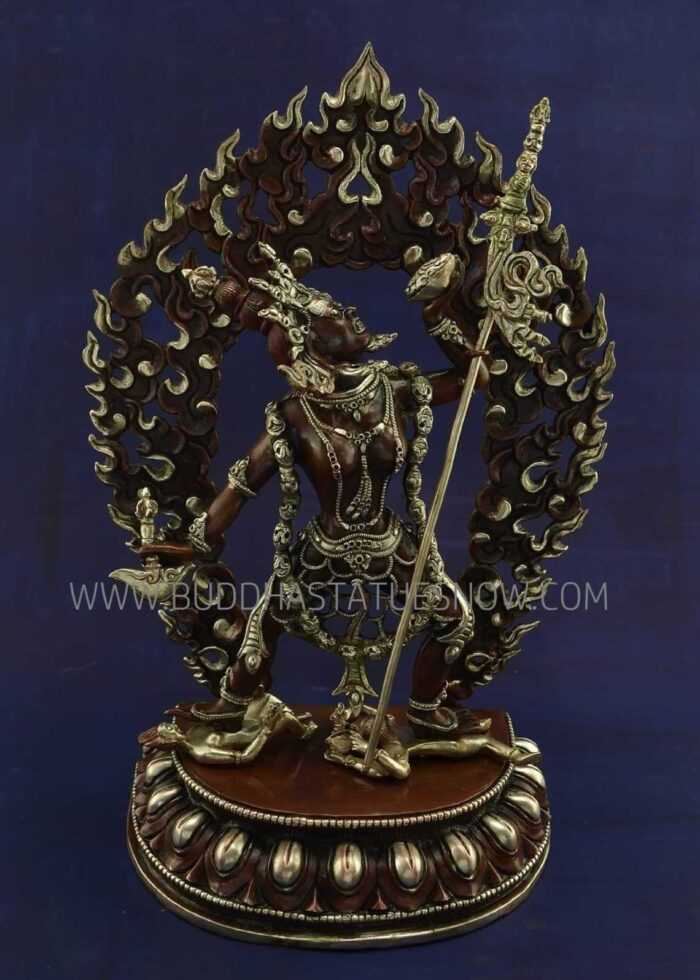
Reviews
There are no reviews yet.