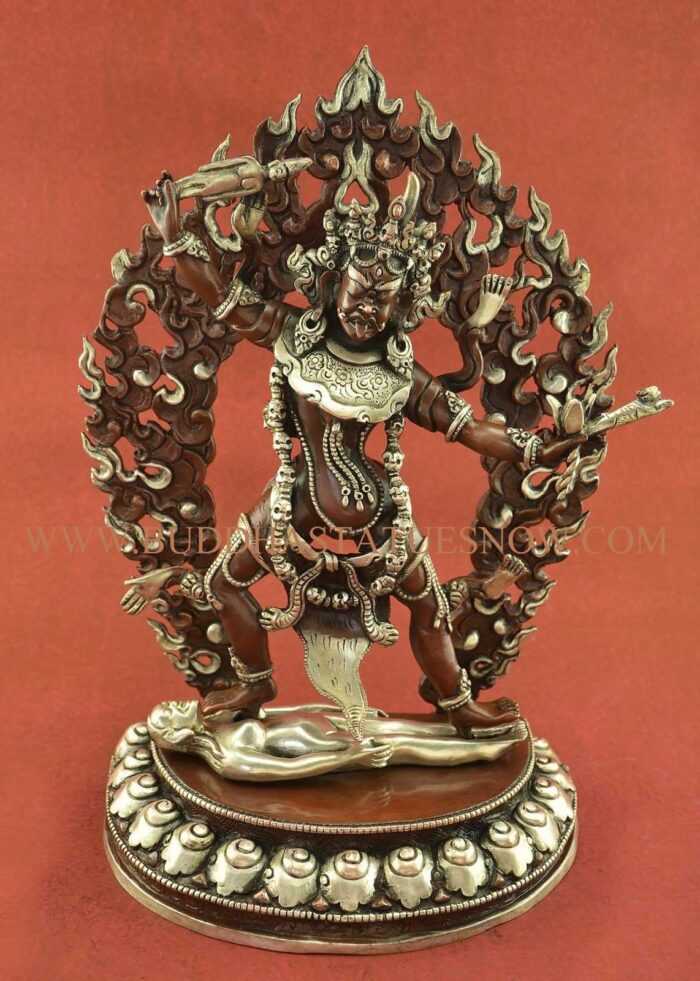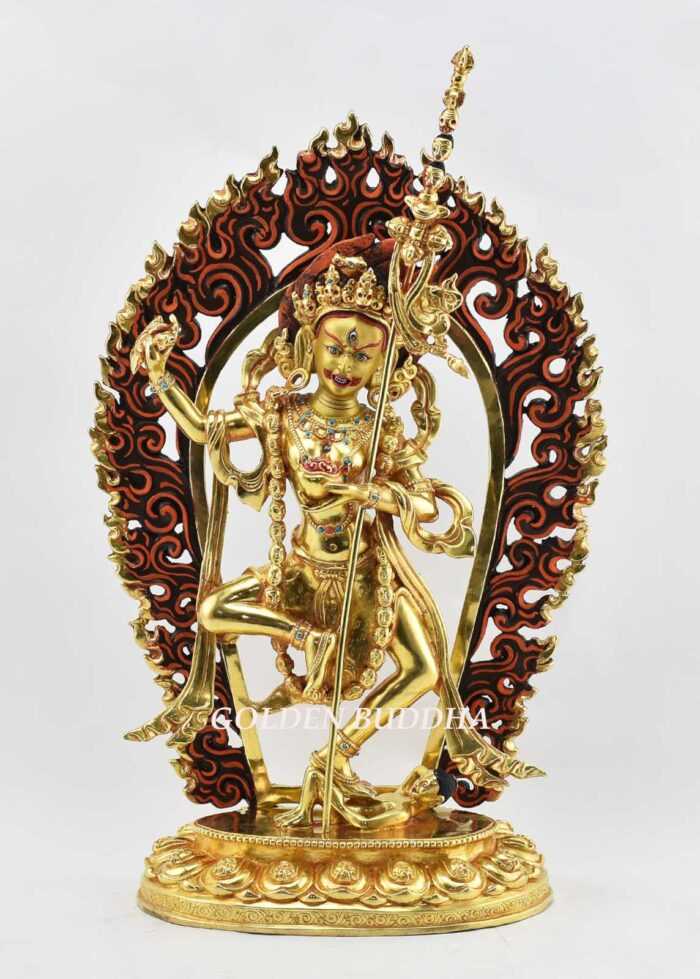

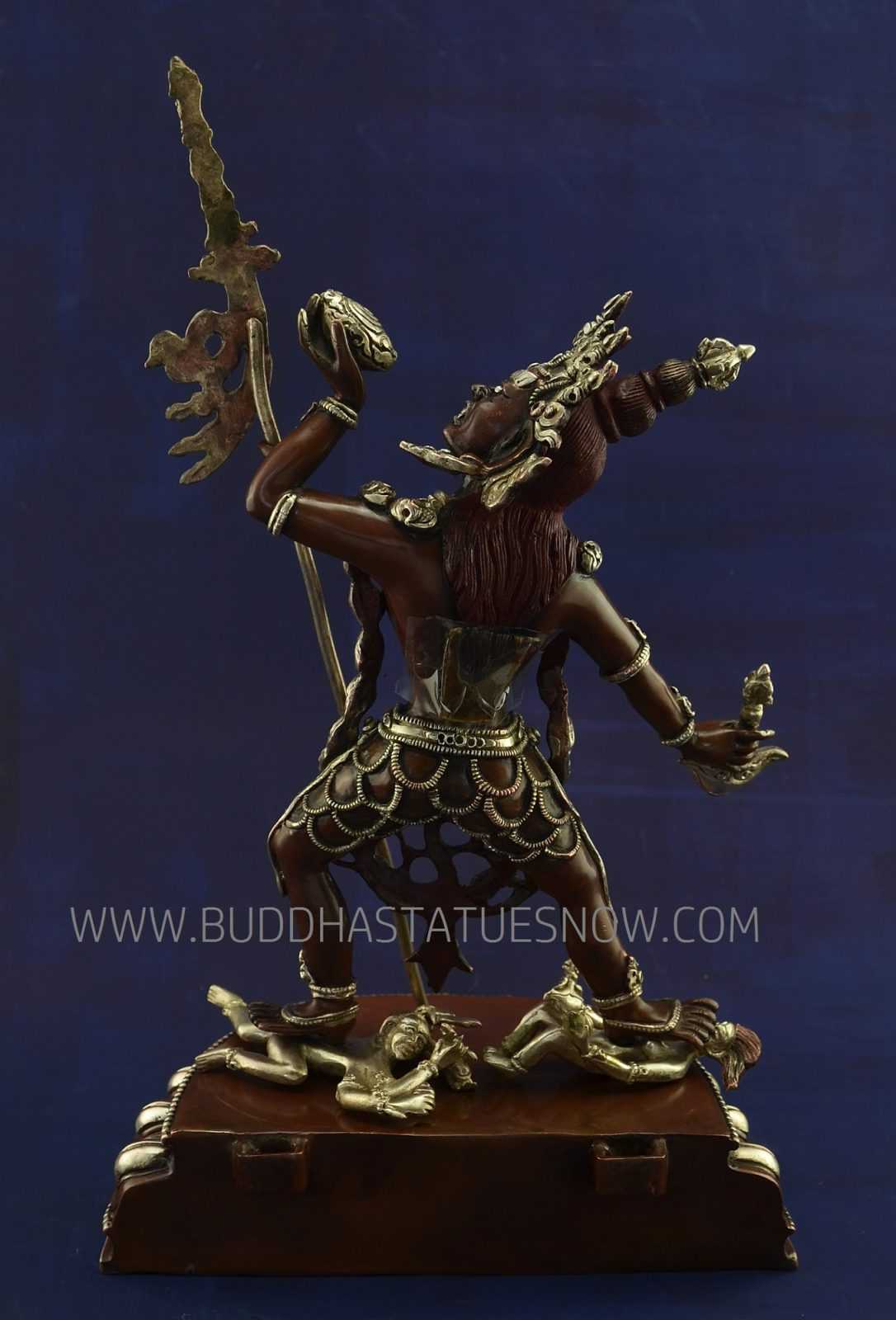
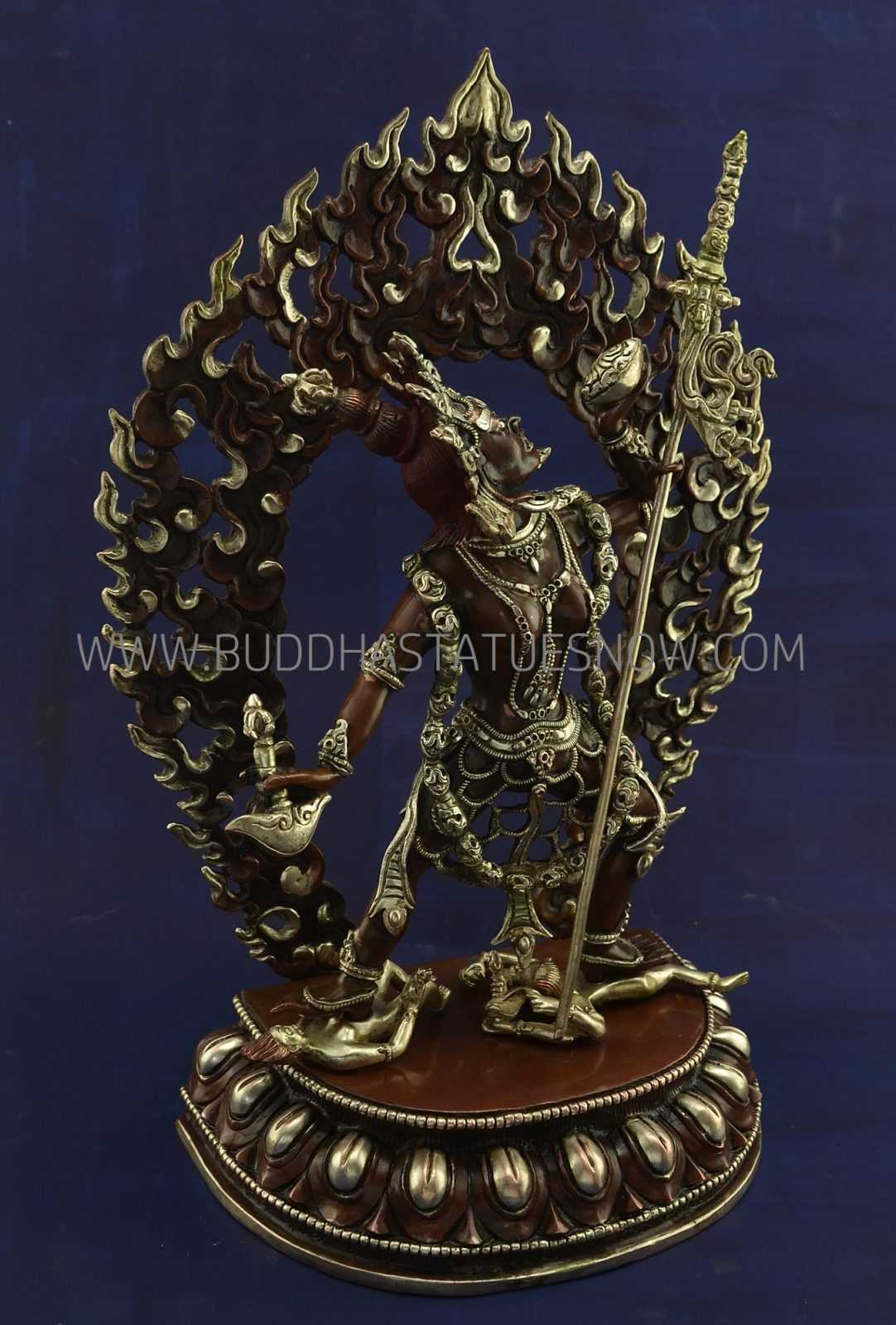
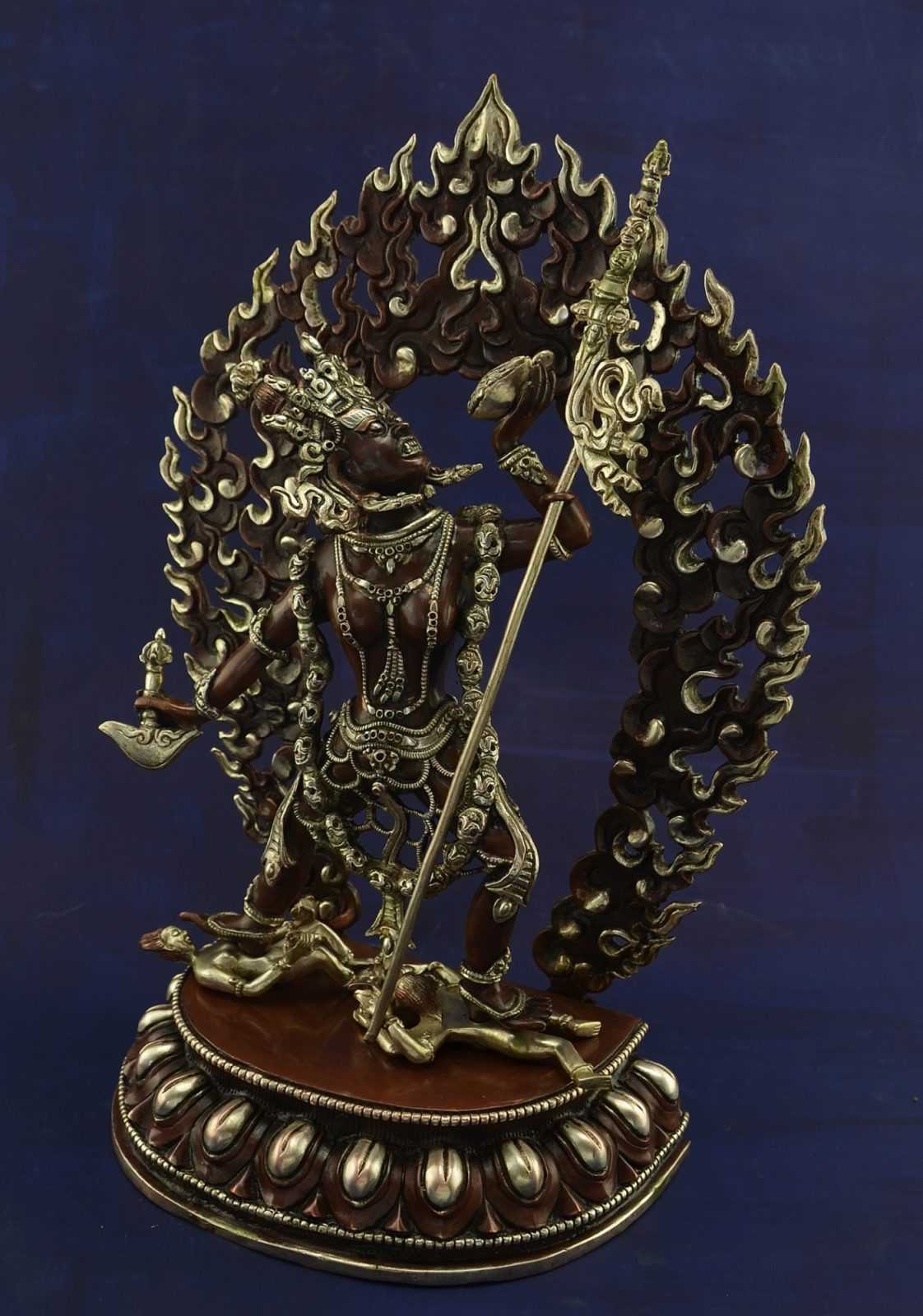
This 13-inch Antiquated Vajrayogini Statue presents the revered Naro Kacho (“Kechari of Naropa”) form in a striking antiquated finish that emphasizes both her fierce iconography and refined Newar craftsmanship. Handcrafted in Patan, Nepal using the traditional lost-wax casting method, the copper alloy sculpture features a rich oxidized surface accented by silver-plated highlights across the jewelry, skull ornaments, lotus petals, crown, and flame tips. Unlike fully gilded versions, this presentation creates a dramatic interplay between shadow and light, giving the figure exceptional depth and a timeless temple-like presence.
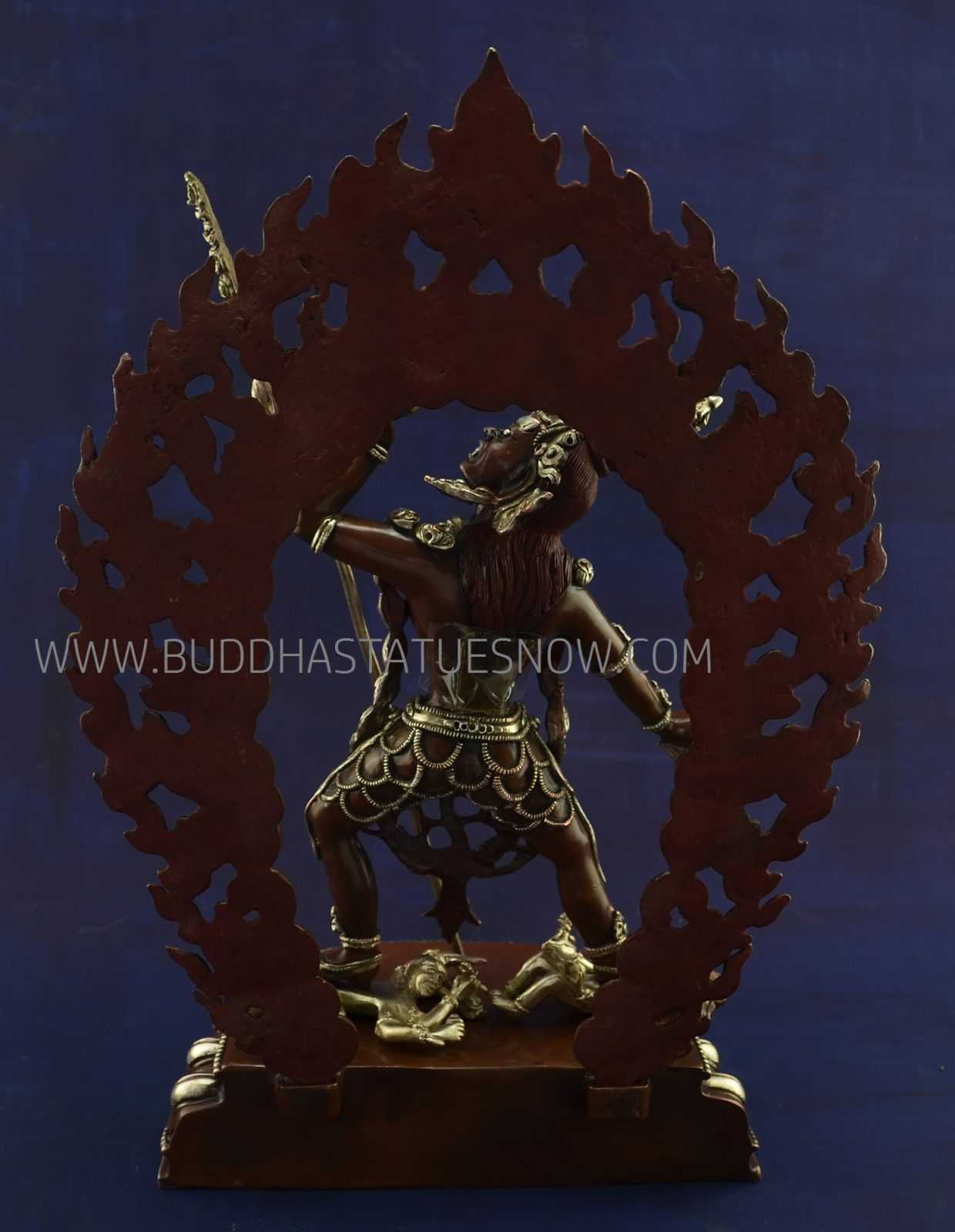
The statue offers remarkable versatility for display. Both the openwork wisdom-flame mandorla and the towering khatvanga staff are removable, allowing collectors to present Vajrayogini either as a complete shrine-like composition or as a standalone figure suited to a more intimate altar. Learn more about this tradition in our complete Vajrayogini guide.
Antiquated Vajrayogini Statue Iconography
This Antiquated Vajrayogini Statue faithfully follows the Naro Kacho lineage associated with the Indian mahasiddha Naropa. Her expressive face tilts upward toward Kechari, emphasizing the distinctive skyward orientation of this form. In her lowered right hand she wields the kartika, the curved flaying knife symbolizing the severing of ego and attachment, while her raised left hand holds the kapala, or skull cup, representing the transformation of ordinary experience into bliss-wisdom.
The tall khatvanga rising beside her left side bears the traditional three impaled heads and signifies her inseparable union with Heruka (Chakrasamvara). Around her body hang an elaborate skull garland, bone ornaments, necklaces, and finely modeled jewelry, each brought into sharp relief by contrasting silver-plated highlights against the darker oxidized copper surface.
Artistry of the Antiquated Vajrayogini Statue
One of this statue’s defining characteristics is its restrained use of silver plating. Rather than overwhelming the composition, the highlights draw attention to individual sculptural details, including the skull ornaments, crown, necklaces, flame tips, and raised lotus petals. Against the deep antiquated surface, these accents produce a subtle metallic brilliance that rewards close viewing while preserving the sculpture’s aged character.
Vajrayogini assumes her dynamic Alidha stance while trampling Kalaratri and Bhairava, expressing transcendence over worldly limitations and obstacles. Behind her, the removable openwork mandorla forms an imposing oval of densely sculpted wisdom flames. Its dark oxidized surfaces are punctuated by silver-highlighted flame tips, visually framing the figure while reinforcing the fierce transformative character of the composition. The substantial lotus pedestal continues the antiquated treatment with prominent silver-highlighted petals.
Antiquated Vajrayogini Statue and Ekajati
This Antiquated Vajrayogini Statue forms an exceptional visual pairing with Ekajati (Ugra Tara). Within the religious landscape of Nepal’s Kathmandu Valley, Vajrayogini and Ugra Tara possess a particularly interesting historical relationship. The celebrated Sankhu Vajrayogini tradition illustrates the regional intersections surrounding these powerful female deities. As a display pairing, their wrathful expressions, dynamic postures, elaborate ornaments, and flaming aureoles create strong visual harmony while representing distinct tantric identities and functions.
Together they can also be appreciated symbolically as complementary expressions of transformation and protection. Vajrayogini embodies the transformation of ordinary perception and attachment into awakened wisdom, while Ekajati is renowned as a fierce protector of tantric teachings. Explore the meaning and symbolism of Vajrayogini for a deeper introduction to her iconography.
Filling and Consecration
This statue includes a traditional consecration opening in the base, allowing the interior to be ritually filled according to Himalayan Buddhist traditions. Sacred mantras, incense, herbs, relics, and other blessed substances may be placed within the statue before the opening is sealed and the completed image is consecrated. Learn more about the traditional process in our guide to Buddha statue filling, blessing, and consecration.
Custom Made Vajrayogini Statues
Collectors seeking a different size, finish, or presentation may commission a Vajrayogini sculpture handcrafted to their requirements by skilled Newar artisans in Nepal. Options can include larger shrine-scale dimensions, antiquated or gilded finishes, specialized detailing, and genuine turquoise and red coral gemstone embellishments. Visit our custom Tibetan Buddhist statues page to learn more about commissioning a unique handmade sculpture.
Authentic, Handmade in Nepal
Every statue is handcrafted in Patan, Nepal, using traditional lost wax casting and comes with a certificate of authenticity issued by Nepal’s Department of Archaeology, verifying its materials, technique, and origin.