


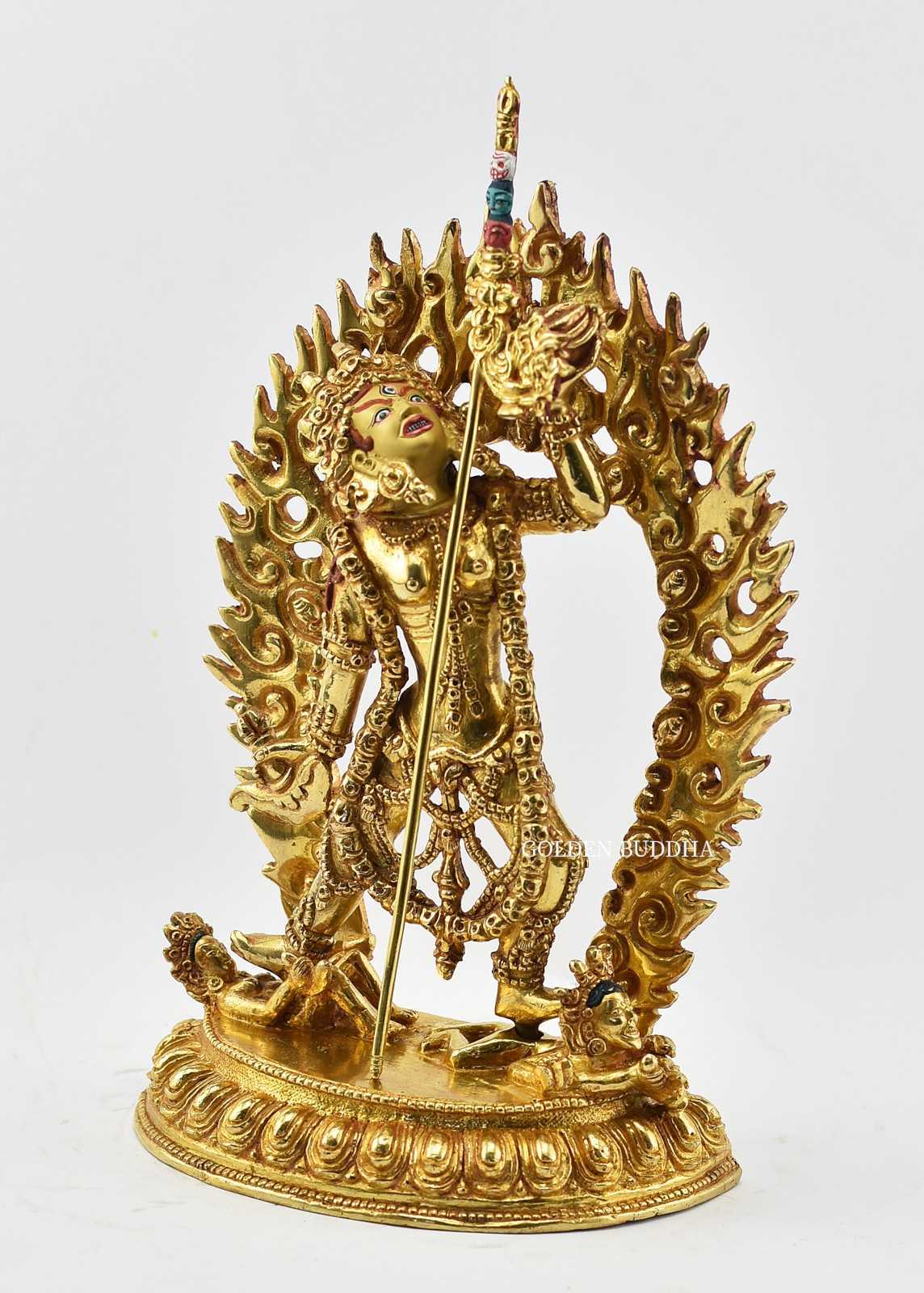
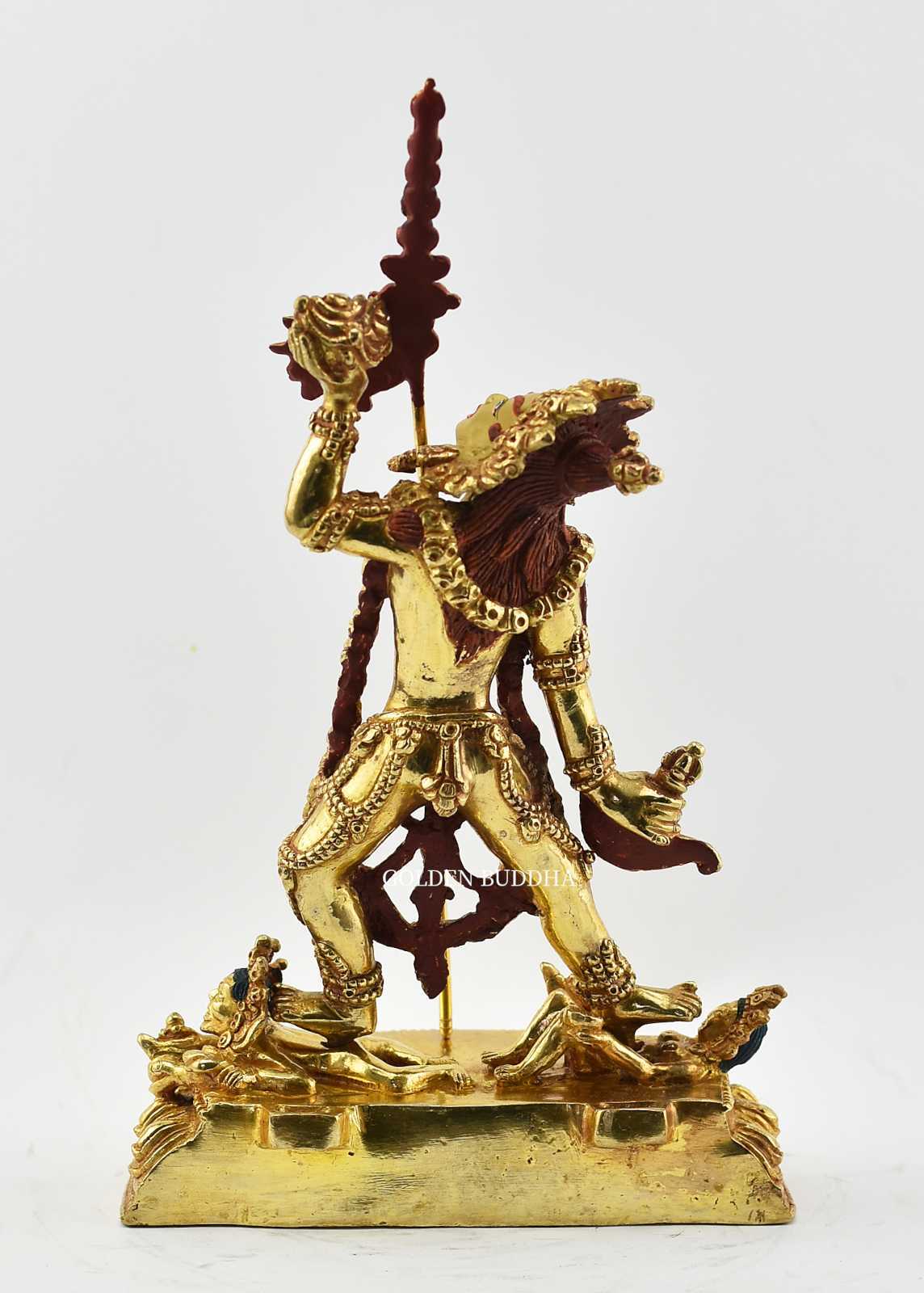
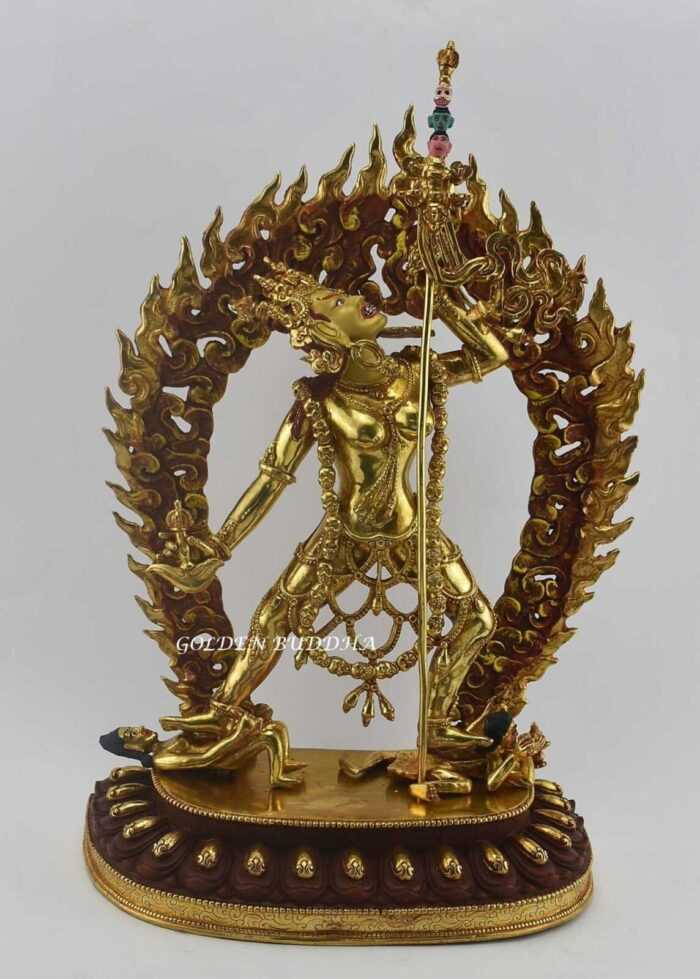
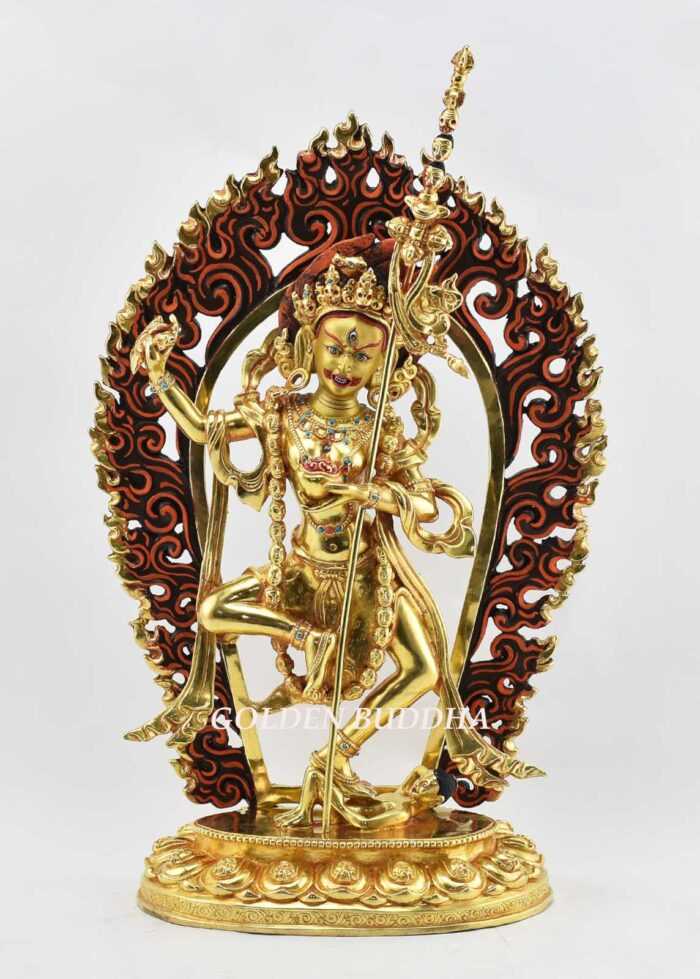
Standing 9 inches tall with the khatvanga, 8 inches with the removable flame mandorla, and 6.75 inches without the frame, this handcrafted Tantric Vajrayogini statue portrays the supreme Dakini in her distinctive Naro Khacho form, meaning “Kechari of Naropa.” Master Newar artisans in Patan, Nepal, created the complete sculpture from copper alloy using the traditional lost wax casting method before fire gilding the principal surfaces in 24K gold. Her face is separately hand painted with 18K gold and natural pigments, bringing exceptional definition to the three eyes, arched brows, open mouth and upward-directed gaze.
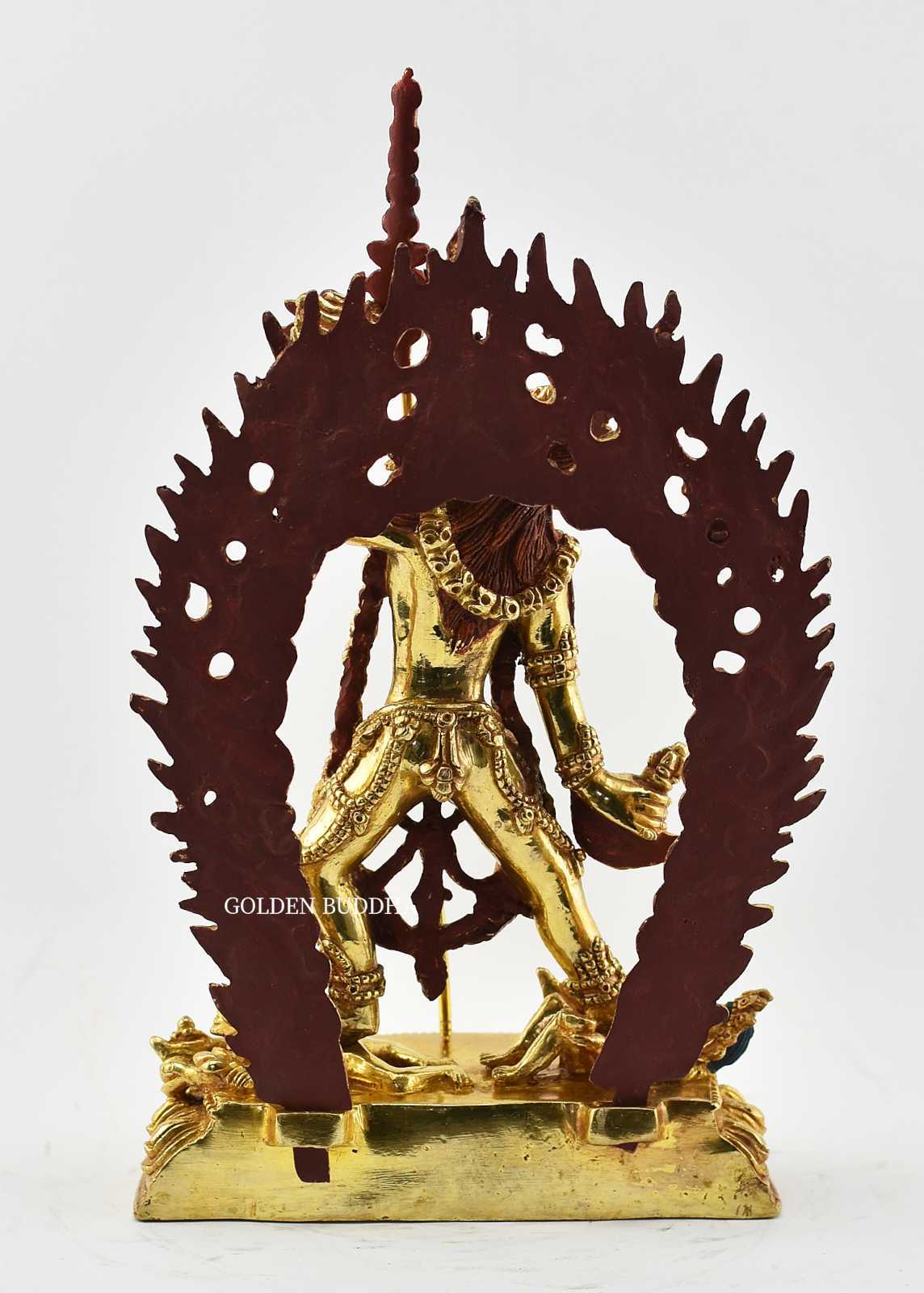
The removable copper-alloy flame mandorla allows Vajrayogini to be displayed either within the complete ring of pristine-awareness fire or independently when altar space is limited. The photographs reveal finely sculpted bone ornaments, skull jewelry and flowing garlands across the body, together with a single lotus throne displaying raised repoussé petals. At the buyer’s request, genuine turquoise and red coral may be embedded into suitable crown and jewelry settings at no additional cost before shipping. For further guidance, visit our Dakini statues FAQ.
Tantric Vajrayogini Statue in Naro Khacho Form
Naro Khacho is one of the most recognizable forms of Vajrayogini and is traditionally associated with the Indian mahasiddha Naropa. She stands in a dynamic reverse warrior posture, her body inclined upward as she gazes toward the Pure Land of the Dakinis. This upward movement gives the composition a quality of longing transformed into direct realization. Rather than rejecting passionate energy, Vajrayogini represents its purification into great bliss, wisdom and compassionate activity free from self-centered attachment.
Her appearance deliberately unites beauty and frightening imagery. The graceful body, elaborate ornaments and flowing posture draw the viewer inward, while the skull crown, bone jewelry, garland, flaying knife and subdued figures confront attachment to permanence and ordinary identity. This combination expresses the tantric principle that every aspect of experience can become part of the path when recognized through wisdom.
Kartika, Kapala and Sacred Khatvanga
Vajrayogini lowers the kartika, or curved flaying knife, in her right hand. Its hooked blade symbolizes the severing of ego fixation, conceptual grasping and the ordinary appearance of phenomena. It does not represent worldly violence; rather, the knife cuts through the mental habits that conceal the empty and luminous nature of experience.
Her left hand raises the kapala, or skull cup, toward her mouth. Traditionally filled with symbolic nectar or blood, the kapala represents the transformation of ordinary life-force and desire into bliss-wisdom. The elevated gesture reinforces her upward gaze and creates the distinctive Naro Khacho silhouette visible from the front and side.
The khatvanga rises beside her body and is surmounted by three multicolored heads beneath a vajra finial. The three heads signify liberation from the realms of desire, form and formlessness. The khatvanga also represents Vajrayogini’s inseparable union with Chakrasamvara: wisdom united with compassionate method, and emptiness inseparable from great bliss.
Skull Crown, Bone Ornaments and Three Eyes
A crown of five skulls encircles Vajrayogini’s head, representing the transformation of the five afflictive emotions into the five wisdoms. Her additional skull and bone ornaments express freedom from attachment to the physical body and ordinary social identity. They are not decorations of death for its own sake; they proclaim that impermanence, mortality and change have been fully integrated into awakened awareness.
Her three eyes perceive beyond conventional limitation and are traditionally associated with unobstructed awareness of past, present and future. The face combines beauty with a fierce open-mouthed expression, communicating directness, urgency and fearless tantric realization. Unlike Vajravarahi, this Naro Khacho form does not display the distinctive sow’s head above the right ear. See our Masterpiece Vajravarahi statue for a comparison with that wrathful manifestation.
Subdued Figures and Removable Flame Mandorla
Vajrayogini stands upon the subdued worldly figures Kalarati and Bhairava. Within tantric iconography, their placement beneath her feet signifies transcendence of ordinary samsaric forces, ego fixation and obstructive states. Her Alidha stance does not express personal hostility toward individual beings; it demonstrates the complete subordination of ignorance beneath awakened wisdom.
A removable openwork mandorla of curling flames surrounds the figure. Cast from copper alloy, the frame creates a radiant boundary of pristine awareness around Vajrayogini while allowing light to pass through its pierced forms. The flames symbolize awakened wisdom consuming ignorance, dualistic perception and impediments to realization. The frame may be removed to reveal a more open view of the body, ornaments, khatvanga and subdued figures.
24K Fire Gilding and Lost Wax Craftsmanship
This Tantric Vajrayogini statue was cast and finished by hand in Patan, Nepal. Separate wax models were prepared for the central figure, implements, subdued deities, lotus pedestal and removable mandorla. After casting, the artisans chased and refined the skull ornaments, bone jewelry, facial features, robe borders, lotus petals and curling flames before applying the 24K fire-gilded finish.
The luminous gold emphasizes the slender body and complex jewelry while darker painted accents add definition to the hair, sacred attributes and subdued figures. The compact pedestal is shaped as a single lotus throne with one course of rounded repoussé petals, providing a stable visual foundation for the strongly vertical composition.
Tantric Vajrayogini Statue and Dorje Shugden Pair
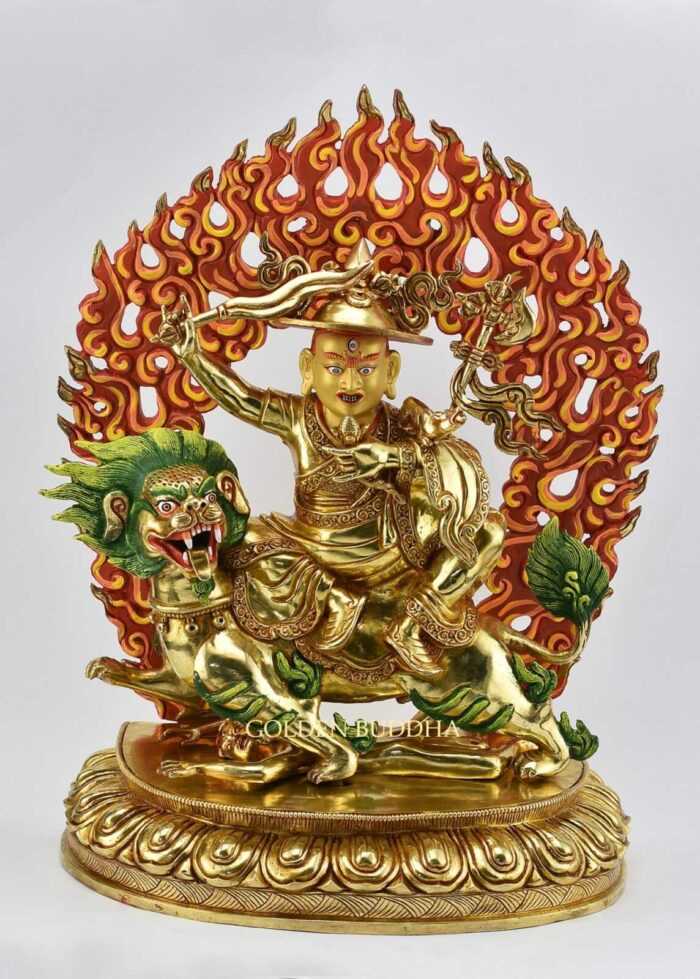
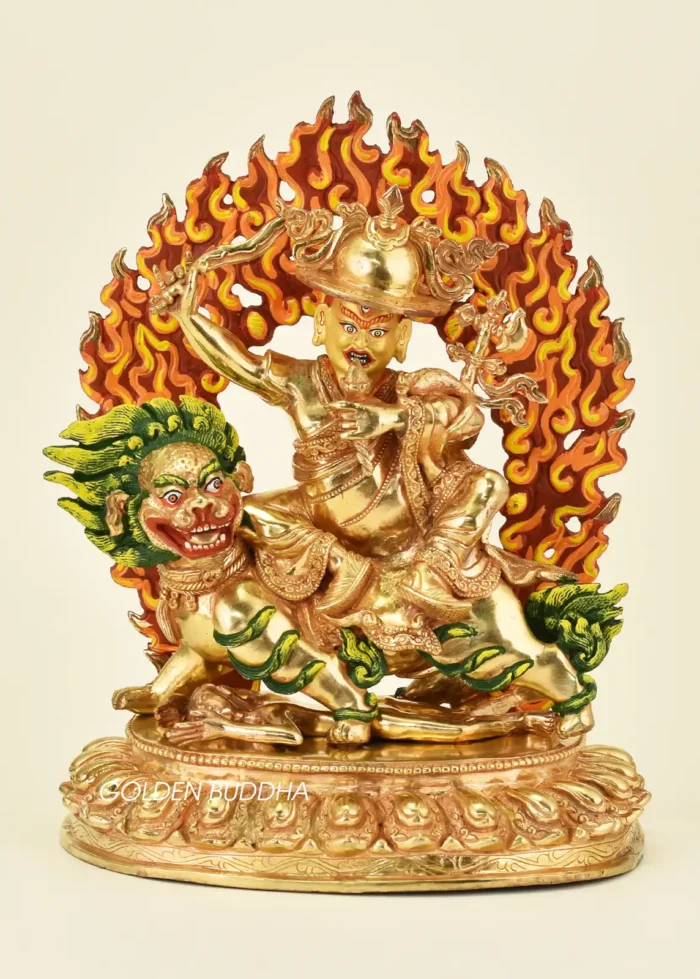
This statue can form a visually powerful arrangement with our matching 10-inch Dorje Shugden Sculpture. Both compositions are crafted from copper alloy, fire gilded in 24K gold and surrounded by removable flame mandorlas. Their dynamic postures, sacred implements, subdued worldly figures and closely related scale create an intentionally coordinated appearance.
The doctrinal relationship applies specifically within traditions that accept and practice both figures. Vajrayogini is the meditation deity embodying the transformation of ordinary experience into great bliss and emptiness. Dorje Shugden is relied upon within certain lineages as a Dharma protector whose activity removes obstacles and supports favorable circumstances for practice. Within that context, Vajrayogini represents the principal path and awakened result, while Dorje Shugden represents protective activity serving that path. Their placement should follow the practitioner’s commitments and the guidance of a qualified teacher.
Custom-Made Tantric Vajrayogini Statues
A custom-made Tantric Vajrayogini statue may be commissioned in a preferred size, finish and degree of ornamentation. Options include compact personal shrine images, larger monastery-scale sculptures, antiquated copper finishes, selective gilding or complete 24K fire gilding. Customers may request a removable flame mandorla, deeper detailing across the bone ornaments, more elaborate lotus petals or gemstones embedded into suitable crown and jewelry settings.
A coordinated custom commission may also pair Vajrayogini with Dorje Shugden by matching the heights, pedestal proportions, mandorla dimensions and gilded finishes while preserving the separate iconography and ritual role of each figure. For practitioners whose lineage includes both practices, the pairing can represent transformative tantric realization supported by protective activity and favorable conditions for sustained Dharma practice.
Authentic, Handmade in Nepal
Every statue is handcrafted in Patan, Nepal, using traditional lost wax casting and comes with a certificate of authenticity issued by Nepal’s Department of Archaeology, verifying its materials, technique, and origin.
Reviews
There are no reviews yet.