
Amitabha Buddha Thangka Paintings
Amitabha Buddha thangka paintings depict the Buddha of Infinite Light, the most widely venerated figure in Pure Land Buddhism and one of the Five Dhyani Buddhas, presiding over the western direction. As the Bodhisattva Dharmakara he was a great king who renounced his throne and vowed not to accept Buddhahood until he could guarantee liberation to every being who sincerely called upon him. Having fulfilled that vow, he presides over Sukhavati — the Western Pure Land, described in scripture as a realm of jeweled trees, fragrant lotus ponds, and the continuous sound of Dharma. Read the full account in our guide to Amitabha’s Pure Land of Sukhavati.
Amitabha is traditionally painted in deep red — the color whose meditation transforms the poison of desire and attachment into discriminating wisdom — seated in full lotus pose with both hands in the Dhyana meditation mudra, the alms bowl resting on his upturned palms. He is known as Amida in Japan and invoked as Namo Amituofo in Chinese practice, and thangkas bearing those names appear in this collection alongside the Tibetan tradition.
Every painting is hand painted in Nepal by Himalayan artists trained in the traditional schools, with genuine 24K gold detailing applied by hand. This is our largest single group of thangkas, ranging from paintings of around 26 inches up to masterpiece-grade works of more than four feet, including pieces mounted in traditional silk brocade and custom commissions painted to order. Browse the full range of Tibetan thangka paintings, or see Amitabha rendered in fire gilded copper alloy among our Amitabha Buddha statues.
Showing all 12 resultsSorted by popularity
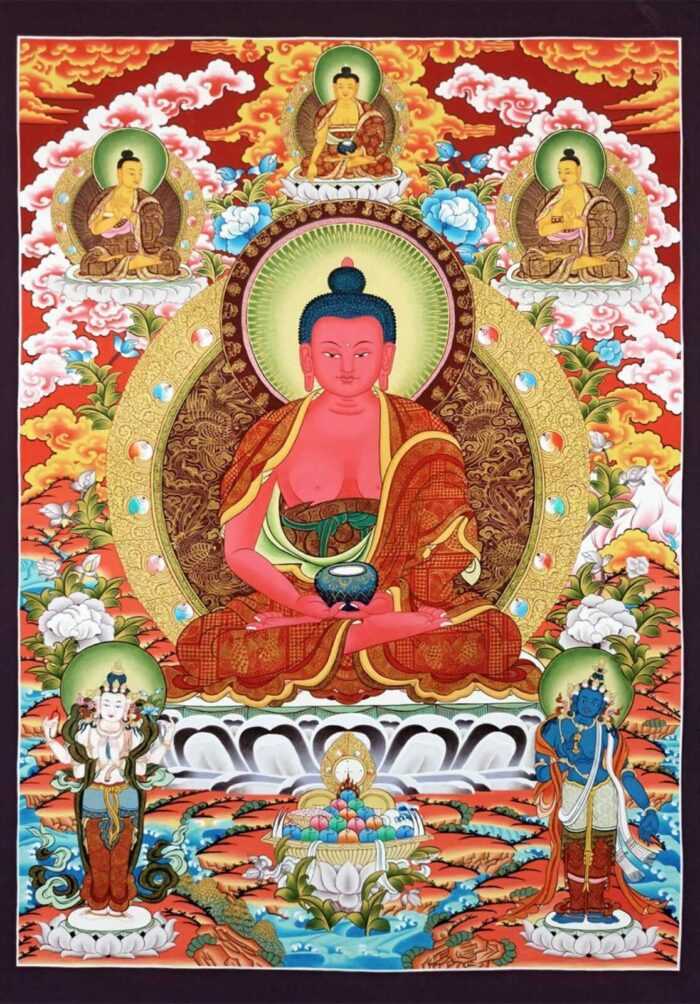
Masterpiece Amitabha Thangka Painting, 24k Gold Detail, 34.25″ x 25″ (Custom Order)
Original price was: $1,999.00.$1,449.00Current price is: $1,449.00.Add to Cart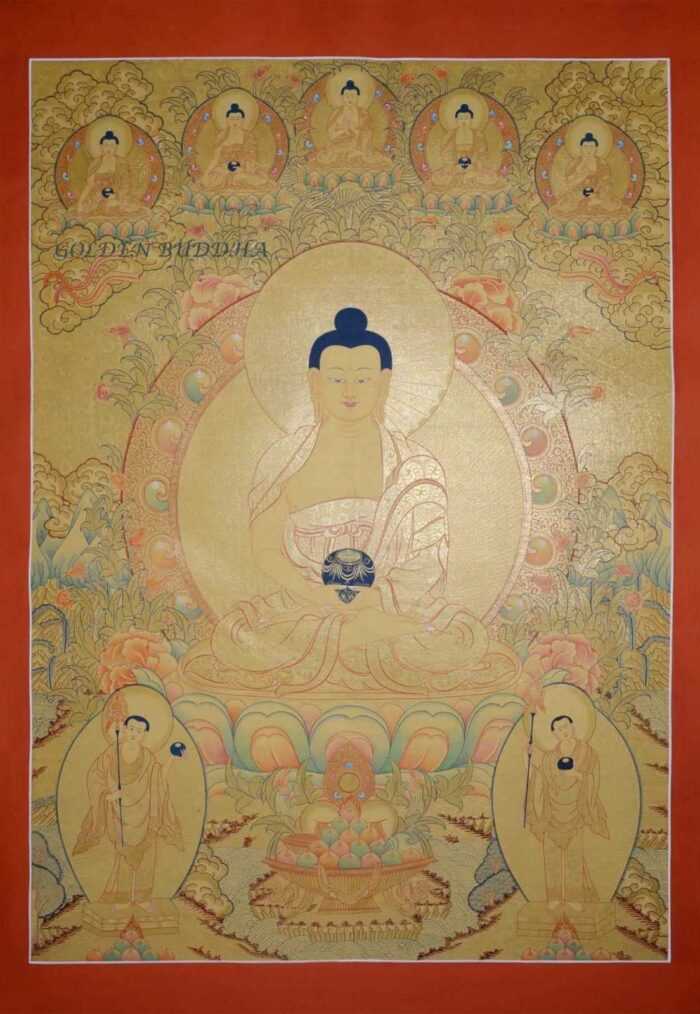
Amitabha Buddha Thangka Painting, Hand Painted, 24k Gold Detail, 33.5″ x 24″
Original price was: $1,099.00.$789.00Current price is: $789.00.Add to Cart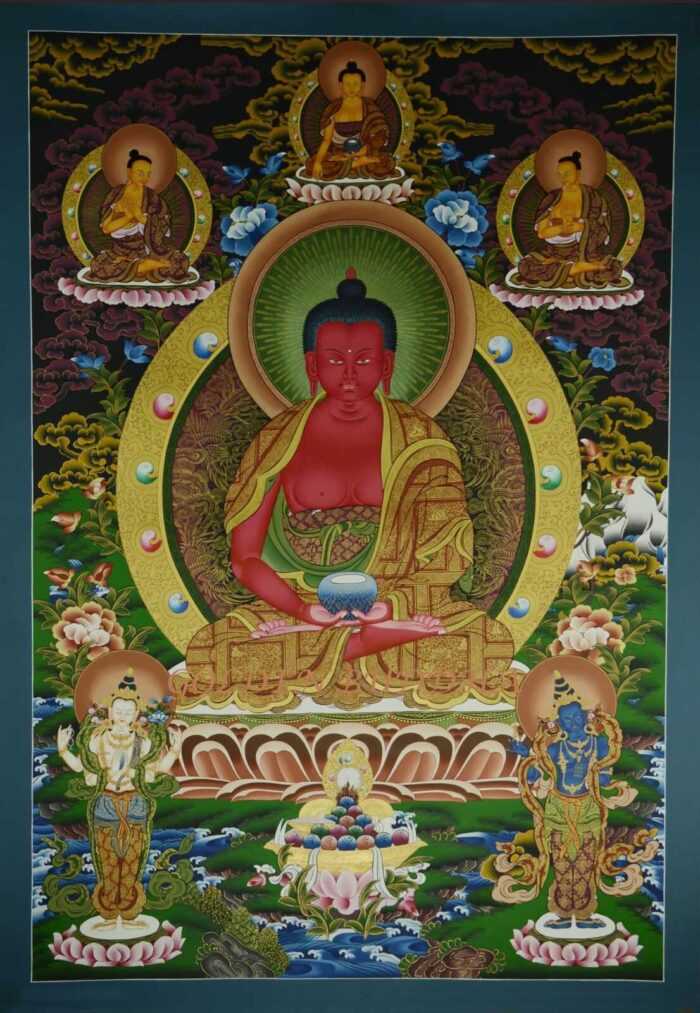
Amitabha Thangka Painting, 24k Gold Details, 41.75″ x 29.5″
Original price was: $2,499.00.$1,799.00Current price is: $1,799.00.Add to Cart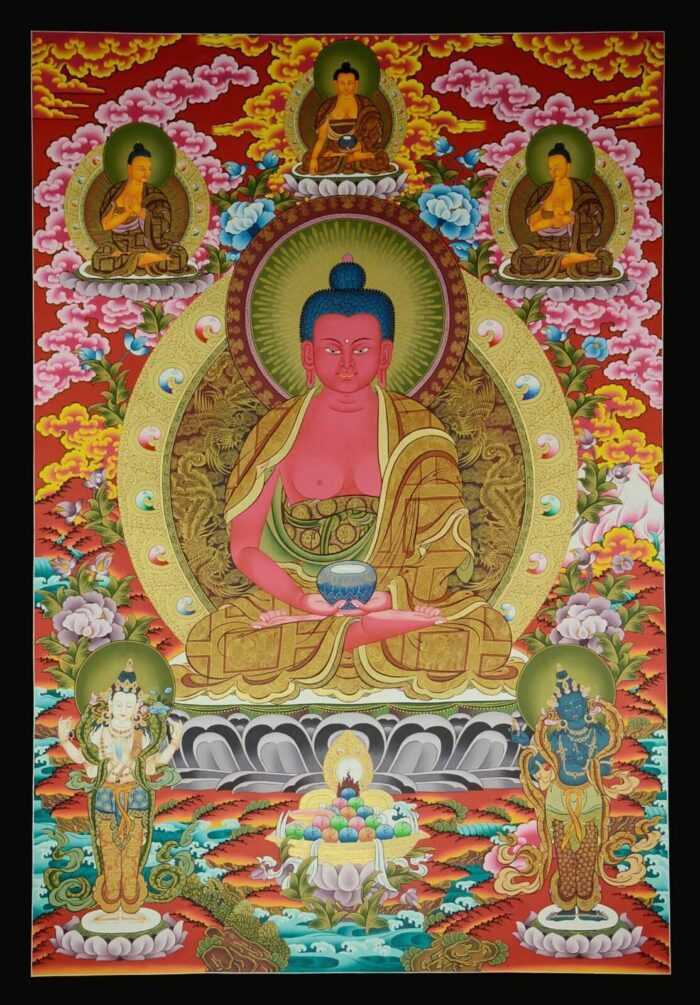
Masterpiece Amitabha Buddha Thangka Painting, 24k Gold Detail, 42.5″ x 29.5″
Original price was: $2,499.00.$1,779.00Current price is: $1,779.00.Add to Cart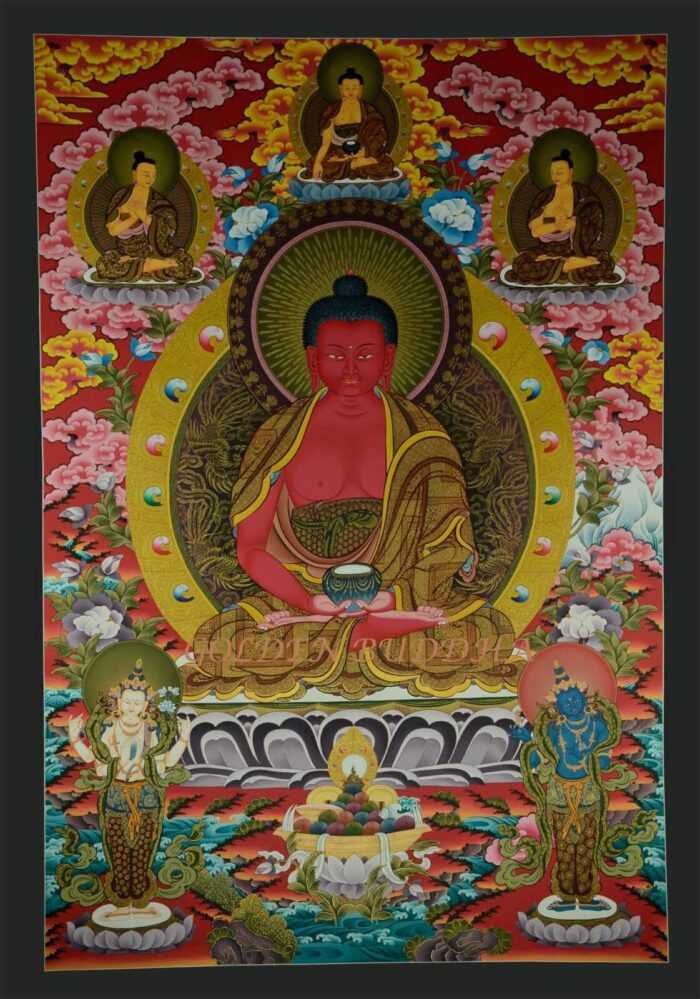
Masterpiece Amitabha Tibetan Thangka, 24k Gold Detail, 42.5″ x 29.75″
Original price was: $2,499.00.$1,779.00Current price is: $1,779.00.Add to Cart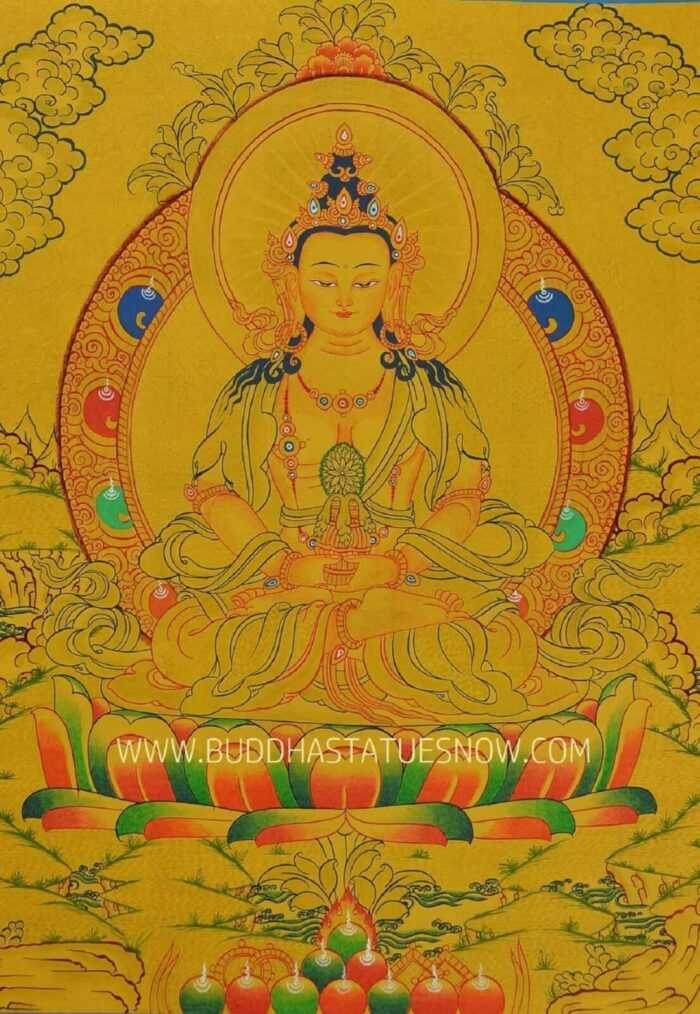
Amitayus Tibetan Thangka Painting 15.25″ x 12″ (Hand Painted)
Original price was: $259.00.$169.00Current price is: $169.00.Add to Cart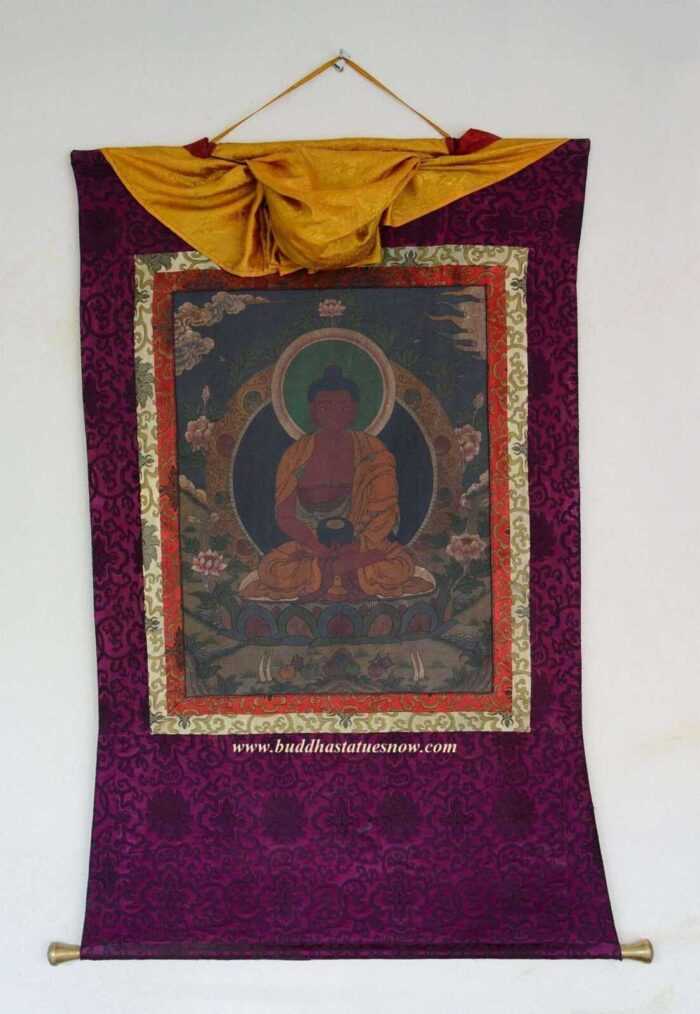
Amitabha Buddha Thangka Painting, Silk Brocade, 24K Gold Detail, 50″ x 37.75″
Original price was: $799.00.$599.00Current price is: $599.00.Add to Cart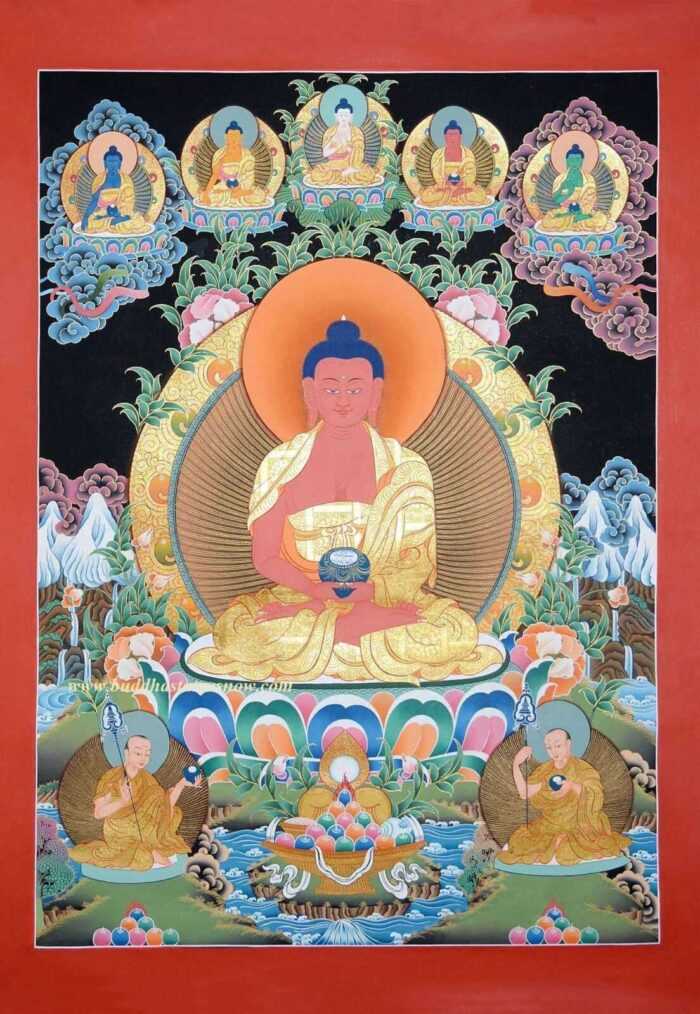
Amitabha Buddha Tibetan Thangka, 24k Gold Detail, 34.25″ x 25″
Original price was: $1,339.00.$799.00Current price is: $799.00.Add to Cart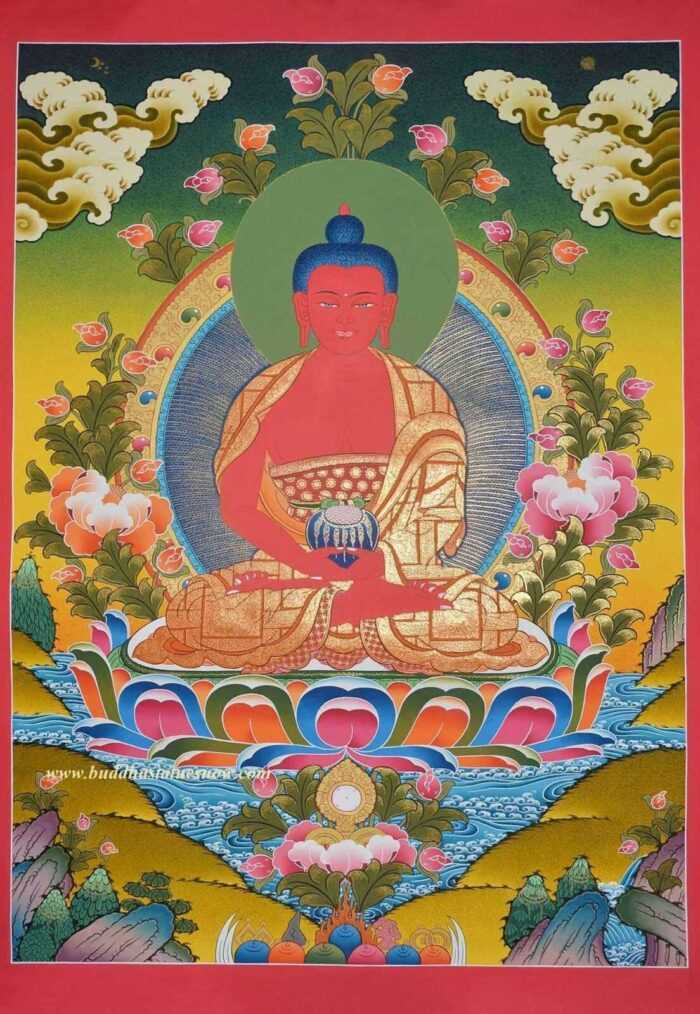
Amida Buddha Thangka Painting, 24k Gold Detail, 30.25″ x 22.5″
Original price was: $689.00.$459.00Current price is: $459.00.Add to Cart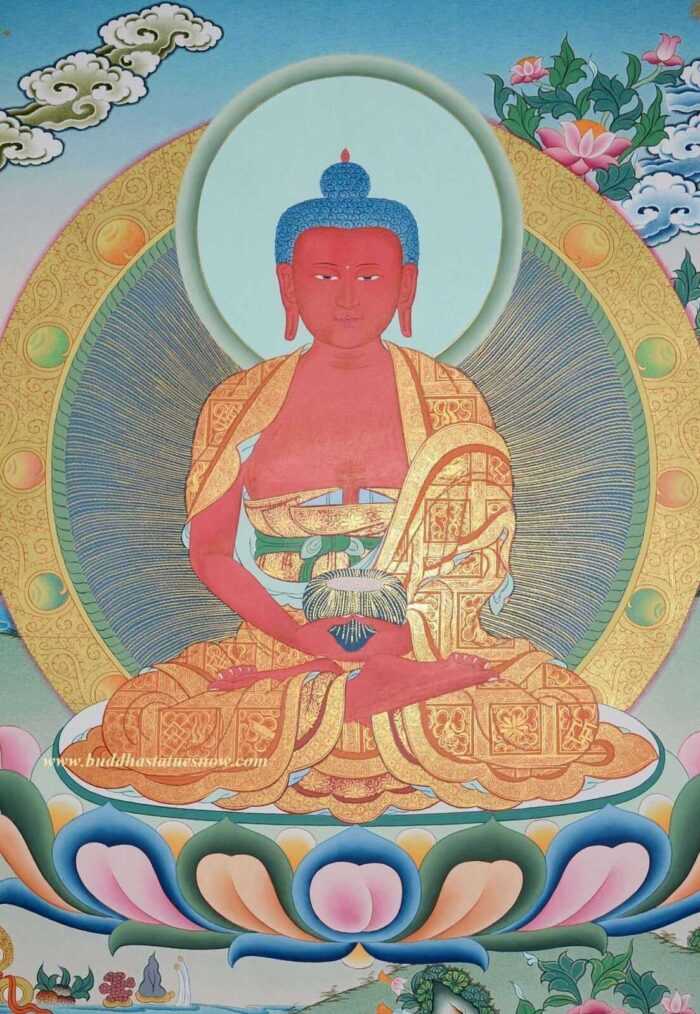
Amitabha Tibetan Thangka Painting, 24k Gold Detailing, 26.25″ x 20.5″
Original price was: $559.00.$399.00Current price is: $399.00.Add to Cart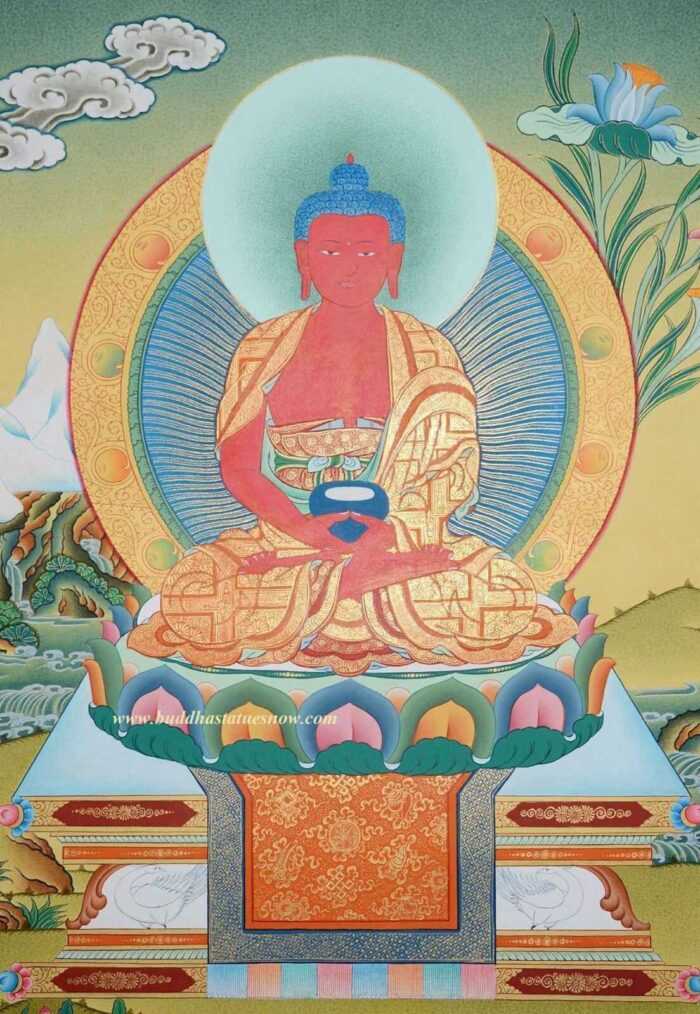
Amida Buddha Tibetan Thangka, 24k Gold Detailing, 26.5″ x 20″
Original price was: $699.00.$499.00Current price is: $499.00.Add to Cart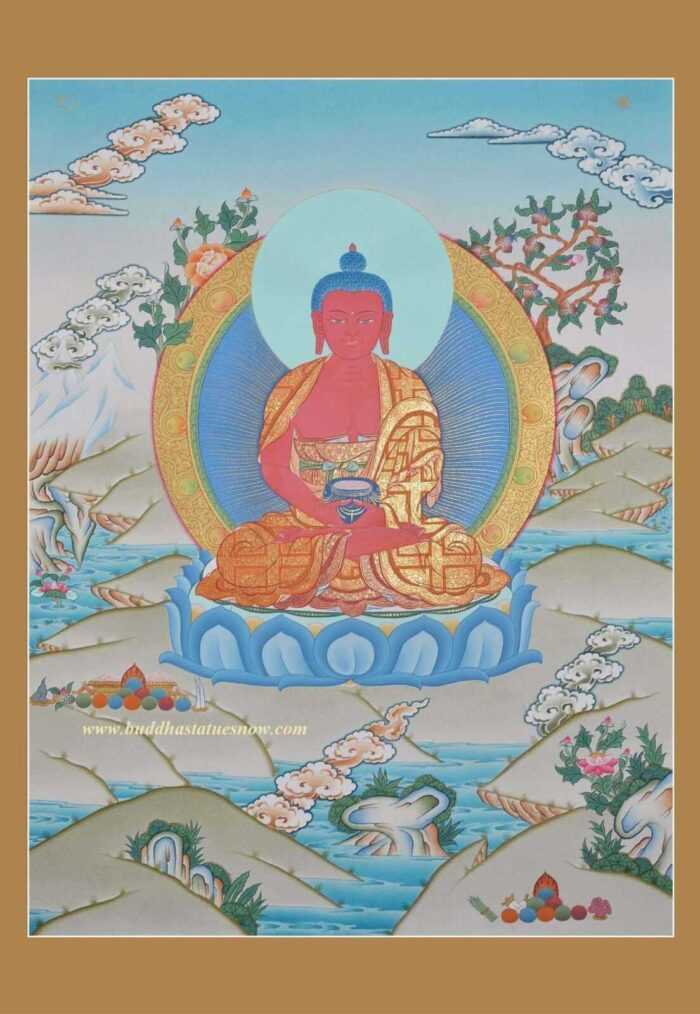
Amitabha Buddha Thangka, 24K Gold Detailing, 26″ x 20.25″, Namo Amituofo
Original price was: $729.00.$529.00Current price is: $529.00.Add to Cart


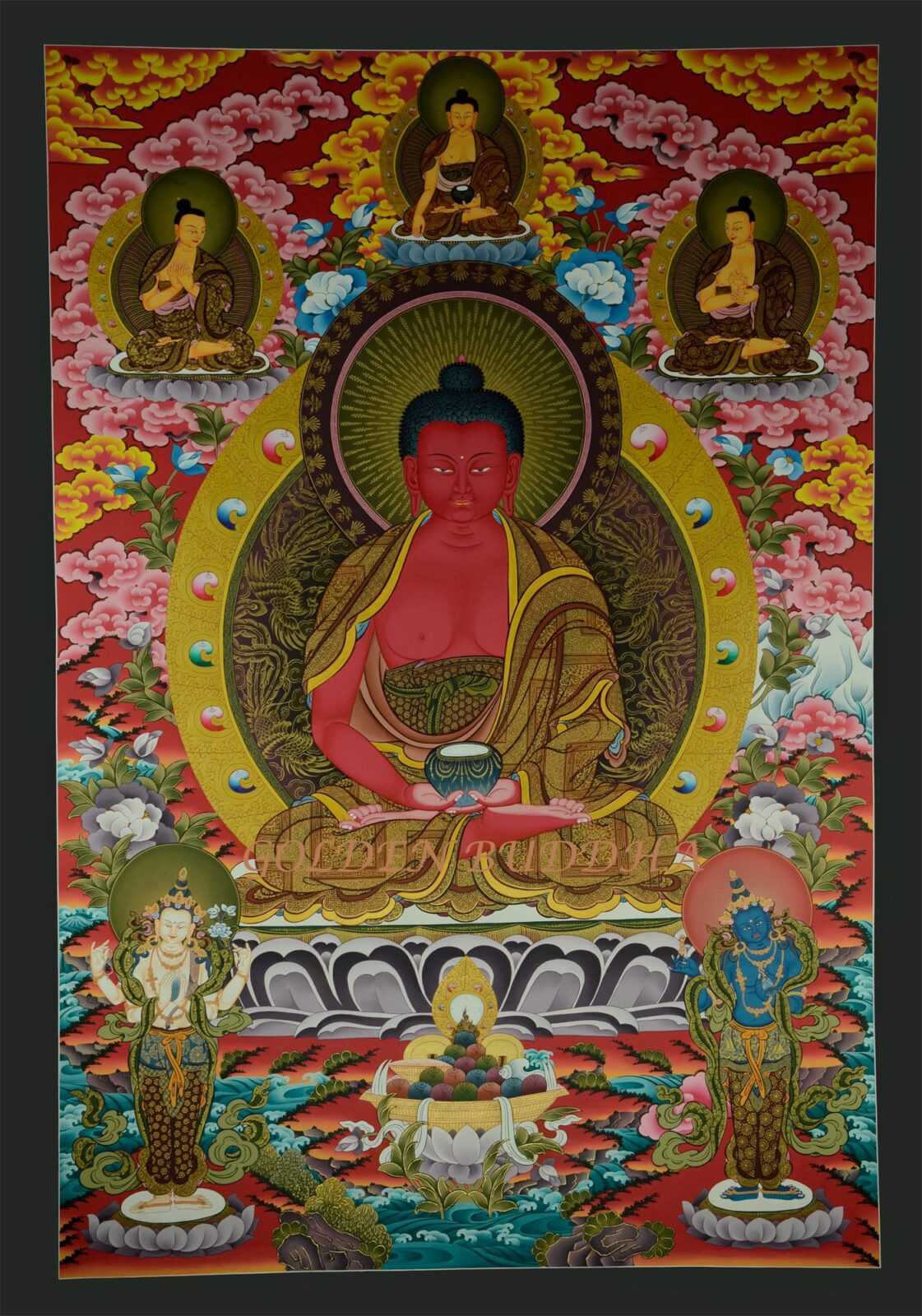


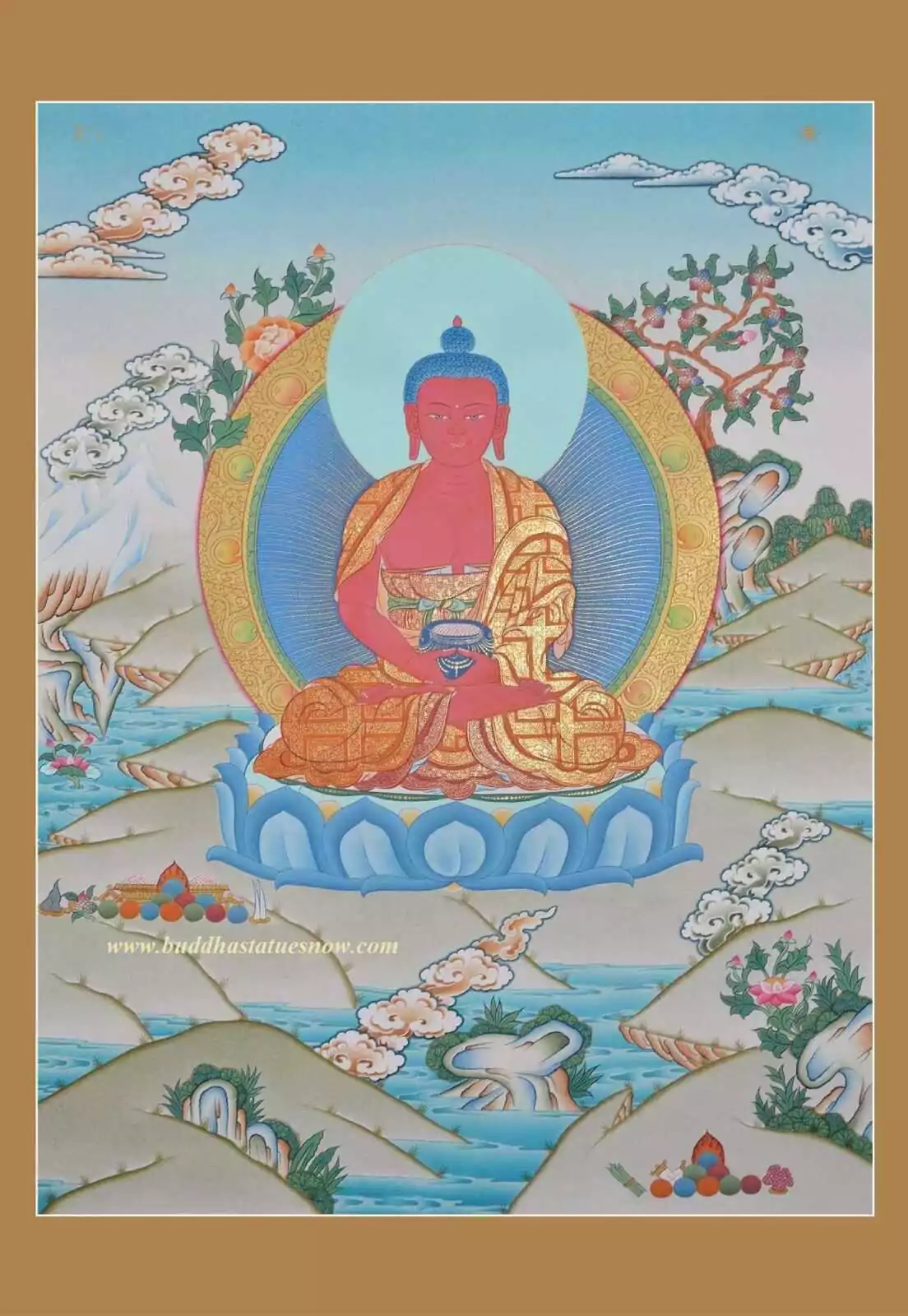
Amitabha Buddha Thangka Iconography
Amitabha is painted a deep, saturated red, seated in full lotus pose with both hands resting in the Dhyana meditation mudra and an alms bowl on his upturned palms. Unlike the crowned celestial Buddhas, he wears the plain patched robes of a monastic, a reminder that his vow was made as a renunciant rather than a king. Behind him the painting frequently opens into the landscape of Sukhavati itself - jeweled trees, lotus ponds, and rising terraces - which is what distinguishes a Pure Land composition from a simple portrait.
Among the Five Dhyani Buddhas, Amitabha holds the west, and his wisdom is the discriminating wisdom that arises when desire and attachment are transformed rather than suppressed. For his place among the Buddhas and Bodhisattvas, see our guide to Amitabha in the Buddhist pantheon.
Sizes, Mounting, and Custom Commissions
This is our largest group of thangka paintings, and the range reflects it. Smaller works of around 26 inches suit a home altar or meditation room, while masterpiece pieces of more than four feet are intended as the principal image of a shrine room or Dharma center. Several of the largest paintings in this category began as private commissions.
Paintings are offered both unmounted, for framing behind glass in a Western manner, and mounted in traditional silk brocade ready to hang. Whichever you choose, keep a thangka out of direct sunlight and away from damp and smoke, and if it must be stored, roll it around a wide tube rather than folding it. Browse the full range of Tibetan thangka paintings, or see Amitabha rendered in fire gilded copper alloy among our Amitabha Buddha statues.
Frequently Asked Questions
What does an Amitabha Buddha thangka represent?
An Amitabha thangka depicts the Buddha of Infinite Light presiding over Sukhavati, his Western Pure Land. For Pure Land practitioners the image is a support for aspiration: a reminder of the vow Amitabha made as the Bodhisattva Dharmakara to guarantee liberation to any being who sincerely calls upon him. Read the full account in our guide to Amitabha and the Pure Land of Sukhavati.
Why is Amitabha Buddha painted red?
Red is Amitabha's defining color among the Five Dhyani Buddhas, in which he presides over the western direction. Meditation on the color red is said to transform the poison of desire and attachment into discriminating wisdom, the specific wisdom Amitabha embodies. For more on his color, mudra, and attributes, see our guide to Amitabha iconography.
What is the difference between Amitabha, Amida, and Amituofo?
They are the same Buddha under different names. Amitabha is the Sanskrit name, meaning infinite light. Amida is the Japanese form used in Jodo Shu and Jodo Shinshu Pure Land Buddhism, and Amituofo is the Chinese form, invoked in the recitation Namo Amituofo. Thangkas in this category appear under all three names because our customers come from each of these traditions, but the deity, iconography, and practice are one.
What is the difference between Amitabha and Amitayus?
Amitabha is the Buddha of Infinite Light, shown in simple monastic robes with an alms bowl resting in his hands. Amitayus is the Buddha of Infinite Life, understood as the sambhogakaya or celestial form of Amitabha, and is shown crowned and adorned with jewelry, holding a vase of the nectar of immortality. Amitayus is invoked specifically in longevity practice - read more about Amitayus, the longevity form of Amitabha.
Should I choose a mounted or unmounted thangka?
A traditional silk brocade mount surrounds the painting in patterned silk and is ready to hang, in the manner used in Tibetan monasteries and shrine rooms. An unmounted painting, sometimes described as gallery style or without border, gives you the freedom to frame it behind glass in a Western manner, which offers more protection from dust and smoke. Both are available in this category, and the choice is largely one of setting and taste.
Can I commission a custom Amitabha thangka?
Yes. Several of the masterpiece Amitabha paintings in this collection were originally custom commissions. You can specify size, composition, the amount of 24K gold detailing, and whether the finished work arrives mounted in silk brocade or unmounted. Because every element is painted by hand, commissioned works take considerably longer than pieces held in stock. Contact us to discuss a commission.