Tibetan Ritual Items & Buddhist Altar Supplies
Tibetan ritual items are working tools rather than ornaments. Each one has a defined role in Vajrayana practice – a specific place on the altar, a specific moment in a ceremony, a specific meaning it carries while it is being used. Our collection is handmade in Patan, in the Kathmandu Valley, by Newar artisans whose families have supplied the Tibetan monasteries for generations, using the same metalworking and carving methods their ancestors used. What follows is organised by what each item is for, which is usually the most useful way to find what you need.
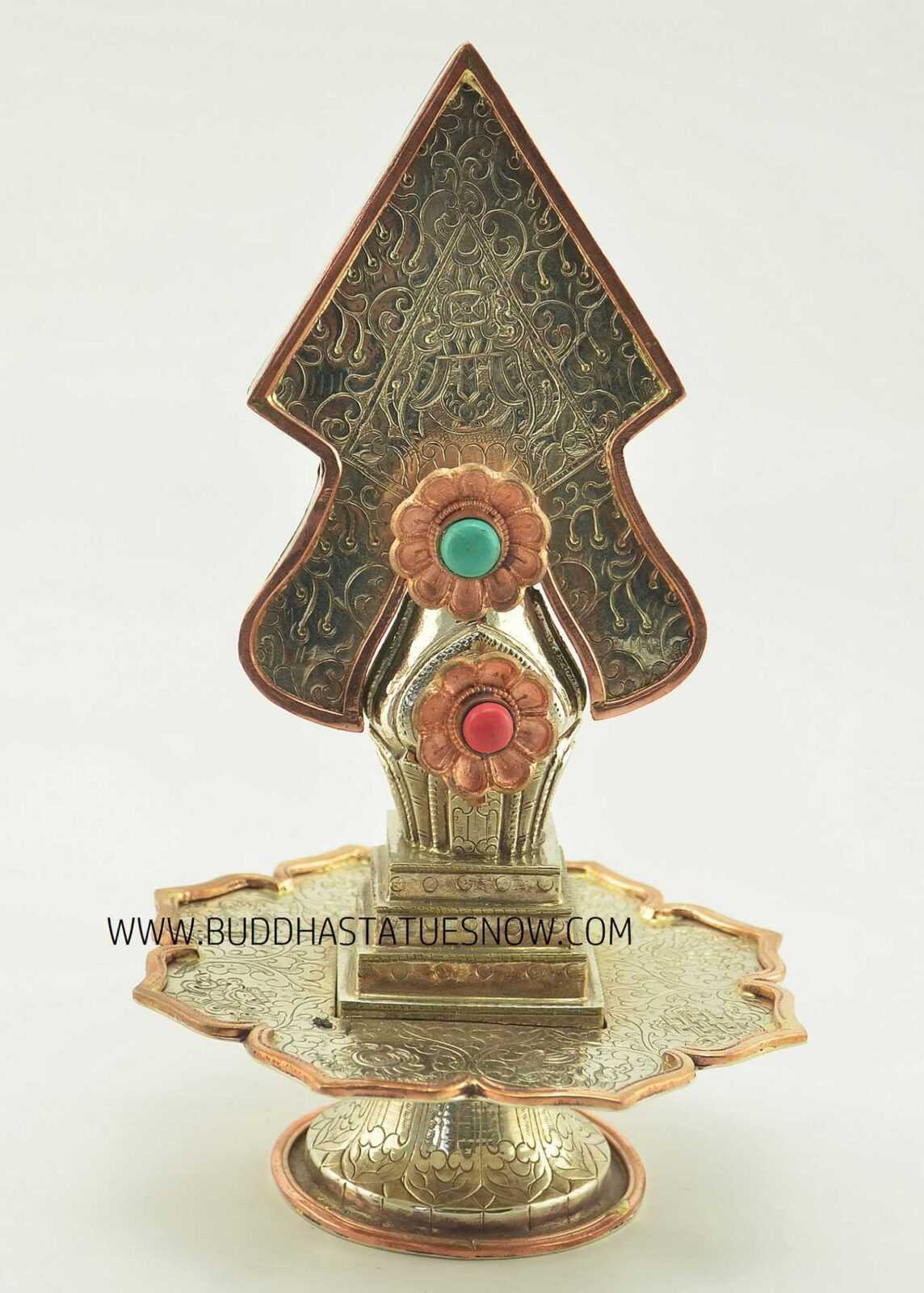
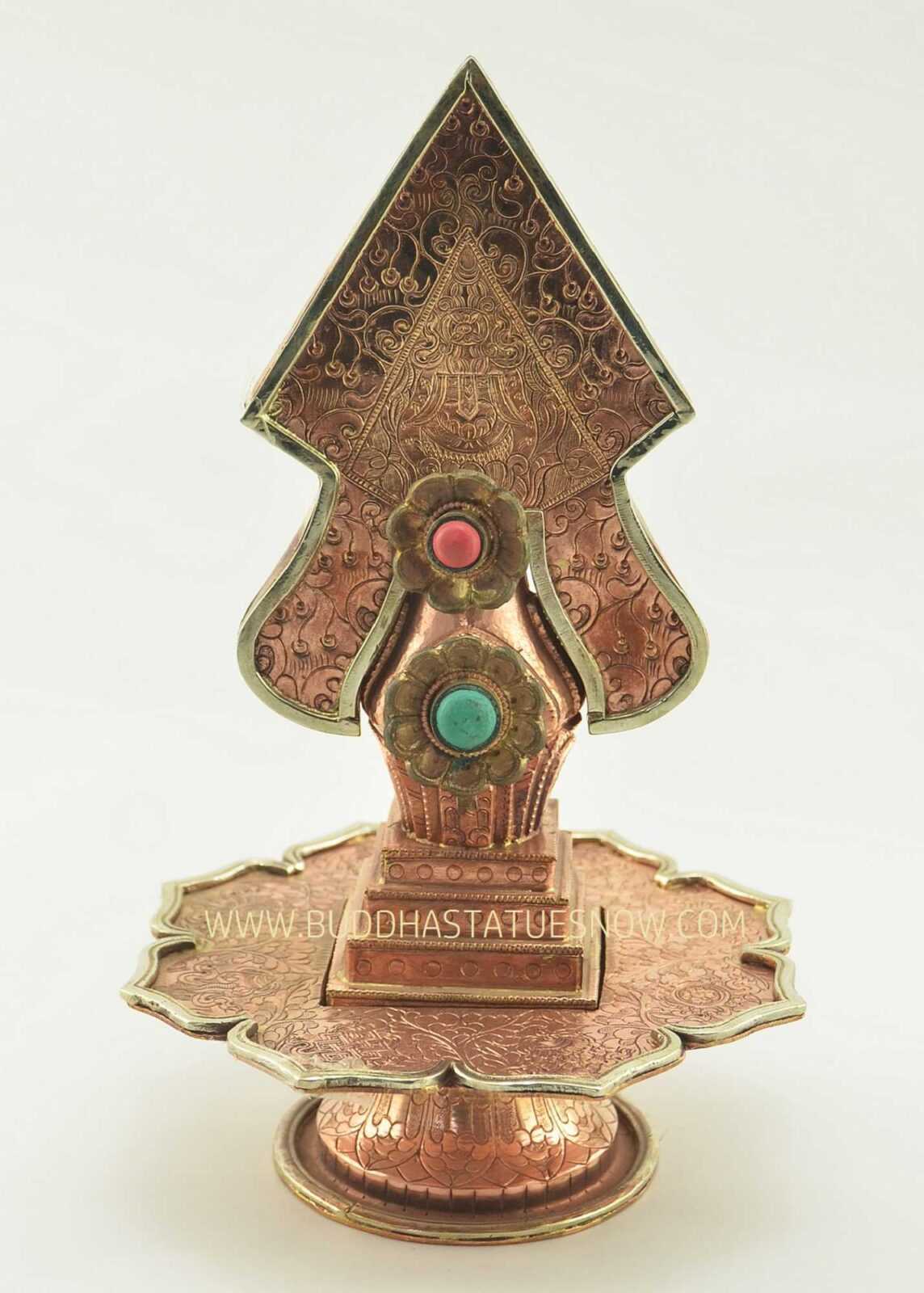
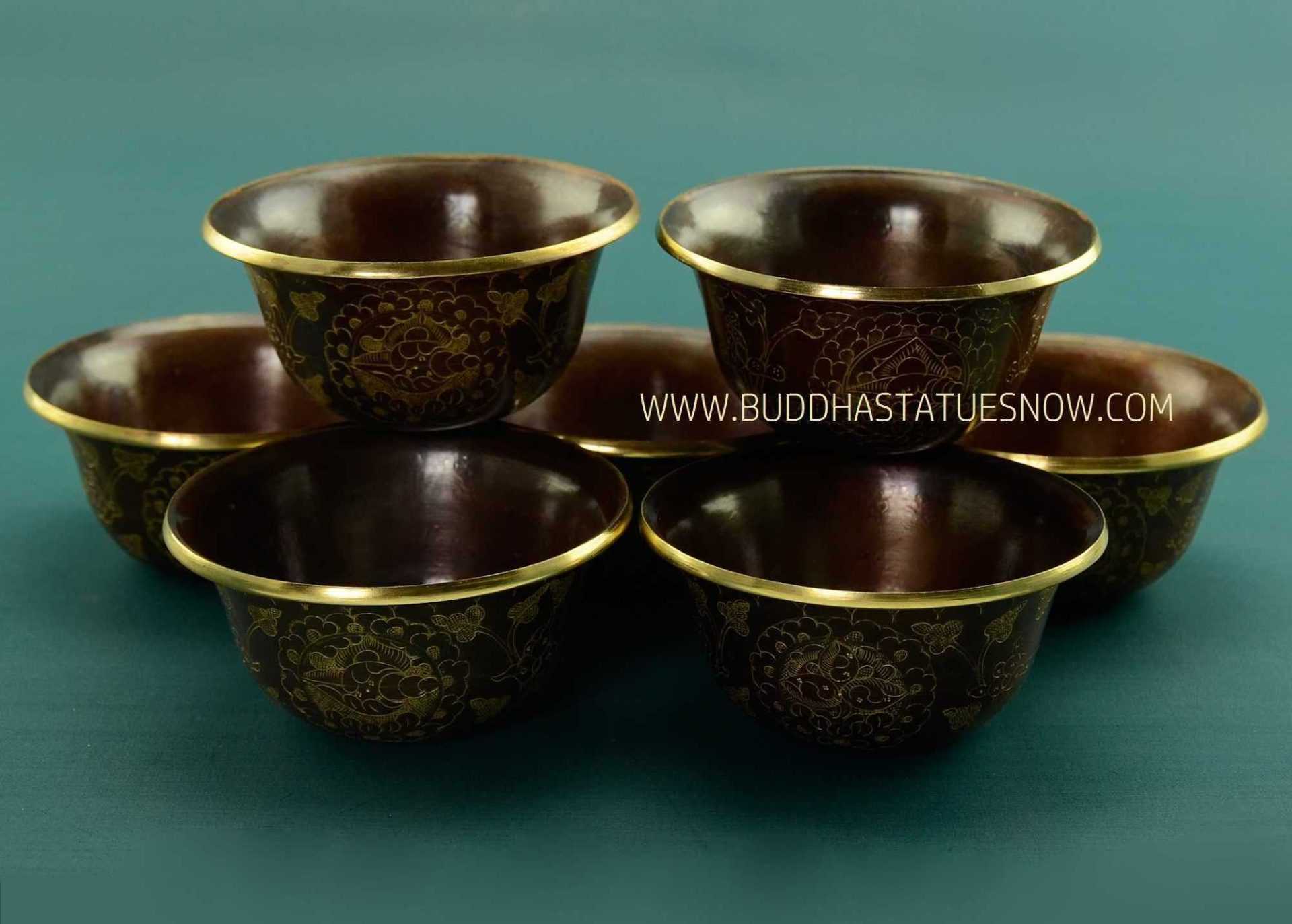
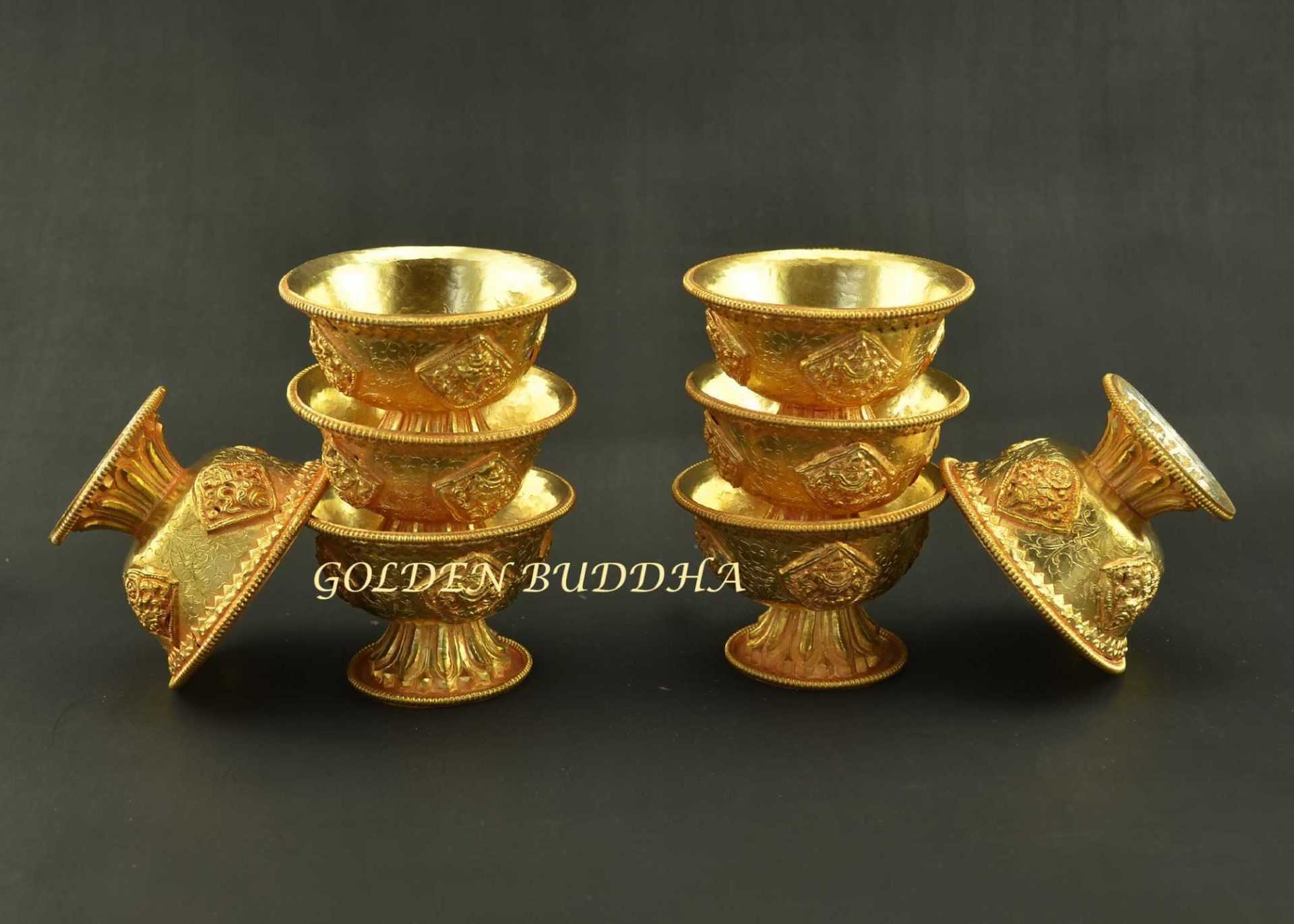
Daily offering practice with Tibetan ritual items is the heart of most home altars. Tibetan water offering bowls are set out in rows of seven or eight and filled each morning, representing the offerings traditionally made to an honoured guest – water for drinking, water for washing, flowers, incense, light, perfume and food. Butter lamps make the offering of light, and incense burners the offering of fragrance. Offering tormas in hand carved metal serve as permanent versions of the sculpted dough offerings used in Tibetan ceremony, and the serkyem set – literally “golden drink” – is the tall stand and cup used to offer libation to the protectors.
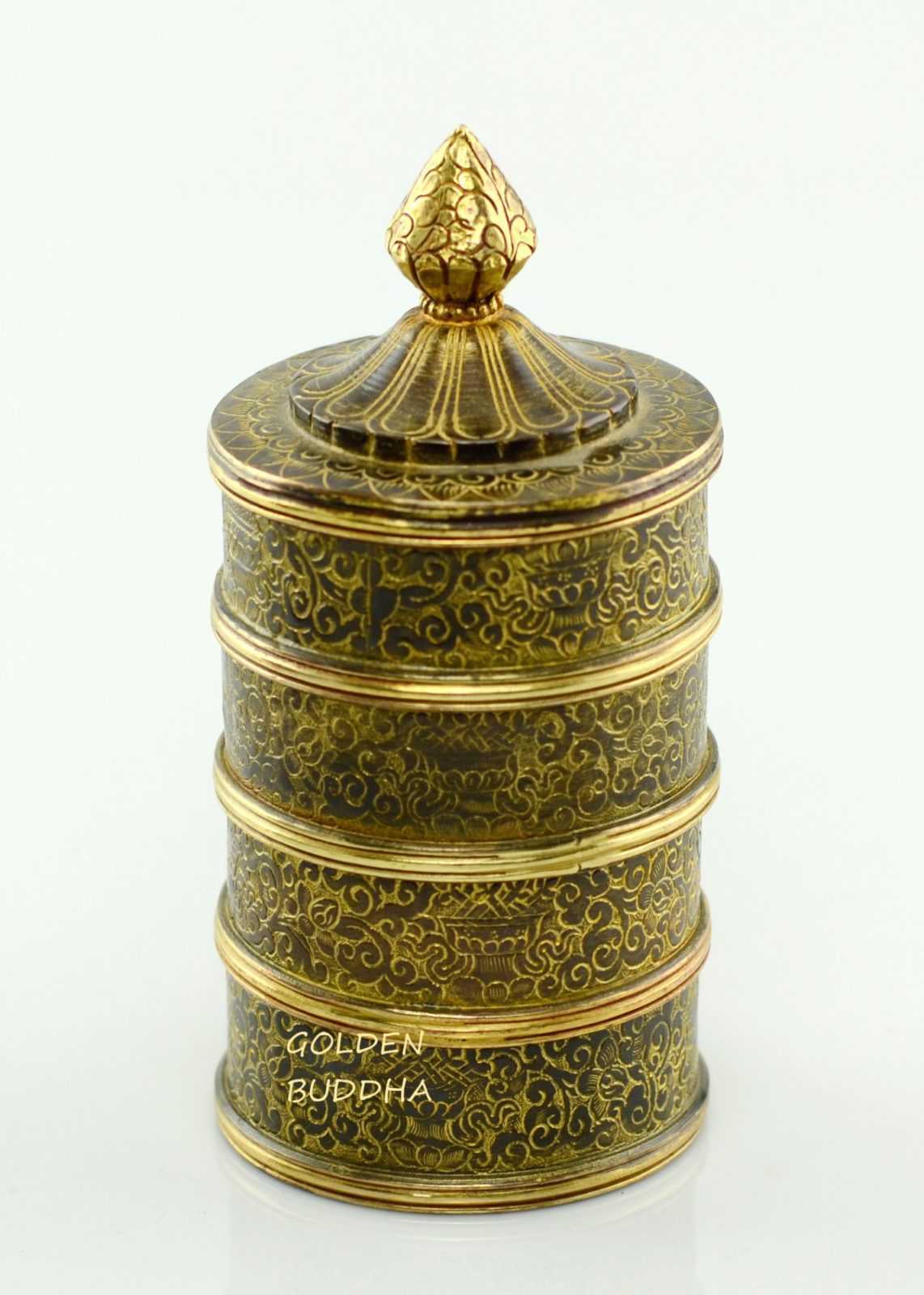
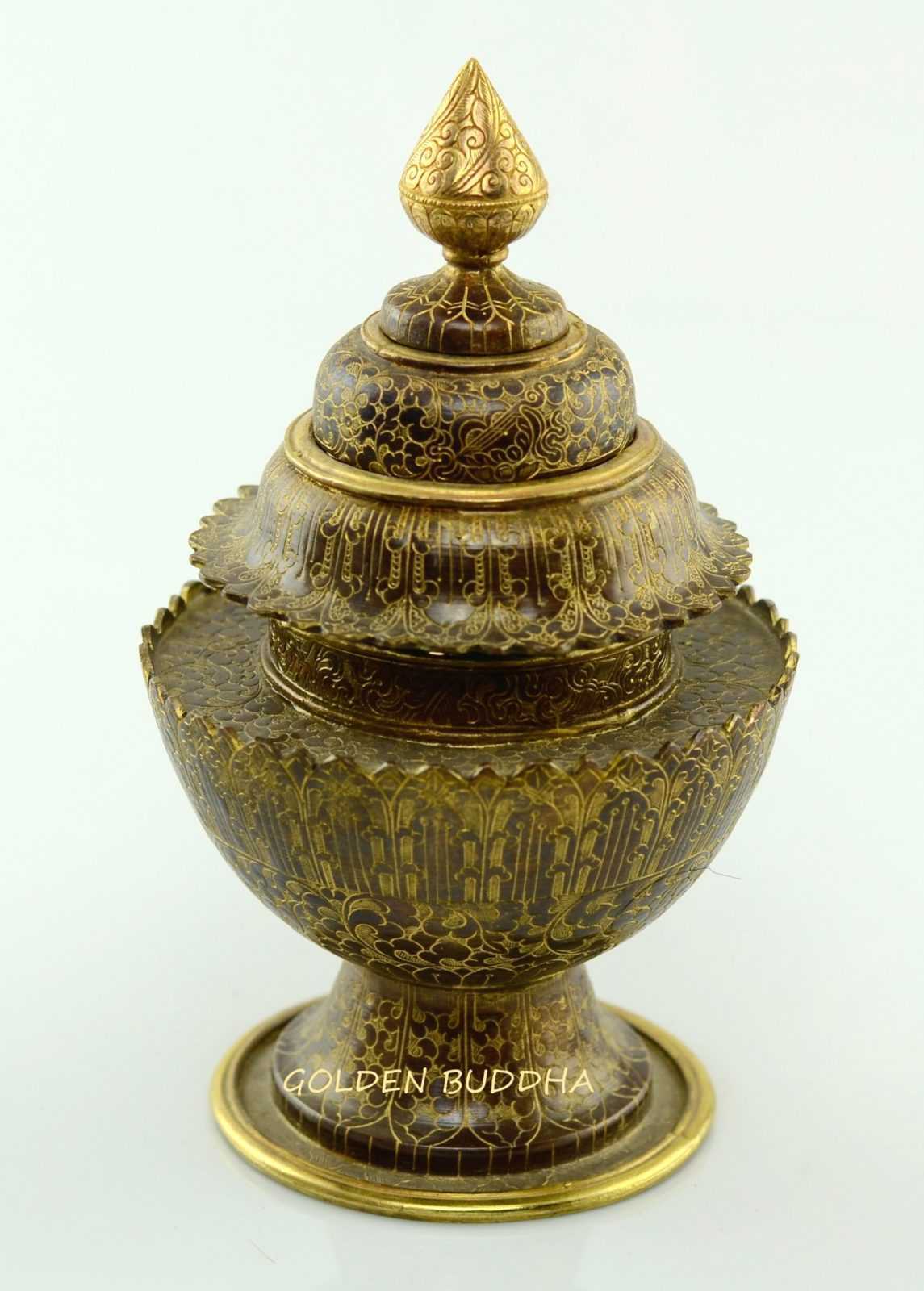
Two rarer vessels complete the offering group. The Japher set and the Nheshi set are Newar containers used to hold offerings presented during ceremony, the Nheshi specifically for offerings made to a deity, and each is built in separate pieces that come apart for filling. Neither is a common retail item – both were originally commissioned at the request of an advanced practitioner who came to us for them, and we have kept them in the collection since. Both are worked in oxidized copper alloy with hand engraving and 24K gold gilded detail.
The tantric implements are the instruments of Vajrayana ritual proper. The vajra and bell are held together in practice, the vajra in the right hand representing skilful means and the bell in the left representing wisdom, inseparable as the two wings of enlightenment. The phurba, or ritual dagger, has a three-sided blade used to pin down and transform obstacles. The chod damaru is the double-headed hand drum sounded in chöd practice, and the kapala, or skull cup, is used in the offerings that confront impermanence directly. Bhumpa sets hold the consecrated water used in empowerment ceremonies, mandala sets are used to make the symbolic offering of the entire universe, and the conch shell horn is sounded to call the assembly and proclaim the Dharma.
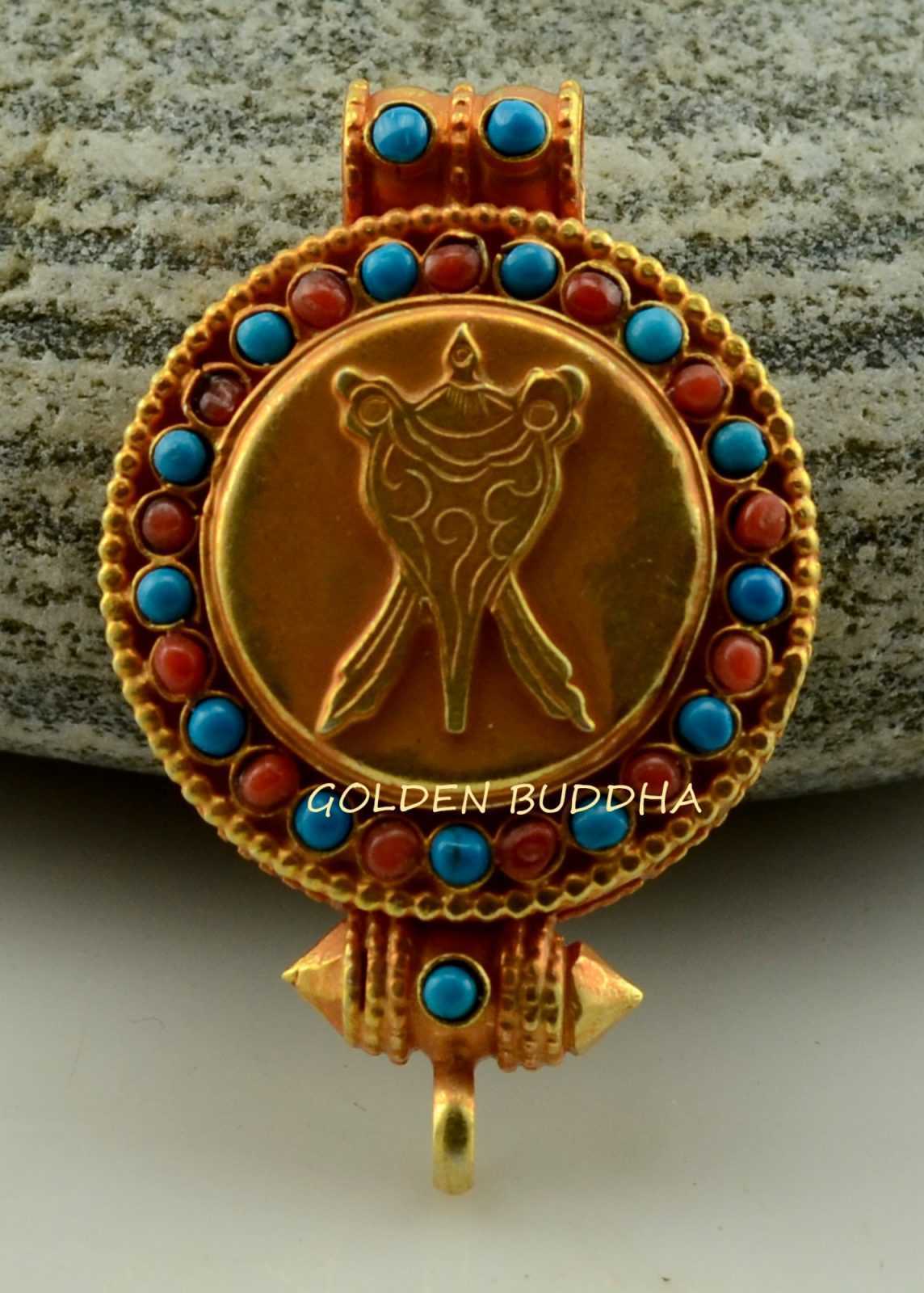
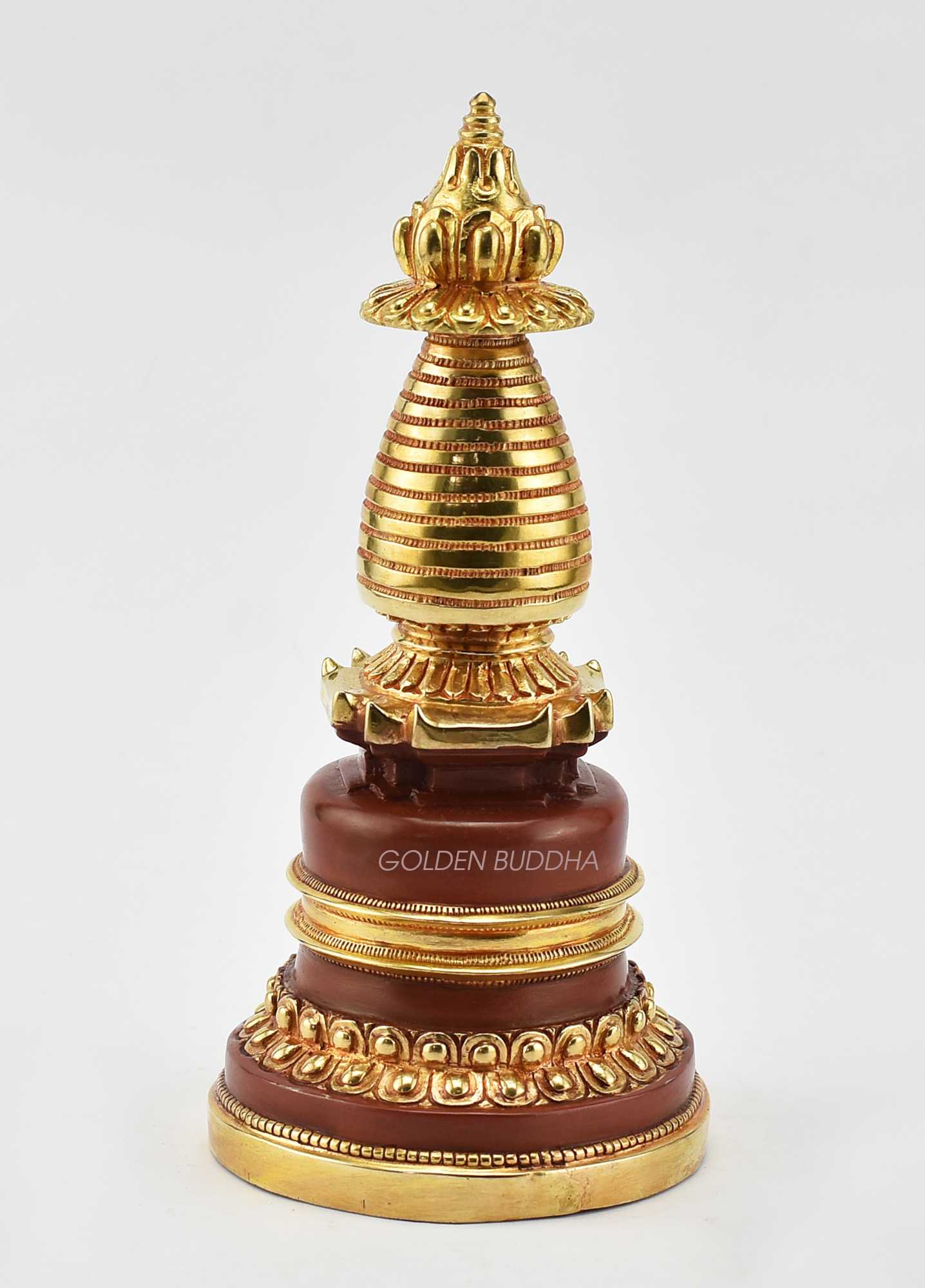
Two categories serve practice beyond the altar. Stupas, or chortens, are reliquary forms representing the enlightened mind of a Buddha, made here in traditional Kadam and other styles for shrine rooms and meditation spaces. Ghau pendants are portable shrines worn around the neck, made in gold plated silver and set with coral and turquoise – our range includes the eight auspicious symbols as individual pendants, from the white parasol and twin golden fish to the eternal knot and treasure vase, alongside Om Mani Padme Hum and deity designs.
Materials vary with function: most pieces are copper alloy, gold plated or fire gilded in 24K gold, some finished in silver plate or an antiqued patina, and many are set with semi-precious turquoise and coral. Prices start well below our statuary, with ghau pendants from around $69, making this the most accessible way to begin an altar or to give something meaningful to a practitioner. Every Tibetan ritual item is made by hand, so no two are identical. For a broader introduction to Buddhist practice and imagery, see our guides to the Buddhist pantheon and to filling and consecration.
Showing 1–12 of 101 resultsSorted by popularity
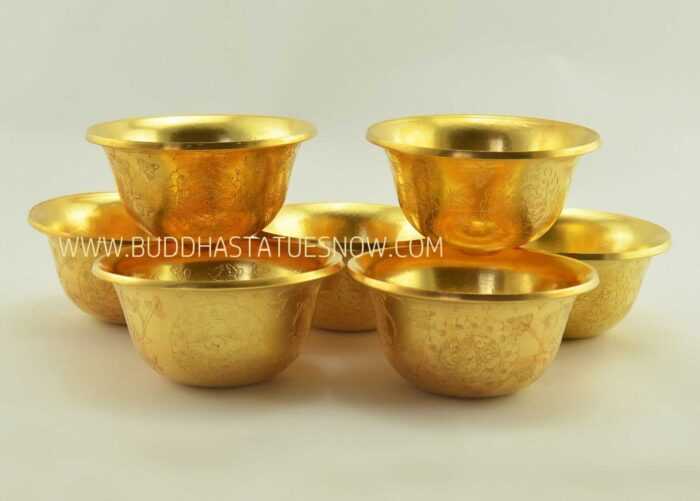
Gold Plated Offering Bowls | 3.5″ Set of Seven | Authentic Nepal
Original price was: $299.00.$189.00Current price is: $189.00.Add to Cart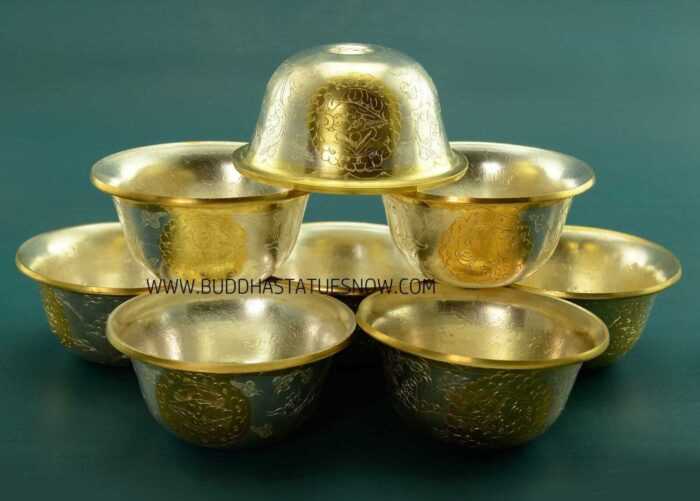
Silver and Gold Offering Bowls | 3.5″ Set of Eight | Auspicious Symbols
Original price was: $379.00.$229.00Current price is: $229.00.Add to Cart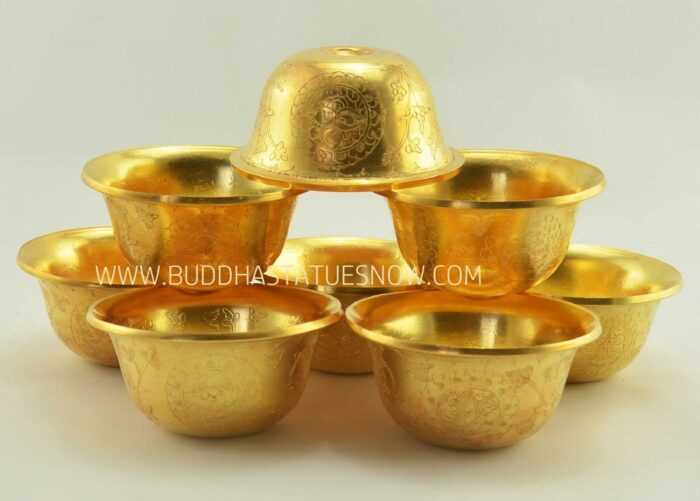
Gold Plated Tibetan Offering Bowls | 3.5″ Set of Eight | Patan, Nepal
Original price was: $299.00.$199.00Current price is: $199.00.Add to Cart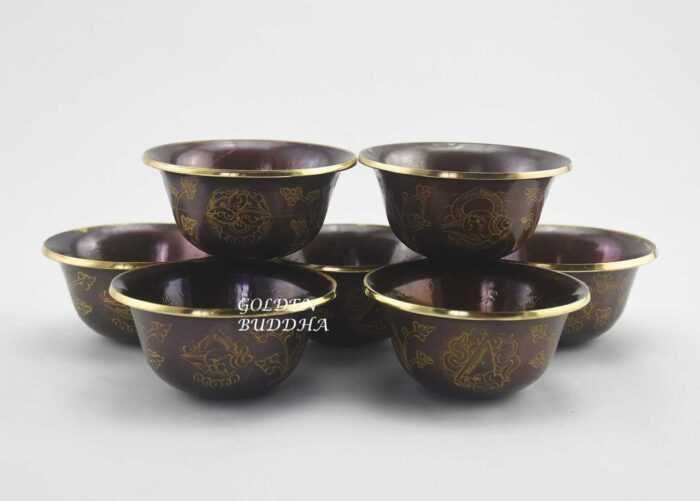
Seven Tibetan Offering Bowls Set 2.75″ | Oxidized, 24K Gold Details
Original price was: $269.00.$169.00Current price is: $169.00.Add to Cart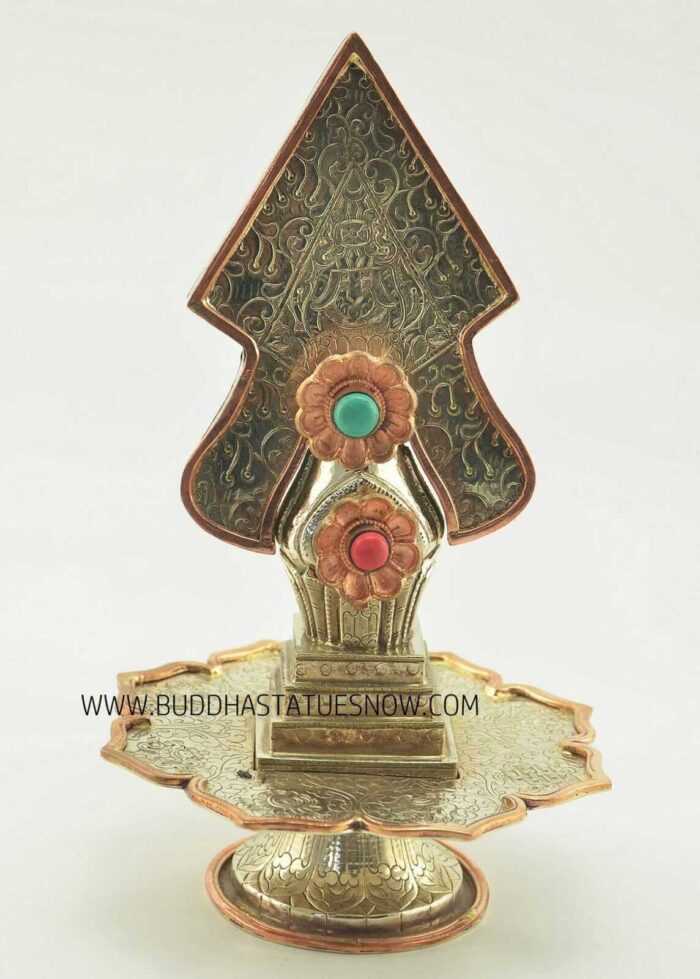
8″ Offering Torma Hand Carved White Metal w/Copper Rings, Colored Stones
Original price was: $309.00.$209.00Current price is: $209.00.Add to Cart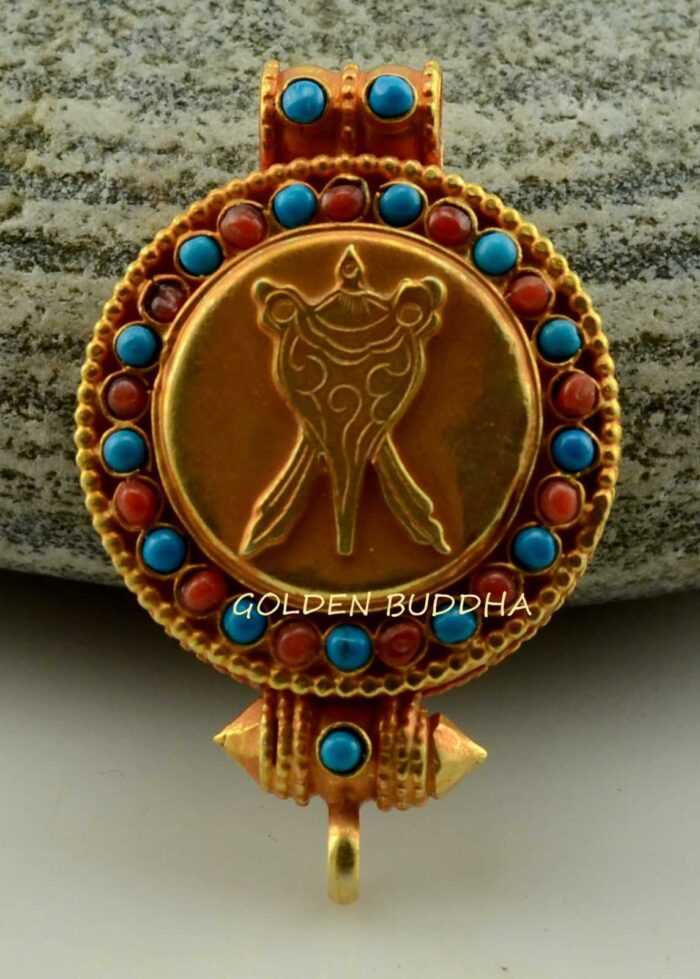
Conch Shell Ghau Pendant 44mm, Gold Plated Silver, Coral and Turquoise
Original price was: $99.00.$69.00Current price is: $69.00.Add to Cart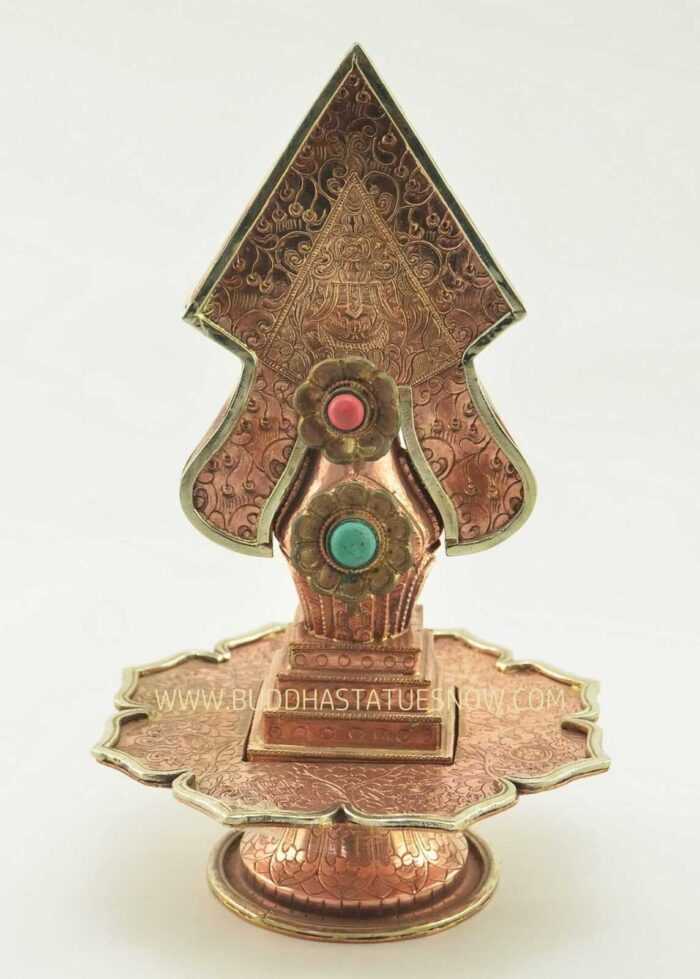
8″ Offering Torma Fine Hand Carving, White Metal Rings w/Semiprecious Stones
Original price was: $339.00.$209.00Current price is: $209.00.Add to Cart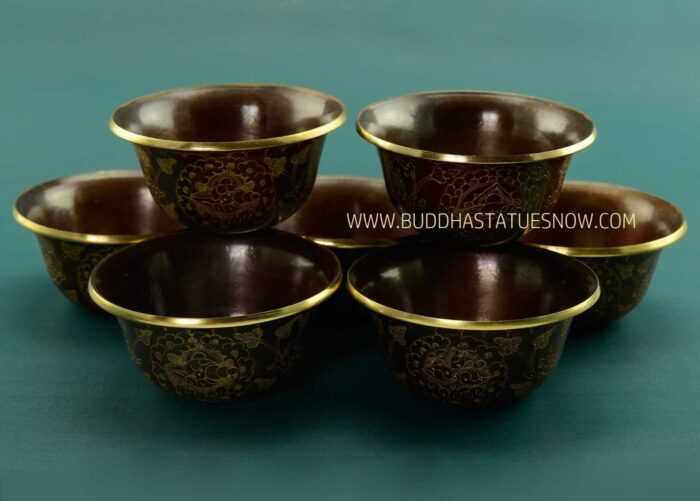
Oxidized Water Offering Bowls | 3.5″ Set of Seven | 24K Gold Detail
Original price was: $349.00.$239.00Current price is: $239.00.Add to Cart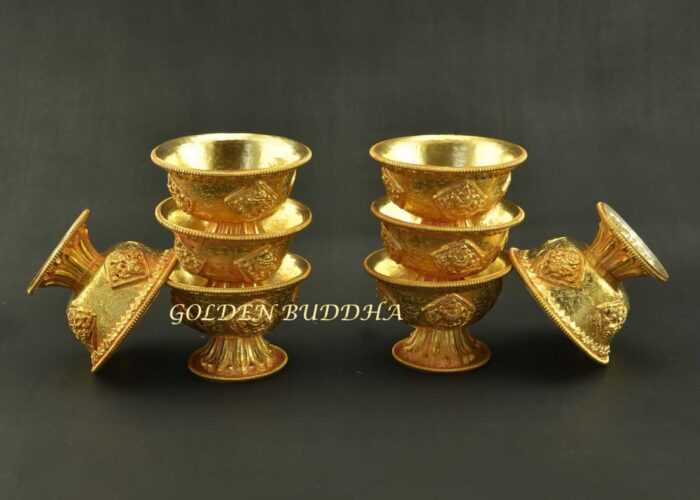
Tibetan Offering Bowls Set with Stand 3.25″ | 8 Gold Plated Bowls
Original price was: $399.00.$299.00Current price is: $299.00.Add to Cart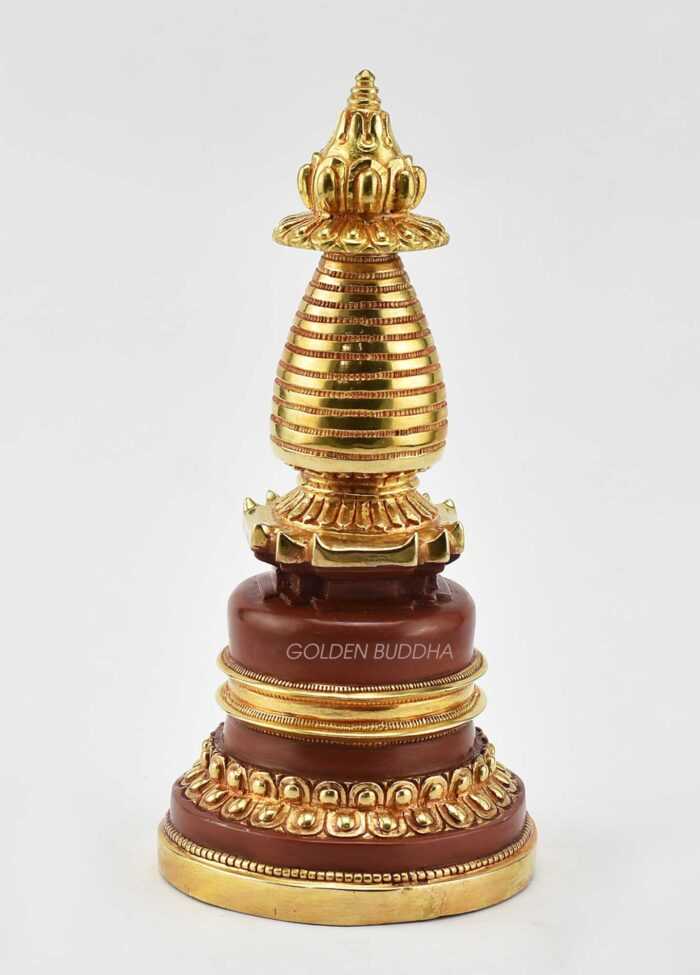
7.75″ Kadam Style Stupa, 24K Gold Finish, Handmade in Nepal
Original price was: $639.00.$389.00Current price is: $389.00.Add to Cart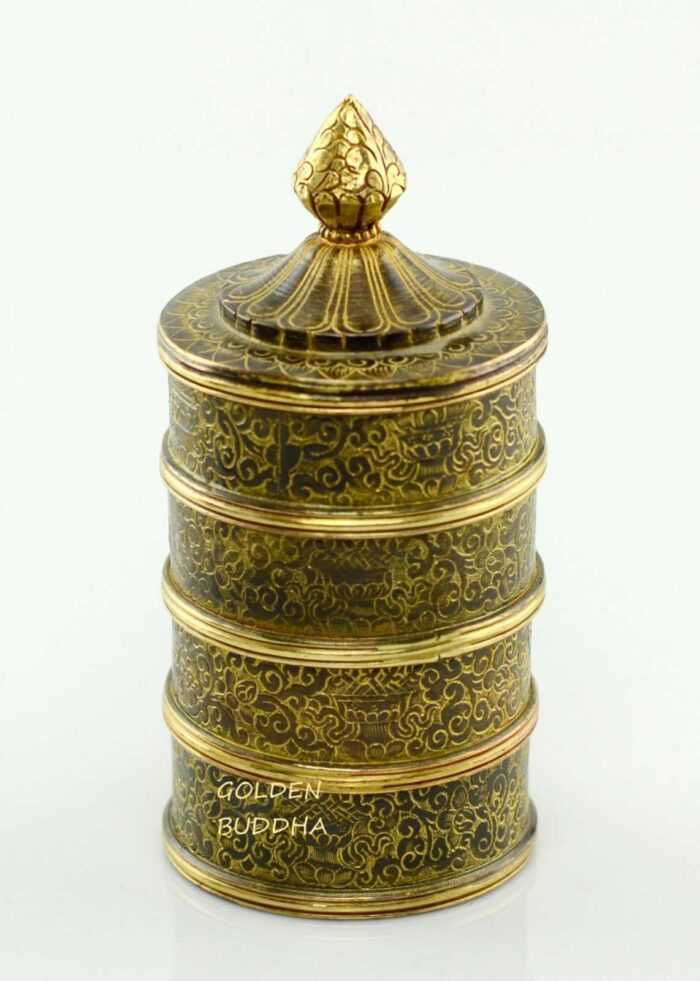
5.75″ Japher Set (Oxidized Copper Alloy and 24K Gold Gilding)
Original price was: $339.00.$239.00Current price is: $239.00.Add to Cart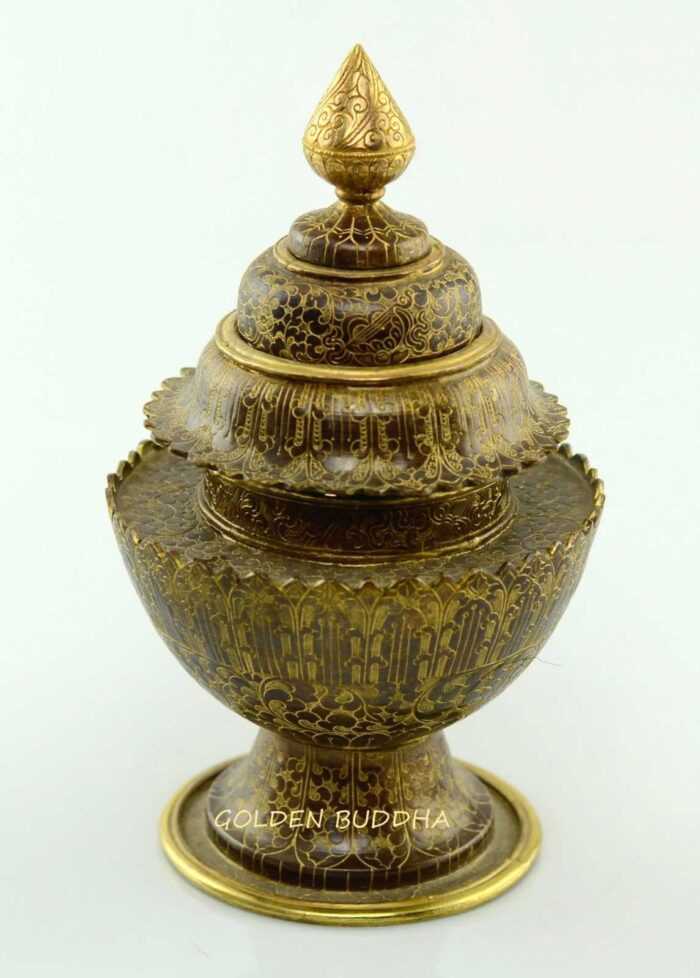
7″ Nheshi Set (Oxidized Copper Alloy and 24K Gold Gilding)
Original price was: $459.00.$299.00Current price is: $299.00.Add to Cart