


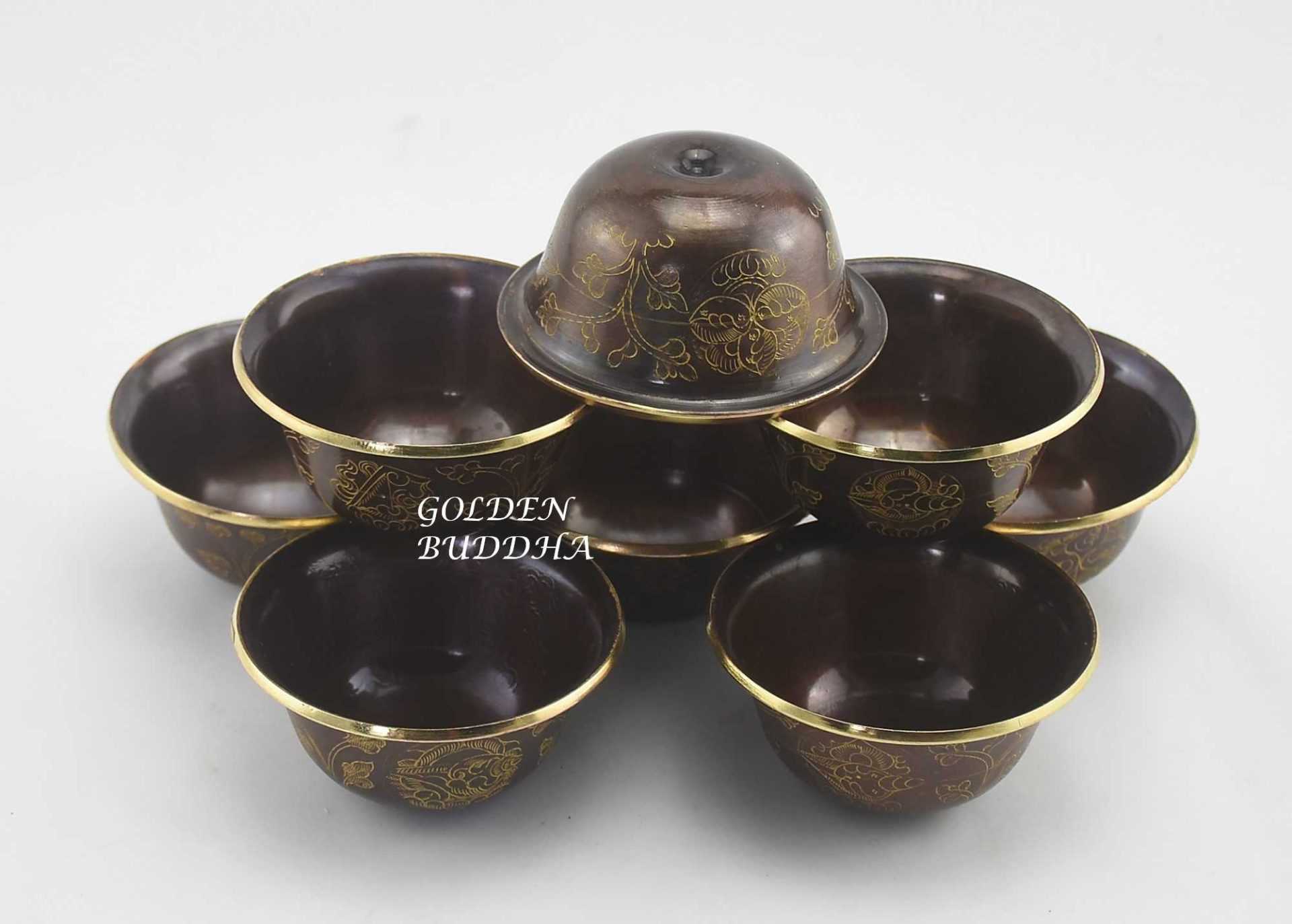


Traditionally there are seven offering substances: water for drinking, water for bathing, flowers, incense, light, perfume and food. In daily practice, a set of eight Tibetan offering bowls filled with pure water are commonly substituted for all of them — water because it is plentiful and costs nothing, which means it can be offered without the faintest trace of reluctance. That is the whole point. Tibetan Buddhists visualise the water as pure nectar, and devotees are encouraged to give away time and possessions as freely as they would pour it out. A set of eight Tibetan offering bowls on the altar makes that a daily exercise rather than an occasional intention.
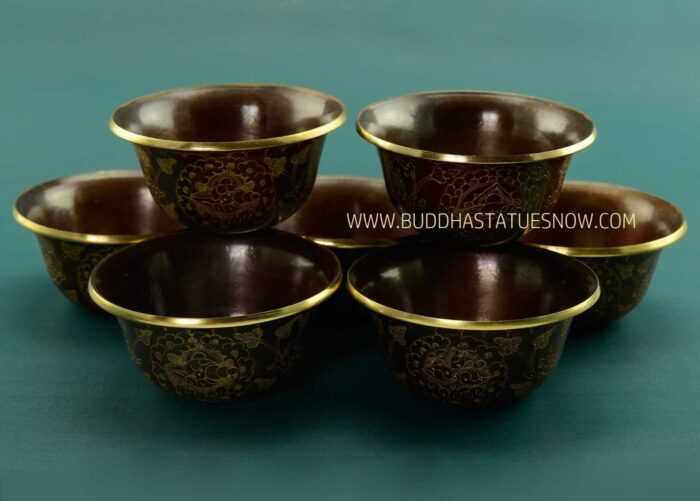
Set of Eight Tibetan Offering Bowls – Oxidized Copper with Fire Gilded Detail
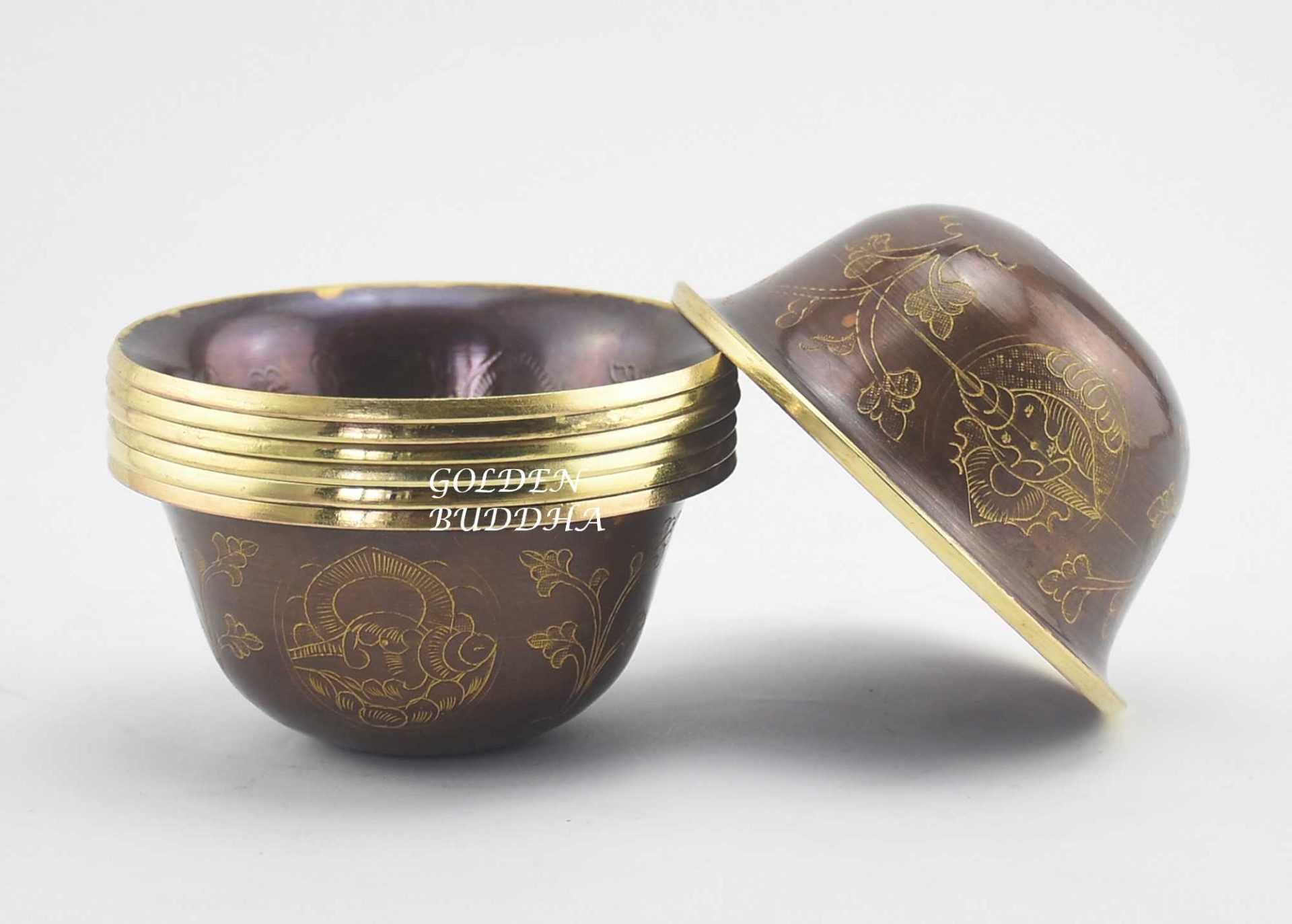
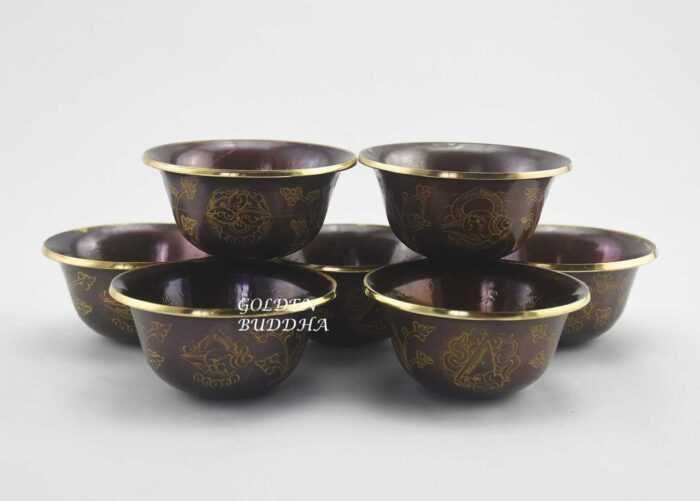
These eight offering bowls are finished in a deep antiquated copper, with the raised detailing fire gilded in 24 karat gold — the traditional method, in which the gold is fused to the prepared copper surface rather than laid over it, giving a warmer and more durable finish than plating. The contrast does the work: darkened copper throws the gilded engraving forward, so the carving reads clearly even at this scale. Each bowl measures 2.75 inches across the rim, tapering to 1.75 inches at the foot, and stands 1.5 inches high — a compact profile that suits a shelf shrine or a personal altar where a larger row would crowd the central image.
Handmade in Patan, Nepal
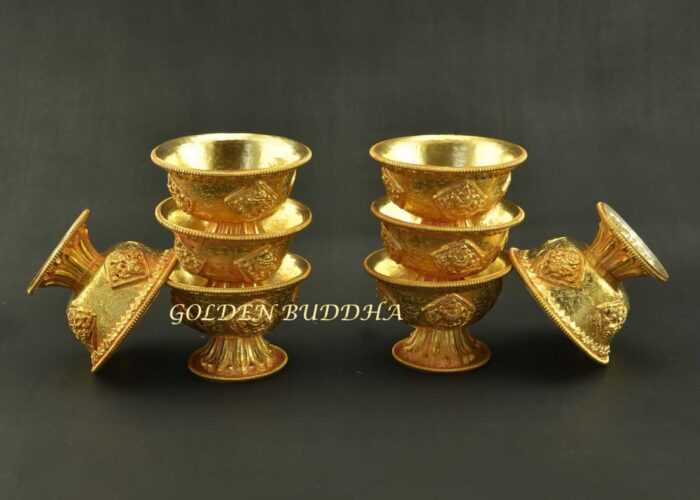
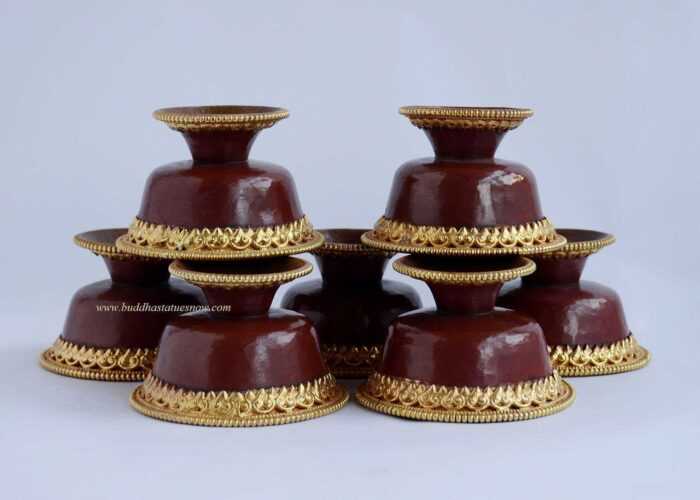
Every bowl in this set of eight Tibetan offering bowls is engraved by hand by the artisans of Patan, whose families have supplied the Tibetan monasteries for generations — so the depth and rhythm of the carving varies slightly from bowl to bowl, as it should. In use, the bowls are set out in a row each morning, filled with clean water, then emptied, dried and stacked inverted at the end of the day. Browse our full range of water offering bowls, or pair them with butter lamps for the offering of light.
Authentic, Handmade in Nepal
Every ritual item is handcrafted in Patan, Nepal, using traditional Newar metalworking and carving methods and comes with a certificate of authenticity issued by Nepal’s Department of Archaeology, verifying its materials, technique, and origin.
Reviews
There are no reviews yet.