
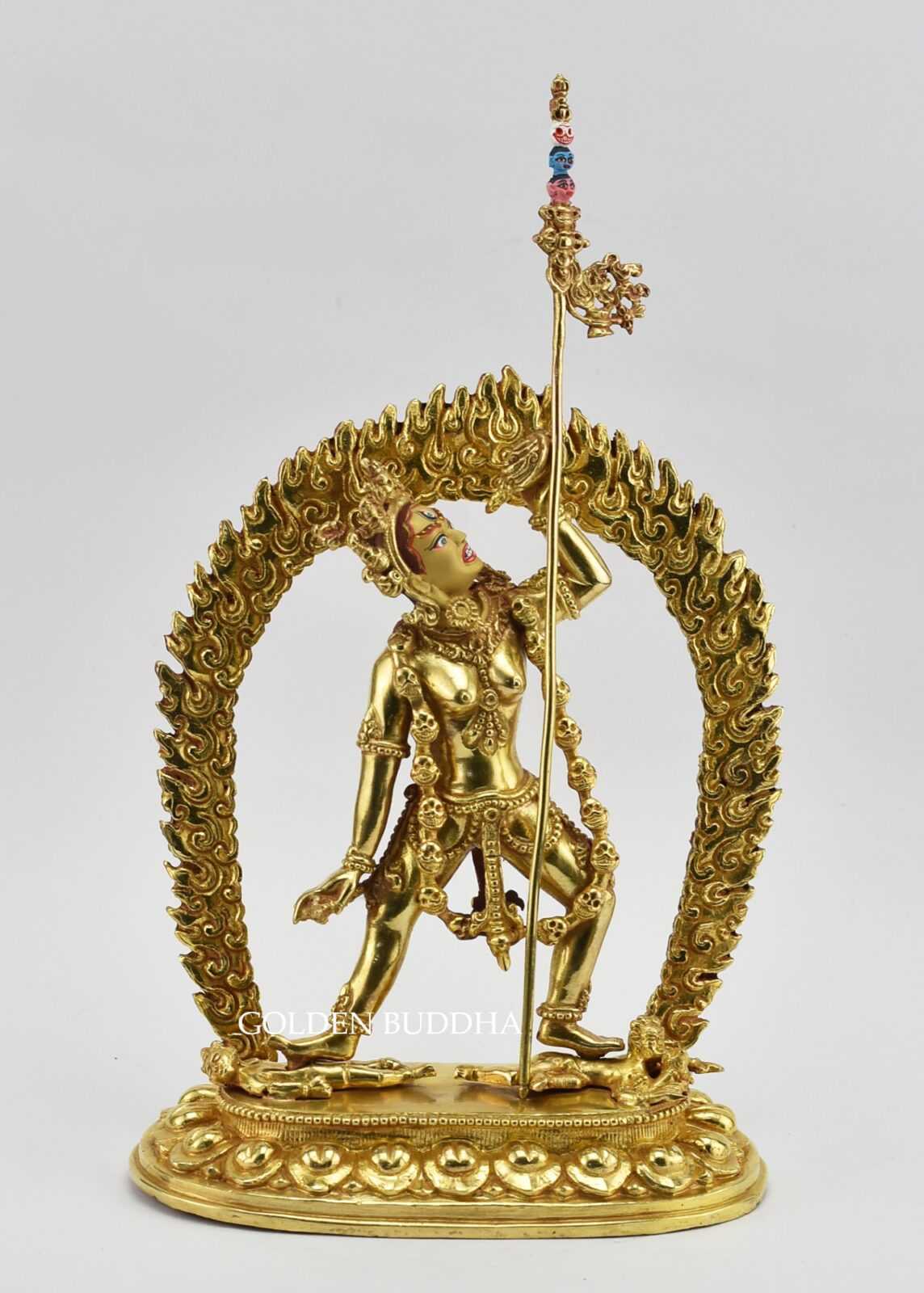
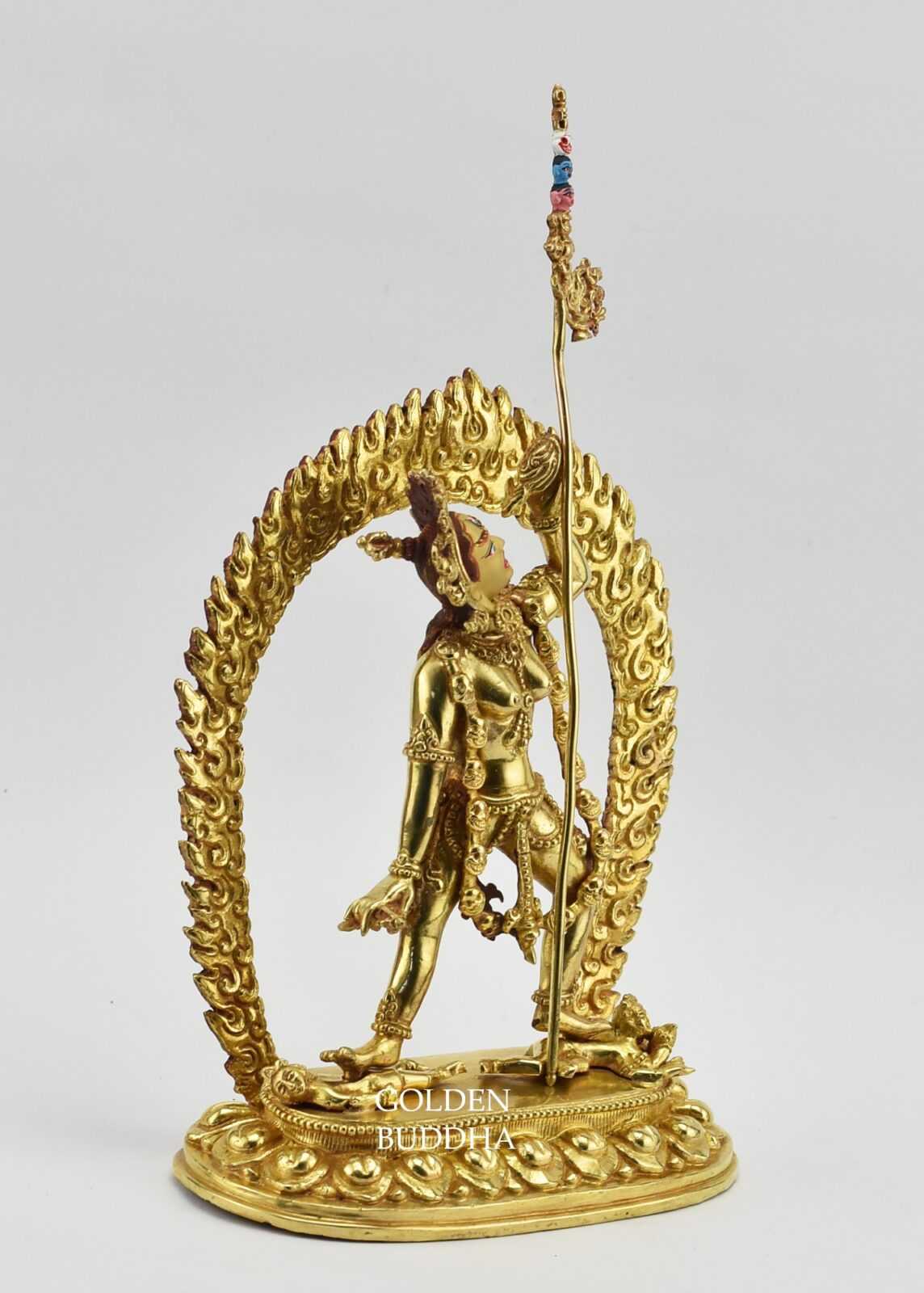


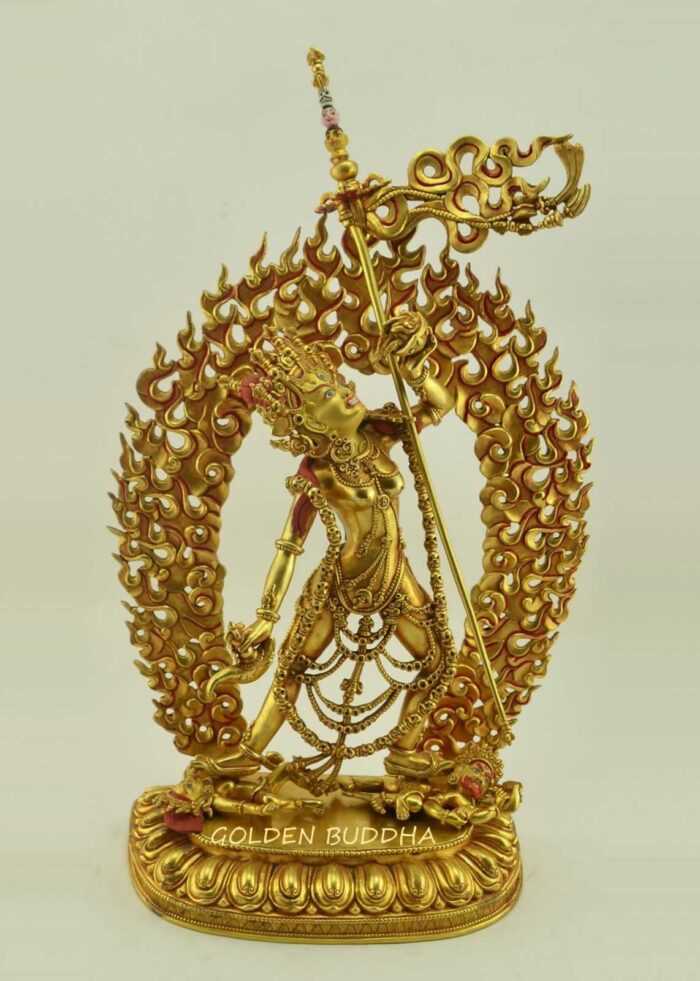
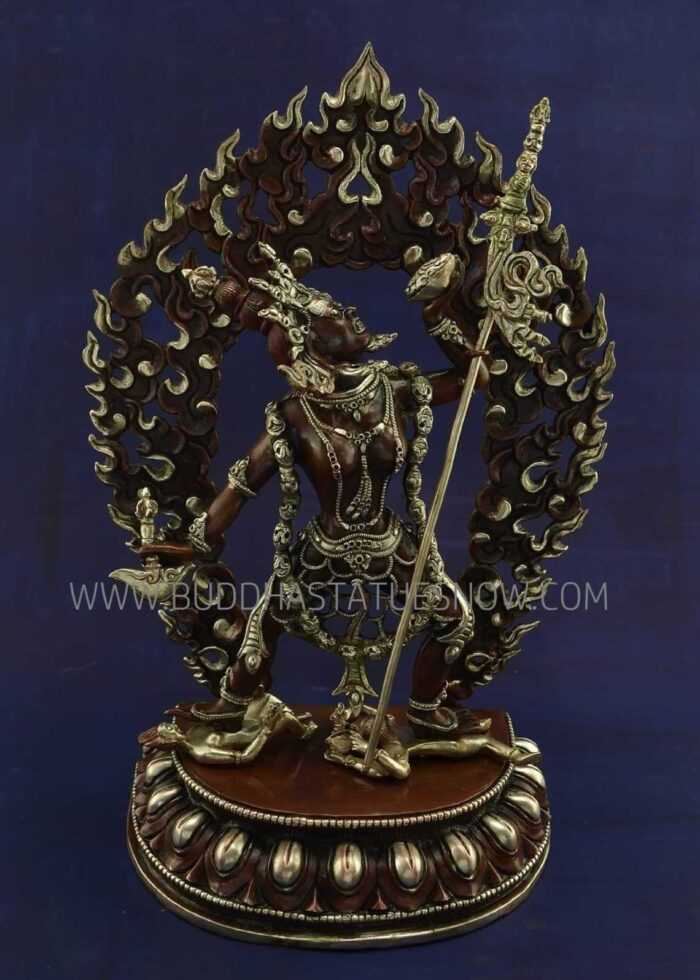
This 7.25″ Vajrayogini statue is fully fire gilded in 24K gold with semi-precious stones embedded in the crown and jewels, handcrafted in Patan, Nepal by master Newar artisans using the traditional lost wax sculpting method, with the face hand-painted. At 7.25″ this is a compact personal altar size — the right scale for a dedicated home shrine or travel practice where a complete Vajrayogini presentation is desired in a smaller format. At the buyer’s request, additional turquoise and red coral stones can be inserted into the crown and jewels at no extra charge before shipping. Have questions about Vajrayogini statues? Read our Dakini statues FAQ, covering Vajrayogini iconography, the difference between Vajrayogini and Vajravarahi, and choosing the right statue for your practice.
The colored stones carry specific symbolic meaning in Tibetan Buddhist tradition. Meditation on the color red is associated with the transformation of desire — including, in Tantric practice, the specific transmutation of worldly desire into the bliss-wisdom that Vajrayogini herself embodies. Turquoise combines the blue of the Buddhas (purity, Dharmakaya) with the green of active compassion and readiness, making it particularly appropriate for a Dakini statue whose entire iconography is oriented toward immediate, unobstructed action.
Vajrayogini is a fully enlightened Tantric Buddha who embodies the inseparability of great bliss and emptiness — free from ignorance, attachment, and self-referential craving, working entirely for the benefit of beings. She is surrounded by the flames of pristine awareness and gazes upward toward the Pure Land of the Dakinis — the defining posture of the Naro Kacho form. She wears a necklace of 50 fresh skulls over her shoulders (representing the 50 Sanskrit letters, signifying the transmutation of all conceptual activity into enlightened speech) and a crown of five skulls representing the transformation of the five Kleshas (afflictive emotions) into the five wisdoms. The khatvanga staff leans against her left shoulder — its presence signifying her inseparable union with her consort Chakrasamvara (Heruka) — with three skulls impaled at the tip representing liberation from the three worlds of desire, form, and formlessness.
Vajrayogini Statue Features
In her right hand Vajrayogini holds the kartika (curved flaying knife) to permanently sever ego and conceptual thought at its root. In her left hand she holds the kapala (skull cup) — traditionally filled with blood in ritual contexts, signifying the transmutation of ordinary experience into bliss-wisdom and the deity’s complete transcendence of impermanence. She stands with her right foot on the principal worldly goddess Kalarati and her left foot on the principal worldly god Bhairava, symbolizing her complete transcendence of all worldly attachment and the conditions of samsara. The wrathful emanation of Vajrayogini — identifiable by the sow’s head rising above her right ear — is Vajravarahi, her fully wrathful form within the Chakrasamvara cycle.
Authentic, Handmade in Nepal
Every statue is handcrafted in Patan, Nepal, using traditional lost wax casting and comes with a certificate of authenticity issued by Nepal’s Department of Archaeology, verifying its materials, technique, and origin.
Reviews
There are no reviews yet.