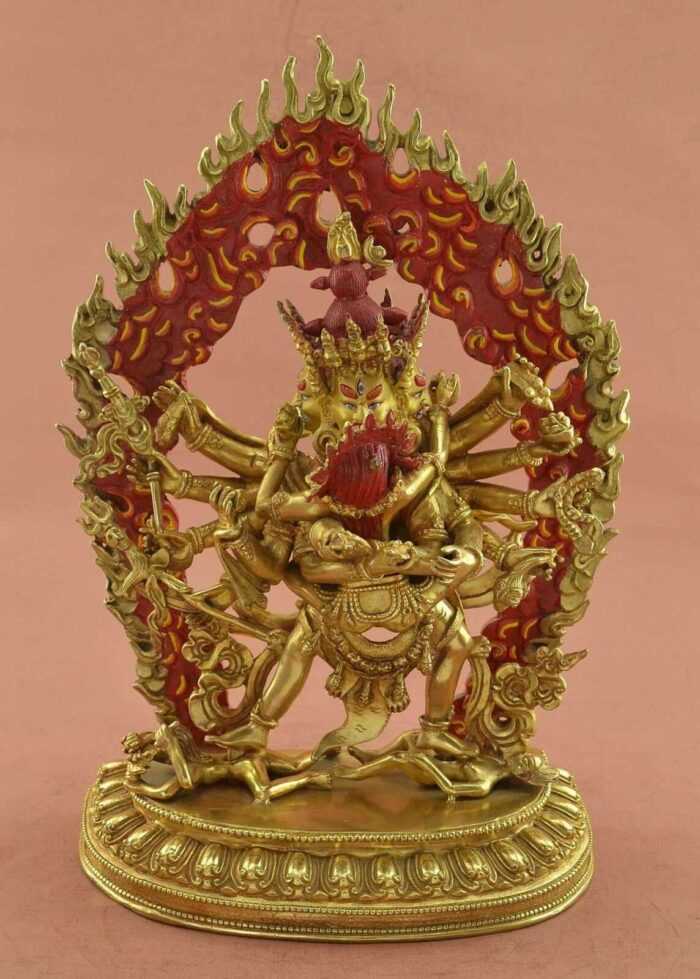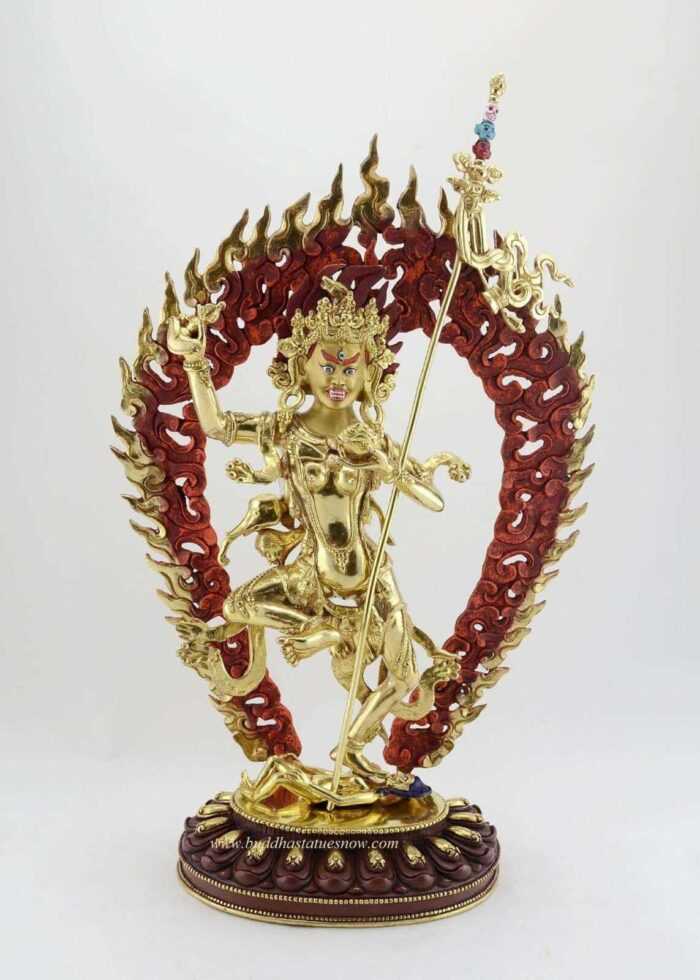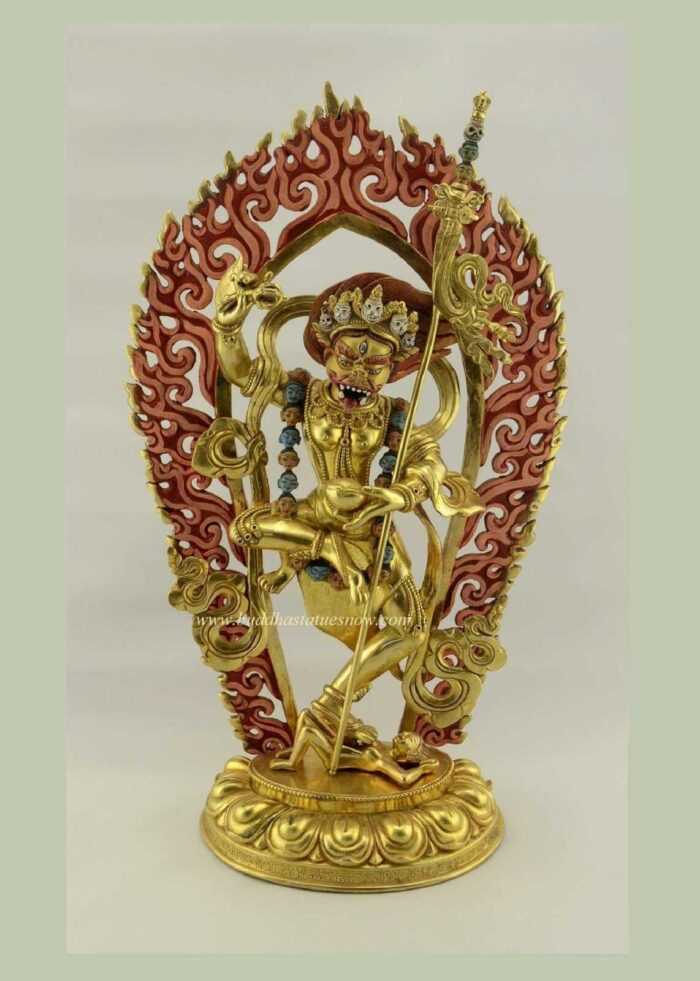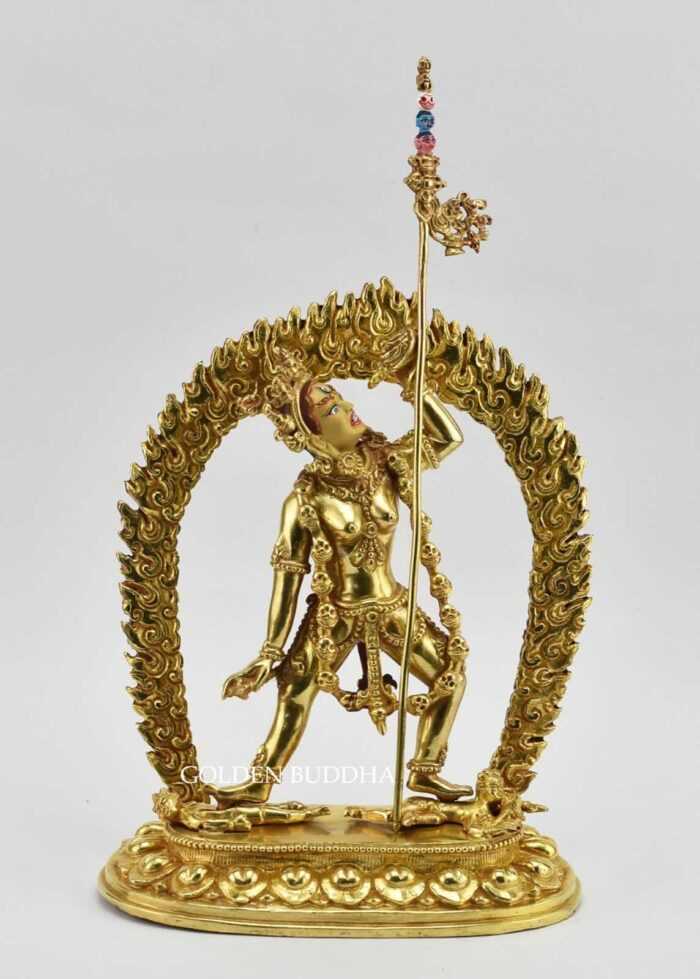

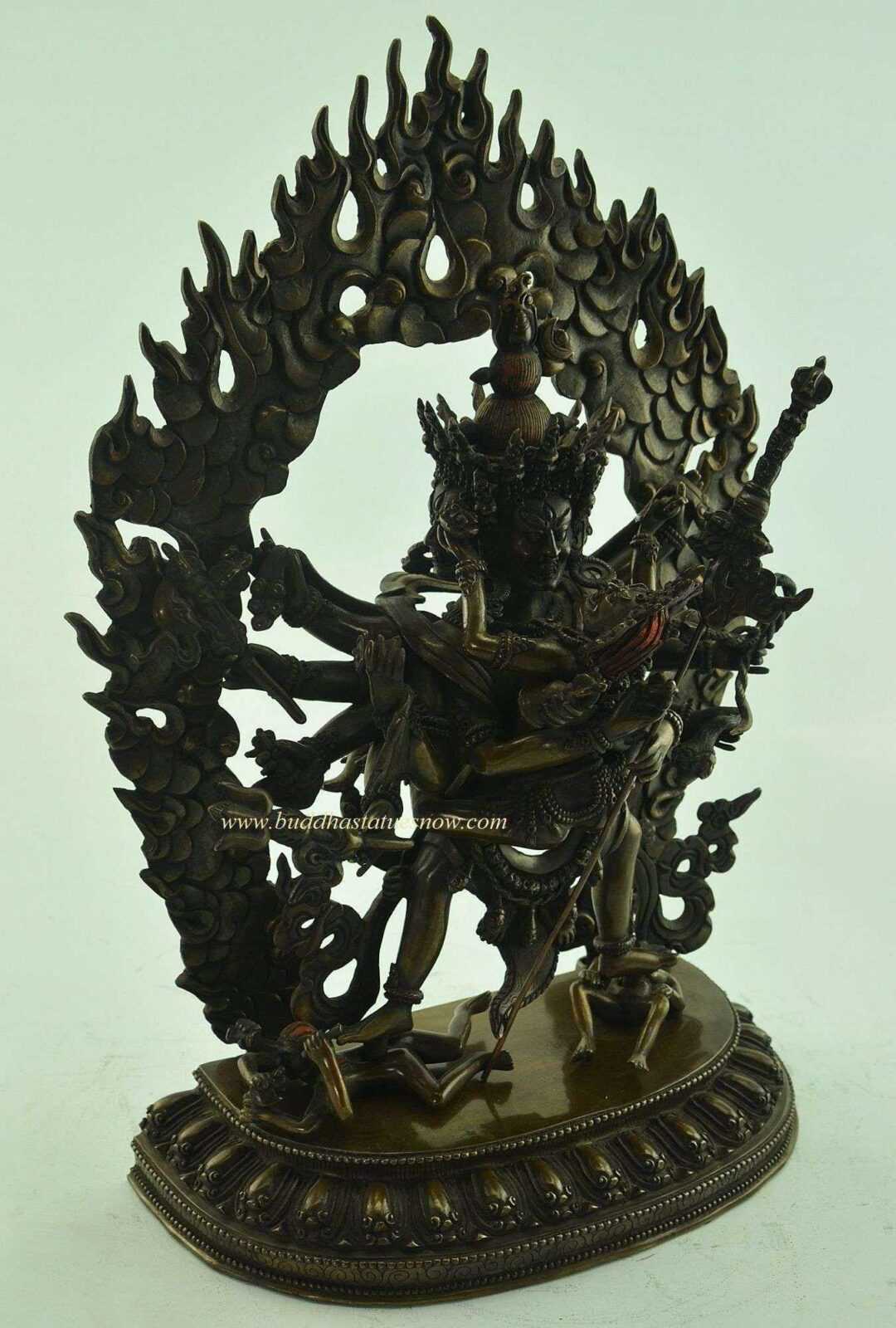
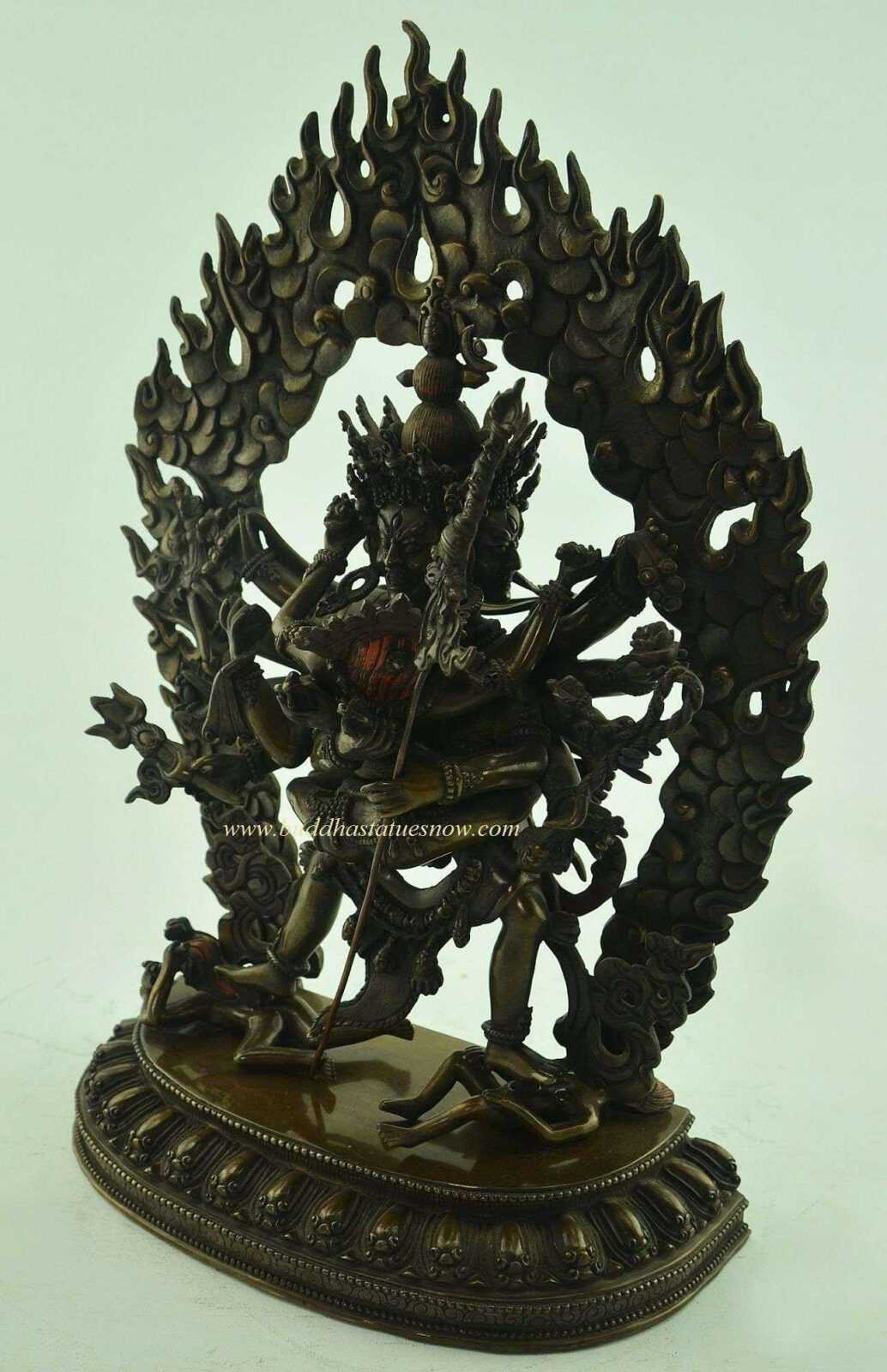
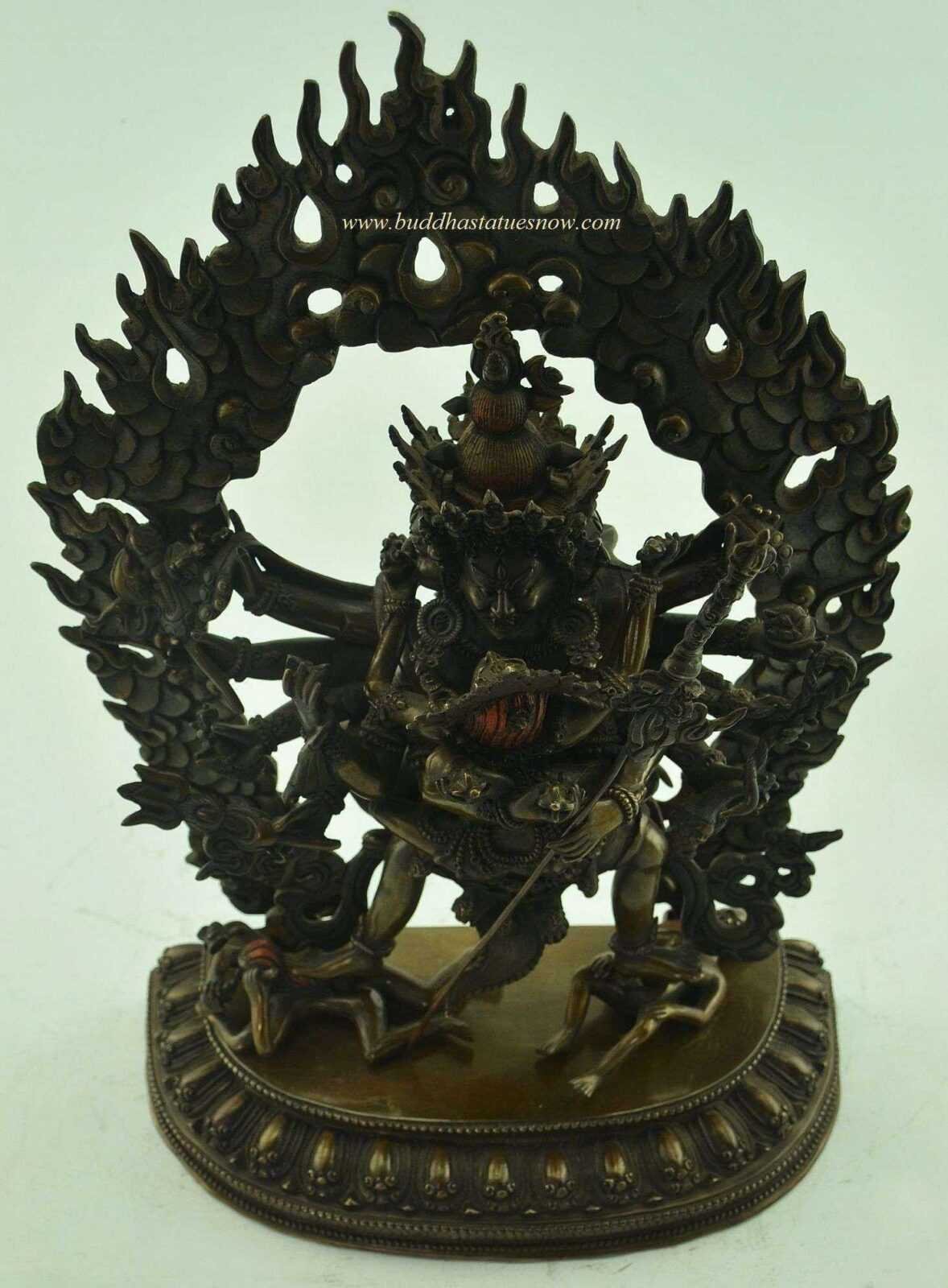
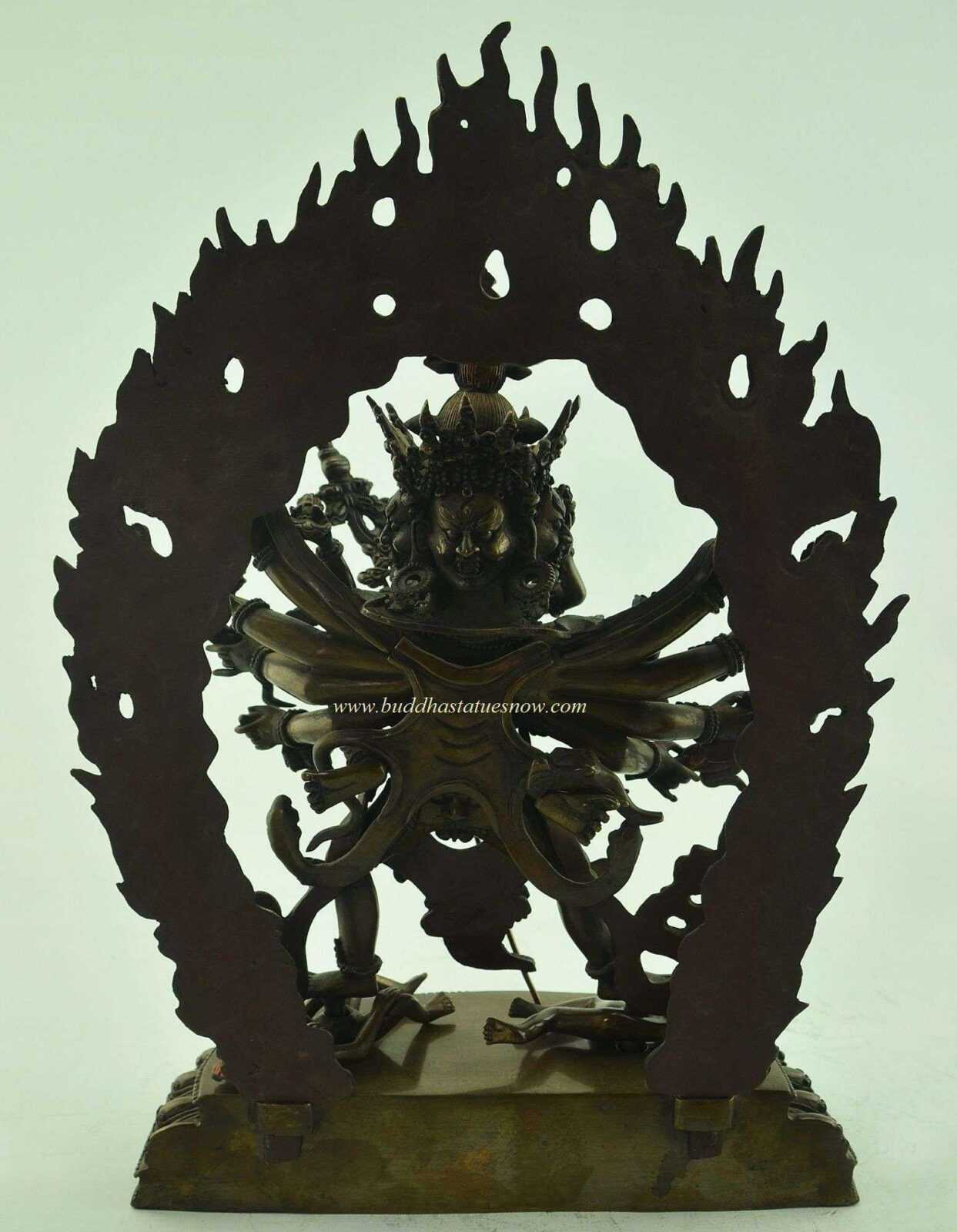
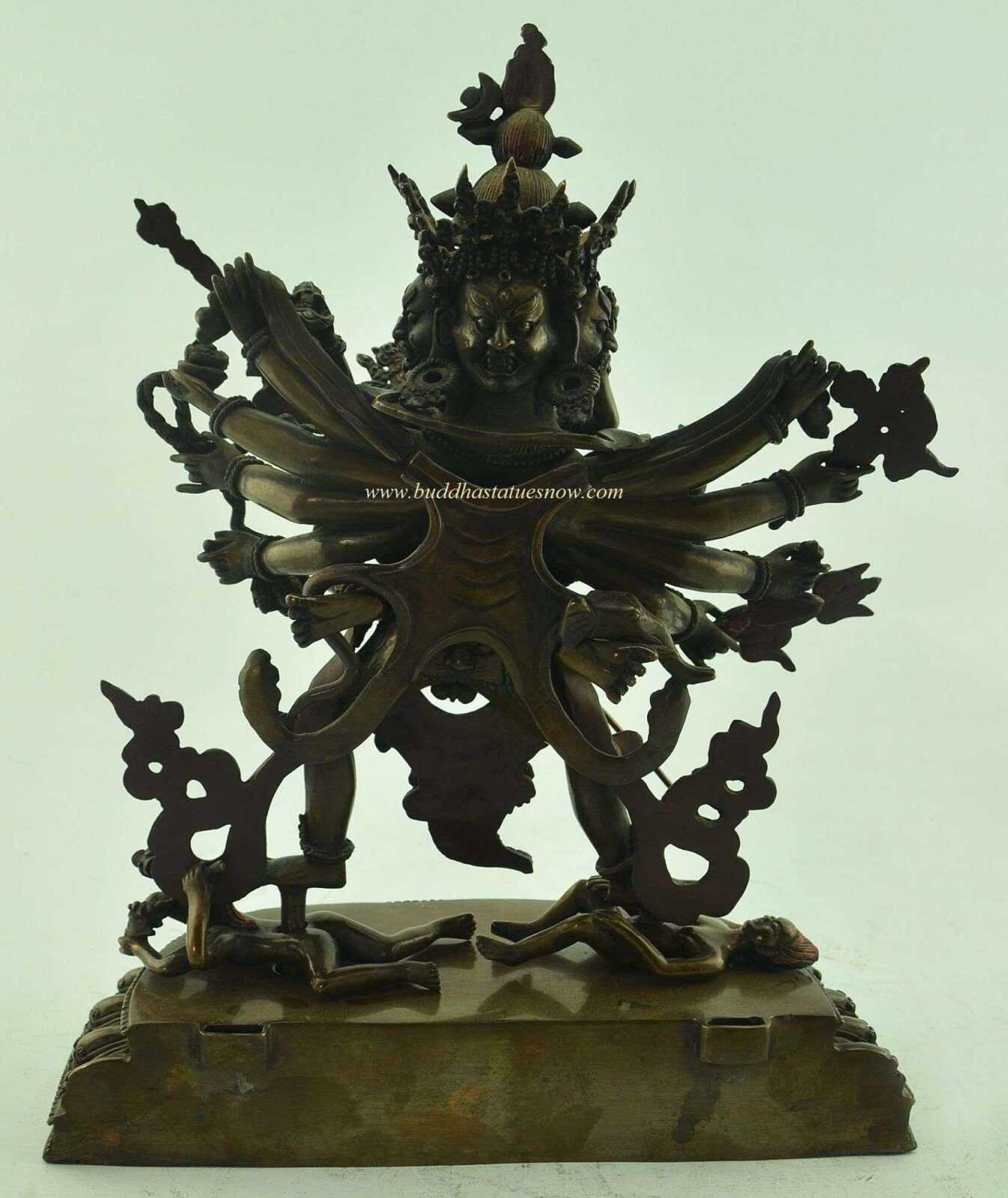
This 13.5″ Chakrasamvara yab-yum statue is finished in an antiquated oxidized copper treatment — the complex multi-armed composition, flame mandorla, and round lotus throne all in a single warm dark patina — presenting Chakrasamvara in his complete 12-armed, 4-faced form with consort Vajravarahi. The antiquated finish gives the piece the contemplative, aged quality of a monastery altar figure that has been present in practice for generations. The statue was handcrafted in Patan, Nepal by master Newar artisans using the traditional lost wax sculpting method — the Shakya artisans of Patan have supplied sacred sculpture to Tibetan Buddhist institutions for centuries. Chakrasamvara holds the vajra (compassionate method) and ghanta bell (wisdom/emptiness) in his two principal hands wrapped around Vajravarahi, the union of these two instruments in their embrace expressing the non-dual ground of full enlightenment.
The 12 arms of Chakrasamvara carry a specific iconographic meaning: each arm corresponds to one of the 12 links of dependent origination (dvādaśāṅga pratītyasamutpāda) — the chain of ignorance, karmic formation, consciousness, name-and-form, the six sense bases, contact, feeling, craving, grasping, becoming, birth, and aging-and-death that constitutes the full mechanism of cyclic existence. The 12 arms represent Chakrasamvara’s complete liberation from each link in the chain — his enlightened awareness no longer caught in any stage of the cycle that drives ordinary beings through endless rebirth. The two figures stand on the prostrate forms of Bhairava and Kalarati, who in this context represent the extremes of existence and non-existence — eternalism and nihilism — the two conceptual errors that the Middle Way transcends. Chakrasamvara and Vajravarahi stand above both, embodying the Great Bliss that is beyond both affirmation and negation.
Chakrasamvara Statue Features
Each of the 4 faces of Chakrasamvara wears a crown of 5 skulls — the five skulls representing the five aggregates of ordinary existence (form, feeling, perception, mental formations, consciousness) that have been overcome, and simultaneously the five poisons (ignorance, desire, aversion, pride, jealousy) that have been transformed into the five transcendent wisdoms of enlightened awareness. Both Chakrasamvara and Vajravarahi wear necklaces of 50 human heads — representing the 50 Sanskrit seed syllables through which all phenomena are expressed in the Tantric system: wearing them declares that the deity has mastered the totality of conceptual appearance, that no ordinary perception or conception can arise for them outside the ground of enlightened awareness. The antiquated finish across the complete composition gives the iconographic complexity of this statue the unified, sombre quality of a deeply serious practice support.
Authentic, Handmade in Nepal
Every statue is handcrafted in Patan, Nepal, using traditional lost wax casting and comes with a certificate of authenticity issued by Nepal’s Department of Archaeology, verifying its materials, technique, and origin.