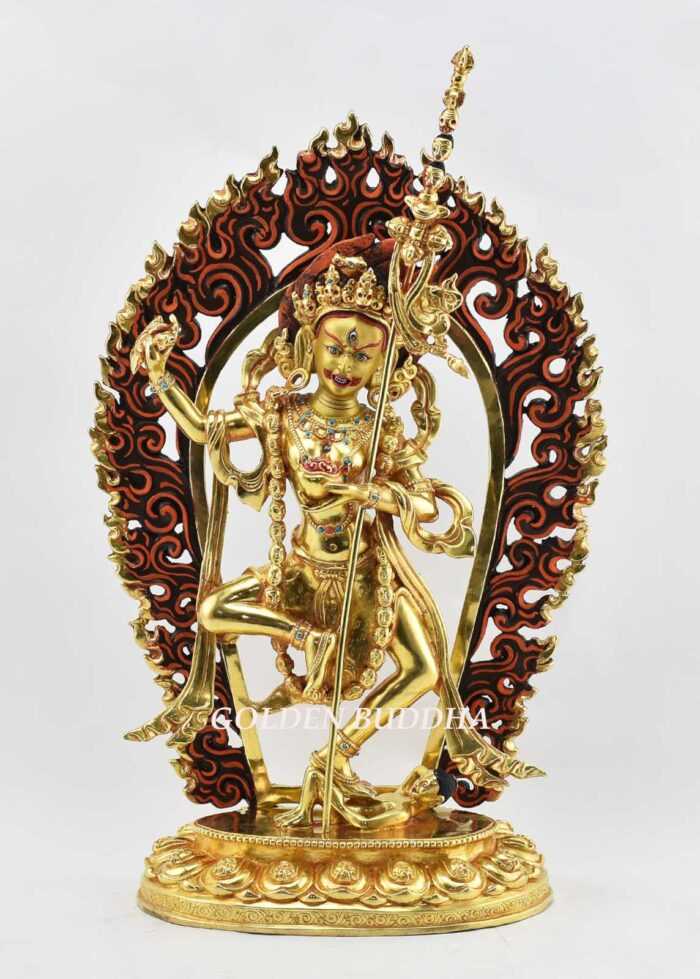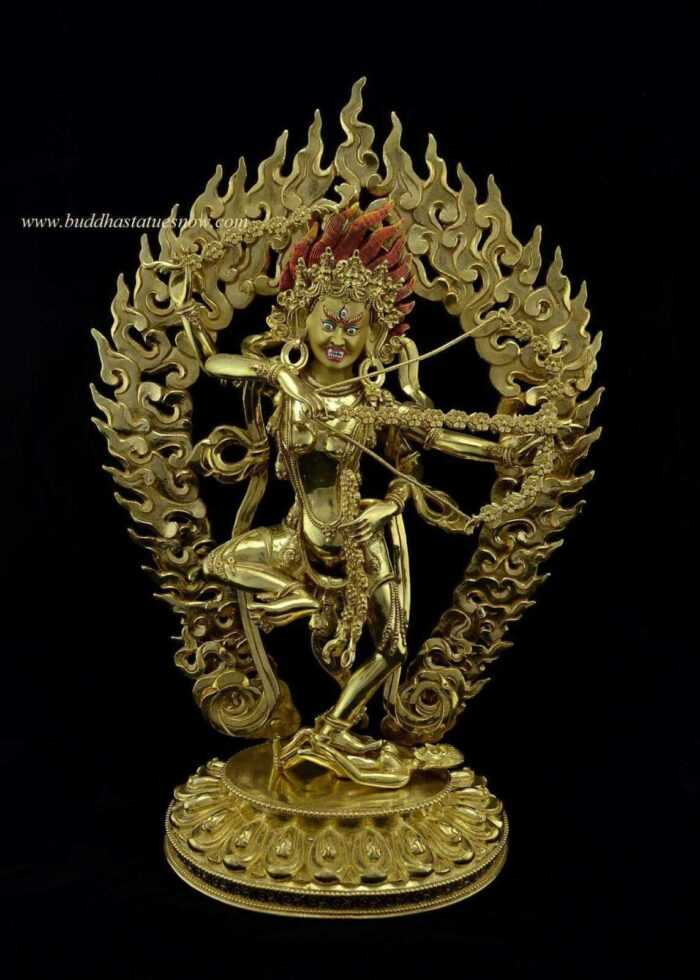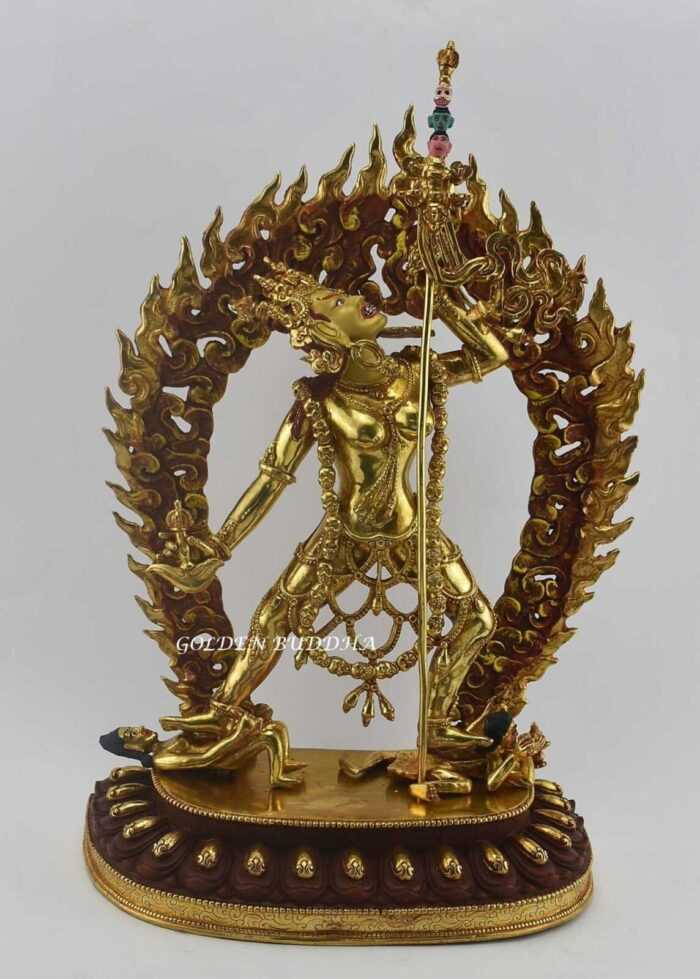
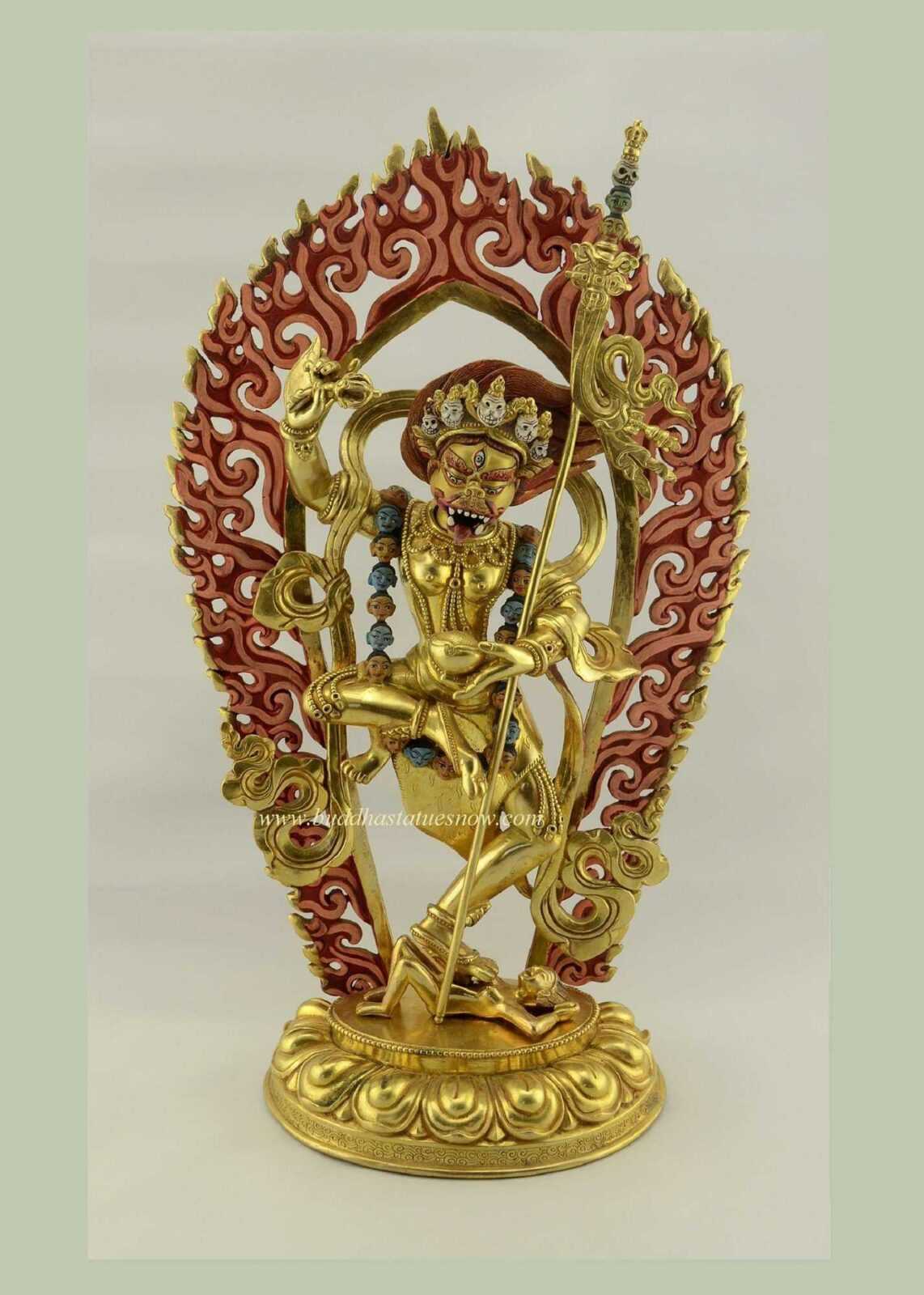

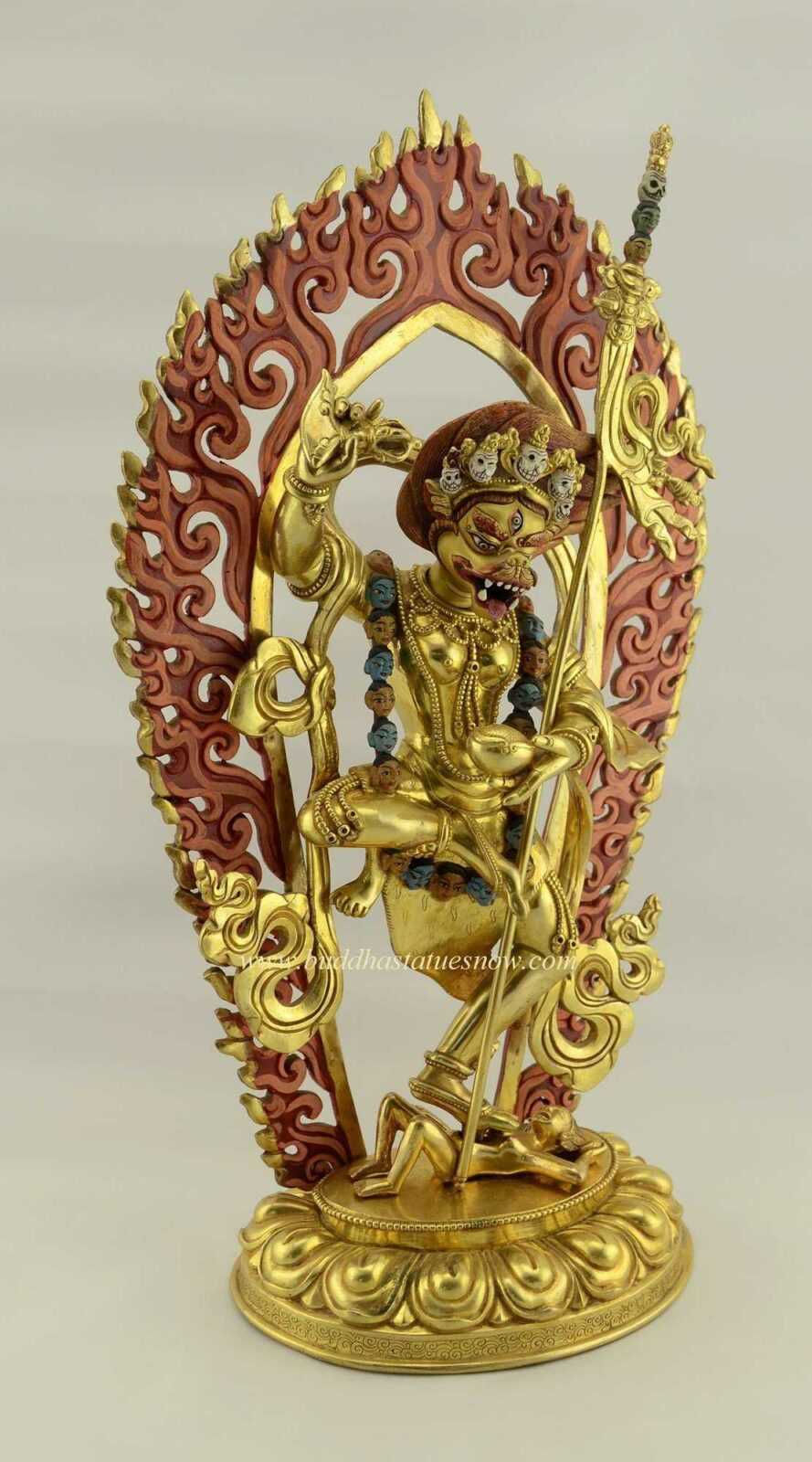


This extraordinary 15.5-inch Simha Mukhi Dakini Statue portrays the lion-headed tantric Dakini Simhamukha, known in Tibetan as Senge Dongma, “Lion Faced Woman.” Handmade in Patan, Nepal by skilled Newar artisans, the sculpture is cast in copper alloy using the traditional lost-wax method and extensively fire gilded in 24K gold. Hand-painted natural pigments define her ferocious lion face, flowing hair, garland, ritual ornaments, and other symbolic details. Behind the figure rises a dramatic removable mandorla of red wisdom flames edged with gold, creating a powerful contrast against the luminous gilded body. Simha Mukhi is among the most distinctive figures represented in our collection of Tibetan Dakini statues.
Simha Mukhi Dakini Statue in Ardhaparyanka Posture
Simha Mukhi dances in the dynamic Ardhaparyanka posture, balancing upon her left leg while her right leg bends sharply upward. Beneath her supporting foot lies a human corpse, symbolizing the overcoming of ego, ignorance, and attachment to an inherently existing self. The dramatically raised leg, sweeping ribbons, windblown hair, tall ritual staff, and surrounding flames give the sculpture a remarkable impression of movement. Her fierce lion face displays three eyes, pronounced fangs, a protruding tongue, and powerful brows, expressing wrathful enlightened activity rather than ordinary anger. The lion’s roar traditionally evokes the fearless proclamation of Dharma and the power of awakened wisdom to silence confusion and delusion.
Ritual Attributes of the Simha Mukhi Dakini Statue
Every major attribute reinforces Simha Mukhi’s uncompromising tantric character. Her raised right hand brandishes a kartika, the curved ritual knife associated with Dakinis and wrathful deities, symbolizing the severing of ego-clinging and conceptual obscuration. Her left hand holds a kapala, or skull cup, representing the transformation of ordinary experience and defilements into wisdom. Rising beside her is an elaborate khatvanga staff crowned by a triple-skull finial and vajra-like ornamentation, an important attribute of tantric practice.
A crown of five skulls encircles her head, traditionally associated with transformation of the five poisons into the five wisdoms. Around her body hangs a striking garland of severed heads, individually modeled and painted in contrasting tones. The gold jewelry, bracelets, anklets, necklaces, flowing ribbons, tiger-skin garment, and finely modeled ornaments provide further layers of detail. Behind these attributes, her long red-brown hair streams horizontally as though driven outward by the force of her dance.
Simha Mukhi Dakini Statue and Palden Lhamo
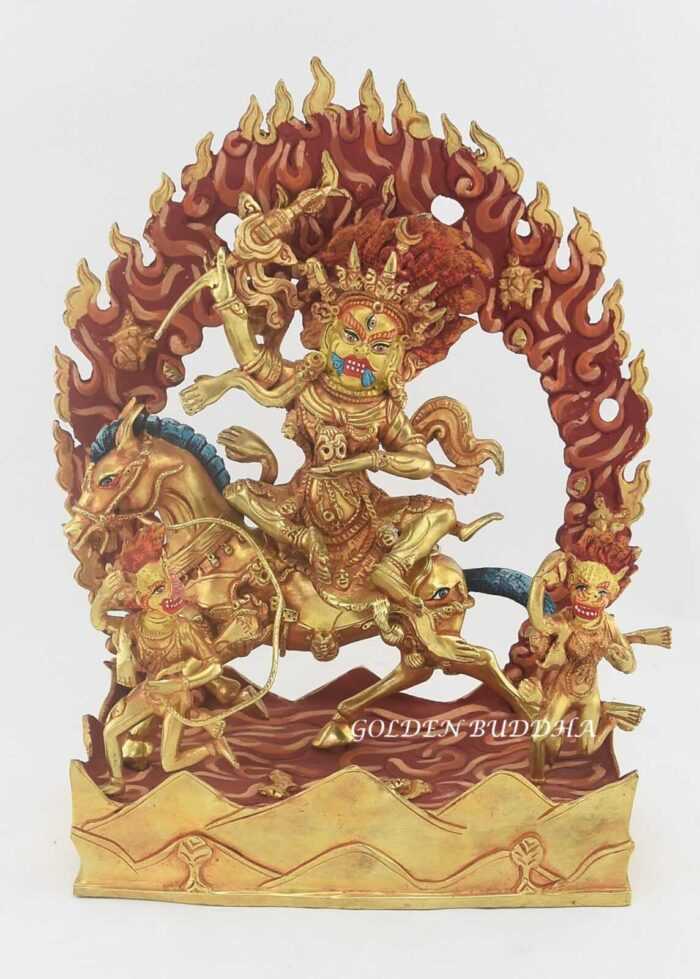
Simha Mukhi also creates a particularly meaningful protector pairing with Palden Lhamo, the Glorious Goddess. In representations of Palden Lhamo’s protector retinue, the lion-faced Simha Mukhi appears behind her mule while Maharavaktra leads from the front. Our detailed guide to Palden Lhamo iconography explains this relationship and the surrounding protector imagery. Displayed together, the two statues therefore form more than an aesthetically compatible wrathful pairing: they recall an established relationship within Tibetan protector iconography, making them especially compelling for a shrine or collection centered upon fierce enlightened protection.
Traditional Craftsmanship, Filling and Consecration
The craftsmanship becomes especially apparent in the openwork flame mandorla, sculpted lotus pedestal, tiny faces of the garland, skull crown, khatvanga and delicate jewelry. Optional turquoise and red coral gemstones may also be embedded into appropriate ornamental settings upon request, adding traditional Himalayan color accents without altering the essential iconography.
The hollow copper-alloy statue may be traditionally filled with sacred mantras, relics, incense, medicinal substances and other appropriate materials before being sealed and blessed for altar use. Our guide to Buddhist statue filling, blessing and consecration explains this traditional process in greater detail.
Custom Made Tibetan Buddhist Statues
Collectors seeking a different size or coordinated shrine arrangement may commission a custom Simha Mukhi through our custom Tibetan Buddhist statue service. Dimensions, gilding, antiquated finishes, gemstone settings, decorative treatment, and a matching Palden Lhamo composition can be discussed with our artisans while preserving the deity’s traditional iconography. Each commission is individually handmade in Nepal from copper alloy using lost-wax casting, allowing a distinctive sculpture to be created for a personal shrine, Dharma center, or Himalayan Buddhist art collection.
Authentic, Handmade in Nepal
Every statue is handcrafted in Patan, Nepal, using traditional lost wax casting and comes with a certificate of authenticity issued by Nepal’s Department of Archaeology, verifying its materials, technique, and origin.