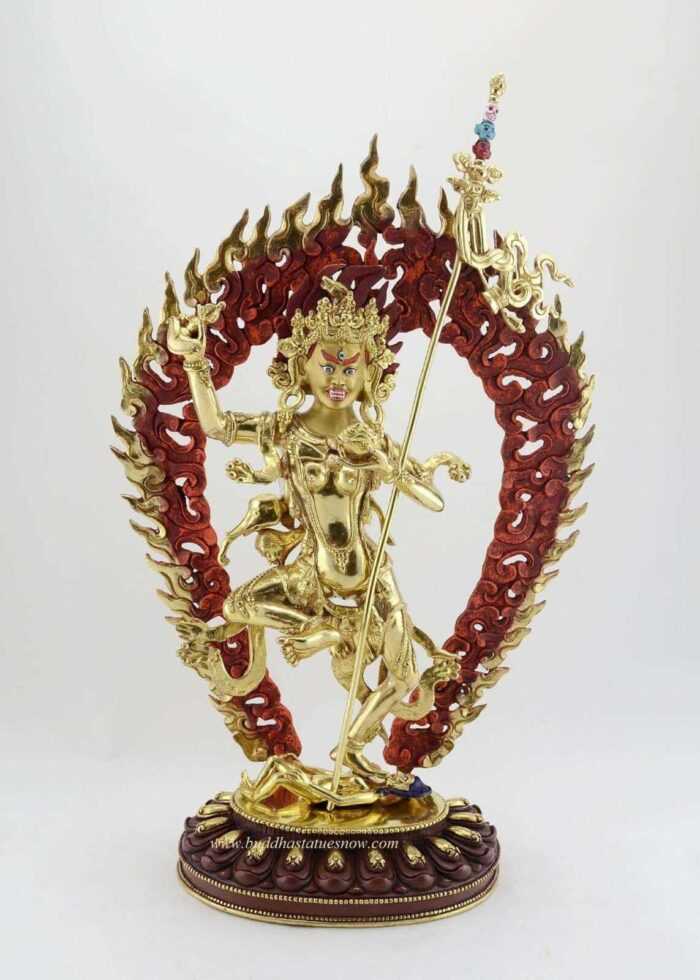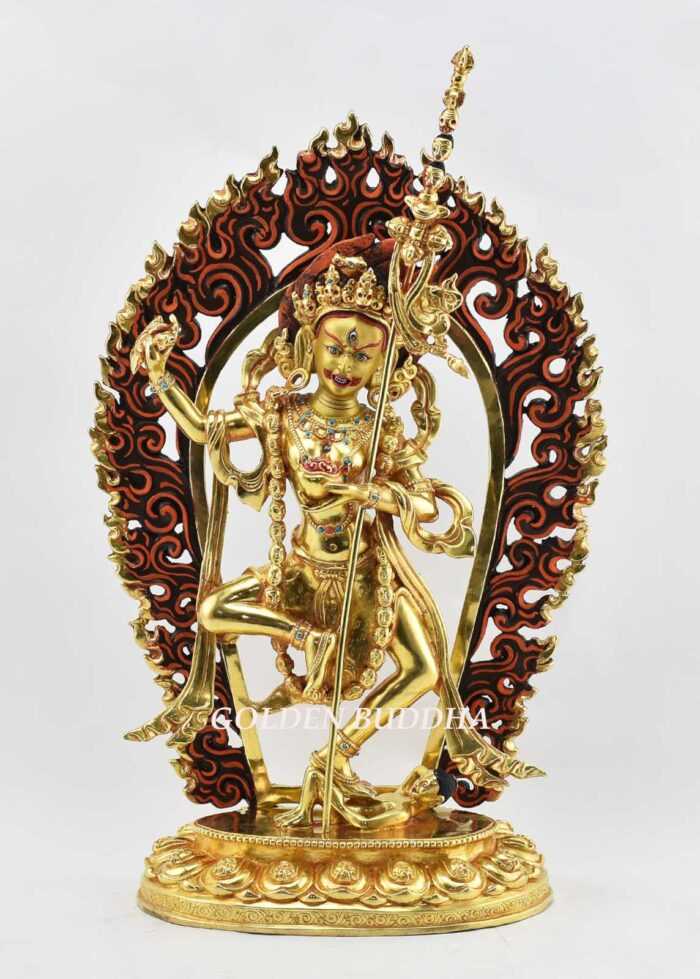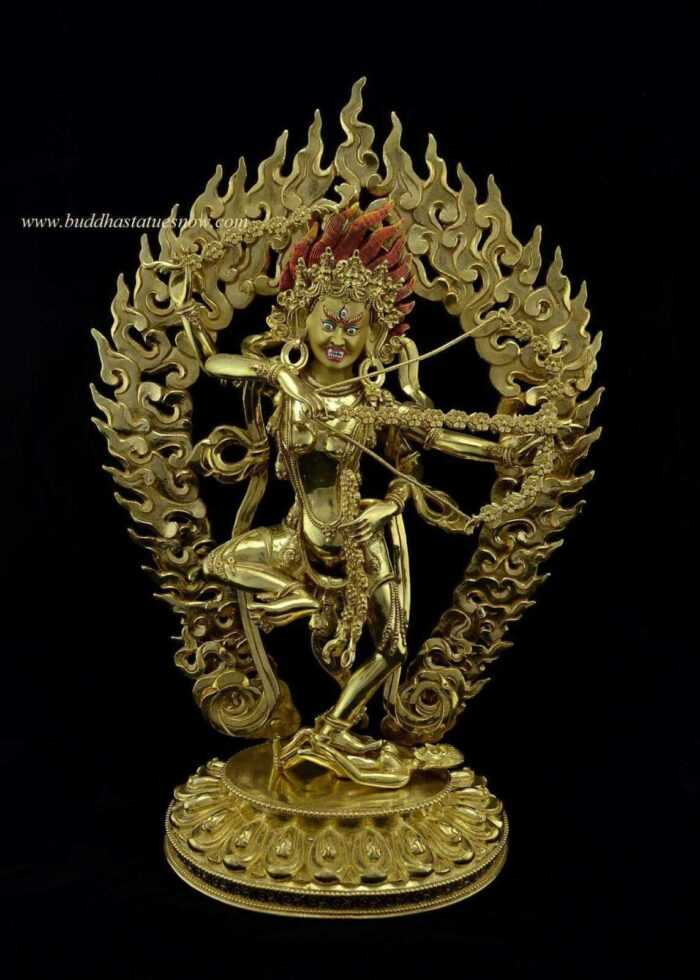

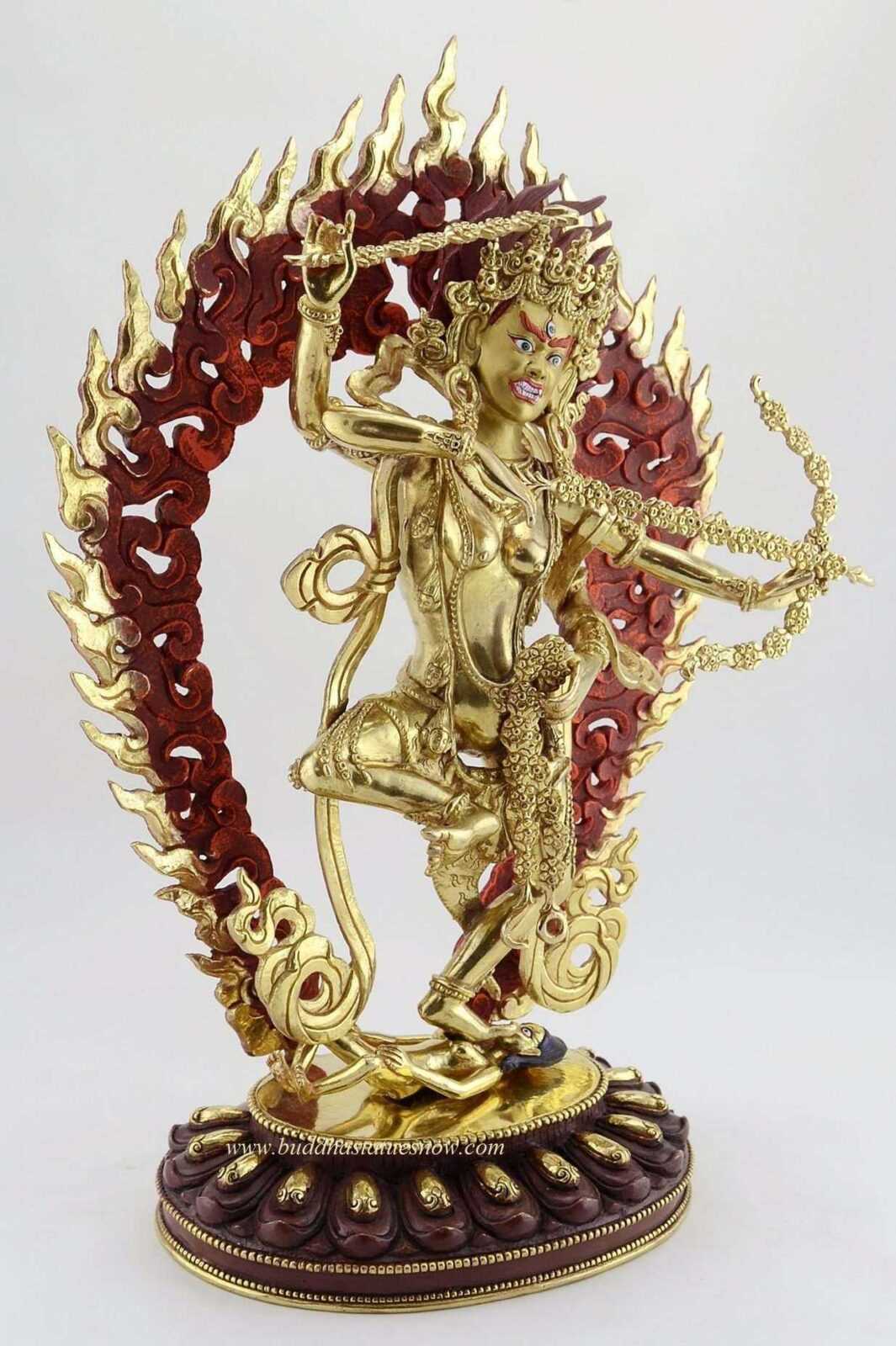
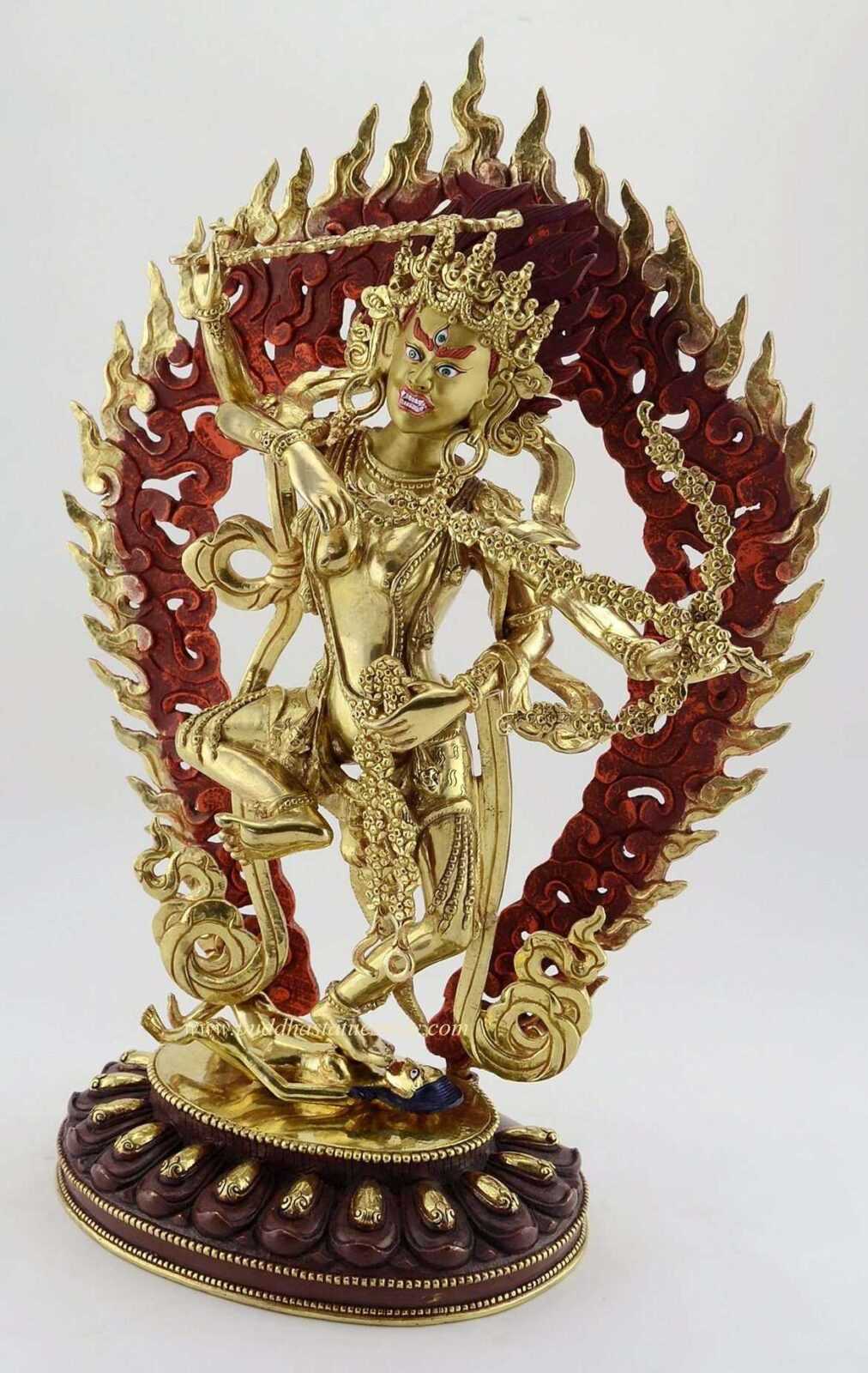

This remarkable 15-inch Dancing Red Tara Statue portrays Kurukulla, the captivating female deity of magnetizing enlightened activity. Handmade in Patan, Nepal by skilled Newar artisans using the traditional lost-wax casting method, the statue is cast in copper alloy and fire gilded in 24K gold. Kurukulla’s face is carefully hand painted with 18K gold and natural pigments, emphasizing her three penetrating eyes and semi-wrathful expression. The brilliant gilded figure is framed by a dramatic deep-red flaming mandorla with gilded flame tips, creating a striking contrast between the radiant deity and the fire surrounding her. Learn more about Red Tara and Kurukulla in our guide to Tara iconography and meaning.
Dancing Red Tara Statue in Ardhaparyanka Posture
Kurukulla is represented with four arms in the distinctive Ardhaparyanka posture, an energetic dancing position in which one leg supports the figure while the other is dramatically raised and bent. Beneath her feet lies a subdued figure, expressing the mastery of obstructive forces and uncontrolled desire. Her sweeping body, raised leg, extended arms, flowing ribbons, and flame-like hair give the sculpture an exceptional sense of movement. Rather than appearing static, Kurukulla seems to dance within the surrounding flames.
Her four hands display the implements characteristic of Kurukulla’s magnetizing activity. The principal pair draws a flower bow and arrow, while her other hands hold a flower noose and hook. These implements symbolize the attraction, gathering, and directing of beings and circumstances toward beneficial purposes and ultimately toward the Dharma. Her three eyes signify extraordinary awareness, while the elaborate skull crown and tantric ornaments emphasize her powerful Dakini character. The intricately modeled garland sweeping across her body further accentuates the movement of the composition. Explore the broader symbolism of Tara statues and their meanings in our detailed guide.
Dancing Red Tara Statue and Vajravarahi Pairing
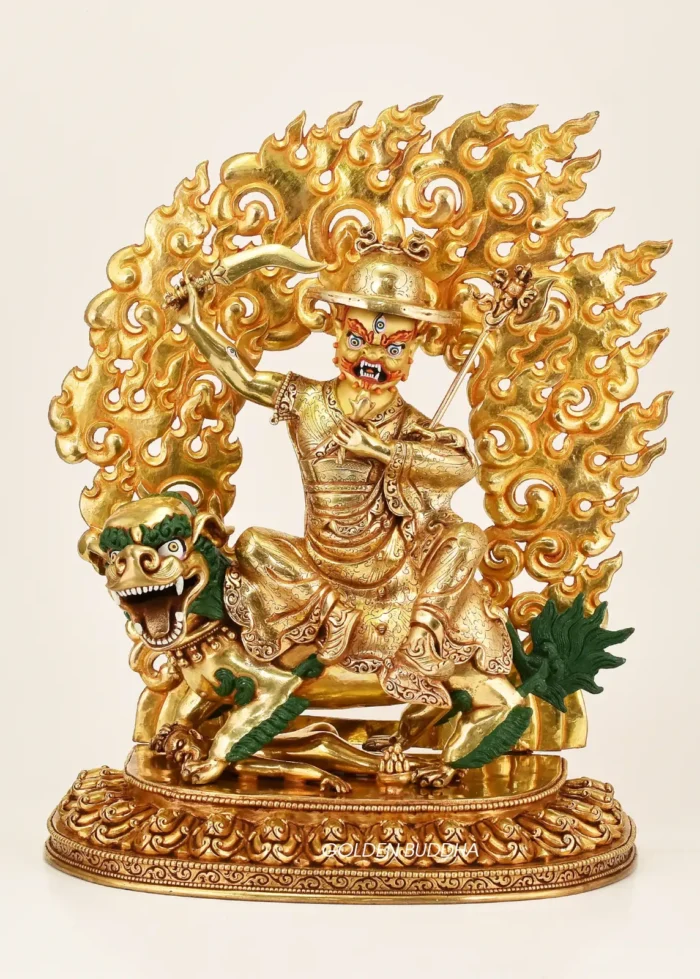
Kurukulla makes an especially compelling visual companion to our masterpiece Vajravarahi statue. Both female tantric deities are portrayed in the dynamic Ardhaparyanka posture, producing remarkably complementary silhouettes when displayed together. Their raised legs, sweeping ornaments, fierce expressions, and flaming aureoles give the pair a shared visual rhythm while preserving their very different identities.
Their symbolism is equally complementary. Kurukulla embodies magnetizing enlightened activity and the transformation of desire into a force directed toward awakening. Vajravarahi embodies profound wisdom and the transformation of ignorance and ordinary perception. Displayed together, the two sculptures form a powerful representation of distinct but complementary expressions of enlightened feminine energy. Kurukulla’s brilliant gold surface and deep-red mandorla also harmonize beautifully with the strong tantric imagery of Vajravarahi.
Craftsmanship of the Dancing Red Tara Statue
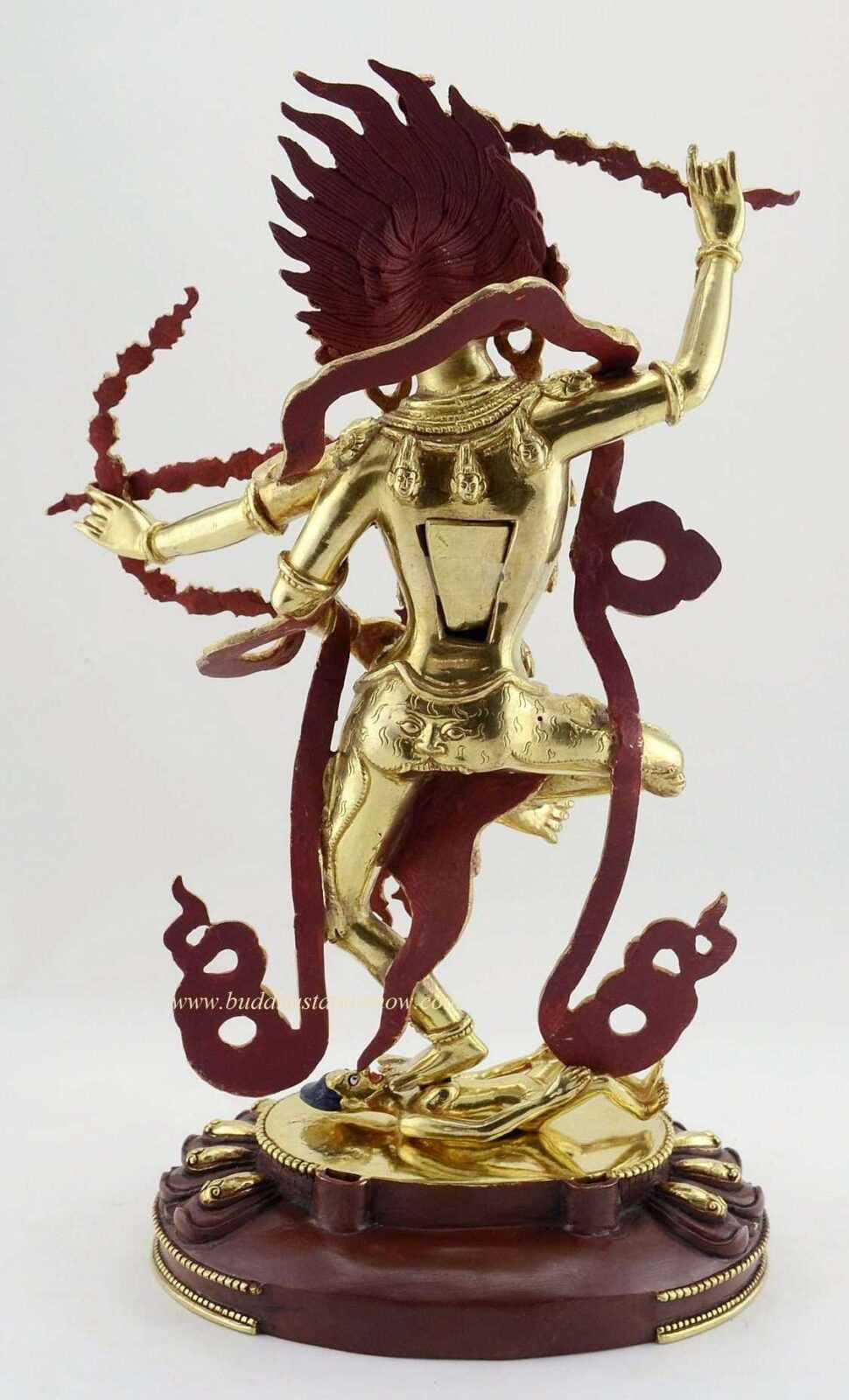
The craftsmanship extends well beyond the central figure. Kurukulla stands upon an elaborate lotus pedestal whose dark-red petals and gilded detailing repeat the contrasting palette of the mandorla. Delicate jewelry, engraved garments, curling ribbons, individual flower elements, crown details, and finely modeled facial features demonstrate the precision of the Newar metalworking tradition. The surrounding flames are sculpted as an openwork aureole, their gilded outer tips emerging from the richly oxidized red interior. Optional turquoise and red coral gemstones can also be embedded upon request, adding traditional Himalayan color accents to the finished sculpture.
Filling and Consecrating in Kathmandu, Nepal
A consecration opening is incorporated into the back of the statue, allowing the hollow interior to be traditionally filled with sacred substances, mantras, relics, and other appropriate materials before ritual sealing and blessing. For collectors who intend to place Kurukulla on a Buddhist altar rather than display her solely as Himalayan art, learn more about the traditional process of statue filling, blessing, and consecration.
Custom Made Tibetan Buddhist Statues
Collectors seeking a different size, finish, or presentation may commission a custom Tibetan Buddhist statue handmade in Nepal. A custom Kurukulla can be created with selected dimensions, gilding and antiquated treatments, gemstone ornamentation, and other traditional details while preserving the essential iconography of the deity. This option is particularly useful for creating coordinated altar pieces or a visually matched Kurukulla and Vajravarahi pair.
Authentic, Handmade in Nepal
Every statue is handcrafted in Patan, Nepal, using traditional lost wax casting and comes with a certificate of authenticity issued by Nepal’s Department of Archaeology, verifying its materials, technique, and origin.