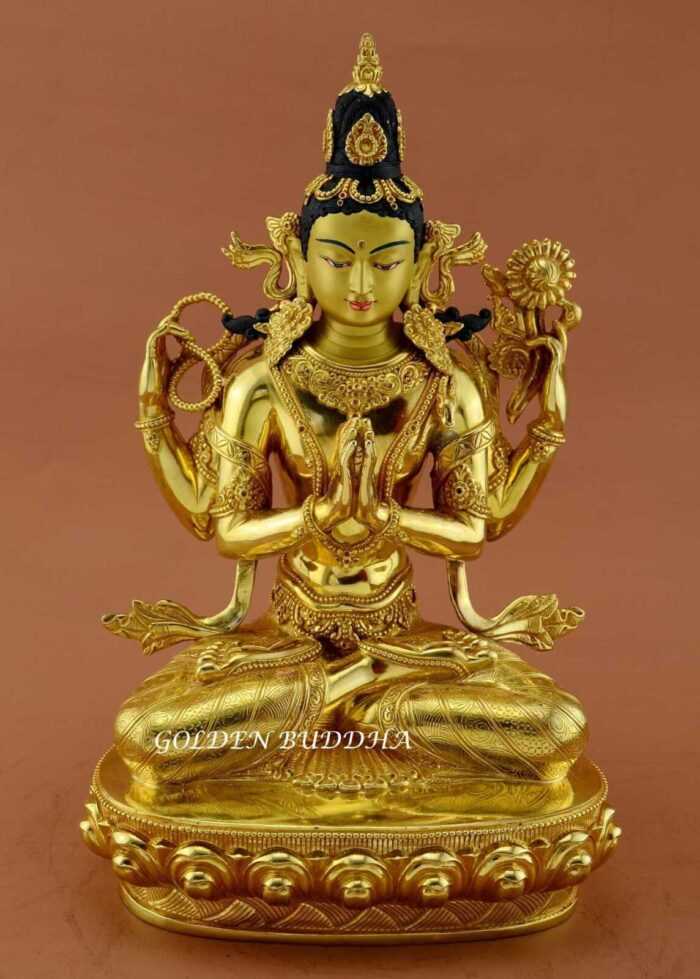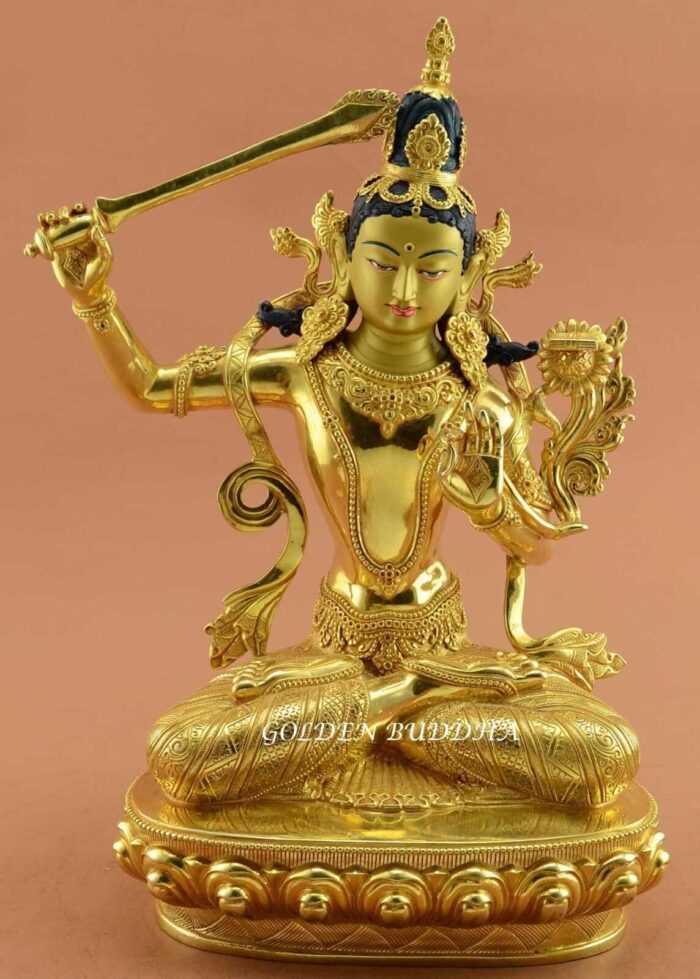
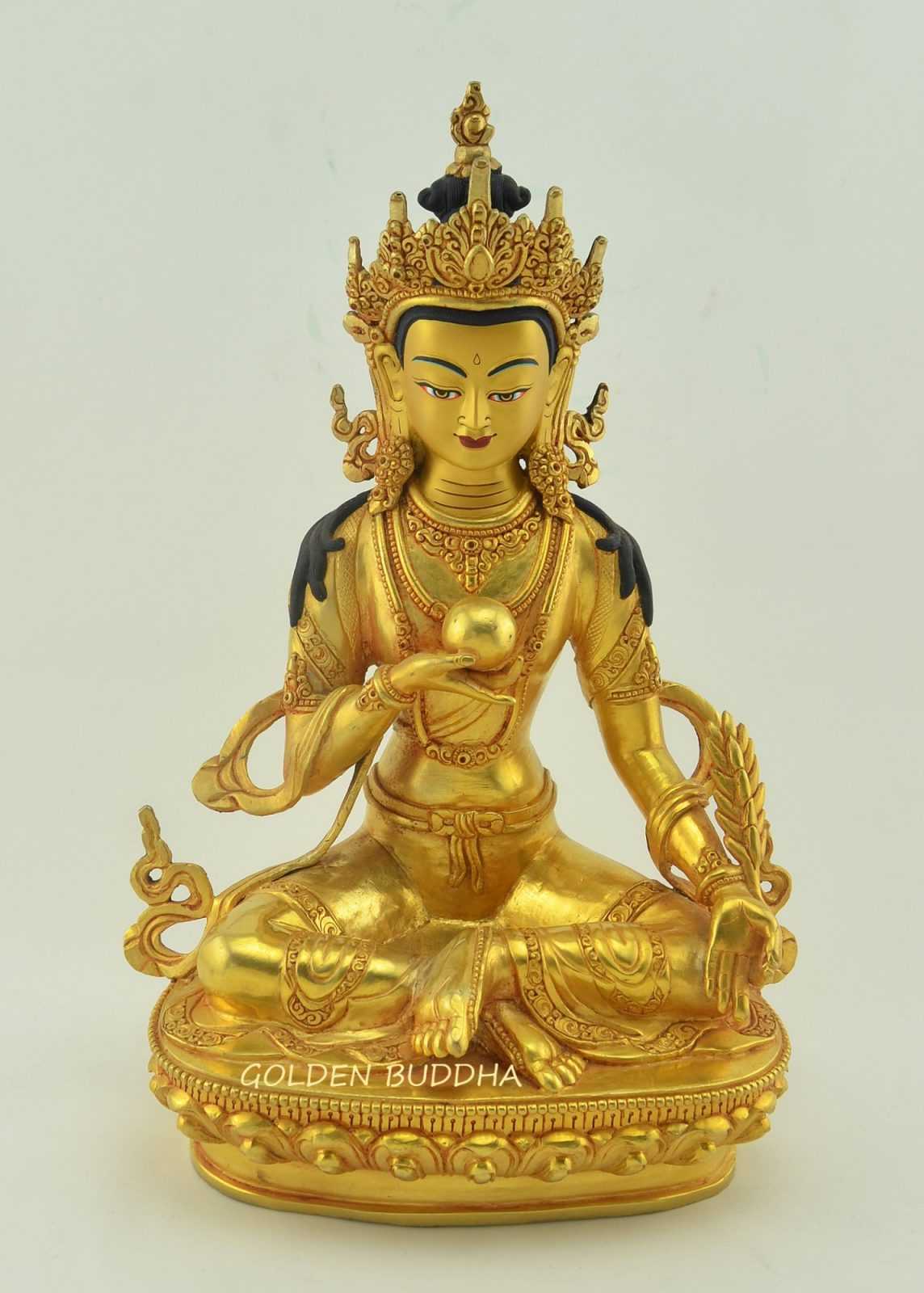
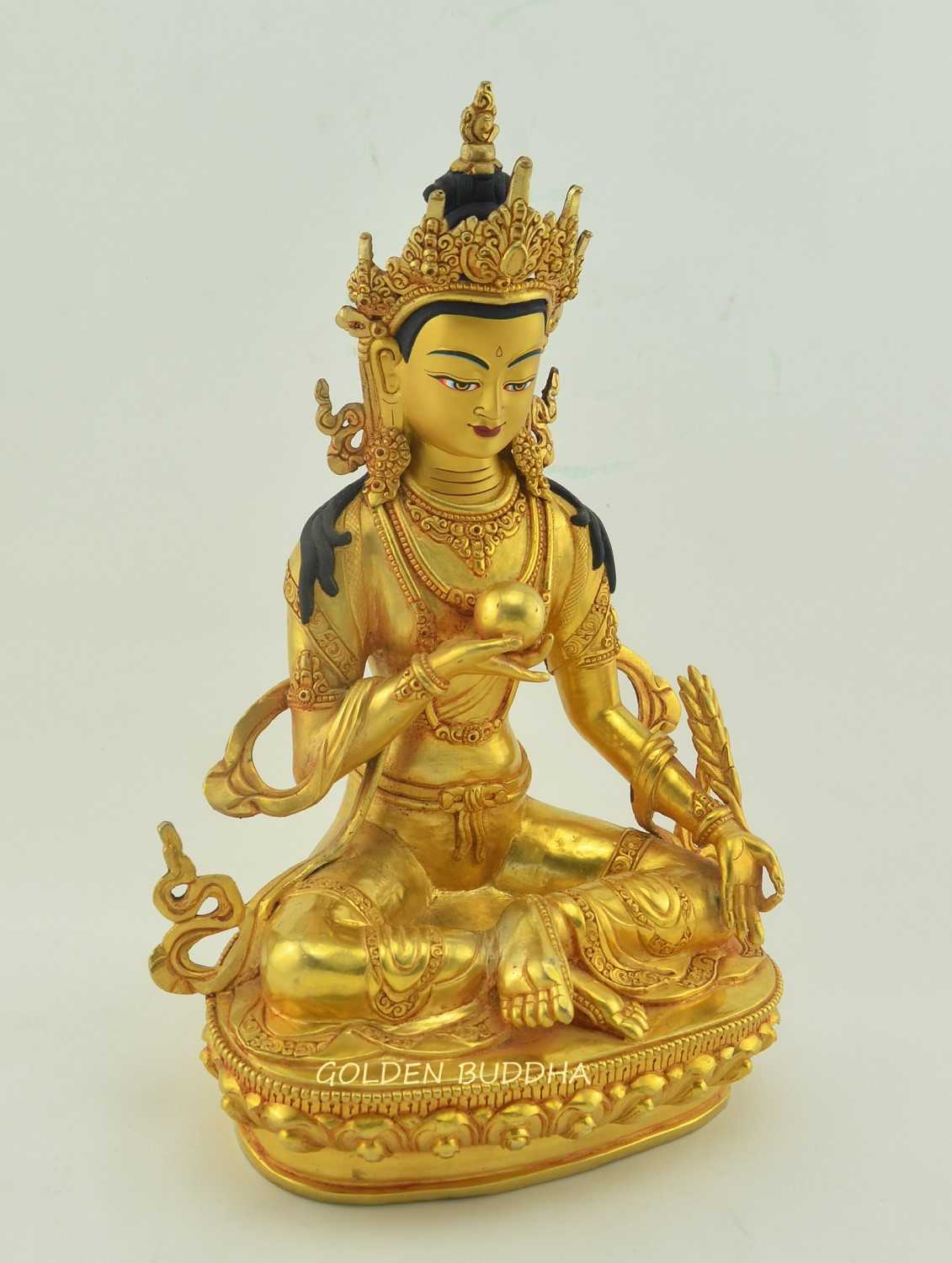
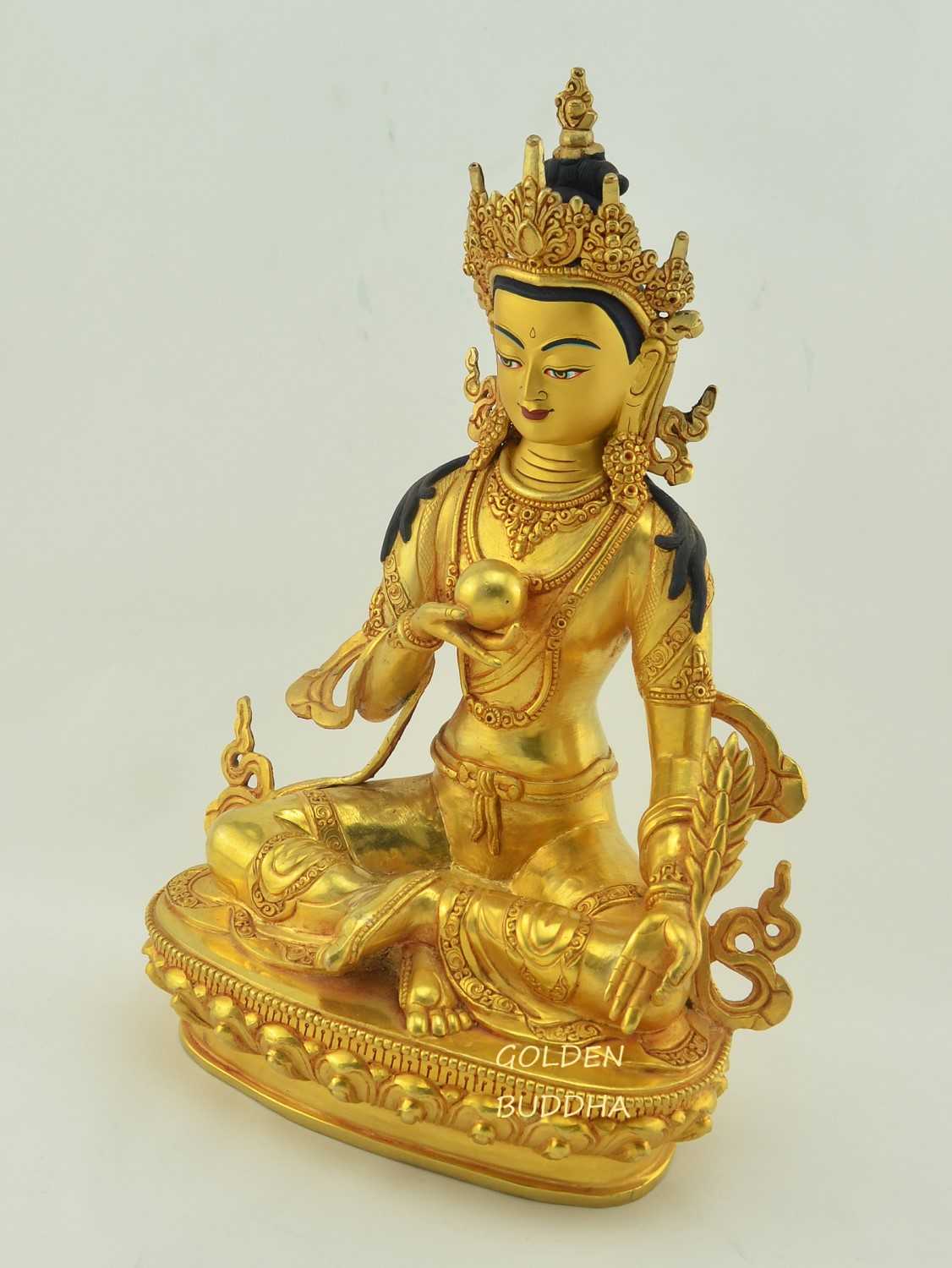
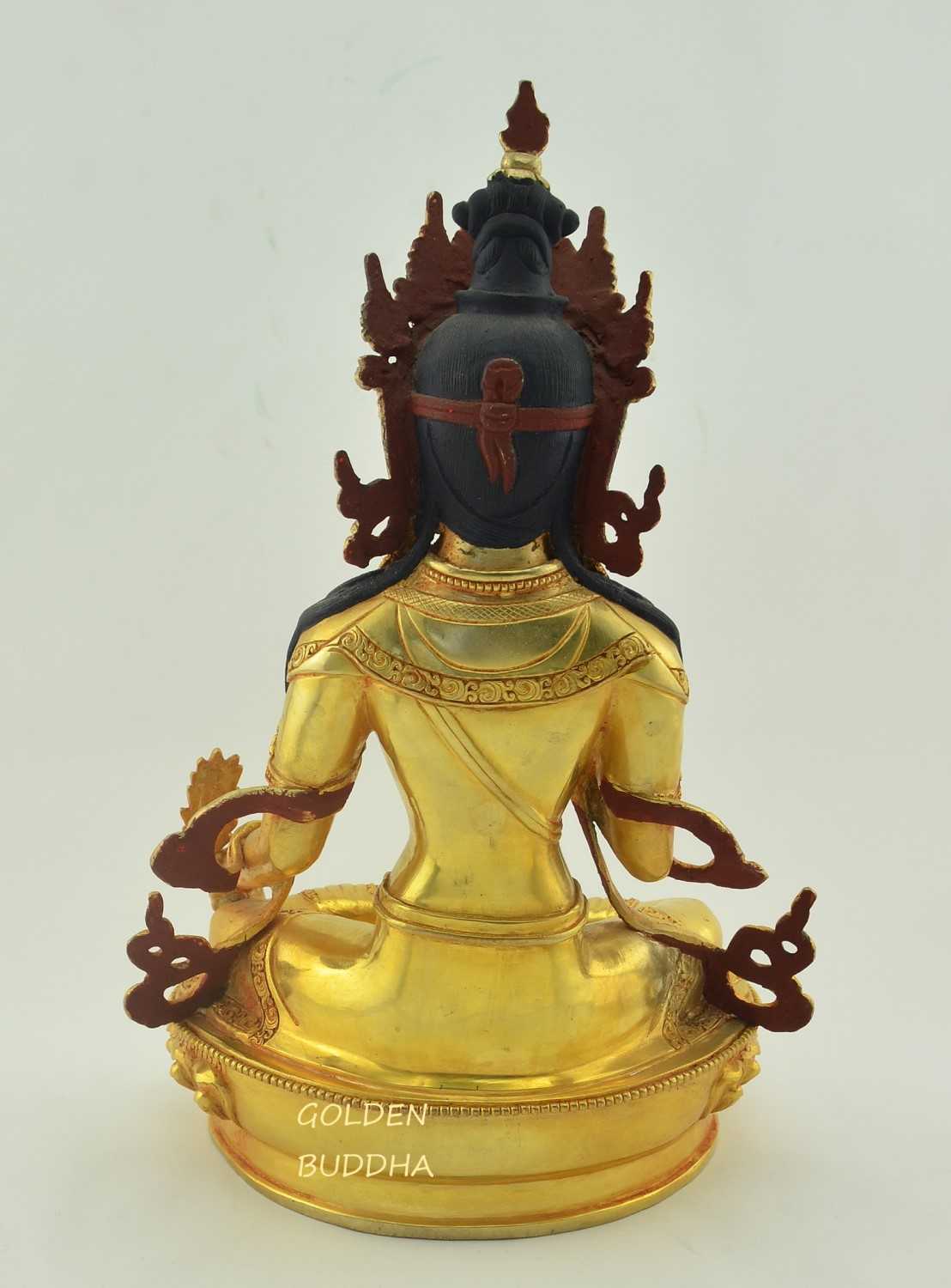
This 12.5″ Ksitigarbha Bodhisattva statue is gold plated throughout with a hand painted face rendered in fine golden detail — the crowned Bodhisattva form with elaborate jewelled ornaments, seated on a single lotus throne. In his right hand he holds the cintāmaṇi (wish-fulfilling jewel) — the luminous jewel whose light reaches the deepest realms of existence. In his left hand, arm extended downward, he holds the stem of the myrobalan plant between thumb and index finger — the healing herb that in Buddhist iconography represents the cure for all suffering at its root, here combined with the cintāmaṇi to express the full range of Ksitigarbha’s compassionate healing function across both the spiritual and the physical dimensions of suffering. The Bodhisattva crown and jewels can be additionally embellished with turquoise and red coral stones at no extra charge before shipping. The statue was handcrafted in Patan, Nepal by master Newar artisans using the traditional lost wax sculpting method with fine hand-carved detail throughout the crown, robes, and lotus throne.
Ksitigarbha holds a specific and irreplaceable role in Buddhist practice surrounding death and the intermediate state. The Ksitigarbha Sutra is one of the most widely recited texts in East Asian Buddhism specifically during funeral ceremonies and the 49-day bardo period following death — the intermediate state recognized in both Tibetan and Chinese Buddhist traditions during which the consciousness of the deceased is understood to be migrating between states of existence and is most receptive to the influence of prayer and merit-making by the living. Recitation of the Ksitigarbha Sutra during this period, the offering of his image, and the generation of merit in his name are all understood to directly benefit the deceased — lightening karmic burdens, generating the conditions for a favorable rebirth, and ensuring that even beings who have fallen into the lower realms receive his protection and guidance. A Ksitigarbha statue placed on the altar during this period serves as a continuous focus of this merit-generating activity, his presence an ongoing invocation of his vow — to leave no being behind in the period between Shakyamuni Buddha’s teachings and the coming of Maitreya Buddha.
Ksitigarbha Bodhisattva Statue Features
This statue depicts Ksitigarbha in the full Bodhisattva crowned form — the elaborate crown and jewelled ornaments of an enlightened princely being rather than the simple monk’s robes of the traditional East Asian Jizō presentation — reflecting the Newar sculptural tradition in which the full radiance of a Bodhisattva’s enlightened qualities is expressed through royal adornment. The cintāmaṇi and myrobalan together in a single figure express his dual compassionate mission: the wish-fulfilling jewel that illuminates darkness and grants deepest aspirations, and the healing plant that addresses the suffering beings carry into the realms he specifically vowed to enter.
Authentic, Handmade in Nepal
Every statue is handcrafted in Patan, Nepal, using traditional lost wax casting and comes with a certificate of authenticity issued by Nepal’s Department of Archaeology, verifying its materials, technique, and origin.