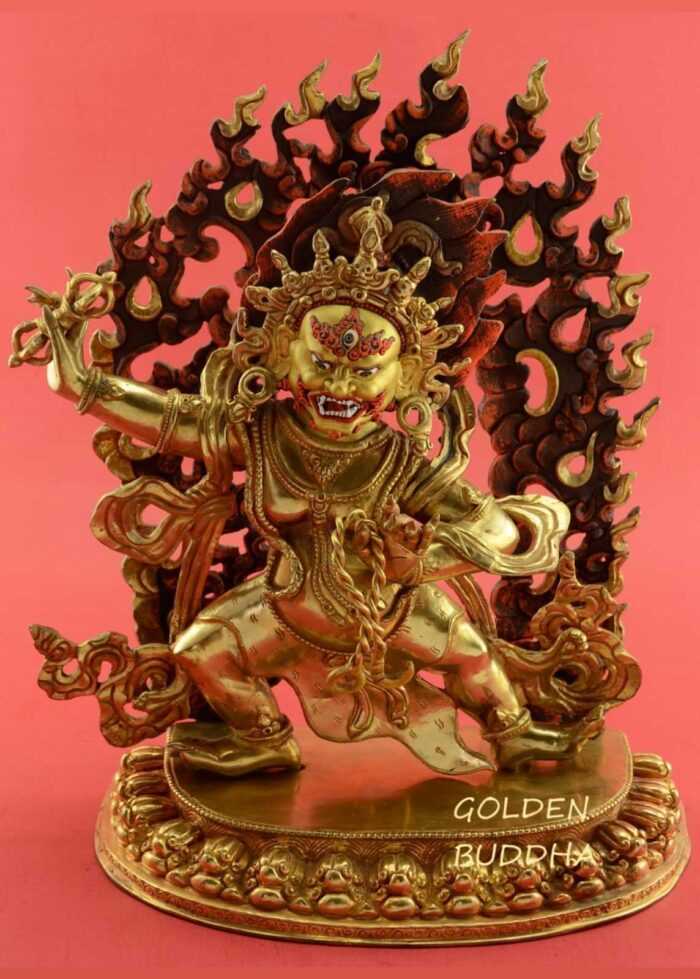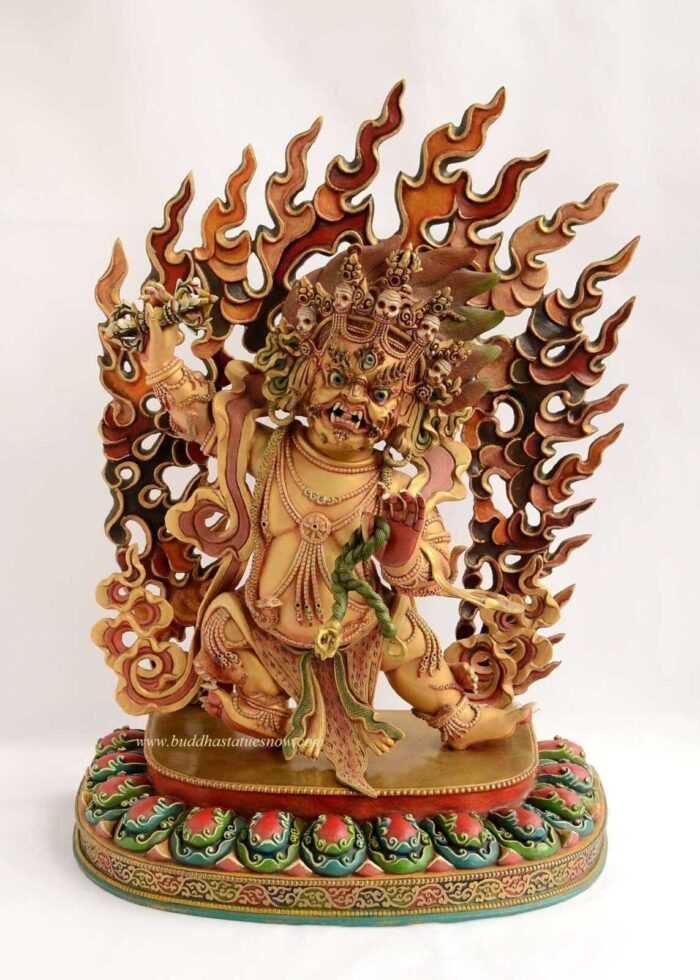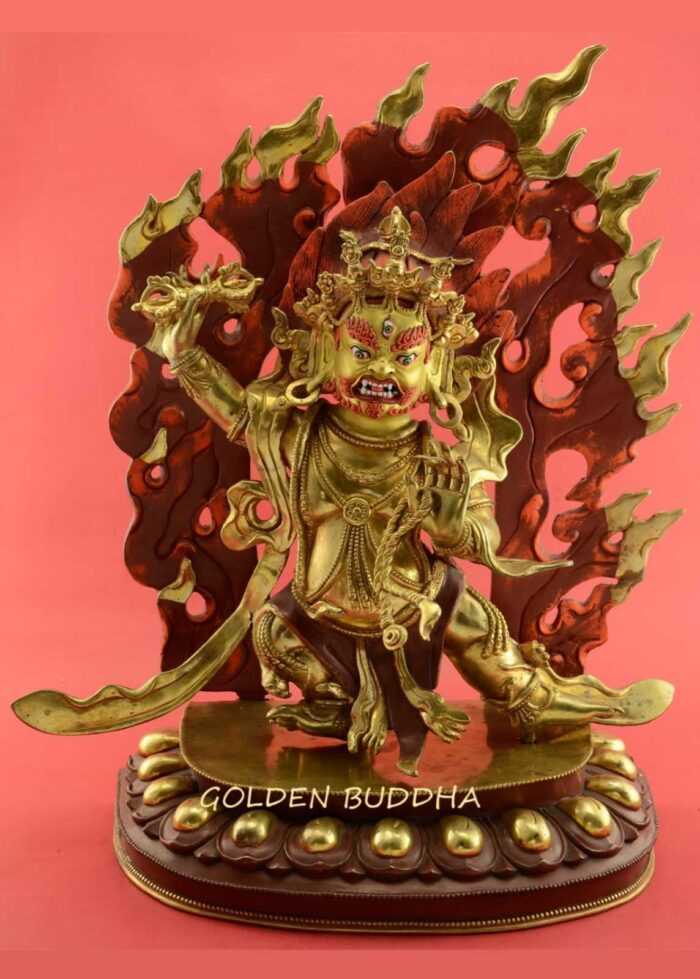
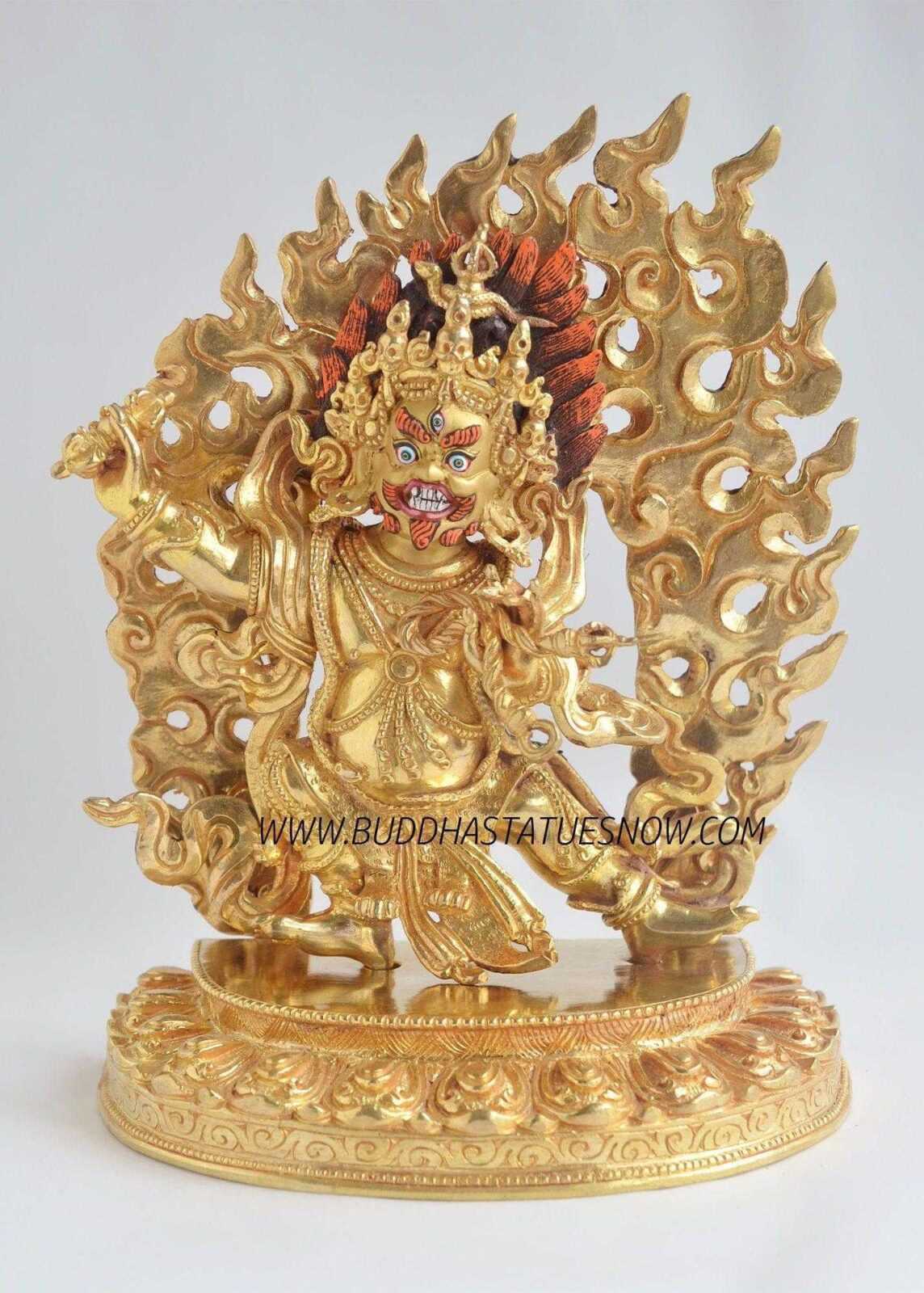
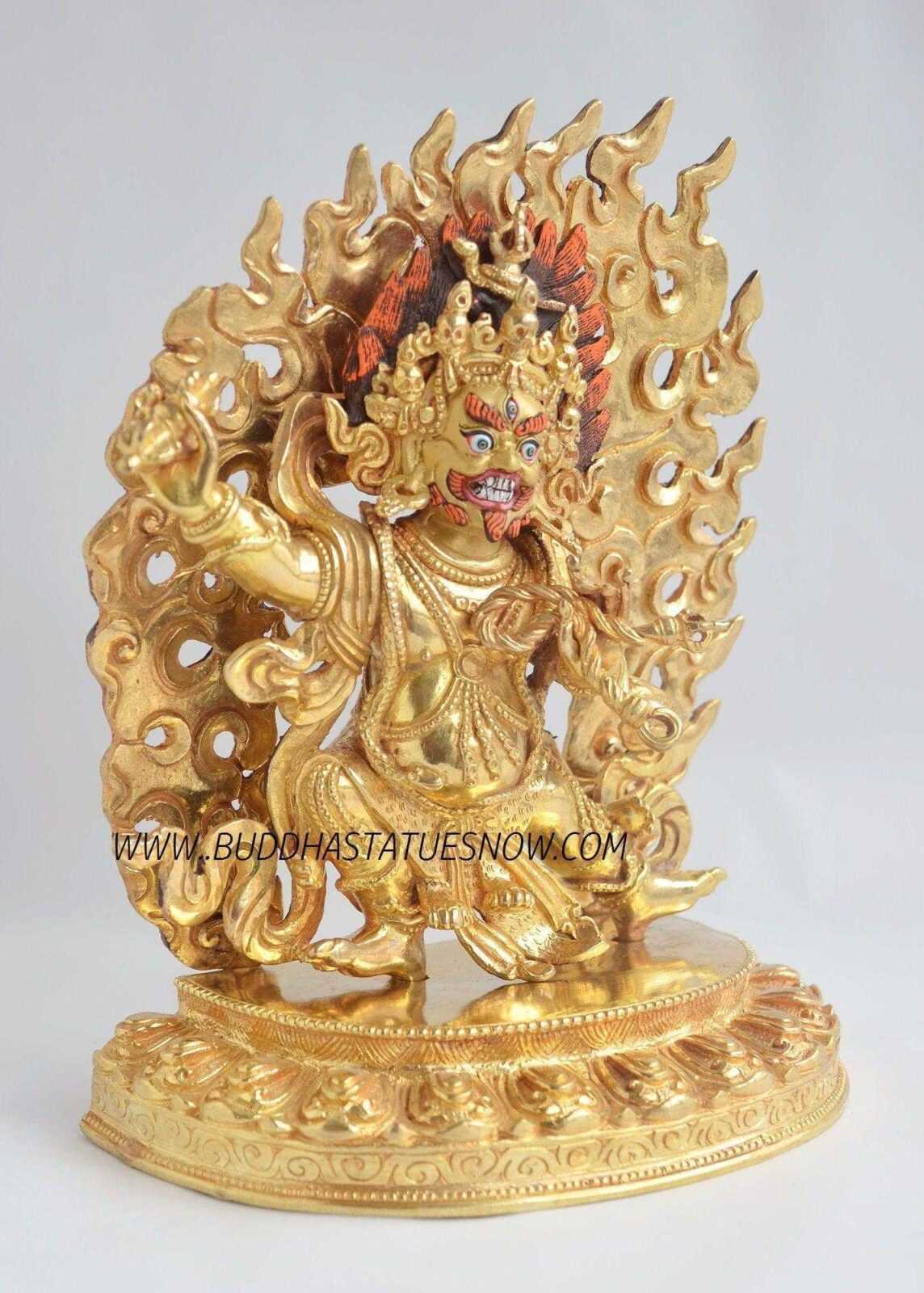
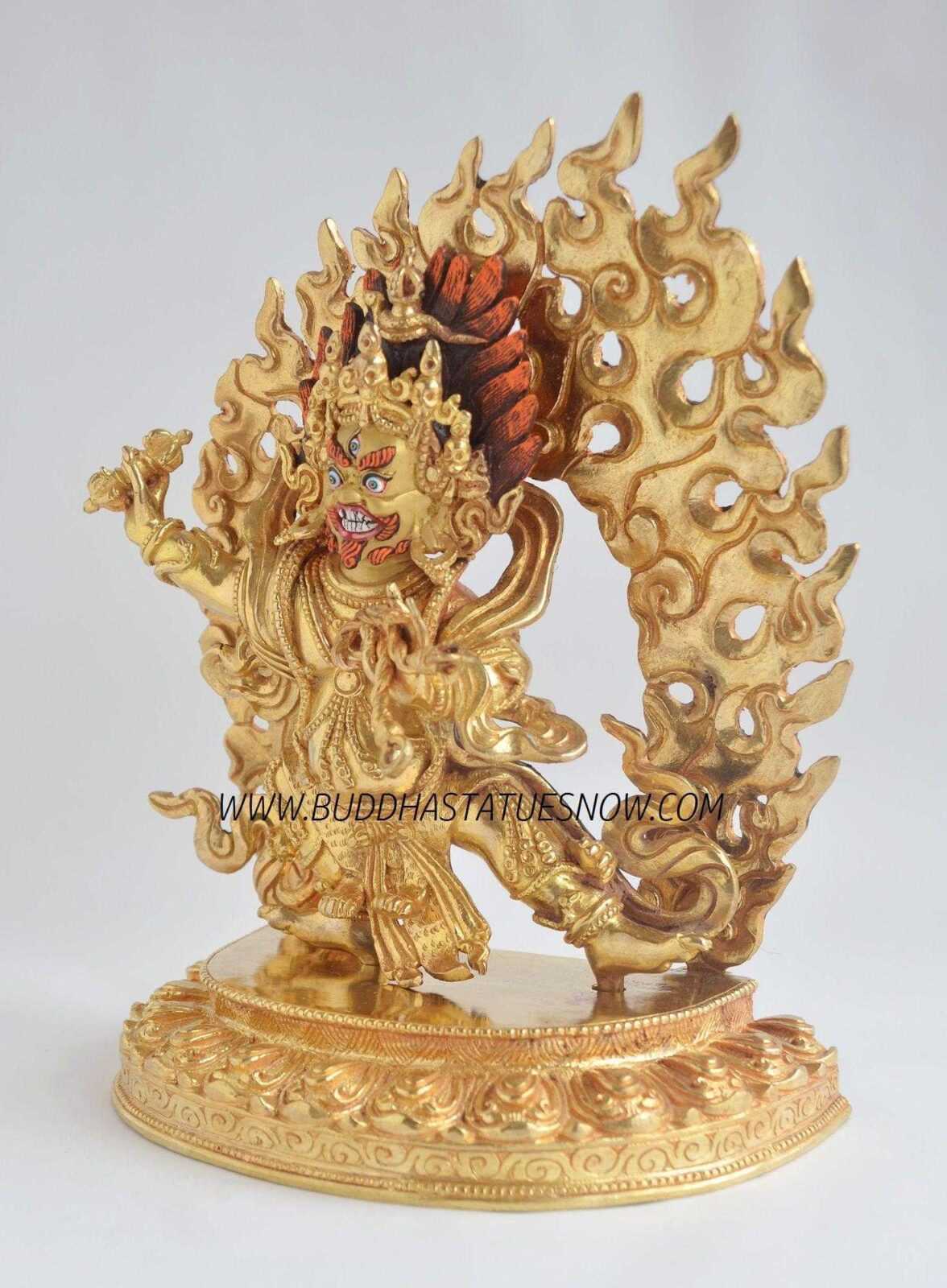
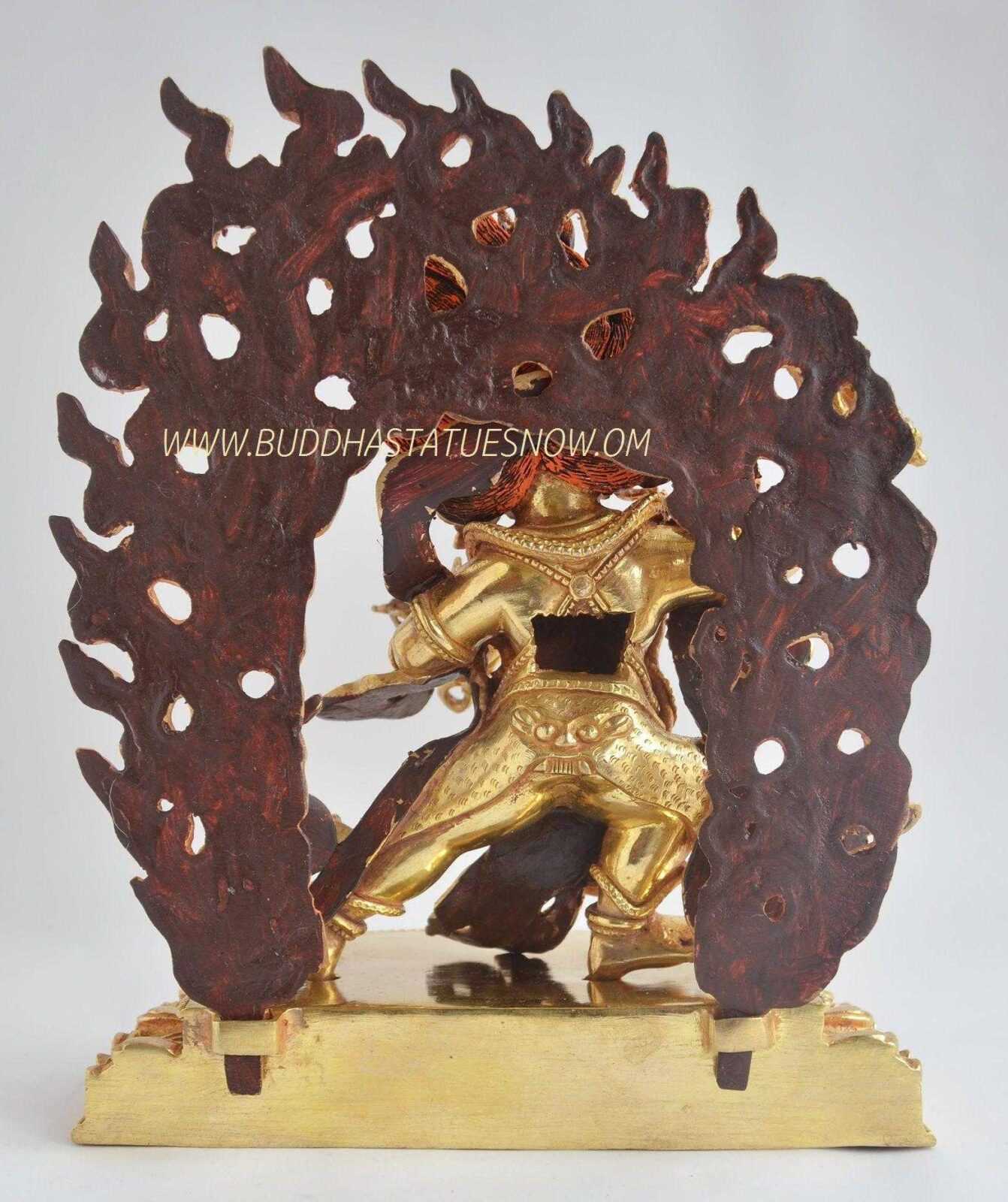
Our master artisan created our Nepali 9.75″ Vajrapani statue with the jewelry and crown of a bodhisattva. At the request of the buyer, we would be happy to adorn the crown and jewels of your new Vajrapani statue with colored stones. At no extra charge, the skilled artisan can embellish the statue with special decoration before delivery. One popular choice of color is turquoise, we also have a selection of red stones to choose from.
Nepali Vajrapani Statue Features:
The name Vajrapani is a Sanskrit word that translates as “thunderbolt in the hand”. Therefore, our Nepali Vajrapani statue depicts him in his classic warrior pose wielding a vajra over his right shoulder. The vajra is an ancient symbol that originated in India and it was carried into battle by the highest ranking generals. However, in Buddhism it symbolizes the male aspect of compassion and skillful means. As such it is a symbol of courage for devotees forging a path through the vicissitudes of samsara.
Vajrapani statues commonly depict him wearing a serpent necklace because he is protector of the nagas. Additionally, Vajrapani holds a lasso in his left hand which is used to strangle the demons of delusion. Generally speaking, the wrathful appearance of Vajrapani is meant to crush obstacles to spiritual realization. He also wears the skin of a tiger around his waist. Vajrapani, known in Tibetan as Chana Dorje, is one of the Three Protectors alongside Manjushri and Avalokiteshvara — discover his role as the embodiment of the Buddha’s power.
The burning flames of pristine awareness surround him and incinerate all neurotic mental states. Furthermore, he wears the skull crown that is adorned with the five skulls symbolizing the five poisons. The five insidious poisons in Buddhism are greed, hatred, ignorance, jealousy and pride. These five poisons have been converted into the five transcendent wisdoms. Furthermore, wrathful Vajrapani has three eyes which represent his knowledge of the past, present and future.
Authentic, Handmade in Nepal
Every statue is handcrafted in Patan, Nepal, using traditional lost wax casting and comes with a certificate of authenticity issued by Nepal’s Department of Archaeology, verifying its materials, technique, and origin.