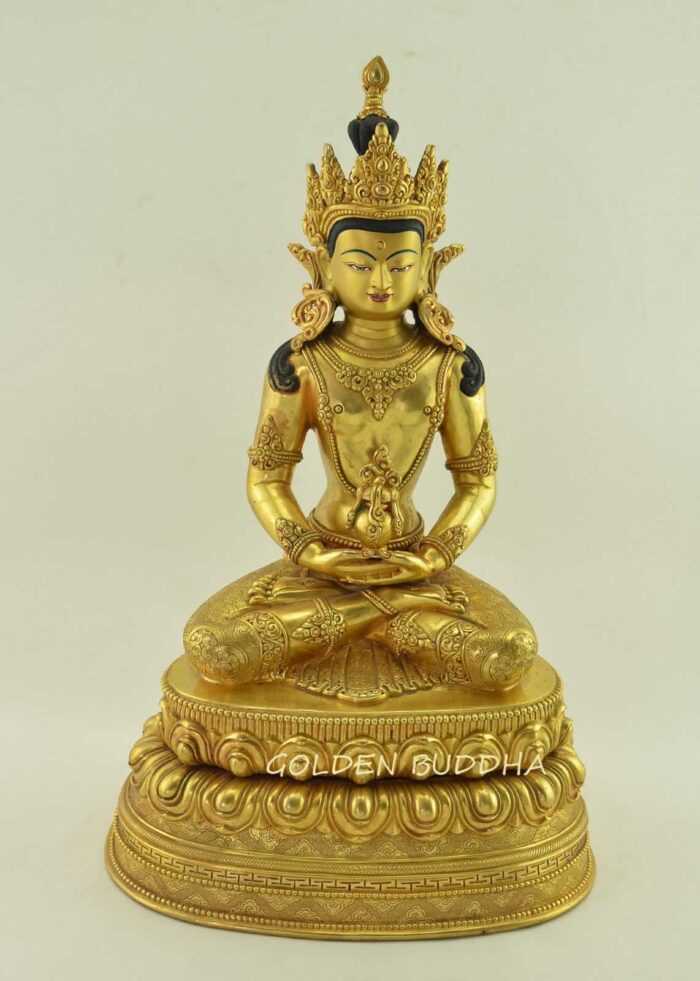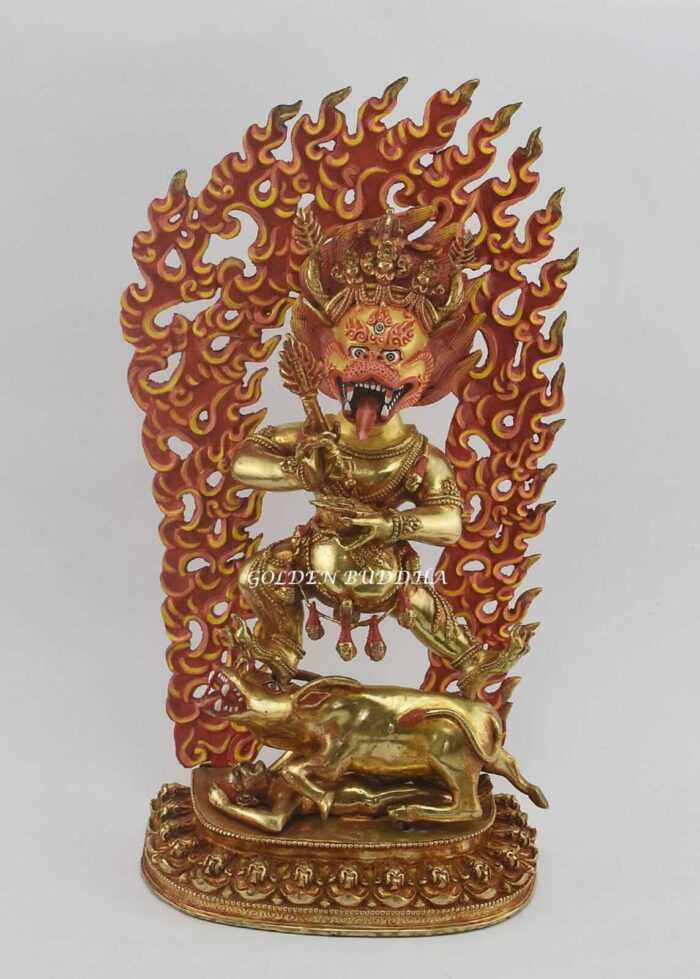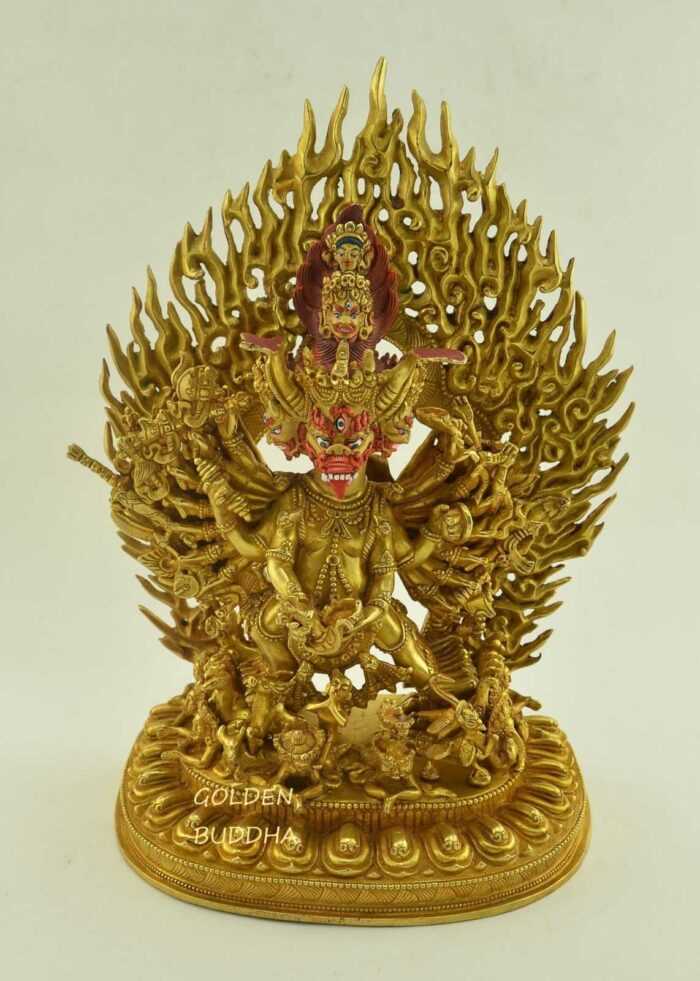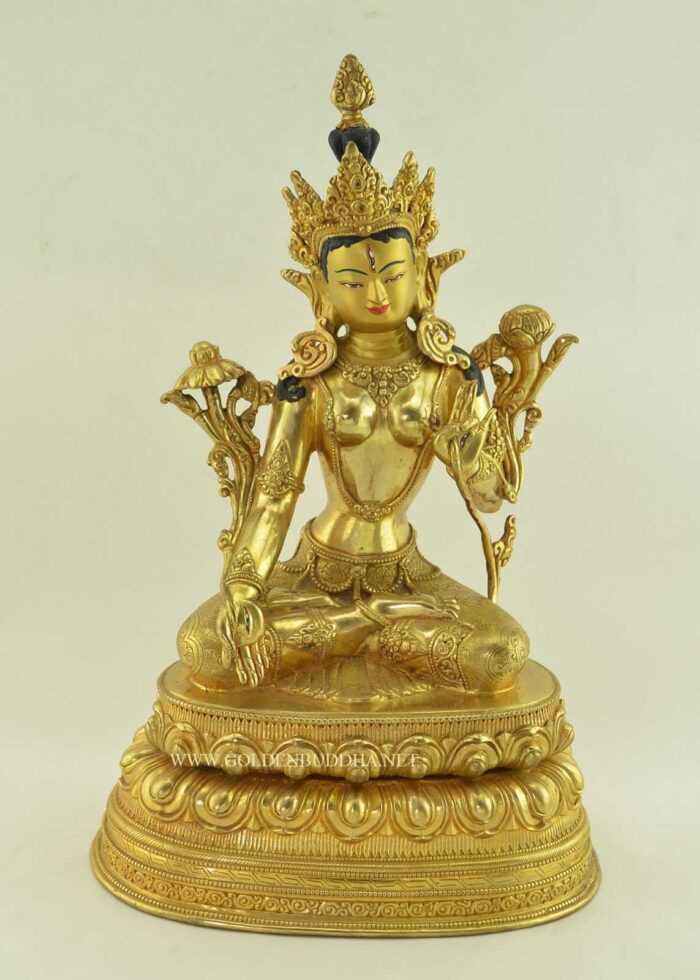

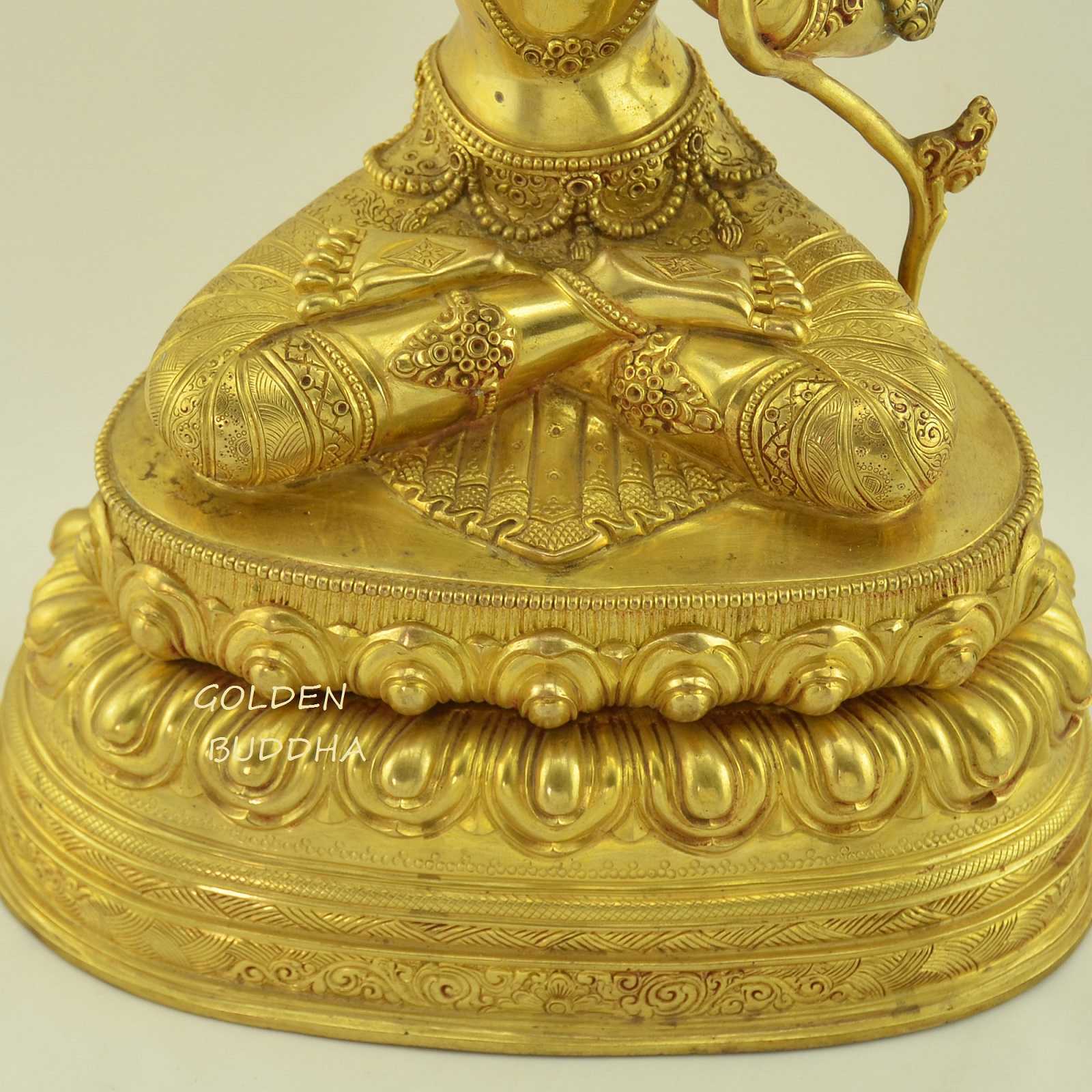
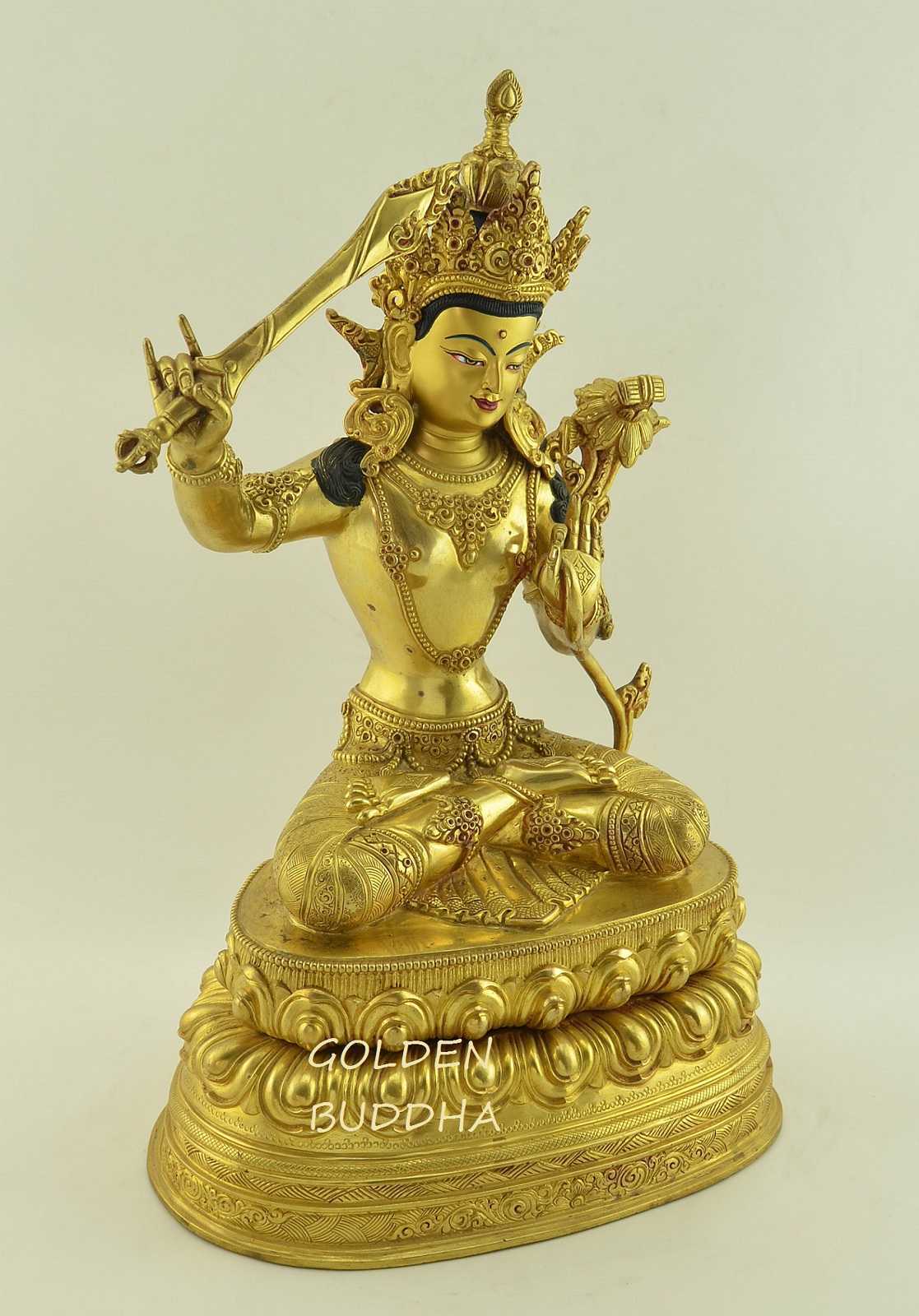
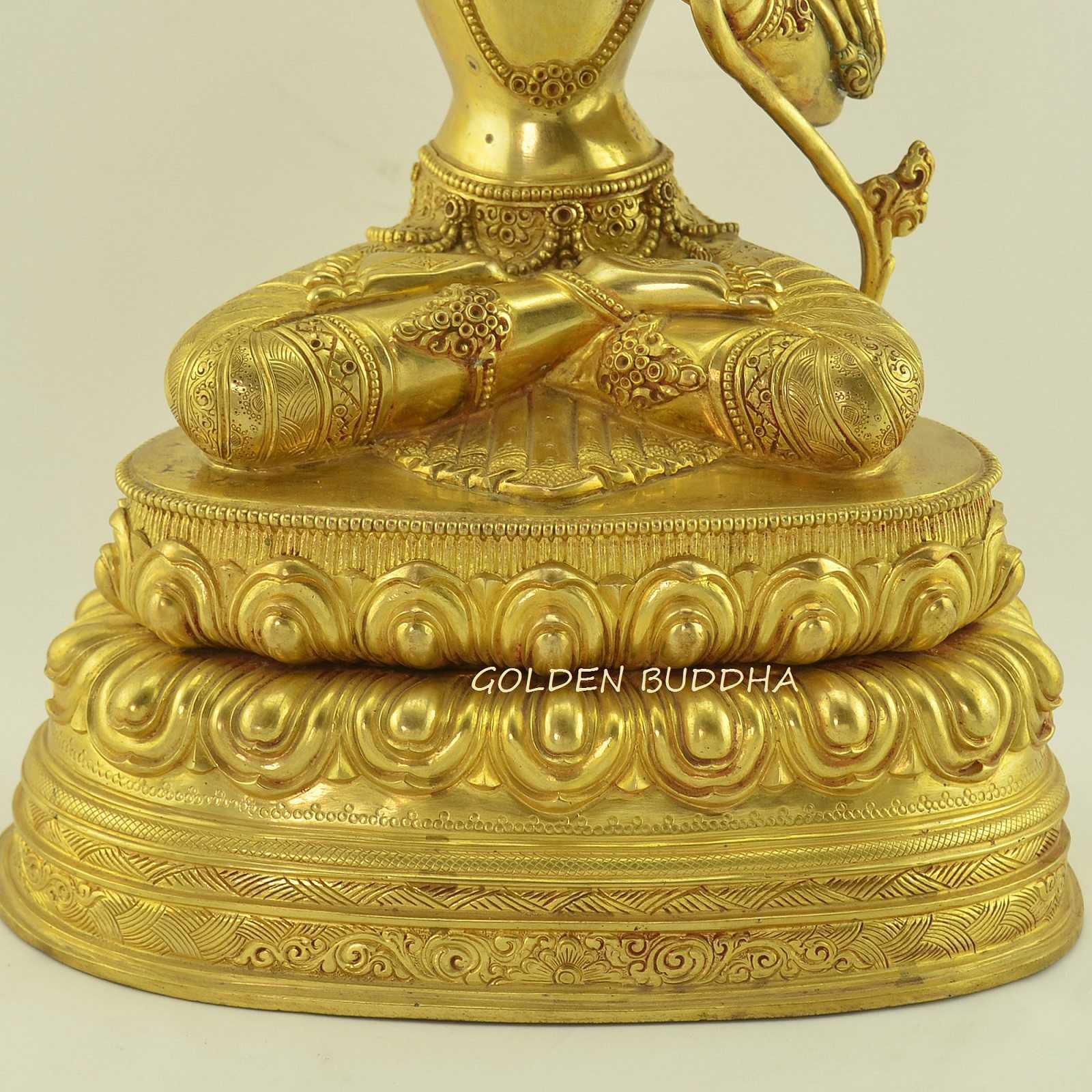
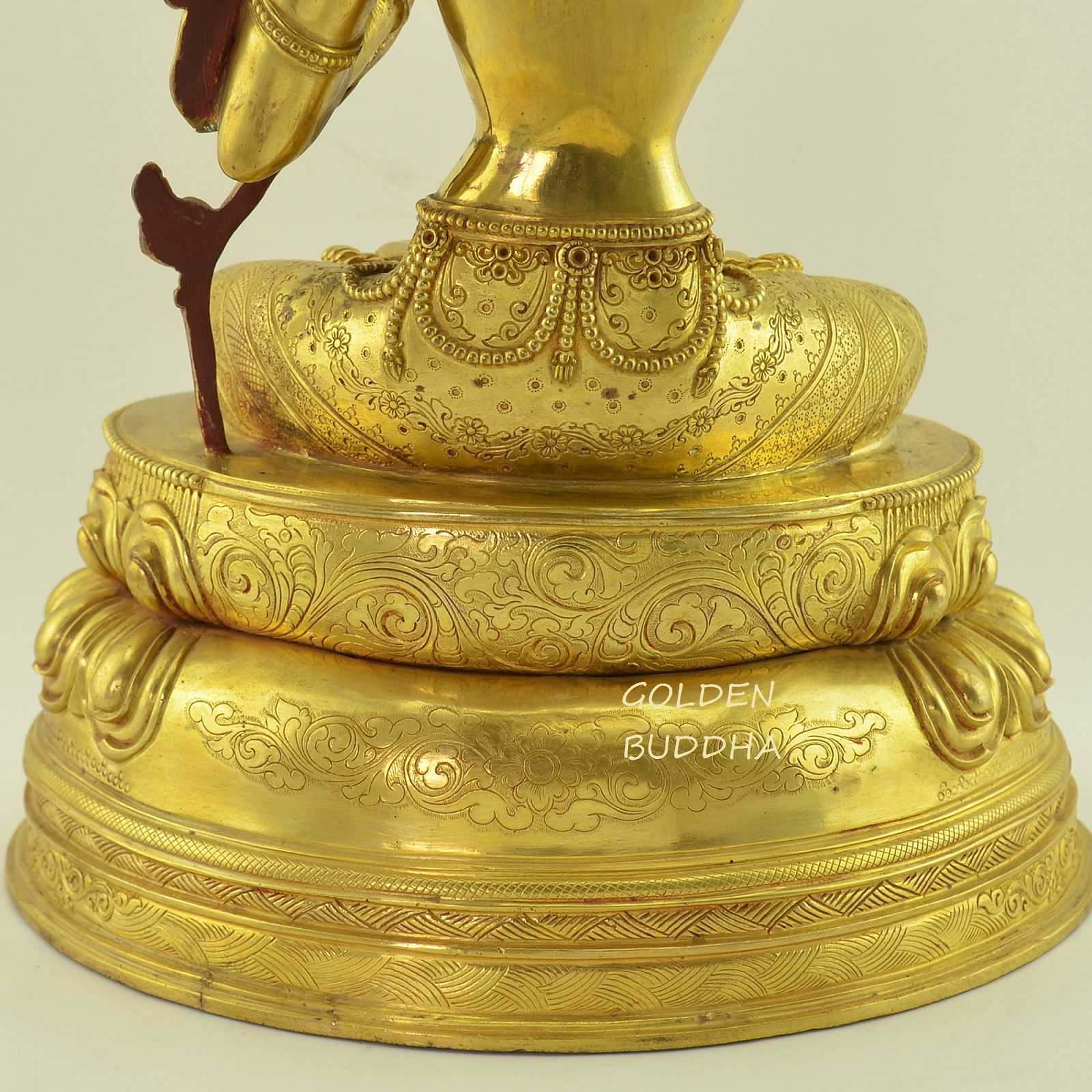
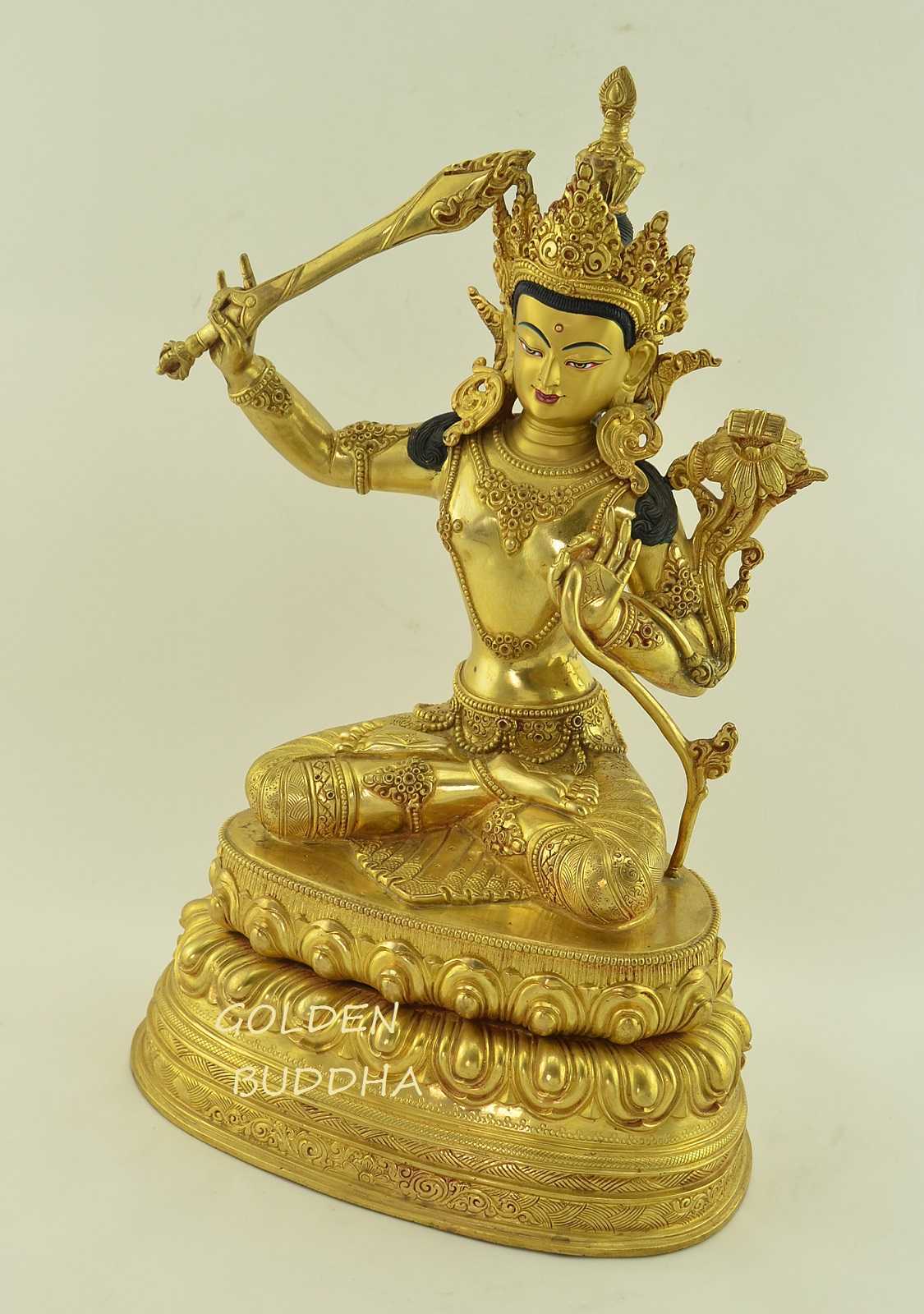
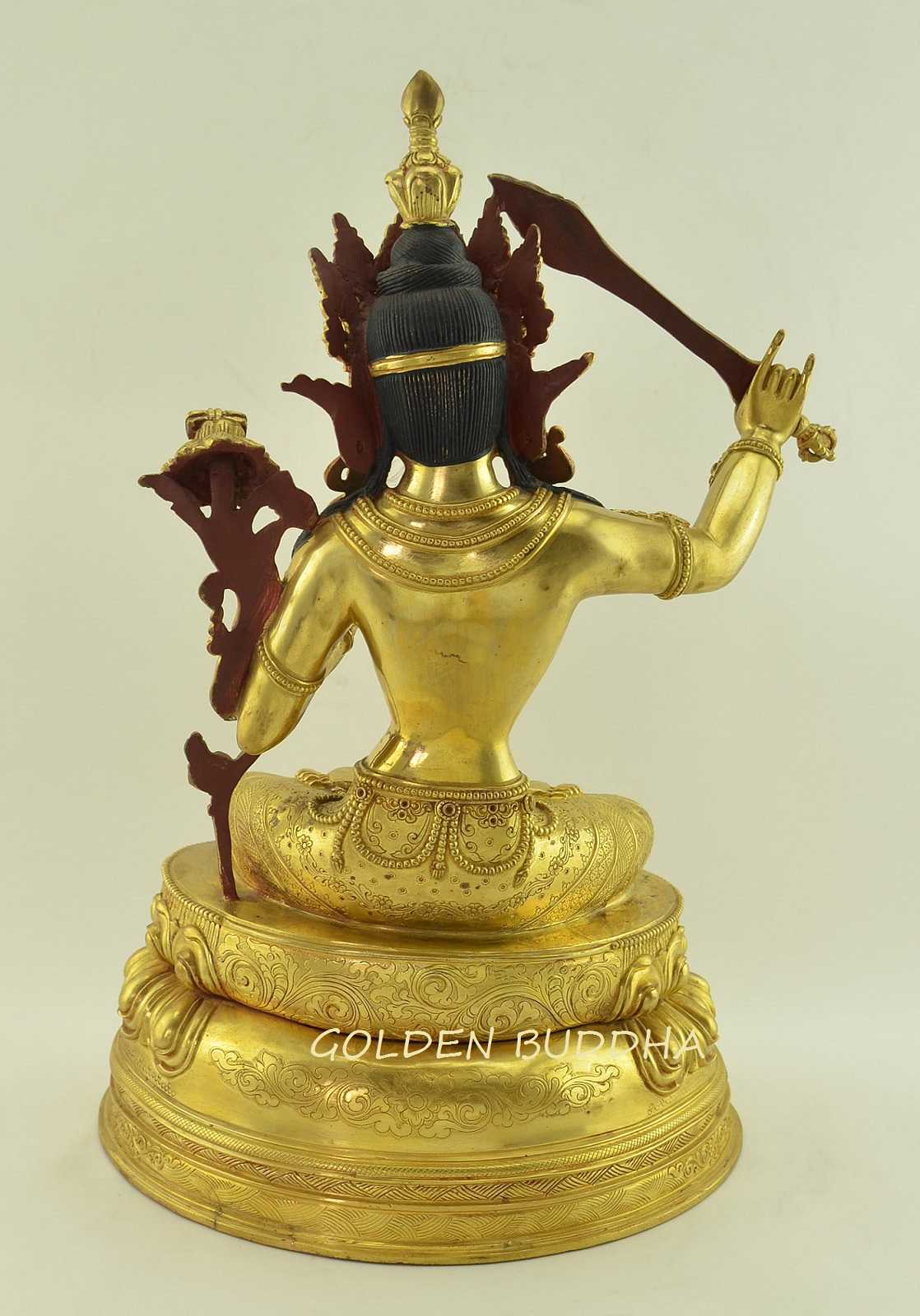
Commanding in scale yet exceptionally refined in its details, this 13.5-inch Gold Gilded Manjushri Sculpture portrays Jampelyang, the Bodhisattva of Transcendent Wisdom, seated above a substantial two-tier lotus throne. The composition is dominated by Manjushri’s raised sword of wisdom, which sweeps dramatically above his right shoulder, while an utpala lotus rises beside his left arm to support the Prajnaparamita scripture. Handmade in Patan, Nepal from copper alloy using the traditional lost-wax casting method, the sculpture is fire gilded in 24K gold and finished with a face hand painted in 18K gold and natural pigments. Particularly notable are the extensive engraved patterns across the dhoti, elaborate Bodhisattva crown, jewelry, lotus petals and broad pedestal, giving this larger sculpture exceptional visual depth from both near and distant viewing.
Gold Gilded Manjushri Sculpture | Iconography of Wisdom
Manjushri, whose Sanskrit name is commonly translated as “Gentle Glory,” personifies prajna, the transcendent wisdom that directly understands the nature of reality. His right arm is raised high while wielding the flaming sword of wisdom. Rather than representing physical violence, the sword symbolizes penetrating insight cutting through ignorance, mistaken perception and conceptual obscuration. His left hand forms Vitarka mudra, associated with teaching and the communication of Dharma, while delicately holding the stem of the lotus beside his shoulder.
The blossoming lotus supports the Prajnaparamita Sutra, the Perfection of Wisdom scripture closely associated with Manjushri’s realization. Sword and scripture therefore complement one another: the book represents perfected wisdom expressed through Buddhist teaching, while the sword represents that wisdom experienced as direct insight. Together they make Manjushri especially meaningful to students, scholars, teachers and practitioners cultivating discernment, memory and understanding.
Exceptional Hand Engraving and Newar Metalwork
The photographs reveal craftsmanship extending well beyond the primary iconographic attributes. Manjushri wears an elaborate multi-point Bodhisattva crown surrounded by large circular earrings, necklaces, armlets and finely modeled ornaments. His blue-black hair is arranged beneath the crown and falls in sections beside the shoulders. Engraved floral, geometric and textile patterns cover the dhoti around both crossed legs, while additional engraving appears across the waist ornaments and pedestal. Manjushri sits in full lotus posture, creating a stable meditative counterpoint to the upward movement of the sword.
The throne is especially substantial. A smaller upper lotus tier supports the figure above a broad second course of raised lotus petals, followed by several engraved decorative bands incorporating scrolling foliage, geometric patterns and finely incised borders. These successive layers give the sculpture considerable architectural presence and help visually support the tall sword and crown above.
Gold Gilded Manjushri Sculpture with Yamantaka and Yama
This Manjushri also forms a particularly meaningful three-statue arrangement with Yamantaka, the Destroyer of Death, and Yama Dharmaraja. The relationship is more than aesthetic. Peaceful Manjushri embodies transcendent wisdom itself, while Yamantaka is the wrathful manifestation of that wisdom, assuming the terrifying form of Vajrabhairava to overcome death and profound spiritual obstruction. Yama Dharmaraja completes the arrangement as a wrathful enlightened protector associated with the defeat of ego-clinging and obstacles to tantric realization.
Together they create a progression from peaceful wisdom, to wisdom expressed as overwhelming tantric activity, to the protective force that safeguards practice. Their comparable scale and elaborate Nepalese metalwork also make the three sculptures visually complementary when arranged together on a larger shrine.
Filling and Consecration in Kathmandu
For a statue intended for an active Buddhist shrine, traditional filling and consecration can be arranged in Kathmandu, Nepal before shipment. Sacred mantra rolls and appropriate blessed substances may be installed within the hollow copper-alloy sculpture before the statue is ritually prepared and blessed. Learn more about our Buddha statue filling and consecration service.
Custom Gold Gilded Manjushri Sculpture Options
Manjushri statues can also be commissioned directly from skilled Nepalese artisans in different dimensions, finishes and levels of ornamentation. Options include 24K gold fire gilding, antiquated finishes and coordinated shrine sets. Genuine turquoise and red coral may also be embedded in appropriate crown and jewelry settings upon request. For collectors planning a complete Manjushri, Yamantaka and Yama grouping, all three may be commissioned with complementary proportions and finishes through our custom Tibetan Buddhist statues service.
Authentic, Handmade in Nepal
Every statue is handcrafted in Patan, Nepal, using traditional lost wax casting and comes with a certificate of authenticity issued by Nepal’s Department of Archaeology, verifying its materials, technique, and origin.