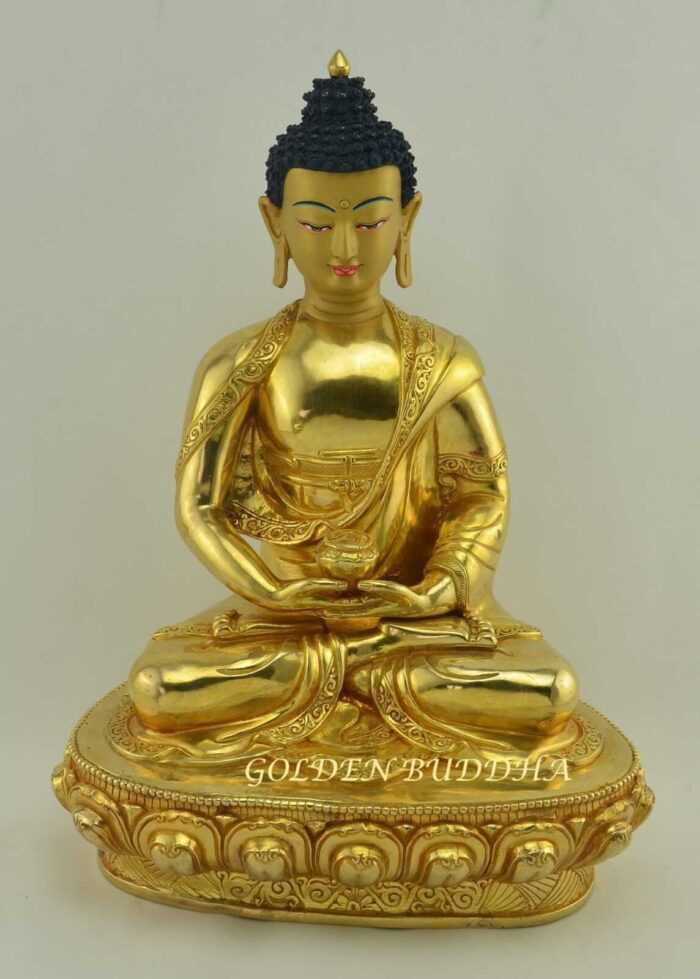

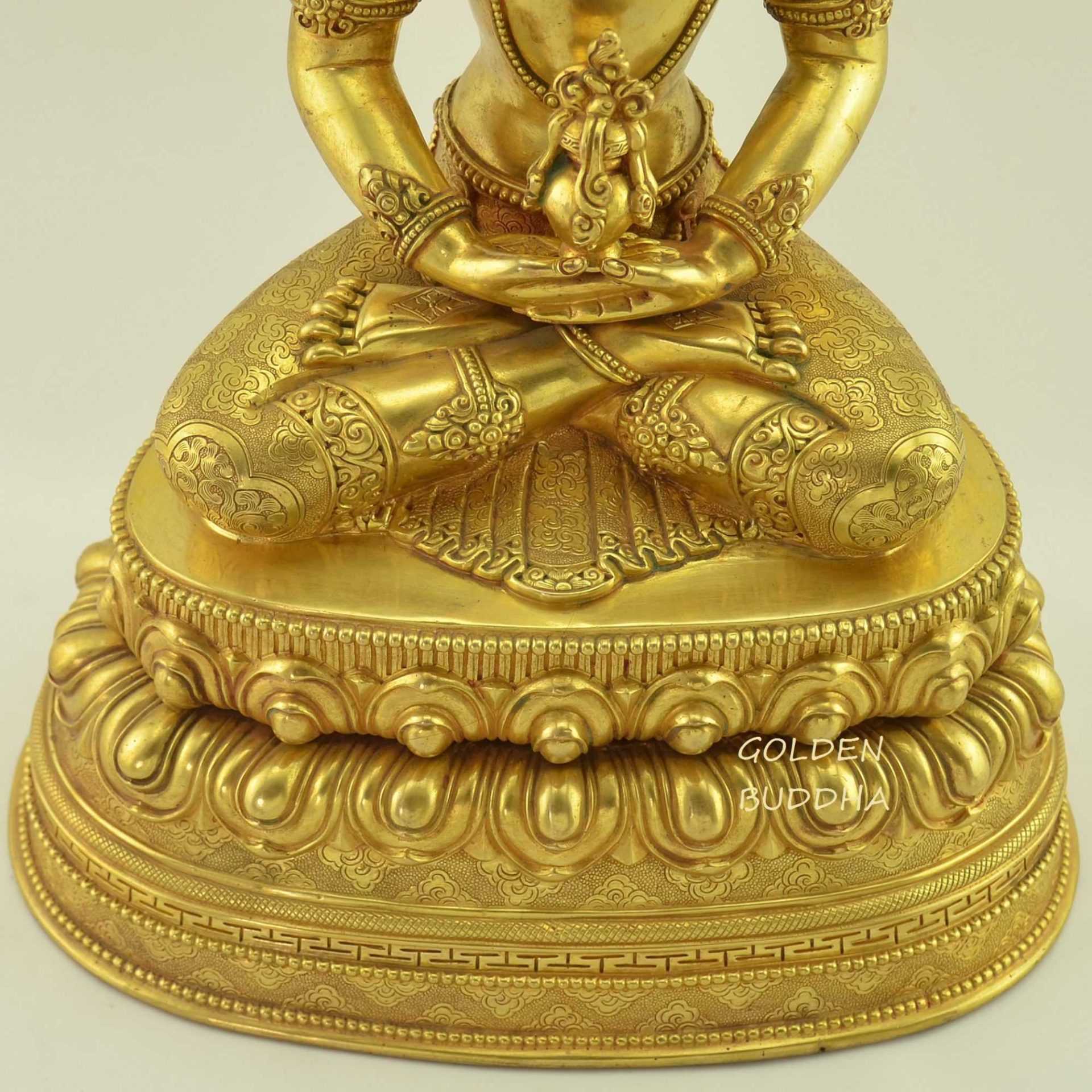
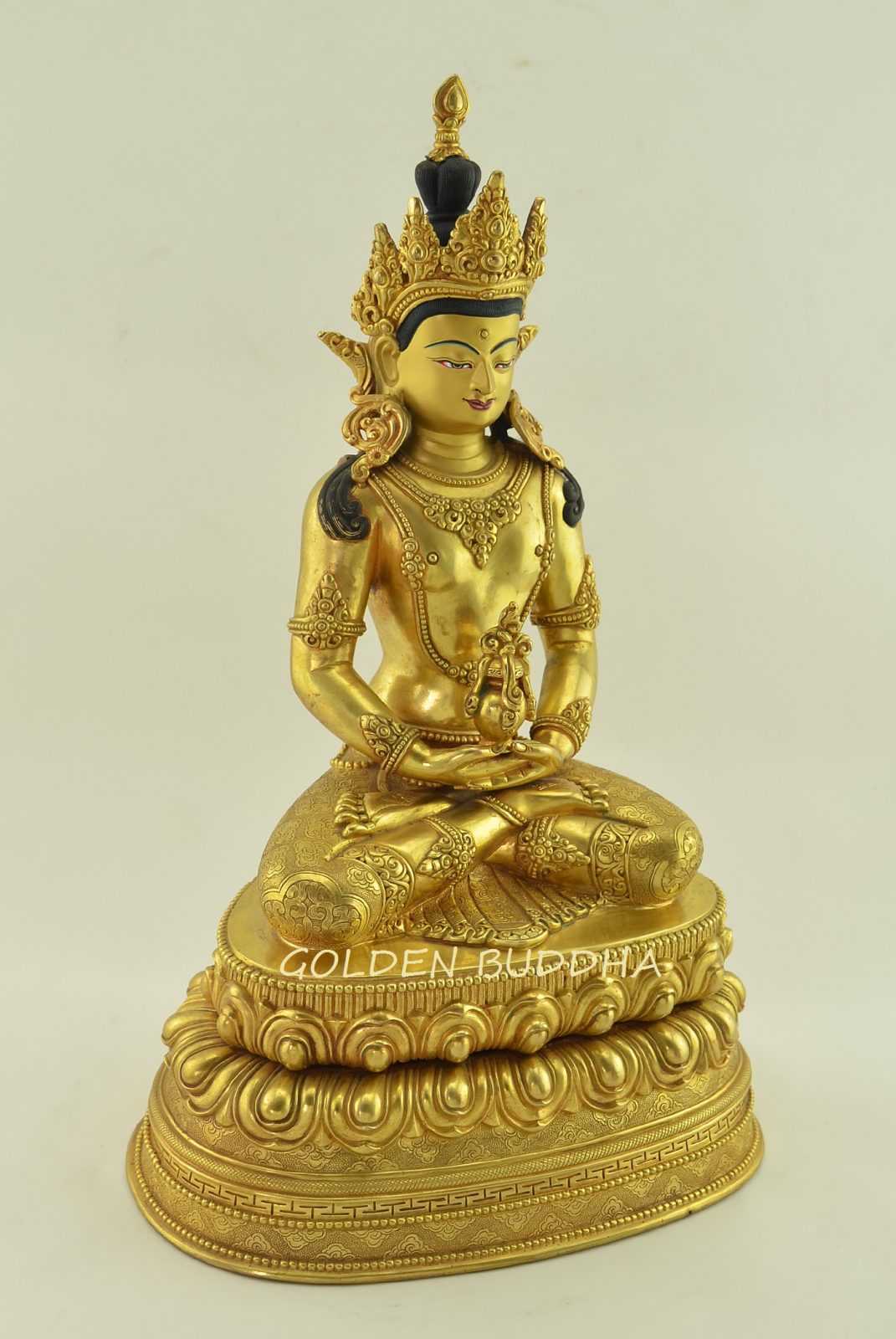



This magnificent 13.5-inch Aparmita Statue portrays Amitayus Buddha, known in Tibetan as Tsepame, the Buddha of Infinite Life. Handmade in Nepal from copper alloy using the traditional lost-wax casting method, the sculpture is fire gilded in 24K gold and distinguished by extensive hand engraving. Aparmita sits serenely in full vajra posture with both hands resting in Dhyana Mudra. Upon his upturned palms rests his defining attribute, the longevity vase containing amrita, the nectar of immortal life. The elaborately ornamented vessel rises prominently from the center of the composition, immediately identifying this richly adorned figure with the Tibetan Buddhist practices of longevity and accumulated merit.
The serene face of this Aparmita Statue is hand painted with 18K gold and natural pigments, with finely outlined eyes, gracefully arched brows and delicately painted lips. An urna appears at the center of his forehead, while his blue-black hair rises into an elaborate high topknot behind his ornate five-pointed crown and terminates in a golden finial. Large ornamental earrings frame the face, and layered necklaces, armbands and bracelets complete the regal appearance traditionally associated with Amitayus Buddha. Dark blue-black accents along the shoulders contrast beautifully with the warm 24K gold surface.
Aparmita Statue with Detailed Hand Engravings
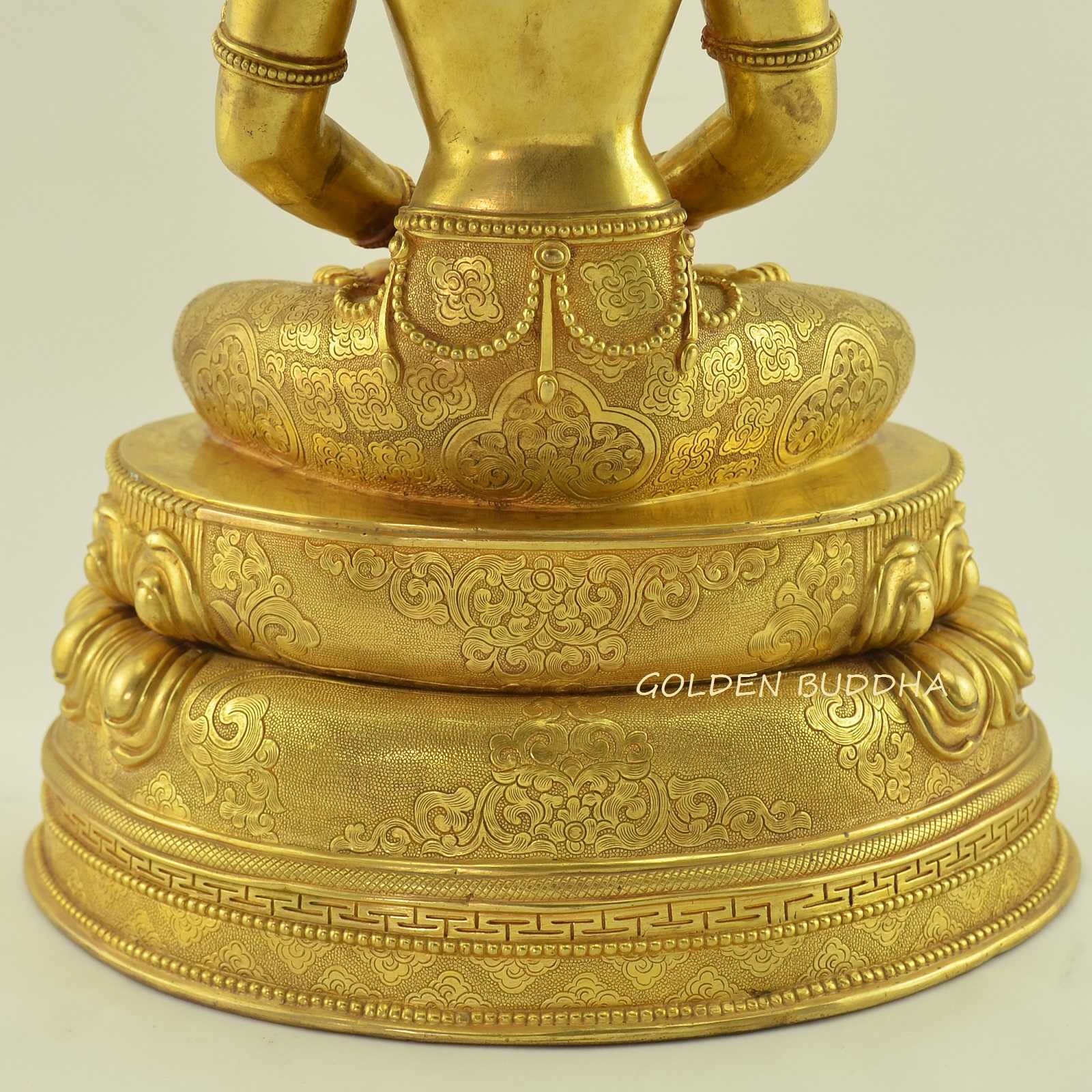
One of the most impressive characteristics of this sculpture is the extraordinary amount of engraved ornamentation. Fine patterns cover the dhoti across both legs, while deeply engraved scrollwork defines the garment borders, cuffs and shoulder coverings. These decorations continue around the figure rather than being restricted to the areas visible from the front. The rear view reveals intricate patterns across the dhoti and upper pedestal, demonstrating the attention given to every side of the sculpture. Long celestial scarves emerge from the shoulders, loop around the arms and descend toward the throne in sweeping curves, introducing graceful movement around Aparmita’s symmetrical meditation posture.
The Aparmita Statue rests upon an unusually substantial double lotus throne that contributes significantly to its visual presence. A smaller upper pedestal supports the seated figure, while a broad lower tier is surrounded by a prominent row of sculpted lotus petals. Fine floral and cloud-like engravings decorate the pedestal surfaces, complemented by repeating geometric borders around the lower circumference. Even the rear of the throne carries carefully executed decorative engraving. Combined with the 13.5-inch height and broad 9-inch width, this elaborate pedestal gives the statue impressive proportions for a home shrine, meditation room or Buddhist altar.
Aparmita, Amitayus Buddha and the Meaning of Infinite Life
Aparmita, meaning “The Boundless One,” is another name for Amitayus, while the Tibetan name Tsepame conveys “Infinite Life.” Amitayus is the longevity aspect of Amitabha Buddha and is especially associated with long life, merit and the removal of obstacles that can shorten one’s opportunity to practice the Dharma. The longevity vase held by this Aparmita Statue contains amrita and is one of the principal identifying attributes of Amitayus iconography. Learn more about his role in Tibetan Buddhism in our guide to Amitayus and the Long Life Deities and explore the symbolism of the vase, posture and ornaments in our detailed section on Amitayus iconography.
Create an Aparmita Statue, White Tara and Green Tara Altar
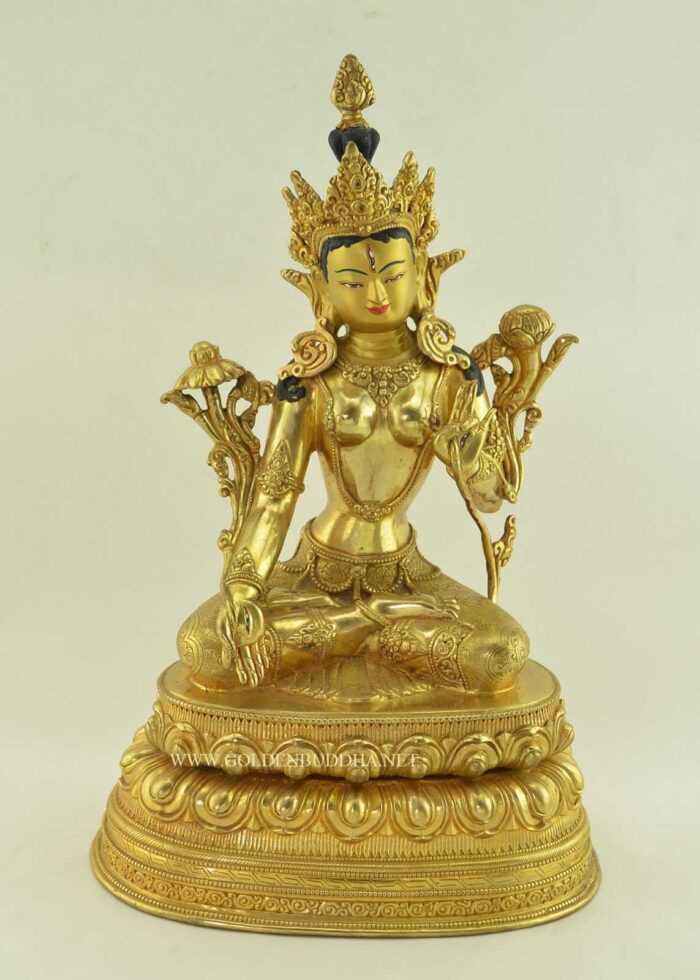
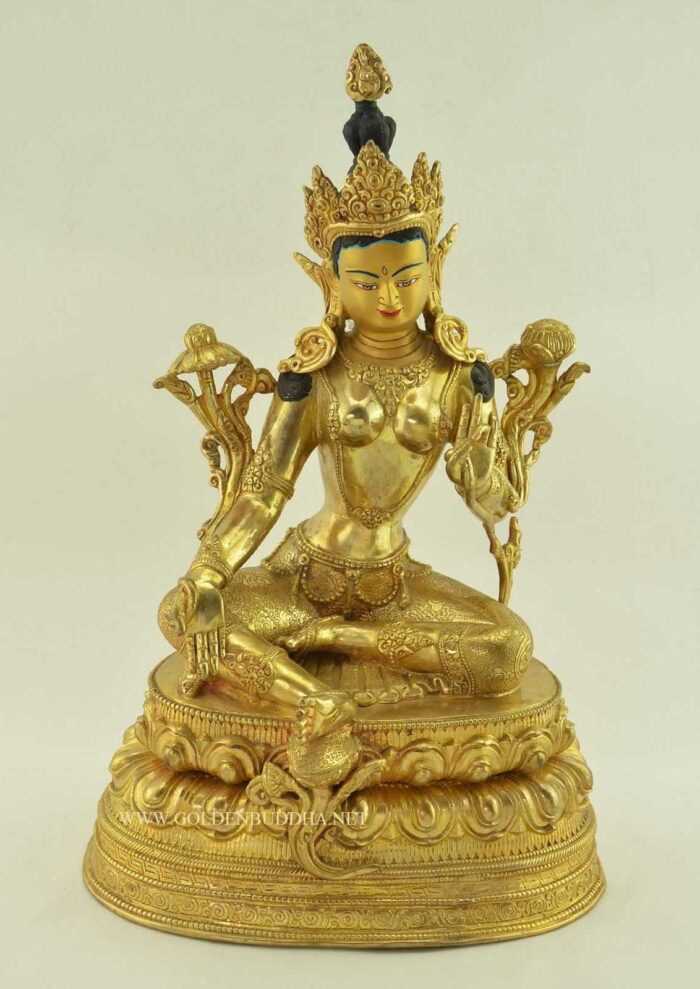
This Aparmita Statue is particularly well suited to a coordinated altar with our 13.5-inch White Tara statue and Green Tara statue. These three sculptures were created by the same artisan and share noticeable similarities in their proportions, sculptural treatment, fine garment engravings and 24K gold finishes. Their spiritual associations are equally complementary. Aparmita represents longevity and merit, White Tara is closely connected with healing and long-life practice, and Green Tara embodies swift compassionate activity and protection from obstacles.
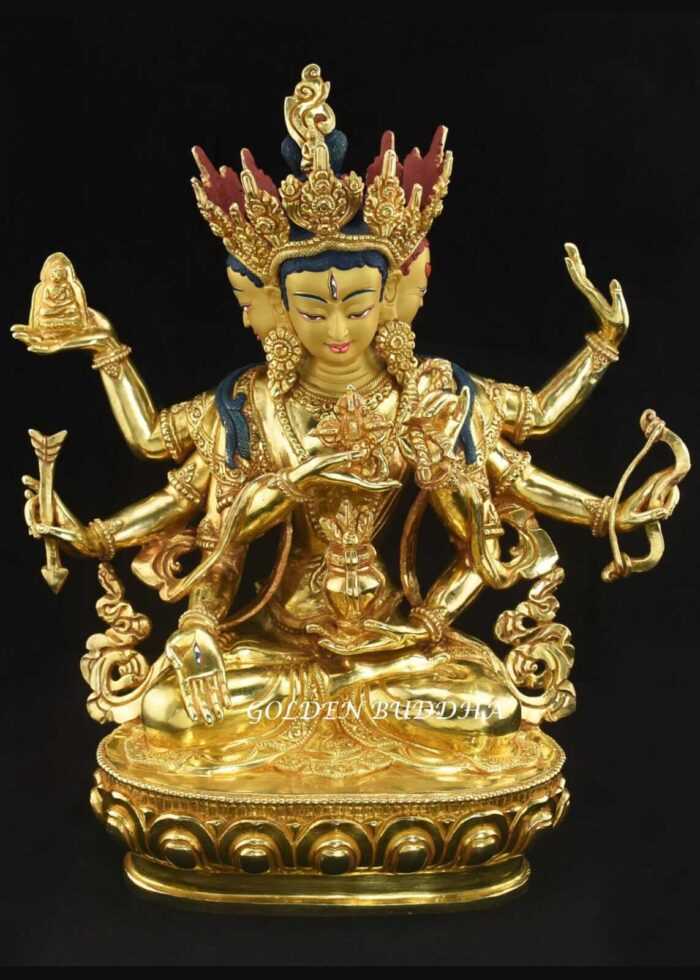
For a more complete longevity altar, our 13.5-inch Namgyalma sculpture, also known as Ushnishavijaya, makes an excellent fourth figure. Aparmita, White Tara and Namgyalma together comprise the traditional Three Long-Life Deities. Adding Green Tara creates a four-statue arrangement combining the complete longevity grouping with Tara’s active compassionate presence. Namgyalma was created by a different artisan, but her comparable dimensions, traditional Himalayan workmanship and 24K gold finish allow the four sculptures to display harmoniously together.
Optional Gemstones and Custom-Made Aparmita Statues
Upon request, turquoise and red coral gemstones can be embedded into the crown and jewelry before delivery, adding traditional color to the richly gilded composition. Collectors who would like an Aparmita Statue in another size, finish or configuration may also commission a custom-made Tibetan Buddhist statue. Our artisans can create statues according to specific dimensions and traditional iconographic requirements, including complementary figures intended for a coordinated altar set. This option is especially suitable for collectors wishing to assemble Amitayus, White Tara, Namgyalma or other related Buddhist figures with consistent proportions, craftsmanship and finishing.
Authentic, Handmade in Nepal
Every statue is handcrafted in Patan, Nepal, using traditional lost wax casting and comes with a certificate of authenticity issued by Nepal’s Department of Archaeology, verifying its materials, technique, and origin.