

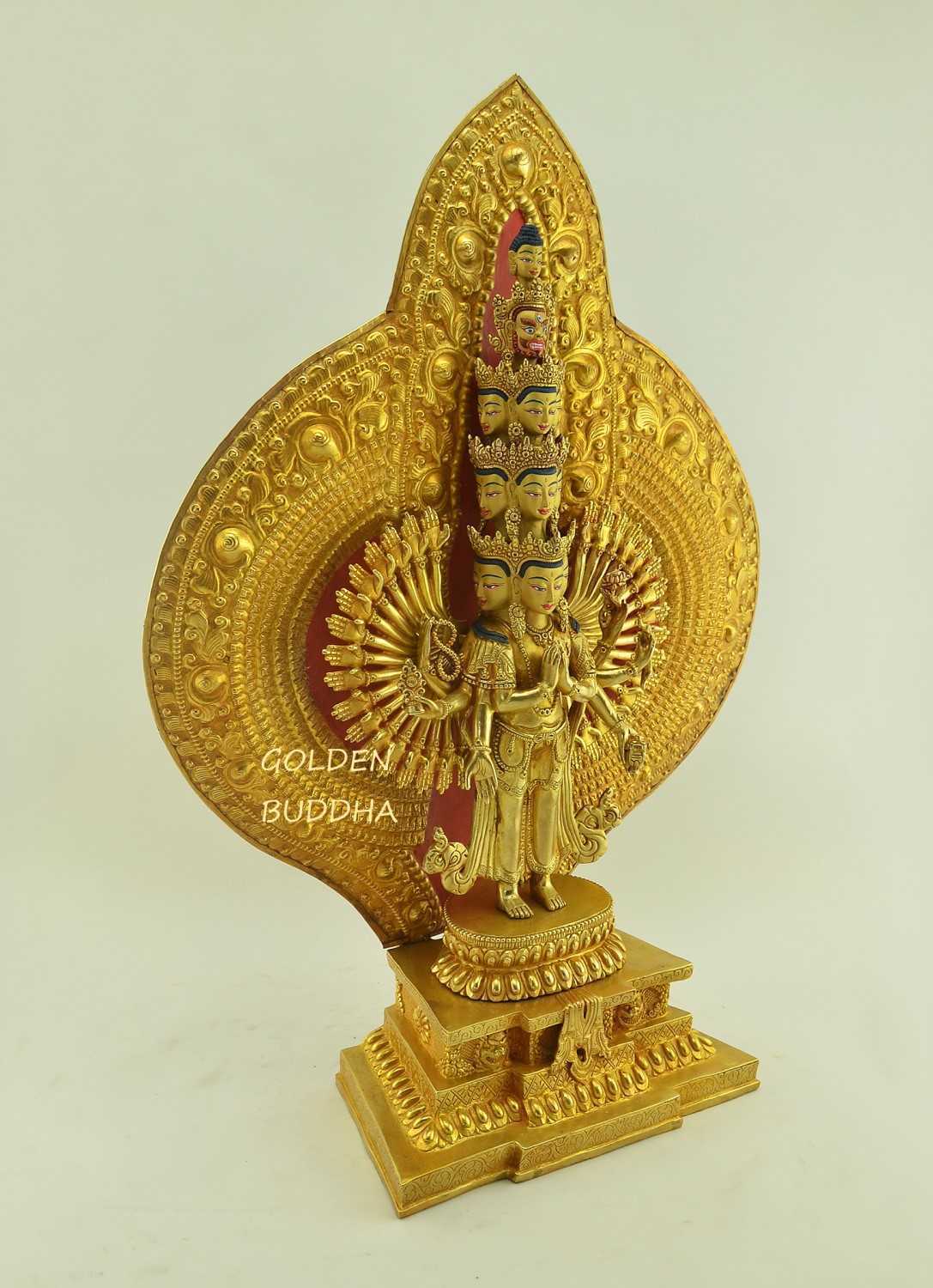
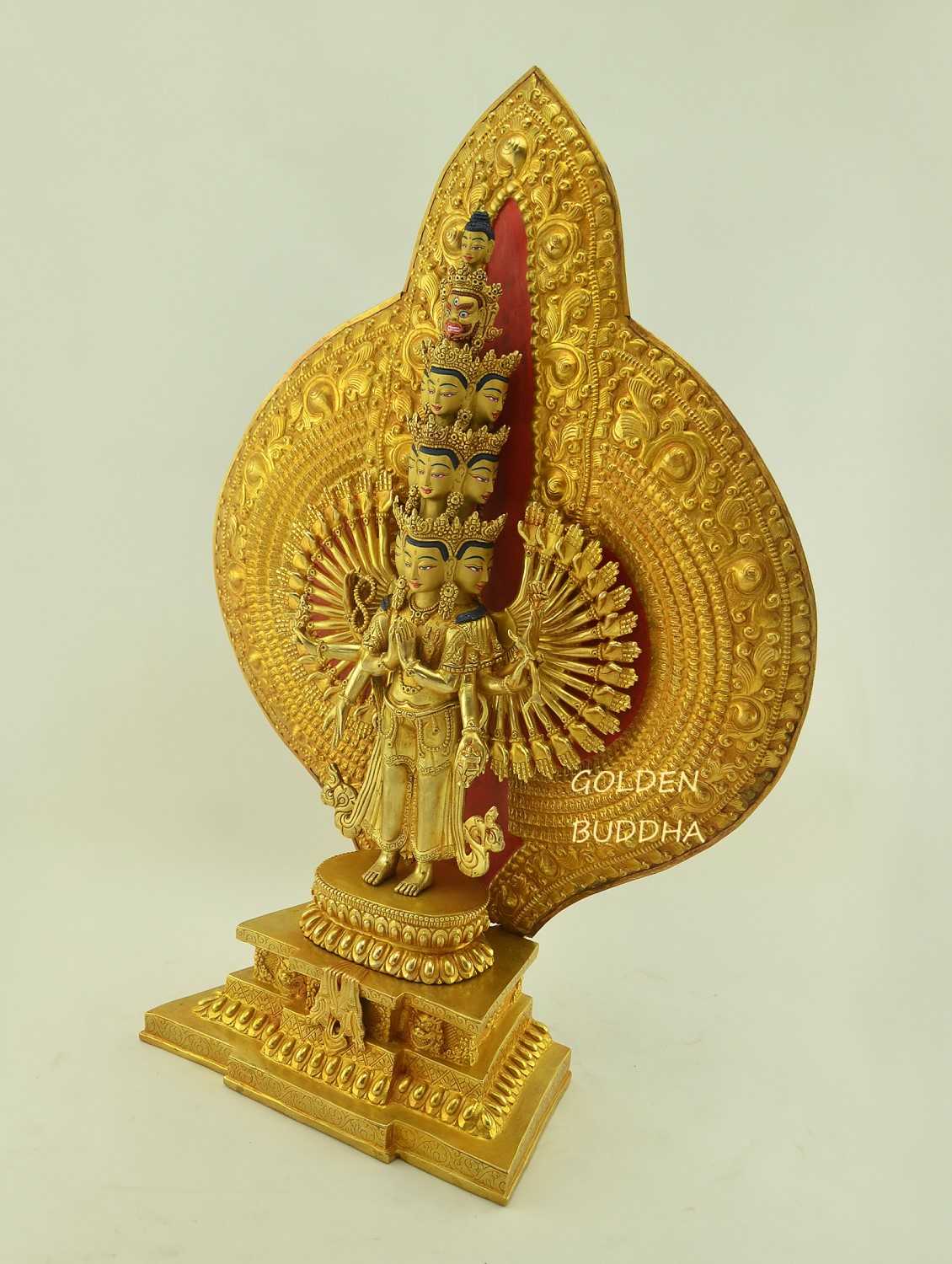
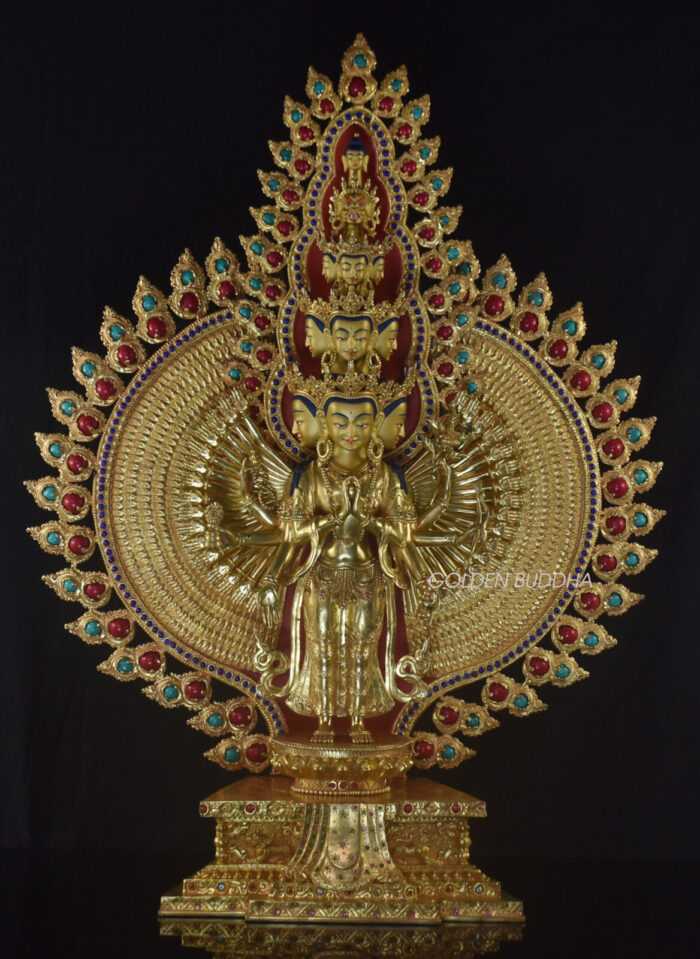
This extraordinary 20-inch 1000-Armed Avalokiteshvara Sculpture portrays Chenrezig Chagstong Chentong, the thousand-armed and thousand-eyed manifestation of the Bodhisattva of Compassion. Known in Sanskrit as Sahasrabhuja Avalokiteshvara, this complex form expresses his limitless ability to perceive suffering and extend compassionate assistance throughout the world. Handmade in Nepal from copper alloy using the traditional lost-wax casting method, the sculpture is fire gilded in 24K gold and presented against an elaborate removable aureole that creates its impressive 20-inch overall height.
1000-Armed Avalokiteshvara Sculpture and Sacred Iconography
The remarkable iconography begins with Avalokiteshvara’s eleven heads rising vertically above the principal face. Peaceful faces look outward in different directions, while the wrathful face symbolizes the fierce compassionate power necessary to overcome obstacles that cannot be subdued by peaceful means. At the summit is Amitabha Buddha, the spiritual head of the Lotus Family with which Avalokiteshvara is intimately associated. The faces are individually hand painted with natural pigments, while dark blue hair and selected red details provide vivid contrast against the extensive gold surface. Learn more about this extraordinary manifestation in our guide to 1000-Armed Avalokiteshvara iconography.
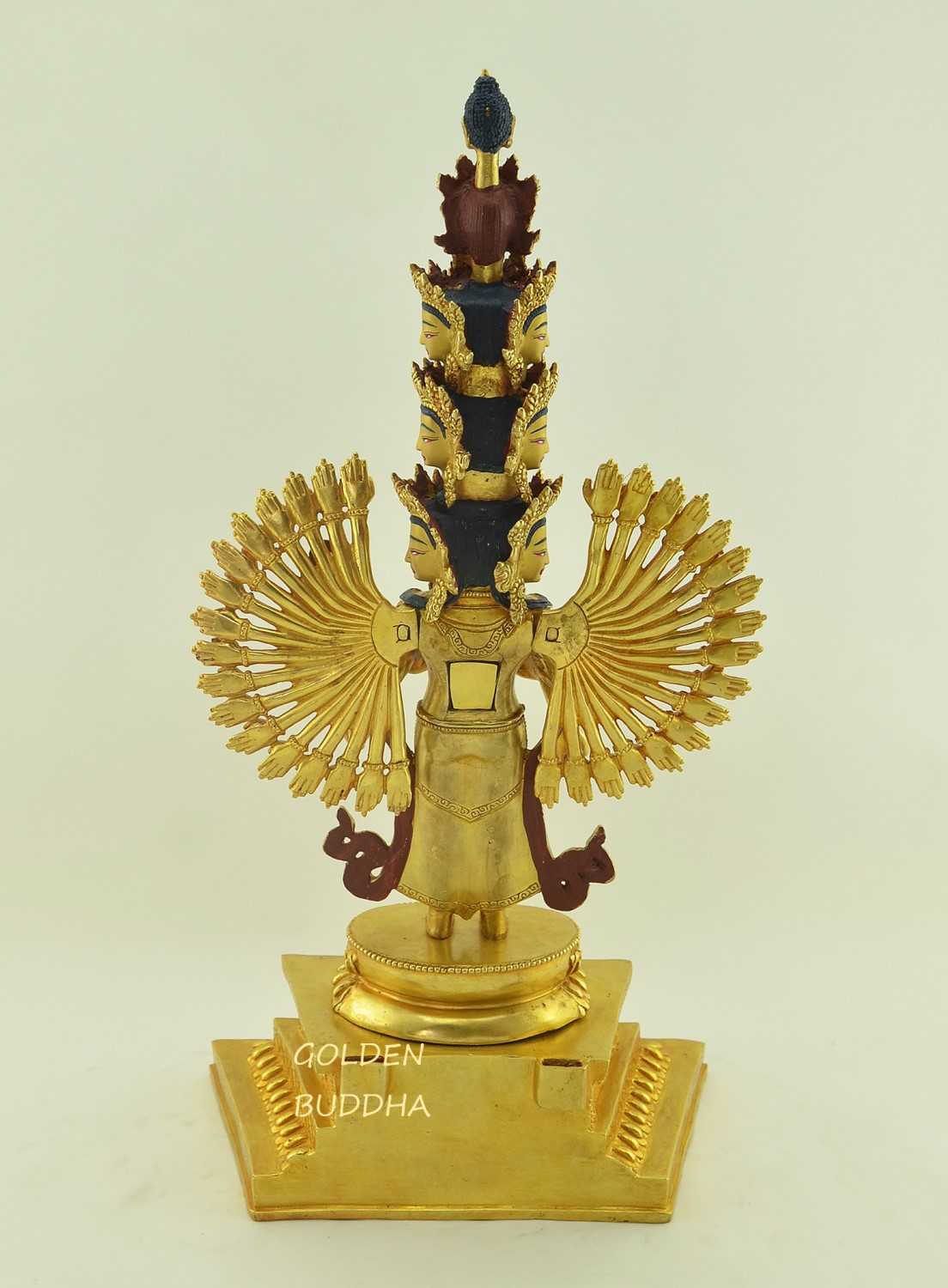
The principal hands are joined before the heart in Anjali Mudra, expressing reverence and devotion, while additional principal arms extend around the body in symbolic gestures and hold ritual attributes. Behind these larger arms spreads the sculpture’s most visually dramatic feature: numerous slender arms radiating outward in symmetrical fans on both sides of the body. Together they represent Avalokiteshvara’s boundless compassionate activity and his ability to reach toward beings in every direction. The finely modeled hands create an intricate halo-like field surrounding the central figure.
Removable Aureole and Ornamental Throne
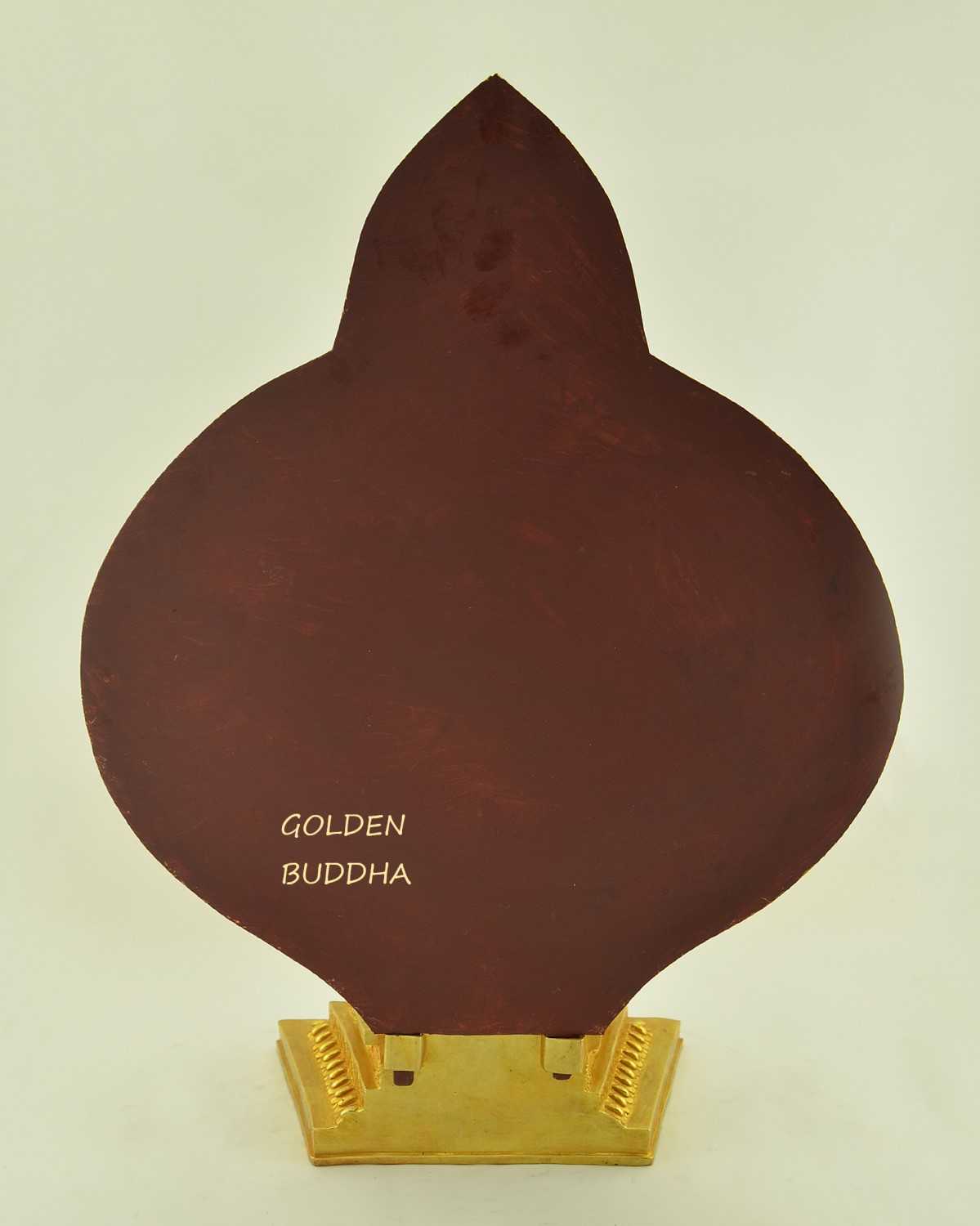
Behind the 1000-Armed Avalokiteshvara Sculpture is a large removable aureole shaped around the radiating arms and ascending heads. Its gold surface is densely ornamented with concentric decorative bands, scrolling motifs, raised circular forms and sculpted details surrounding a deep red central field. The aureole dramatically enlarges the visual presence of the sculpture while framing the many arms without obscuring their individual forms.
Avalokiteshvara stands upon a double lotus pedestal supported by an elaborate stepped throne. Lotus-petal borders, beaded edging and finely worked ornamental bands continue across the base, giving the tall composition a substantial architectural foundation. The combination of the gilded figure, red accents and intricate aureole makes this an especially commanding shrine sculpture.
The Story of Thousand-Armed Chenrezig
According to the traditional account, Avalokiteshvara vowed not to rest until all sentient beings were liberated from suffering. When confronted with the immense scale of suffering remaining in samsara, his body shattered under the weight of his compassionate commitment. Amitabha restored him in an expanded form possessing eleven heads to perceive the cries of beings in every direction and a thousand arms to respond to them. The form therefore transforms the seemingly impossible scope of his vow into a powerful visual expression of inexhaustible compassion. Explore the deeper meaning of Avalokiteshvara and Chenrezig in our complete guide.
Avalokiteshvara and Amitayus as an Altar Pair
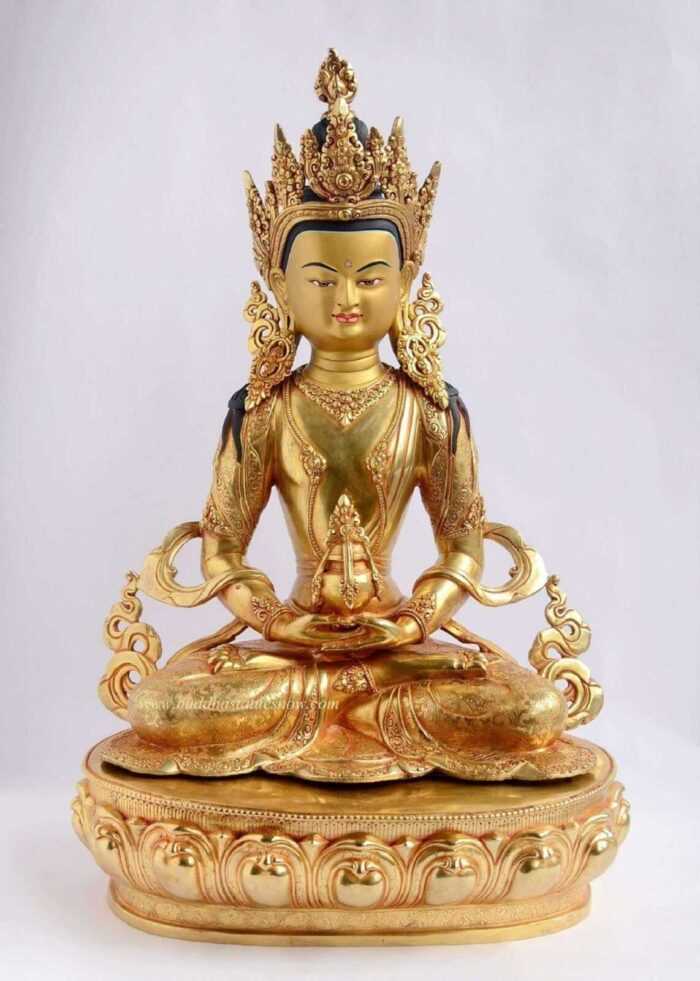
This sculpture also makes a meaningful companion to our 20-inch Amitayus Buddha sculpture. Amitayus is the longevity manifestation of Amitabha, whose image appears at the summit of eleven-headed Avalokiteshvara. The pairing therefore has a strong iconographic relationship: Avalokiteshvara embodies universal compassion, while Amitayus embodies infinite life, accumulated merit and the conditions supporting sustained Dharma practice. Their similar 20-inch scale also makes the two sculptures particularly suitable for a coordinated altar arrangement.
Consecration and Sacred Filling Available in Nepal
A removable consecration door provides access to the hollow interior of the statue for the traditional placement of mantras, sacred substances and other appropriate filling materials. For buyers wishing to receive the sculpture prepared for religious practice, traditional statue filling, blessing and consecration can be arranged in Nepal upon request before shipment. Please contact us before ordering if you would like to discuss this additional service.
Custom Made 1000-Armed Avalokiteshvara Sculptures
Collectors seeking a different scale or finish can commission a related piece through our custom Tibetan Buddhist statue service. A custom 1000-Armed Avalokiteshvara Sculpture can be handmade in Nepal using traditional lost-wax casting with specifications selected for an existing shrine or collection. Options may include different dimensions, 24K gold fire gilding, antiquated finishes, hand-painted details and coordinated pedestal treatments. Turquoise and red coral gemstones may also be added to appropriate crown and jewelry details upon request, creating a personalized expression of this extraordinary thousand-armed form of the Bodhisattva of Compassion.
Authentic, Handmade in Nepal
Every statue is handcrafted in Patan, Nepal, using traditional lost wax casting and comes with a certificate of authenticity issued by Nepal’s Department of Archaeology, verifying its materials, technique, and origin.
pascal poirel (verified owner) –
hello Edwin,
this little email to tell you that I received the statue of Tchenrezi 1000 arms.
I am happy to include it in my practice, it will soon be dedicated.
Its finesse and the precision of its details are simply extraordinary …
A big thank you to all who participated in the making of this magnificent work of art.
I wish the benefits of my practice to be for them too.
Thank you for the seriousness and speed of sending the order, and despite the language problems, I will not hesitate to use your services for my next projects.
Greetings, Pascal Poirel.
Of France.