
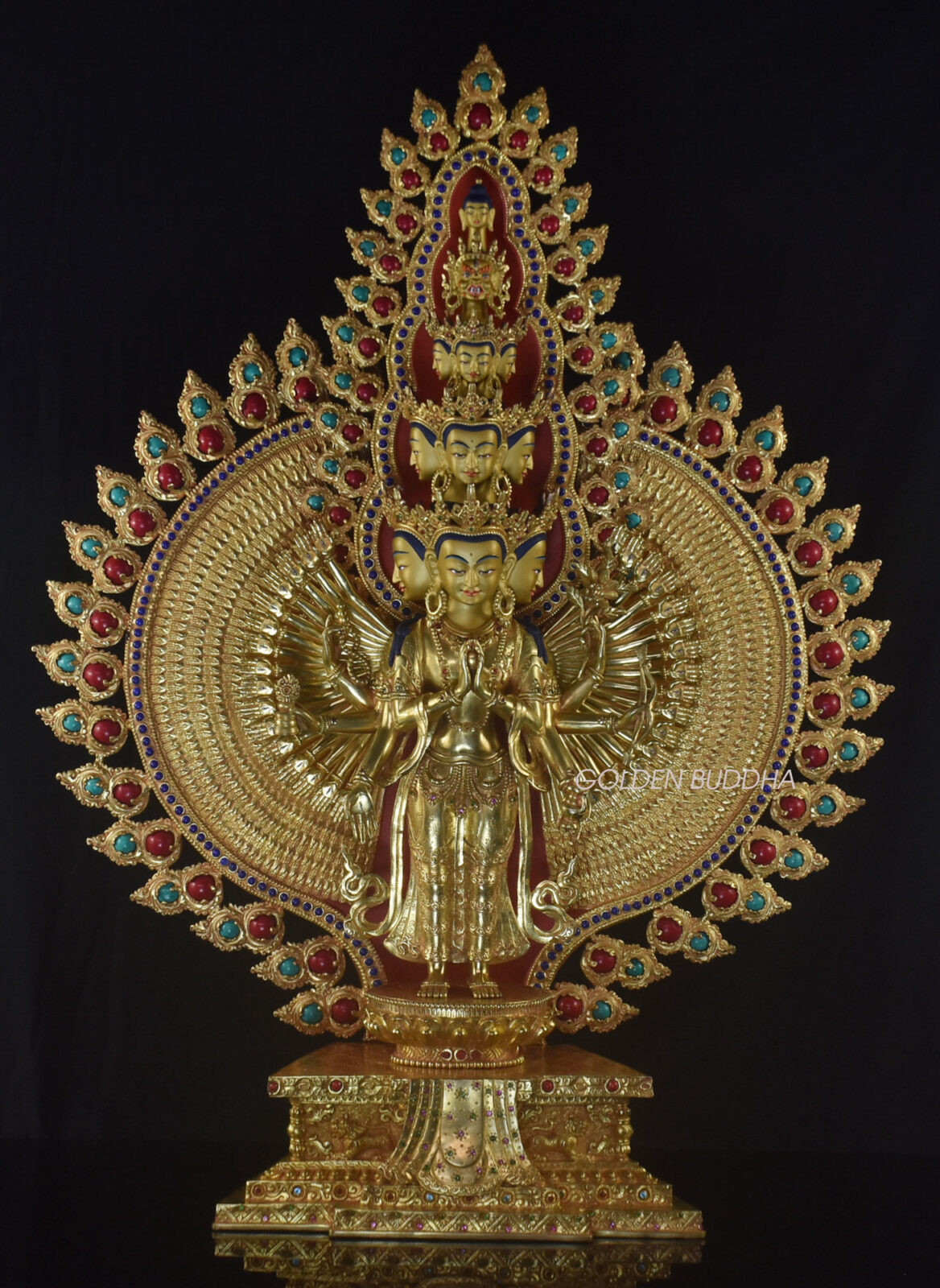
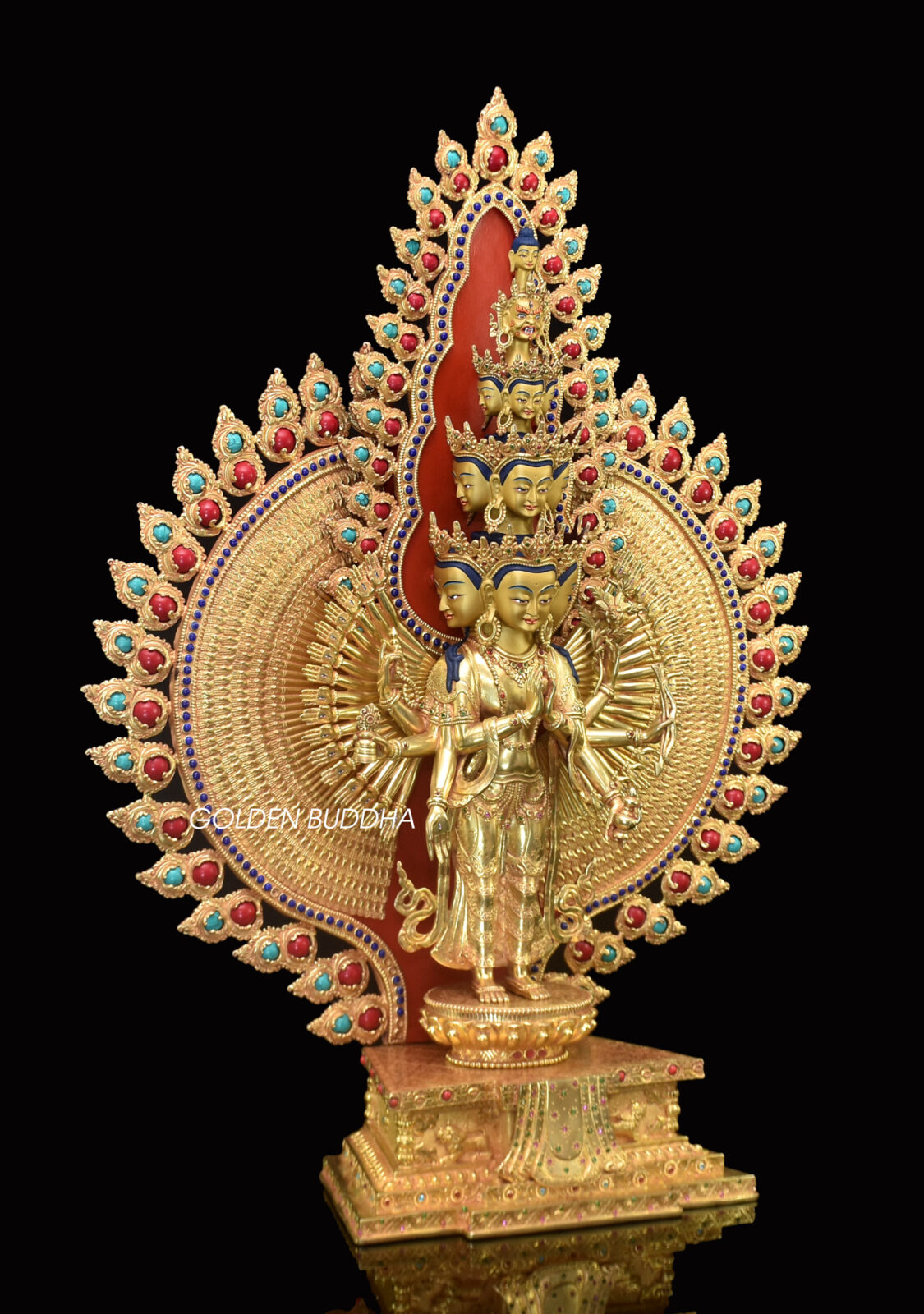
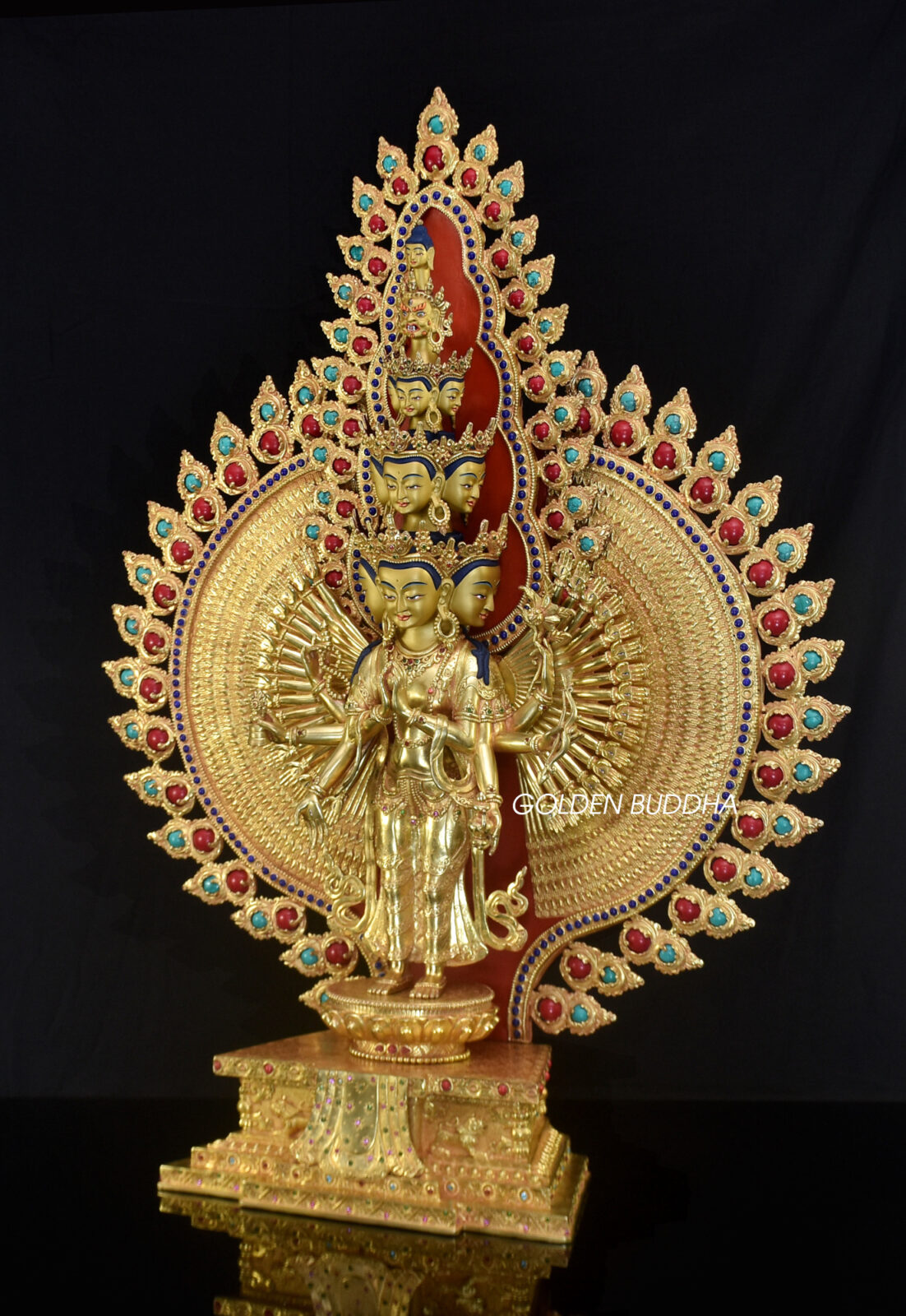
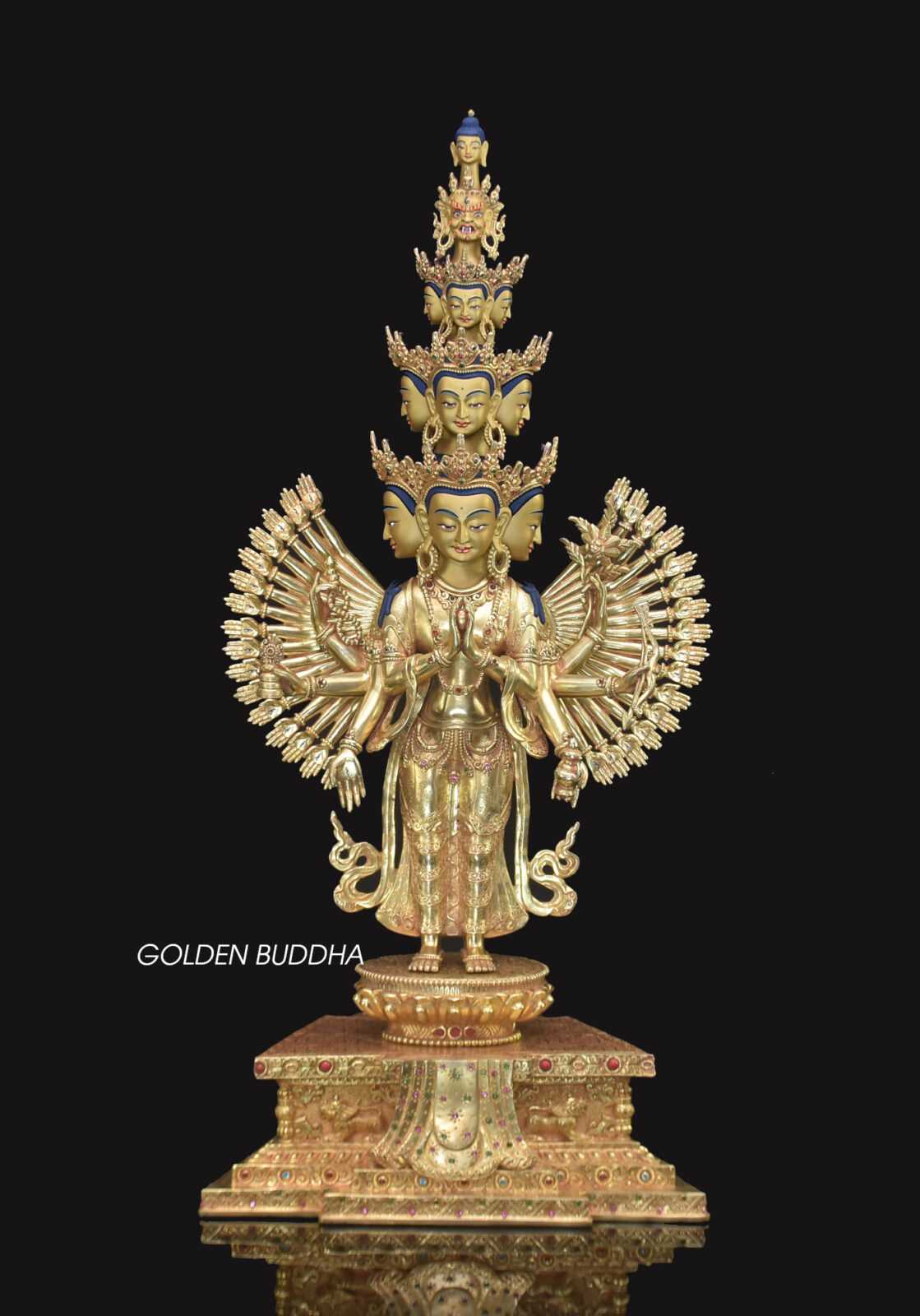

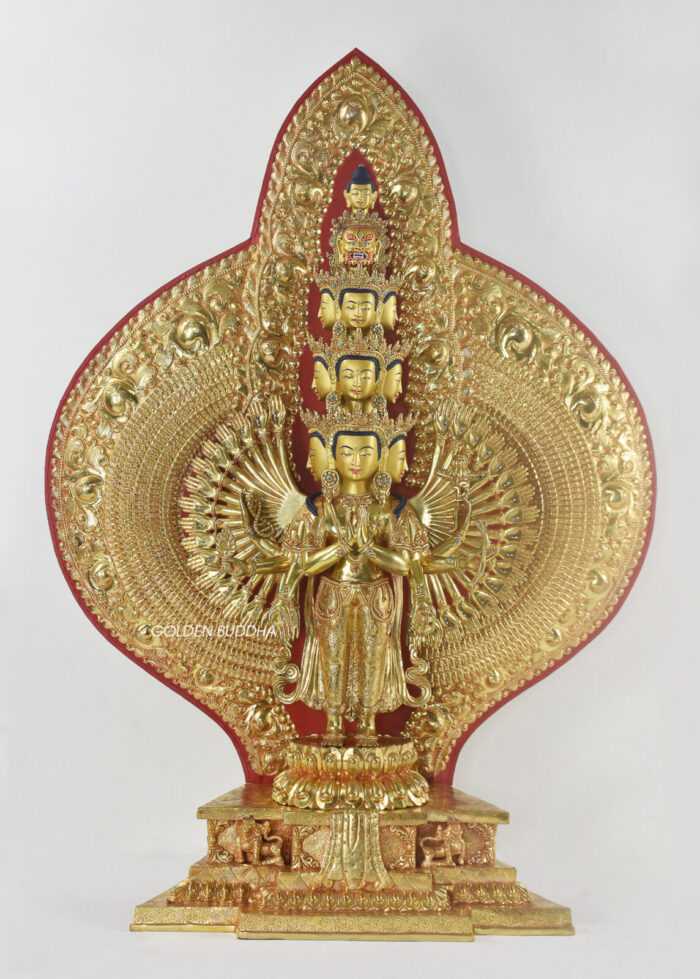
Our 27-inch Masterpiece 1000-armed Avalokiteshvara Statue is an extraordinary representation of Chenrezig Chagstong Chentong, the Thousand-Armed, Thousand-Eyed Bodhisattva of Compassion. Handmade in Patan, Nepal from copper alloy using the traditional lost-wax casting method, this monumental sculpture is fire gilded in 24K gold and rises to 27 inches with its magnificent removable aureole, or 24 inches without the frame. Avalokiteshvara stands upon a double lotus pedestal above an elaborate stepped throne, surrounded by an immense radiating field of compassionate hands. The scale, complexity and extensive gemstone embellishment make this one of the most elaborate examples of Avalokiteshvara iconography in our collection.
Iconography of the Masterpiece 1000-Armed Avalokiteshvara Statue
The sculpture presents Avalokiteshvara in his spectacular eleven-headed form, with peaceful faces arranged in ascending tiers so that his compassionate awareness extends in every direction. Above them appears the fierce wrathful face representing enlightened power, while Amitabha Buddha crowns the entire composition. Amitabha’s position at the summit recalls Avalokiteshvara’s intimate connection with the Buddha of Infinite Light and the Lotus Family. Each face is carefully hand painted, with delicately rendered eyes, brows and lips contrasting against the brilliant gold surface.
Avalokiteshvara’s two principal hands meet before his heart in Anjali Mudra, expressing devotion and the awakened compassion at the center of his activity. Additional principal arms extend outward carrying ritual attributes and displaying symbolic gestures, while countless smaller arms spread behind him in enormous symmetrical arrays. These many hands visually express his limitless capacity to reach beings throughout samsara. The story and meaning behind this remarkable manifestation are explored further in our guide to 1000-armed Avalokiteshvara.
24K Gold, Gemstones and Removable Aureole
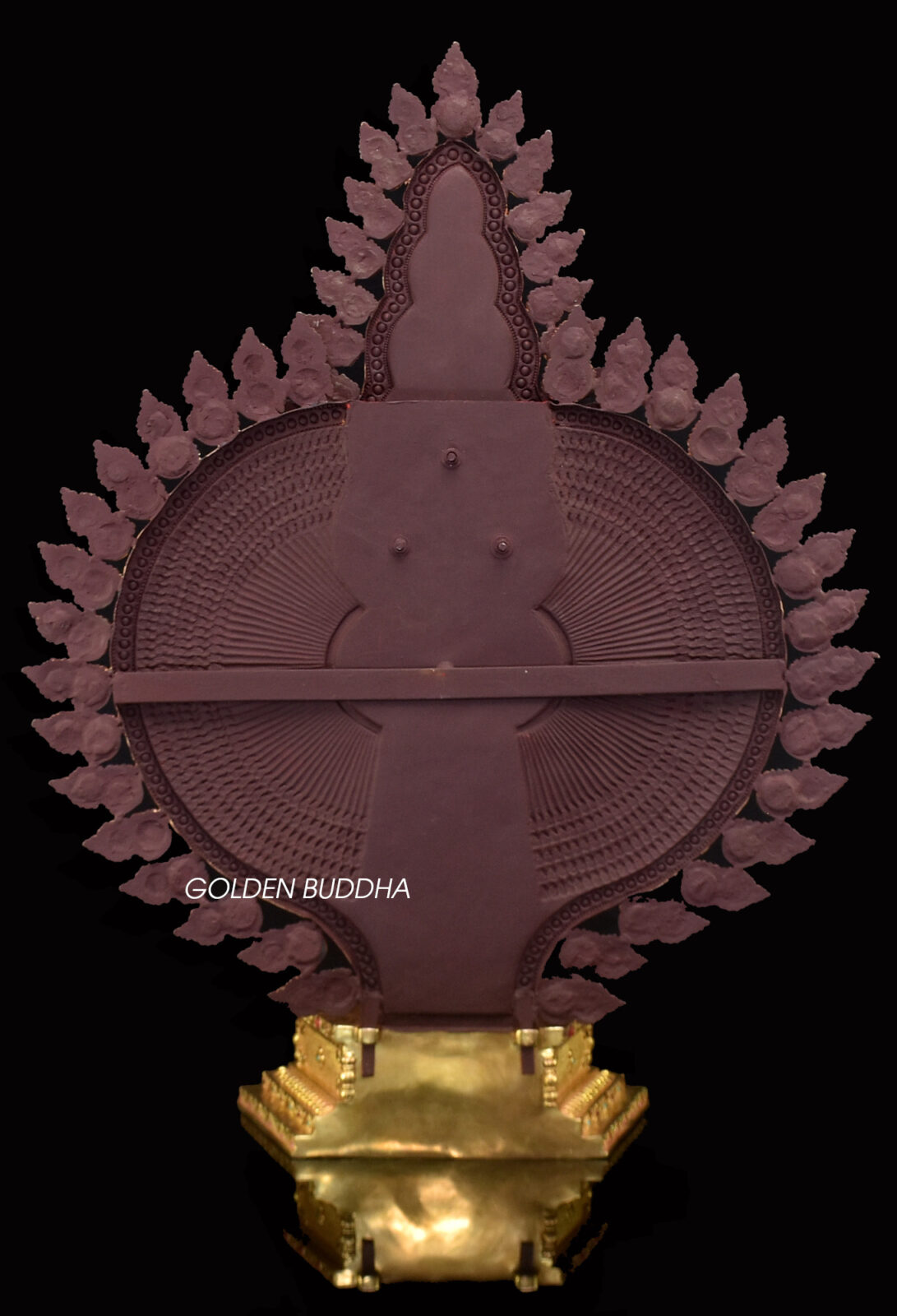
Exceptional ornamentation distinguishes this statue from more conventional representations. The enormous removable aureole surrounds the thousand-arm configuration with successive fields of finely worked detailing. Its outer perimeter is crowned by flame-shaped ornaments individually embellished with alternating turquoise and red coral gemstones. Rows of deep blue lapis lazuli form an additional jeweled border around the inner aureole and ascending head chamber. More gemstones embellish the garments, lotus pedestal and richly ornamented throne. Together, the brilliant 24K gold and natural colors of the stones create the appearance of an important Himalayan shrine image rather than a simple decorative sculpture.
The craftsmanship continues through Avalokiteshvara’s long garments, jewelry and crowns, with extensive engraved detailing visible across the robes. Below, the double lotus pedestal rests upon a large stepped throne enriched with gemstone settings, sculpted figures, ornamental bands and a central cascading textile motif. The removable aureole is constructed separately from the main figure, allowing the extraordinary central sculpture and its radiating arms to be appreciated independently.
1000-Armed Avalokiteshvara and Vajrapani — Compassion and Enlightened Power
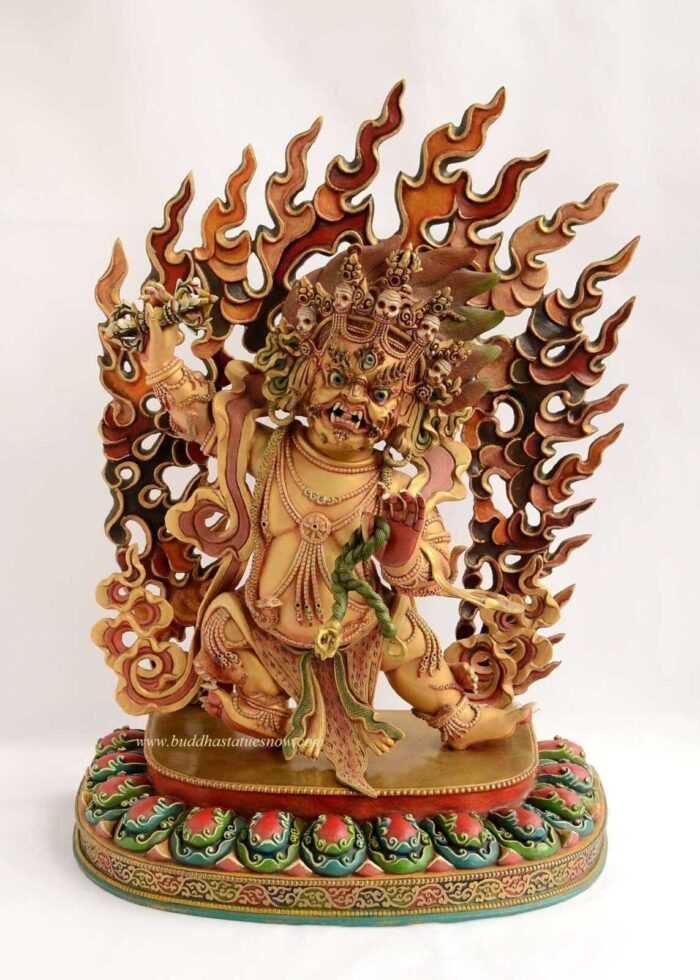
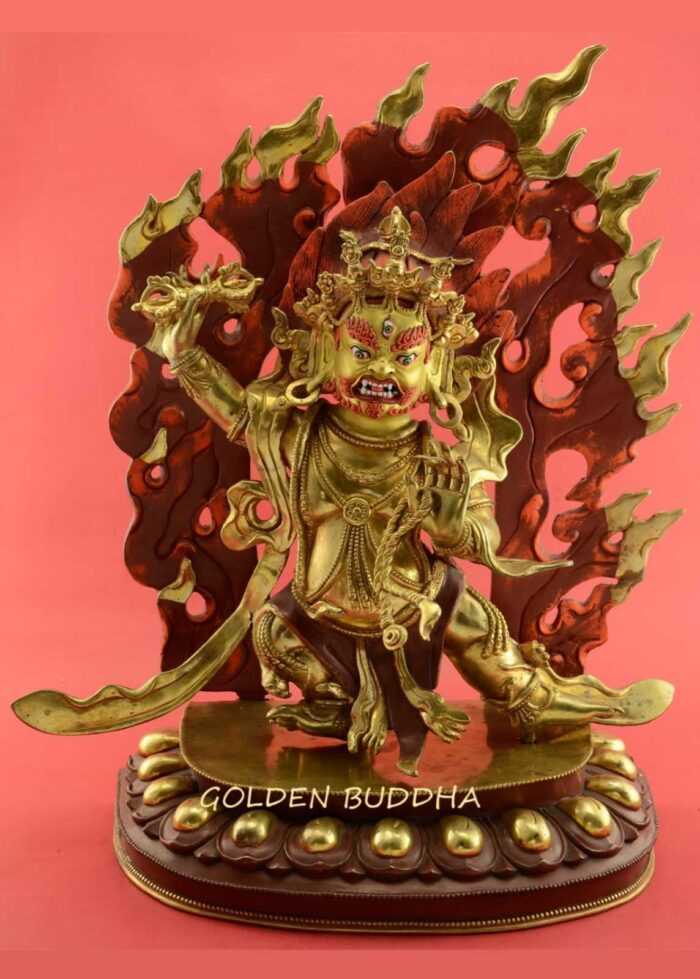
A 1000-armed Avalokiteshvara also makes a meaningful altar companion for Vajrapani. Avalokiteshvara embodies the boundless compassion of the Buddhas, while Vajrapani embodies their enlightened power and capacity for decisive action. Together with Manjushri, embodiment of transcendent wisdom, they form the great Bodhisattva triad traditionally associated with Compassion, Wisdom and Power. A shrine can therefore pair this peaceful Chenrezig with a Wrathful Vajrapani statue, or add Manjushri to create the complete three-deity arrangement. Learn more about Vajrapani’s symbolism and his relationship with the other great Bodhisattvas in our Vajrapani iconography guide.
Statue Filling and Consecration in Nepal
For practitioners who intend to place this Masterpiece 1000-armed Avalokiteshvara Statue upon a Buddhist altar, traditional statue filling and consecration can be arranged in Nepal upon request before the sculpture is shipped. The hollow interior may be carefully filled with sacred materials selected according to Tibetan Buddhist tradition, including rolled mantras, fragrant woods, incense powders and other appropriate substances.
After the filling has been completed and the statue securely resealed, a qualified Nepali Buddhist guru can perform the consecration ceremony while reciting the deity’s mantras and prayers. This ritual transforms the sculpture from a sacred representation of Avalokiteshvara into a properly prepared support for Buddhist practice according to Tibetan tradition.
Filling and consecration are optional services and should be requested before purchase so that sufficient time can be allowed for arrangements with the monastery. Learn more about the process, materials and ceremony in our complete guide to Buddha statue filling, blessing and consecration in Nepal.
Custom Made Avalokiteshvara Statues
For collectors, monasteries or practitioners seeking this extraordinary iconography in another size or configuration, we can arrange custom Tibetan Buddhist statues handmade in Patan, Nepal. A custom Avalokiteshvara may be commissioned in copper alloy with 24K gold fire gilding, hand-painted facial details, elaborate engraving and selected gemstone embellishment. Matching Manjushri and Vajrapani sculptures can also be commissioned to create a coordinated altar set representing the three enlightened qualities of Wisdom, Compassion and Power.
Authentic, Handmade in Nepal
Every statue is handcrafted in Patan, Nepal, using traditional lost wax casting and comes with a certificate of authenticity issued by Nepal’s Department of Archaeology, verifying its materials, technique, and origin.
Reviews
There are no reviews yet.