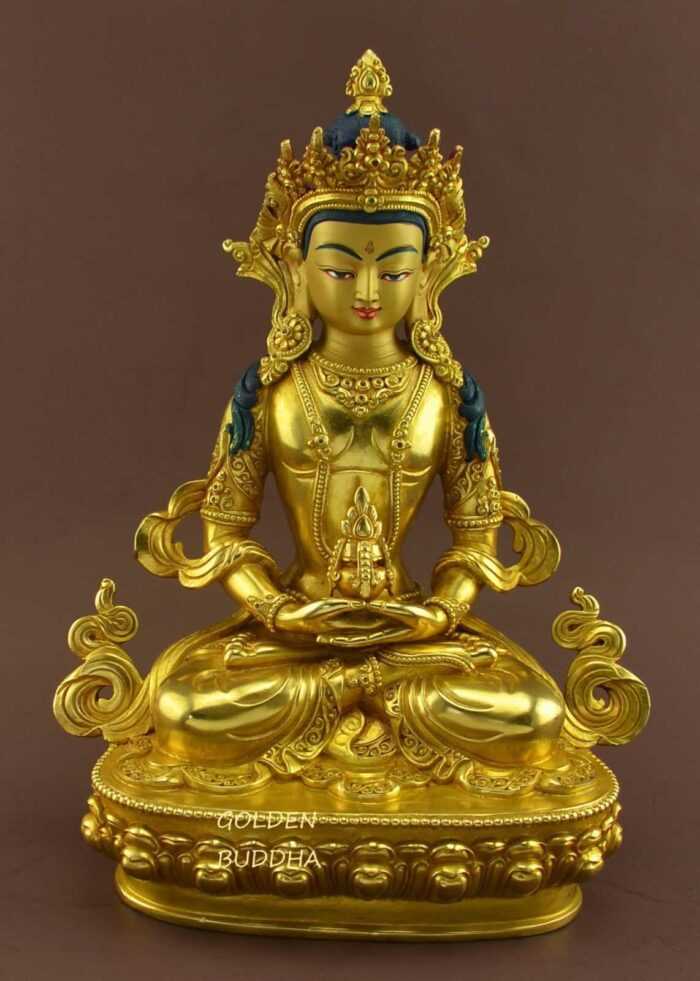
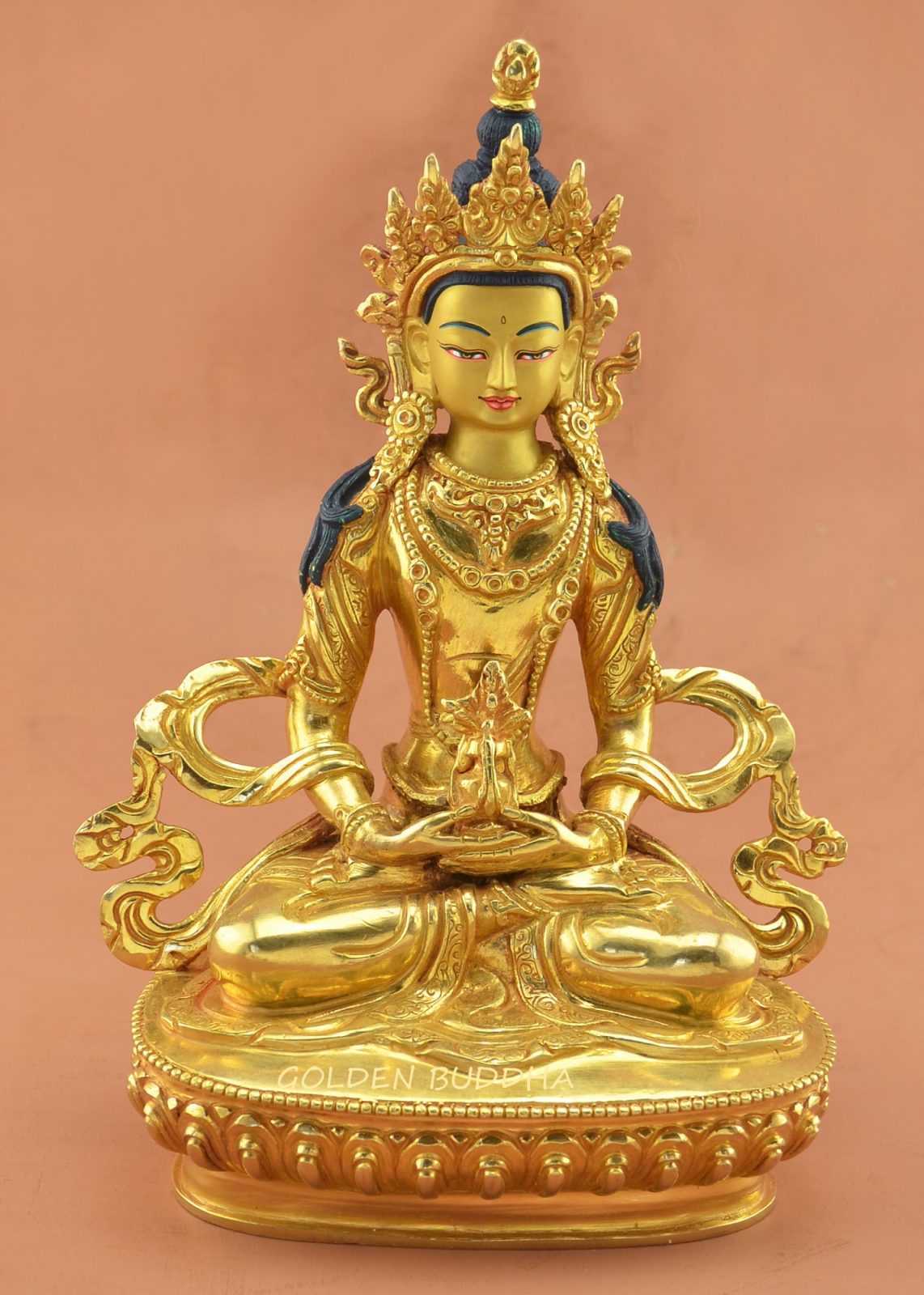
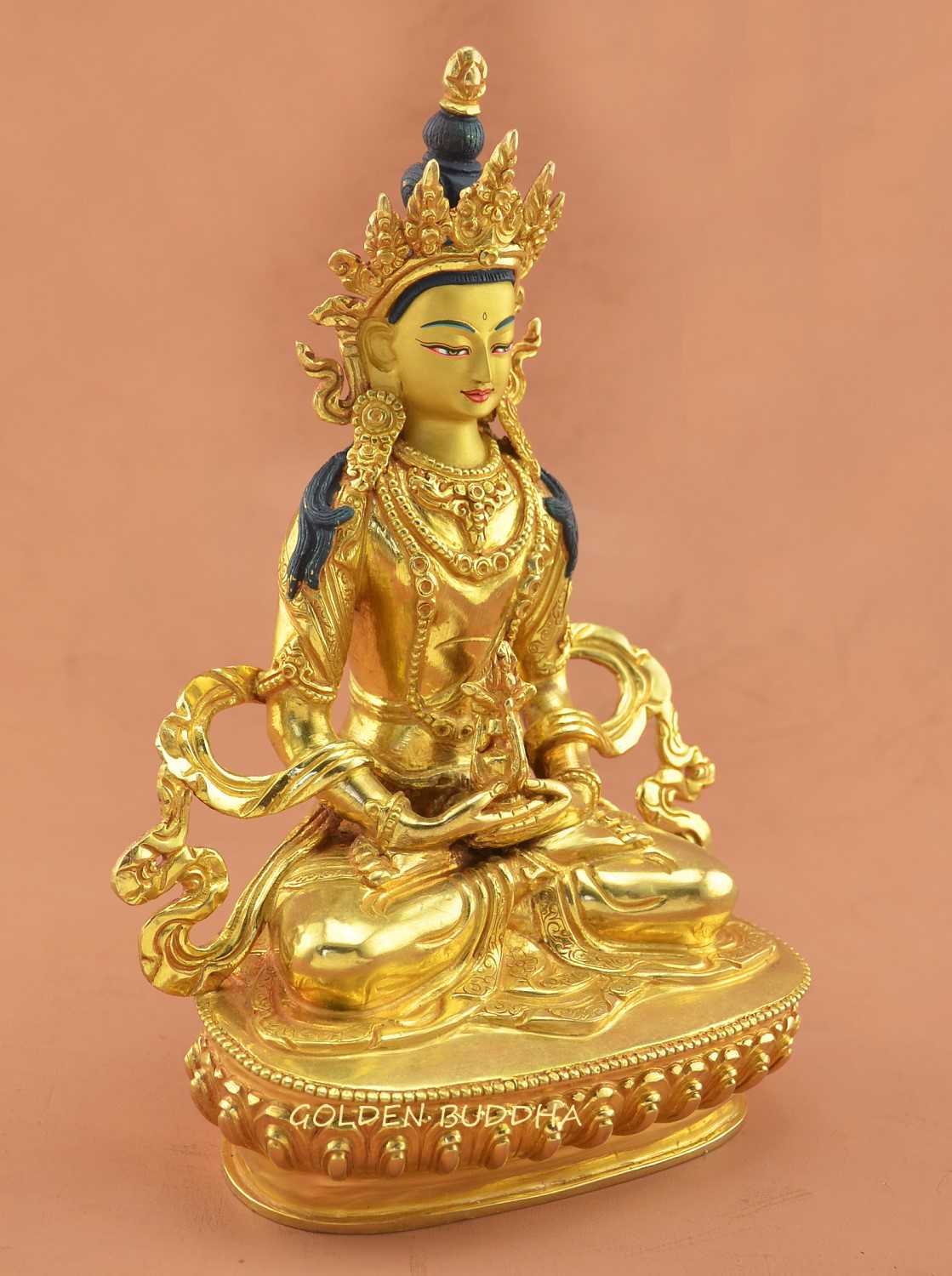
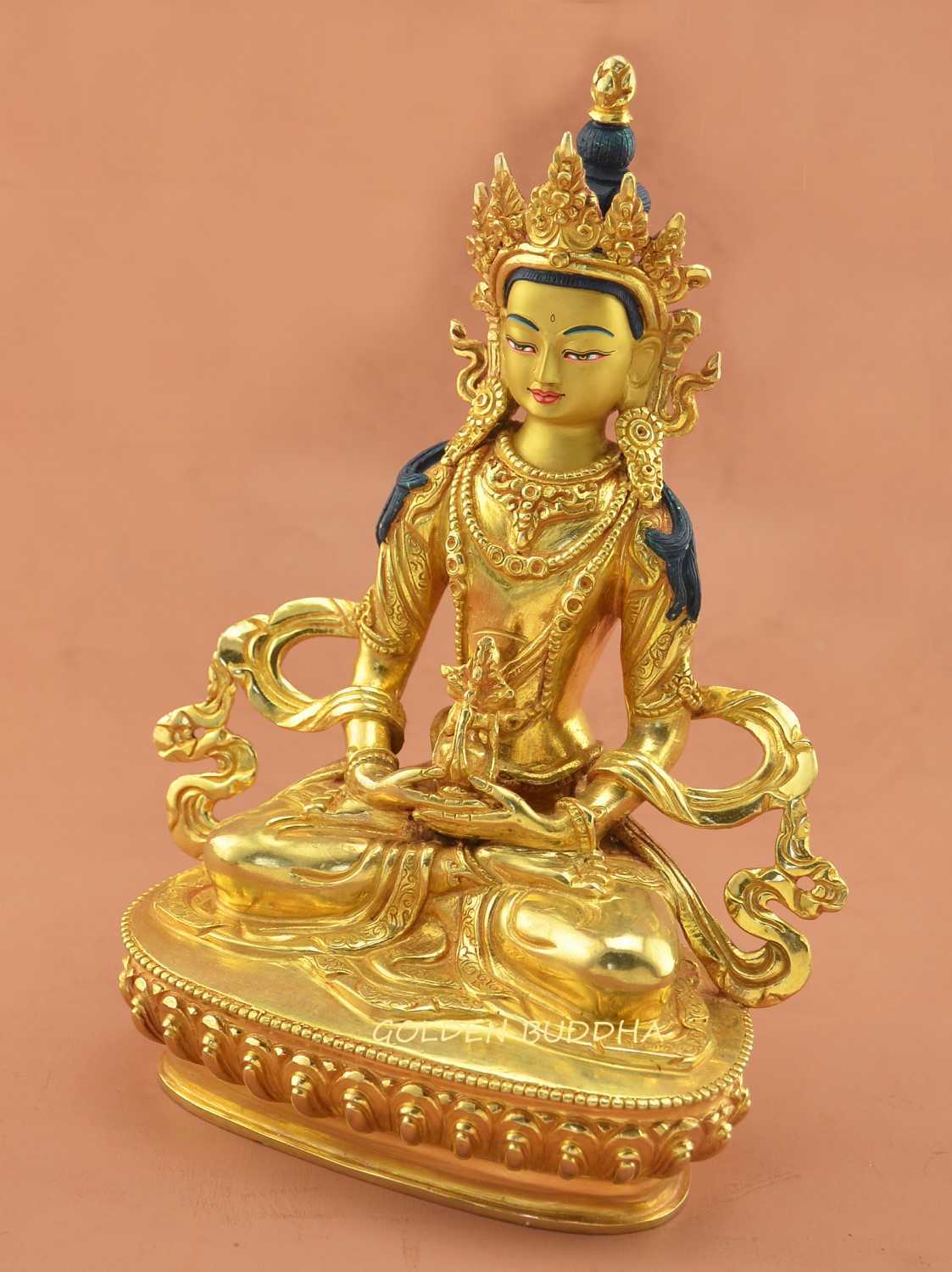
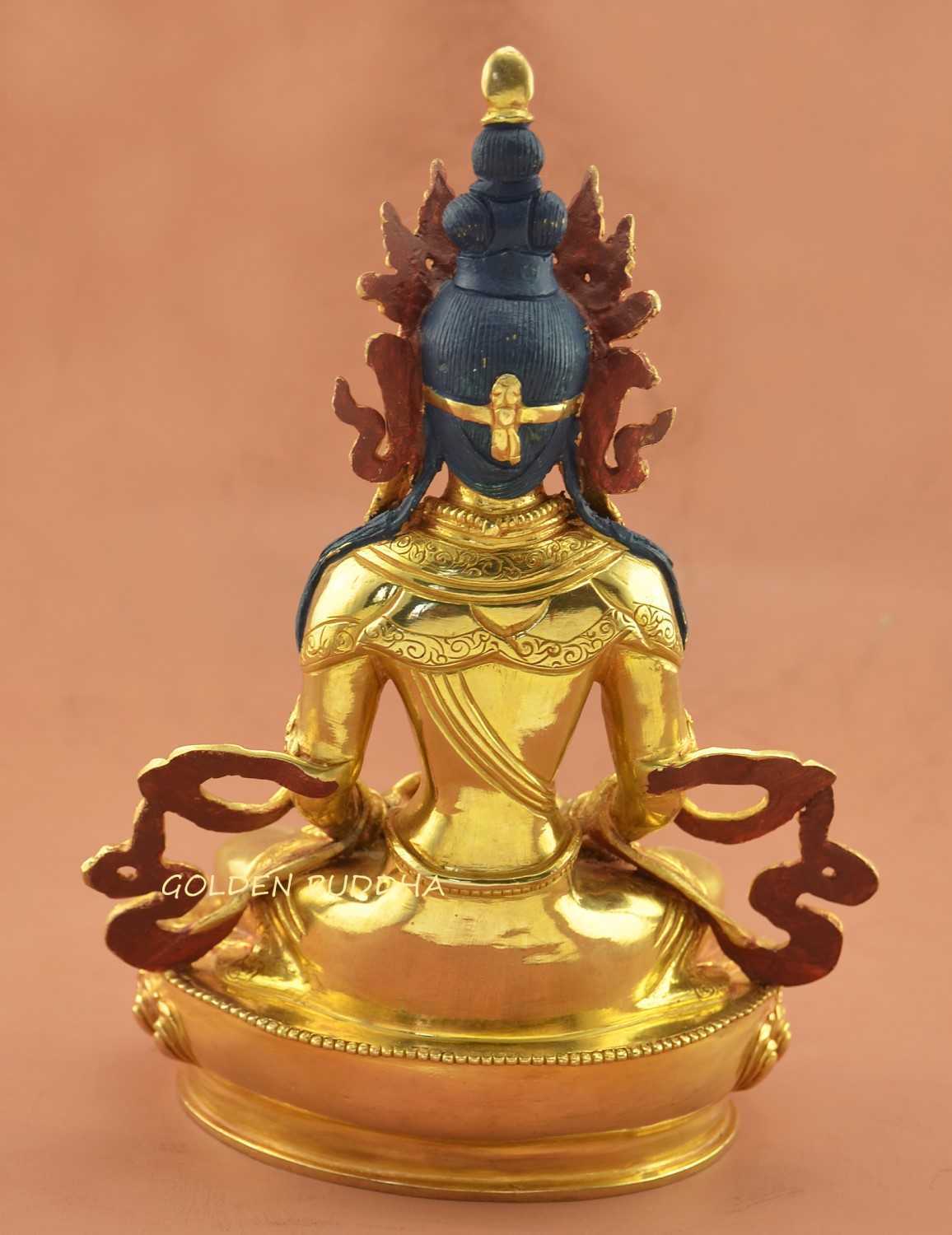
This 8.5-inch Aparmita Buddha Statue presents Amitayus, the Buddha of Infinite Life, in an elegant traditional form handmade in Nepal. Known as Aparmita, “The Boundless One,” and as Tsepame in Tibetan, Amitayus embodies the longevity aspect of Amitabha Buddha. The copper alloy sculpture is handmade using the traditional lost-wax casting method and fire gilded in 24K gold, creating a luminous finish complemented by blue-black hair, selectively painted celestial ribbons, and a serene face hand painted with 18K gold and natural pigments.
Aparmita Buddha Statue and the Nectar of Immortality
Amitayus sits in full lotus posture with both hands resting in Dhyana Mudra, the gesture of meditation and contemplative absorption. Resting upon his upturned palms is his defining attribute: the longevity vessel containing amrita, the nectar of immortality. Its elaborate lid rises vertically from the center of the vessel, making this sacred attribute a prominent focal point of the composition. Discover the symbolism behind the vase and other attributes in our guide to Amitayus iconography and longevity practice.
Although Amitayus is a fully enlightened Buddha, he appears here in the richly ornamented sambhogakaya form associated with celestial manifestations of enlightenment. An elaborate five-pointed crown surrounds his high blue-black topknot, while large ornamental earrings, layered necklaces, armbands and bracelets decorate the body. Flowing celestial scarves descend from the shoulders, loop gracefully beside the elbows and terminate in curling forms beside the lotus throne. Delicate engraved patterns ornament his garments, contrasting with the smooth reflective surfaces of the gilded legs and hands. His composed expression is completed by finely painted eyes, arched brows, red lips and the urna between the brows.
Amitayus Buddha Statue and the Three Long Life Deities
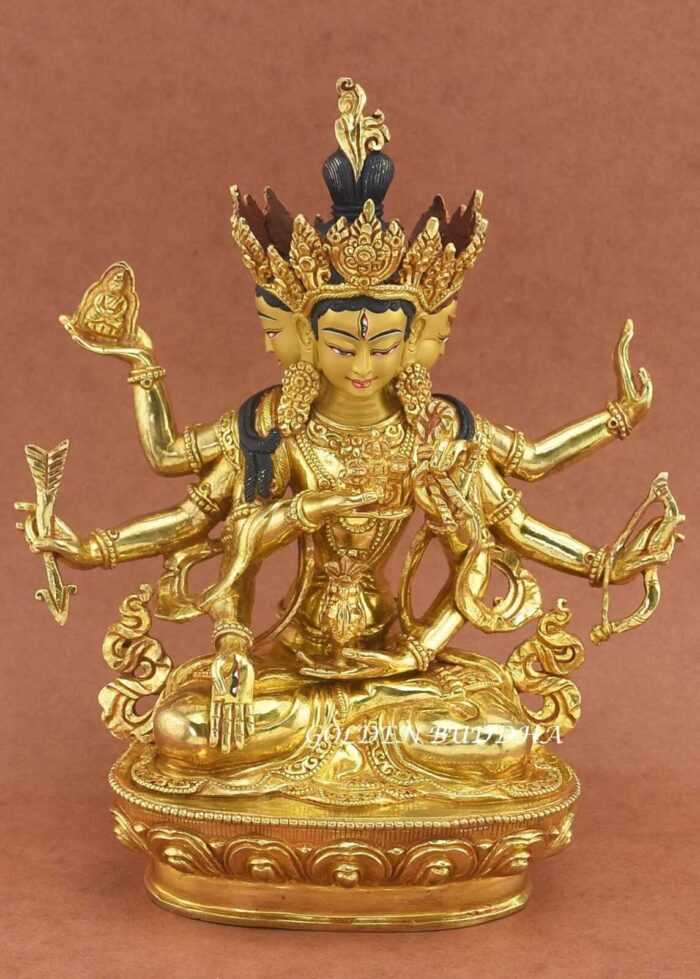
Aparmita is one of the Three Long Life Deities of Tibetan Buddhism, together with White Tara and Namgyalma, also known as Ushnishavijaya. Their practices are associated with longevity, purification, healing, the accumulation of merit and overcoming obstacles that can shorten life. Amitayus occupies a particularly important position as the Buddha of Infinite Life, and his practice provides practitioners with the opportunity to cultivate the conditions for a long and meaningful life devoted to Dharma. The traditional Amitayus mantra and its meaning are discussed in our complete longevity guide.
Create a Three Long Life Deities Statue Set
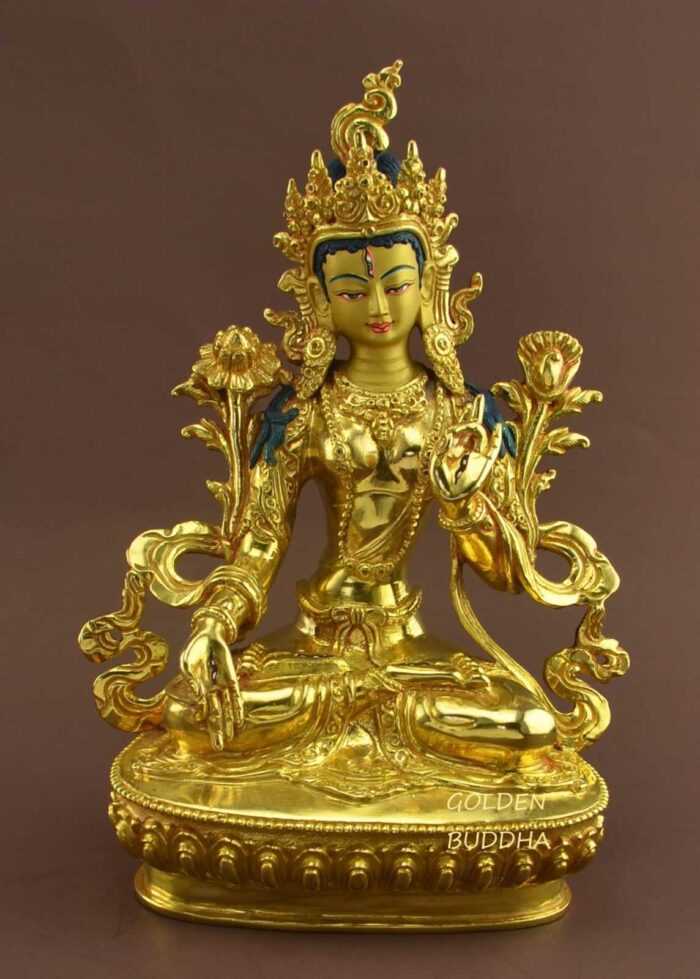
This Aparmita Buddha Statue can form the centerpiece of a coordinated longevity altar with our gold-gilded White Tara and Namgyalma. Together, the three figures create the traditional Three Long Life Deities grouping. Their shared gold finishes also create a visually harmonious altar arrangement while preserving the distinctive iconography of each deity.
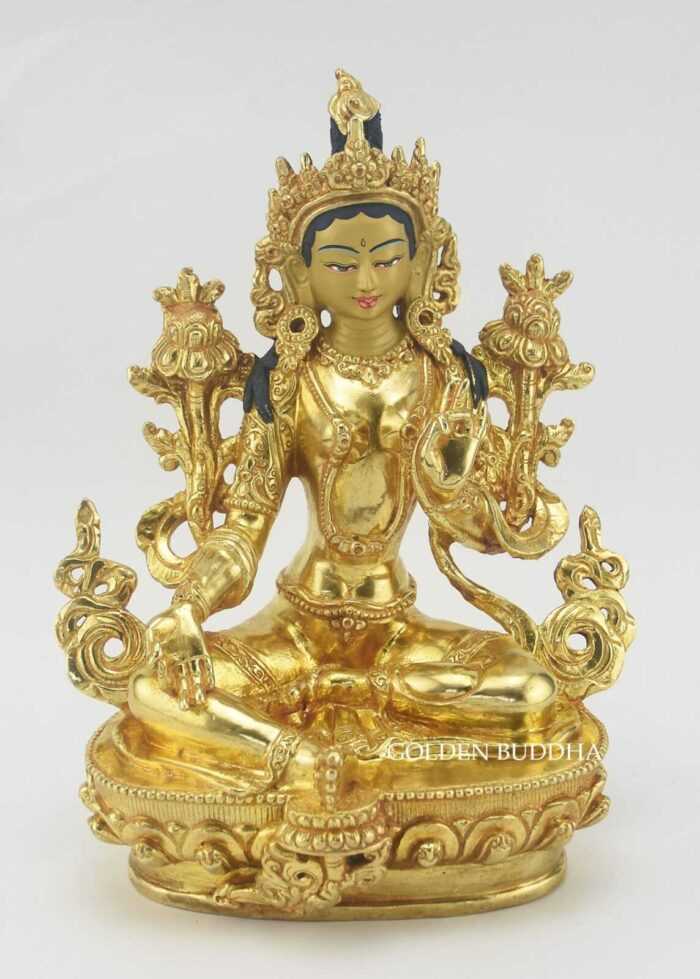
Green Tara may be introduced as an optional fourth figure rather than being presented as part of the traditional longevity triad. Her association with swift compassionate activity and protection complements the longevity emphasis of Amitayus, White Tara and Namgyalma. A four-statue arrangement therefore combines the established Three Long Life Deities with Green Tara’s dynamic compassionate presence. For this statue, turquoise and red coral gemstones can also be embedded into selected crown and jewelry settings upon request.
Custom Made Buddhist Statues and Altar Sets
Collectors seeking a coordinated altar may also commission custom made Tibetan Buddhist statues from Nepal. A custom Three Long Life Deities set can be planned with complementary dimensions, gilding and artistic details so that Amitayus, White Tara and Namgyalma display as a unified ensemble. Green Tara can be commissioned as a matching fourth statue for those wishing to combine longevity practice with the symbolism of swift compassionate activity. Custom commissions also provide an opportunity to discuss preferred dimensions, finishes and traditional decorative details with our artisans.
Authentic, Handmade in Nepal
Every statue is handcrafted in Patan, Nepal, using traditional lost wax casting and comes with a certificate of authenticity issued by Nepal’s Department of Archaeology, verifying its materials, technique, and origin.