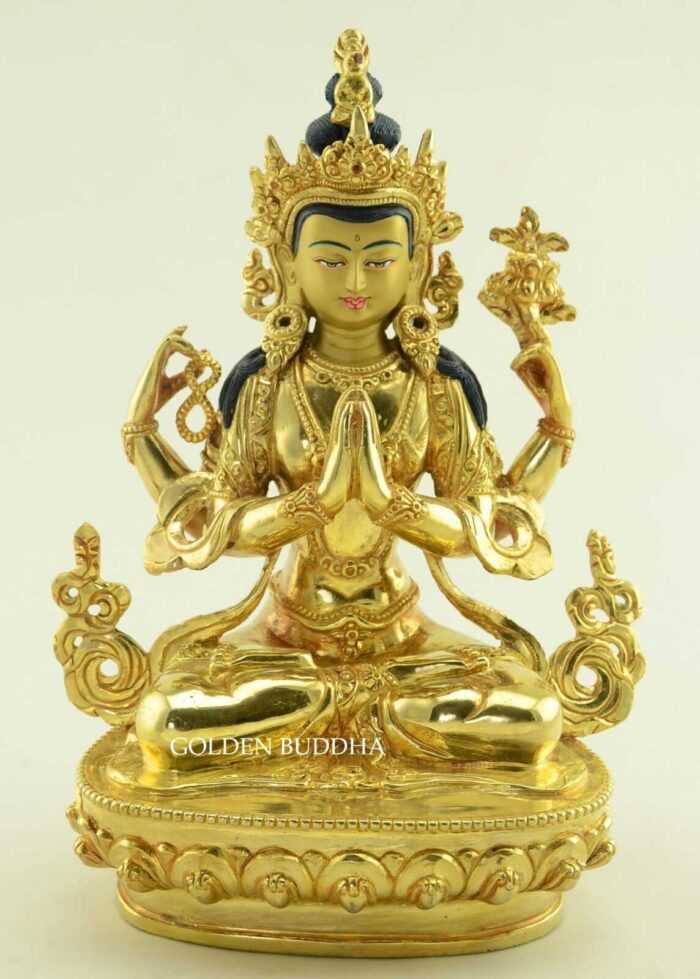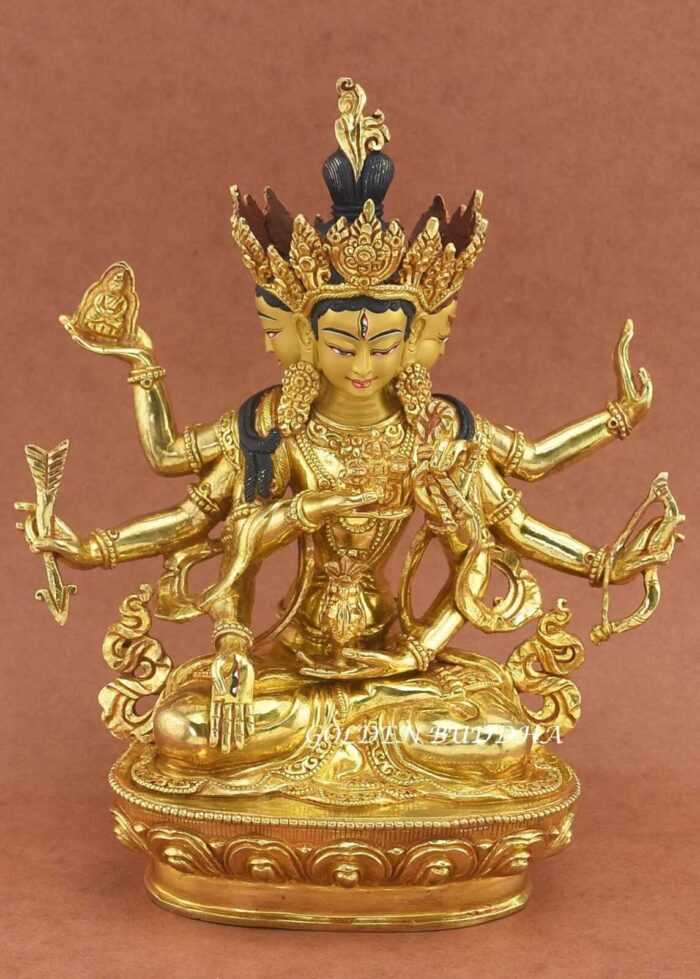
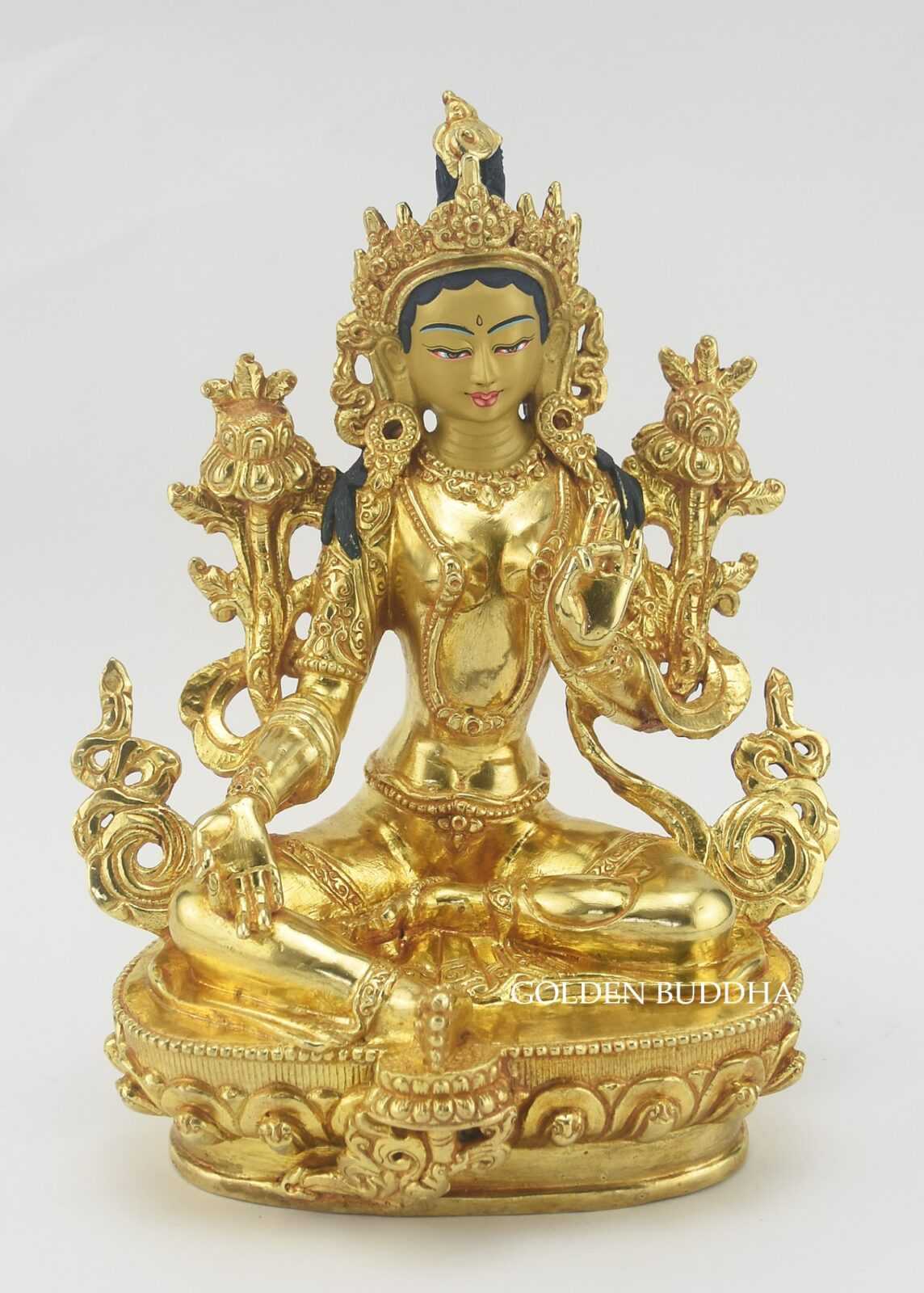
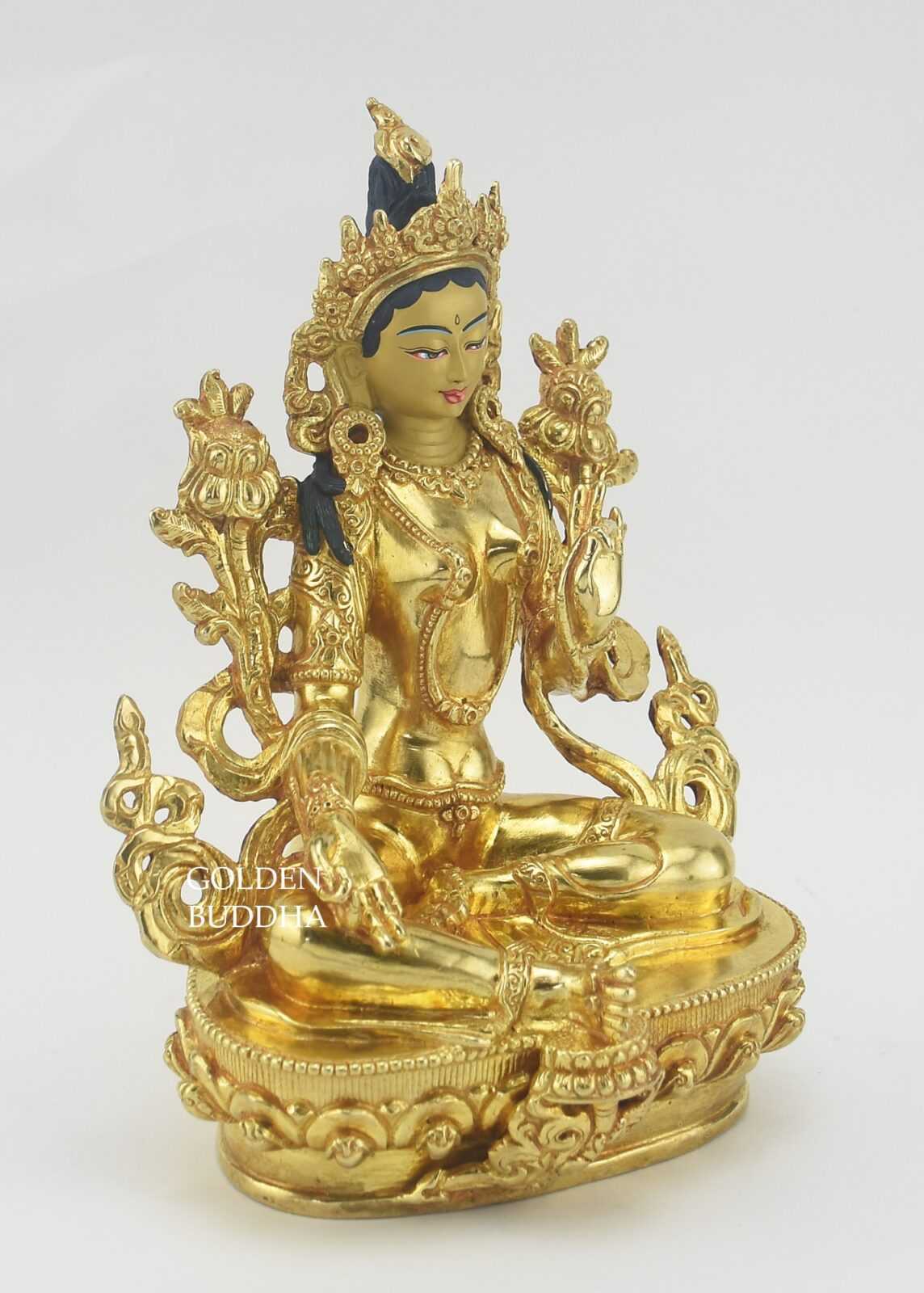

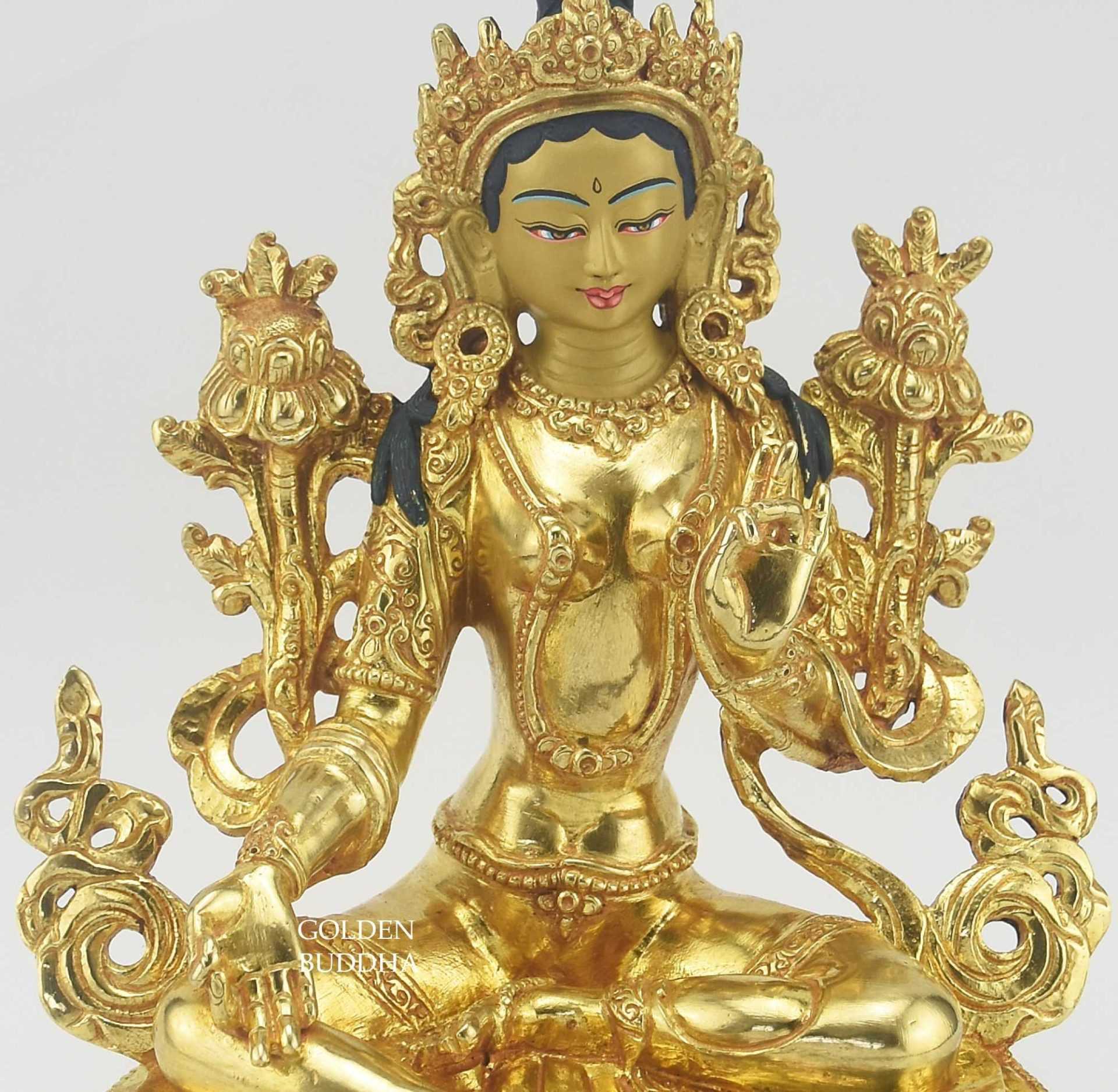
This 8.5-inch Nepali Green Tara Statue is an elegant example of traditional Himalayan metalwork, handmade in Patan, Nepal from copper alloy using the centuries-old lost-wax casting method. The sculpture is completely fire gilded in 24K gold, producing a warm luminous surface that emphasizes Tara’s graceful proportions, elaborate jewelry, flowing garments and finely modeled lotus throne. Her serene face is separately hand painted with 18K gold and natural pigments, while deep blue hair creates a striking contrast with the brilliant gilding. The ornate Bodhisattva crown and jewelry may also be embellished with genuine turquoise and red coral gemstones at the buyer’s request before shipping at no additional charge.
Meaning of the Nepali Green Tara Statue
The Nepali Green Tara Statue represents one of Tibetan Buddhism’s most important expressions of enlightened compassion in action. Tara does not simply contemplate the suffering of sentient beings; her iconography presents compassion as something immediately responsive and active. She is traditionally invoked for protection, liberation from fear, removal of obstacles and the development of the courage needed to progress along the Buddhist path. Her composed expression combined with her poised, partially extended leg communicates this distinctive union of inner tranquility and readiness to act. Explore the deeper meaning and spiritual symbolism of Green Tara in our complete guide.
Nepali Green Tara Statue Iconography
Tara sits in lalitasana, the posture of royal ease. Her left leg remains folded inward while her right leg extends forward over the lotus throne, symbolizing her readiness to rise and respond to beings in need. Her lowered right hand displays Varada mudra, the gesture of generosity and the bestowing of blessings. The open palm faces outward toward the practitioner, giving the composition an especially welcoming quality. Her raised left hand forms a graceful gesture while holding the stem of a lotus beside her shoulder. These carefully preserved attributes immediately identify the sacred figure and communicate Tara’s compassionate activity through visual symbolism.
Lotus Flowers and Traditional Craftsmanship
Two flowering lotus stems rise prominently beside Tara’s shoulders, framing the upper body and crown. Their stems curve naturally alongside her arms before opening into sculpted blossoms, while long celestial scarves sweep outward around the figure. The combination creates an impression of movement that contrasts beautifully with Tara’s calm expression. The lotus represents purity arising unstained from the conditions of samsara and is especially appropriate to Tara’s enlightened activity. Learn more about Green Tara’s traditional iconography and sacred attributes.
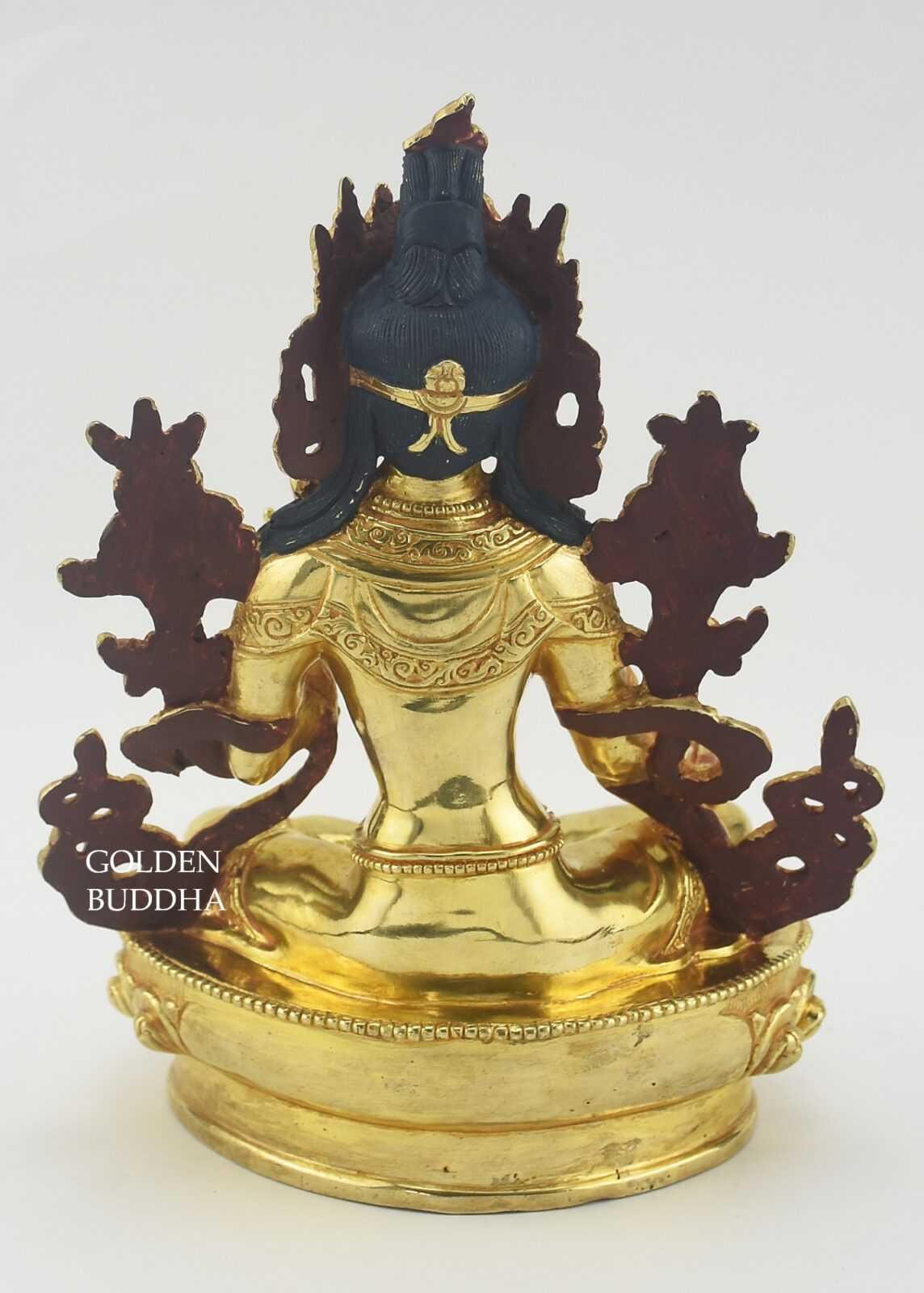
The craftsmanship extends from Tara’s elaborate crown and large circular earrings to her necklaces, bracelets and carefully defined garment borders. Fine scrolling ornamentation appears around the shoulder covering and clothing, while the rear view reveals additional engraved detailing across the upper garment. Dark blue hair is arranged into a high traditional coiffure beneath the crown. Below, the single lotus pedestal has a beaded upper border and broad sculpted lotus petals. Together with the uniform gold finish, these details give this relatively compact sculpture the visual presence of a considerably larger shrine image.
Nepali Green Tara Statue with Amitabha Buddha
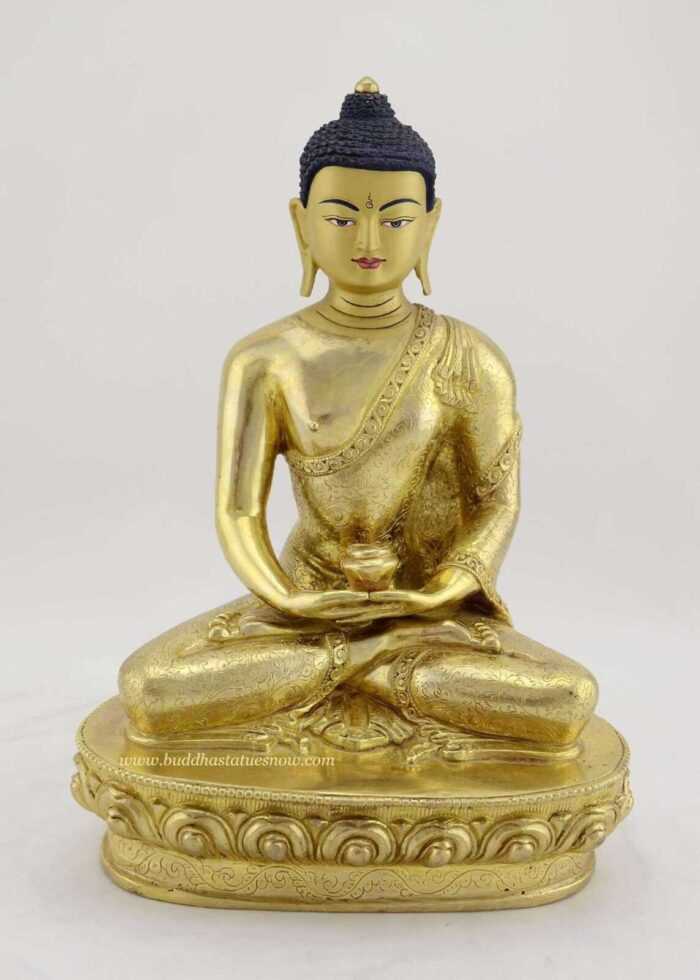
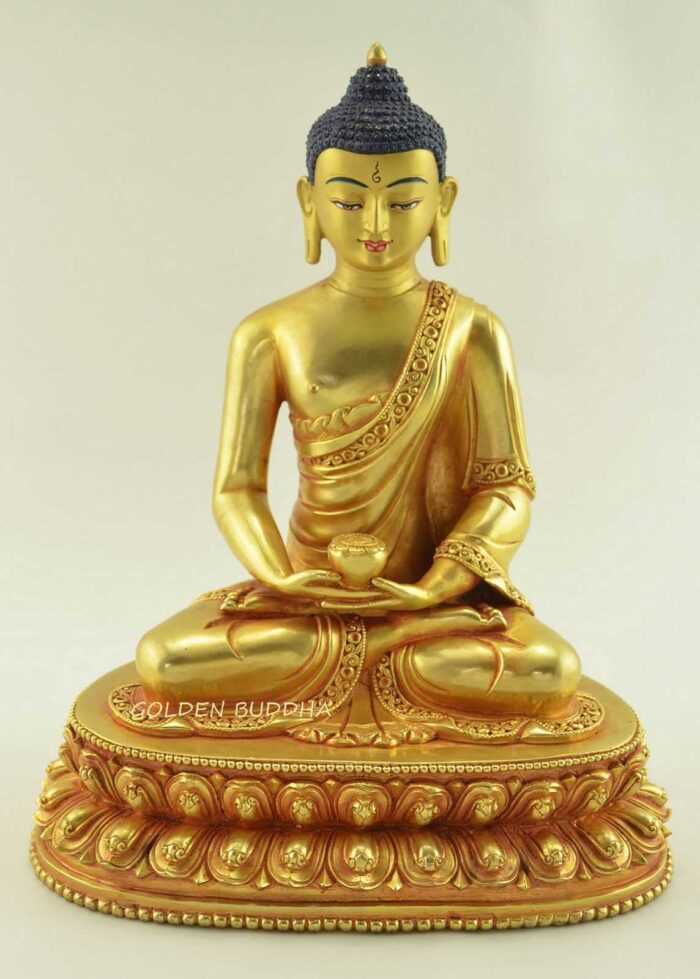
This sculpture can also form a harmonious Buddhist altar arrangement with a gold gilded Amitabha Buddha statue. Amitabha presides over the Padma, or Lotus, Buddha family and embodies discriminating wisdom, infinite light and the enlightened qualities associated with Sukhavati. Green Tara has a close relationship with the compassionate activity of this spiritual family through Avalokiteshvara, Amitabha’s principal Bodhisattva attendant. The pairing therefore brings together Amitabha’s meditative stillness and Pure Land aspiration with Tara’s swift compassionate response. Their individual iconography remains distinct while their complementary qualities create a balanced devotional arrangement.
Custom Made Green Tara and Amitabha Statues
Collectors, practitioners, monasteries and Dharma centers seeking coordinated altar figures may commission custom made Tibetan Buddhist statues directly from our artisans in Nepal. Green Tara and Amitabha make a particularly meaningful doctrinal pairing for a commissioned set. Amitabha’s Dhyana mudra and meditative posture communicate concentration, wisdom and the aspiration toward his Pure Land, while Tara’s open Varada mudra and extended right foot express generosity and immediate compassionate activity. A custom pair can be created with coordinated dimensions, lotus pedestals, facial style, engraving and 24K fire-gilded finishes while faithfully preserving the distinctive iconographic attributes of each figure.
Authentic, Handmade in Nepal
Every statue is handcrafted in Patan, Nepal, using traditional lost wax casting and comes with a certificate of authenticity issued by Nepal’s Department of Archaeology, verifying its materials, technique, and origin.