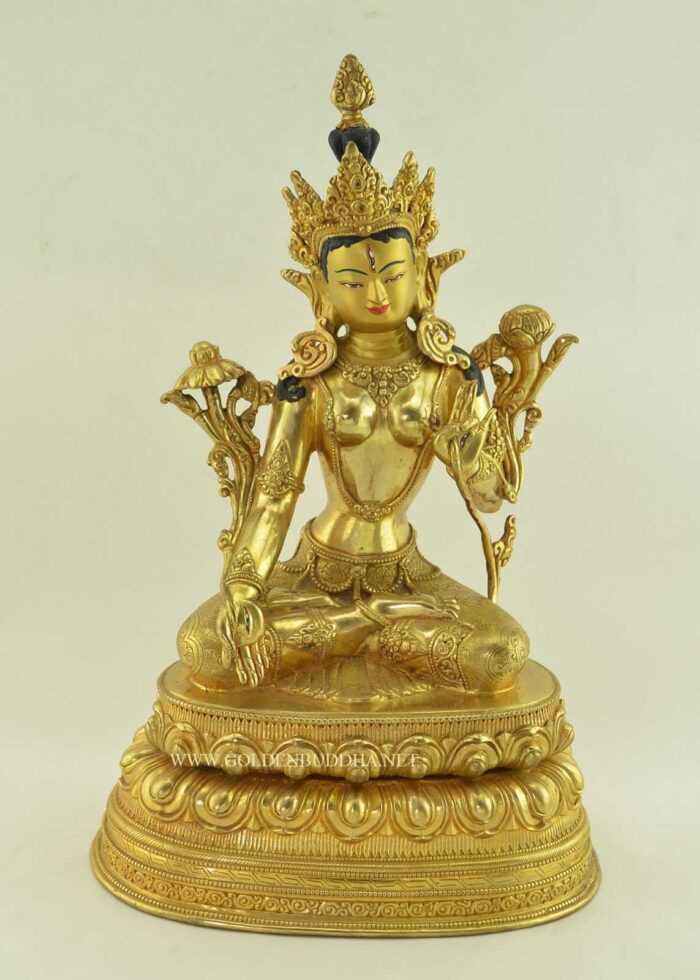
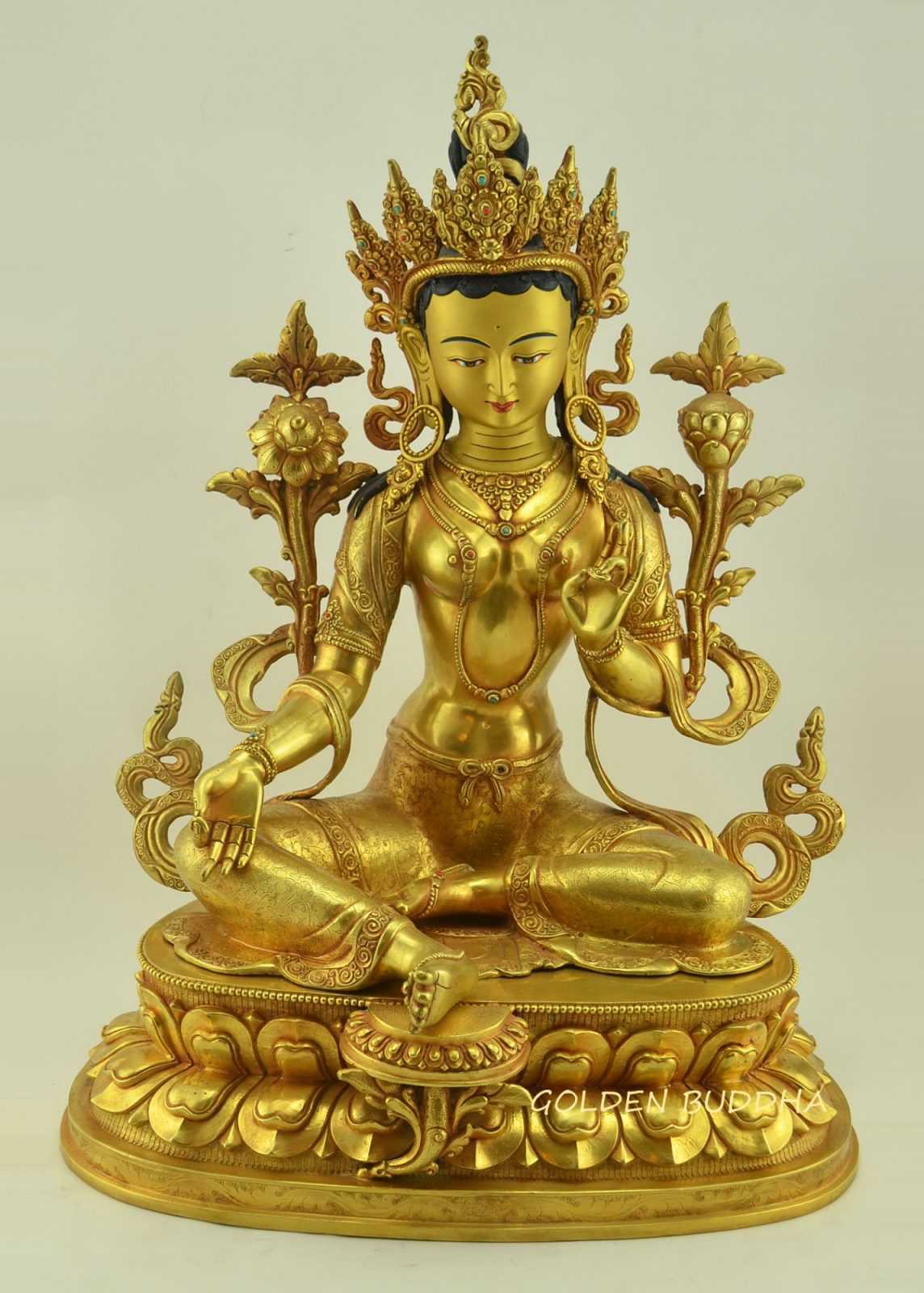
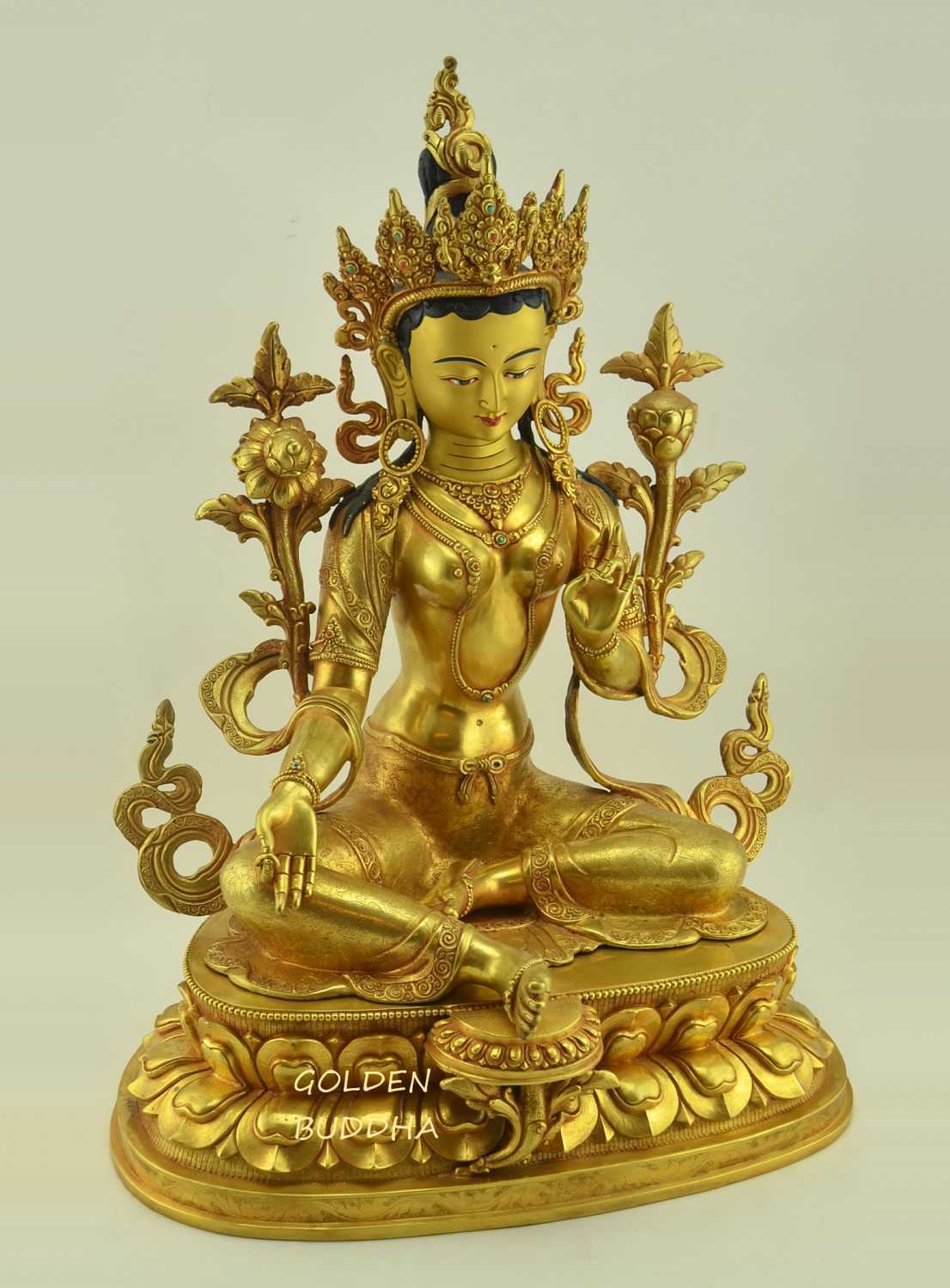
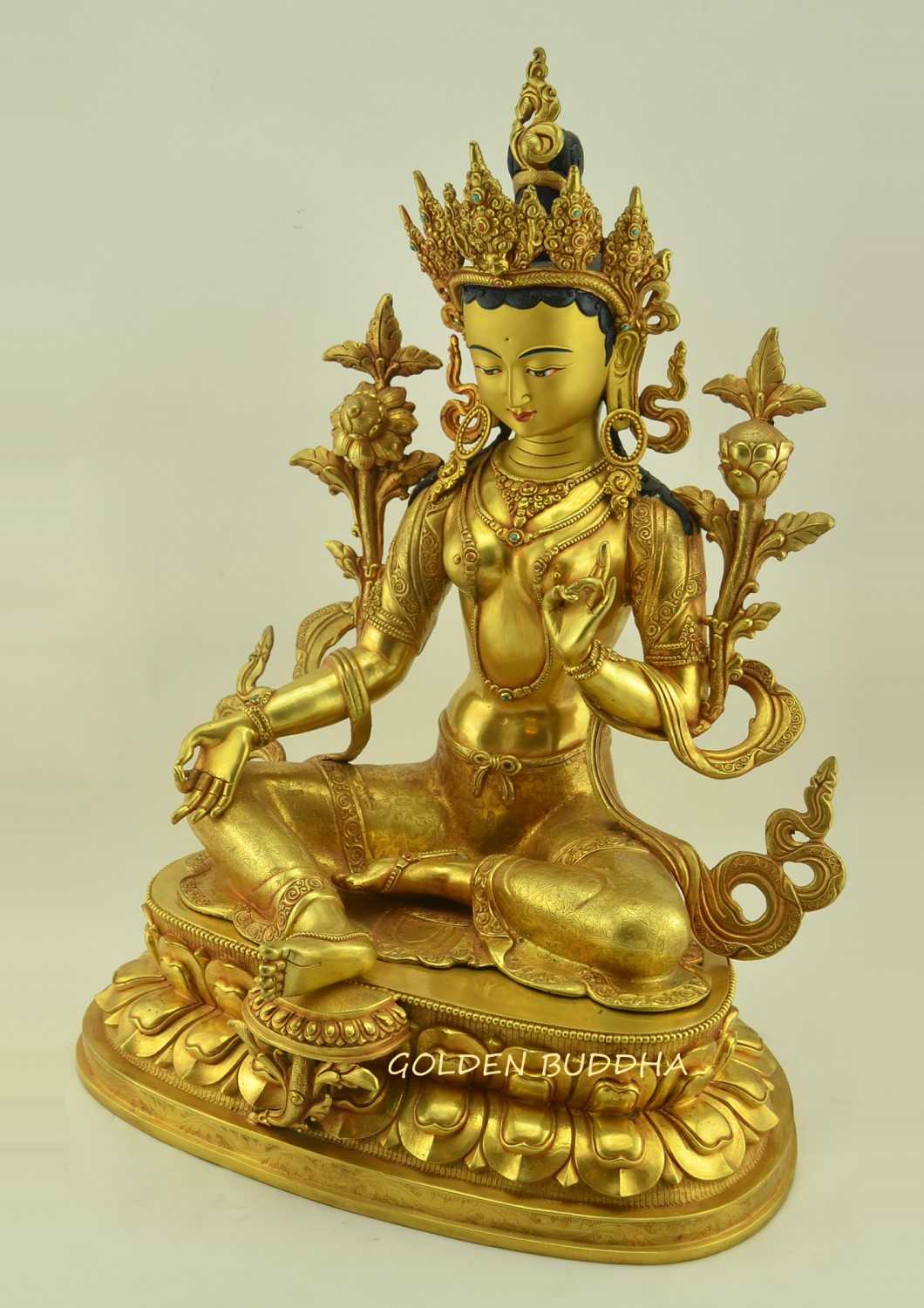
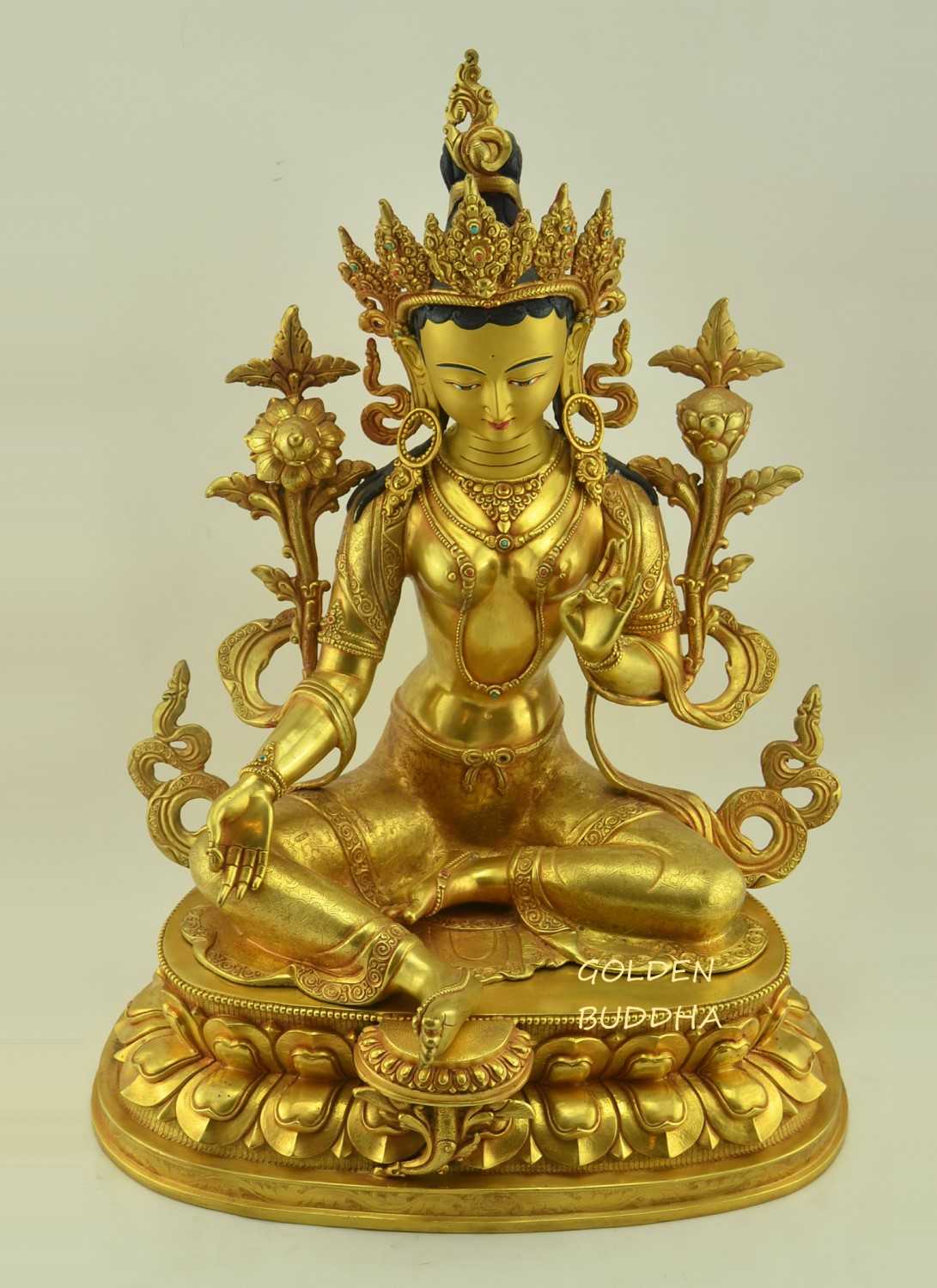
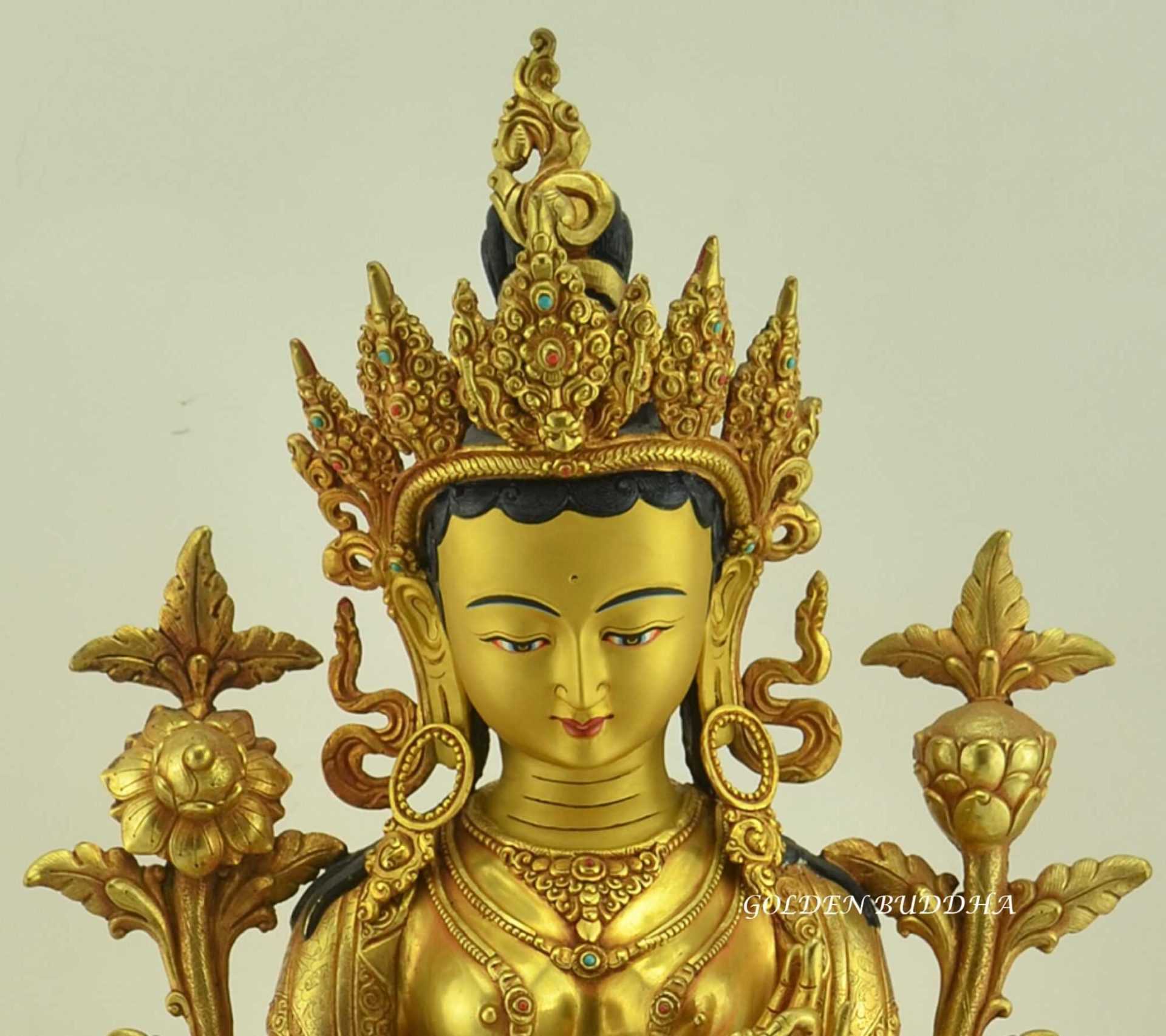
Created by master Newar artisans in Patan, Nepal, this magnificent 19.5″ Green Tara sculpture is handcrafted from copper alloy using the traditional lost wax casting method before being fire gilded in genuine 24K gold. Every stage of its creation reflects centuries of Himalayan artistic tradition, from the meticulous casting process to the individually hand engraved decorative details that enrich the crown, jewelry, garments, lotus pedestal, and flowing celestial scarves. The serene face is separately hand painted using traditional pigments enriched with 18K gold, giving Green Tara the gentle expression of compassionate readiness for which she is universally revered throughout Tibetan Buddhism. Together, the brilliant gilding, refined proportions, and exceptional craftsmanship create a museum-quality Green Tara sculpture suitable for a shrine, meditation room, Dharma center, or fine collection of Himalayan Buddhist art.
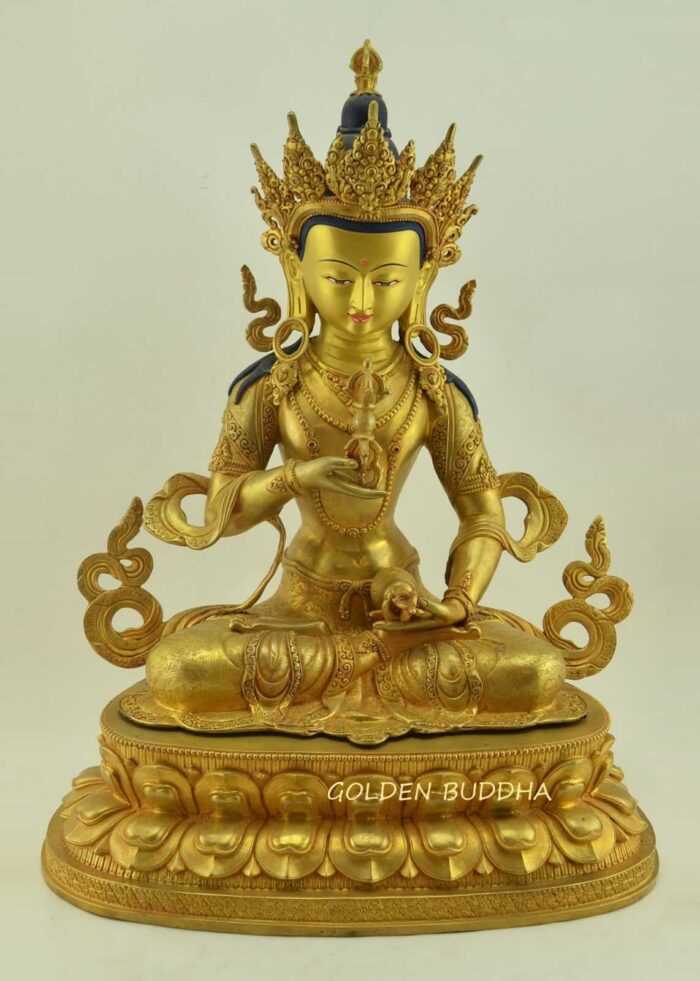
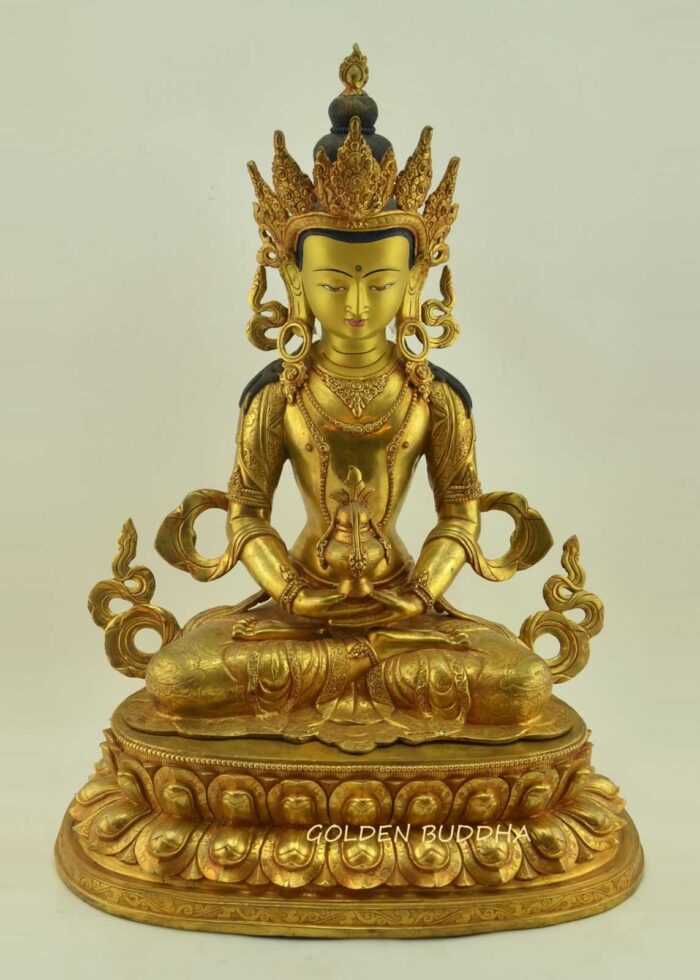
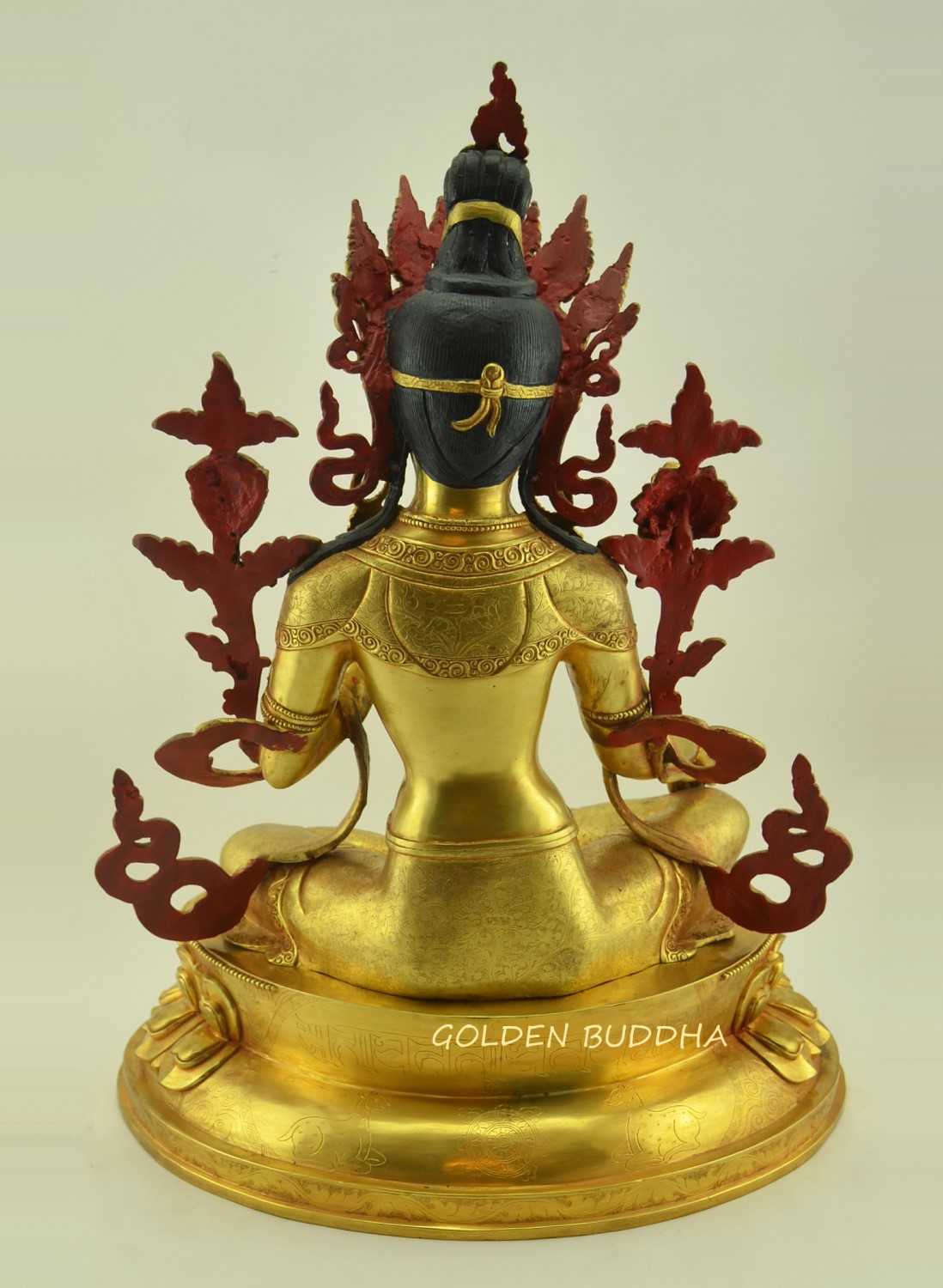
The richly ornamented Bodhisattva crown is beautifully set with genuine turquoise and red coral stones that complement the warm gold surface of the sculpture. Layered necklaces, bracelets, armlets, earrings, and jeweled ornaments frame Tara’s elegant figure without disturbing the natural harmony of the composition. Fine hand engraving decorates the dhoti, shoulder wrap, jewelry, lotus throne, and ornamental details, while the reverse of the sculpture displays equally impressive engraving and repoussé metalwork that continue around the back of the double lotus pedestal. The attention devoted to every surface reflects the work of the same master artisan responsible for our matching Amitayus and Vajrasattva statues, making this Green Tara sculpture a remarkable example of traditional Nepalese Buddhist metalwork.
Green Tara Sculpture Symbolism
Green Tara is one of the most beloved female deities in Tibetan Buddhism and is revered as the embodiment of swift compassion in action. Unlike many enlightened figures who remain in perfect meditative stillness, Green Tara is always depicted ready to rise immediately to aid those who sincerely call upon her. This quality is beautifully expressed in her traditional lalitasana, or royal ease posture, with her left leg folded in meditation while her right leg extends gracefully forward, symbolizing her willingness to respond instantly to the needs of sentient beings. Her right hand displays the Varada mudra, the gesture of generosity, protection, and the fulfillment of sincere aspirations, while her left hand gently holds the stem of the sacred blue utpala lotus.
The lotus stems rise elegantly beside Tara’s shoulders, where one blossom is fully opened while the other remains a closed bud. This traditional iconography symbolizes both the fully awakened wisdom of enlightenment and the ever-present potential for awakening within all beings. Her flowing celestial scarves further reinforce the symbolism of effortless compassionate activity, creating graceful movement around the figure while preserving the serenity of her meditative expression. Learn more about her history, symbolism, and practice in our guide to Green Tara meaning and symbolism.
Hand Engraving and Traditional Himalayan Craftsmanship
The exceptional craftsmanship of this Green Tara sculpture becomes even more apparent upon closer inspection. Every decorative element has been individually finished by hand rather than mechanically reproduced. Fine floral and scrolling engravings cover the dhoti, shoulder wrap, crown, jewelry, lotus stems, and the upper register of the double lotus pedestal, creating remarkable depth across the brilliant 24K fire-gilded surface. The flowing celestial scarves sweep gracefully around Tara before curling into elegant cloud-like forms beside the lotus throne, adding movement and balance without disturbing the calm harmony of the composition. The richly sculpted crown, together with the carefully positioned turquoise and red coral stones, further demonstrates the extraordinary level of detail achieved by the master artisan.
The reverse of the sculpture has been finished to the same exacting standard as the front. Delicate engraving continues across the shoulder covering and rear garments, while decorative repoussé metalwork enriches the back of the double lotus throne. This complete treatment allows the statue to be appreciated from every direction, making it especially suitable for an open altar or meditation space where the rear of the sculpture remains visible. Such attention to the back of a statue is a hallmark of the finest workshops in Patan, Nepal, where master Newar artisans continue centuries-old traditions of sacred Buddhist metalwork. Browse our complete collection of Green Tara sculptures and statues to compare additional sizes, artistic interpretations, and traditional finishes.
A Matching Green Tara, Amitayus and Vajrasattva Statue Set
This Green Tara sculpture forms an exceptional three-piece set when displayed together with our Amitayus Buddha statue and Vajrasattva statue. All three sculptures were handcrafted by the same master artisan and share a remarkably consistent artistic style. Each features genuine 24K fire gilding, individually hand-painted facial details, elaborate Bodhisattva ornaments, finely engraved dhotis and shoulder garments, richly detailed lotus pedestals, and decorative repoussé metalwork continuing around the reverse of the throne. Displayed together, the three statues create a visually unified shrine while showcasing the highest level of traditional Himalayan craftsmanship.
Beyond their artistic harmony, these three enlightened figures complement one another beautifully within Tibetan Buddhist practice. Green Tara embodies swift compassionate activity, protection from fear, and the immediate removal of obstacles. Vajrasattva represents purification, helping practitioners cleanse negative karma, obscurations, and broken commitments that hinder spiritual development. Amitayus, the Buddha of Infinite Life, bestows blessings of longevity, vitality, and the favorable conditions necessary for sustained Dharma practice. Together they symbolize compassionate action, inner purification, and long life—the essential qualities that support continuous spiritual cultivation. Learn more about Amitayus in our guide to Long Life Deities and Longevity Practice.
Filling, Blessing and Consecration
This Green Tara sculpture includes a traditional consecration opening so that it may be filled with sacred mantras, rolled prayers, incense, medicinal herbs, precious substances, and other traditional materials before receiving a formal blessing according to the buyer’s Buddhist lineage. Filling and consecration transform the handcrafted image into a properly prepared object of meditation, offering, and devotional practice while preserving an ancient Himalayan tradition that continues throughout Tibetan Buddhism today. Our guide to Buddha statue filling, blessing, and consecration explains the customary preparation process and the options available to collectors, practitioners, monasteries, and Dharma centers.
Custom Made Green Tara Sculptures
Collectors, practitioners, monasteries, and Dharma centers may commission a custom made Tibetan Buddhist statue inspired by this Green Tara sculpture. Our master artisans in Patan can produce Green Tara in virtually any size with a choice of traditional 24K fire gilding, oxidized, antique, or partially gilded finishes. Additional options include enhanced hand engraving, customized lotus pedestals, personalized facial painting, and expanded turquoise and red coral stone settings throughout the crown and jewelry. Every commission is individually handcrafted using the traditional lost wax process while faithfully preserving authentic Himalayan iconographic proportions.
Clients may also commission matching Amitayus and Vajrasattva statues so that all three sculptures share identical proportions, pedestal dimensions, engraving patterns, gilding quality, and overall artistic character. Because all three deities were originally designed by the same master artisan, they naturally complement one another both visually and spiritually. A custom three-piece shrine combining Green Tara’s swift compassion, Vajrasattva’s profound purification, and Amitayus’s blessings of longevity creates a balanced and meaningful altar that reflects some of the most important qualities cultivated within Tibetan Buddhist practice while showcasing the extraordinary craftsmanship of Nepal’s finest Buddhist sculptors.
Authentic, Handmade in Nepal
Every statue is handcrafted in Patan, Nepal, using traditional lost wax casting and comes with a certificate of authenticity issued by Nepal’s Department of Archaeology, verifying its materials, technique, and origin.