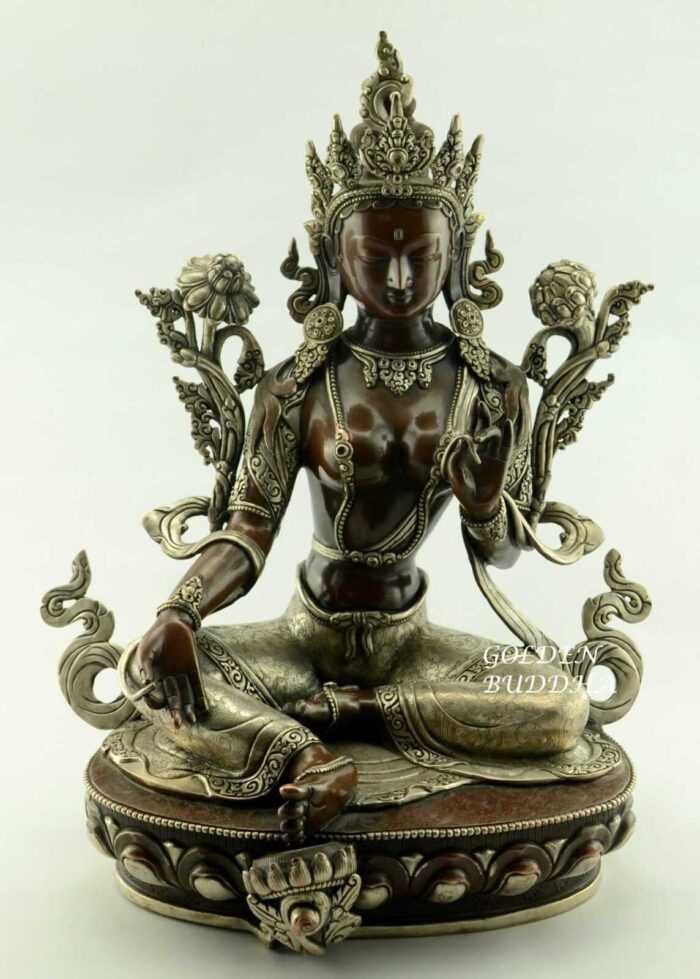
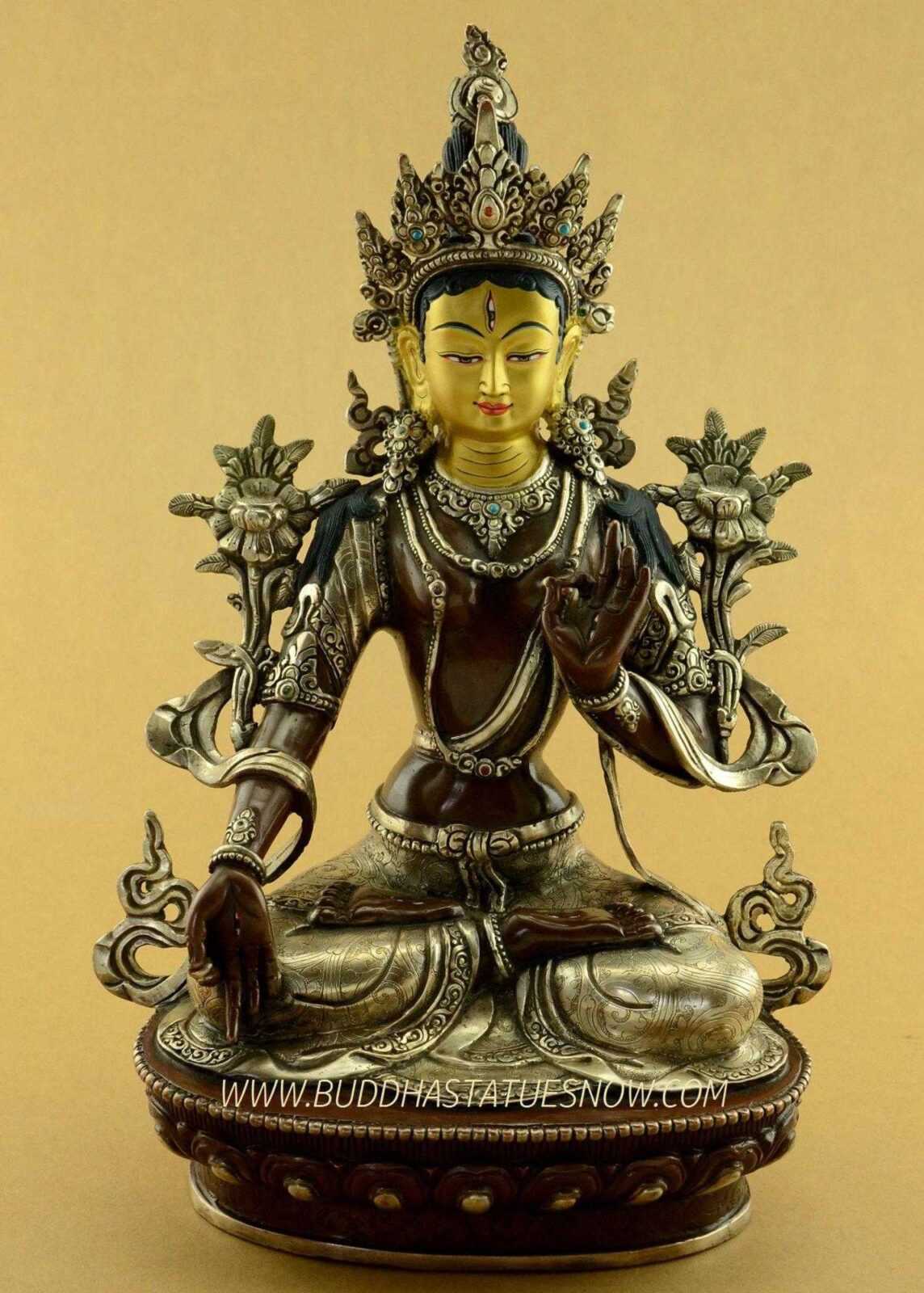
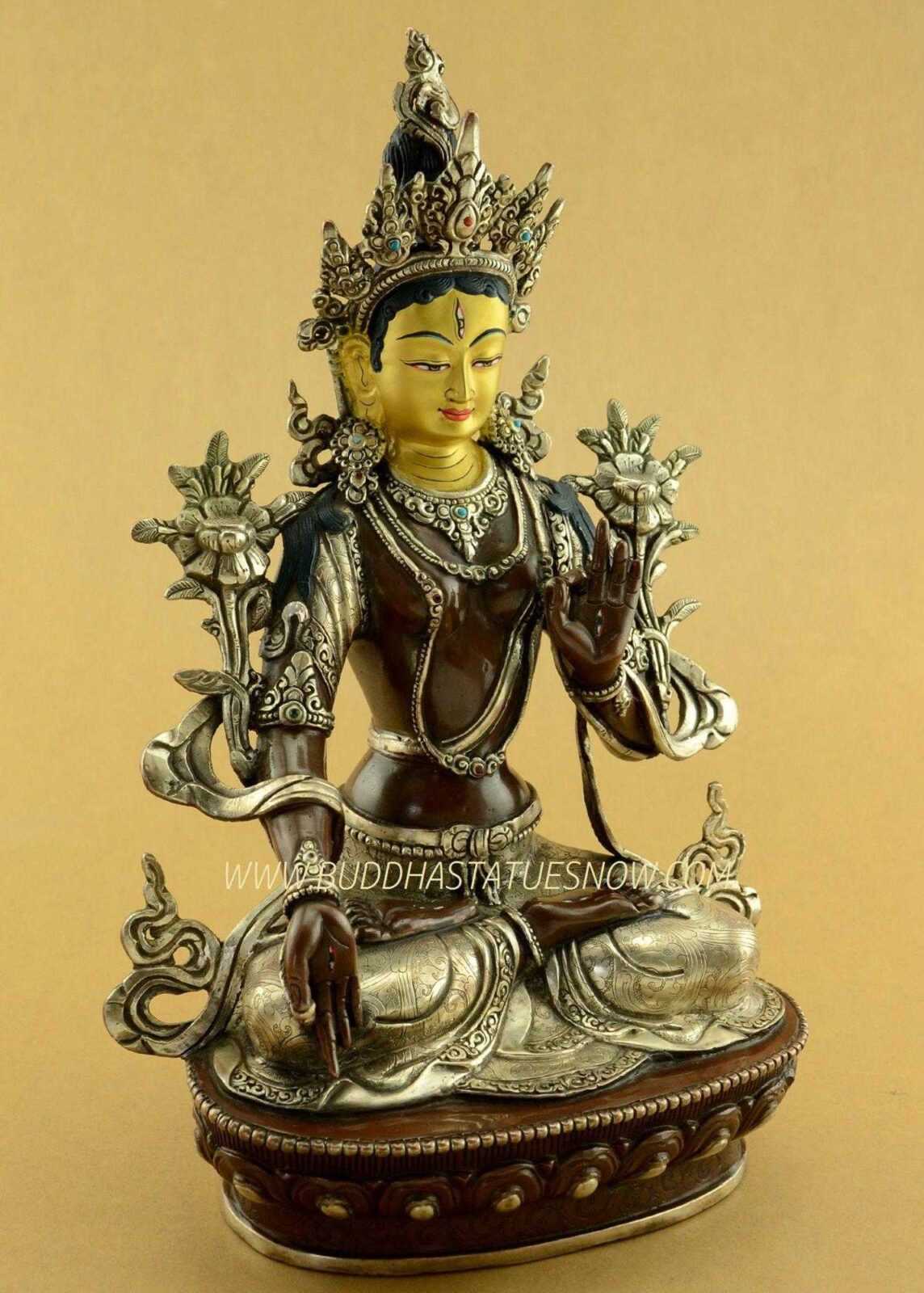
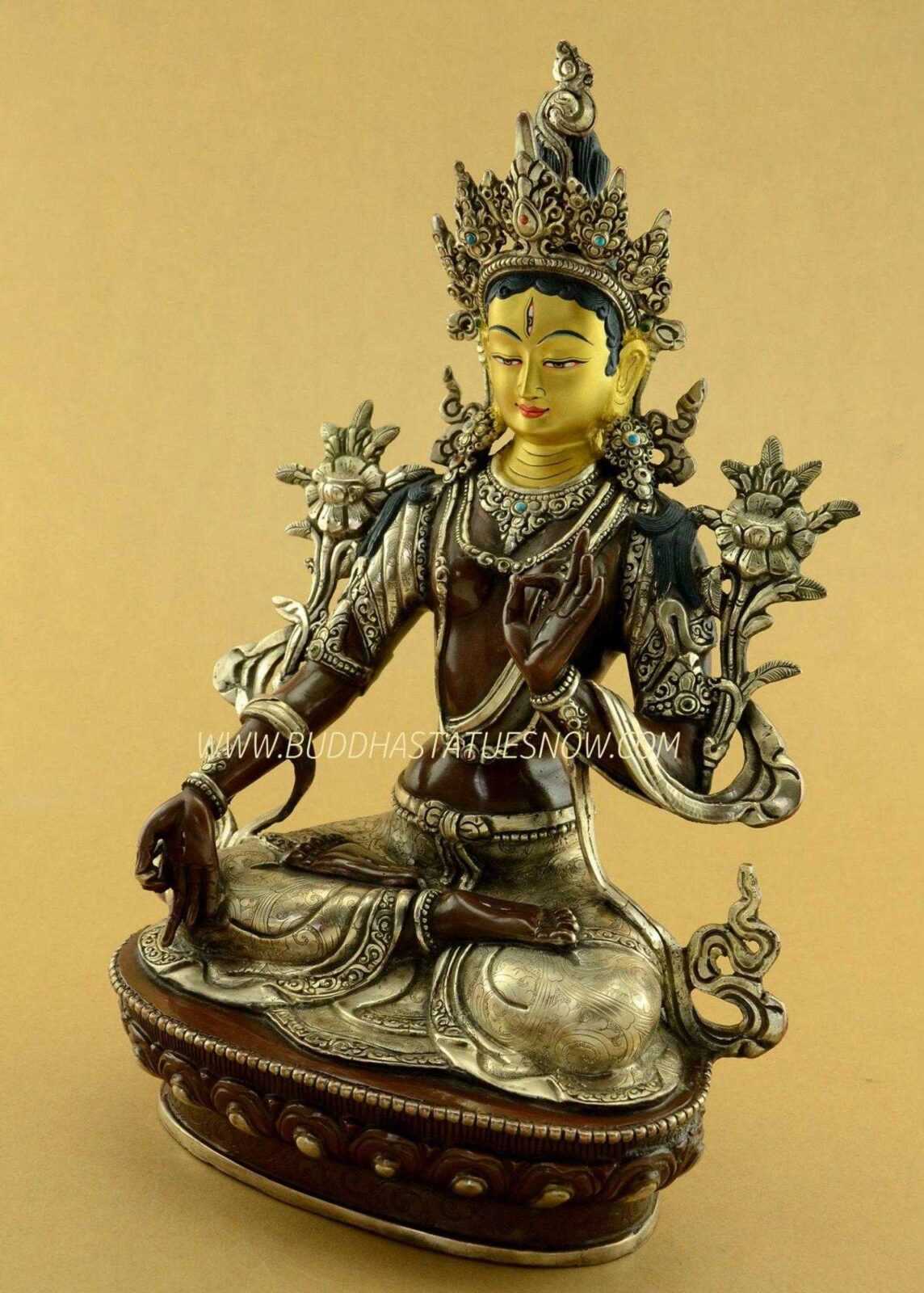
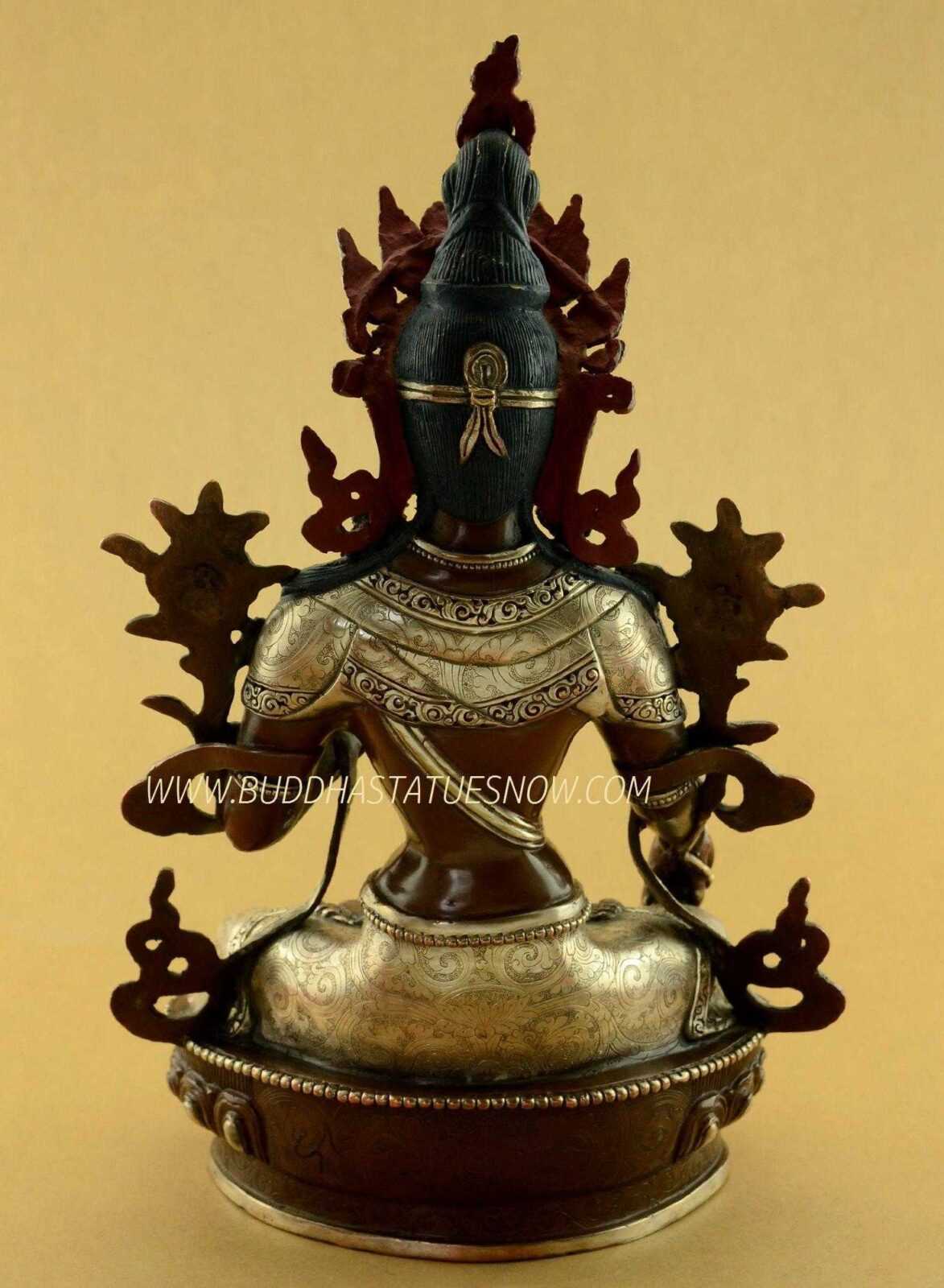
Our 12.75-inch Antiquated White Tara statue is a distinctive handmade representation of Cintachakra, the “Wish-Fulfilling Wheel,” combining an aged oxidized copper-alloy body with luminous silver-plated details and a beautifully hand-painted gold face. Handmade in Patan, Nepal using the traditional lost-wax casting method, the sculpture presents White Tara, also known as Dolkar or Sita Tara, with the seven wisdom eyes that distinguish her peaceful form. The contrasting finishes emphasize the sculptural detail while giving the statue the appearance and character of an older Himalayan devotional image.
Antiquated White Tara Statue Craftsmanship
The antiquated finish creates striking contrasts throughout the sculpture. Tara’s torso retains the rich dark tone of oxidized copper alloy, while silver-plated surfaces highlight her flowing garments, elaborate jewelry, crown, lotus flowers and lower robes. Particularly impressive are the finely hand-engraved patterns covering the dhoti and legs. Closely worked scrolling designs continue across the borders of her garments and onto the broad shoulder wrap visible from the rear, demonstrating that the artisans decorated the sculpture comprehensively rather than concentrating solely upon its frontal presentation.
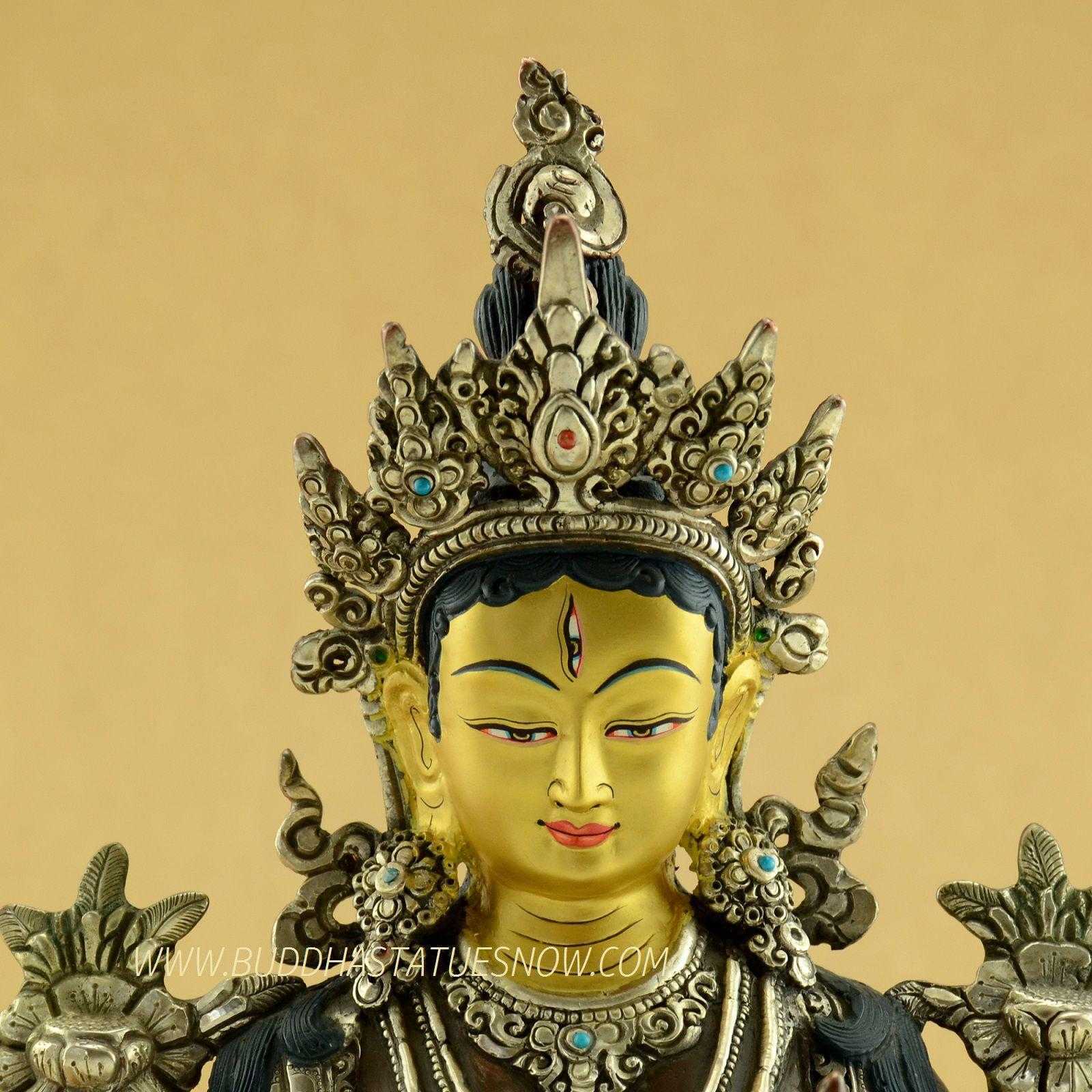
Her tall Bodhisattva crown is richly modeled with scrolling forms and inset turquoise and red coral gemstones, with additional stones appearing among her earrings, necklaces and ornaments. Blue-black painted hair rises into a high topknot behind the crown. Tara’s serene face is hand painted with gold and natural pigments, with delicately outlined eyes, red lips and the prominent upright wisdom eye upon her forehead. Additional turquoise and red coral gemstones may be embedded upon request.
Seven Eyes and White Tara Iconography
White Tara’s seven eyes are among the defining characteristics of this peaceful deity: two natural eyes, the vertical wisdom eye upon her forehead, eyes upon both palms and eyes upon the soles of both feet. Together they symbolize an extraordinary compassionate awareness capable of perceiving suffering in every direction. Our guide to White Tara’s iconography explores the meaning of these attributes and their relationship to her enlightened activity.
Two leafy lotus stems rise beside Tara and open into large blossoms at shoulder height. Her right hand extends over the knee in Varada mudra, the gesture of generosity and granting blessings. Her raised left hand holds the lotus stem while forming a graceful protective and teaching gesture. She sits peacefully in full lotus posture upon a rounded single-lotus pedestal, reinforcing the sculpture’s balanced and meditative composition.
White Tara and the Three Long-Life Deities
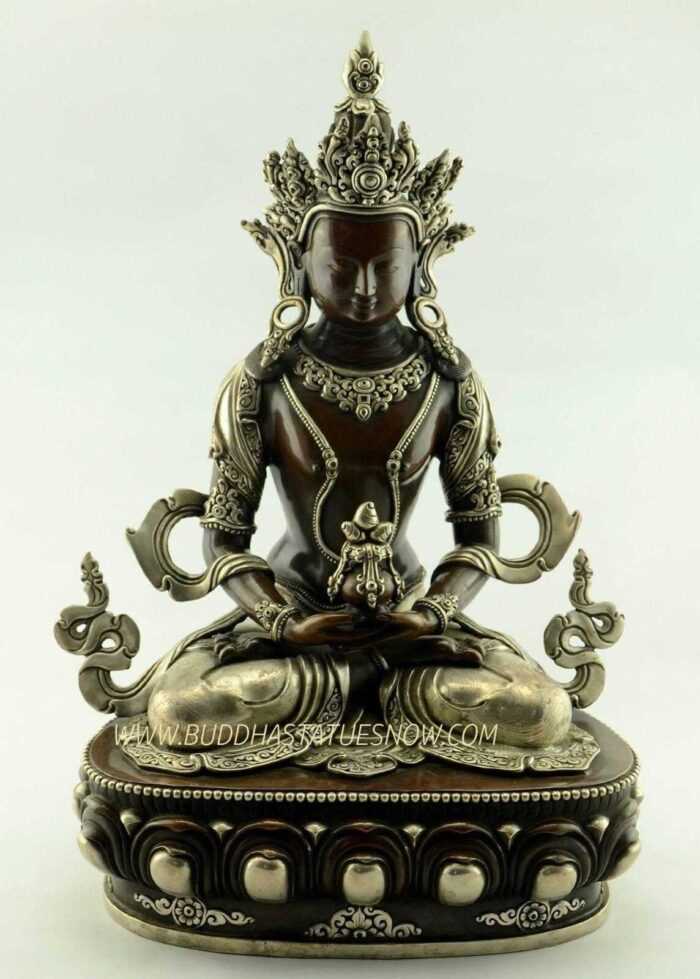
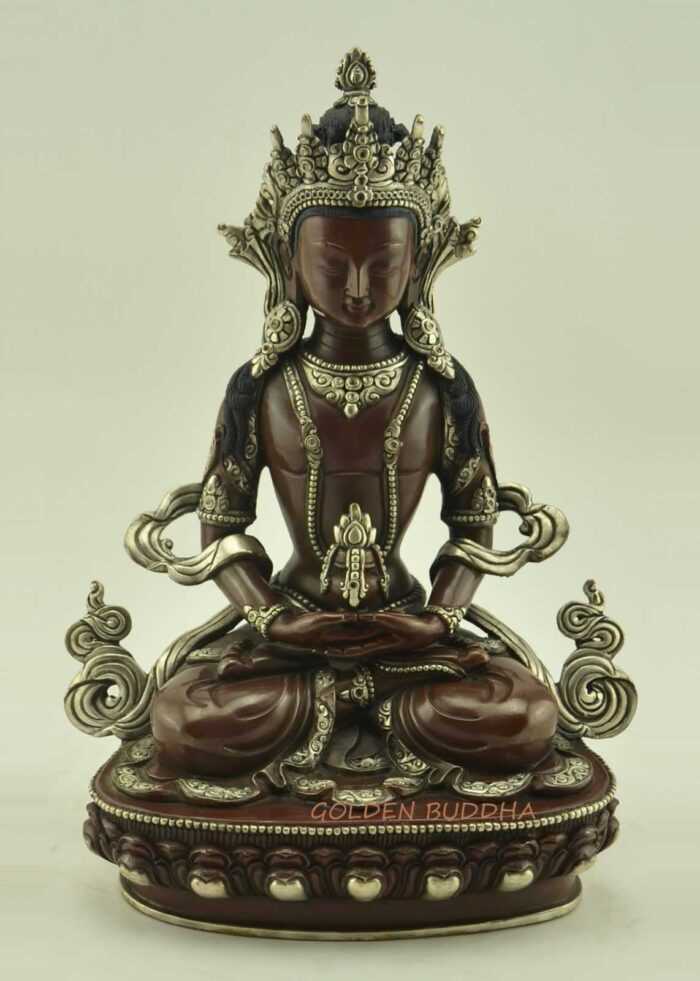
Known as Cintachakra, White Tara is particularly associated with healing, compassionate activity, serenity and longevity. She is also one of the Three Long-Life Deities of Tibetan Buddhism, together with Amitayus and Namgyalma. The three complement one another in traditional longevity practice: White Tara embodies compassionate healing and peaceful longevity, Amitayus represents immeasurable life and the nectar of immortality, while Namgyalma represents purification and victory over obstacles associated with premature death.
White Tara practices therefore have a special place in Tibetan Buddhist traditions concerned with preserving the precious opportunity for Dharma practice. Her mantra is recited in connection with longevity, healing and the removal of obstacles to wellbeing. Learn more about the White Tara mantra and longevity practice, or explore our collection of White Tara sculptures to compare other traditional interpretations of Dolkar.
Custom Made Antiquated White Tara Statues
Collectors seeking a different size, finish or interpretation may commission a custom Tibetan Buddhist statue handmade by skilled Nepali artisans. A custom White Tara can be created with traditional antiquated, silver-plated or 24K gold-gilded finishes and specified decorative details. Coordinated statues of Amitayus and Namgyalma can also create a traditional Three Long-Life Deities altar grouping. With its unusual contrast of dark oxidized copper alloy, bright silver ornamentation, intricate hand engraving, embedded gemstones and luminous gold-painted face, this Antiquated White Tara statue is particularly suited to collectors who appreciate the visual character of traditional Himalayan metalwork.
Authentic, Handmade in Nepal
Every statue is handcrafted in Patan, Nepal, using traditional lost wax casting and comes with a certificate of authenticity issued by Nepal’s Department of Archaeology, verifying its materials, technique, and origin.