


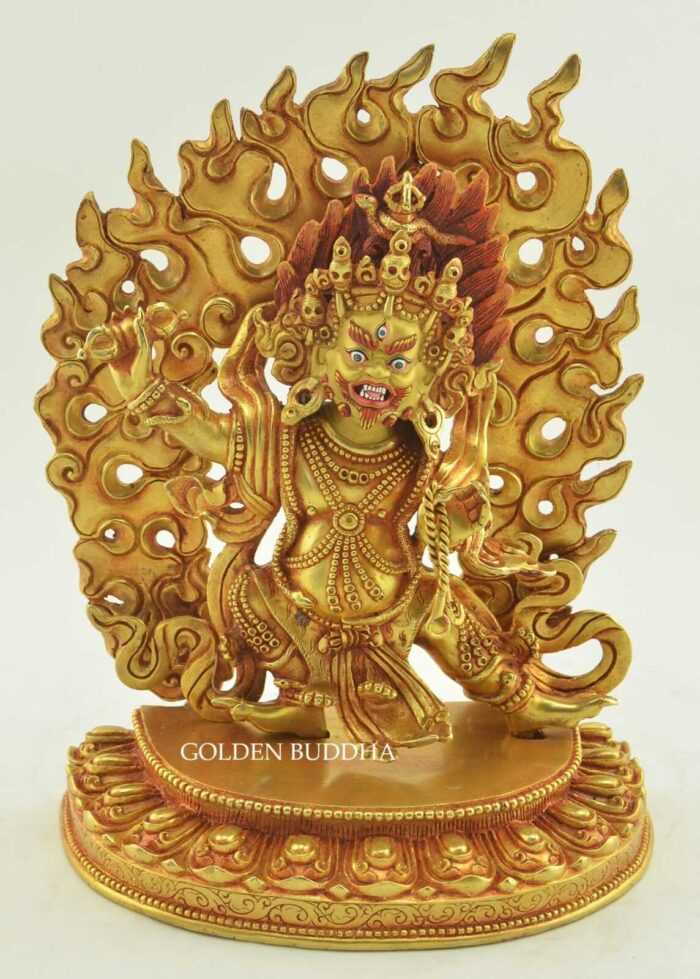
This imposing 11-inch Vajrapani sculpture portrays Chana Dorje in his powerful wrathful form, surrounded by a sweeping aureole of flames that expresses the force of awakened activity. Handmade in Patan, Nepal, the sculpture is cast in copper alloy using the traditional lost-wax method and finished with luminous gold gilding. The central figure measures 9 inches without the removable flame aureole and reaches 11 inches when fully assembled. Vajrapani’s intensely expressive face is individually hand painted, with three wide-open eyes, sharply arched brows and exposed teeth contrasting against his red-and-gold flame-like hair. The overall composition combines energetic movement with the balanced proportions of traditional Newar Buddhist sculpture.
Known in Tibetan as Chana Dorje, or “Holder of the Vajra,” Vajrapani represents the enlightened power and effective activity of the Buddhas. His wrathful appearance should not be interpreted as ordinary anger. In Vajrayana Buddhism, fierce imagery communicates compassionate power directed against ignorance, delusion and the obstacles that prevent liberation. The enormous aureole surrounding this figure reinforces that meaning: its curling flames represent pristine awareness consuming obscurations rather than destructive worldly fire. Explore the symbolism of wrathful Vajrapani and Chana Dorje in our complete guide.
Vajrapani Sculpture Iconography and Attributes
Vajrapani stands in a dramatic warrior posture with his knees deeply bent and his body poised for immediate action. His raised right hand brandishes the vajra, the diamond-thunderbolt that gives Vajrapani his Sanskrit name. In Buddhist symbolism, the vajra represents indestructibility, irresistible spiritual power and skillful means. His left hand holds a pasha lasso, an attribute associated with restraining obstructive forces and bringing them under the control of awakened wisdom.
The sculpted crown is adorned with five skulls, one of the most recognizable features of wrathful Vajrapani. These symbolize the transformation of the five poisons — ignorance, attachment, anger, pride and jealousy — into the five transcendent wisdoms. Three eyes reinforce his awakened perception, while the dramatically swept hair rises behind the crown like another field of fire. Large circular earrings, layered necklaces, bracelets, anklets and ornamental cords further identify him as an enlightened Bodhisattva rather than a worldly warrior.
Tiger Skin, Flaming Aureole and Dynamic Sculpture
The photographs reveal particularly strong detailing around Vajrapani’s lower body. A tiger-skin garment wraps around his waist, with the stylized feline face visible at the rear, while engraved markings suggest the texture of the hide. Flowing scarves curl outward around his arms and legs, extending the movement of the body into the surrounding flames. The removable aureole rises high above the deity and nearly encloses him in a ring of curling fire. Beneath the figure, a broad oval lotus pedestal is finished with substantial raised lotus-petal carvings and a beaded upper border, giving the energetic composition a visually stable foundation.
At the buyer’s request, selected areas of the crown and jewelry may also be embellished with turquoise and red coral gemstones before shipment. These optional stones can add traditional Himalayan color while preserving the sculpture’s existing iconography and gold finish.
Rig Sum Gonpo — Compassion, Wisdom and Enlightened Power
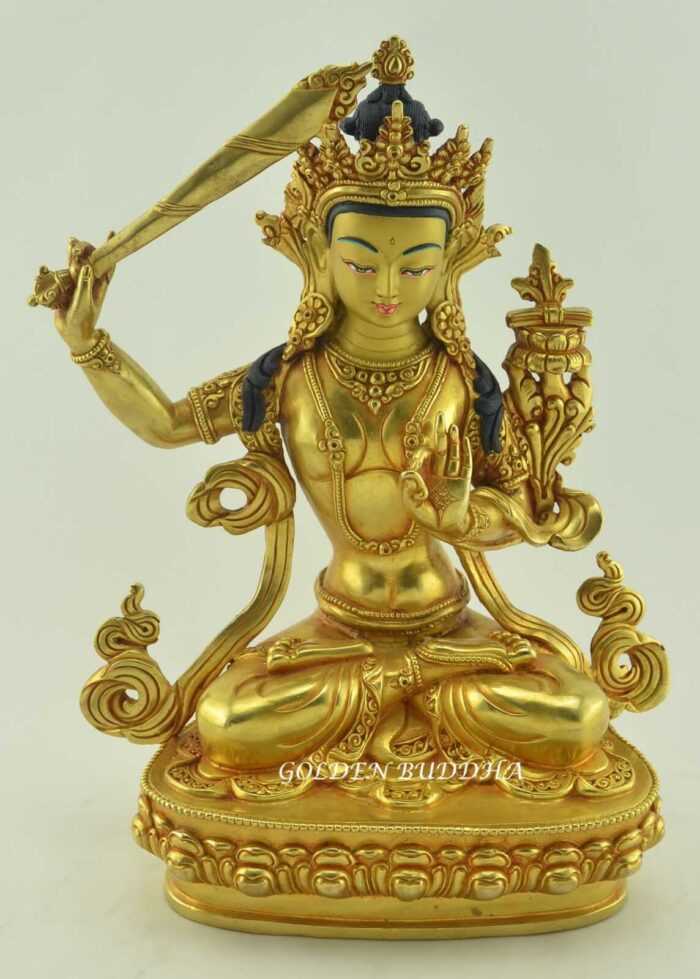
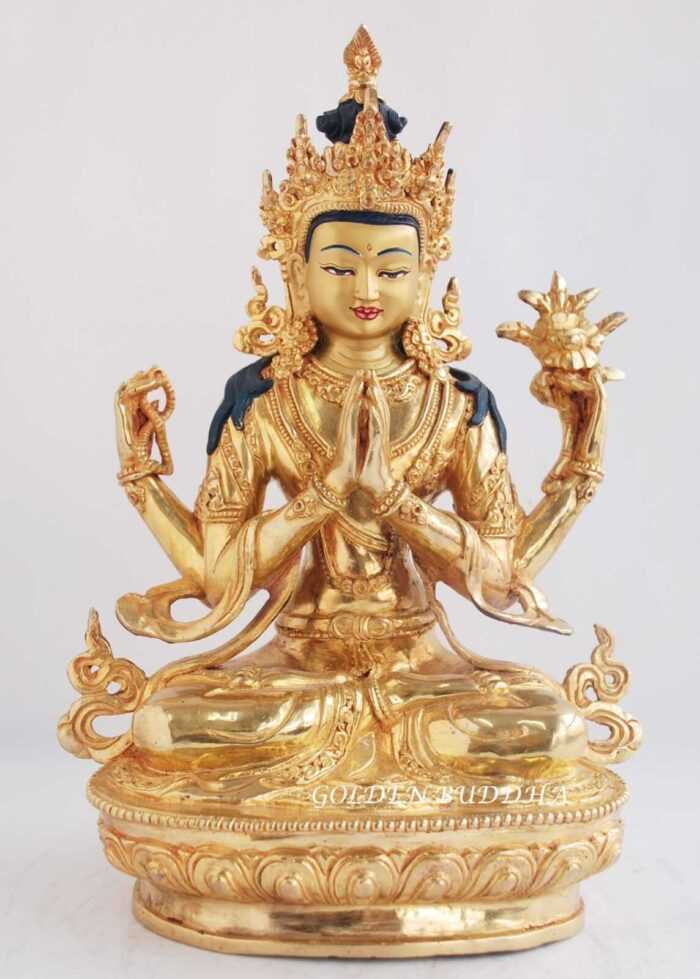
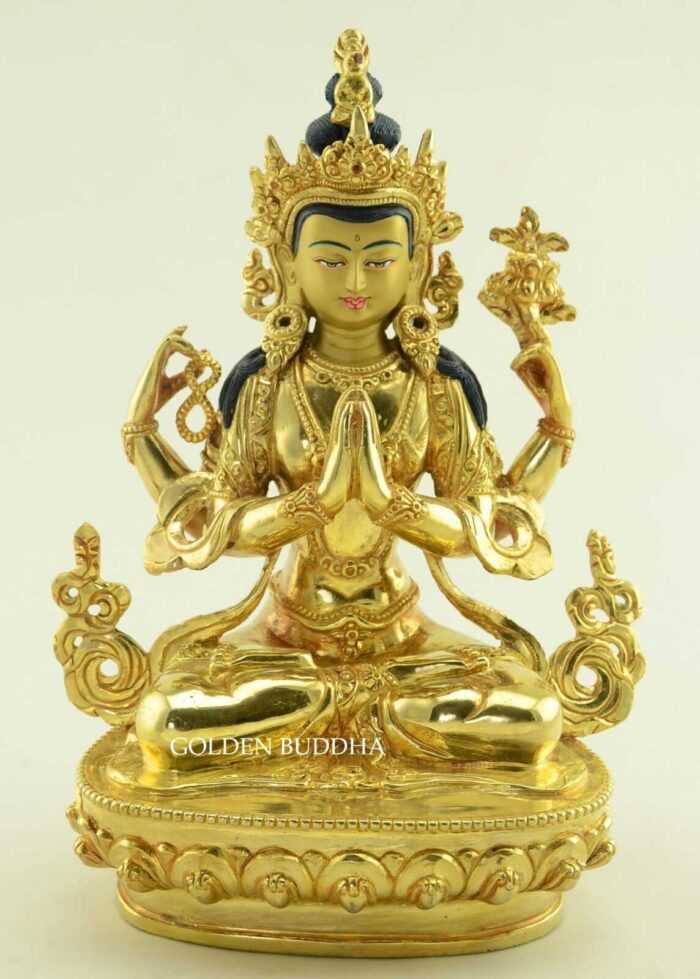
This Vajrapani sculpture makes an especially meaningful shrine companion to our gold-gilded Manjushri statue and Four-Armed Avalokiteshvara statue. Together they form the traditional Rig Sum Gonpo, the three great Bodhisattvas representing essential qualities of awakening. Avalokiteshvara embodies limitless compassion, Manjushri embodies transcendent wisdom, and Vajrapani embodies the enlightened power required to overcome obstacles and translate wisdom and compassion into effective action. Displayed together, the three create both a doctrinally coherent practice set and a visually balanced grouping of Himalayan Buddhist sculpture.
Custom Made Vajrapani Sculpture and Rig Sum Gonpo Statues
Collectors, practitioners, monasteries and Dharma centers seeking different dimensions or a completely coordinated shrine arrangement may commission custom Tibetan Buddhist statues handmade in Nepal. Vajrapani may be commissioned individually or together with Manjushri and Avalokiteshvara as a matched Rig Sum Gonpo set, with coordinated heights, gilding, pedestal proportions and ornamentation. Such a grouping brings together the compassionate heart represented by Chenrezig, the discerning wisdom of Manjushri and the fearless spiritual power of Chana Dorje — three complementary qualities central to the Vajrayana path.
Authentic, Handmade in Nepal
Every statue is handcrafted in Patan, Nepal, using traditional lost wax casting and comes with a certificate of authenticity issued by Nepal’s Department of Archaeology, verifying its materials, technique, and origin.
Reviews
There are no reviews yet.