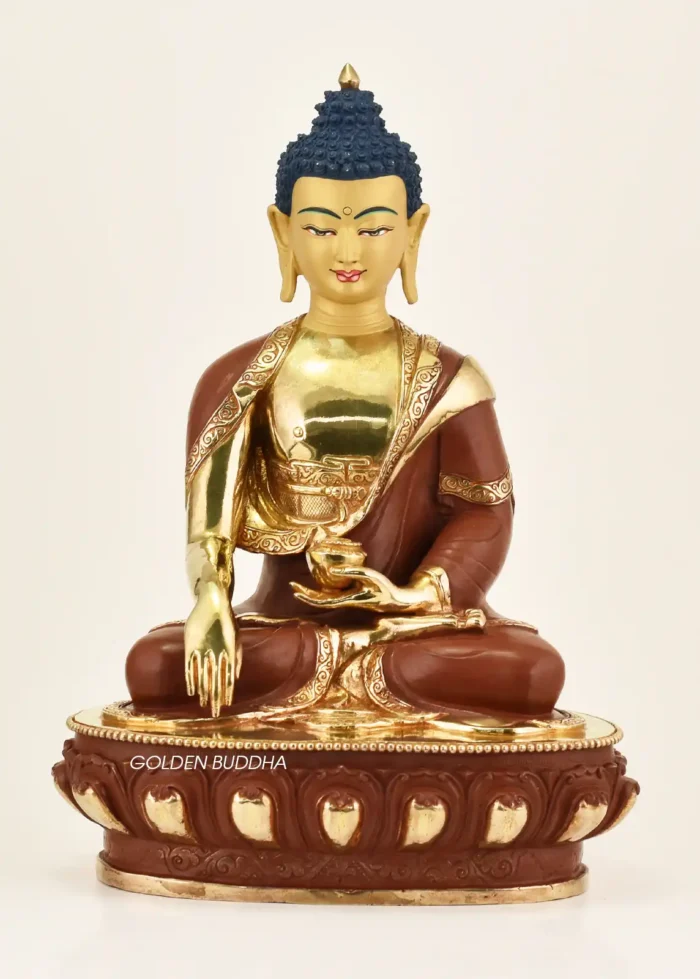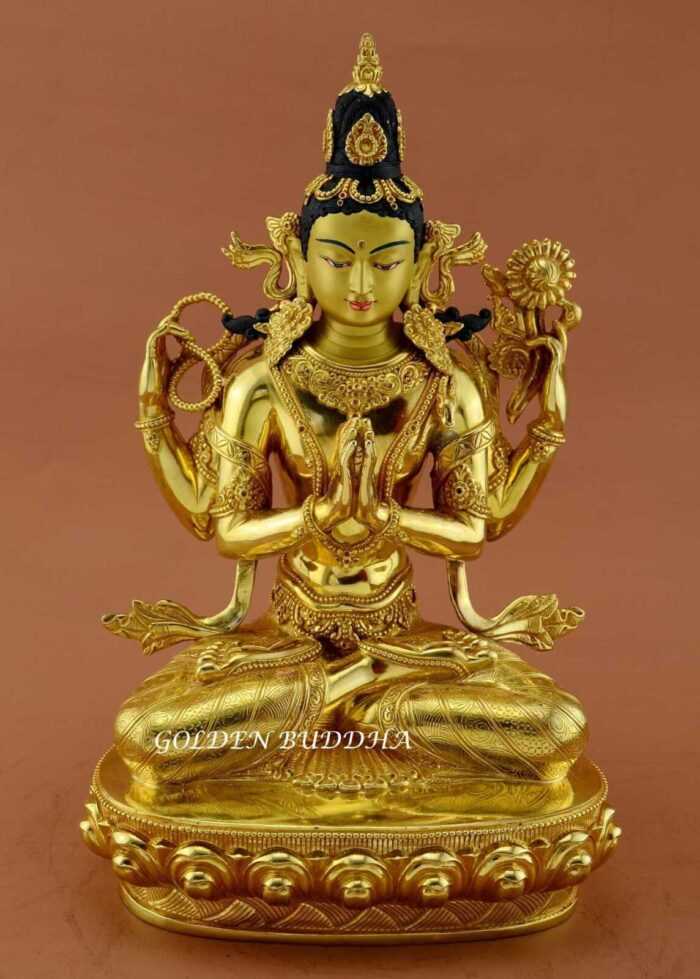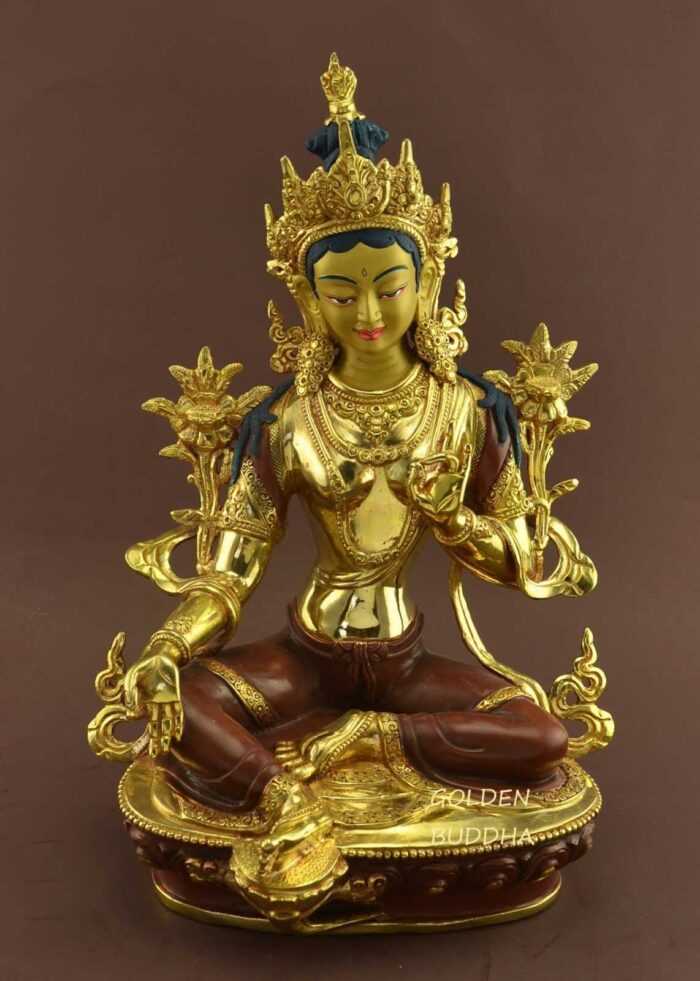

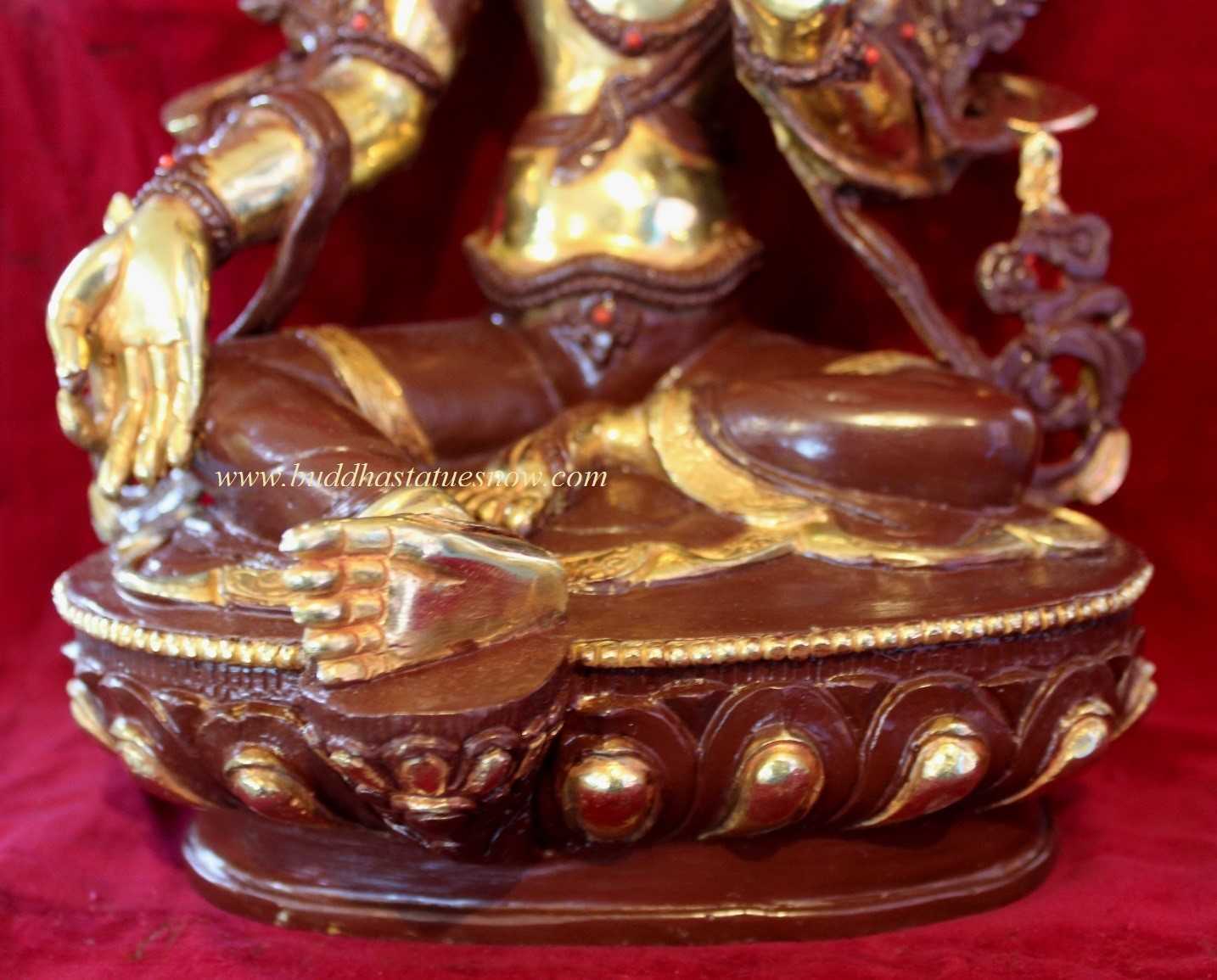
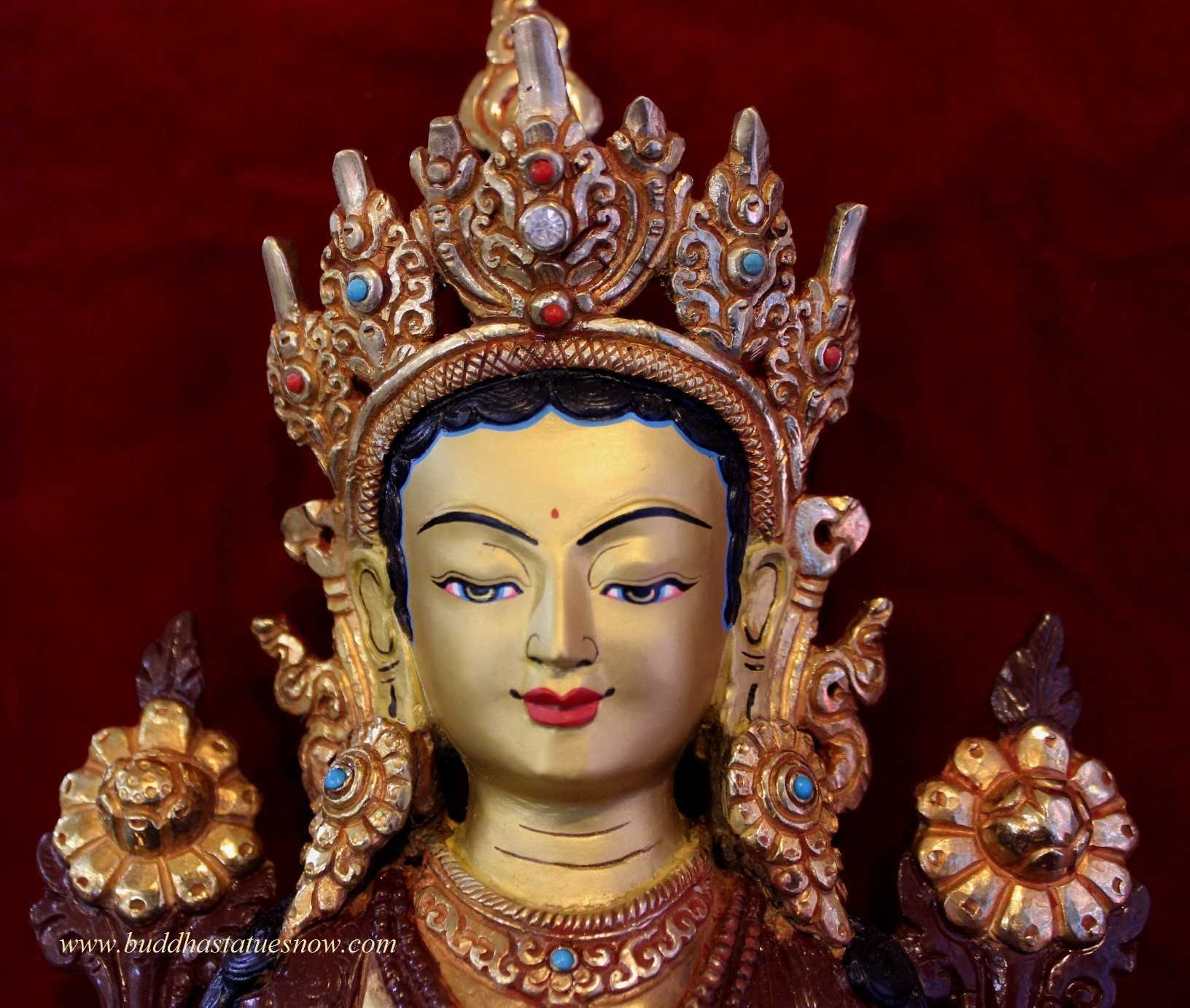
This 12-inch Tibetan Jetsun Dolma sculpture presents Green Tara in a richly contrasting combination of 24K gold and warm reddish-brown copper tones. Handcrafted in Patan, Nepal by skilled Newar artisans, the sculpture is cast from copper alloy using the traditional lost-wax method and selectively fire gilded in 24K gold. The gilding illuminates Tara’s face, torso, hands and sacred ornaments while the reddish-brown garments, flower stems and lotus throne create visual depth around the radiant central figure. Measuring 12 inches high and 8 inches wide, this substantial 6000-gram sculpture is suited to a Buddhist altar, meditation room or collection of authentic Himalayan art.
Green Tara is known in Tibetan as Jetsun Dolma, the Noble Liberator, and is among the most beloved female enlightened figures of Tibetan Buddhism. Tara embodies swift compassionate activity and the immediate response of enlightened awareness to suffering. Traditional accounts describe her arising from the compassion of Avalokiteshvara, establishing an important spiritual connection between Tara and the great Bodhisattva of Compassion. Learn more about Tara’s traditional origin and relationship with Avalokiteshvara.
Tibetan Jetsun Dolma Sculpture Iconography
Jetsun Dolma sits in lalitasana, the posture of royal ease. Her left leg remains folded inward while the right leg extends forward and downward, with the foot supported by a smaller lotus emerging from the throne. This distinctive posture expresses one of Green Tara’s defining qualities: although serenely composed, she remains ready to arise and respond to beings in need. Her lowered right hand displays Varada mudra, the gesture of generosity, compassionate giving and the granting of blessings. Her raised left hand holds a flowering stem beside her body. For a detailed explanation of these attributes, see our guide to Green Tara’s iconography and symbolism.
Two prominent lotus blossoms rise above Tara’s shoulders, creating a balanced floral frame around her crown and upper body. Both flowers are visibly opened in this sculpture rather than presenting the contrasting open-flower-and-bud arrangement found in some Tara images. Long stems, foliage and curling celestial ribbons extend behind her arms, adding graceful movement to the otherwise composed seated figure.
Jeweled Crown and 24K Gold Craftsmanship
The elaborate Bodhisattva crown is one of the sculpture’s most distinctive features. Its multiple ornamental points and scrolling details are embellished with turquoise, red coral and clear stones. Additional turquoise and red accents appear in Tara’s earrings and necklaces, providing small areas of vivid color against the gold and reddish-brown surfaces. Her serene face is individually hand painted, with carefully delineated eyes, dark brows, red lips and a small urna centered between the brows.
Tara’s layered jewelry, armlets, bracelets and garment borders continue the ornamental treatment across the figure. The selective gilding is particularly effective because it does not conceal the copper sculpture beneath it. Instead, brilliant gold surfaces are juxtaposed with deep reddish-brown robes and throne elements, emphasizing the contours of her body, mudras and sacred attributes. The lotus pedestal completes the composition with a broad rounded platform and sculpted lotus-petal register.
Green Tara as Swift Protector
Green Tara is traditionally invoked for protection from danger, fear and obstacles to spiritual practice. The famous Eight Great Fears can be understood both as external dangers and as representations of inner afflictions that obstruct awakening. Tara’s extended leg and open Varada hand visually reinforce this active dimension of her compassion. Read more about Green Tara and the Eight Fears.
A Matching Tibetan Jetsun Dolma and Amitabha Buddha Pair
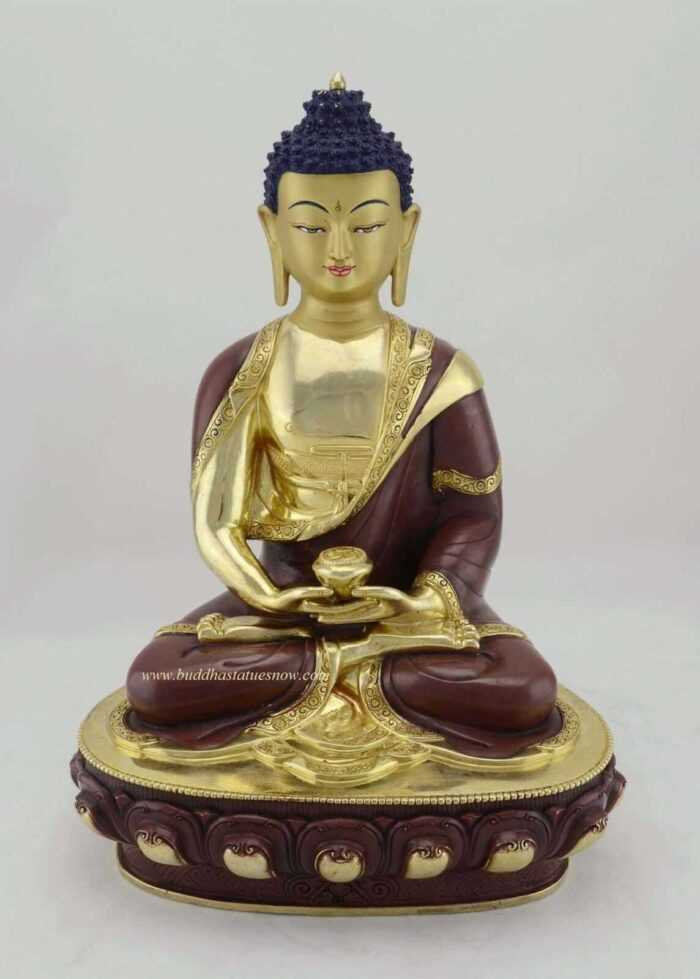
This sculpture pairs beautifully with our 12.5-inch Amitabha Buddha sculpture. Their nearly identical dimensions and complementary 24K gold and reddish-brown finishes create a visually balanced shrine pair while their iconography remains distinct. Amitabha rests in meditative equipoise with his hands in Dhyana mudra, whereas Jetsun Dolma’s extended leg and Varada mudra emphasize immediate compassionate activity.
The pairing also has a meaningful doctrinal relationship. Amitabha presides over the Padma or Lotus Buddha family and the Western Pure Land of Sukhavati. Avalokiteshvara is closely associated with Amitabha and the Padma family, while Tara’s traditional emergence from Avalokiteshvara’s compassionate tear connects her to this lineage. Together, Amitabha and Green Tara can therefore represent complementary qualities of contemplative wisdom, Pure Land aspiration and swift compassionate activity.
Custom Made Green Tara and Amitabha Statues
Collectors, practitioners, monasteries and Dharma centers may also commission custom Tibetan Buddhist statues handcrafted in Nepal. Green Tara and Amitabha can be commissioned individually or as a coordinated pair with matching dimensions, lotus thrones, gilding and artistic proportions. Creating them together allows the artisan to establish visual continuity while preserving each deity’s traditional attributes. Such a pairing unites Amitabha’s meditative presence and Pure Land aspiration with Jetsun Dolma’s protective, compassionate and immediately responsive enlightened activity.
Authentic, Handmade in Nepal
Every statue is handcrafted in Patan, Nepal, using traditional lost wax casting and comes with a certificate of authenticity issued by Nepal’s Department of Archaeology, verifying its materials, technique, and origin.