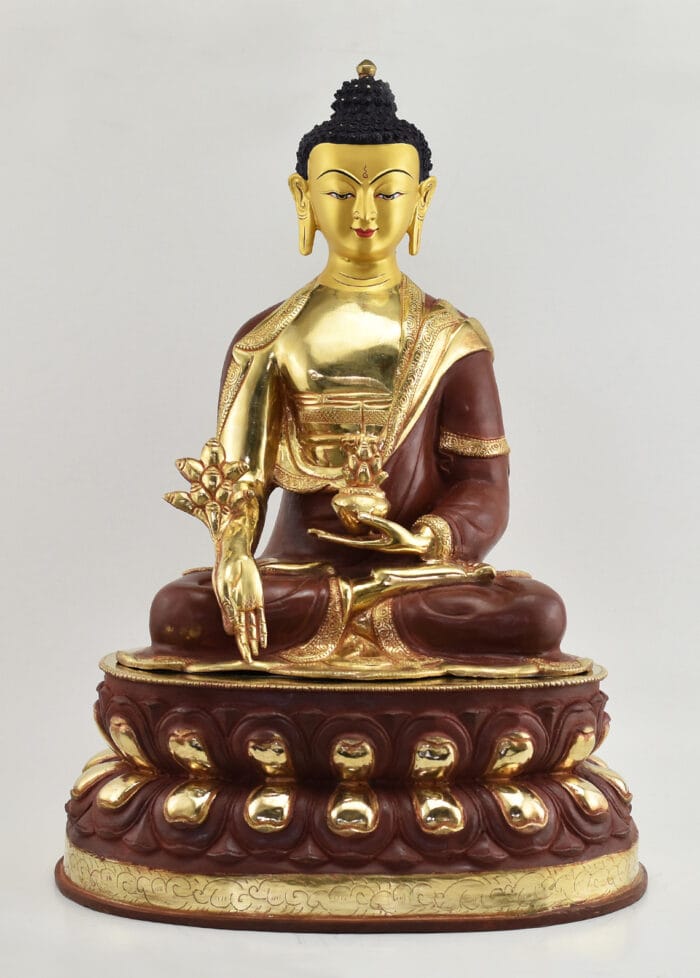
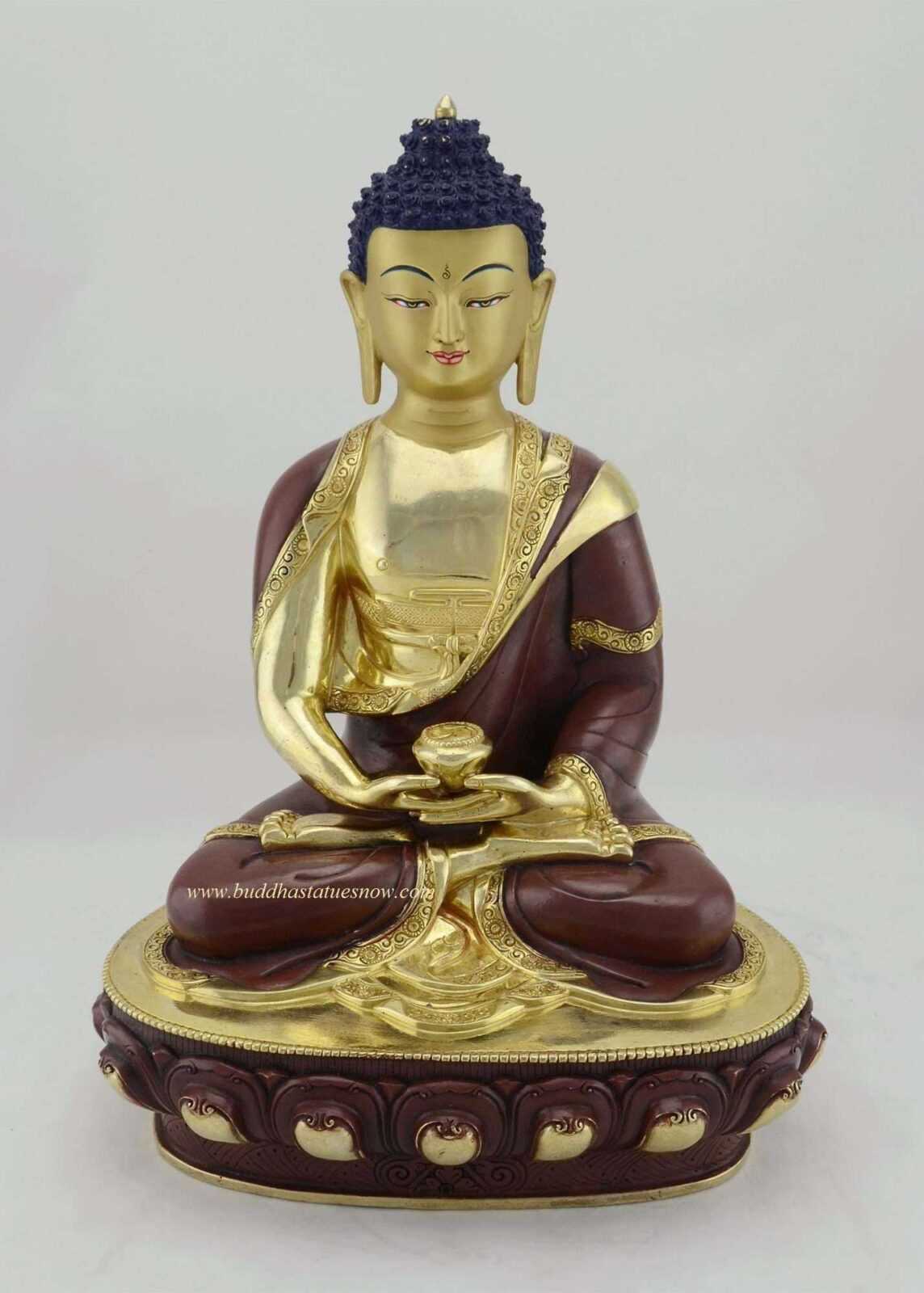


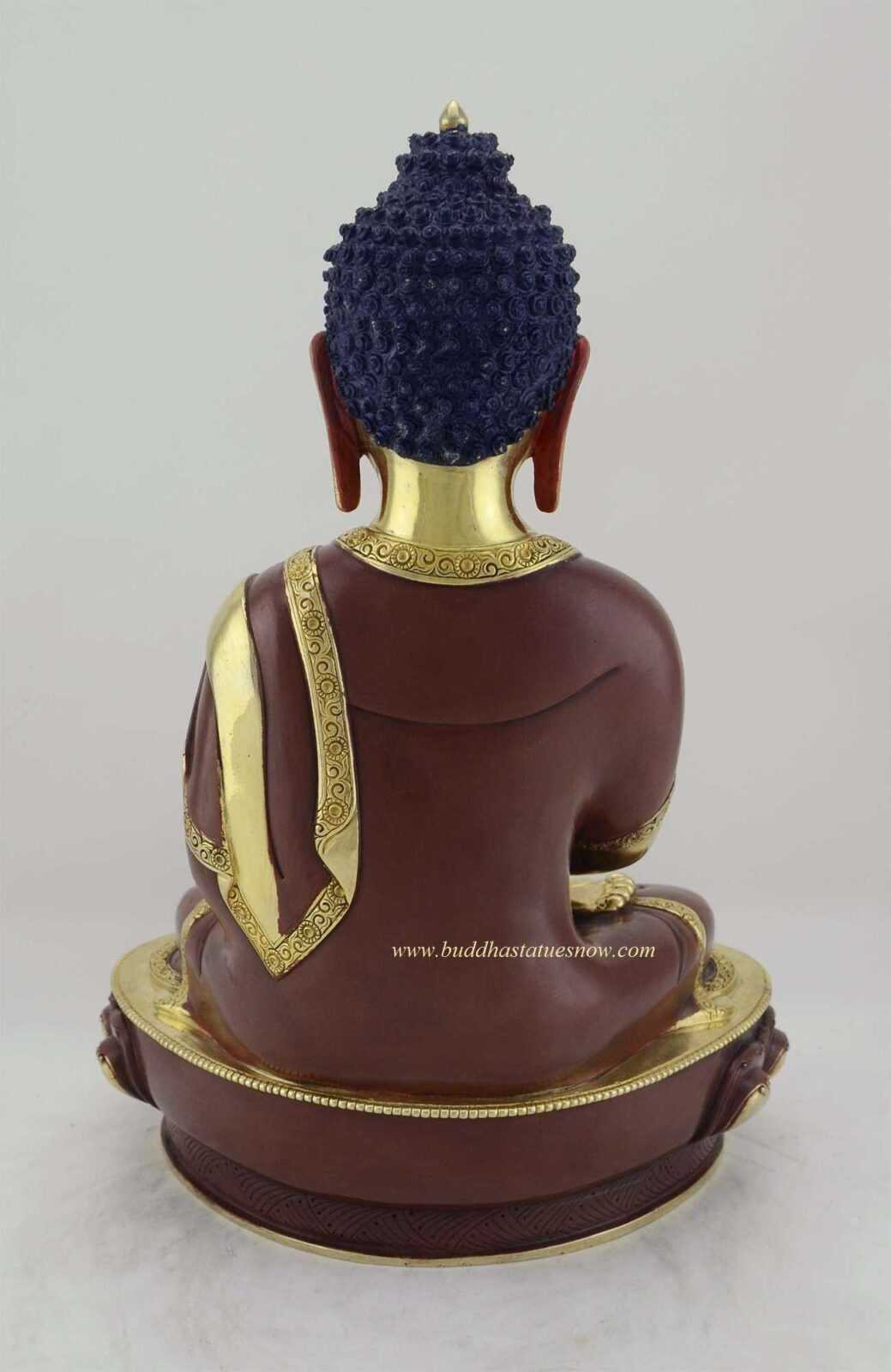
The warm contrast between the deep maroon monastic robe and radiant gold surface gives this 12.5″ Amitabha Buddha sculpture a serene presence suited to a Buddhist altar, meditation room, or collection of Himalayan sacred art. The exposed face, chest, right arm, hands, robe borders, and upper surface of the pedestal are fire gilded in 24K pure gold, while the robe and lower lotus petals retain their rich reddish-brown copper finish. This carefully balanced two-tone treatment allows the gold to illuminate Amitabha’s peaceful form without concealing the flowing shape of his monastic garment.
A master Newar artisan in Patan, Nepal created the Amitabha Buddha sculpture from copper alloy using the traditional lost wax casting method. Fine scrolling patterns were hand engraved along the gilded borders of the robe, collar, cuffs, and sash. The same ornamental detailing continues around the base, while the maroon robe remains largely smooth and unembellished, producing a restrained monastic appearance. Learn more about the traditional 24K gold fire gilding process used by the artisans of the Kathmandu Valley.
The face is finished separately through traditional hand painting rather than fire gilding. Carefully outlined eyes, arched brows, a red lower lip, and the urna between the eyebrows give the sculpture a calm and lifelike expression. Above the face, tightly curled dark hair rises into the ushnisha and ends beneath a small gilded finial. The elongated earlobes, three neck lines, urna, and ushnisha are among the familiar physical characteristics used to identify an enlightened Buddha in Himalayan Buddhist art.
Amitabha Buddha Sculpture Features and Dhyana Mudra
Amitabha sits in the full lotus posture with both hands resting one above the other in the Dhyana mudra. This meditation gesture represents unwavering concentration, inner stillness, and the disciplined awareness required to perceive the nature of reality. A small gilded alms bowl rests in his open palms. Although the bowl originated as the simple vessel used by Buddhist monks to receive food, in Amitabha iconography it is understood to contain the nectar of spiritual nourishment offered to devotees who call upon him with sincere faith.
The Amitabha Buddha sculpture rests on a single lotus pedestal with an oval upper platform, a beaded rim, and a register of rounded lotus petals. A raised lotus blossom appears beneath his crossed ankles, visually joining the meditating Buddha to the throne below. The lotus represents purity because it rises from muddy water without being stained by it, just as an awakened being transcends suffering without abandoning compassion for those who remain within samsara.
Amitabha and the Pure Land of Sukhavati
Before attaining Buddhahood, Amitabha was the Bodhisattva Dharmakara. He made a series of vows describing a pure realm in which beings could continue their spiritual development without the severe obstacles found in ordinary existence. After accumulating immeasurable merit over countless lifetimes, he fulfilled those vows and became the Buddha presiding over Sukhavati, the Western Pure Land. Read more about Amitabha’s Pure Land of Sukhavati and the conditions associated with rebirth there.
Pure Land practitioners remember Amitabha through sincere recitation of his name and mantra while cultivating faith, aspiration, and ethical conduct. A statue such as this can serve as the central visual support for that practice, helping the devotee contemplate Amitabha’s infinite light, compassion, and promise of guidance. Additional questions about his identity, iconography, mantra, and relationship with Amitayus are answered in the Amitabha Buddha statues FAQ.
Matching Amitabha, Namgyalma and Shakyamuni Buddha Sculpture Set
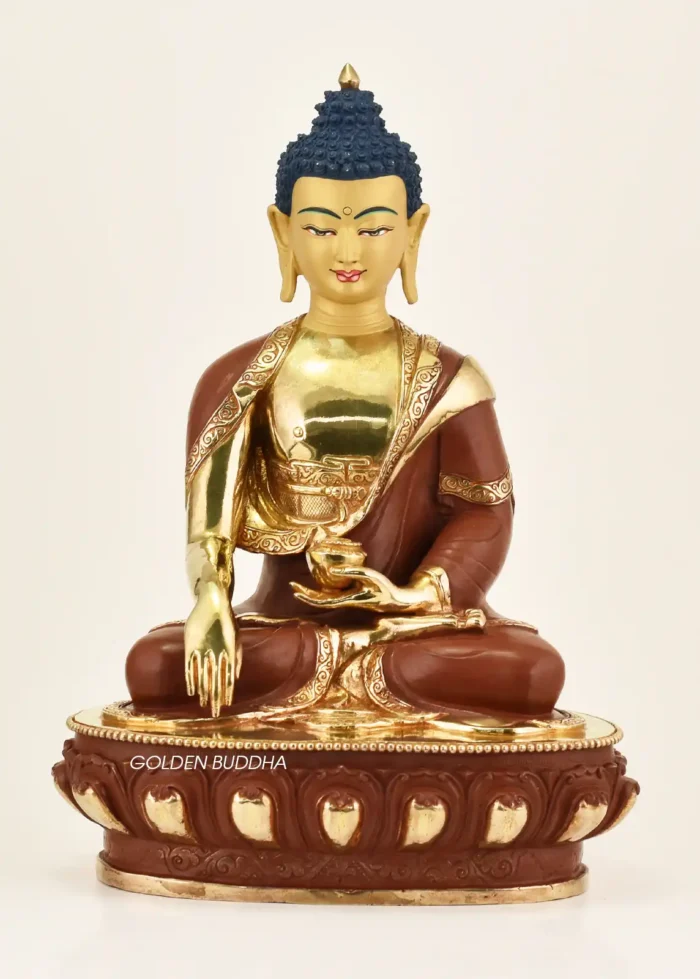
This Amitabha Buddha sculpture forms a particularly harmonious pair with our matching Shakyamuni Buddha sculpture. Both statues were created by the same master artisan and share closely related proportions, maroon monastic robes, exposed gold surfaces, finely engraved borders, dark curled hair, and coordinated lotus pedestals. Displayed together, Shakyamuni represents the historical Buddha who revealed the Dharma in our world, while Amitabha represents Infinite Light and the compassionate promise of rebirth in Sukhavati. Their matching craftsmanship and complementary meanings make the pair suitable for a balanced home altar, meditation center, or coordinated Buddhist art collection.
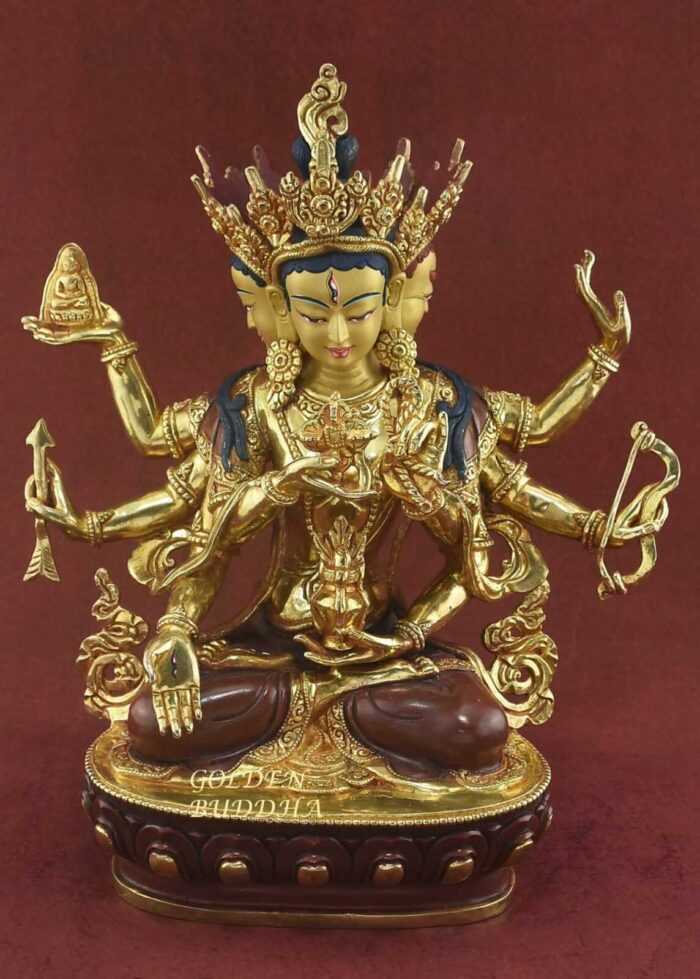
This Amitabha Buddha sculpture could also be paired very nicely in combination with our partly gold gilded and antiquated copper, mixed finish Namgyalma (Usnisavijaya) 13.5″ statue since both Amitabha Buddha’s long life attribute ‒ Amitayus ‒ and Namgyalma are two of the three Tibetan long life deities. The two statues are very well matched with nearly identical dimensions and mixed 24K gold and antiquated copper finish.
Custom Amitabha Buddha Sculpture
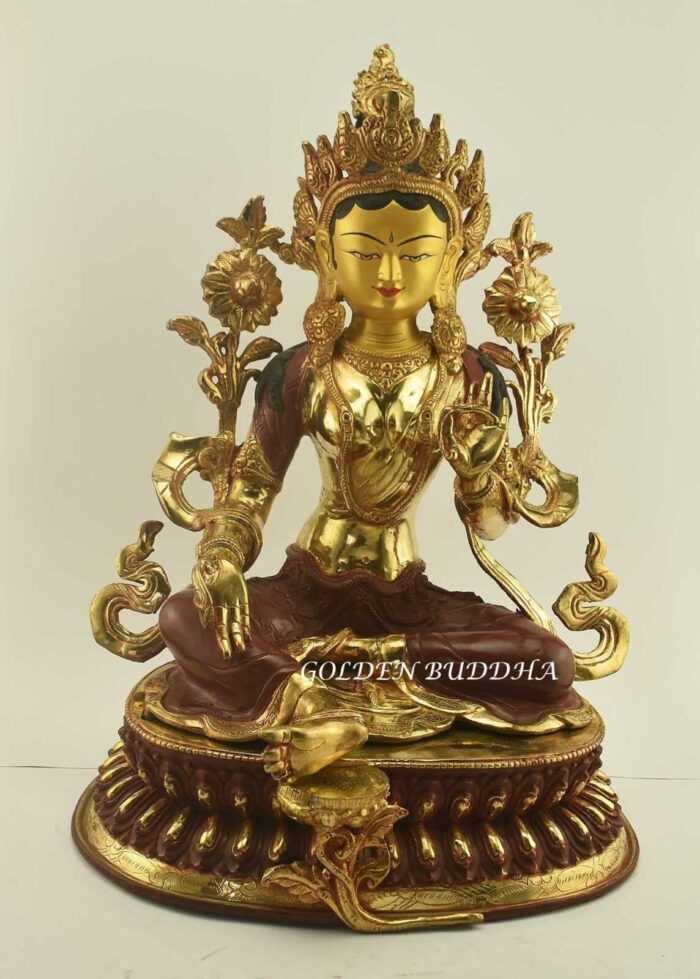
Collectors, practitioners, monasteries, and Dharma centers may also commission a custom Tibetan Buddhist statue based on this Amitabha Buddha sculpture. Our Patan artisans can produce Amitabha in a requested size, posture, pedestal style, level of engraving, and finish, including oxidized copper, 24K fire gilding, or a coordinated two-tone treatment. A matching Shakyamuni, Medicine Buddha, Amitayus, or complete Buddha set can also be commissioned through the same workshop so that the proportions, facial style, lotus thrones, and surface finishes remain visually consistent. Photographs can be provided during the wax carving, casting, engraving, gilding, and final face-painting stages before the completed sculpture is shipped.
Authentic, Handmade in Nepal
Every statue is handcrafted in Patan, Nepal, using traditional lost wax casting and comes with a certificate of authenticity issued by Nepal’s Department of Archaeology, verifying its materials, technique, and origin.