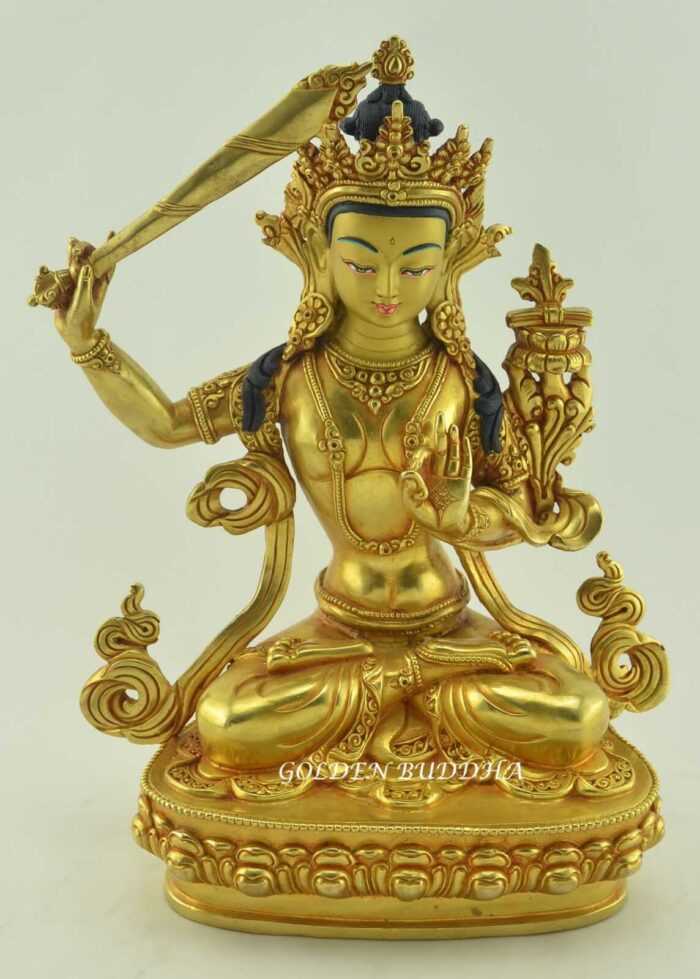

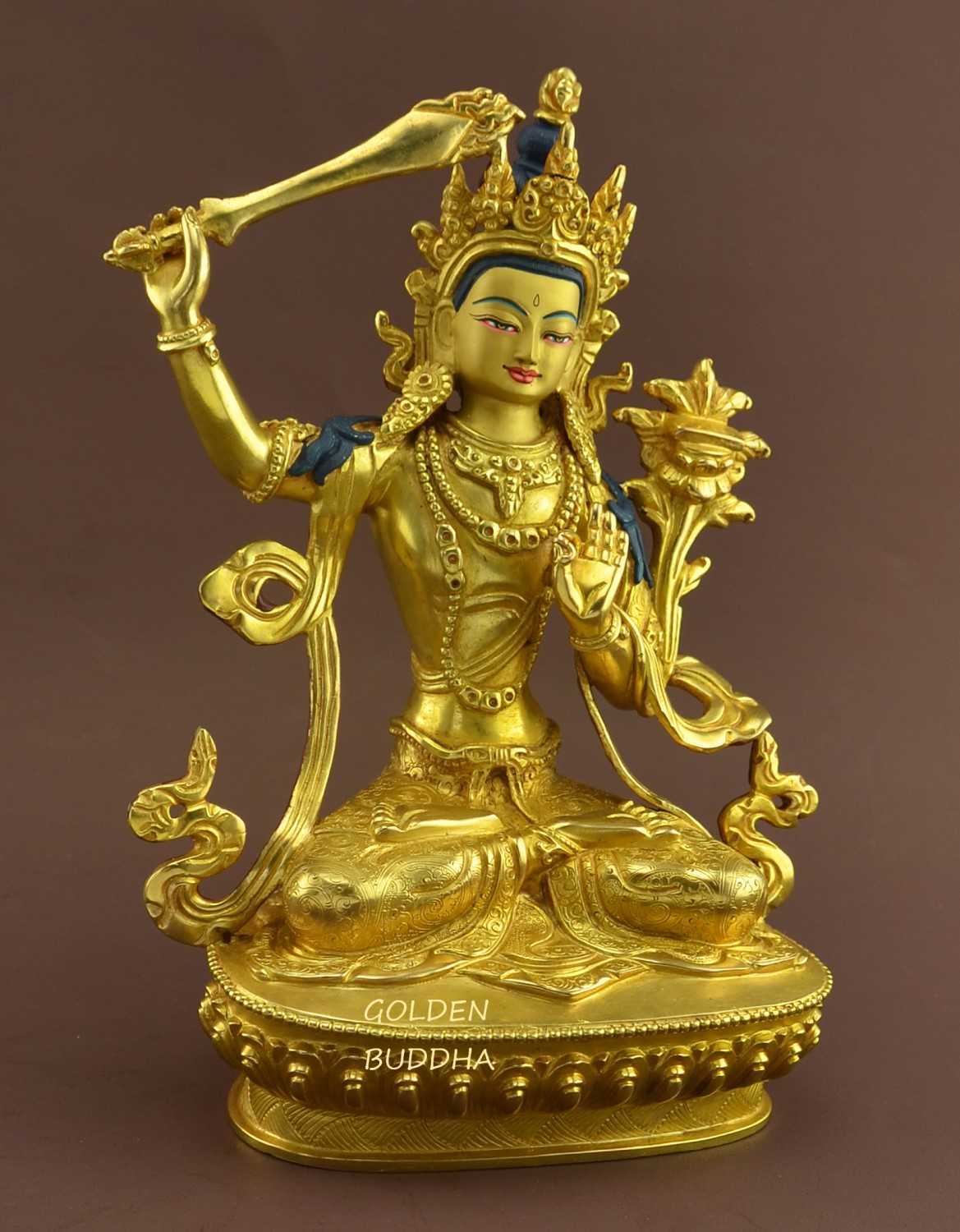


This 9-inch Tibetan Jampelyang Sculpture portrays Manjushri, the Bodhisattva of transcendent wisdom, in an elegant traditional form distinguished by extensive hand-finished detail. Handmade in Patan, Nepal, the sculpture is cast in copper alloy using the traditional lost-wax method and fire gilded in 24K gold. The warm gilded surface reveals intricate engraving across the dhoti, lower robes and shoulder wrap, with further decorative work continuing around the rear garments and lotus throne. Manjushri’s serene face is hand painted, while his blue-black hair rises into a carefully modeled topknot behind an elaborate Bodhisattva crown. The crown and jewelry may also be embellished with turquoise and red coral gemstones upon request before delivery.
Tibetan Jampelyang Sculpture and the Bodhisattva of Wisdom
Known as Jampelyang in Tibetan and Manjushri in Sanskrit, this revered Bodhisattva personifies prajna, the transcendent wisdom that penetrates beyond ordinary conceptual understanding. His youthful appearance does not signify immaturity. Instead, it expresses the continually fresh quality of awakened perception—the ability to encounter reality without the obscurations of habitual ignorance. This association with wisdom has made Manjushri particularly important to students, scholars, teachers, translators and Dharma practitioners. Explore the deeper meaning and symbolism of Manjushri in our illustrated guide.
Sword of Wisdom and Prajnaparamita Sutra
Manjushri’s defining attribute is the great Sword of Wisdom raised high in his right hand. Its purpose is symbolic rather than martial: the sword represents discriminating insight capable of cutting through ignorance, delusion and mistaken views. The sweeping blade gives the sculpture an energetic upward movement while contrasting with Manjushri’s composed expression and stable meditation posture. His left hand forms a graceful teaching gesture while holding the stem of a lotus that rises beside his shoulder.
Upon this lotus rests the Prajnaparamita Sutra, representing the Perfection of Wisdom teachings central to Mahayana Buddhism. The scripture and sword form a complementary pair. The sacred text represents the teachings through which wisdom is cultivated, while the sword expresses direct realization capable of severing ignorance. Manjushri therefore unites learning, contemplation and penetrating insight within a single iconographic form.
Hand-Engraved Detail and Traditional Iconography
This Tibetan Jampelyang Sculpture is seated in full vajra posture upon a single lotus throne, establishing a stable triangular composition beneath the raised sword. Long celestial scarves descend from his shoulders and form curling flourishes beside the body. Particularly noteworthy is the extensive engraving visible across his dhoti and folded garments. The craftsmanship continues around the back, where engraved patterns decorate the shoulder wrap, lower robes and rear of the lotus throne. These details give the sculpture visual interest from multiple viewing angles while emphasizing its traditional Himalayan workmanship.
Manjushri Mantra and the Cultivation of Insight
Manjushri is closely associated with the Tibetan pronunciation of his celebrated mantra, Om A Ra Pa Tsa Na Dhih. Its practice is traditionally connected with cultivating wisdom, clarity, memory and eloquence. For this reason, an image of Jampelyang can provide a meaningful devotional focus for meditation, study or Dharma practice. Learn more about Manjushri mantra practice and the symbolism associated with this wisdom deity.
Rig Sum Gonpo — Compassion, Wisdom and Enlightened Power
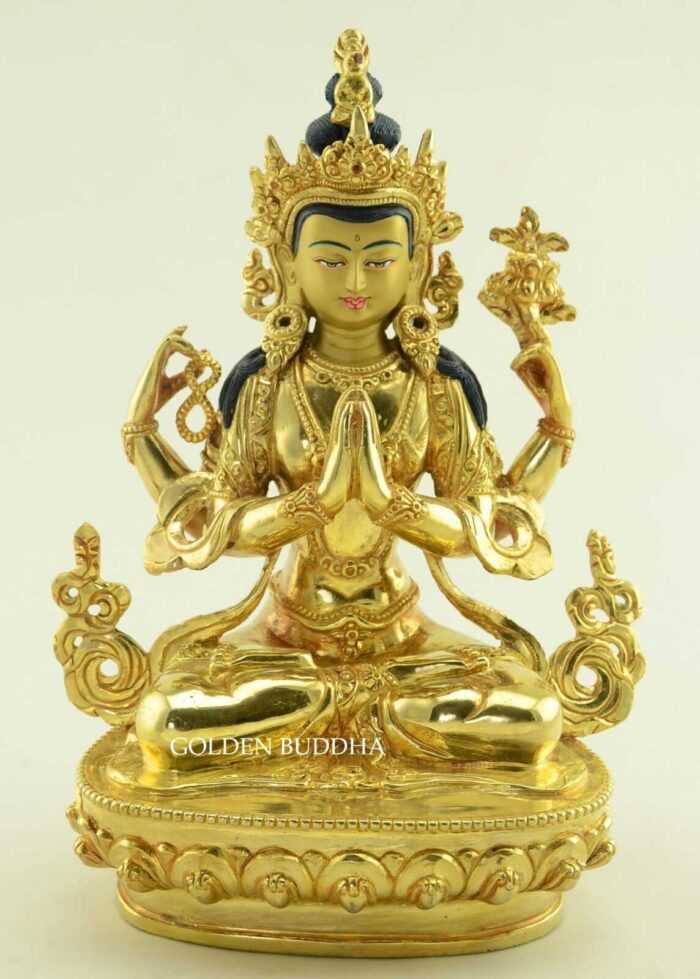
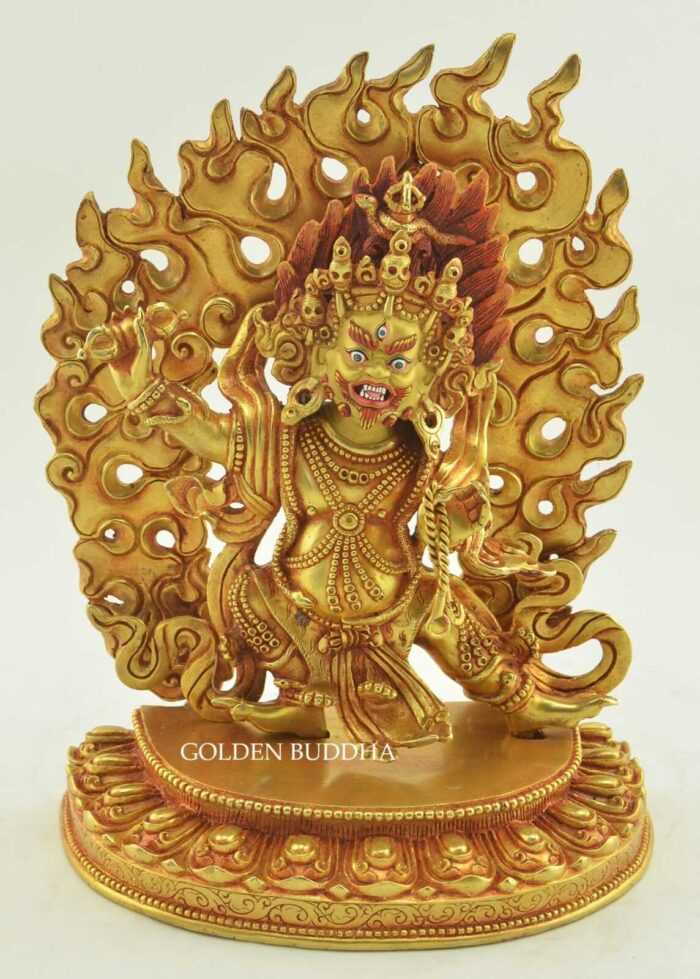
For a traditional three-deity altar, this Manjushri makes a doctrinally complementary companion to our gold-gilded Chenrezig sculpture and wrathful Chana Dorje statue. Together Chenrezig, Manjushri and Vajrapani form Rig Sum Gonpo, the Three Lords traditionally associated with compassion, wisdom and enlightened power. Chenrezig embodies the compassionate motivation to benefit sentient beings, Manjushri provides the wisdom that correctly understands reality, and Vajrapani represents the spiritual power and courageous activity necessary to overcome obstacles. Their complementary attributes make the triad especially meaningful for a Tibetan Buddhist altar.
Custom Made Tibetan Jampelyang and Rig Sum Gonpo Sculptures
Collectors seeking a different size, finish or coordinated altar arrangement may commission custom Tibetan Buddhist statues handmade by skilled Nepalese artisans. Jampelyang may be commissioned individually or together with Chenrezig and Vajrapani as a harmonized Rig Sum Gonpo set. Coordinating their proportions, gilding, lotus bases and decorative treatment creates visual unity while preserving the doctrinal relationship between the three deities. Together, Chenrezig’s compassion, Manjushri’s transcendent wisdom and Vajrapani’s enlightened power represent three mutually supporting qualities essential to the Mahayana and Vajrayana path.
Authentic, Handmade in Nepal
Every statue is handcrafted in Patan, Nepal, using traditional lost wax casting and comes with a certificate of authenticity issued by Nepal’s Department of Archaeology, verifying its materials, technique, and origin.