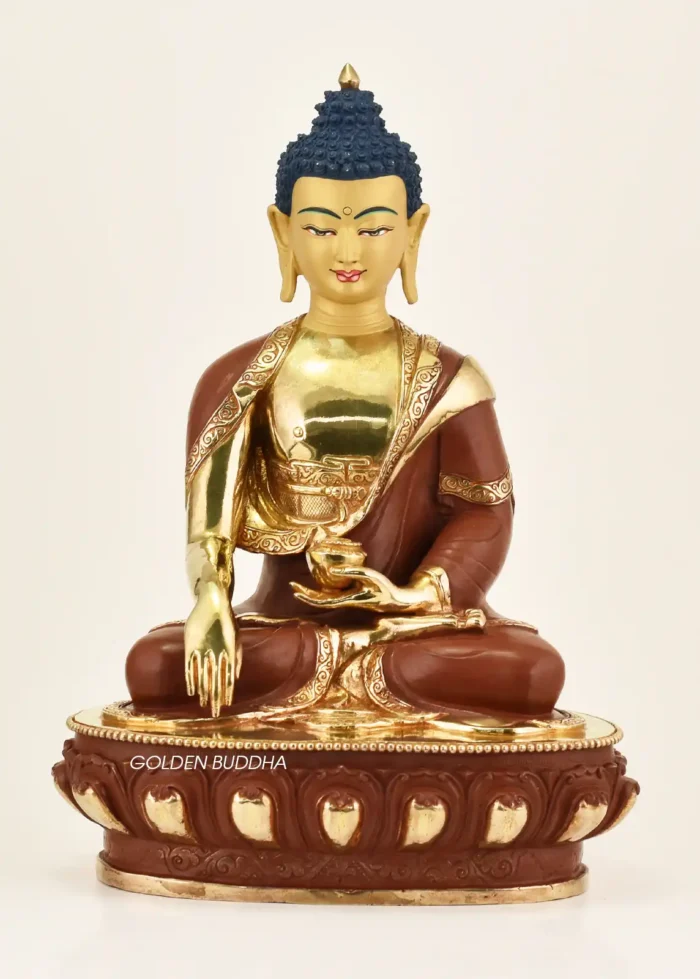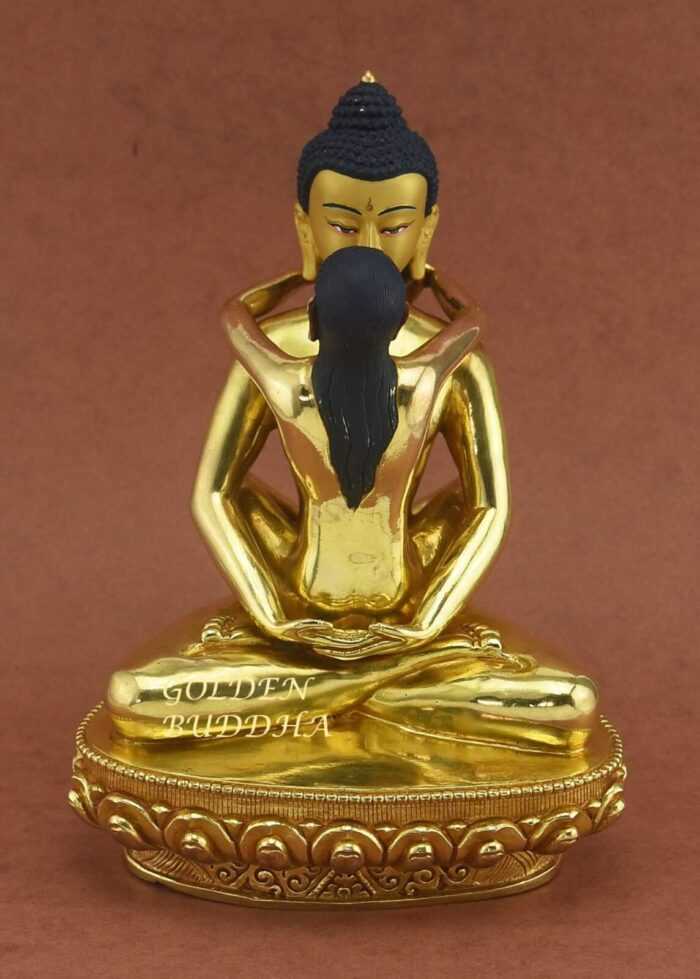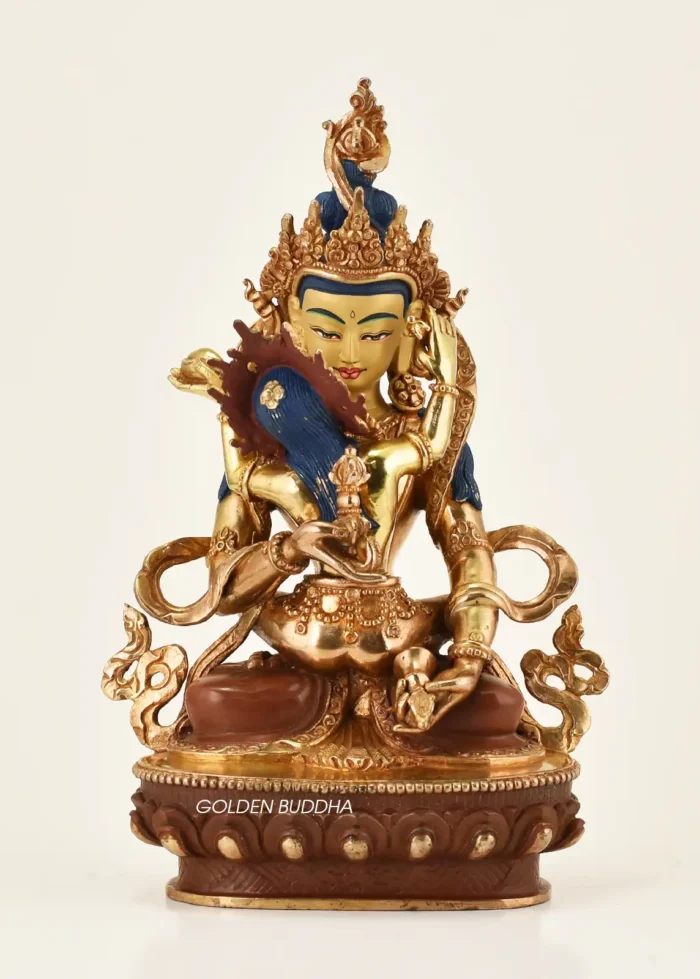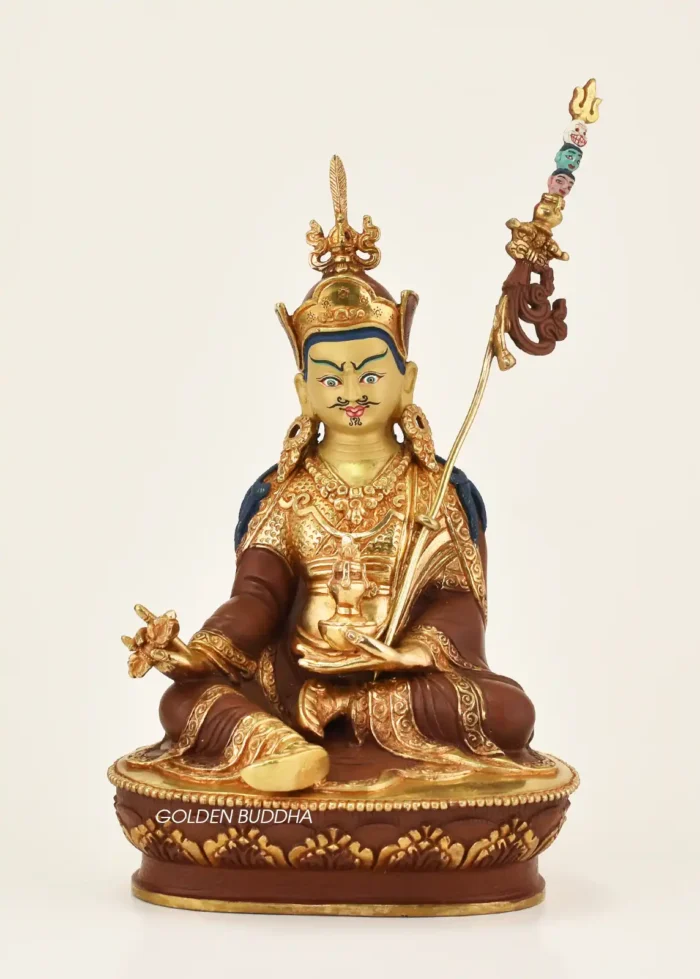
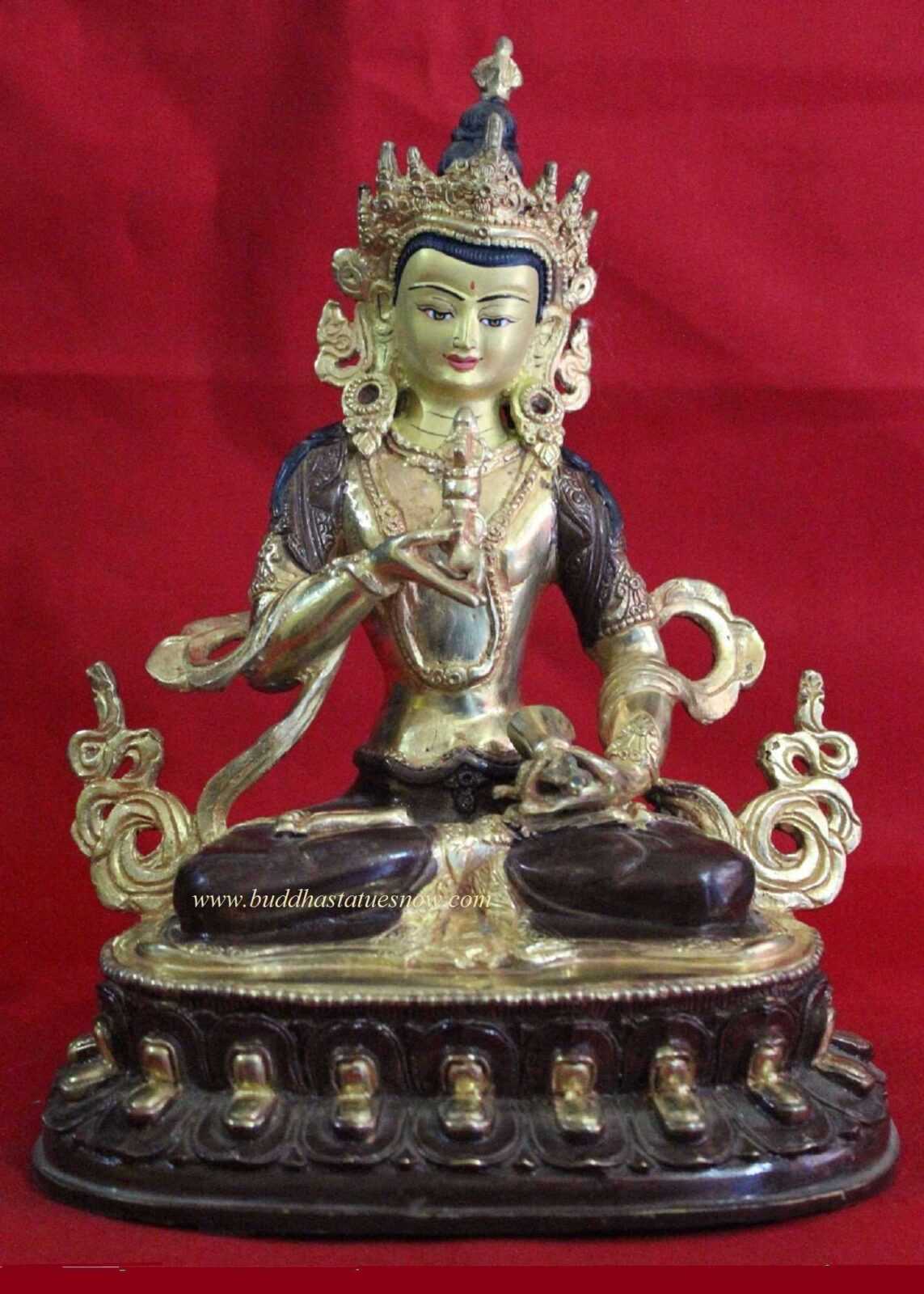
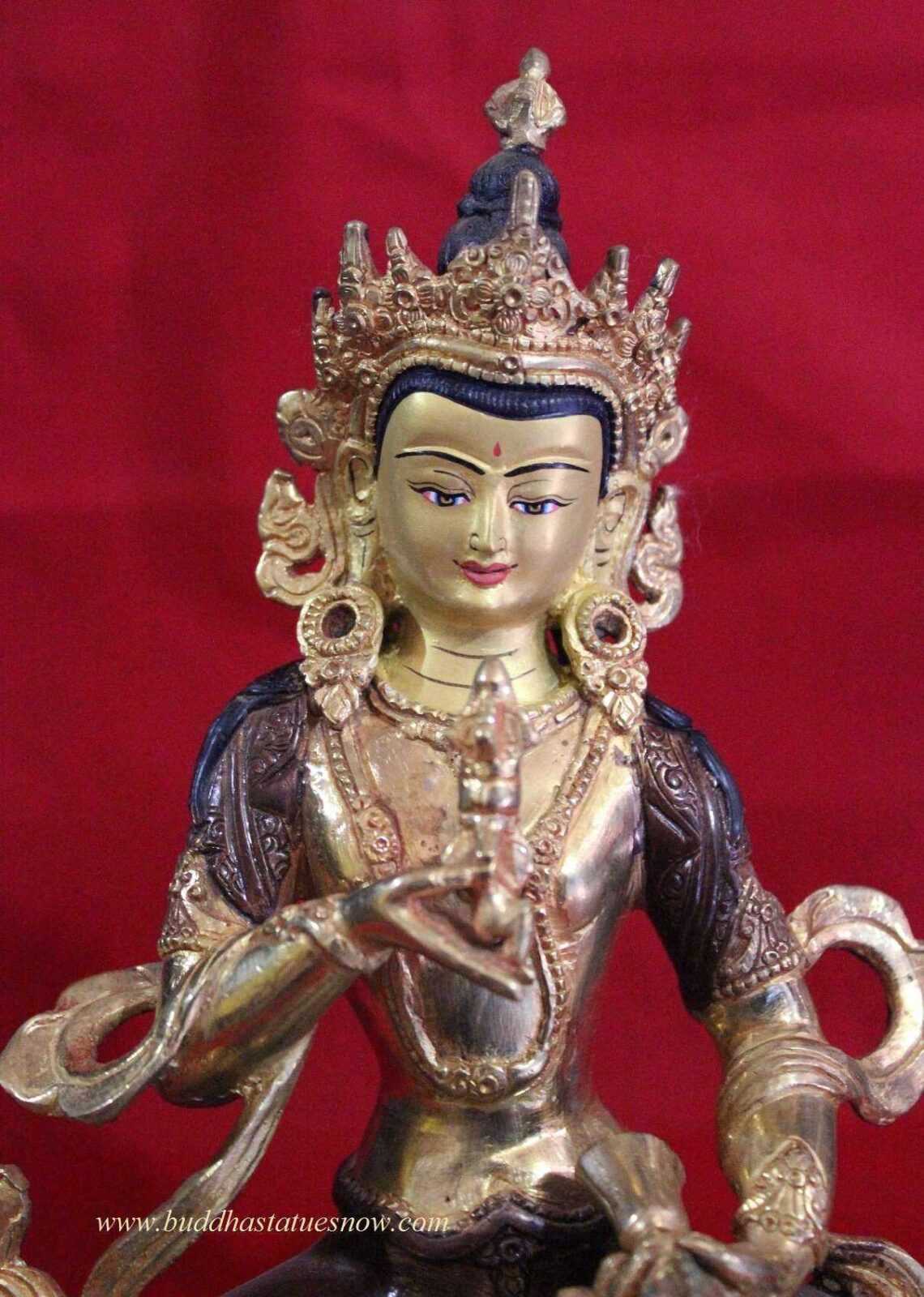
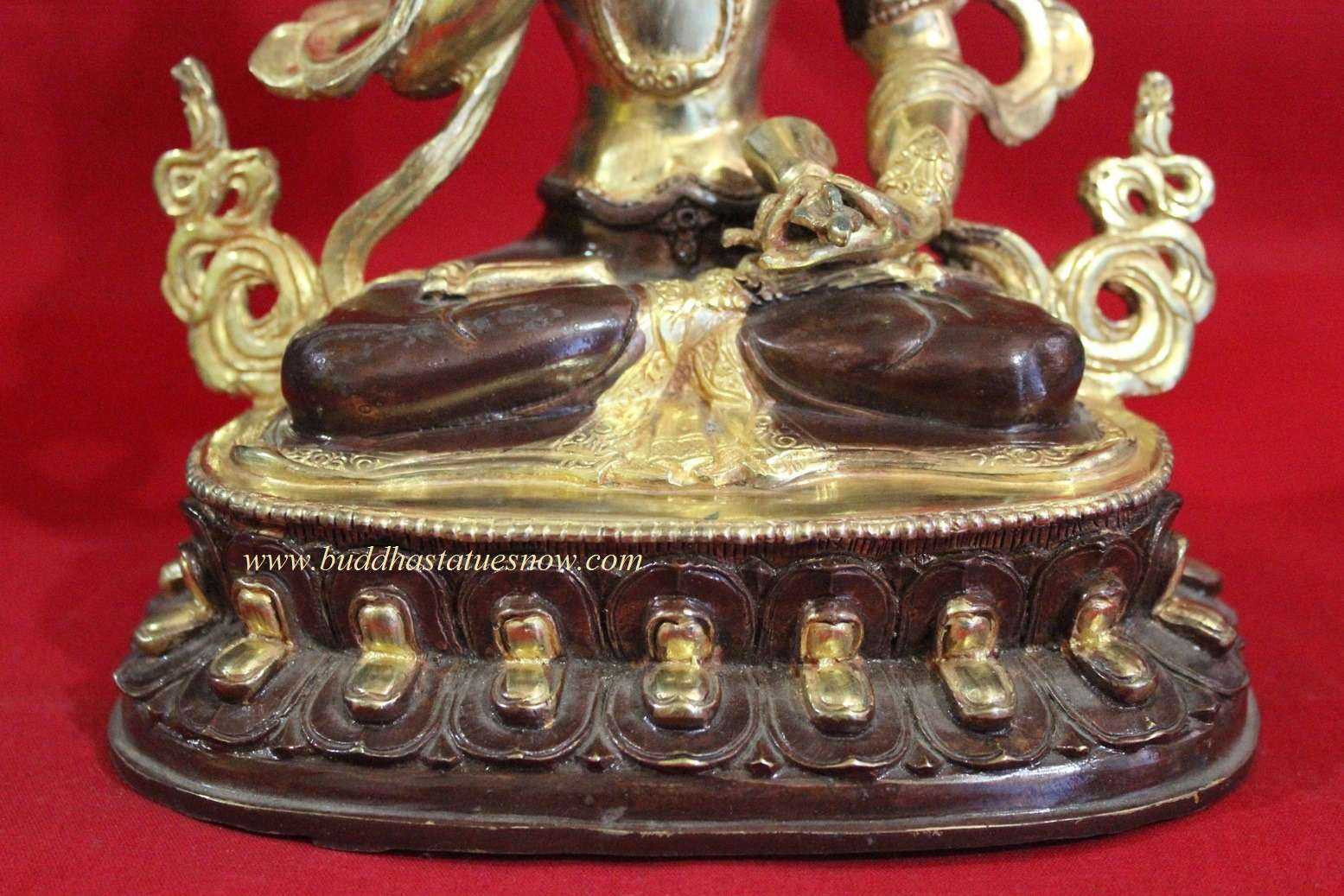
Gold and dark oxidized copper are deliberately balanced across this 8-inch Partly Gilded Vajrasattva Statue, giving Dorje Sempa a depth and contrast quite different from a completely gold-covered sculpture. Vajrasattva’s torso, arms, crown, jewelry and sacred implements catch the warmer metallic highlights, while the deep brown lower garments and lotus throne establish a darker foundation beneath the figure. His calm face is separately hand painted with 18K gold and natural pigments, framed by blue-black hair and an elaborate Bodhisattva crown. Handmade in Nepal from copper alloy using the traditional lost-wax casting method, this compact sculpture preserves the complete iconography of Vajrasattva while remaining practical for a home shrine or meditation altar.
Partly Gilded Vajrasattva Statue and Its Sacred Attributes
The defining attributes appear exactly where Vajrasattva practitioners expect them. His right hand holds the vajra upright before the heart, while the left hand rests near the hip holding the ghanta, or ritual bell. In Vajrayana iconography these complementary implements express the inseparability of skillful means and wisdom. Vajrasattva is particularly associated with purification of negative karma, obscurations and damaged samaya commitments, making his visualization and mantra practice foundational within Tibetan Buddhism. A fuller explanation of these symbols appears in our guide to Vajrasattva iconography.
The sculpture shows Dorje Sempa seated steadily in full lotus posture, adorned with large circular earrings, necklaces, arm ornaments and the richly modeled crown characteristic of sambhogakaya imagery. Celestial scarves curl outward around the arms and rise beside the throne, softening the otherwise symmetrical composition. The dark oxidized surfaces across the legs and pedestal are particularly effective because they visually separate the seated figure from the base rather than allowing the entire sculpture to merge into a single gold surface.
Vajrasattva as the Sambhogakaya of Vajradhara
Dorje Sempa, meaning “Diamond Being,” is understood in Tibetan Buddhist teaching as the sambhogakaya manifestation of Vajradhara. Sambhogakaya is the subtle or visionary Buddha body through which enlightened beings may appear in pure realms to advanced practitioners. This explains Vajrasattva’s princely crown, jewelry and celestial garments: they are not merely decorative additions but part of the traditional visual language of the sambhogakaya. Vajrasattva is also closely connected with purification practice and the transmission of Dzogchen. Learn more about Vajrasattva and his role in Tibetan Buddhism.
Partly Gilded Vajrasattva Statue with Guru Rinpoche
Vajrasattva and Guru Padmasambhava form a particularly meaningful pairing for a Tibetan Buddhist shrine. Vajrasattva represents the sambhogakaya dimension of enlightened form and is associated with the primordial Dzogchen transmission, while Guru Rinpoche manifests enlightened activity within the human world as a nirmanakaya master. Guru Padmasambhava brought Vajrayana and Dzogchen teachings into Tibet and became the central lineage figure of the Nyingma tradition. Displayed together, the two sculptures can therefore represent the relationship between transcendent realization and its transmission through an enlightened teacher accessible within the human realm.
Filling and Consecration in Kathmandu
For a statue intended for active Dharma practice, traditional filling and consecration can be arranged in Kathmandu, Nepal before shipment. Sacred mantra rolls and other appropriate substances may be placed within the hollow copper-alloy sculpture before it is ritually sealed and blessed. This preparation transforms the statue from an artistic representation into a properly prepared support for meditation, mantra recitation and shrine practice. Details are available through our Buddha statue filling and consecration service.
Optional Gemstone Adornments
The crown and jewelry provide suitable settings for additional ornamentation. At the buyer’s request, genuine turquoise and red coral stones can be embedded into appropriate crown and jewelry settings before the statue is dispatched. These additions are optional and allow the sculpture to be further personalized without altering Vajrasattva’s traditional iconographic form.
Custom Tibetan Buddhist Statues
If the contrast of this partly gilded finish appeals to you but another size or treatment would better suit your shrine, our Nepal artisans can create a made-to-order Vajrasattva. Through our custom Tibetan Buddhist statues service, commissions may specify dimensions, proportions and finishes including full 24K fire gilding, partial gilding, oxidized copper or other traditional treatments. Matching Guru Rinpoche and other lineage figures can also be commissioned in coordinated proportions and finishes to create a visually unified altar set.
Authentic, Handmade in Nepal
Every statue is handcrafted in Patan, Nepal, using traditional lost wax casting and comes with a certificate of authenticity issued by Nepal’s Department of Archaeology, verifying its materials, technique, and origin.