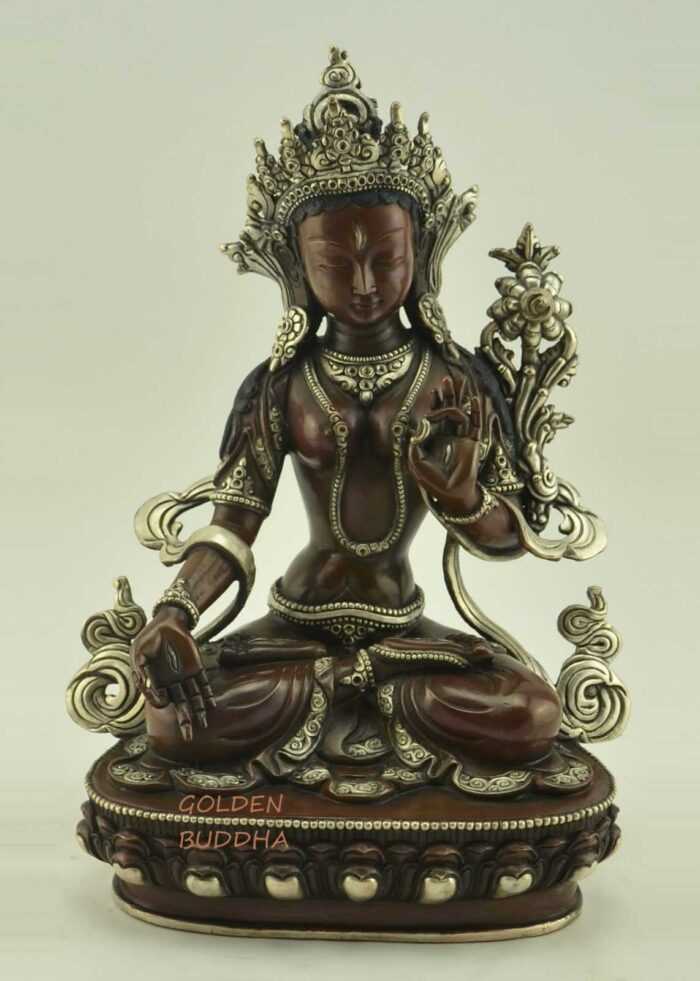
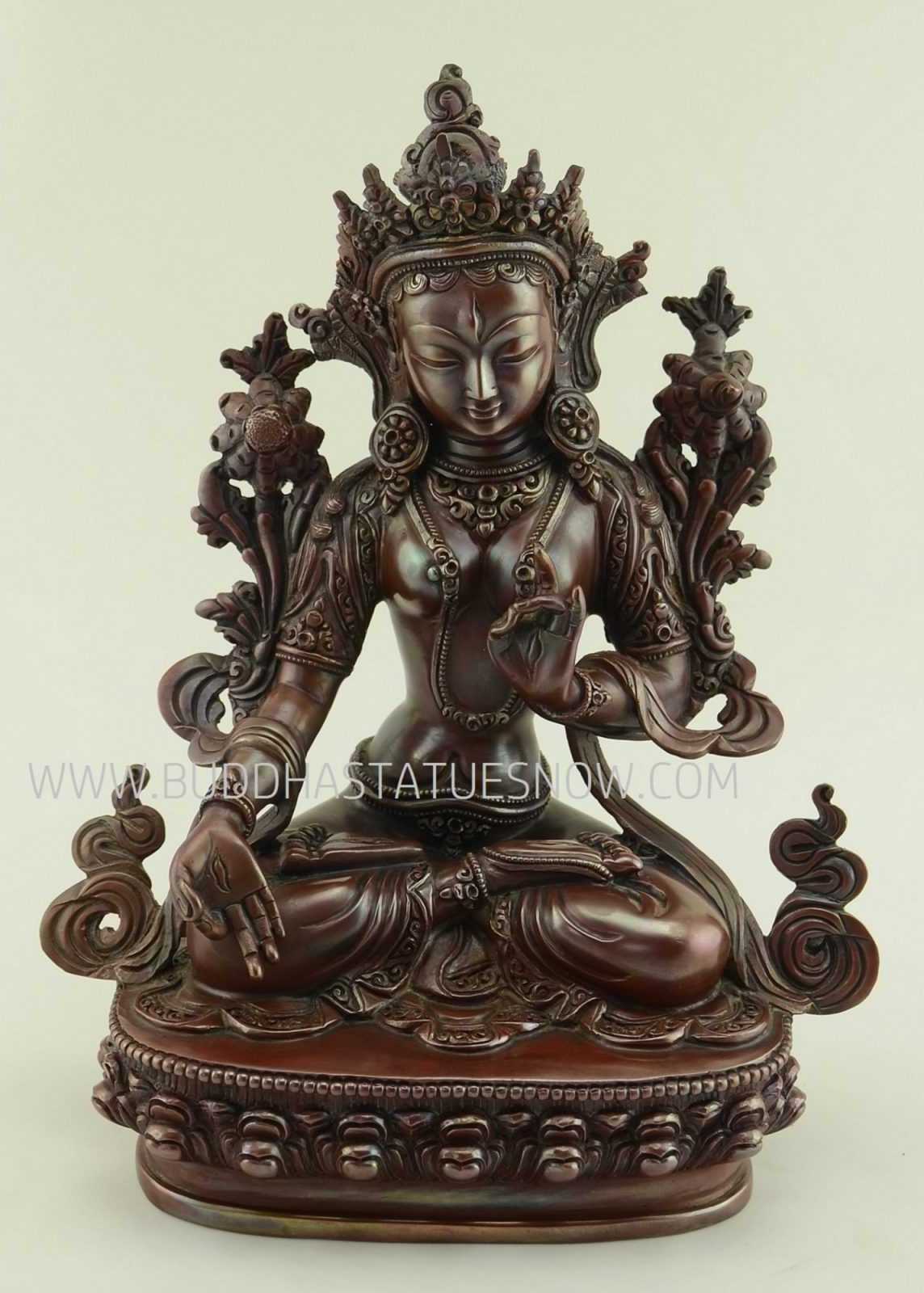
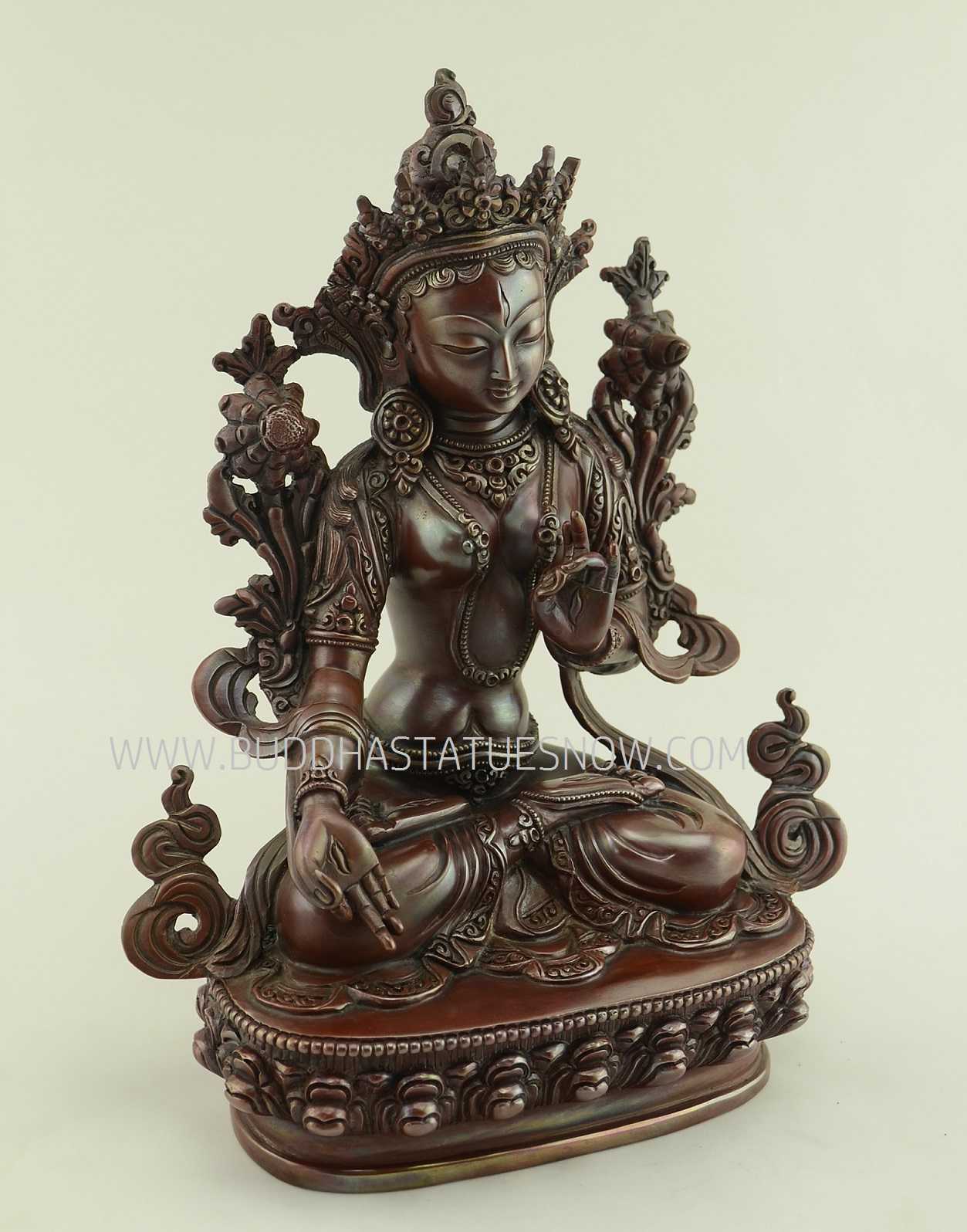
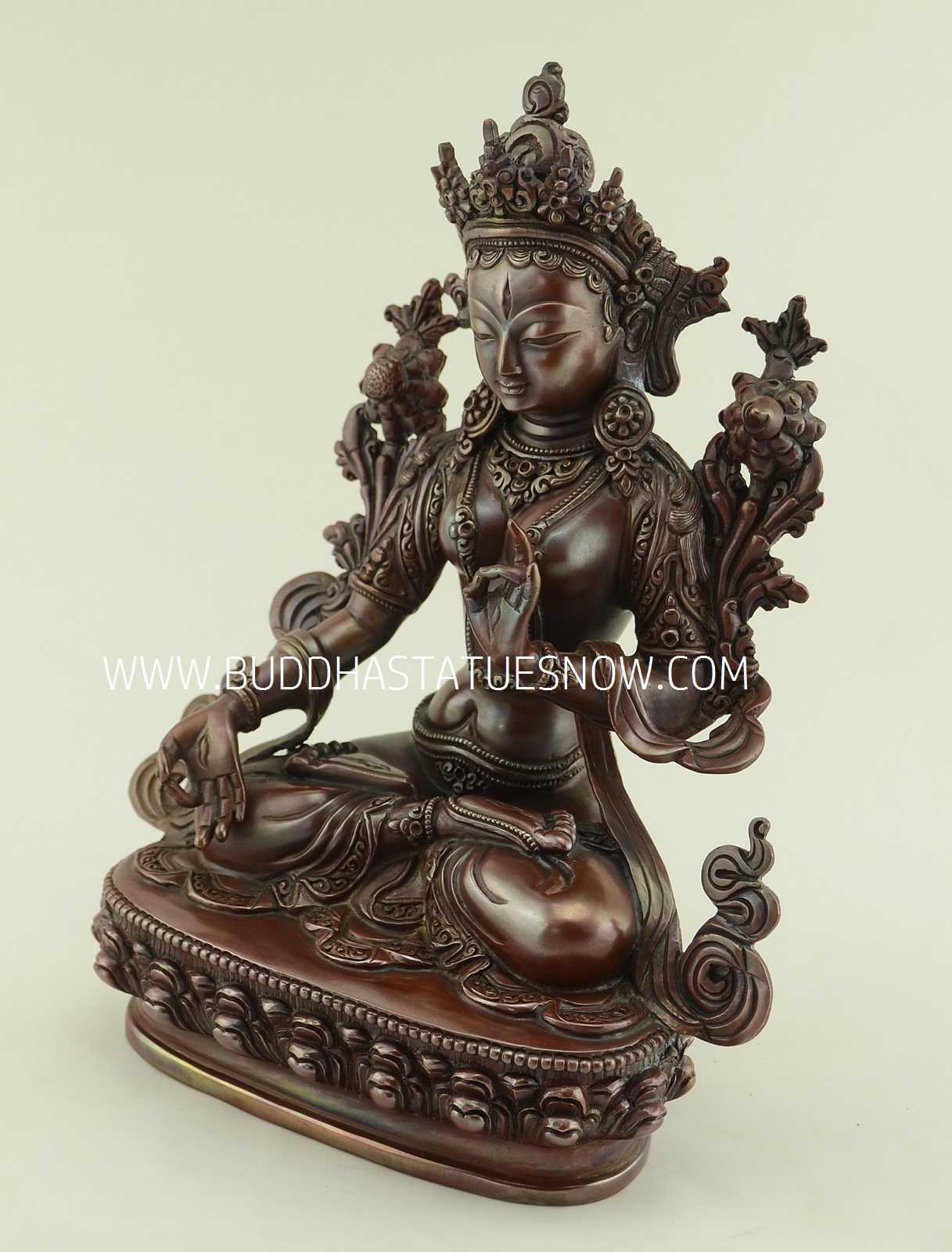
This 9.5-inch Oxidized White Tara Statue portrays Cintachakra, or Dolkar, the peaceful Seven-Eyed Tara associated with healing, longevity, compassionate protection, and the preservation of favorable conditions for Dharma practice. Handmade in Nepal from copper alloy using the traditional lost-wax casting method, the sculpture has a rich antiquated surface with warm reddish-brown copper tones and darker oxidized accents. The understated finish allows the intricate crown, jewelry, flowering lotuses, garments, and serene facial modeling to become the visual focus of this traditional Himalayan sculpture.
The Seven Wisdom Eyes of White Tara
White Tara is distinguished iconographically by her seven wisdom eyes. In addition to her two natural eyes, this sculpture displays a prominent vertical third eye upon the forehead and clearly modeled eyes within both palms. The remaining two are traditionally represented upon the soles of her feet. Together, the seven eyes express awakened awareness capable of perceiving suffering in every direction and responding through wisdom and compassion. Discover the deeper symbolism of White Tara’s seven wisdom eyes and their importance within her iconography.
Lotus Flowers, Mudras and Bodhisattva Adornments
Tara sits gracefully in full lotus posture upon a substantial single lotus throne. Her lowered right hand extends across the knee in Varada Mudra, the gesture of generosity and compassionate giving, with one of her additional wisdom eyes visible in the palm. Her raised left hand holds the stem of a lotus near her heart while the fingers form a graceful ritual gesture. Tall flowering lotus stems rise beside both shoulders, their blossoms surrounded by sculpted leaves, curling stems, and foliage that frame Tara’s upper body.
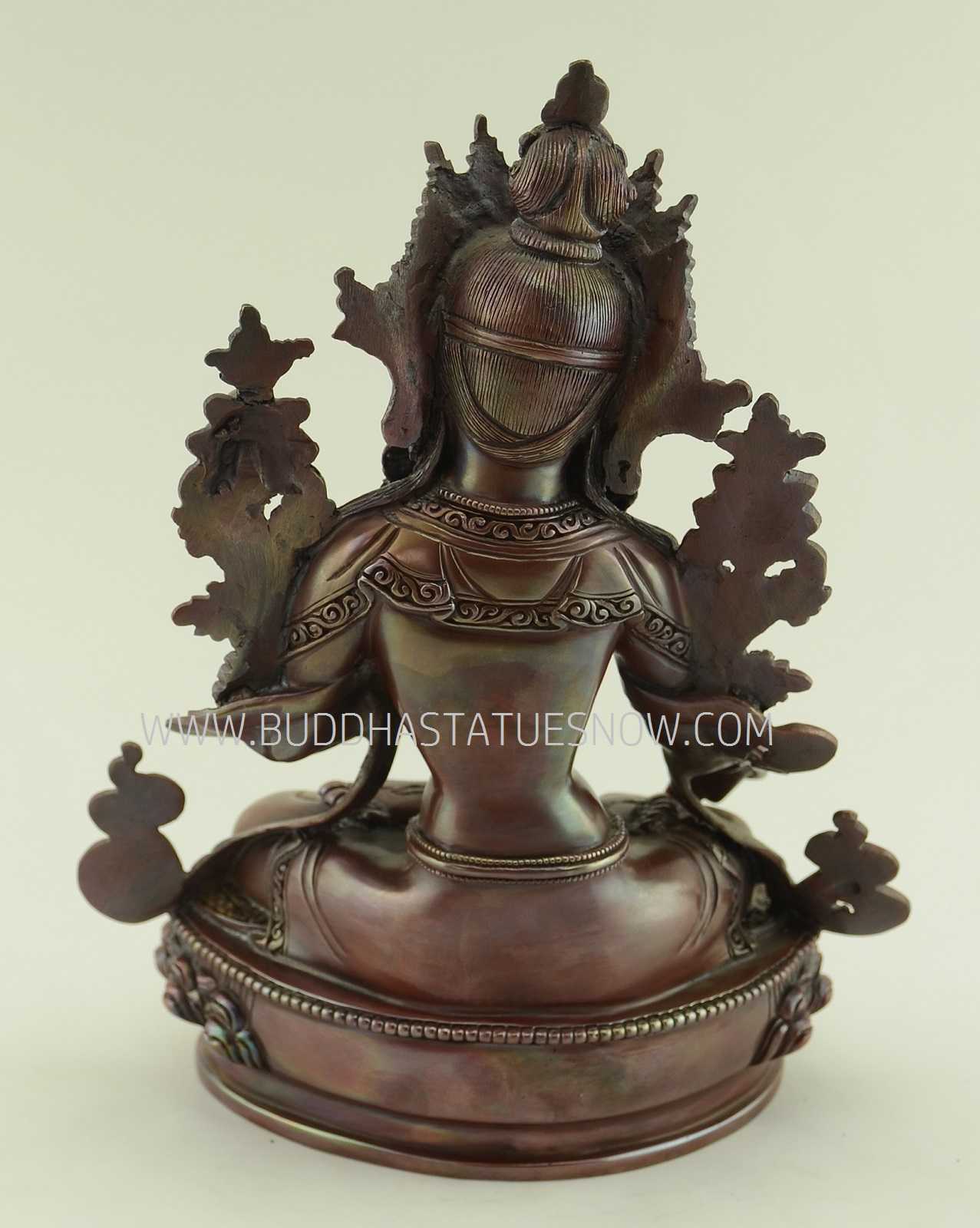
The artisan has adorned the figure with the traditional ornaments of a Bodhisattva. An elaborate crown rises above her finely modeled face, complemented by large circular earrings, layered necklaces, bracelets, armbands, and waist ornaments. Her dhoti falls naturally across the folded legs with carefully modeled folds and decorative borders. The reverse reveals equally careful workmanship: finely striated hair rises into an elaborate topknot while ornamental bands continue across the shoulders and around the waist.
Antiquated Oxidized Copper Finish
Unlike a brightly gilded image, this Oxidized White Tara Statue emphasizes the natural character of its copper-alloy casting. Polished areas reveal warm reddish and brown copper tones, while deeper oxidation settles into the recesses surrounding the crown, jewelry, garment details, lotus flowers, and throne. This variation accentuates the sculpture’s depth and gives it the visual character of an established Himalayan devotional image.
The crown and jewelry may also be embellished with genuine turquoise and red coral gemstones upon request. These stones are optional and are not presently embedded in the statue, allowing the collector to preserve the restrained antiquated appearance or commission additional traditional ornamentation.
White Tara: Healing, Longevity and Compassion
Known in Tibetan as Dolkar and in Sanskrit as Sita Tara, White Tara represents a serene and restorative expression of enlightened compassion. Her practice is especially associated with healing, longevity, protection, and overcoming conditions that threaten the opportunity for spiritual development. Longevity in this context is valued not merely for extending worldly life, but for preserving the precious opportunity to cultivate wisdom, accumulate merit, practice Dharma, and benefit other beings. Read more about White Tara’s meaning and symbolism or explore the traditional White Tara mantra and practice.
A Complementary Oxidized Copper White Tara, Vajrasattva and Namgyalma Altar
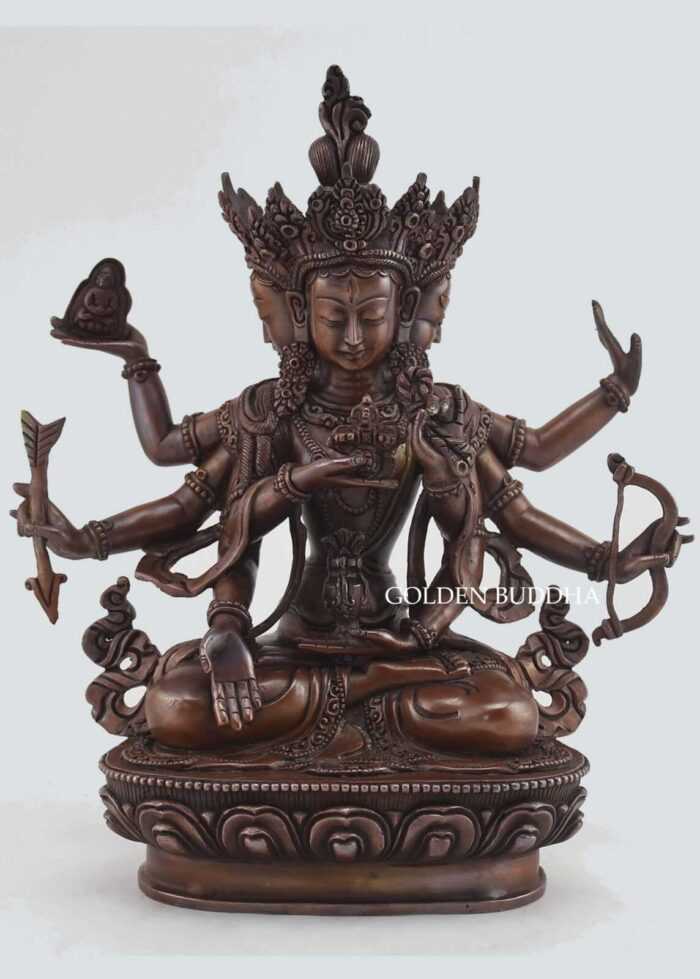
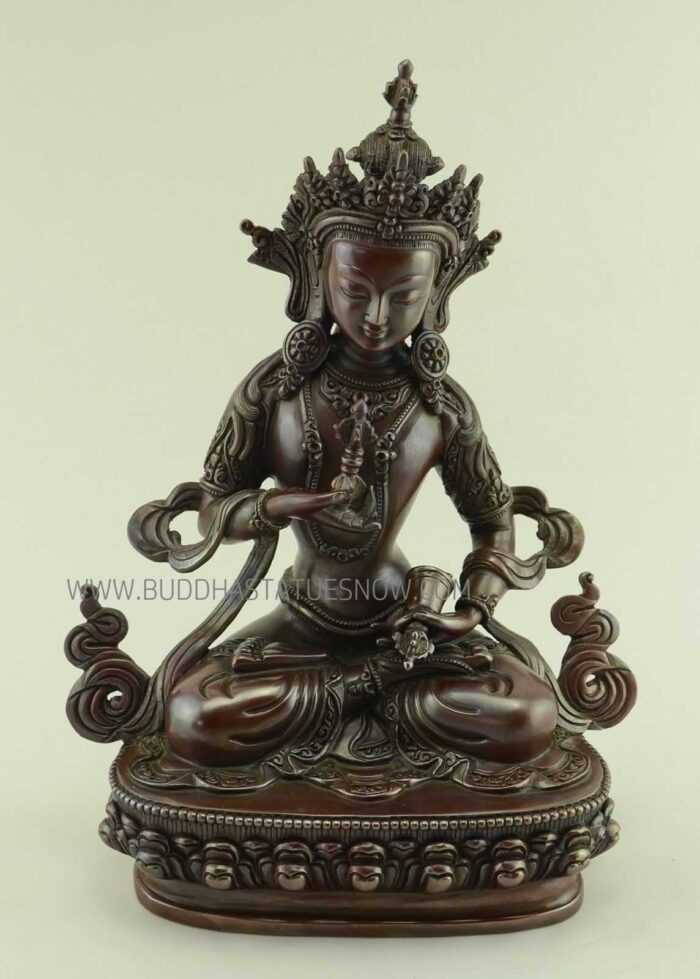
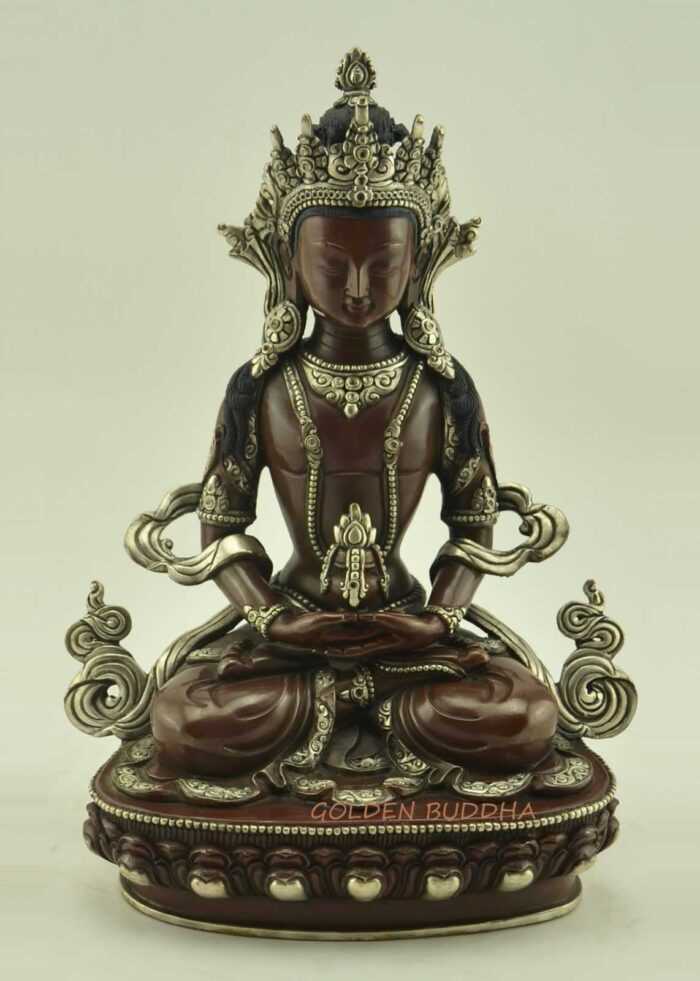
For a coordinated altar, this sculpture is an excellent companion to our antiquated Vajrasattva sculpture and similarly finished Namgyalma. Vajrasattva embodies purification, helping cleanse negative karma and obscurations that impede realization. White Tara contributes healing, longevity, serenity, and compassionate activity. Ushnishavijaya, known in Tibetan as Namgyalma, combines longevity with purification and protection against obstacles associated with untimely death. Together, the three figures create a complementary devotional arrangement centered upon purification, preservation of favorable conditions for practice, and compassionate enlightened activity.
Custom-Made White Tara and Coordinated Statue Sets
Collectors, practitioners, monasteries, and Dharma centers may commission custom Tibetan Buddhist statues handmade in Nepal. White Tara may be commissioned in a preferred size and finish with customized ornamentation, optional turquoise and red coral gemstones, and other traditional details. Coordinated White Tara, Vajrasattva, and Namgyalma statues may also be commissioned together so their dimensions, oxidized finishes, lotus thrones, and artistic proportions form a visually unified altar while preserving the distinct iconography and spiritual attributes of each deity.
Authentic, Handmade in Nepal
Every statue is handcrafted in Patan, Nepal, using traditional lost wax casting and comes with a certificate of authenticity issued by Nepal’s Department of Archaeology, verifying its materials, technique, and origin.