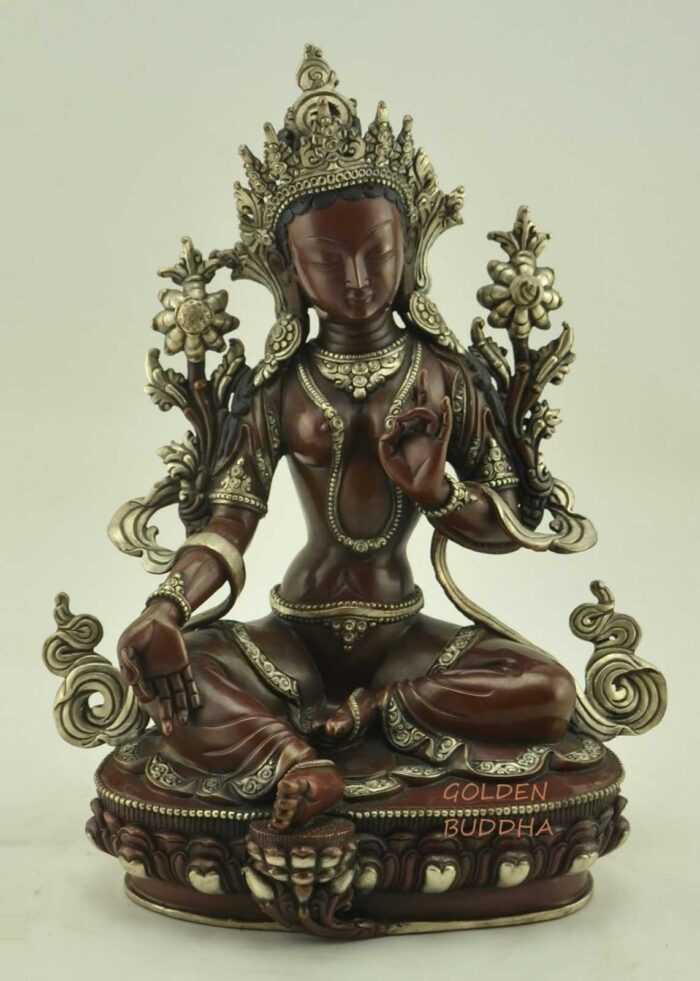
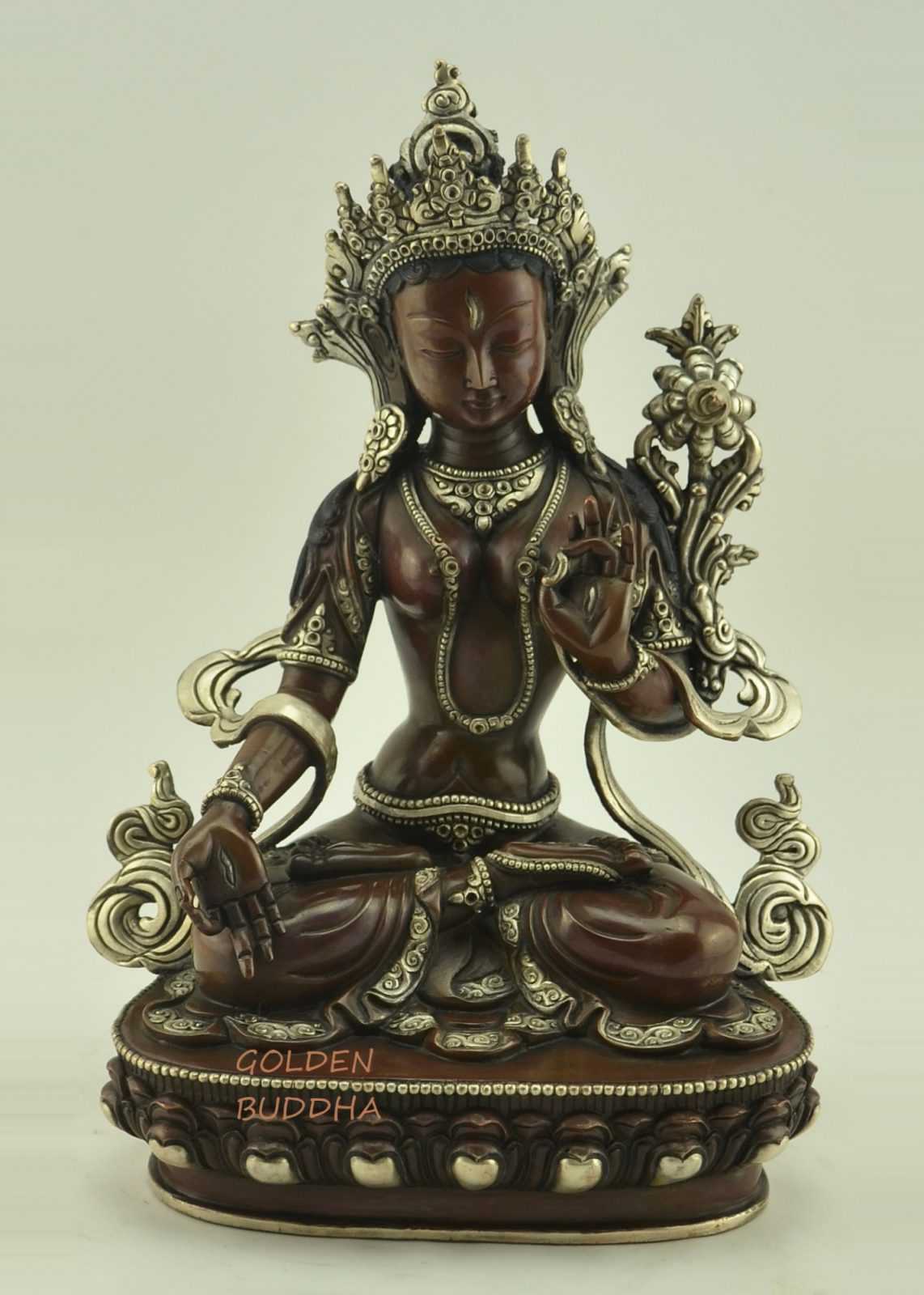
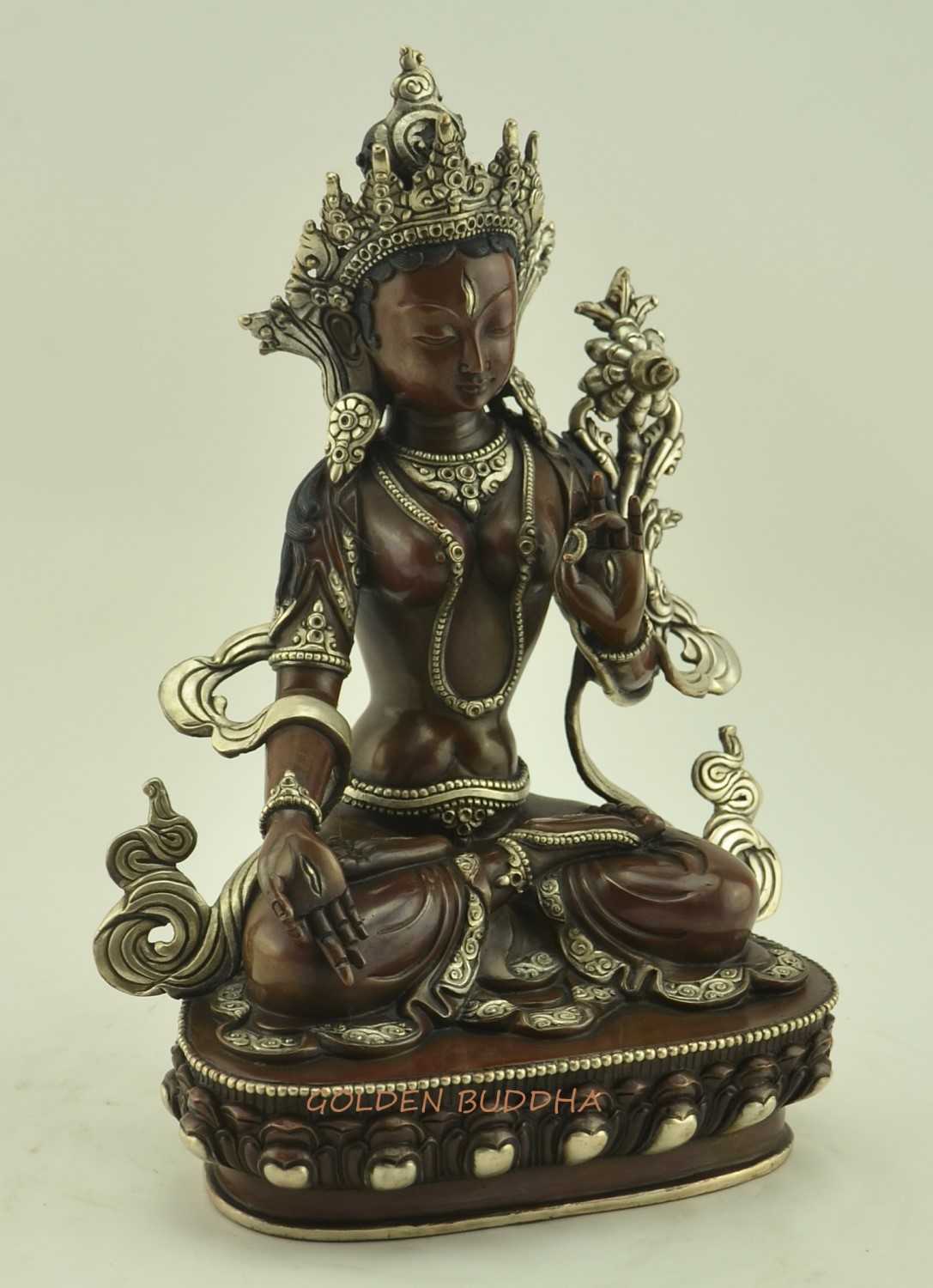
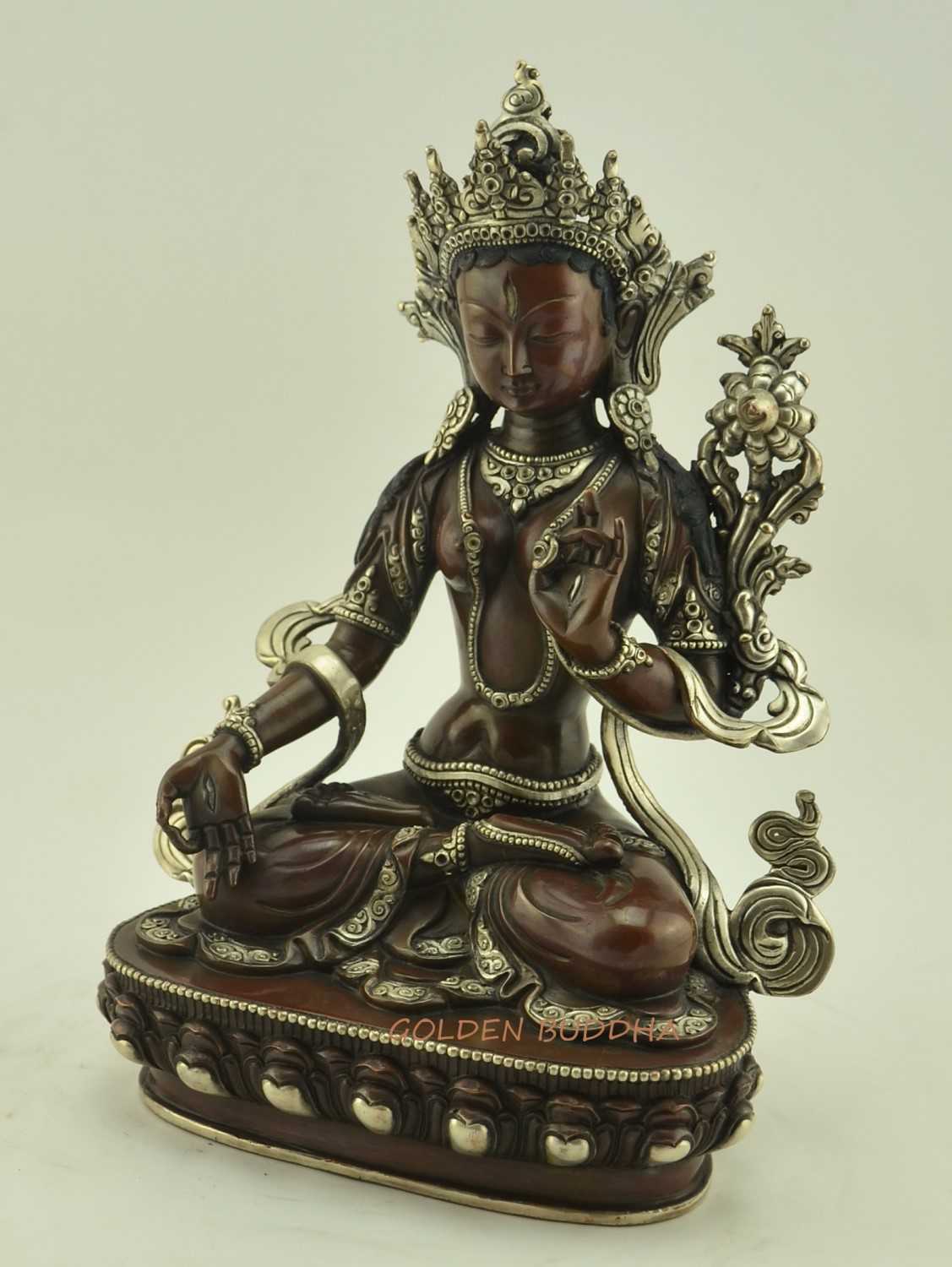
This 9.75″ Dolkar sculpture portrays White Tara, the peaceful female Bodhisattva associated with compassionate healing, protection, serenity, and longevity. Handcrafted from copper alloy by a master Newar artisan in Patan, Nepal, the statue was created through the traditional lost-wax casting method and finished in rich oxidized copper. Selective silver detailing brings brightness to the crown, jewelry, garment borders, celestial ribbons, lotus flower, and portions of the lotus throne, creating an elegant contrast against the warm reddish-brown body of the sculpture.
The artisan has presented Dolkar in the complete adornments of a celestial Bodhisattva. Her elaborate five-pointed crown rises around the gathered blue-black hair and is enriched with silver-highlighted floral and jewel-like designs. Large circular earrings frame the peaceful face, while layered necklaces, a long beaded chest ornament, armlets, bracelets, and a delicately modeled waistband complete the jewelry. Silver follows many of these raised decorative borders, making the fine carving visible without overwhelming the quieter oxidized copper surfaces of the face, torso, hands, and legs.
The face remains unpainted so that Dolkar’s expression is formed entirely through the subtle modeling of the copper alloy. Her gently lowered eyes, softly arched brows, composed mouth, and upright wisdom eye create a calm presence appropriate for meditation and longevity practice. The oxidized finish settles into the recessed lines of the crown and ornaments, while lighter copper highlights naturally emerge across the cheeks, forehead, chest, arms, and folded legs. At the buyer’s request, suitable settings in the crown and jewelry may be embellished with turquoise and red coral stones before delivery.
Dolkar Sculpture Meaning and White Tara Practice
Dolkar is the Tibetan name for White Tara, who is also known as Cintachakra, the “Wish-Fulfilling Wheel.” She embodies a peaceful form of enlightened compassion that is especially connected with healing, the renewal of life energy, protection from obstacles, and the creation of favorable conditions for a long and meaningful life. Her practice is not concerned merely with extending ordinary existence. Within Tibetan Buddhism, longevity is valued because it gives practitioners additional time to study the Dharma, meditate, cultivate wisdom and compassion, support teachers and communities, and benefit other sentient beings.
White Tara’s serene appearance reflects the restorative quality of her activity. Where Green Tara is often emphasized as responding swiftly to immediate dangers, Dolkar represents sustained healing, stability, and the replenishment of weakened vitality. Her peaceful presence makes this sculpture especially appropriate for a home shrine, meditation room, healing center, monastery, or Dharma center devoted to long-life practice. Learn more about White Tara’s meaning and symbolism, including her relationship with the other manifestations of Tara.
Seven Eyes of the Dolkar Sculpture
White Tara is distinguished by her seven eyes of enlightened awareness. In addition to her two ordinary eyes, an upright third eye appears between the brows and is emphasized with a silver highlight. Additional eyes appear in the palms of both hands and traditionally upon the soles of both feet. The visible palm eyes are carefully incorporated into the hand gestures rather than added as separate decorative elements.
Together, the seven eyes express an awareness that perceives suffering in every direction. They show that White Tara’s compassionate activity is inseparable from wisdom: she does not respond blindly or impulsively, but recognizes both the immediate suffering of beings and the deeper causes that sustain it. The eyes in her hands and feet also suggest that every compassionate action and every movement through the world is guided by awakened understanding. Devotees invoke these peaceful qualities through her mantra, explained in our guide to the White Tara mantra.
Dolkar Sculpture Mudras and Utpala Lotus
Dolkar sits in the full lotus posture, expressing meditative stability and the balanced awareness of an enlightened being. Her right hand extends over the knee in the Varada mudra, the gesture of generosity, blessings, and compassionate giving. The palm faces outward so that the wisdom eye remains clearly visible, emphasizing that the blessings she offers are directed by complete awareness of the needs of each being.
Her raised left hand forms a graceful gesture of teaching, refuge, and reassurance, with the thumb and finger brought together while the remaining fingers extend upward. The wisdom eye in the palm remains visible within the gesture. Although it resembles the fearlessness expressed by the Abhaya mudra, the more delicate arrangement of the fingers also conveys the communication of Dharma and the union of compassionate activity with wisdom.
A beautifully modeled utpala lotus rises beside her left shoulder on a curving foliate stem. The open blossom and much of its stem are highlighted in silver, causing the flower to stand prominently against the oxidized copper body. The lotus symbolizes purity arising within samsara, recalling how an awakened mind may develop amid suffering without becoming stained by it. Its placement beside the raised wisdom hand visually joins purity, compassionate teaching, and enlightened awareness.
Silver Details and Traditional Newar Craftsmanship
The selective silver work is the defining artistic feature of this Dolkar sculpture. Silver outlines the points and ornamental details of the Bodhisattva crown, brightens the earrings and necklaces, follows the raised borders of the shoulder covering and dhoti, and accents the bracelets, waistband, celestial ribbons, and lotus flower. Silver highlights also appear along the beaded rim and selected petals of the single lotus throne. These details create a measured rhythm of light across the sculpture while preserving the antiquated character of the oxidized copper finish.
Flowing celestial scarves pass behind the shoulders and around the arms before forming broad loops beside the torso and curling cloud-like shapes near the lotus throne. Their movement gives the composition a gentle vitality without disturbing White Tara’s meditative stillness. The fitted Bodhisattva garments include raised ornamental borders around the shoulders, sleeves, waist, and lower robe, while the exposed copper surfaces allow the graceful proportions of the body to remain clearly defined.
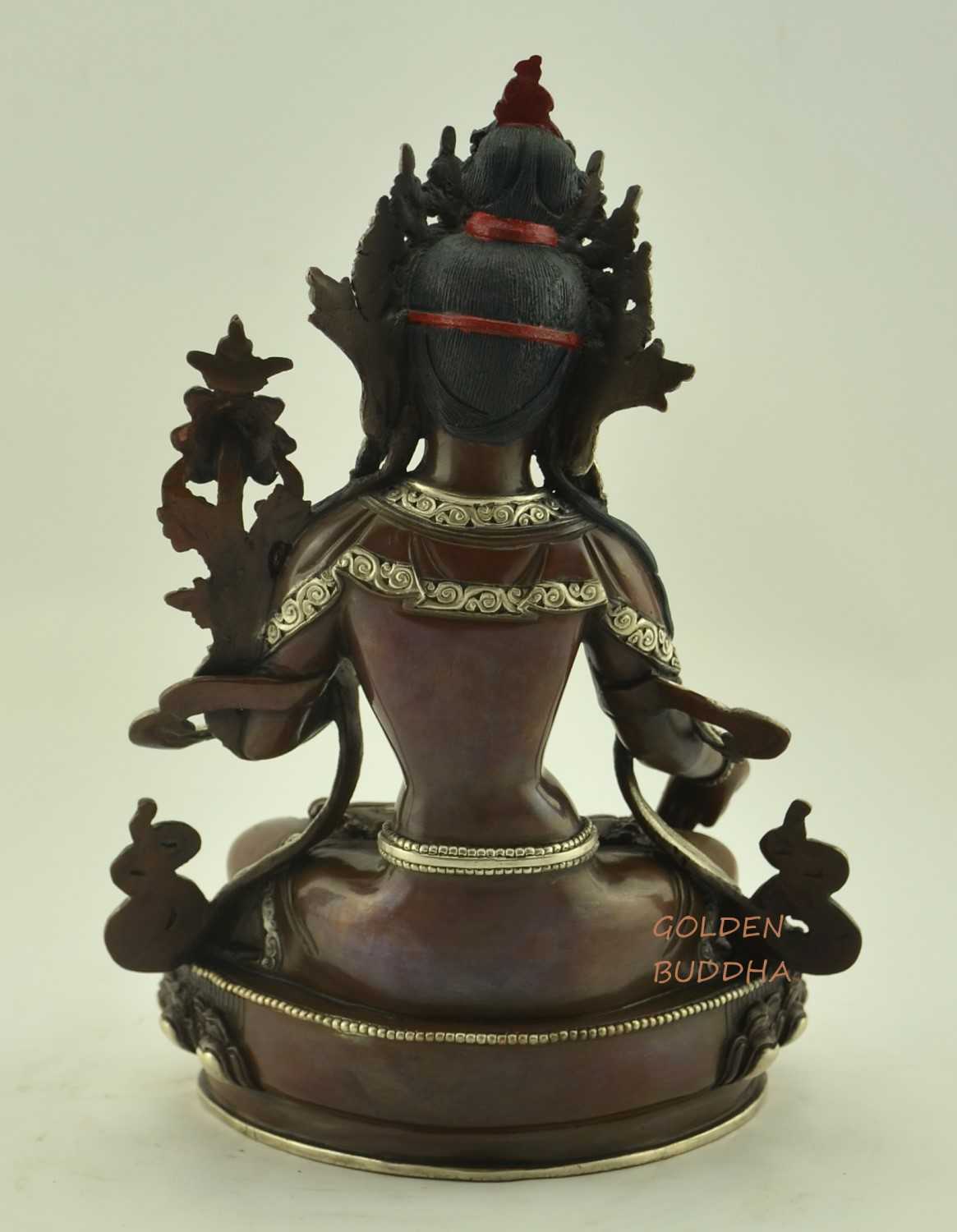
Viewed from behind, the sculpture continues with a carefully modeled crown, vertically textured hair, tied hair ornaments, shoulder covering, waist bands, scarf loops, lotus stem, and the rear forms of the single lotus throne. The back is intentionally more restrained than the highly ornamented front, emphasizing smooth bodily proportions and clean sculptural balance rather than dense engraving. This complete modeling makes the statue suitable for an open altar where it may be appreciated from several directions. Browse our collection of White Tara statues to compare different sizes, finishes, and artistic interpretations.
The Three Long Life Deities Statue Set
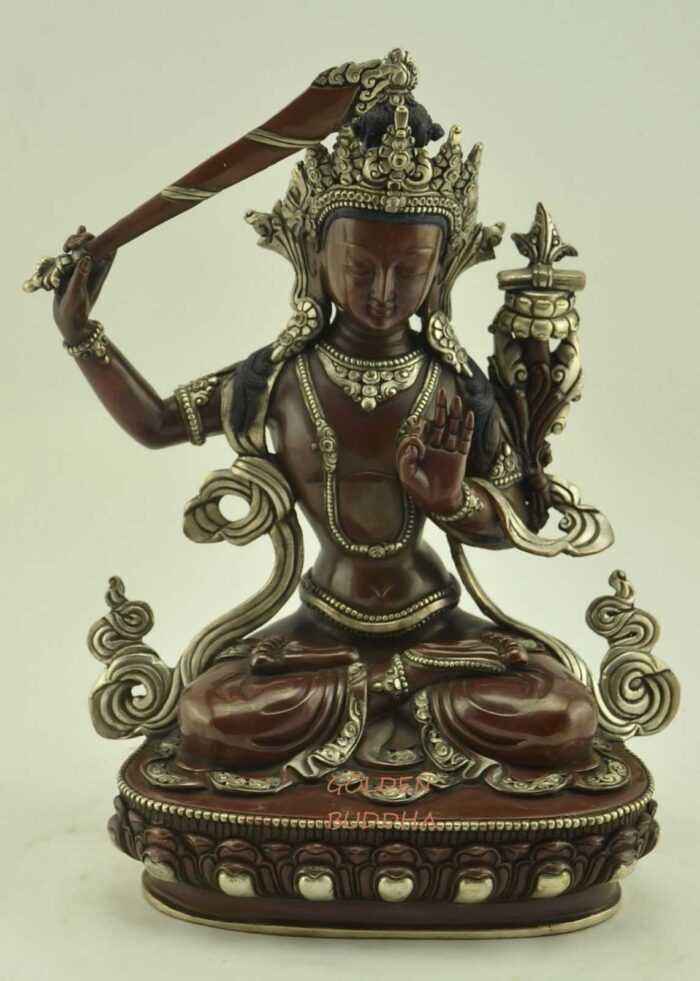
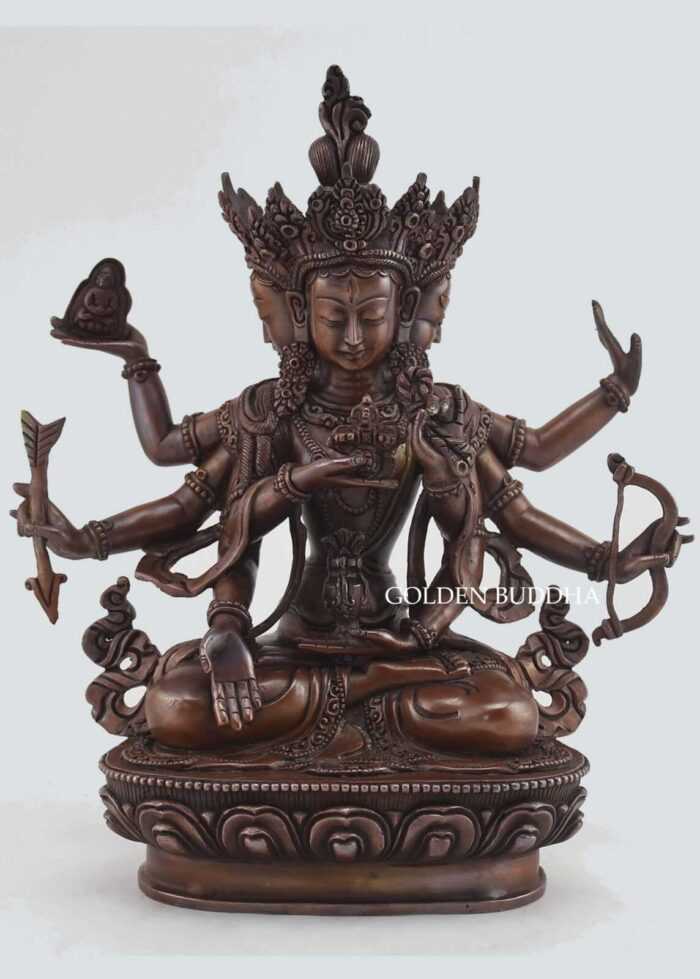
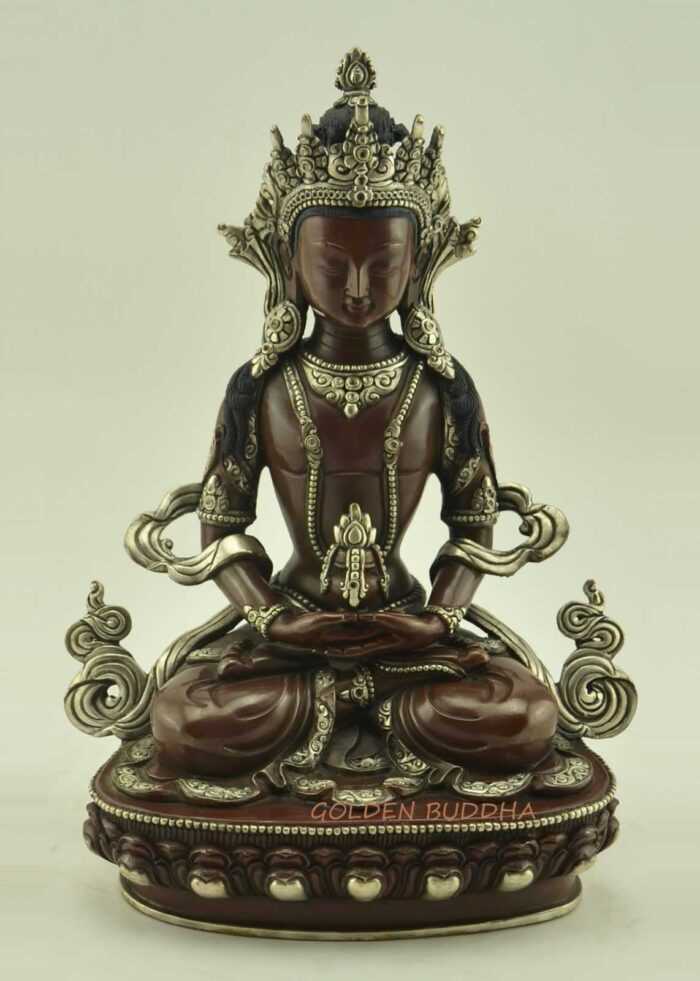
This Dolkar sculpture may be displayed as part of a coordinated Three Long Life Deities altar set with our Amitayus Buddha sculpture and Oxidized Namgyalma statue. The three sculptures share copper-alloy construction, warm oxidized finishes, traditional lost-wax workmanship, Bodhisattva adornments, and closely related altar proportions. Dolkar and Amitayus also share selective silver detailing that highlights their crowns, ornaments, garment borders, celestial ribbons, lotus elements, and throne details. Namgyalma retains a unified oxidized finish, but her materials, scale, and artistic treatment allow her more complex three-faced and eight-armed composition to complement the pair naturally.
The three deities form a particularly strong doctrinal match because each contributes a different aspect of Tibetan longevity practice. Dolkar, or White Tara, embodies compassionate healing, serenity, fearlessness, and the restoration of depleted life force. Amitayus, the Buddha of Infinite Life, holds the vase containing the nectar of immortality and represents the increase of longevity, merit, and favorable conditions for continued Dharma practice. Namgyalma, or Ushnishavijaya, purifies harmful karma, removes obstacles associated with untimely death, and protects practitioners from unfavorable rebirth.
Displayed together, White Tara heals and renews life energy, Amitayus increases life and merit, and Namgyalma purifies and protects the circumstances sustaining that life. Their shared purpose is not simply to extend existence for worldly enjoyment, but to preserve a precious human life so that it may be used meaningfully for spiritual development and service to others. The visual harmony of the oxidized copper and silver treatments reinforces this doctrinal unity, creating an altar ensemble devoted to healing, longevity, purification, protection, and awakened compassionate activity.
Filling, Blessing and Consecration
The statue includes a consecration opening so that it may be filled with sacred texts, printed mantras, incense, medicinal substances, precious materials, and other traditional contents before being blessed according to the buyer’s Buddhist lineage. Proper filling and consecration prepare the sculpture as an object of practice and veneration. Our guide to Buddha statue filling, blessing, and consecration explains the customary process and the available preparation options.
Custom Made Dolkar and Long-Life Deity Statues
Collectors, practitioners, monasteries, and Dharma centers may commission a custom made Tibetan Buddhist statue based upon this Dolkar design. A custom White Tara sculpture may be produced in a different size with an oxidized copper finish, another traditional finish, selective silver details, selective 24K fire gilding, or complete 24K fire gilding with a face hand painted in 18K gold and natural pigments. Further options may include customized crown and jewelry details, turquoise or red coral embellishment, expanded garment engraving, altered silver placement, differently formed utpala flowers, or a personalized lotus throne while preserving White Tara’s seven-eyed iconography and traditional proportions.
A complete custom Three Long Life Deities set may also be commissioned with Dolkar, Amitayus, and Namgyalma created together so that all three share the same scale, oxidized finish, silver treatment, facial character, crown and jewelry style, and lotus-throne proportions. Commissioning the figures as one unified project allows the artisan to coordinate their appearance while preserving their distinct functions: White Tara healing and restoring life force, Amitayus increasing longevity and merit, and Namgyalma purifying karma and protecting against untimely death. Each custom statue is individually cast from copper alloy, chased, engraved, finished, and assembled by hand in Nepal according to traditional Himalayan Buddhist iconography.
Authentic, Handmade in Nepal
Every statue is handcrafted in Patan, Nepal, using traditional lost wax casting and comes with a certificate of authenticity issued by Nepal’s Department of Archaeology, verifying its materials, technique, and origin.