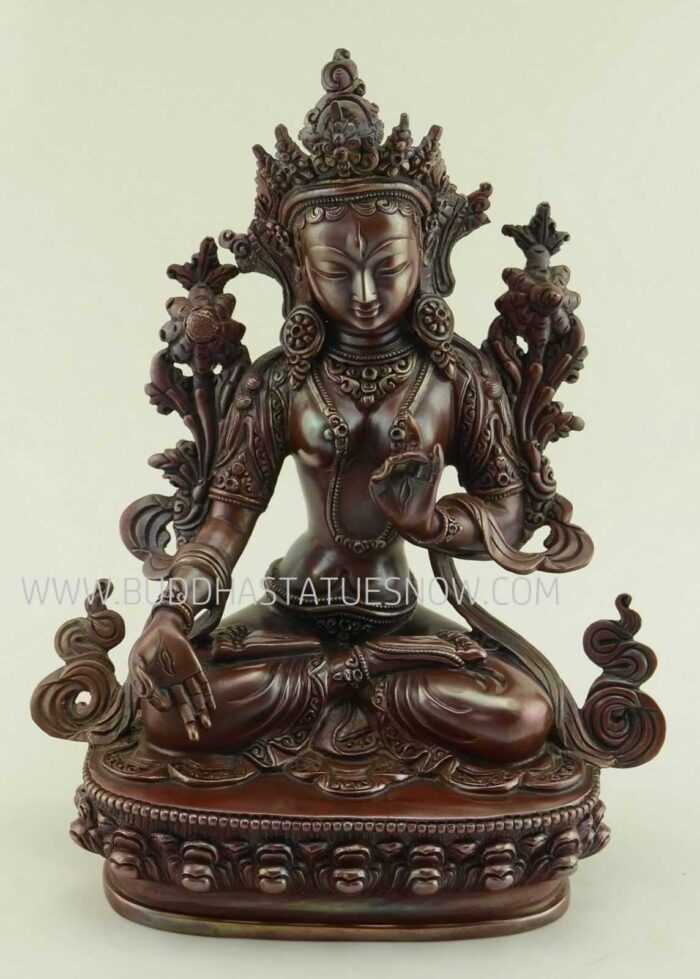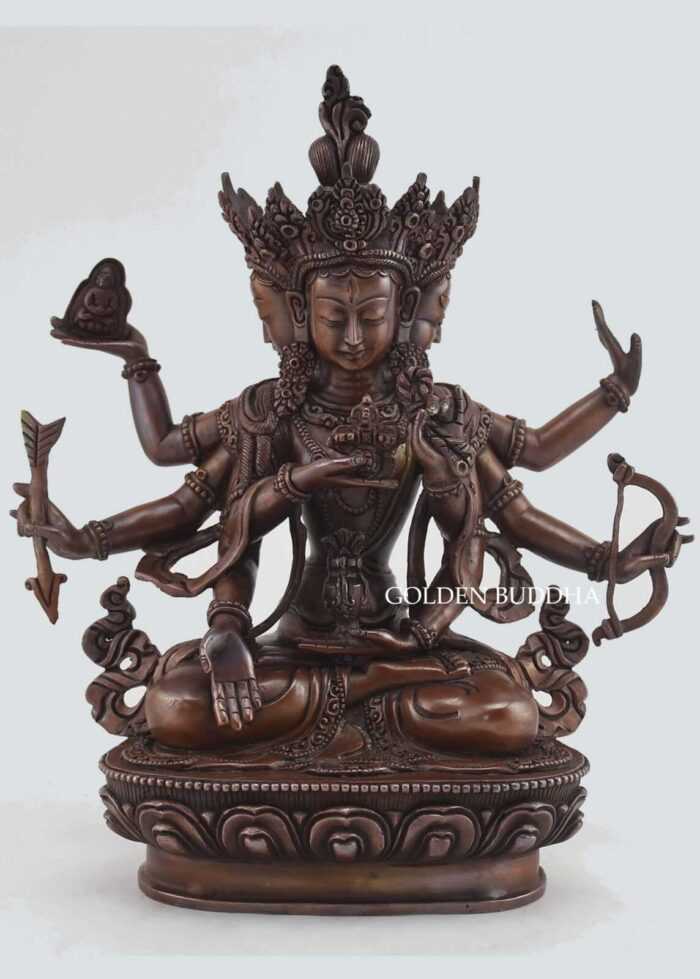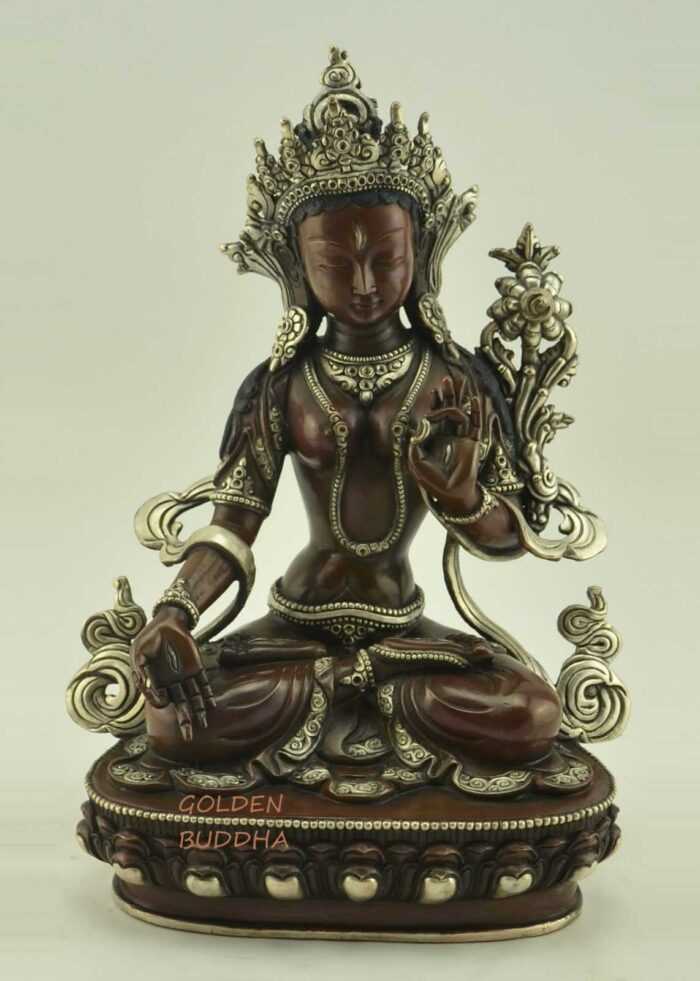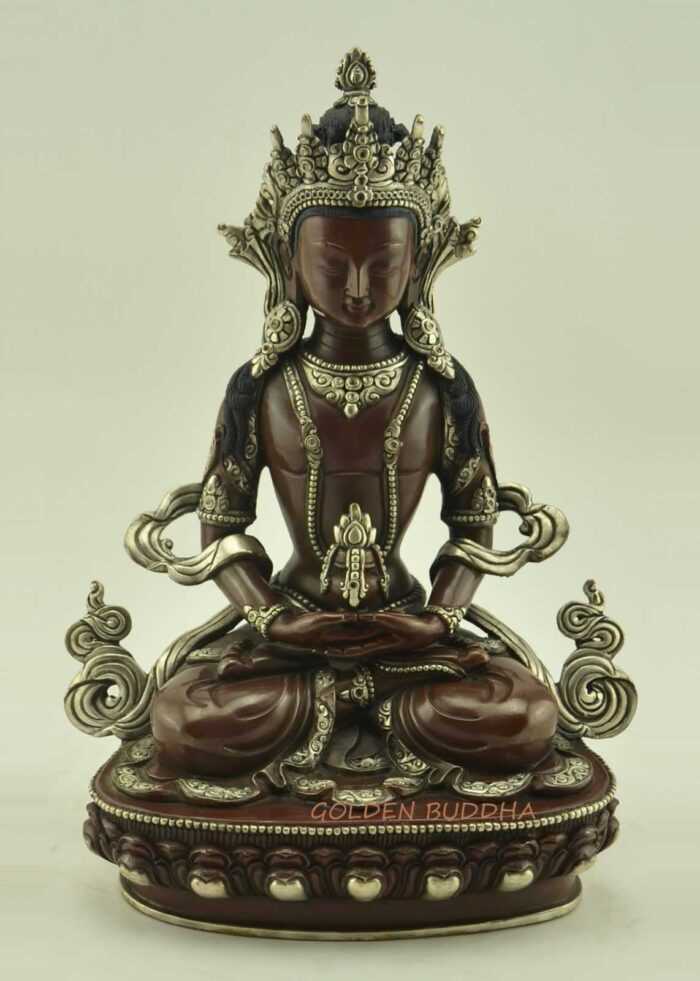
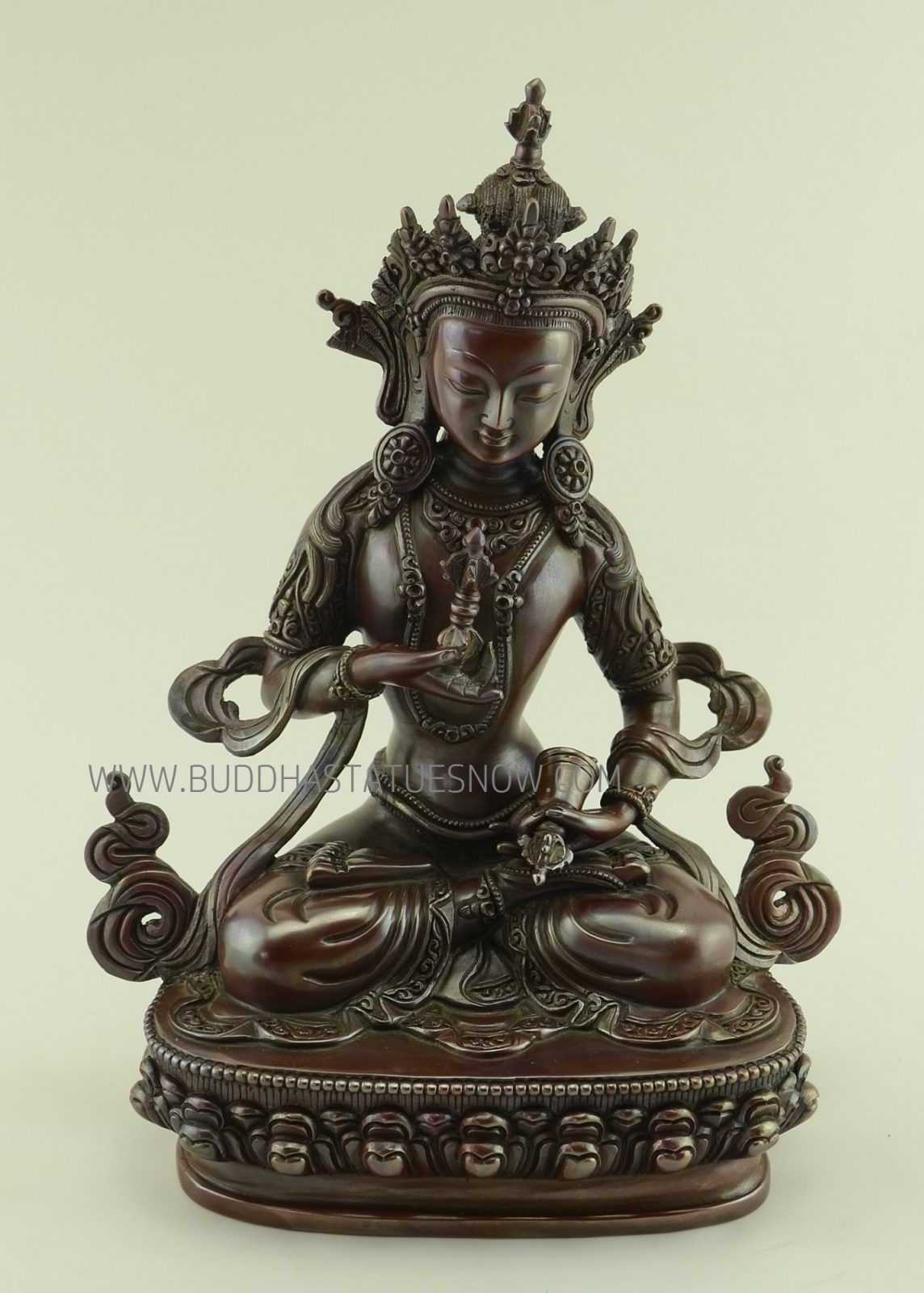
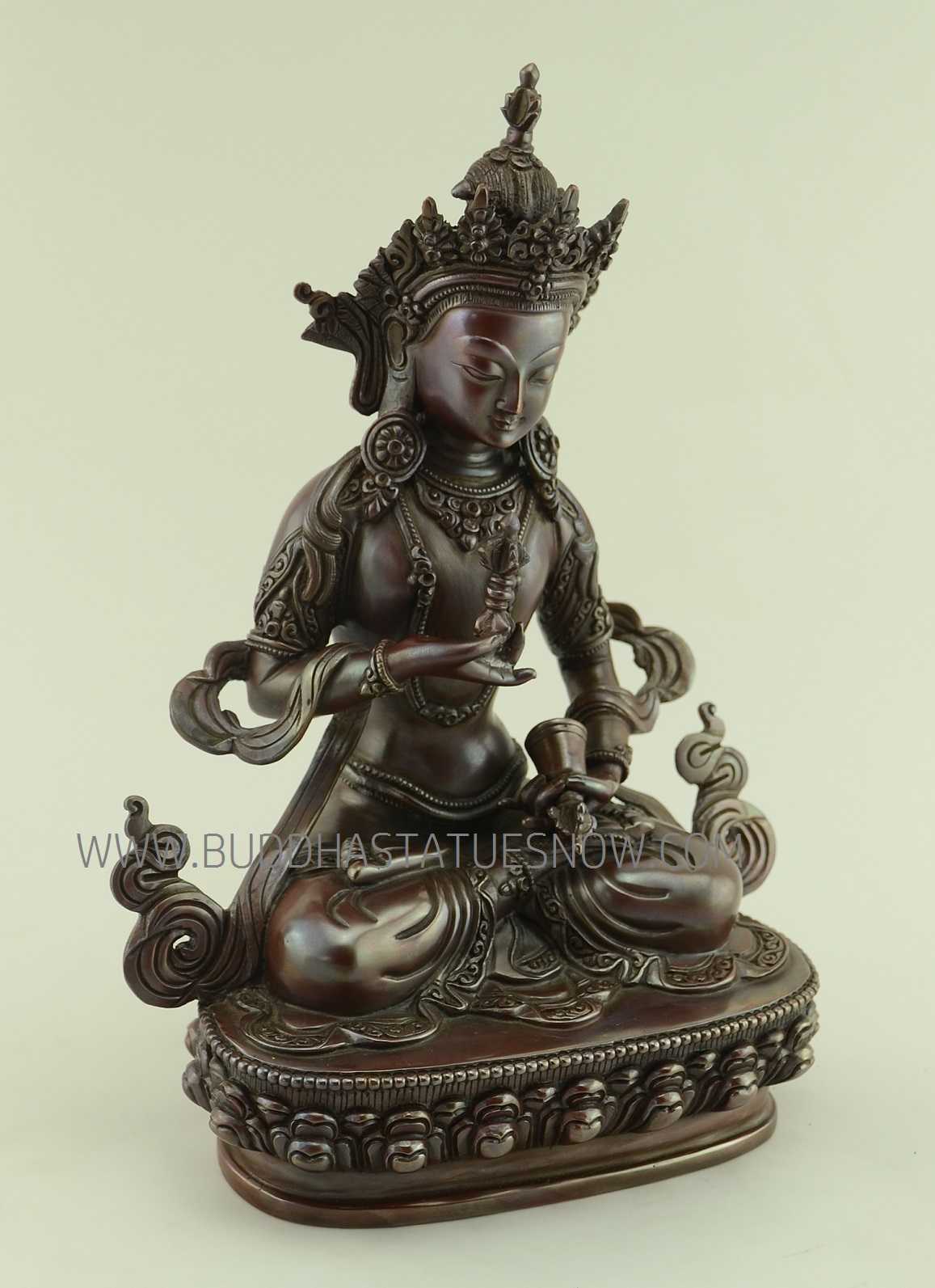
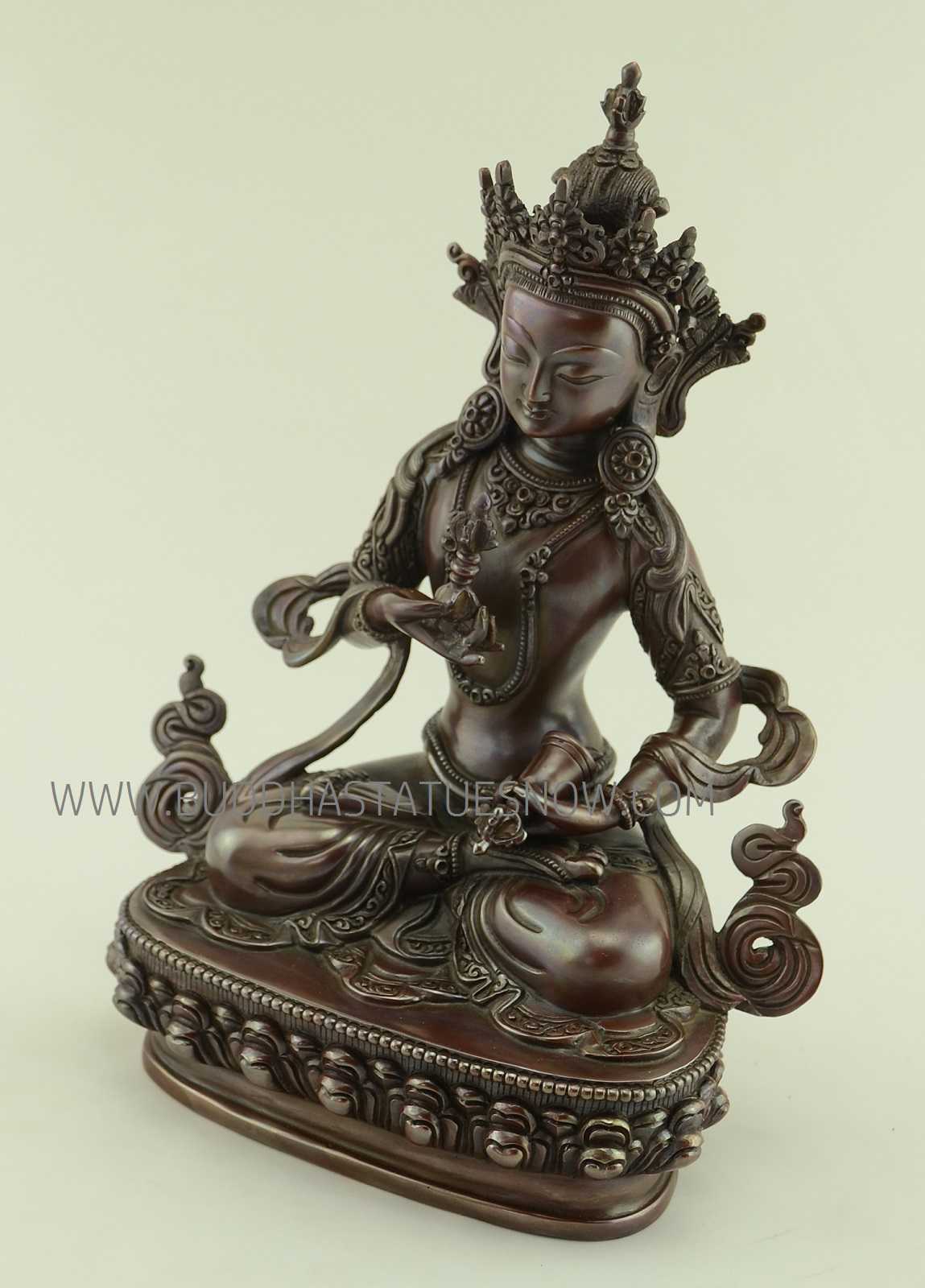
This 9.75-inch Antiquated Vajrasattva Statue presents Dorje Sempa in a beautifully restrained oxidized copper finish, emphasizing the sculptural detail of the figure rather than relying upon gold gilding. Handcrafted from copper alloy using the traditional lost wax method, the statue has a warm reddish-brown surface with darker tones settling naturally into the crown, jewelry, garment borders and lotus petals. Subtle variations across the polished copper give the sculpture the visual character of an older Himalayan sacred image while preserving the fine workmanship of the Nepali artisan.
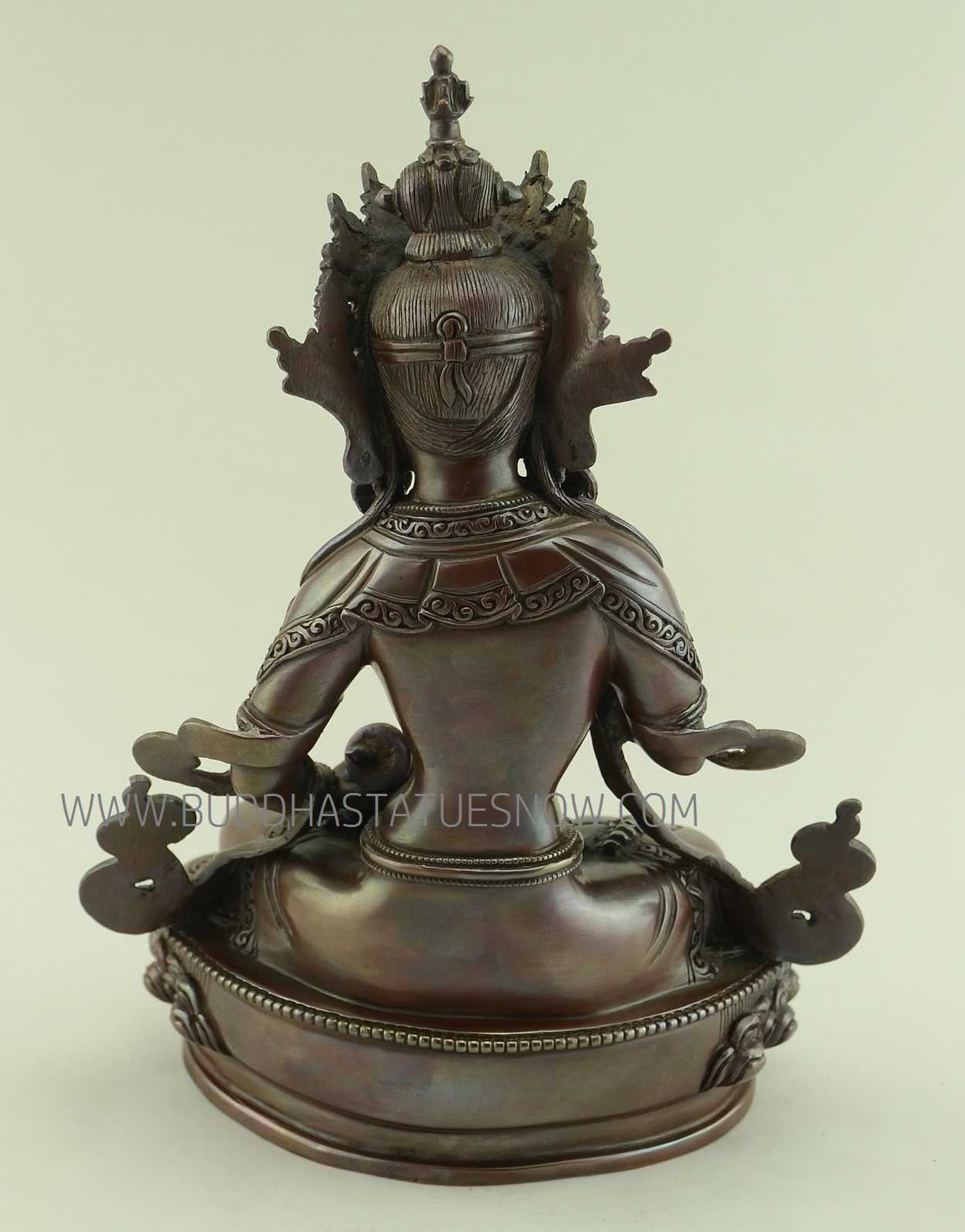
Vajrasattva is seated in the full vajra posture upon a single lotus throne. His peaceful expression is framed by an elaborate Bodhisattva crown, large circular earrings and layered necklaces. Ornamental borders continue across the shoulders and sleeves, while long celestial scarves curve outward around his arms before descending toward the throne. Viewed from behind, carefully delineated strands of hair, the crown, patterned shoulder ornaments and beaded waist border demonstrate that the sculpture has been finished in the round rather than concentrating its craftsmanship exclusively upon the front.
Antiquated Vajrasattva Statue Iconography
Vajrasattva, known in Tibetan as Dorje Sempa, is among the most important purification deities of Vajrayana Buddhism. His two principal ritual attributes immediately identify him. The right hand holds the vajra upright at the heart, while the left hand holds the ghanta, or ritual bell, near the hip. Together they express the inseparability of skillful means and wisdom, fundamental qualities of the awakened state. Explore these attributes in greater detail in our guide to Vajrasattva iconography and symbolism.
His crown, jewelry and flowing silks identify Vajrasattva’s celestial Sambhogakaya appearance. Rather than depicting worldly ornamentation, these adornments visually communicate enlightened qualities through the richly ornamented form encountered in advanced Mahayana and Vajrayana traditions. Learn more about Vajrasattva and the Sambhogakaya.
Vajrasattva and the Practice of Purification
Vajrasattva is especially associated with the purification of negative karma, mental obscurations and damaged samaya commitments. His practice forms an important part of Ngöndro, the foundational preliminary practices found throughout Tibetan Buddhism. Practitioners commonly visualize Vajrasattva while reciting either his celebrated one-hundred-syllable mantra or the concise mantra “Om Vajrasattva Hum.” The statue can therefore serve not only as a work of traditional Himalayan art but also as a visual focus for meditation and purification practice. Our detailed guide explains who Vajrasattva is and his role in Tibetan Buddhism.
Optional Turquoise and Red Coral Adornments
For collectors who prefer additional color, suitable settings within the crown and jewelry may be embellished with turquoise and red coral gemstones upon request. Their vivid colors provide a striking contrast against the deep oxidized copper while retaining the statue’s antiquated character. The unembellished sculpture is equally compelling, allowing the crown, jewelry, ritual implements and warm copper patina to form a unified composition.
A Coordinated Antiquated Vajrasattva Statue Altar
This Antiquated Vajrasattva Statue was created by the same artisan as our coordinating oxidized White Tara statue, giving the two sculptures closely related proportions, copper coloration, sculptural detail, and antiquated character. Vajrasattva’s purification activity makes him a particularly meaningful companion to White Tara, whose seven-eyed form is associated with compassionate awareness, healing, serenity, and longevity. The grouping may be expanded with our oxidized Namgyalma statue. Namgyalma, or Ushnishavijaya, is associated with longevity, purification, and overcoming obstacles connected with untimely death. Together, the three figures create a harmonious altar centered upon purification, long life, compassionate activity, and the preservation of favorable conditions for Dharma practice.
Custom Made Vajrasattva Statues and Coordinated Altar Sets
Collectors, practitioners, monasteries and Dharma centers may commission a custom made Tibetan Buddhist statue based upon this Vajrasattva design. Options may include alternative dimensions, an oxidized or antiquated copper finish, 24K fire gilding, additional engraving, gemstone embellishment and coordinated lotus-throne designs. Vajrasattva may also be commissioned together with White Tara and Namgyalma so the artisan can coordinate their scale, finish and sculptural treatment from the outset. Such an ensemble brings together Vajrasattva’s purification of karmic obscurations, White Tara’s compassionate healing and longevity activity, and Namgyalma’s purification and protection of the conditions supporting long life, creating a visually unified shrine with complementary doctrinal meaning.
Authentic, Handmade in Nepal
Every statue is handcrafted in Patan, Nepal, using traditional lost wax casting and comes with a certificate of authenticity issued by Nepal’s Department of Archaeology, verifying its materials, technique, and origin.