

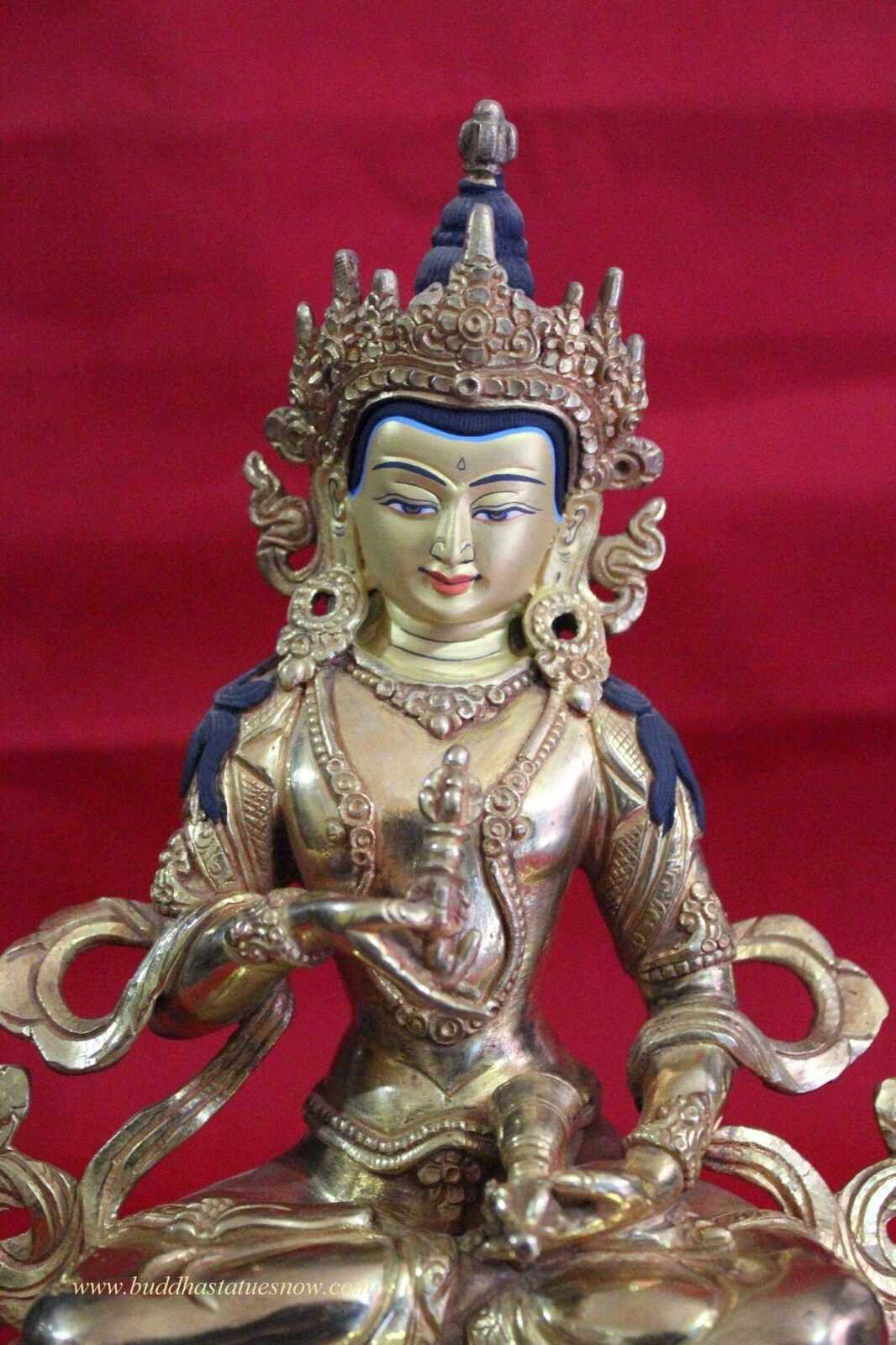
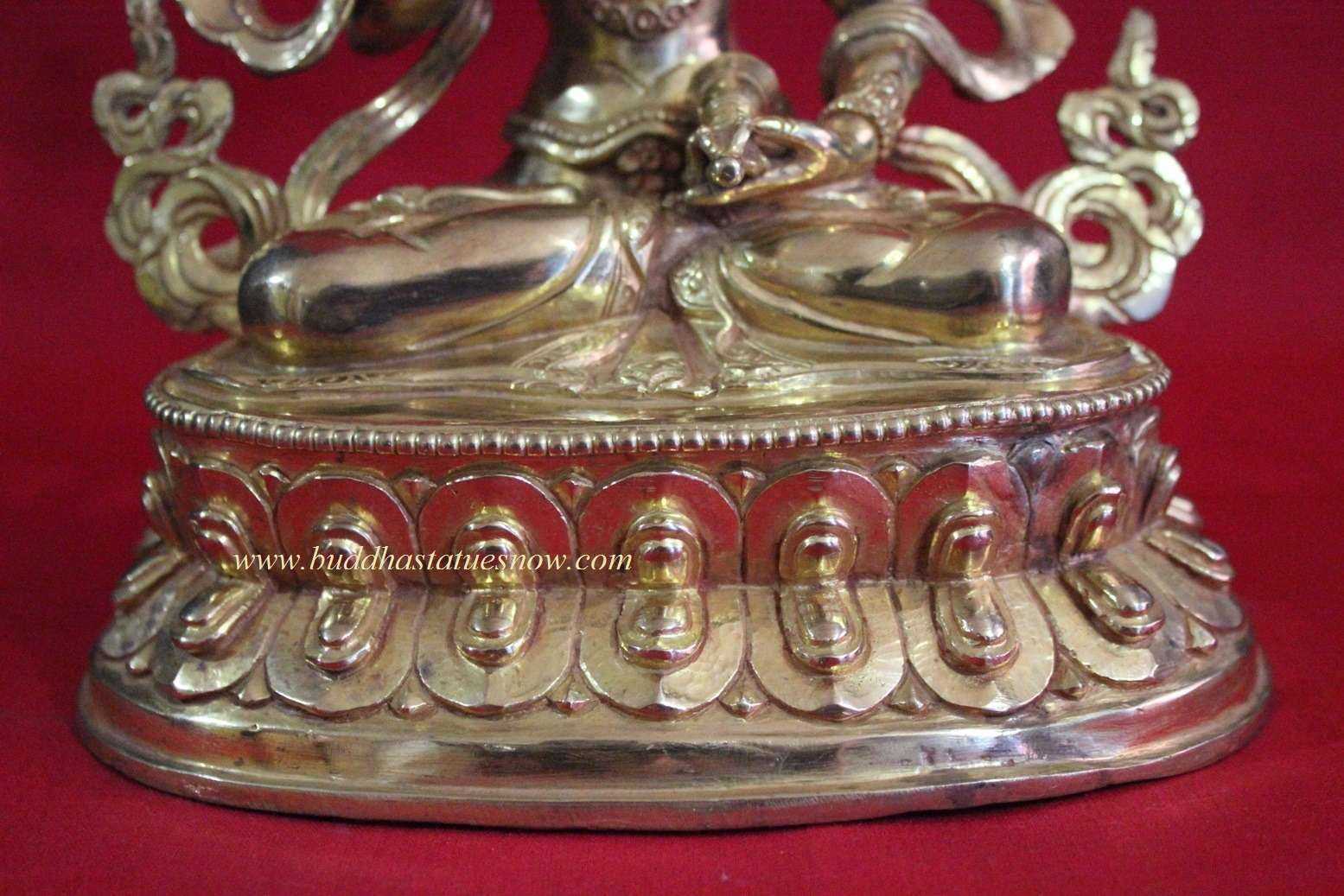
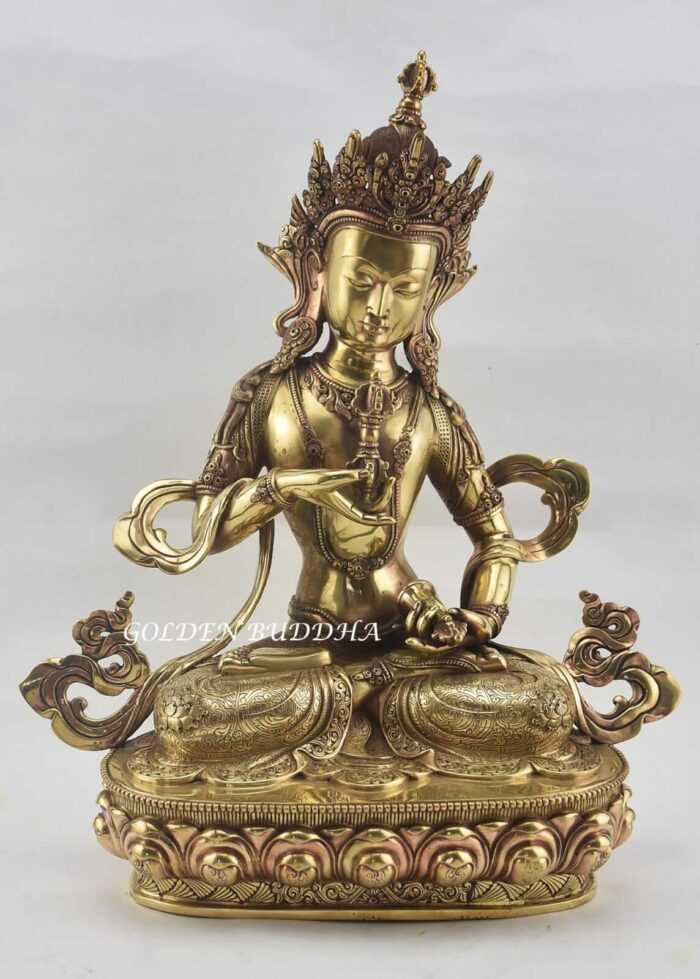
Vajrasattva’s characteristic vajra and bell immediately identify this 12-inch Fully Gilded Vajrasattva Statue as Dorje Sempa, the “Diamond Being” associated throughout Tibetan Buddhism with purification and primordial purity. The sculpture has a graceful upright composition, with the vajra held vertically before the heart while the ghanta rests in the left hand beside the hip. An elaborate crown rises around the blue-black topknot, and large circular earrings, necklaces, arm ornaments and flowing scarves give the figure the richly adorned appearance traditionally associated with a sambhogakaya Buddha. Handmade in Patan, Nepal from copper alloy using the lost-wax casting method, the sculpture is fire gilded in 24K gold. Its serene face is separately hand painted with 18K gold and natural pigments.
Fully Gilded Vajrasattva Statue Iconography
The vajra and ghanta are the two principal attributes of Vajrasattva. His right hand holds the vajra upright at the heart, representing indestructible enlightened activity and skillful means. The ritual bell held at the left hip is associated with wisdom and the realization of emptiness. Together they express the inseparability of skillful means and wisdom, two essential qualities of the enlightened state. The figure sits in full lotus posture with both legs crossed symmetrically above the throne, creating the stable triangular composition characteristic of peaceful Vajrayana deities. Learn more about the meaning of these attributes in our guide to Vajrasattva iconography.
The photographs reveal especially attractive proportions in the upper body. The narrow waist opens into broad shoulders framed by dark blue-black locks of hair and sweeping celestial scarves. Decorative borders accent the short sleeves, jewelry and waist ornaments without overwhelming the smooth gilded surfaces. Vajrasattva rests upon a substantial double lotus throne with two clearly differentiated rows of raised lotus petals and a beaded rim separating the sacred figure from the pedestal below.
Dorje Sempa and the Practice of Purification
Known in Tibetan as Dorje Sempa, Vajrasattva holds an important place in purification practices across Tibetan Buddhist traditions. His visualization and mantra are used to purify negative karma, obscurations and damaged samaya commitments. Within the Trikaya teachings, Vajrasattva is understood as the sambhogakaya manifestation of Vajradhara, the primordial Buddha. Sambhogakaya is the luminous or subtle dimension of enlightened form, which helps explain why Vajrasattva is portrayed not in simple monastic robes but adorned with the crown, jewelry and celestial garments of an enlightened prince. :contentReference[oaicite:1]{index=1}
Fully Gilded Vajrasattva Statue with Guru Rinpoche
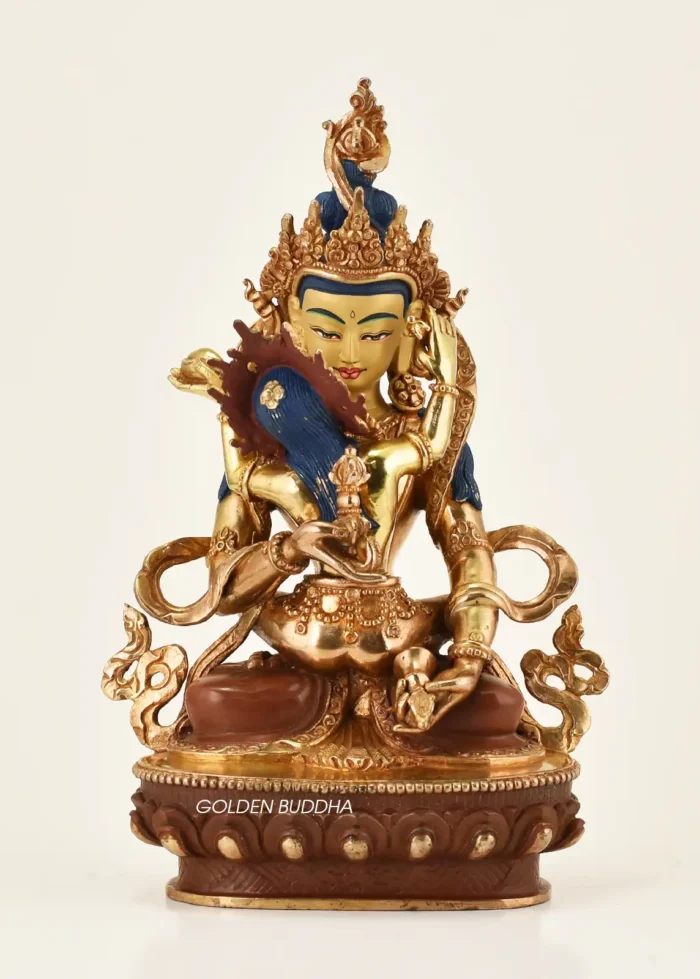
Vajrasattva and Guru Rinpoche form a particularly meaningful pairing for practitioners of the Nyingma and Dzogchen traditions. Vajrasattva is associated with the primordial transmission of Atiyoga or Dzogchen and represents the sambhogakaya dimension of enlightenment. Guru Padmasambhava, by contrast, appears within the human world as a nirmanakaya master who transmitted Vajrayana teachings in Tibet and became central to the Nyingma lineage. Vajrasattva can therefore represent the pure enlightened source and purification of the practitioner, while Guru Rinpoche represents the transmission and practical realization of those teachings within the human realm. Their complementary roles make the pair both doctrinally meaningful and visually appropriate for a Tibetan Buddhist shrine.
Optional Gemstones and Traditional Consecration
The crown, earrings and jewelry contain suitable settings where genuine turquoise and red coral gemstones may be embedded at the buyer’s request before shipment. For practitioners preparing the sculpture as an active sacred image, traditional statue filling and consecration in Kathmandu may also be arranged. Sacred mantra rolls and other appropriate substances can be installed within the hollow copper-alloy body before the statue is sealed and ritually blessed in Nepal. :contentReference[oaicite:2]{index=2}
Custom Tibetan Buddhist Statues
For a larger temple image, a smaller home-shrine figure or a coordinated Vajrasattva and Guru Rinpoche set, our artisans can create custom Tibetan Buddhist statues handmade in Nepal. Commissions can specify dimensions, traditional finishes and gemstone ornamentation while preserving the required iconography and proportions of the chosen deity. Matching figures can also be commissioned together so their scale, gilding and overall craftsmanship create a unified altar arrangement.
Authentic, Handmade in Nepal
Every statue is handcrafted in Patan, Nepal, using traditional lost wax casting and comes with a certificate of authenticity issued by Nepal’s Department of Archaeology, verifying its materials, technique, and origin.
Reviews
There are no reviews yet.