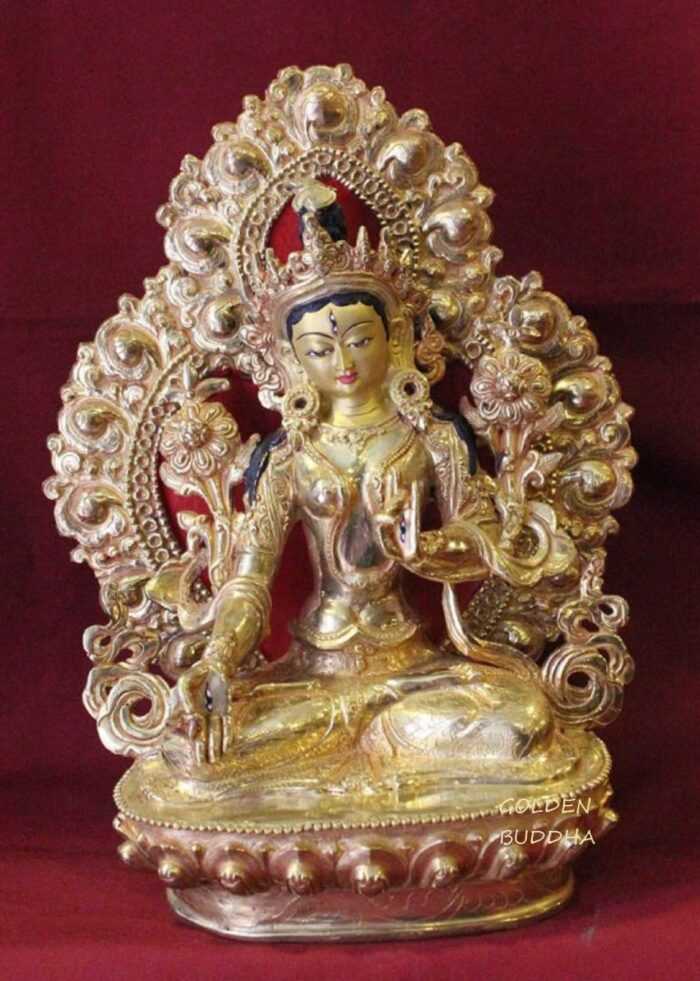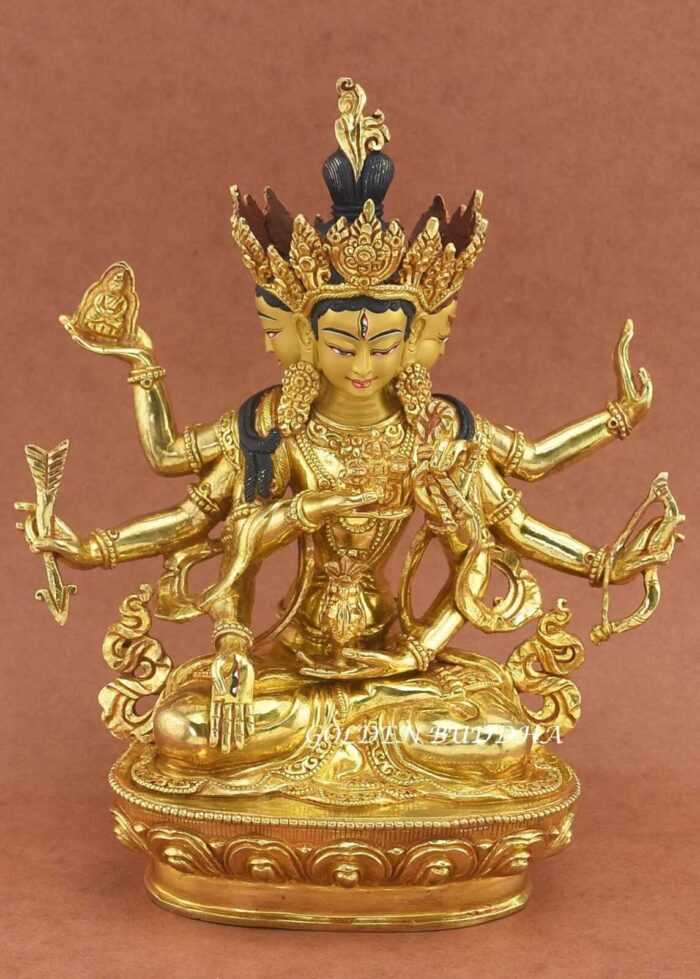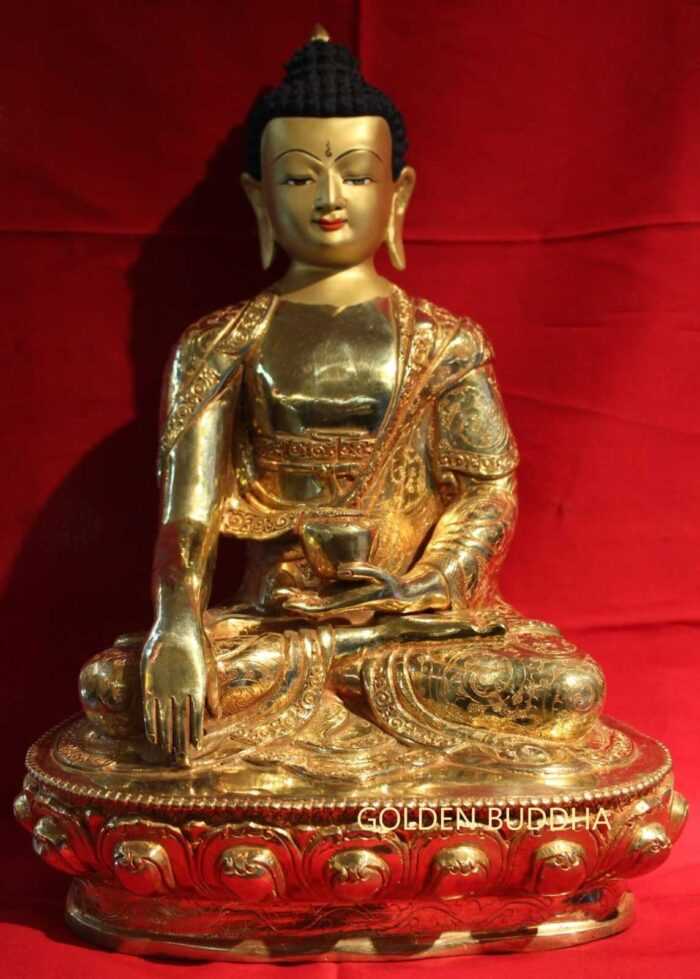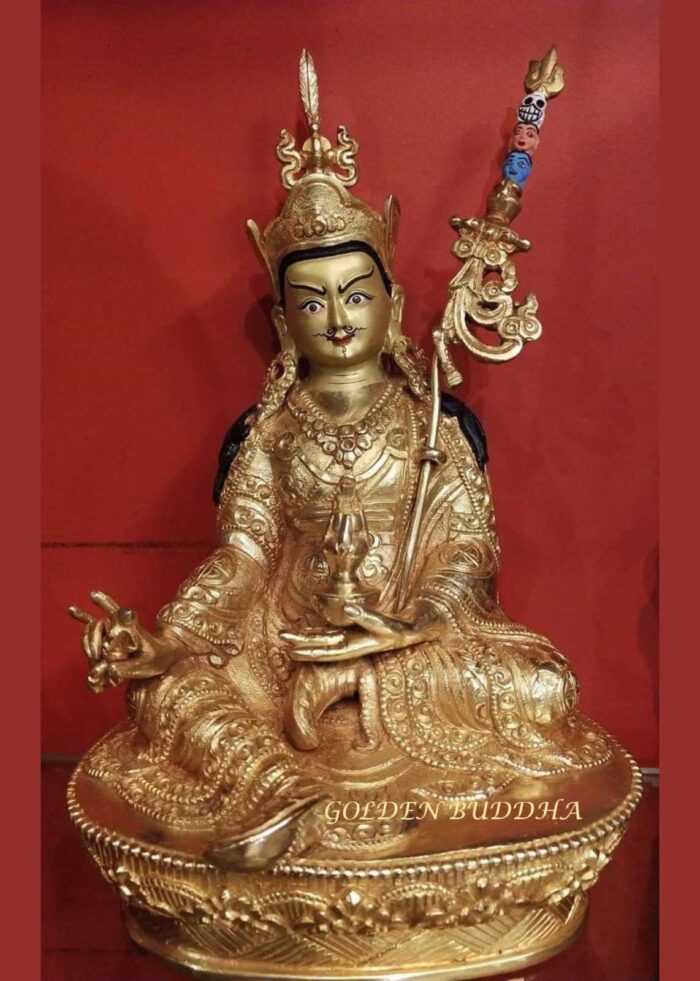
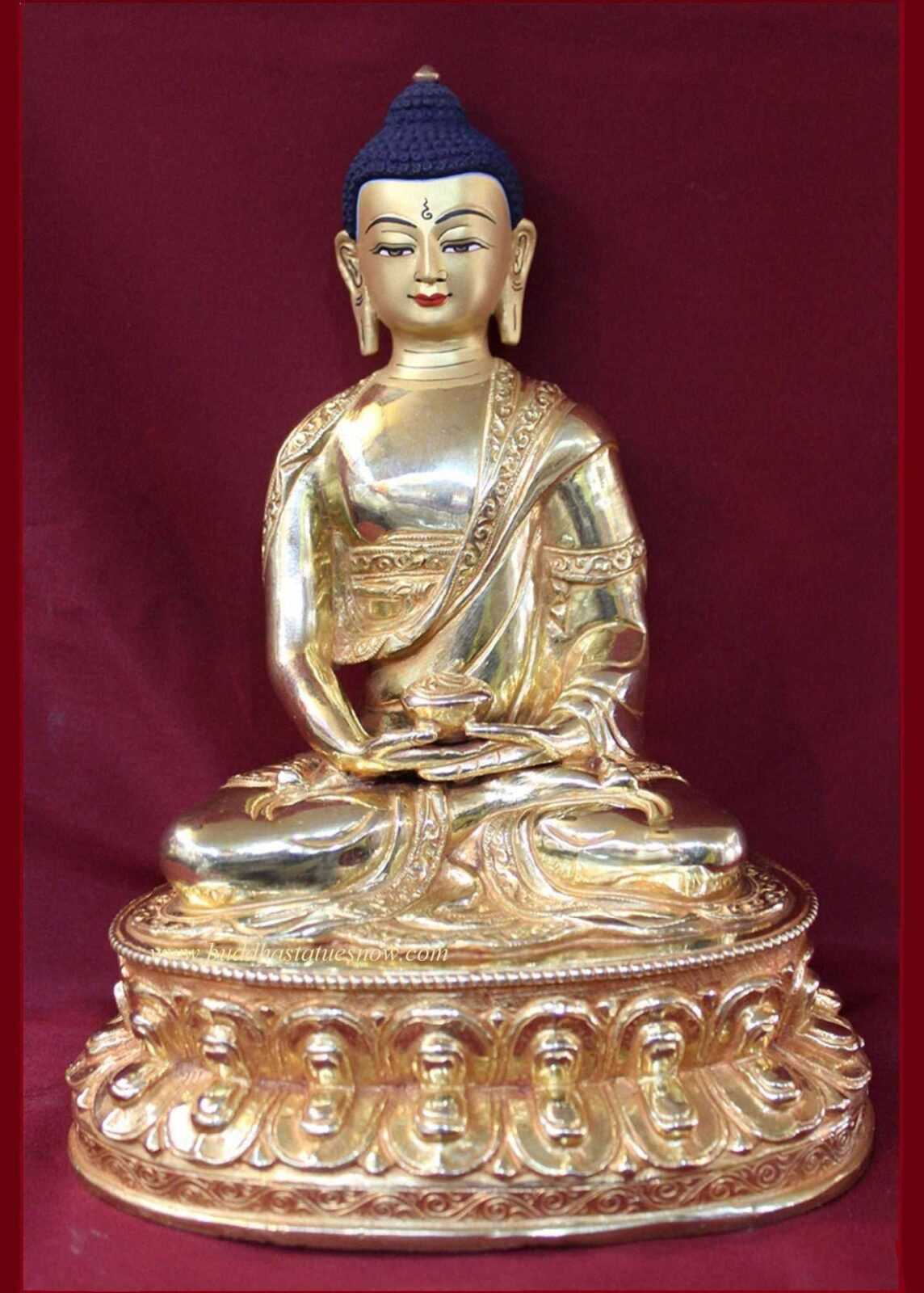

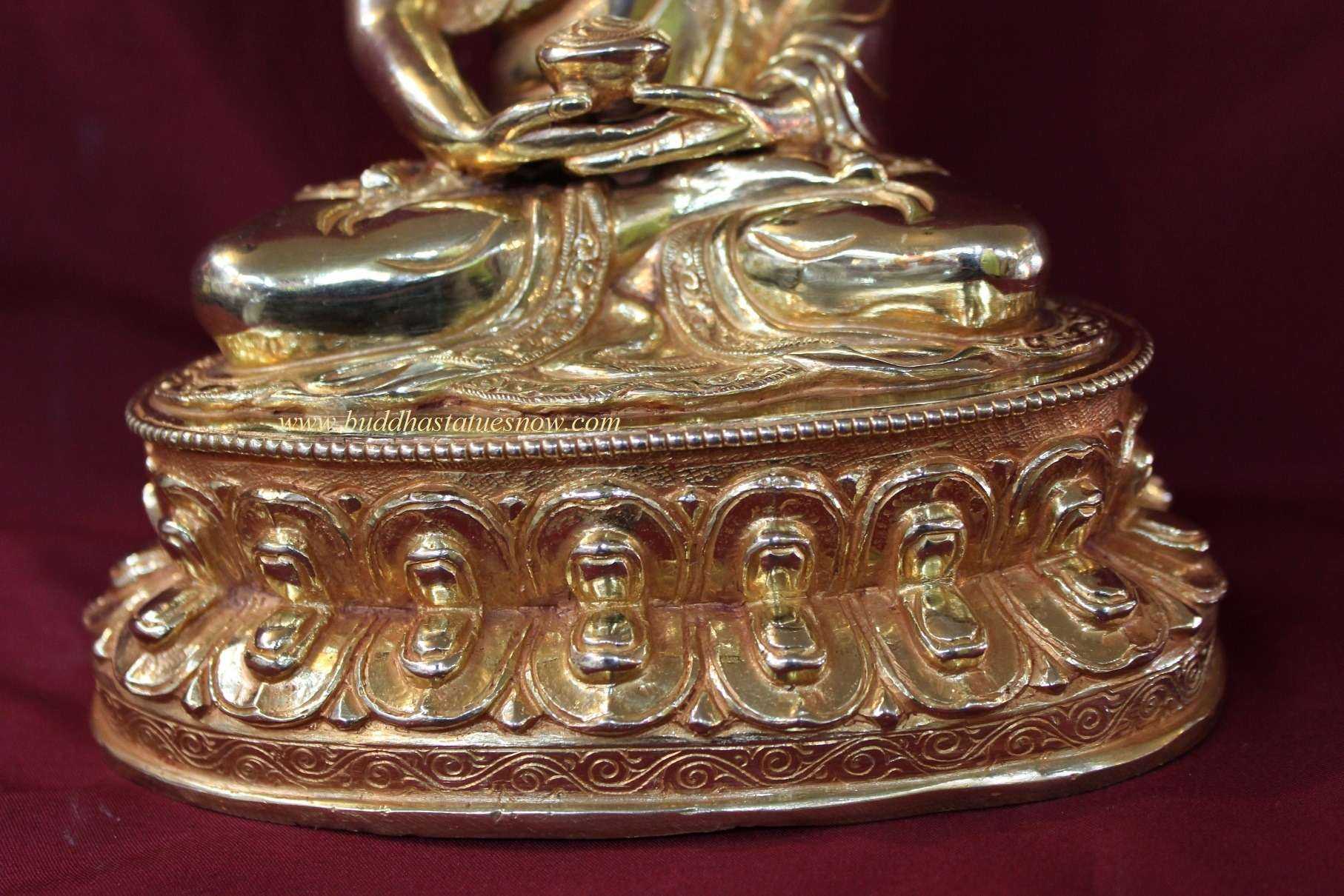
This 8″ fire gilded Amitabha statue rests on a double lotus throne in full lotus pose. Fire gilding method is the traditional gold gilding method used by our artisans in Patan, Nepal. The result is a permanent 24K pure gold finish that will never show wear or tarnish. It is indeed, the preferred finish of the Tibetan monasteries which these same Nepali artisans have supplied with statues for many centuries. Furthermore, the double lotus throne features two full registers of overlapping petals ringing the base — a traditional mark of an especially venerated figure.
The facial features of the statue are hand painted with a special mixture of 18K gold and natural pigments that imbue the deity with lifelike virtues. The luminous, high luster gold gilded finish with gold face painting is especially fitting for Amitabha, since he is known as the “Buddha of Infinite Light.” The gold finish suits the fine hand carved features of the statue well which exhibit the best of the lost wax casting tradition. Our master artisan in Patan, Nepal that created this original fire gilded Amitabha statue gets better every time he does a recreation. Read about Golden Buddha’s origins and what our customers are saying about the artisans in Patan, Nepal. Indeed, the statue looks even better in person than in the photos!
Amitabha Buddha Pure Land ‒ Sukhavati
As the Bodhisattva Dharmakara, Amitabha vowed to remain a Bodhisattva until he had created his own Pure Land, and after countless lifetimes of accumulated merit, he succeeded — his Pure Land is called Sukhavati. Sukhavati is described in scripture as a realm of sonorous delights and visual bliss. To gain admittance, devotees are required only to recite the Amitabha Buddha mantra – Om Amitabha Hum – or say his name with sincere faith, a minimum of 10 times.
Upon admission to Amitabha’s Pure Land, devotees are protected from suffering and receive guidance and encouragement from Amitabha and his retinue of Bodhisattvas until they reach full enlightenment. Common questions about Amitabha and his Pure Land practice are answered in our Amitabha Buddha Statues FAQ.
Fire Gilded Amitabha Statue Features
This golden Amitabha Buddha statue sits in full lotus pose, depicting the Dhyana Mudra, the meditation gesture, with the alms bowl resting in the palm of his right hand. The alms bowl is significant in Buddhism because it was traditionally used by monks to collect alms, and here it is understood to hold the nectar of spiritual nourishment — with Amitabha’s own wisdom specifically associated with transforming the poison of desire and attachment. The statue also features several of the traditional 32 marks of an enlightened being: the ushnisha topknot with hair coils turning to the right, the urna or third eye of wisdom, elongated earlobes, and the three folds of the neck. The hand gesture, lotus throne, and coloring on this statue each carry meaning — explore Amitabha Statue Iconography: Mudra, Color & Form to learn more.
Our Nepali statues are hand carved using the traditional lost wax method by artisans in Patan — the same craftsmen relied upon by Tibetan monasteries for generations. When you purchase one of our statues, you can rest assured that you have procured a world-class, monastic-quality piece. Browse our full collection of Amitabha Buddha statues to compare sizes and finishes.
Custom Made Buddha Statues
If you admire this fire gilded Amitabha statue but need a different size, finish, or altar presence, we can also arrange custom Tibetan Buddhist statues handmade in Nepal. Custom Amitabha statues can be commissioned in copper alloy with 24K gold gilding, painted face details, different pedestal styles, or special engraving preferences according to your shrine requirements.
Authentic, Handmade in Nepal
Every statue is handcrafted in Patan, Nepal, using traditional lost wax casting and comes with a certificate of authenticity issued by Nepal’s Department of Archaeology, verifying its materials, technique, and origin.