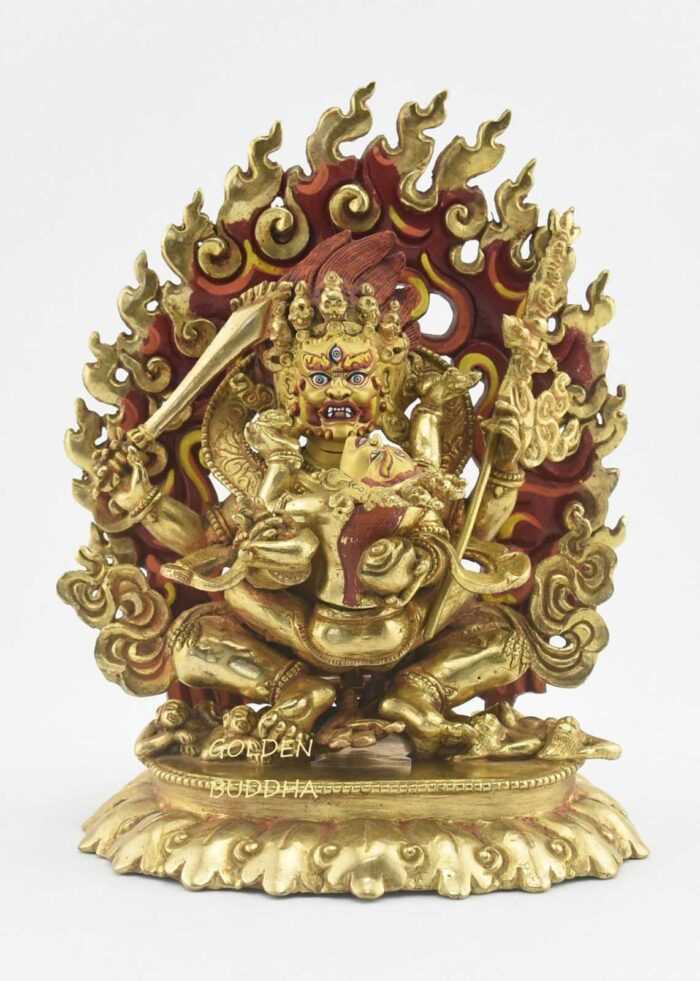
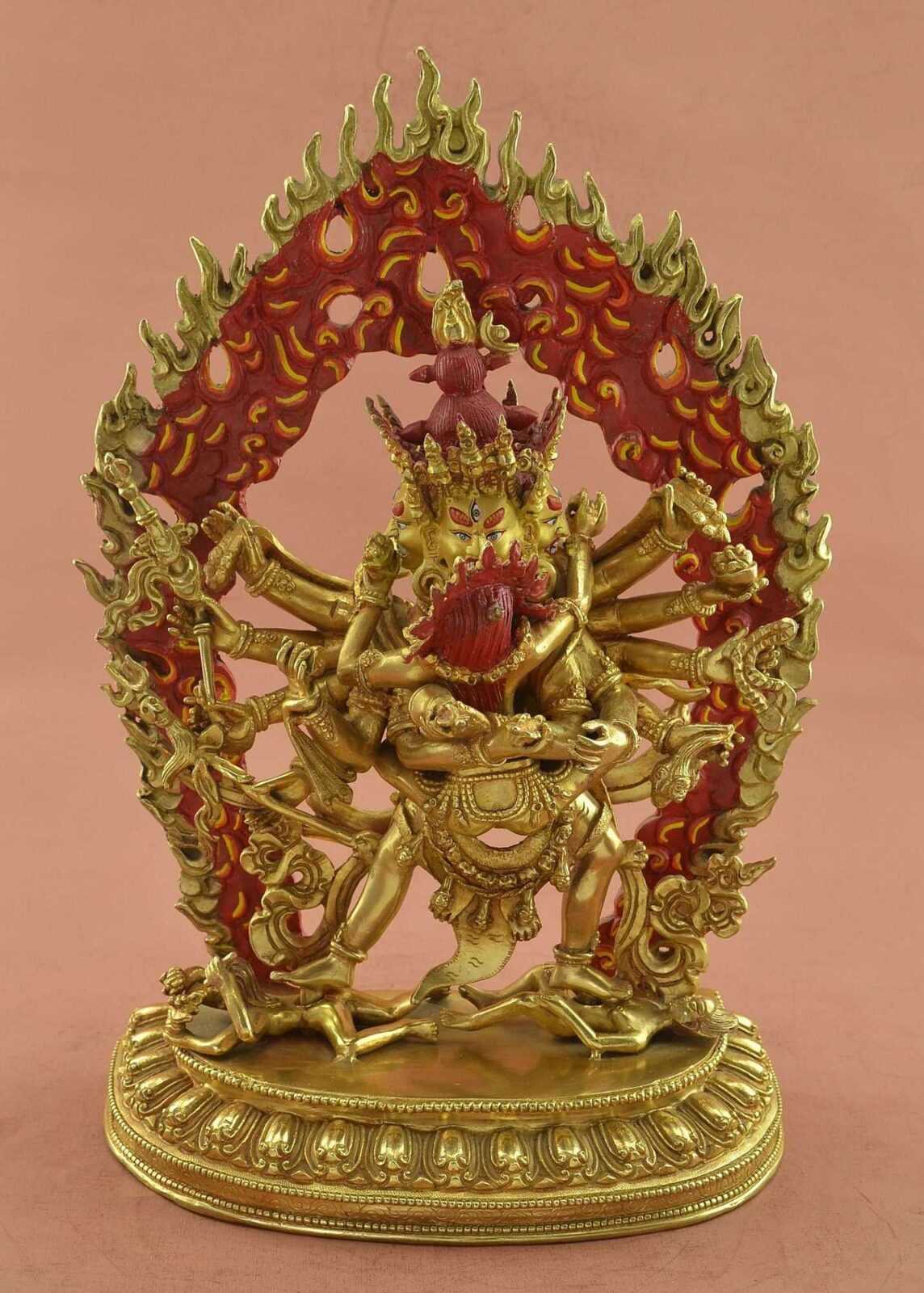


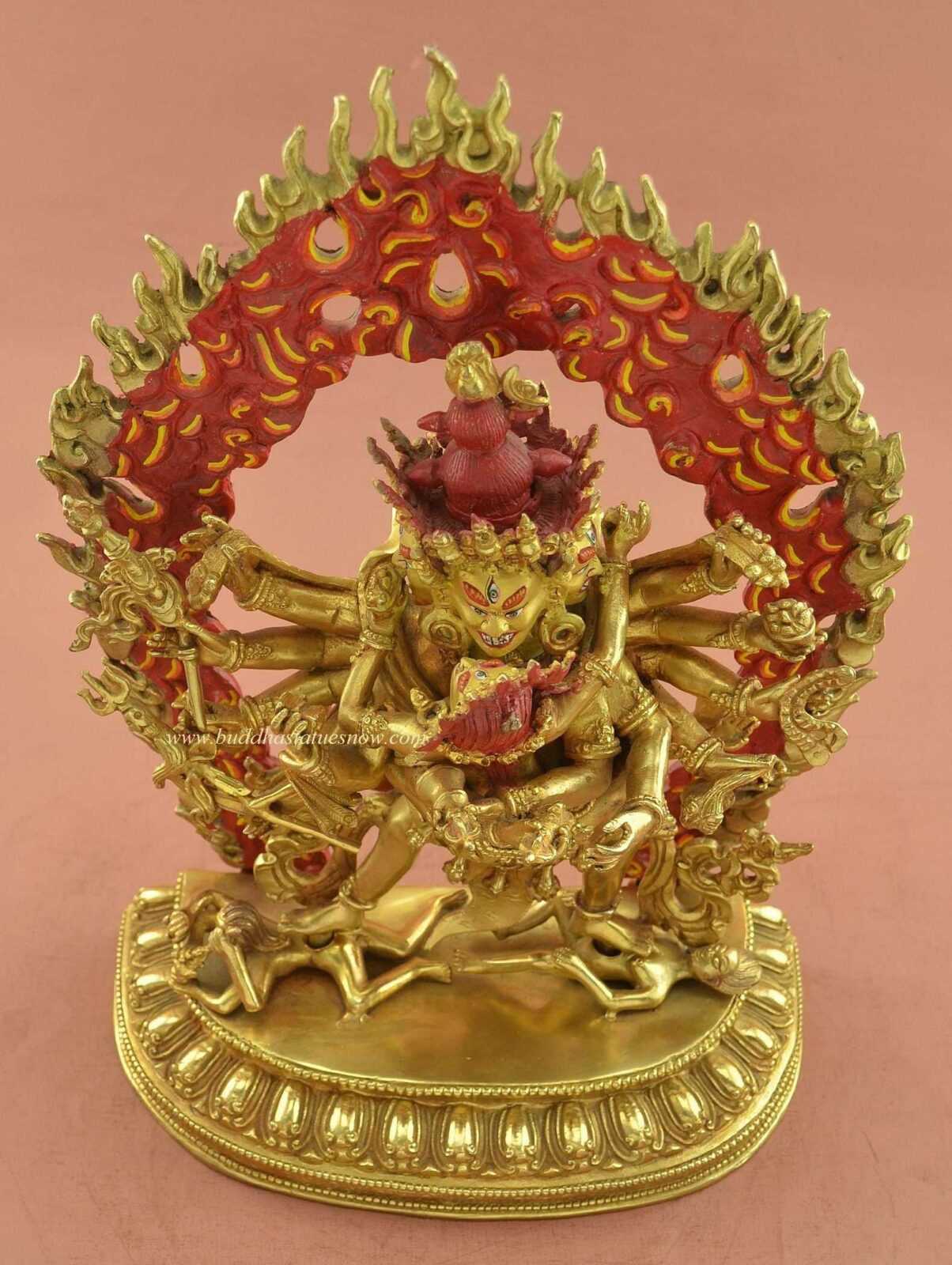
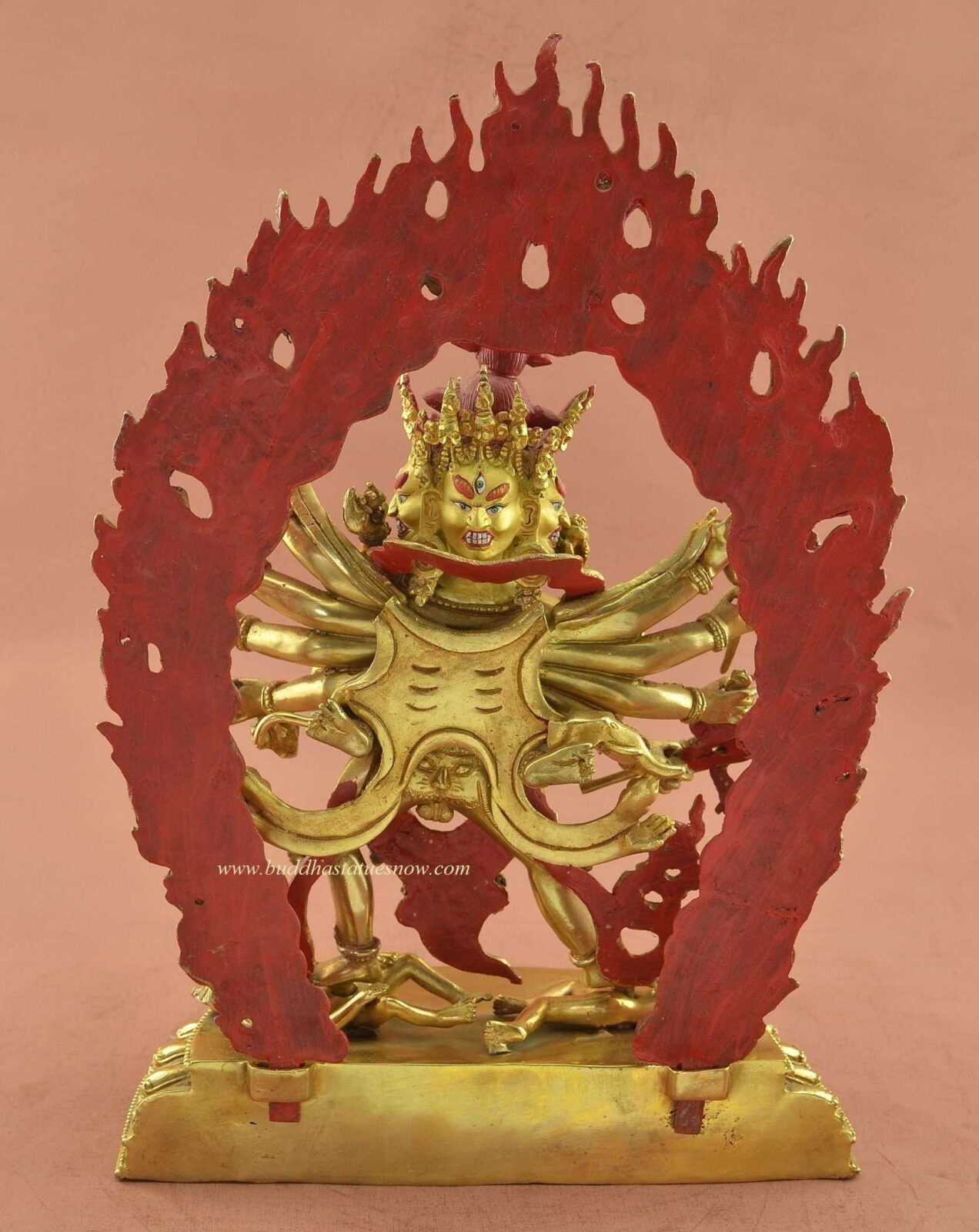

This 13.5-inch Chakrasamvara Yab Yum Statue depicts Chakrasamvara, or Heruka, in union with Vajravarahi in one of the most complex and important forms of Tibetan Buddhist tantra. Handmade in Patan, Nepal from copper alloy using the traditional lost wax casting method, the central figures are fire gilded in 24K gold, while the faces are hand painted with 18K gold and natural pigments. A large red-painted flame aureole with gilded tips surrounds the couple, and the composition rises from an ornamented lotus pedestal. The frame is removable, allowing the sculpture to be displayed at its full 13.5-inch height or as the 11-inch central figure without the aureole.
Chakrasamvara Yab Yum Statue | 24K Gold Fire-Gilded Craftsmanship
The photographs reveal extensive hand finishing across the many arms, faces, ritual implements, jewelry, garments, and pedestal. The warm gilded surfaces are offset by antiquated oxidized highlights in recessed areas and by the deep red flame frame, which is accented with yellow-red painted scrollwork and gilded flame tips. From the reverse, the separate construction of the aureole is clearly visible, along with the rear faces, multiple arms, and the stretched animal hide that forms part of Chakrasamvara’s traditional iconography. Optional turquoise and red coral gemstones may be embedded in appropriate ornamental settings upon request, adding controlled color accents without altering the deity’s essential form.
Four-Faced, Twelve-Armed Chakrasamvara Iconography
This sculpture presents the classic four-faced, twelve-armed form of Chakrasamvara. His foremost hands hold the vajra and bell while embracing Vajravarahi, expressing the inseparability of method and wisdom. The remaining hands carry the varied implements associated with the full form, while another pair extends the elephant hide behind the body. The photographs also show the elaborate crown, three-eyed wrathful faces, upward-bound hair, and numerous ornaments characteristic of Heruka imagery. Beneath the couple are two subdued figures traditionally associated with Bhairava and Kalaratri in Chakrasamvara iconography. Their presence belongs to the symbolic language of tantric subjugation, representing mastery over obstructive forces rather than ordinary violence.
Chakrasamvara Yab Yum Statue | Union with Vajravarahi
Vajravarahi is not simply an accompanying figure in this composition; she is Chakrasamvara’s principal consort within the tantric cycle. She embraces him in yab-yum, the “father-mother” form used in Vajrayana art to express the inseparability of awakened method and wisdom, bliss and emptiness. In standard iconography she is shown with one face, two arms, a curved kartika, and a kapala skull cup, while her legs encircle Chakrasamvara. The close interlocking of the two figures gives the sculpture its distinctive visual intensity and makes the relationship between the two deities immediately clear.
Chakrasamvara Yab Yum Statue | Meaning within the Chakrasamvara Tantra
Chakrasamvara is one of the principal meditational deities of the Mother Tantra tradition and is widely practiced within the Kagyu, Sakya, and Gelug schools. The yab-yum image is therefore best understood as a sacred support connected with a specific transmitted tantric system rather than as a general symbol of male and female union. Its many faces, arms, implements, subdued figures, and encircling wisdom flames form an integrated iconographic program. Formal Chakrasamvara practice traditionally depends on the appropriate empowerment and instruction from a qualified teacher, while the statue itself can serve as a devotional and visual support on an altar or in a collection of Himalayan Buddhist art.
Pairing with a Standalone Vajravarahi Statue
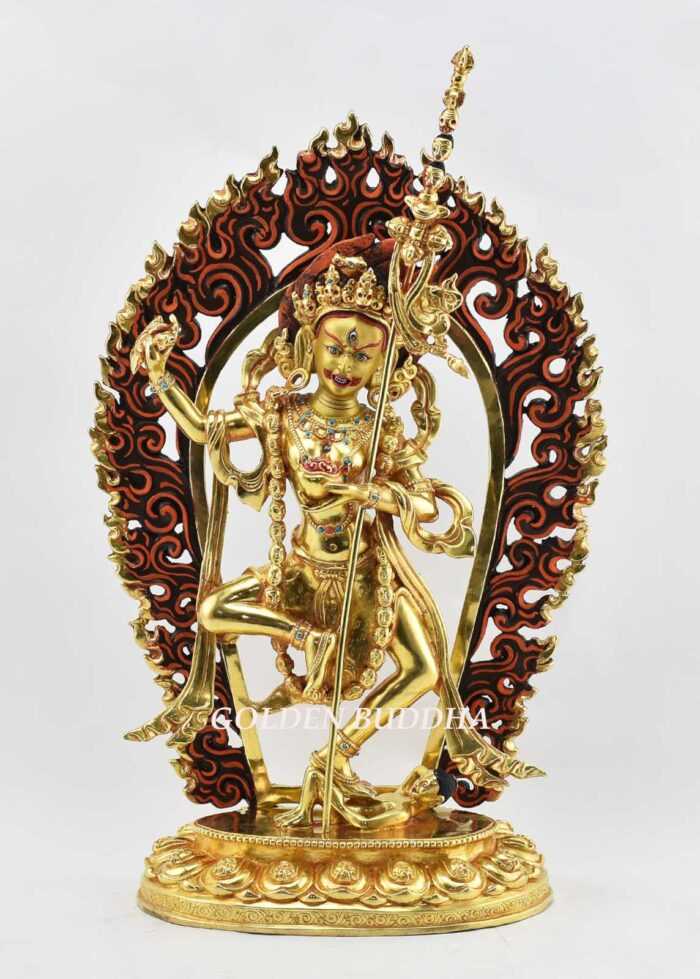
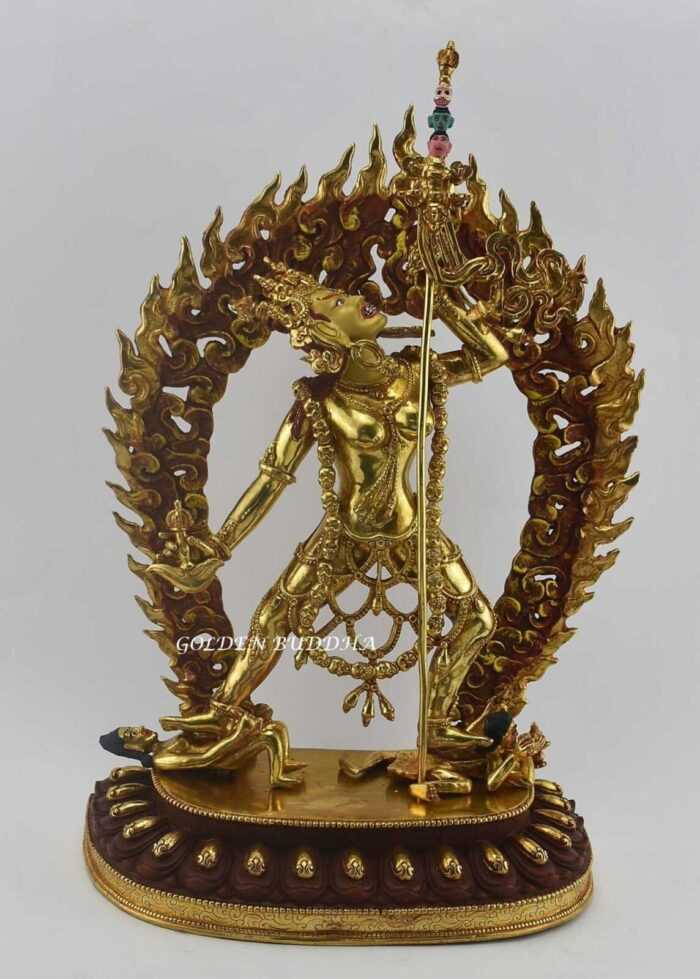
This sculpture forms an especially meaningful two-statue arrangement with our Masterpiece Vajravarahi Statue. The relationship is unusually direct: Vajravarahi is already the consort shown in the Chakrasamvara yab-yum image, while the companion sculpture presents the same enlightened Dakini independently in her own iconographic form. A paired display therefore shows Vajravarahi in two complementary contexts — inseparably united with Heruka and standing alone as Dorje Pakmo. Her solitary khatvanga also signifies her inseparability from Chakrasamvara. For additional background, see our guide to Vajravarahi and her relationship to Vajrayogini.
Filling and Consecration for the Chakrasamvara Yab Yum Statue
For practitioners who wish to prepare the sculpture for shrine use, we can arrange traditional statue filling and consecration in Kathmandu, Nepal before shipment. Appropriate rolled mantras, incense, and other sacred substances may be placed inside the hollow copper-alloy image according to the requested ceremony. The statue can then be sealed and consecrated by a qualified Buddhist practitioner or monastery in accordance with the relevant tradition.
Custom Made Tibetan Buddhist Statues
Practitioners, monasteries, Dharma centers, and collectors may commission custom Tibetan Buddhist statues handmade in Nepal. Because Chakrasamvara is iconographically complex, a custom commission can be planned around an established lineage reference while preserving the correct faces, arms, implements, consort, posture, and supporting figures. Options may include different sizes, 24K gold fire gilding, antiquated finishes, painted flame aureoles, and turquoise or red coral gemstone accents. A matching standalone Vajravarahi may also be commissioned so the two sculptures share compatible scale, finish, pedestal design, and visual balance.
Authentic, Handmade in Nepal
Every statue is handcrafted in Patan, Nepal, using traditional lost wax casting and comes with a certificate of authenticity issued by Nepal’s Department of Archaeology, verifying its materials, technique, and origin.