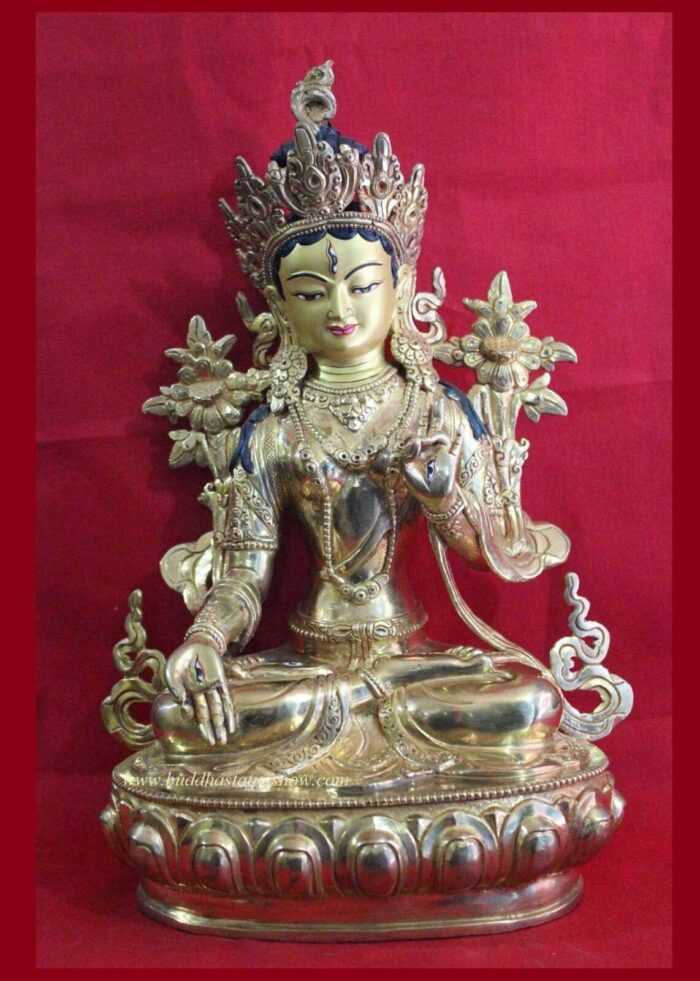
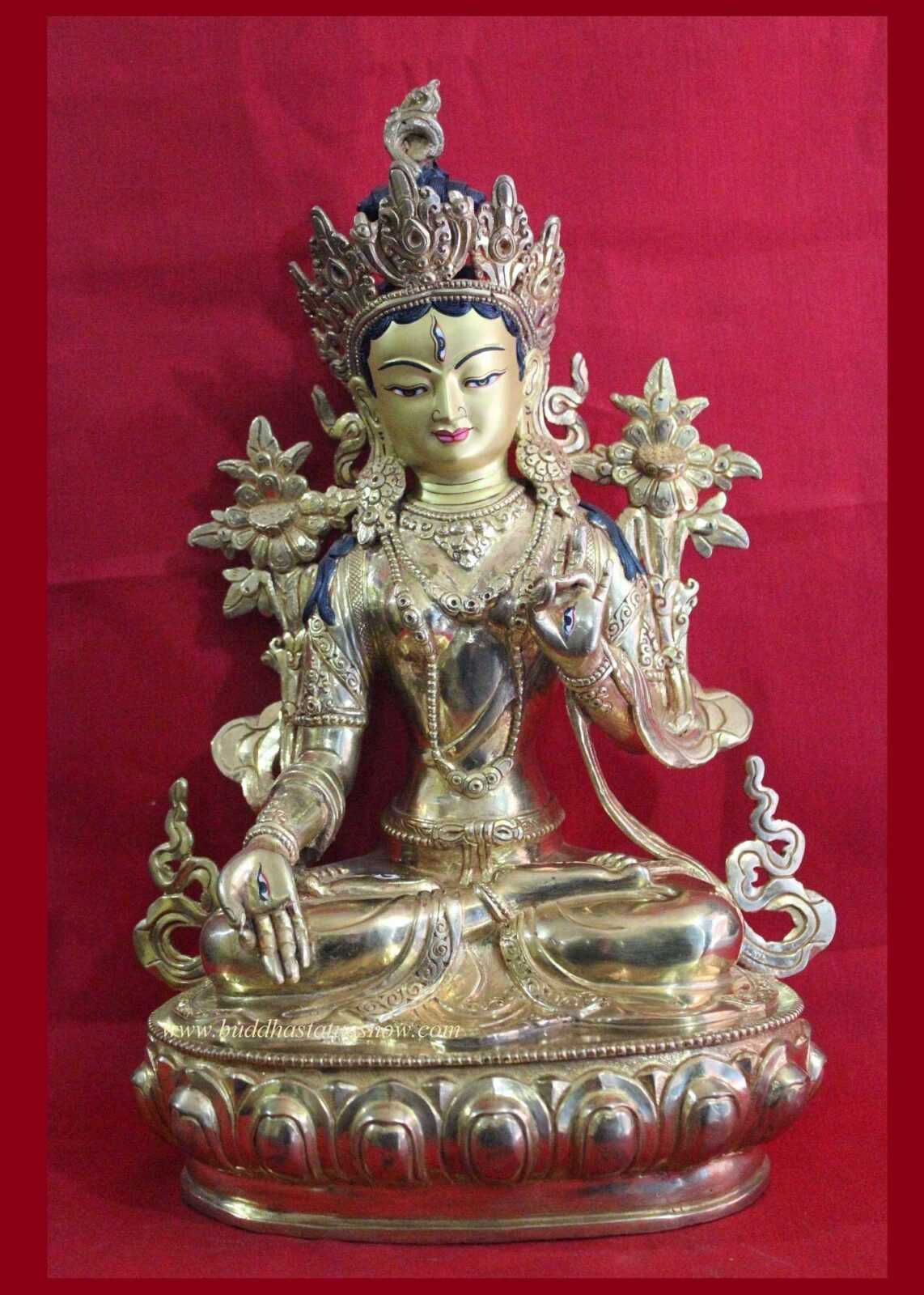
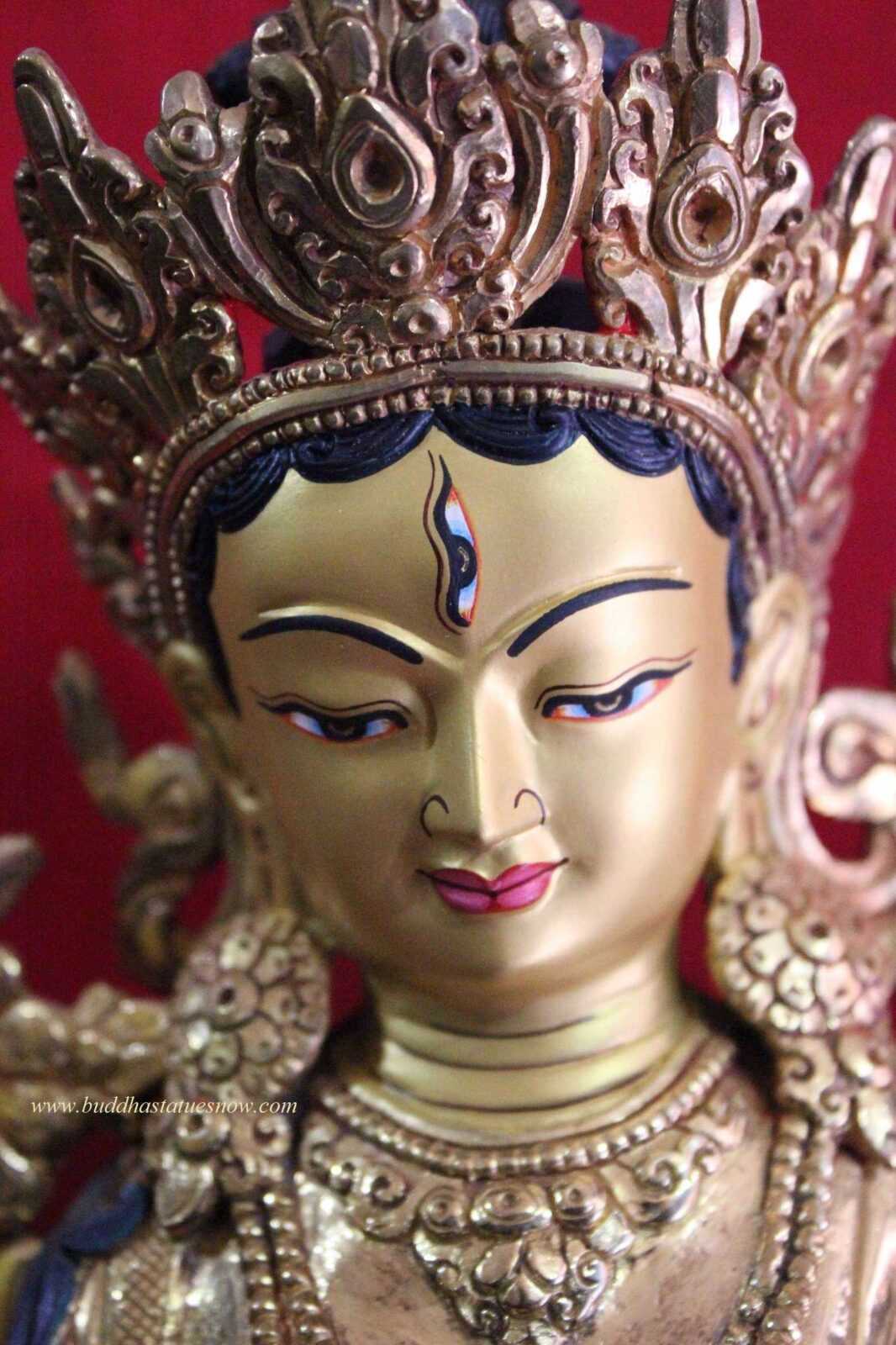
Our beautiful gold gilded Cintachakra (White Tara) statue was handmade using the lost wax sculpting method — and then intricately hand painted by our Nepali master craftsmen. Her seven eyes are painted with precision: the upright third eye on her forehead, the eyes of her serene face lined in blue, and the painted eyes gazing from her open palms — enlivening the statue’s most symbolic quality.
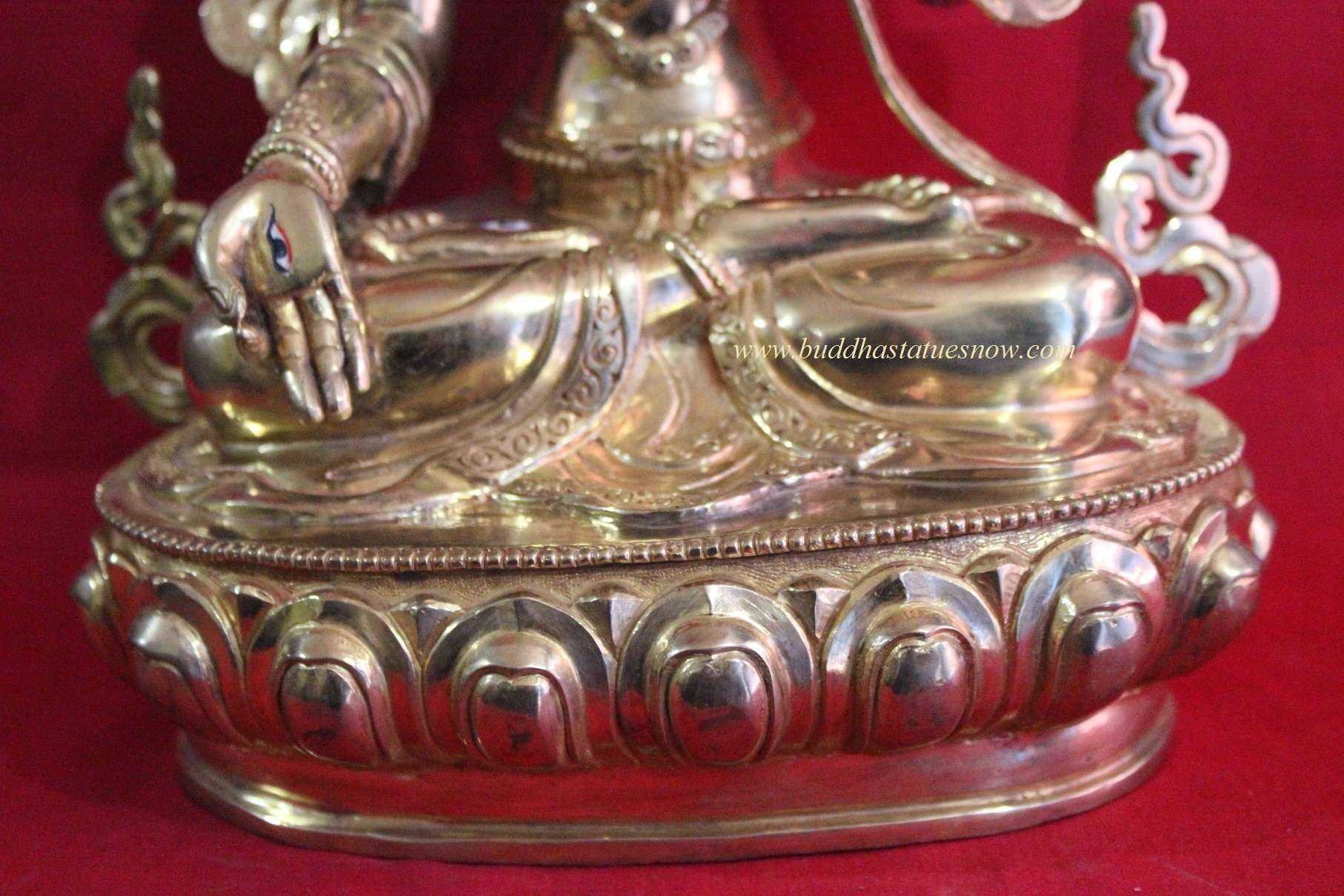
Cintachakra (also known as White Tara) is sculpted with two lotus flowers rising in full, open blooms over her shoulders — an enticement to devotees to remain dedicated to their Buddhist vows, for infinite rewards await in the land of virtue and bliss. The lotus flower has long been a symbol of the path that leads to enlightenment. Her raised left hand holds the stem of one lotus delicately between thumb and fingers in the gesture of refuge and teaching, while her right hand rests open over the knee in the Varada, or gift-giving, mudra.
This Cintachakra statue is fully gold gilded using the traditional fire gilding method, which leaves behind a glittering 24K golden finish — giving Cintachakra a deep golden luster with a special glow. Devotees of Cintachakra believe she glows with the ambience of a thousand white moons, and the purchaser of this statue will take special meaning from her golden radiance. For common questions, see the White Tara statues FAQ.
Cintachakra is also adorned with the crown and jewels of a Bodhisattva — our sculptor took special care to intricately carve each detail of the tall five-pointed crown, which rises around her blue-black painted hair, gathered into a topknot capped with a curling gold finial. White Tara sits in full lotus pose on a single lotus pedestal with broad petals beneath a beaded rim, and she displays the three neck lines — folds shaped like a conch shell, long regarded as a sign of beauty and an acknowledgment of the melodious nature of an enlightened being’s voice. Read more about White Tara’s meaning and symbolism, or browse our full collection of White Tara statues to compare sizes and finishes.
Authentic, Handmade in Nepal
Every statue is handcrafted in Patan, Nepal, using traditional lost wax casting and comes with a certificate of authenticity issued by Nepal’s Department of Archaeology, verifying its materials, technique, and origin.